The Fragmented Data Problem Nobody in Industrial Safety Wants to Admit

AI-powered safety tools are gaining adoption across industrial sectors, but fragmented EHS, contractor, HR, and operations data may be limiting their effectiveness.

What California Businesses Should Know Before Evaluating Direct Access Electricity Options

For many commercial customers, electricity is one of the largest recurring operating expenses. It affects budgets, margins, facility operations, and long-term planning. Yet many businesses still …

Don't Scale Smart Meters Before the Sector Is Ready

Smart meters and distributed solar are reaching clinics, factories, and households faster than utilities and regulators can align on cyber readiness. Drawing on World Bank sector assessment practice, Lior Tabansky argues coordination has to come before the next rollout wave — not after.

Eaton Backs VoltServer to Advance Digital Electricity

EAST GREENWICH, R.I.  -- VoltServer, the pioneering leader in fault-managed power systems and creator of Digital Electricity®, today announces a strategic partnership with Eaton to …
Taiwan is freezing industrial power rates and planning grid capacity around named fabs, while TSMC secures its own dedicated generation rather than wait.
Power, water, and permitting risk now belong in board-level due diligence, not just management's site selection memo. Here are five questions to ask.
A new model shows how tiny spacer layers change 2D perovskites. It could help engineers design better LEDs, solar cells and other light-based devices.
Windpark Zeewolde is pairing Europe's largest onshore wind farm with a new hydrogen-iron flow battery built for 10 to 40 hours of storage, not four.

Join Energy & Sustainability Leaders

Twice-weekly insights on trends shaping energy, sustainability, and business policy.

Sustainability Soundbites

Quebec Is Rationing the Cheap Power It Once Marketed
Hydro-Québec once promoted low-cost hydropower to attract data centers. Now it is proposing higher rates and tighter access as demand strains supply.
As grid constraints grow, manufacturers and data center developers are prioritizing guaranteed power delivery over the lowest electricity prices.
PFAS Targeted for Deregulation Were Found in Fish Tissue
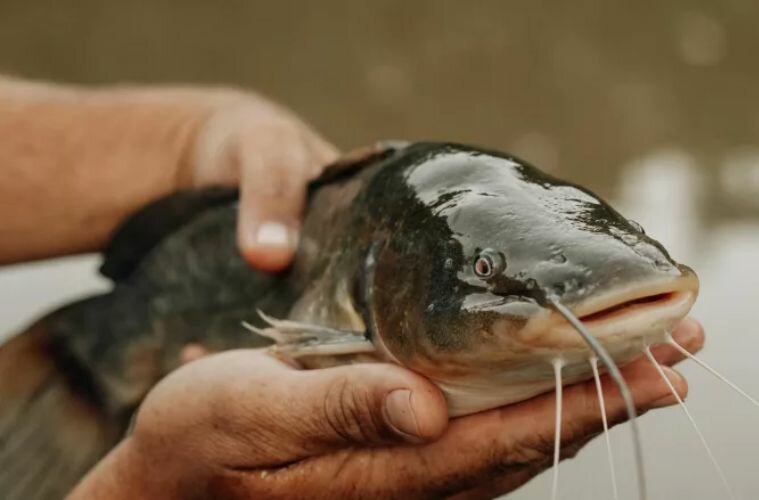
Monitoring data submitted to EPA detected PFNA and PFHxS in catfish tissue as the agency weighs rescinding federal determinations for both compounds.
Biochar is getting a real-world road test. Verde and Ergon are moving their cold paving partnership toward field projects, carbon credits and commercial use.
Clean Fuel Producers Face Four More Months of Uncertainty
Treasury now expects to finalize 45Z clean fuel tax credit regulations in November, extending uncertainty for renewable fuel projects and investment planning.
The UAE is showing what happens when power, capital, permitting, and chip access are coordinated before construction begins, not assembled project by project.

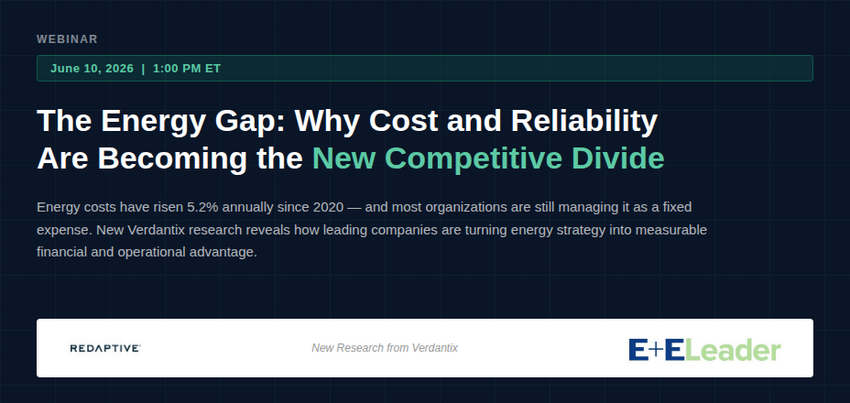
Energy costs are up 5.2% annually. Is your organization treating it as a fixed expense — or a financial advantage?

Join us to learn insights from Verdantix and Redaptive. Find out what leaders are doing differently.

Watch Now →


Watch this free on-demand webinar with Verdantix and Verse to learn why traditional PPA management is falling short and how energy, sustainability, and finance teams can improve portfolio visibility, control, and financial performance.

Why Utilities Are Buying Land Years Before They Need It

Norfolk, Nebraska's wastewater land purchase reflects a broader strategy as utilities secure room for future industrial growth and infrastructure expansion.

States Win Projects on Grid Readiness, Not Tax Breaks

Tax incentives are sliding down site selection checklists as states compete on power availability, and several are already rebuilding programs around it.

CONSOL Innovations Wins DOE Grant for Coal Waste Rare Earths

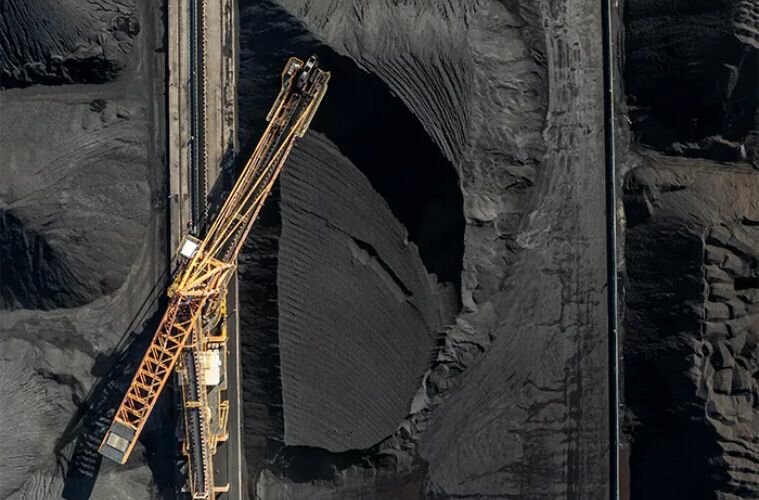
Core Natural Resources subsidiary CONSOL Innovations was selected for a DOE grant to pilot rare earth element recovery from Pennsylvania coal waste.

Desert Moss Study Reveals Hidden Fungi and Climate Clues Too

Desert mosses may carry fungi that help them handle heat. The discovery could shift how scientists approach dryland restoration and climate stress.
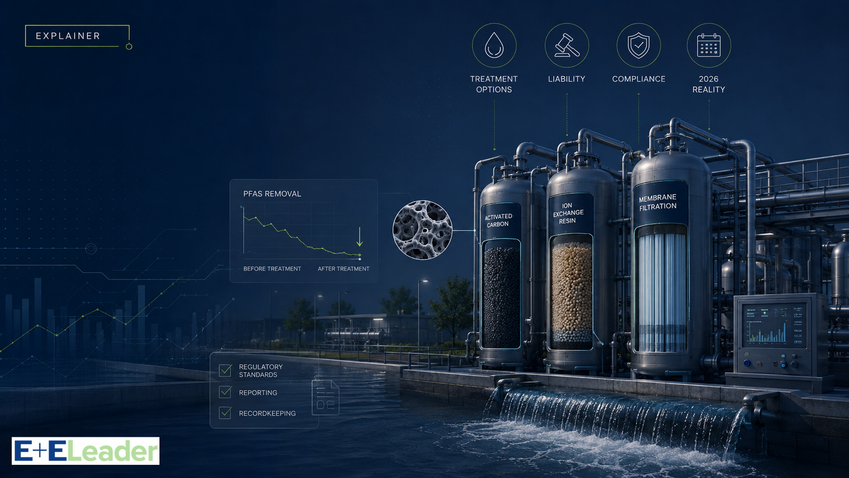
PFAS contamination is now a regulated, litigated, and expensive problem for water systems, wastewater utilities, landfills, manufacturers, and property owners alike. Here’s what makes these chemicals different, where liability comes from, what drives remediation cost, and which treatment technologies work — and which claims deserve skepticism.

Chain length may shape how PFAS move through water and respond to treatment. For utilities, that means monitoring and removal strategies need sharper focus.
Volvo is putting greener materials inside its newest truck cabs. The move brings recycled plastics, fibers and certified wood into VNL and VNR models.

Ireland could owe up to $30 billion (€26 billion) by 2030 for missing EU climate targets, new fiscal modeling shows, with costs rising after 2030.
Building electrification replaces fossil-fueled heating, hot water, cooking, and some process loads with high-efficiency electric systems. Here’s how the U.S. economics, financing options, grid constraints, and building performance mandates are reshaping capital planning — and what owners should check before committing to a retrofit.

Power constraints can delay facility openings, increase carrying costs, and force expensive temporary power investments that reshape project economics for CFOs.
Data centers are absorbing grid capacity that manufacturers need for expansion, forcing executives to treat power access as a site selection variable.
As skilled trades shortages narrow the contractor pool, procurement teams face a workforce constraint they didn't create and can't negotiate their way out of.
With median interconnection timelines approaching five years, facilities teams are redesigning project sequencing around a queue that most enterprise plans never accounted for.
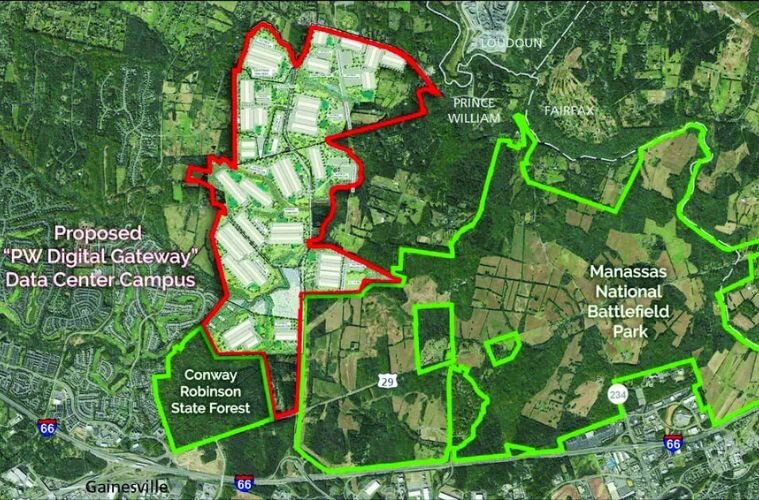
Blackstone's QTS dropped its final appeal, terminating pursuit of a 2,100-acre Virginia data center campus after courts voided the project's rezoning approvals.
CFOs entering Q3 face a triage question: which infrastructure-dependent projects can actually execute on their original timelines, and what changes next.
AI plans often stall before models ever run. OpsGuru’s AWS lakehouse aims to help enterprises turn fragmented data into governed AI-ready systems.
A structural cost coverage gap in the EU's Extended Producer Responsibility framework is leaving recyclers underfunded, just as the Circular Economy Act opens for reform.
The UK announced a $63.5 million critical minerals investment, funding rare earth magnet manufacturing, recycling projects, and a new industry demand aggregation platform.
TerraCycle’s NLR deal adds regulated waste capacity. The move gives business customers broader recycling and compliance support.
The D.C. Circuit unanimously upheld the EPA's 2024 PM2.5 soot standard on June 26, rejecting the Trump administration's bid to abandon the rule. EPA said it is reviewing the decision.
MediSun and Yanrun are launching a Singapore JV for brine recovery. The move targets industrial water reuse markets facing tighter rules.
The projects moving forward in the second half of 2026 are increasingly defined by infrastructure readiness, permitting certainty, and execution feasibility rather than projected returns alone.
UPS is investing $48 million in temperature-controlled freight facilities while expanding AI-powered logistics to support growing pharmaceutical demand.
World Athletics' 2026 midpoint review shows what happens when sustainability stops being a pledge and becomes a contractual deliverable embedded in event hosting requirements.
Twenty-one percent of supply chain leaders still operate without real-time visibility into disruptions affecting their suppliers
Environment + Energy Leader