

Europe’s renewable boom is exposing gaps in grid flexibility. Pumped storage is gaining attention as negative prices, heat and curtailment rise.

Hydro-Québec once promoted low-cost hydropower to attract data centers. Now it is proposing higher rates and tighter access as demand strains supply.

As grid constraints grow, manufacturers and data center developers are prioritizing guaranteed power delivery over the lowest electricity prices.

The UAE is showing what happens when power, capital, permitting, and chip access are coordinated before construction begins, not assembled project by project.

Tax incentives are sliding down site selection checklists as states compete on power availability, and several are already rebuilding programs around it.

Power constraints can delay facility openings, increase carrying costs, and force expensive temporary power investments that reshape project economics for CFOs.

Data centers are absorbing grid capacity that manufacturers need for expansion, forcing executives to treat power access as a site selection variable.
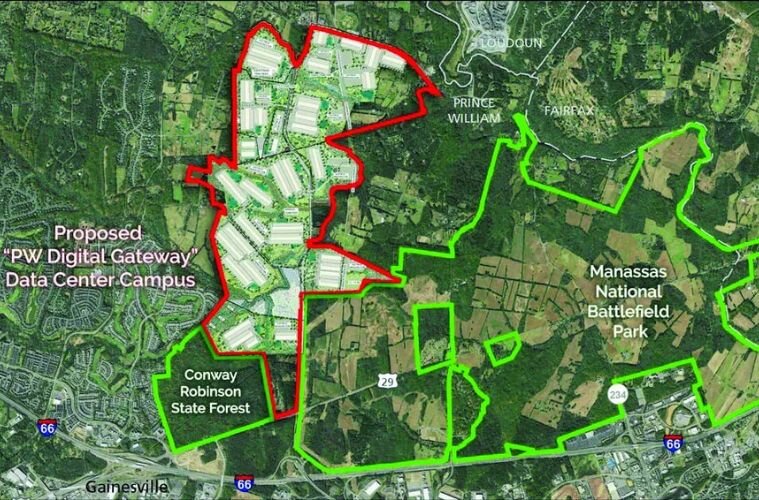
Blackstone's QTS dropped its final appeal, terminating pursuit of a 2,100-acre Virginia data center campus after courts voided the project's rezoning approvals.

Chain length may shape how PFAS move through water and respond to treatment. For utilities, that means monitoring and removal strategies need sharper focus.

California’s SB 343 update gives cartons fresh labeling clarity. New MRF data shows stronger sortation, but recovery work remains.

CFOs entering Q3 face a triage question: which infrastructure-dependent projects can actually execute on their original timelines, and what changes next.

AI plans often stall before models ever run. OpsGuru’s AWS lakehouse aims to help enterprises turn fragmented data into governed AI-ready systems.

Infrastructure constraints on power, water and permits are structural, not cyclical. Executives still planning around their resolution are planning for an environment that doesn't exist.

MediSun and Yanrun are launching a Singapore JV for brine recovery. The move targets industrial water reuse markets facing tighter rules.
Operators cannot control power demand growth, infrastructure upgrade timelines, permitting contest rates or capital selectivity. What they can control is how early those realities enter their planning

Grid queues, water access, permitting risk and capital timing are converging on the same projects. That is changing how executives plan for Q3.

Rock Tech’s Victory option adds lithium upside in Northwestern Ontario. The deal supports its push to link exploration with future conversion capacity.

Illinois HB1700 expands state authority over renewable energy siting disputes, signaling a broader shift toward accelerating project development.

The projects moving forward in the second half of 2026 are increasingly defined by infrastructure readiness, permitting certainty, and execution feasibility rather than projected returns alone.

Smart hydrants are giving utilities a sharper view of aging networks. McWane’s iHydrantPlus supports leak detection, pressure monitoring and faster response.