第五年第一百八十七天

Jul. 16th, 2026 07:26 pm
nnozomi: (Default)
[personal profile] nnozomi posting in [community profile] guardian_learning
部首
饣 part 3
饿, hungry; 馅, filling (for dumplings, etc.); 馆, building/establishment pinyin )
https://www.mdbg.net/chinese/dictionary?cdqrads=184

词汇
动车, high-speed train; 动作, movement; 电动车, electric vehicle; 感动, to be (emotionally) moved; 活动, activity; 激动, excited pinyin )
https://mandarinbean.com/new-hsk-4-word-list/

Guardian:
大半夜的饿醒了, I woke up hungry in the middle of the night
我有预感他很快就会有新的动作, I have a feeling he's going to make a new move very soon

Me:
他家乡的饺子馅儿就是羊肉和皮芽子。
这个小孩真的喜欢坐动车。

The Friday Five for 17 July 2026

Jul. 16th, 2026 05:15 pm
anais_pf: (Default)
[personal profile] anais_pf posting in [community profile] thefridayfive
These questions were written by [personal profile] pebbleinalake.

1. Books or movies?

2. Indoors or outdoors?

3. Morning person or night owl?

4. Online messaging or physical letters?

5. Dragons or unicorns?

Copy and paste to your own journal, then reply to this post with a link to your answers. If your journal is private or friends-only, you can post your full answers in the comments below.

If you'd like to suggest questions for a future Friday Five, then do so on DreamWidth or LiveJournal. Old sets that were used have been deleted, so we encourage you to suggest some more!

two more Writer's Little Books!

Jul. 16th, 2026 05:25 pm
swan_tower: (Default)
[personal profile] swan_tower
As I promised when The Writer's Little Book of Platitudes got republished, I am continuing on with the series! And as you can guess from the fact that the first two are focused on writing advice and the sociolinguistics of naming, the series will continue eclectic.

Next up -- and fairly timely, given the release of The Eye of Leviathan -- is The Writer's Little Book of Research, now available for pre-order via the retailer links there. This is all about the tricks I've used over the years to find information and sources for my stories, offered up in the hopes that it might make research a little less intimidating for those who didn't spend six years in grad school . . .

That one will be out in August. But wait, there's more! In September (and also available for pre-order now) comes The Writer's Little Book of Readings, i.e. my advice for performing your work in public: everything from selecting what to read, to preparing and practicing, to specific techniques, to handling the actual event. Now with a coda addressing how to read poetry!

Nor, of course, am I ending there. But for what comes next, you'll have to wait and see . . .

(originally posted at Swan Tower: https://www.swantower.com/2026/07/16/two-more-writers-little-books/)

Read-in-Progress Wednesday

Jul. 16th, 2026 12:32 pm
geraineon: (Default)
[personal profile] geraineon posting in [community profile] cnovels
This is your weekly read-in-progress post~

For spoilers:

<details><summary>insert summary</summary>Your spoilers goes here</details>

<b>Highlight for spoilers!*</b><span style="background-color: #FFFFFF; color: #FFFFFF">Your spoilers goes here.</span>*

第五年第一百八十六天

Jul. 15th, 2026 07:14 pm
nnozomi: (Default)
[personal profile] nnozomi posting in [community profile] guardian_learning
部首
饣 part 2
饱, full from eating; 饺, dumplings; 饼, baked goods pinyin )
https://www.mdbg.net/chinese/dictionary?cdqrads=184

语法
5.2 令, to make something happen
https://www.digmandarin.com/hsk-5-grammar

词汇
东部, eastern part; 房东, landlord pinyin )
https://mandarinbean.com/new-hsk-4-word-list/

Guardian:
我看大家也算是吃饱喝足了, it looks like everyone has eaten and drunk their fill
赵处长和他的父亲竟然性格完全相反,更令我诧异的是明明是父子, Chief Zhao and his father have such totally opposite personalities, it makes me even more surprised that they're clearly father and son
[no 东 words]

Me:
他是北方人,过年的时候想要包饺子。
房东不让我们养猫。

Obsolete Saves the Day

Jul. 15th, 2026 06:14 pm
lb_lee: a black and white animated gif of a pro wrestler flailing his arms above the words STILL THE BEST (VICTORY)
[personal profile] lb_lee
We are working on [SECRET PROJECT], which involves looking at a bunch of really, really old back-up files of [REDACTED]. Said files included 361 mysterious, unopenable .art files, an extension we'd never even heard of.

Turns out it was a proprietary AOL image format that hasn't been supported in twenty years. Even BSOD was too new to open them.

But Obsolete, our doughty little Windows 98 laptop, could! Its version of Internet Explorer added .art support in June 2000, so it could open the files! ...and convert them to bitmaps, which is how I learned that it can't save as .PNGs, only color-indexed bitmaps of one form or other (256 colors max!), .JPEG, or .GIF. I also discovered that Windows 98 had a WAY better file search than Windows XP, holy crap, it was child's play to get all those .art files, though I had to walk away and give it a while to crunch through all that.

So what WERE those 361 files?

Well, 354 of them were pocket lint: what must've been hundreds of duplicate identical background image textures, plus a few dozen duplicate identical logos. Glad we dug through them all, though, because turns out there were 7 buried in all those folders that mattered: one photograph, and six crummy flowcharts/infographics that'd make Tufte cry. Still important to the files they belong to, though!

I converted all those files into .BMP, zipped 'em (and got an angry message about how I was still using the trial version of Winzip after TWENTY-FIVE YEARS LIKE A CHEAPSKATE), transferred them to the sci-fi library computer using THEIR floppy drive, then transferred them to my USB key, where I will work at fixing and replacing all those cursed HTML files so we don't NEED hundreds of duplicate textures cluttering up the files.

Three cheers for Obsolete!

EDIT: of COURSE some intrepid old dog made a version of the Windows 98 file search to be used elsewhere. Bless you, old nerd. YOINK! BSOD getting an upgrade!

第五年第一百八十五天

Jul. 14th, 2026 07:04 pm
nnozomi: (Default)
[personal profile] nnozomi posting in [community profile] guardian_learning
部首
饣 part 1 shí
饭, rice/meal; 饮, to drink; 饰, to decorate/to play a role pinyin )
https://www.mdbg.net/chinese/dictionary?cdqrads=184

词汇
定, to fix; 规定, to set rules; 肯定, certain(ly)/positive/to be certain pinyin )
https://mandarinbean.com/new-hsk-4-word-list/

Guardian:
你们几个别替他掩饰了, stop playing a role on his account
肯定有女朋友吧, you must have a girlfriend, right?

Me:
吃饭的时候不要太热闹。
他把我们的活动规定了。
swan_tower: (Default)
[personal profile] swan_tower
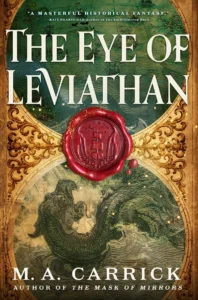
My latest M.A. Carrick collaboration with Alyc Helms is out today! Retailer links for all formats are on our site . . .

cover art for The Eye of Leviathan by M.A. Carrick, showing a half-circle of a green-tinged map of the Otherworld above a half-circle of an engraving of a sea beast. The intervening space is filled with gold filigree, and joined by a blood-red wax seal with a ship sailing between tall cliffs toward a starry sky, with tentacles in the waves below.

In an alternate Spanish Golden Age, where the map becomes the territory and mapmakers are the architects of reality, the Council of the Sea Beyond has risen to unrivaled power, exploiting the world’s most precious resources for their own gain.

Determined to discover how cosmographers pin down the islands of the Otherworld, Estevan seeks power with the Council of the Sea Beyond – but he risks the exposure of his own secrets, too. For he is a changeling, a faerie masquerading as a mortal. And for a faerie to enter the mortal world like that, a child must go the other way . . .

The Hungry Girl, the nameless human daughter whose place he took, has grown up opposite her “brother.” Lost among the fae and desperate to find some purpose for her existence, she leaps at the chance to help a group of Spanish explorers in the Sea Beyond . . . only to be horrified at the atrocities they commit.

Soon the unlikely siblings will need to overcome their rivalry — because only together can they bring down Spain’s worlds-spanning empire and save the homes they have come to love.


(originally posted at Swan Tower: https://www.swantower.com/2026/07/14/happy-book-day-to-the-eye-of-leviathan/)

第五年第一百八十四天

Jul. 14th, 2026 07:49 am
nnozomi: (Default)
[personal profile] nnozomi posting in [community profile] guardian_learning
部首
飞, to fly (the one and only character with this radical, apparently) (pinyin in tags)
https://www.mdbg.net/chinese/dictionary?cdqrads=183

语法
5.1 part 2 所, measure word for institutions
https://www.digmandarin.com/hsk-5-grammar

词汇
订, to order/to book (pinyin in tags)
https://mandarinbean.com/new-hsk-4-word-list/

Guardian:
当年天外飞船着陆海星, at that time a spaceship made landfall on Haixing
[no 所 of this kind that I can find]
结果发现林静哥好像把我之前订购的娃娃给藏起来了, in the end I discovered that Lin Jing-ge seems to have been hiding the doll I ordered earlier

Me:
他的工作速度飞快。
这所大学的历史里第一次发生这种事情了。

Why Have Intros?

Jul. 13th, 2026 09:05 am
lb_lee: A colored pencil drawing of Raige's freckled hand holding a hot pink paperback entitled the Princess and Her Monster (book)
[personal profile] lb_lee

Rogan: Con went well, but three days is a lot. By con end Sunday, all I wanted was to relax, so I went to the sci-fi library to paw through and label some boxes of donations, pulling books that jumped out at me as non-genre, obvious duplicates, or things I absolutely KNEW we did/didn’t have. (If any of you have been dying to get your hands on works by Anne McCaffrey, Andre Norton, or C. J. Cherryh, please let me know. We have so many in the book sale, some in triplicate. Please save us.) One of the exciting moments was the finding of a rare Spider Robinson book I’d never even gotten to SEE, never mind touch or read, so naturally I devoured it on the spot. (I’m a librarian! I get DIBS!) In it, he mentioned being contractually obligated to write an intro he clearly didn’t want to, asking what was even the point of such things. I decided to poll my bookshelf and find out!

Wherefore introductions? )

umadoshi: (berries in bowls (roxicons))
[personal profile] umadoshi
Reading: One of the libraries I use suddenly acquired 91 more ebook copies of The Gate of the Feral Gods (DCC book 4), so I'm reading that. I also started Abra Berens' Ruffage: A Practical Guide to Vegetables.

Watching: We're halfway through Widow's Bay now and, I think, pretty invested.

Materialism: In the last couple of weeks I've tipped over into desperately wanting new jeans that, y'know, actually fit well. (The ones I've been wearing for ages are passable but just not great, and it relatively recently occurred to me that I can probably get away with wearing normal jeans with metal bits [to which I'm allergic] most of the time, since I'm rarely out of the house for very long. And while years ago, the "coat the skin-touching metal bits in clear nail polish" didn't actually work well, there's always the option of just plain sewing fabric bits over those spots.) Yesterday I spent a truly appalling amount of money ordering an array of jeans from a couple of different stores, most of which will be returned...but hopefully I can get a pair or two I actually like out of it.

Growing: The lettuce is still doing well! I think that's going well enough that we'll try it again next year and see how it does when the elevated planter is closer to the house (which it has to be after this season). I probably won't opt to grow spinach again; the plants are doing okay, but only three came up and they're not producing enough to Do Something With Spinach, so their leaves are just getting tossed into salads with the lettuce.

Meanwhile, the sole cucumber plant now seems to be serious about growing, and the tomatoes are flowering to varying degrees. Apparently we should go out and do a bit of hand pollination, and we really need to do a bit of pruning, at least on the three indeterminate plants.

Foodstuffs: [personal profile] scruloose made the Easy Swiss Chard Stir Fry from Omnivore's Cookbook to use the rainbow chard from our first week of farmshare, and if making it again, would increase both the garlic and soy sauce and also make it in the wok rather than the deep frying pan, which wasn't quite up to the mass of the chard greens. Sadly, I didn't like it much, which I suspect is a general chard thing rather than being due to this recipe. But we may try it again sometime.

Farmshare from last week (week 2): onions, new potatoes, strawberries, beets, parsley (flat?), and celeriac. This time the fridge wasn't straight-up exploding with greens. We still have to use the beets and celeriac, both of which are new to me; I think in both cases we're just planning to roast them and see what we think.

Having a car of our own means being able to just...get up and go to the produce stand we really like (which does sadly mean lower odds of making it to the corner farmers' market on Saturdays, but I'm hoping we'll still make it there during berry season). We went both Saturday and yesterday morning. The summer strawberries are just wrapping up (we tried four varieties through them over the last few weeks: Brunswick, Laurel, Jewel, and Evelyn), and yesterday we were able to also get our first raspberries and cherries of the season (both were sold out by the time we got to the front of the line on Saturday, which is a bit alarming given that we got there within half an hour of opening time). All of the remaining strawberries got roasted yesterday.
kate_nepveu: sleeping cat carved in brown wood (Default)
[personal profile] kate_nepveu

I woke up too early! This is out of chronological order but I wanted to be sure to get it up.

The Limits of Hope: A Meditation on Fiction as an Activist Force
Daniel José Older, E. C. Ambrose (moderator), Gillian Daniels, Marissa Lingen, Michael J. DeLuca

In a keynote at the 2025 Locus Awards, Sarah Gailey challenged the focus on literature conferring hope on the reader, asking, "Are we here to provide comfort to the inert? Are we here to reassure people that experiencing a positive feeling is the end of their work?" They noted that hopelessness, fear, and despair all can be motivating, but regardless, "you are also powerful enough to act on your principles even when they oppose your emotions." How can we keep a clear eye about the practical effects of stories? How can we take lessons from fiction and writing and apply them to activism?

panel notes

Michael: founded Reckoning, journal of environmental activism. specifically not solarpunk because wanted wider scope

Gillian: struggles with writing in difficult times. activist work largely through security for demonstrations.

Marissa: activist work for years of supporting ICE detainees in Minnesota. when I tell people I'm from Minneapolis it hits differently now

Daniel: lot of community organization before publishing, some of transferred to being pain in the ass to publishing industry as much as possible

Elaine (E.C.): start by bringing out examples of works of fiction that have caused change in world.

Michael: I got nothing for this. two that are defaults are non-fiction: Silent Spring: which everyone uses and is a very old example. and Braiding Sweetgrass changed me

Gillian: A Modest Proposal, satire to puncture people's assumptions about appropriate to talk about re: rights of people. Hogfather, Terry Pratchett, little/big lies conversation. [*] don't know if one piece can push big changes, but can change ideas and how think about world. once temped at Harvard School of Public Health in 2016, always talking about: have you seen new episode of Westworld? people need things to escape to. I do recommend understanding that fiction is important and changes minds, but different than more direct action like filling a food pantry with food.

[*] ... HUMANS NEED FANTASY TO BE HUMAN. TO BE THE PLACE WHERE THE FALLING ANGEL MEETS THE RISING APE.

“Tooth fairies? Hogfathers? Little—”

YES. AS PRACTICE. YOU HAVE TO START OUT LEARNING TO BELIEVE THE LITTLE LIES.

“So we can believe the big ones?”

YES. JUSTICE. MERCY. DUTY. THAT SORT OF THING.

(I apologize that my ebook copy-paste rendered that as all-caps and I don't have time to convert to small caps)

Marissa: people often looking for something as large-scale as Uncle Tom's Cabin. but people don't recognize that impact was very partial compared to the goals. if what you needed was to be convinced that Black people are human, then I'm glad that did it, but that's very short of the goal. writers need to look at works that bolster activists in their work, and recognize that drastic changes aren't the only kind.

Marissa cont'd: Winifred Holby, South Riding, Yorkshire in the 1930s. beautiful novel. but characters talking about friends in Germany that hadn't heard from. public did not rise up, but Holby's circles kept conversation going. so lots of examples but need to be interested in scales and willing to work on lots of scales.

Daniel: love this conversation. a lot of these things are incalculable. thinks that one thing is rise of independent work, beyond normal corporation media through different platforms. webtoons (small w), YouTube and then sometimes moving off, e.g., Dropout. much more open to radical work.

Daniel cont'd: Andor, recent Superman: to have mass-media works to be talking about genocide (which is fantasy but clearly Gaza) in way that cannot ignore is powerful. took a lot of work from activists on the ground. we are always part of a larger movement, writers/activists always think about selves as singular savior, which is bullshit

Elaine: Silent Spring opens with a narrative, story structure that brings reader into the silent spring that's the title of the book. (missed some stuff here, but basically) narrative is useful even when not fiction. also Black Beauty was specifically written as activism

(me: child me was deeply convinced I should be nice to horses by that book)

Elaine cont'd: example that makes angry which was not intended as activism: Harry Potter. is from NH therefore very privileged in US politics. decided should take advantage of that. 2020, would be sitting in online meetings and hearing 20-30-year old activists using terms like Dumbledore's Army and Room of Requirement, know that's why they're there. hates that JKR has been revealed as terf because betraying what people took away from it, banding together and rise up against greater force.

Gillian: I think a number of people who read those may have already had that seed of, I want to do something. these kind of books give people the language for it. book becomes popular because of what's in the zeitgeist. can seed things but people have feelings looking for place to put.

Michael: as writers, cannot set out create huge change. Silent Spring and Uncle Tom's Cabin, matches were already there. what Reckoning is, is encouraging not to produce the match but support in working toward. aiming for match seems doomed to frustrate, aim for individuals

Marissa: having conversation with new writer here who wanted to know how current should be in writing. encouraged to think broader, value in "here's what happened today" but also in "what I learned is". strange that thinking more broadly can have less perceptible impact. aches for W.H. Auden that could not stop Holocaust with his poetry, which he wanted to do. but poems opened up for people. and he did the work of activism, we can point to people he saved. big and small go together in weird ways

Gillian: 100% agree. circles been in, people used incrementalism as insult, don't want anything to actually change like establishment politicians. that's in mix but the glorious revolution that happens overnight needs to be seeded for decades beforehand.

Marissa: and when we see changes in the world we imagine more changes. as big an imagination this convention has, I don't think we have imagined how good things can be.

Elaine: Philip Zombardo, architect of Stanford Prison Experiment, which is also reference to Hannah Arendt's work on banality of evil, which rediscovered the whole thing. Zombardo grad student asked, what makes ordinary person a hero? article, "The Banality of Heroism", started Heroic Imagination Project that does hero training around the world, inspire ordinary people to be willing to move beyond being a bystander. specifically talked about story as giving people language that we can use to encourage to step up.

(me: the conclusions of the experiment specifically are more complex than I think the popular view is, which is not addressed to the panel, just a side note)

Daniel: struggle with: story is double-edged sword. SFF been overwhelmingly white supremacist for so long, also harmed people and justified genocide, our legacy. how do we reckon with, not to burden with guilt but to look it in the face. don't deserve to wield an implement that you won't fully look in the face or understand. if really honor power, have to take that responsibility so seriously and lovingly. let that move through me as I write, otherwise will not just fail, but hurt people.

Gillian: fiction as holding space for exploring ambiguity and morality that wouldn't do in real life. "I don't eat people." (see: forthcoming debut novel) so as horror writer, don't confuse fiction for parables. but make sure that writing people as full complicated people. sense of truth of world you are communicating to people. would be remiss if didn't mention Ring Shout by GoH P. Djèlí Clark which is wonderful and all about Birth of Nation releasing spell that causes white supremacist monsters to ravage the U.S., which is kind of what happened. propaganda but also (paraphrased) very well-crafted action movie. once take it apart, see all the pieces of e.g. Superman and modern action movies that have been built with it. also important cannot erase that people did protest movie. not like overall getting more moral.

Marissa: scariest thing as writer: there are things in your work that weren't in your brain consciously. some of most damaging things are things people didn't know they believed and were conveying, like who has worth. no substitute for fixing your heart. it will come out in your work. the people who love you will tell you, if you are honest, that your own flaws are there

(me: I'm guessing that fixing heart is a Twin Peaks/David Lynch reference)

Gillian: D.W. Griffith's next movie Intolerance got buried. seems to have been partly, no I'm a good person actually, so not learning and growing. but still buried. contrast Tamora Pierce recognizing that she'd messed up and would try to do better (I don't know this reference off the top of my head)

Daniel: context of world that we're putting our work into matters so much. hear about Founding Fathers, Lovecraft: "men of their time." no, super racist even at time. but also people were always fighting. that phrase means white men of time and not even all of them. flattening of history, have to let that go. and let go of crushes: "Lovecraft is not going to fuck us."

audience: works that have had largest effects, is emotion going for not hope but outrage (Silent Spring, Birth of Nation)?

Daniel: find outrage very hopeful, if not outraged, what's going on. work like 1984 and Brazil held up as great activist works but so depressing, nowhere to go from there, very counterproductive.

(me: why I wanted my seven books to be resistance in the face of oppression)

Daniel cont'd: job as writers, truth of story and how interacting with world and outrage of. Borges quote, paraphrased, taking outrage of time & turning into music. not negating but there's a beauty to it

(I think this may be from "The Art of Poetry":

To see in every day and year a symbol
of all the days of man and his years,
and convert the outrage of the years
into a music, a sound, and a symbol.

which is lovely and I'm glad to have found it regardless.)

Marissa: outrage is the loudest, and have culture that amplifies the most. cannot live in outrage, will damage you, we know this because people have been forced to do and see that damage in bodies. can choose to try and amplify other things that are more constructive. reads lots of 1930s women writers: Winifred Holby, Rose Macaulay, Naomi Mitchison, Sanora Babb; who were also were fighting and building. good tired from packing food or helping deportees, not like if I scroll.

Gillian: getting angry about social media checks a little box in your brain: I did something. building awareness is great, genuinely. is it the same as talking to your neighbor

Marissa: hear a lot from other activist-minded people and in minoritized groups: this is not my job; but I can take it on anyway.

Gillian: our system where work 40+ hours week, you're very tired: that's on purpose. figure out way to contribute anyway.

Elaine: Gailey's essay contains links

audience: Upton Sinclair's The Jungle needs to be reissued right now

audience: bouncing off of how perception of works changes over time, think something released now that will be seen as more or less important in future? R.F. Kuang gets a lot of backlash but think will be very important in future

Gillian: graphic novel memoir Gender Queer, Maia Kobabe, most challenged; thinks become classic because of criticism and wild accusations

audience: Maus, Art Spiegelman (also graphic novel memoir)

Gillain: Persepolis, Marjane Satrapi, recent death brought back, memoir. loves romances, do think very escapist, wonder how dark romance and romantasy will be looked at in context of deterioration of women's rights, thinks created to deal with feelings about helplessness within patriarchy

audience: do we need violence, what would Gandhi say

(me: @@4EVA [my eyes roll forever])

Marissa: you've popped off a rant. non-violence is a tactic, often very effective, but treating it as a tactic means there are skills that you have to teach, can't just send people out. what tools are you using from the toolkit

Gillian: recommend book This Nonviolent Stuff'll Get You Killed, Charles E. Cobb Jr.: civil rights movement, people did have to show up with guns to make sure got out alive

audience: recommends Naomi Kritzer's YA books, also Harry Potter and Hunger Games mentioned (somewhere I didn't make a note of); is it YA in particular?

Marissa: when targeting older middle grade and YA, that's audience first tasting wide-scale agency, has inherent power. maybe not works but audience

Gillian: for every of those works, there are hundreds of stories that didn't get same cultural power. but don't put all eggs in one basket, encourage teens to read widely

Elaine: David Hartwell quote, the golden age of SF is 12

(which the audience doesn't seem to have heard before given the reaction! amazing)

Gillian: Sailor Moon when was 12!

as we get the STOP sign:

Elaine: go out and make change!

Gillian: go out and join local organizations and talk to your neighbors!

This was one of the many suggestions I tossed in the panel box (you can too!) and it might've been the one I was most excited to see. And it was wonderful.

Open to: Registered Users, detailed results viewable to: All, participants: 20


+1 (thumbs-up, I see you, etc.)?

View Answers

+1
20 (100.0%)

第五年第一百八十三天

Jul. 12th, 2026 06:52 pm
nnozomi: (pic#16332211)
[personal profile] nnozomi posting in [community profile] guardian_learning
部首
纟 parts 13-14
缕, strand; 编, to weave/to edit; 缘, reason/fate; 缝, to sew; 缠, to tangle; 缩, to contract
pinyin )
https://www.mdbg.net/chinese/dictionary?cdqrads=120
门 parts 1-4
门, gate/door; 闪, to flash/to hide; 闭, to close; 问, to ask; 闯, to dash; 闲, at leisure; 间, between; 闷, stuffy; 闹, noisy; 闺, lady's chamber; 闻, to smell/to hear; 阅, to read/to review
pinyin )
https://www.mdbg.net/chinese/dictionary?cdqrads=169

语法
4.23 即使, even if
4.24 再...也, no matter how...still...
https://www.digmandarin.com/hsk-4-grammar
5.1 part 1 所, introducing a relative clause
https://www.digmandarin.com/hsk-5-grammar

词汇
底, bottom; 底下, below; 到底, after all; 年底, end of the year
地球, the earth; 地址, address; 各地, various places; 目的地, destination
点名, to call roll; 点头, to nod; 差点, almost; 景点, tourist spot; 缺点, shortcoming; 特点, characteristic; 优点, advantage; 重点, key point
电动车, electric vehicle; 电视剧, TV drama
掉, to fall/to drop
调查, to investigate
pinyin )
https://mandarinbean.com/new-hsk-4-word-list/

玩玩
A few things I listened to for the first time in a while and was reminded how good they are: Zhu Yilong’s 纸短情长, Zhang Yuan’s 晚婚, Sun Yanzi’s 逃亡. (I do tend to be all the same singers all the time! Keep reminding me of other people I should be listening to.)

夏天好长…好累…还是应该去新西兰过夏天对吧?咱们北半球朋友们好好凉快,南半球朋友们好好暖和啊。

Amishi P. Jha's Peak Mind

Jul. 12th, 2026 05:50 pm
swan_tower: (Default)
[personal profile] swan_tower
This is a piece of July reading, but I'm pulling it out from the usual booklog (which will come in August) both because I have more than usual to say about it, and because in this case, there's good reason to mention it before next month.

What this book is: a very cogent discussion by a neuroscientist specializing in the study of attention -- and, as knock-on effects from that, memory, emotional regulation, connection with other people, and so forth. She talks about how we focus (and what disrupts that), how we stay aware of our environment (physical, emotional, etc.), how this relates to working/short-term memory and what goes into long-term memory, why we get disrupted by negative memories or worries about the future, how to keep from being hijacked by emotional responses, how to really be present for our interactions with people around us . . . and how basically all of these things can be improved through mindfulness practice.

Which is kind of a buzzword these days, but not without reason. Jha is very explicit that mindfulness is not about "thinking happy thoughts" (that's actually counter-productive a lot of the time, as it burns the mental resources you need for actual coping), nor is it something whose purpose is to make you feel better. In fact, the early road there often sucks! Instead, she treats it as mental training, the way you might undertake physical training for your body. The aim is to have better control of your focus -- not so you can be focused all the time, but so you can switch as needed between that and broader contextual awareness -- and a meta-awareness of what your own mind is doing, which gives you the chance to intervene when what it's doing is uhhhh not so great.

(As a sidebar, this book is also the first time I've encountered the word "hypertasking." It refers to tetrising your time so that you're always focused on something and never give yourself downtime between tasks, and, uh. Hi. Yeah. That's me. Turns out that whole "I don't know how to turn off" thing is also part of this same cluster of concepts, and while it has its benefits, in the long run it's not really good for your brain.)

A few caveats: first, a good chunk of the research Jha has done, and therefore presumably a chunk of her funding, involves the U.S. military. I found that I was not as bothered by that as I expected, because frankly, her work is ultimately about helping them not do the kind of thing I want them to not do. For example, she talks about how we need to be aware of our own mental narratives so that we can see how they're influencing our attention and know when to let go of them: for example, if you have the mental narrative of "anybody around me could be a terrorist," then you are automatically going to notice things that fit your narrative and literally not see the ones that signal "actually, this is a harmless civilian." (If you've ever heard of the basketball/gorilla experiment, it's very much in line with that.) I'm honestly in favor of anybody working against the "assume anybody could be an enemy and react accordingly" mindset.

Second, though she touches briefly on ADHD, she is not specifically a researcher in that field. So, for example, she comments that using mindfulness training to build awareness of mind-wandering abates the "costs" of mind-wandering in people with ADHD, but she doesn't address the challenges in undertaking that training in the first place. That's the kind of thing that would probably benefit from reading a different book, one written by someone specialized in the relevant sub-field -- or, of course, direct therapeutic guidance. (She is very very clear that while mindfulness plays a key role in certain treatments for a variety of conditions, including both ADHD and PTSD, reading her book is 1000% not a substitute for actual therapy, and please do not use it as such.)

Those caveats laid aside, I found this lucid, well-argued, and convincing. I've gone through spates of doing mindfulness meditation before, and they were fine, but I never found them life-changing. Turns out that might be because I was almost always doing only five or ten minutes, and so far, the research suggests that -- for whatever reason -- twelve minutes is the minimum effective "dose." (More is better, but since telling people to meditate for thirty minutes tends to result in them doing it for zero, she is very pragmatically aiming at the minimum line.) Twelve minutes a day, at least five days a week, for at least four weeks, to produce measurable changes in people's performance in various cognitive tests . . . though of course it's not like you do that and then stop, any more than you get swole at the gym and then quit on the assumption those muscles will stay with you forever. But theoretically, after four weeks of following this regimen, you've done enough mental lifting to notice a change.

And that's why I'm posting this now. As of it going live, I have successfully meditated for eight days straight, twelve minutes each time. By saying that publicly, I'm giving myself a bit more accountability -- because my hope is that I'll be able to keep this up, and in August I'll come back to report on how it's going. Will I feel less scattershot? Better able to remember things? More skilled, not only at focusing on what's in front of me, but knowing how to stop focusing and just &#$! chill for a bit?

Only one way to find out!

(originally posted at Swan Tower: https://www.swantower.com/2026/07/12/amishi-p-jhas-peak-mind/)

Profile

duckprintspress: (Default)
duckprintspress

July 2026

S M T W T F S
   1234
567 8 91011
12 13 14 15 161718
19202122232425
262728293031 

Most Popular Tags

Style Credit

Expand Cut Tags

No cut tags
Page generated Jul. 17th, 2026 03:44 am
Powered by Dreamwidth Studios