Cobaltoblödite
A valid IMA mineral species
This page is currently not sponsored. Click here to sponsor this page.
About Cobaltoblödite
Formula:
Na2Co(SO4)2 · 4H2O
Colour:
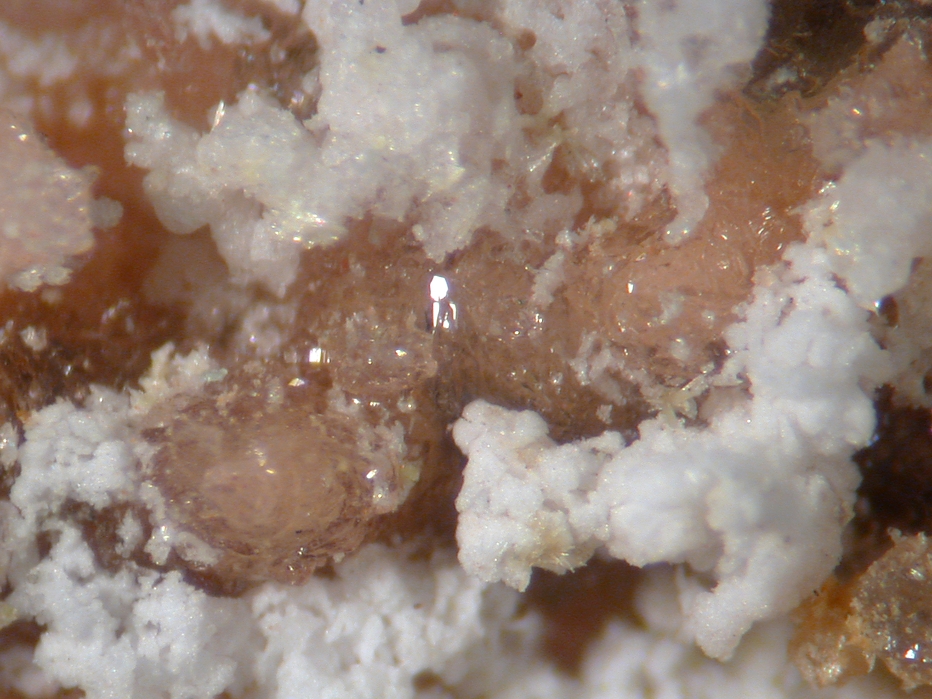
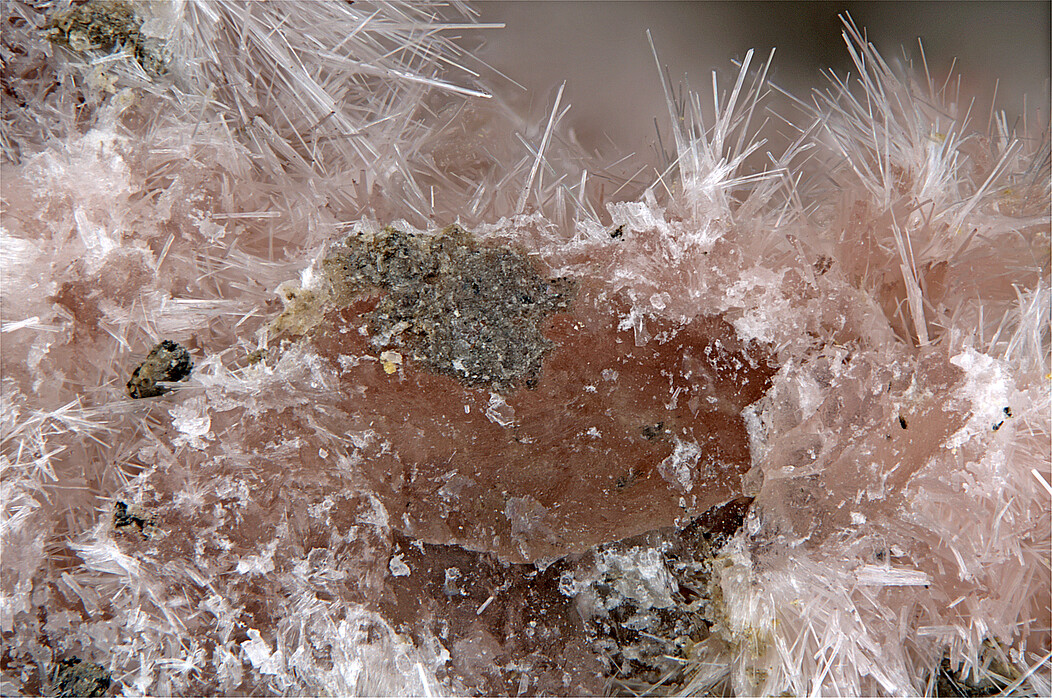
Reddish-pink in aggregates.
Lustre:
Vitreous
Hardness:
2½
Specific Gravity:
2.29
Crystal System:
Monoclinic
Member of:
Name:
Co-dominant analogue of blödite.
This page provides mineralogical data about Cobaltoblödite.
Unique Identifiers
Mindat ID:
43582
Long-form identifier:
mindat:1:1:43582:2
IMA Classification of Cobaltoblödite
Approved
First published:
2013
Type description reference:
Kasatkin, A. V., Nestola, F., Plášil, J., Marty, J., Belakovskiy, D. I., Agakhanov, A. A., Mills, S. J., Pedron, D., Lanza, A., Favaro, M., Bianchin, S., Lykova, I. S., Goliáš, V., Birch, W. D. (2013) Manganoblödite, Na2Mn(SO4)2·4H2O, and cobaltoblödite, Na2Co(SO4)2·4H2O: two new members of the blödite group from the Blue Lizard mine, San Juan County, Utah, USA. Mineralogical Magazine, 77 (3) 367-383 doi:10.1180/minmag.2013.077.3.10
Classification of Cobaltoblödite
7.CC.
7 : SULFATES (selenates, tellurates, chromates, molybdates, wolframates)
C : Sulfates (selenates, etc.) without additional anions, with H2O
C : With medium-sized and large cations
7 : SULFATES (selenates, tellurates, chromates, molybdates, wolframates)
C : Sulfates (selenates, etc.) without additional anions, with H2O
C : With medium-sized and large cations
Mineral Symbols
As of 2021 there are now IMA–CNMNC approved mineral symbols (abbreviations) for each mineral species, useful for tables and diagrams.
| Symbol | Source | Reference |
|---|---|---|
| Cblö | IMA–CNMNC | Warr, L.N. (2021). IMA–CNMNC approved mineral symbols. Mineralogical Magazine, 85(3), 291-320. doi:10.1180/mgm.2021.43 |
Physical Properties of Cobaltoblödite
Vitreous
Transparency:
Transparent
Colour:
Reddish-pink in aggregates.
Streak:
White
Hardness:
2½ on Mohs scale
Tenacity:
Brittle
Cleavage:
None Observed
Parting:
none
Fracture:
Irregular/Uneven
Density:
2.29(2) g/cm3 (Measured) 2.347 g/cm3 (Calculated)
Optical Data of Cobaltoblödite
Type:
Biaxial (-)
RI values:
nα = 1.498(2) nβ = 1.503(2) nγ = 1.505(2)
2V:
Measured: 70° (10), Calculated: 64°
Max. Birefringence:
δ = 0.007
Based on recorded range of RI values above.
Based on recorded range of RI values above.
Interference Colours:
The colours simulate birefringence patterns seen in thin section under crossed polars. They do not take into account mineral colouration or opacity.
Michel-Levy Bar The default colours simulate the birefringence range for a 30 µm thin-section thickness. Adjust the slider to simulate a different thickness.
Grain Simulation You can rotate the grain simulation to show how this range might look as you rotated a sample under crossed polars.
The colours simulate birefringence patterns seen in thin section under crossed polars. They do not take into account mineral colouration or opacity.
Michel-Levy Bar The default colours simulate the birefringence range for a 30 µm thin-section thickness. Adjust the slider to simulate a different thickness.
Grain Simulation You can rotate the grain simulation to show how this range might look as you rotated a sample under crossed polars.
Surface Relief:
Moderate
Dispersion:
r > v, weak.
Pleochroism:
Non-pleochroic
Chemistry of Cobaltoblödite
Mindat Formula:
Na2Co(SO4)2 · 4H2O
Element Weights:
Crystallography of Cobaltoblödite
Crystal System:
Monoclinic
Class (H-M):
2/m - Prismatic
Space Group:
P21/b
Setting:
P21/a
Cell Parameters:
a = 11.147(1) Å, b = 8.268(1) Å, c = 5.5396(7) Å
β = 100.517(11)°
β = 100.517(11)°
Ratio:
a:b:c = 1.348 : 1 : 0.67
Unit Cell V:
501.97 ų (Calculated from Unit Cell)
Z:
2
X-Ray Powder Diffraction
Powder Diffraction Data:
| d-spacing | Intensity |
|---|---|
| 4.551 Å | (80) |
| 4.269 Å | (50) |
| 3.795 Å | (18) |
| 3.339 Å | (43) |
| 3.290 Å | (100) |
| 3.258 Å | (58) |
| 2.644 Å | (21) |
| 2.296 Å | (22) |
Reference:
Kasatkin, A. V., Nestola, F., Plášil, J., Marty, J., Belakovskiy, D. I., Agakhanov, A. A., Mills, S. J., Pedron, D., Lanza, A., Favaro, M., Bianchin, S., Lykova, I. S., Goliáš, V., Birch, W. D. (2013) Manganoblödite, Na2Mn(SO4)2·4H2O, and cobaltoblödite, Na2Co(SO4)2·4H2O: two new members of the blödite group from the Blue Lizard mine, San Juan County, Utah, USA. Mineralogical Magazine, 77 (3) 367-383 doi:10.1180/minmag.2013.077.3.10
Comments:
From Type Description.
Geological Environment
Paragenetic Mode(s):
| Paragenetic Mode | Earliest Age (Ga) |
|---|---|
| Stage 7: Great Oxidation Event | <2.4 |
| 47a : [Near-surface hydration of prior minerals] | |
| 47b : [Sulfates and sulfites] | |
| Stage 10b: Anthropogenic minerals | <10 Ka |
| 55 : Anthropogenic mine minerals |
Type Occurrence of Cobaltoblödite
General Appearance of Type Material:
Aggregates of anhedral grains up to 200 μm forming thin crusts covering areas up to 2×2 cm on the surface of other sulfates.
Place of Conservation of Type Material:
Fersman Mineralogical Museum of the Russian Academy of Sciences, Moscow, Russia, registration number 4271/1, and Museum Victoria, Melbourne, Australia, catalogue number M52196.
Geological Setting of Type Material:
Post mining. Formed in moist adits in a sandstone-hosted uranium deposit.
Associated Minerals at Type Locality:
Reference:
Kasatkin, A. V., Nestola, F., Plášil, J., Marty, J., Belakovskiy, D. I., Agakhanov, A. A., Mills, S. J., Pedron, D., Lanza, A., Favaro, M., Bianchin, S., Lykova, I. S., Goliáš, V., Birch, W. D. (2013) Manganoblödite, Na2Mn(SO4)2·4H2O, and cobaltoblödite, Na2Co(SO4)2·4H2O: two new members of the blödite group from the Blue Lizard mine, San Juan County, Utah, USA. Mineralogical Magazine, 77 (3) 367-383 doi:10.1180/minmag.2013.077.3.10
Synonyms of Cobaltoblödite
Other Language Names for Cobaltoblödite
Dutch:Cobaltoblödiet
German:Cobaltoblödit
Relationship of Cobaltoblödite to other Species
Member of:
Other Members of Blödite Group:
| Blödite | Na2Mg(SO4)2 · 4H2O | Mon. 2/m : P21/b |
| Changoite | Na2Zn(SO4)2 · 4H2O | Mon. 2/m : P21/b |
| Manganoblödite | Na2Mn(SO4)2 · 4H2O | Mon. 2/m : P21/b |
| Nickelblödite | Na2Ni(SO4)2 · 4H2O | Mon. 2/m : P21/b |
Common Associates
Associated Minerals Based on Photo Data:
| 1 photo of Cobaltoblödite associated with Manganoblödite | Na2Mn(SO4)2 · 4H2O |
Related Minerals - Strunz-mindat Grouping
| 7.CC. | Andychristyite | PbCu2+Te6+O5(H2O) |
| 7.CC. | Ammoniovoltaite | (NH4)2Fe2+5Fe3+3Al(SO4)12(H2O)18 |
| 7.CC.05 | Krausite | KFe(SO4)2 · H2O |
| 7.CC.10 | Tamarugite | NaAl(SO4)2 · 6H2O |
| 7.CC.15 | Mendozite | NaAl(SO4)2 · 11H2O |
| 7.CC.15 | Kalinite | KAl(SO4)2 · 11H2O |
| 7.CC.20 | Alum-(Na) | NaAl(SO4)2 · 12H2O |
| 7.CC.20 | Lonecreekite | (NH4)Fe3+(SO4)2 · 12H2O |
| 7.CC.20 | Alum-(K) | KAl(SO4)2 · 12H2O |
| 7.CC.20 | Tschermigite | (NH4)Al(SO4)2 · 12H2O |
| 7.CC.20 | Lanmuchangite | Tl+Al(SO4)2 · 12H2O |
| 7.CC.25 | Zincovoltaite | K2Zn5Fe3+3Al(SO4)12 · 18H2O |
| 7.CC.25 | Voltaite | K2Fe2+5Fe3+3Al(SO4)12 · 18H2O |
| 7.CC.25 | Magnesiovoltaite | K2Mg5Fe3+3Al(SO4)12 · 18H2O |
| 7.CC.25 | Pertlikite | K2(Fe2+,Mg)2(Mg,Fe3+)4Fe3+2Al(SO4)12 · 18H2O |
| 7.CC.25 | Ammoniomagnesiovoltaite | (NH4)2Mg2+5Fe3+3Al(SO4)12 · 18H2O |
| 7.CC.30 | Kröhnkite | Na2Cu(SO4)2 · 2H2O |
| 7.CC.35 | Ferrinatrite | Na3Fe(SO4)3 · 3H2O |
| 7.CC.40 | Goldichite | KFe(SO4)2 · 4H2O |
| 7.CC.45 | Löweite | Na12Mg7(SO4)13 · 15H2O |
| 7.CC.50 | Nickelblödite | Na2Ni(SO4)2 · 4H2O |
| 7.CC.50 | Blödite | Na2Mg(SO4)2 · 4H2O |
| 7.CC.50 | Changoite | Na2Zn(SO4)2 · 4H2O |
| 7.CC.55 | Leonite | K2Mg(SO4)2 · 4H2O |
| 7.CC.55 | Mereiterite | K2Fe(SO4)2 · 4H2O |
| 7.CC.60 | Nickelpicromerite | K2Ni(SO4)2 · 6H2O |
| 7.CC.60 | Nickelboussingaultite | (NH4)2Ni(SO4)2 · 6H2O |
| 7.CC.60 | Katerinopoulosite | (NH4)2Zn(SO4)2 · 6H2O |
| 7.CC.60 | Picromerite | K2Mg(SO4)2 · 6H2O |
| 7.CC.60 | Cyanochroite | K2Cu(SO4)2 · 6H2O |
| 7.CC.60 | Mohrite | (NH4)2Fe(SO4)2 · 6H2O |
| 7.CC.60 | Boussingaultite | (NH4)2Mg(SO4)2 · 6H2O |
| 7.CC.65 | Polyhalite | K2Ca2Mg(SO4)4 · 2H2O |
| 7.CC.70 | Leightonite | K2Ca2Cu(SO4)4 · 2H2O |
| 7.CC.75 | Amarillite | NaFe(SO4)2 · 6H2O |
| 7.CC.80 | Konyaite | Na2Mg(SO4)2 · 5H2O |
| 7.CC.85 | Wattevilleite | Na2Ca(SO4)2 · 4H2O (?) |
| 7.CC.85 | Xocolatlite | Ca2Mn4+2(Te6+O6)2 · H2O |
| 7.CC.90 | Eckhardite | (Ca,Pb)Cu2+Te6+O5(H2O) |
Fluorescence of Cobaltoblödite
Not fluorescent.
Other Information
Notes:
Dissolves slowly in water water.
Health Risks:
No information on health risks for this material has been entered into the database. You should always treat mineral specimens with care.
Internet Links for Cobaltoblödite
mindat.org URL:
https://www.mindat.org/min-43582.html
Please feel free to link to this page.
Please feel free to link to this page.
Search Engines:
External Links:
References for Cobaltoblödite
Reference List:
Williams, P. A., Hatert, F., Pasero, M., Mills, S. J. (2013) IMA Commission on New Minerals, Nomenclature and Classification. CNMNC Newsletter No. 15. Mineralogical Magazine, 77 (1) 1-12 doi:10.1180/minmag.2013.077.1.01
Kasatkin, A. V., Nestola, F., Plášil, J., Marty, J., Belakovskiy, D. I., Agakhanov, A. A., Mills, S. J., Pedron, D., Lanza, A., Favaro, M., Bianchin, S., Lykova, I. S., Goliáš, V., Birch, W. D. (2013) Manganoblödite, Na2Mn(SO4)2·4H2O, and cobaltoblödite, Na2Co(SO4)2·4H2O: two new members of the blödite group from the Blue Lizard mine, San Juan County, Utah, USA. Mineralogical Magazine, 77 (3) 367-383 doi:10.1180/minmag.2013.077.3.10
Marinova, Delyana, Wildner, Manfred, Bancheva, Tsvetelina, Stoyanova, Radostina, Georgiev, Mitko, Stoilova, Donka G. (2018) Synthesis, structure and properties of blödite-type solid solutions, Na2Co1−xCux(SO4)2·4H2O (0 < x ≤ 0.18), and crystal structure of synthetic kröhnkite, Na2Cu(SO4)2·2H2O. Physics and Chemistry of Minerals, 45 (8) 801-817 doi:10.1007/s00269-018-0963-0
Localities for Cobaltoblödite
 symbol to view information about a locality.
The
symbol to view information about a locality.
The Locality List
 - This locality has map coordinates listed.
- This locality has estimated coordinates.
ⓘ - Click for references and further information on this occurrence.
? - Indicates mineral may be doubtful at this locality.
- This locality has map coordinates listed.
- This locality has estimated coordinates.
ⓘ - Click for references and further information on this occurrence.
? - Indicates mineral may be doubtful at this locality.
 - Good crystals or important locality for species.
 - World class for species or very significant.
(TL) - Type Locality for a valid mineral species.
(FRL) - First Recorded Locality for everything else (eg varieties).
- World class for species or very significant.
(TL) - Type Locality for a valid mineral species.
(FRL) - First Recorded Locality for everything else (eg varieties).
All localities listed without proper references should be considered as questionable.
USA (TL) | |
| Williams et al. (2013) +1 other reference |
Quick NavTopAbout CobaltoblöditeUnique IdentifiersIMA Classification Classification Mineral SymbolsPhysical Properties Optical Data Chemistry Crystallography X-Ray Powder DiffractionGeological EnvironmentType Occurrence SynonymsOther LanguagesRelationshipsCommon AssociatesStrunz-MindatFluorescence Other InformationInternet Links References Localities Locality List
Blue Lizard Mine, Red Canyon Mining District, San Juan County, Utah, USA