
Pulmonology
Abstract
Cellular plasticity is a hallmark of cancer, enabling tumor cells to alter identity and evade therapeutic pressure. In invasive mucinous adenocarcinoma of the lung (IMA), NK2 homeobox 1 (NKX2-1) loss triggers a pulmonary to gastric switch marked by aberrant activation of hepatocyte nuclear factor 4 alpha (HNF4α), a master regulator of gastrointestinal/hepatic differentiation. We show that HNF4α promotes IMA growth and activates a gastric pit cell-like program. Loss of HNF4α enables forkhead box A1/A2 (FoxA1/2) transcription factors to bind de novo sites and activate alternative, non-gastric identities in IMA. HNF4α also establishes a mucinous program associated with tolerance to KRAS blockade, and loss of HNF4α enhances response to KRASG12D inhibition. Mechanistically, HNF4α blocks cell cycle exit in drug-tolerant persister cells and promotes activity of the antioxidant transcription factor nuclear factor erythroid 2-related factor 2 (NRF2). NRF2 activation partially rescues effects of Hnf4a deletion on KRASG12D inhibition, whereas NRF2 inhibition enhances sensitivity to KRASG12D blockade. Thus, HNF4α is a key regulator of growth, identity, and primary response to KRASG12D inhibition in IMA.
Authors
Headtlove Essel Dadzie, Yangsook Song Green, Soledad Camolotto, Henry U. Arnold, Matthew Gumbleton, Minzhe Guo, Mari Mino-Kenudson, Yutaka Maeda, Benjamin T. Spike, Eric L. Snyder
Abstract
Alveolar type II (AT2) progenitor cell exhaustion and impaired regenerative capacity are key pathogenic hallmarks in idiopathic pulmonary fibrosis (IPF). Nicotinamide adenine dinucleotide (NAD+) functions as a central regulator of cellular energy metabolism. We have reported that downregulation of NAD+-dependent sirtuin signaling contributes to the impaired progenitor function of IPF AT2 cells. In this study, we identified that a key NAD+ biosynthesis enzyme, nicotinamide phosphoribosyltransferase (NAMPT), is significantly downregulated in IPF AT2 cells. NAMPT deficiency impaired AT2 renewal and enhanced lung fibrosis through downregulation of SIRT7 and SOD2, which results in increased oxidative stress, mitochondrial dysfunction, accumulated aberrant transitional cells, and impaired differentiation from AT2 to alveolar type I (AT1) cells. A mouse model with AT2-specific deletion of Nampt showed severely impaired AT2 renewal capacity and increased susceptibility to bleomycin lung injury. Activation of NAMPT by small molecule activators promoted IPF AT2 renewal and reversed lung fibrosis in wild-type mice. NAMPT activation is a potential promising therapeutic strategy for restoring AT2 progenitor function and halting or reversing progressive pulmonary fibrosis.
Authors
Xuexi Zhang, Xue Liu, Yujie Qiao, Anas Rabata, Ningshan Liu, Changfu Yao, Tanyalak Parimon, Danica Chen, Cory M. Hogaboam, Peter Chen, Barry R. Stripp, Stephen J. Gardell, Dianhua Jiang, Paul W. Noble, Jiurong Liang
Abstract
Idiopathic pulmonary fibrosis (IPF) is a devastating chronic lung disorder with limited treatment options. Macropinocytosis is one of the key cellular processes involved in nutrient consumption from the extracellular environment under stress conditions. Here, we studied the role of macropinocytosis in experimental pulmonary fibrosis models. We found that macropinocytosis is increased in human lung fibroblasts (HLFs) derived from IPF patients. The inhibition of macropinocytosis with 5-(n-ethyl-n-isopropyl)-amiloride (EIPA) inhibited profibrotic responses in IPF-derived and TGF-1-stimulated HLFs and reduced pulmonary fibrosis in bleomycin (Bleo)-injured mice. EIPA exerted its antifibrotic effects by regulating amino acid (AA) uptake, mammalian target of rapamycin complex 1 (mTORC1) activation and mesenchyme homeobox1 (MEOX1) expression in activated HLFs. Fittngly, genetic inhibition of macropinocytosis also ameliorated lung fibroblast activation and pulmonary fibrosis in mice. Using IPF-derived precision cut lung slices (PCLS), we observed robust repression of profibrotic gene expression programs in EIPA-treated PCLS across different fibroblast subpopulations. Finally, we found that imipramine (Imi), a tricyclic antidepressant approved by the Food and Drug Administration (FDA), effectively inhibited macropinocytosis and ameliorated profibrotic responses in lung fibroblasts, Bleo-injured mice and IPF-derived PCLS. Taken together, our results suggest macropinocytosis inhibition can be considered as a potential therapeutic strategy to treat pulmonary fibrosis.
Authors
Ivan O. Rosas, Aaron K. McDowell-Sanchez, Santiago Sanchez, Juan D. Cala-Garcia, Alan R. Waich Cohen, Elisa Ruiz-Echartea, Scott A. Ochsner, Daniel C. Kraushaar, Lindsay J. Celada, Dandan Sun, Francesca Polverino, Cristian Coarfa, Neil J. McKenna, Konstantin Tsoyi
Abstract
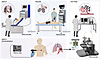
Integrative multiscale imaging bridges the gap between macroscopic organ structures and microscopic cellular processes, enabling holistic visualization of anatomy and function across scales. Photoacoustic imaging (PAI) leverages melanin’s potent contrast for label-free melanoma detection, yet its potential in lung imaging, challenged by air-tissue acoustic impedance mismatch, remains unexplored for melanoma lung metastases (MLMs). We used hierarchical multiscale PAI, transitioning from whole-body macroscale to localized mesoscale and single-cell-resolution microscale. PAI also guided photoablation interventions in the first and second near-infrared windows, requiring only 10.4 pg intracellular melanin/cell. Bioinformatic analysis of human MLM tissues revealed perturbed signaling pathways compared with normal skin and lung tissues, accounting for dysfunctional melanogenesis to enable label-free PAI with high sensitivity and specificity. Malignant MLM lesions in living mice, resected mouse lungs, and human lungs were delineated with margins closely conforming to histology. The high sensitivity allowed visualization of low-cellularity microsatellite foci down to a few tens of cell clusters, with sufficient penetration in the lungs of mice and Bama minipigs. The multiscale imaging methodology streamlines a theranostic workflow and specifically identifies MLM burden in a progressive, label-free manner, which may aid real-time tumor ablation in the future.
Authors
Wei Xing, Yujia Zhou, Katja Haedicke, Chenyixin Wang, Karla Ximena Vazquez-Prada, Hong Wu, Zhijun Lin, Chrysafis Andreou, Qize Zhang, Ke Shang, Ruoyang Hu, Moritz Kircher, Xingdong Ye, Jan Grimm, Jiang Yang
Abstract
Regulatory T (Treg) cells expressing Forkhead Box P3 (FOXP3) play crucial roles in maintaining immune tolerance and tissue integrity. EZH2, a Histone H3 lysine 27 (H3K27) methyltransferase, is known as a key regulator of Treg cell identity and suppressive function upon activation. Here, we demonstrate that the H3K27 lysine demethylase KDM6B, which catalyzes the opposing reaction to EZH2, was also required for Treg cell identity and function after activation. Treg-specific deletion of Kdm6b impaired tissue Treg cell fate and function. KDM6B was upregulated following T cell antigen receptor (TCR) signaling in Treg cells and contributed to the regulation of Treg-associated gene expression through both direct and indirect mechanisms. A subset of Treg functional genes were direct targets of KDM6B and were co-occupied by FOXP3 at cis-regulatory regions, where KDM6B recruitment limited H3K27me3 accumulation. More broadly, KDM6B-dependent H3K27 demethylation facilitated Treg gene expression programs that supported tissue Treg homeostasis.
Authors
Minghong He, Beisi Xu, Pria G. Bose, Morgan J. McCullough, Rani S. Sellers, Xinying Zong, Wenjie Qi, Brianna L. Banten, Miriya K. Tune, Matthew P. Zimmerman, Genevieve N. Mullins, Brian C. Miller, J. Justin Milner, Jason K. Whitmire, Ageliki Tsagaratou, Karl B. Shpargel, Claire M. Doerschuk, Yong-Dong Wang, Jacob A. Steele, Shondra M. Pruett-Miller, Yongqiang Feng, Jason R. Mock
Abstract
Authors
Lawrence W. Rasmussen, Deepali Luthra, Diego Moncada-Giraldo, Crystal Lewis, Yixel M. Soto-Vazquez, Zhuo Li, Buqu Hu, Brian S. Dobosh, Delores A. Stacks, Jonathan L. Koff, Amit Gaggar, Rabindra Tirouvanziam, Camilla Margaroli
Abstract
Mucociliary clearance (MCC) is an innate defense mechanism that normally keeps airways clean but is dysfunctional in cystic fibrosis (CF) and other muco-obstructive pulmonary diseases. Previously we discovered that activating adenyl cyclase in combination with a cholinergic agonist increased MCC velocity (MCCV) synergistically in ex vivo WT and CF ferret and WT piglets. The present study extends and underpins our earlier findings by showing for the first time, in vivo synergistic MCC in WT rats and in CF sheep models and CF rats using inhalable β-adrenergic and cholinergic drugs approved for human use when delivered to the apical surface and a single dose is tolerated by humans. As for mechanisms via ex vivo experiments, we show the combined agonists increased net fluid secretion mainly by stimulating gland secretion and by inhibiting surface absorption, consequently increased ASL depth. They also increased net base secretion and increased ciliary beat frequency. Additional ex vivo and in vitro experiments show that the combined agonists have additive effects when combined with highly effective CF transmembrane conductance regulator (CFTR) modulator therapy (HEMT). The synergistic increase in MCCV induced by this combination of agonists offers therapeutic potential for treating muco-obstructive pulmonary diseases including CF.
Authors
Nam Soo Joo, Susan E. Birket, Johnathan D. Keith, Juan P. Ianowski, Xiaojie Luan, Jacquelyn Spano, Jennifer B. Bollyky, Marissa N. Dobry, Juan R. Sabater, Ryan W. Williams, John F. Engelhardt, Jeffrey J. Wine, Carlos E. Milla
Abstract
Cilia are cellular organelles extruding from the surface of various cell types, serving either sensory or motile functions. Retinitis pigmentosa GTPase regulator (RPGR) variants affect both photoreceptor sensory cilia and airway motile cilia, leading to retinitis pigmentosa (RP) and primary ciliary dyskinesia (PCD), respectively. Not all patients develop PCD, and it remains unclear which RPGR variants predispose patients to PCD. Here, we leverage 2D organoids, super-resolution microscopy, and live-cell imaging to characterize the multiciliated cells (MCCs) from patients with different RPGR variants and CRISPR-modified RPGR KO MCCs. We demonstrate that MCCs with RPGR variants have reduced ciliation, shorter cilia, impaired cilia beat, or cilia beat incoordination, potentially resulting in compromised mucociliary clearance and lung diseases. Moreover, we show that RPGR regulates motile cilia through interfering with F-actin dynamics, evidenced by the undissolved F-actin meshwork in RPGR-deficient MCCs, and the defects can be ameliorated with either Latrunculin A or Y27632 treatment. Though PCD was observed only in patients with variants that affect both isoforms, patients with RPGRORF15 variants also showed cilia and airway anomalies. All RPGR variants affect motile cilia one way or another, and the mechanisms involve the accumulation of apical F-actin.
Authors
Yang Wu, Erika Tavares, Binrun Liang, Wallace B Wee, Vito Mennella, Han-Chao Feng, Jiaying Cao, Pui Yee Wong, Jiayi Zheng, Mu He, Kirk AJ Stephenson, Liran Hanan Hochma, Janice Min Li, Nan-Peng Chen, Sharon D Dell, Elise Heon, ZHEN LIU
Abstract
Airway mucus clearance from the lungs occurs by two widely recognized mechanisms: cilia-mediated clearance and high-velocity airflow-mediated cough clearance. However, a potentially important third mechanism of mucus clearance, referred to as cilia-independent gas-liquid transport (GLT), was proposed based on in vitro model systems to occur during normal tidal breathing, but has largely been overlooked. To investigate the role of tidal breathing airflow rates in mucus clearance, we conducted a series of in vitro and in vivo studies. An in vitro airway culture bead-tracking model demonstrated airflow-dependent mucus transport at tidal breathing flow rates. As with other modes of mucus clearance, GLT was critically dependent on mucus concentration. In vivo studies in cilial beat-deficient mice demonstrated that GLT-mediated mucus clearance occurs during tidal-breathing in the absence of cough, and the rate of GLT mucus clearance was dependent on breathing frequency and body orientation. These studies demonstrated that GLT represents a third mechanism of mucus clearance and likely represents a significant mode of clearance in persons with cilial dysfunction. These findings indicate that increasing breathing rates through exercise, using mucus rehydrating agents or mucolytics, or combining these approaches may restore clinically and physiologically meaningful airway clearance in these patients.
Authors
Siddharth K. Shenoy, Mark Gutay, Ian Brown, Troy D. Rogers, Kane Banner, Nico Olegario, Nicholas Griffin, Henry P. Goodell, Bryan Yoder, David S. Lalush, David A. Edwards, Richard C. Boucher, Barbara R. Grubb, Brian Button
Abstract
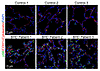
Germline loss-of-function folliculin (FLCN) gene mutations cause Birt-Hogg-Dubé (BHD) syndrome, in which pulmonary cysts are present in up to 90% of the patients. The pathogenic mechanisms underlying lung cyst development in BHD are almost entirely unknown because of the limited availability of BHD patient lung samples and the lack of authentic BHD lung disease models. We generated lung mesenchyme–specific and lung epithelium–specific Flcn-knockout mice using a Cre/loxP approach. We found that deletion of Flcn in lung mesenchymal cells, but not in lung epithelial cells, resulted in alveolar enlargement starting from early postnatal life, with evidence of cyst formation in adult mice, resembling the pulmonary disease in human BHD. These changes were associated with increased mechanistic target of rapamycin complex 1 (mTORC1) activity in the lungs of both patients with BHD and Flcn-knockout mice. Attenuation of mTORC1 activity by knocking out Raptor gene (Rptor) or pharmacologic inhibition using rapamycin substantially rescued the pulmonary pathology caused by Flcn deletion in mice. Taken together, these human and mouse data support a model in which mTORC1 hyperactivation drives pulmonary cystic pathology in BHD.
Authors
Ke Cao, Hui Chen, Ling Chu, Hong-Jun Wang, Jianhua Zhang, Yongfeng Luo, Joanne Chiu, Damir Khabibullin, Nicola Alesi, Matthew E. Thornton, Brendan H. Grubbs, Ali Ataya, Nishant Gupta, Francis X. McCormack, Kathryn A. Wikenheiser-Brokamp, Elizabeth P. Henske, Wei Shi


Copyright © 2026 American Society for Clinical Investigation
ISSN: 0021-9738 (print), 1558-8238 (online)