
Metabolism
Abstract
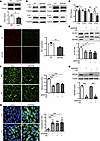
Diabetic retinopathy involves early retinal vascular barrier breakdown and pericyte loss, yet the initiating molecular events remain poorly defined. Vascular endothelial cadherin (VE-cadherin), a key regulator of endothelial integrity, is notably reduced in diabetic and prediabetic nucleoside diphosphate kinase B–deficient (NDPKB-deficient) mouse retinas, particularly in the retinal deep capillary layer, and this decline precedes pericyte loss. In vitro, high glucose (HG) and NDPKB deficiency induced VE-cadherin Y685 phosphorylation, promoting its junctional internalization, activating the hexosamine biosynthesis pathway, and increasing angiopoietin 2 (Ang2), resulting in impaired endothelial barrier function and disrupting pericyte attachment. Preventing Y685 phosphorylation through VE-cadherin Y685F mutation blocked these HG- and NDPKB-driven pathological effects. Pharmacological intervention experiments identified protein O-linked β-N-acetyl glucosamine (O-GlcNAc) modification as a mediator of Y685-dependent Ang2 upregulation. In vivo, VE-cadherin Y685F-knockin mice were protected from diabetes- and prediabetes-induced vascular hyperpermeability, exhibited reduced protein O-GlcNAcylation and Ang2 induction, and maintained neuronal function. O-GlcNAc–enriched retinal proteomics further showed that the Y685F mutation restored balanced neurovascular and mitochondrial pathways. These findings highlight the potential of targeting VE-cadherin Y685 phosphorylation as a promising therapeutic approach to maintain retinal vascular integrity and attenuate the pathological progression of diabetic and prediabetic retinopathy.
Authors
Yixin Wang, Hongpeng Huang, Feng Shao, Rachana Eshwaran, Miao Qin, Noor Karim, Yonggang Ren, Gergana Dobreva, Hans-Peter Hammes, Thomas Wieland, Yuxi Feng
Abstract
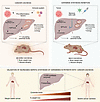
Cachexia is a metabolic wasting syndrome affecting many patients with cancer, with poor survival outcomes. Disturbed lipid metabolism is a hallmark of cachexia, and our previous work has identified increased levels of circulating ceramides, which are bioactive lipids with adverse effects in metabolic diseases, as biomarkers for cachexia in mouse models and patients. Here, we investigated the role of ceramides on cachexia development using the well-established C26 colon carcinoma model. We demonstrated that elevated ceramides in cachexia arose from increased liver synthesis. We showed that ceramides directly contributed to impaired mitochondrial function and energy homeostasis in cachexia target tissues. Targeting ceramide synthesis using miRNA interference, or myriocin, an approved compound targeting the key synthesis enzyme serine palmitoyltransferase (SPT), improved markers of muscle atrophy in cachectic male mice. Importantly, we demonstrated that key enzymes involved in ceramide production were also elevated in livers, but not in other organs, of patients with cancer cachexia, correlating with disease severity. Our data place ceramides as contributors to metabolic dysfunction in cachexia and highlight the suitability of the ceramide synthesis pathway for therapeutic targeting.
Authors
Pauline Morigny, Honglei Ji, Laura Cussonneau, Sabrina Zorzato, Yun Kwon, Fabien Riols, Doris Kaltenecker, Alisa Maier, Vignesh Karthikaisamy, Samantha Corrà, Tanja Krauss, Claudine Seeliger, Syed Qaaifah Gillani, Joël J. Tissink, Sandra Lacas-Gervais, Tuna Felix Samanci, Adriano Maida, Raul Terron-Exposito, Angela Trinca, Christine von Toerne, Leonardo Nogara, Melina Claussnitzer, Olga Prokopchuk, Jeannine Bachmann, Mauricio Berriel Diaz, Laure B. Bindels, Ondrej Kuda, Hans Hauner, Mark Haid, Stephan Herzig, Carlo Fiore Viscomi, Jerome Gilleron, Anja Zeigerer, Bert Blaauw, Maria Rohm
Abstract
Alveolar type II (AT2) progenitor cell exhaustion and impaired regenerative capacity are key pathogenic hallmarks in idiopathic pulmonary fibrosis (IPF). Nicotinamide adenine dinucleotide (NAD+) functions as a central regulator of cellular energy metabolism. We have reported that downregulation of NAD+-dependent sirtuin signaling contributes to the impaired progenitor function of IPF AT2 cells. In this study, we identified that a key NAD+ biosynthesis enzyme, nicotinamide phosphoribosyltransferase (NAMPT), is significantly downregulated in IPF AT2 cells. NAMPT deficiency impaired AT2 renewal and enhanced lung fibrosis through downregulation of SIRT7 and SOD2, which results in increased oxidative stress, mitochondrial dysfunction, accumulated aberrant transitional cells, and impaired differentiation from AT2 to alveolar type I (AT1) cells. A mouse model with AT2-specific deletion of Nampt showed severely impaired AT2 renewal capacity and increased susceptibility to bleomycin lung injury. Activation of NAMPT by small molecule activators promoted IPF AT2 renewal and reversed lung fibrosis in wild-type mice. NAMPT activation is a potential promising therapeutic strategy for restoring AT2 progenitor function and halting or reversing progressive pulmonary fibrosis.
Authors
Xuexi Zhang, Xue Liu, Yujie Qiao, Anas Rabata, Ningshan Liu, Changfu Yao, Tanyalak Parimon, Danica Chen, Cory M. Hogaboam, Peter Chen, Barry R. Stripp, Stephen J. Gardell, Dianhua Jiang, Paul W. Noble, Jiurong Liang

Abstract
Cardiomyocytes primarily rely on fatty acid oxidation (FAO), which provides more than 70% of their energy. However, excessive FAO can disrupt cardiac metabolism by increasing oxygen demand and suppressing glucose utilization through the Randle cycle. Although inhibition of FAO has been investigated in heart failure, its overall therapeutic impact remains uncertain. To determine the consequences of enhanced FAO, we generated cardiomyocyte-specific ACC1 and ACC2 double-knockout (ACC dHKO) mice, which exhibit constitutively elevated FAO. ACC dHKO mice developed dilated cardiomyopathy and heart failure. Lipidomic analysis revealed marked depletion of cardiolipin caused by reduced linoleic acid, a direct consequence of excessive FAO. This cardiolipin deficiency impaired mitochondrial electron transport chain (ETC) activity, leading to mitochondrial dysfunction. Pharmacologic inhibition of FAO with etomoxir or oxfenicine restored cardiolipin levels, normalized ETC activity, and prevented cardiac dysfunction in ACC dHKO mice. These findings demonstrate that unrestrained FAO disrupts both lipid and energy homeostasis, culminating in heart failure in this model. Collectively, these results indicate that although FAO is essential for cardiac energy production, therapeutic strategies aimed at stimulating cardiac FAO may be detrimental rather than beneficial in heart failure.
Authors
Chai-Wan Kim, Goncalo Vale, Xiaorong Fu, Jeffrey G. McDonald, Chongshan Dai, Chao Li, Zhao V. Wang, Gaurav Sharma, Chalermchai Khemtong, Craig R. Malloy, Stanislaw Deja, Shawn C. Burgess, Matthew A. Mitsche, Jay D. Horton
Abstract
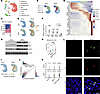
Hepatocyte senescence is increasingly recognized as a pathogenic driver of metabolic dysfunction–associated steatohepatitis (MASH). Through single-nucleus transcriptomic profiling, we identified a discrete population of disease-associated hepatocytes (daHep) exhibiting enrichment for senescence markers in MASH livers. The emergence of senescent hepatocytes was associated with a marked induction of hepatic thymocyte selection associated (THEMIS) expression in both murine and human MASH. Genetic ablation of Themis, either globally or specifically in hepatocytes, resulted in significant expansion of daHep and senescent hepatocyte populations and exacerbated MASH pathology in mice. Single-nucleus transcriptomic analysis revealed a central role for THEMIS in shaping the cellular landscape of both parenchymal and nonparenchymal compartments within the MASH liver microenvironment. Conversely, adeno-associated virus–mediated overexpression of THEMIS suppressed hepatocyte senescence and attenuated diet-induced MASH. Mechanistic studies revealed that THEMIS deficiency promoted aberrant ERK phosphorylation and hepatocyte senescence. These findings establish THEMIS as a critical hepatoprotective factor that restrains hepatocyte senescence and mitigates metabolic liver disease progression.
Authors
Xiaoxue Qiu, You Lu, Yuwei Tang, Linkang Zhou, Yu-tung Lee, Ziyi Meng, Zhimin Chen, Fnu Pradeepa, Lanuza A.P. Faccioli, Zhiping Hu, Alejandro Soto-Gutierrez, Siming Li, Jiandie D. Lin
Abstract
Iron overload has emerged as a significant risk factor for metabolic dysfunction-associated steatotic liver disease (MASLD), a growing global health concern. Despite this association, the precise mechanisms by which hepatic iron and its regulatory genes connect liver pathology to systemic metabolic dysfunction remain elusive. Here, we demonstrate that humoral signals originating from iron-overloaded hepatocytes act as critical mediators driving systemic metabolic dysfunction in MASLD. Ferroportin (FPN, SLC40A1), the sole cellular iron exporter, exhibits markedly reduced expression in hepatocytes of both human patients and mouse models with MASLD, concomitant with hepatic iron accumulation. Functionally, hepatocyte-specific FPN deletion significantly exacerbates diet-induced obesity and insulin resistance, with these metabolic perturbations accompanied by decreased energy expenditure and impaired thermogenic capacity. Mechanistically, we establish that hepatic iron accumulation resulting from FPN deficiency enhances the production of two specific hepatokines, Fetuin-A and LECT2, through activation of the transcription factor FoxO1. Notably, therapeutic interventions — including genetic silencing of these hepatokines, hepatocyte-specific FPN overexpression, or oral iron chelation — effectively reverse the metabolic dysfunction phenotypes. These findings provide critical insights into the pathophysiological mechanisms linking MASLD to systemic metabolic disorders and highlight promising therapeutic strategies to combat these diseases.
Authors
Hye Jin Jo, Ayoung Kim, Hyunsoo Rho, Ae Kyung Park, Gil-Hwan Kim, Seo Jeong Jo, Hao Yuxin, You-Jung Hong, Ji Min Yeon, Hwang Chan Yu, Mi-Young Song, Jeongwoo Park, Yeon Hee Jeong, Sung Eun Hong, Hyo Jin Yeon, Da Young Oh, Philipp E. Scherer, Cheol Soo Choi, Dong Hyeon Lee, Sung Hwan Ki, Keon Wook Kang, Murim Choi, Byung-Hyun Park, Eun Ju Bae, Sang Geon Kim, Won Kim, Chang Yeob Han
Abstract
The liver plays a critical role in lipid homeostasis, where lipids are either secreted as very-low-density lipoproteins (VLDL) or stored in lipid droplets (LDs). However, the regulatory mechanisms governing these two interconnected processes remain poorly understood. Here, we demonstrate that SEC16B functions as a lipid-responsive regulator in the liver, promoting VLDL secretion and LD expansion to handle lipid flux and maintain lipid homeostasis. Genome-wide association studies have identified single-nucleotide polymorphisms in SEC16B to be highly associated with serum lipid levels in humans. Hepatic Sec16b deficiency decreases serum lipid levels by impairing VLDL secretion through mechanisms that are at least partially independent of microsomal triglyceride transfer protein (MTP)-mediated ApoB lipidation and COPII-mediated intracellular trafficking. SEC16B partially localizes at ER-LD contact sites and promotes LD expansion by facilitating the targeting of ER proteins to LDs. More importantly, suppression of Sec16b dramatically lowers serum lipid levels and reduces atherosclerotic lesion size in Ldlr null mice. These data reveal a mechanism that coordinates VLDL and LD metabolism and suggest SEC16B as a potential therapeutic target for atherosclerosis treatment.
Authors
Wei Lu, Zhiming Zhao, Donald Molina, Huaxun Fan, Ruicheng Shi, Ye Tian, Raja Gopoju, Tiantian Yang, Xinyuan Zhang, Yanqiao Zhang, Kai Zhang, Jaume Amengual, Bo Wang
Abstract
Sphingosine-1-phosphate lyase (SPL) insufficiency syndrome (SPLIS) or nephrotic syndrome type 14 (NPHS14), is an autosomal recessive multisystem disorder caused by loss-of-function mutations in SGPL1, encoding the enzyme responsible for the terminal degradation of sphingosine-1-phosphate (S1P). We investigated a patient carrying a previously undescribed c.1084T>A (p.Ser362Thr) SGPL1 variant and analyzed the metabolic and cellular consequences of SPL deficiency using patient fibroblasts, SGPL1-knockout HEK293T cells, and Sgpl1–/– and Sgpl1rosa+fl/fl mice. Metabolic stable isotope labelling revealed that SPL deficiency does not invariably result in S1P accumulation. Instead, SPL-deficient cells maintain near-normal S1P levels through (i) feedback regulation of de novo sphingolipid synthesis via the ORMDL–ceramide axis and (ii) increased diversion of excess ceramides into glycosphingolipids. However, perturbation of sphingolipid homeostasis — either by exogenous sphingolipid load or disruption of compensatory regulation — induces pathological intracellular S1P accumulation. In vivo, Sgpl1–/– mice exhibited pronounced urinary S1P excretion and renal S1P enrichment, accompanied by cytoskeletal disorganization and impaired epithelial morphogenesis. Mechanistically, we identify aberrant Rho–ROCK signaling as a key mediator of S1P-driven cytoskeletal dysregulation. Pharmacological ROCK inhibition with Fasudil mitigated renal cytoskeletal defects in Sgpl1–/– and Sgpl1rosa+fl/fl mice and partially restored epithelial architecture. These findings redefine the metabolic consequences of SPL deficiency and identify S1P-driven Rho–ROCK hyperactivation as a tractable therapeutic target in SPLIS.
Authors
Adam Majcher, Ranjha Khan, Kathrin Buder, Florence Bourquin, Julie D. Saba, Thorsten Hornemann
Abstract
Apolipoprotein B (APOB) containing lipoproteins contribute to atherosclerosis by entering the arterial wall through the endothelial cell (EC) surface receptors scavenger receptor-BI (SR-BI) and activin receptor-like kinase 1 (ALK1). We used N-terminal fragments of APOB, molecular modeling, and site-directed mutagenesis to identify and block the binding of chylomicrons and LDL to these receptors in cells and mice. We discovered that different APOB regions interact with SR-BI and ALK1 expressed on ECs APOB48 lipoproteins were only internalized by SR-BI. A fragment of APOB, comprising 18% of the N-terminal sequence, APOB18, reduced the uptake and transport of both chylomicrons and LDL by ECs, whereas a shorter fragment, APOB12, only blocked ALK1 mediated uptake of APOB100 containing lipoproteins. Importantly, overexpressing APOB18 decreased atherosclerosis in hypercholesterolemic mice. These findings identify the N-terminal region of APOB as the cause of atherosclerosis and illustrate an approach to treating or preventing vascular disease.
Authors
Ainara G. Cabodevilla, Camila Calistru, Waqas Younis, Dimitris Nasias, Tse W.W. Ho, Narasimha Anaganti, Swati Valmiki, Sujith Rajan, Jana Gjini, Rufina Kore, Carmen Hannemann, Nicholas O. Davidson, Tomas Vaisar, Jenny E. Kanter, Karin E. Bornfeldt, Edward A. Fisher, Warren L. Lee, Tobias Madl, M. Mahmood Hussain, Ira J. Goldberg
Abstract
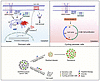
Complete response is rarely observed in lung cancer molecular targeted therapy, despite great clinical success. Here, we found that molecular therapy targeted toward EGFR mutant, KRAS mutant, or ALK fusion lung cancer induced cholesterol biosynthesis, which promoted cancer cells to enter dormancy and thus escape drug killing. Combined statin treatments effectively blocked cholesterol biosynthesis, prevented cancer cells from entering dormancy, and thus resulted in dramatic tumor regression. We further identified a subpopulation of cycling cancer cells that persisted during molecular targeted therapy and remained sensitive to aurora kinase inhibitors. Triple-targeting cholesterol biosynthesis, aurora kinase, and individual oncogenic drivers almost eradicated all the cancer cells. Therapy-induced cancer dormancy was mainly attributed to activation of unfolded protein response, specifically the PERK-eIF2α axis, which triggers cholesterol biosynthesis and AKT signaling. Collectively, this work uncovers an unexpected role of a therapy-induced prosurvival program in promoting cancer dormancy and provides a potentially effective strategy to prevent drug resistance.
Authors
Yikai Zhao, Yijia Zhou, Linnuo Pan, Geng G. Tian, Hsin-Yi Huang, Shijie Tang, Ming Lu, Zhangsen Zhou, Peng Zhang, Luonan Chen, Lele Zhang, Liang Hu, Hongbin Ji


Copyright © 2026 American Society for Clinical Investigation
ISSN: 0021-9738 (print), 1558-8238 (online)