
Oncology
Abstract
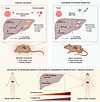
Cachexia is a metabolic wasting syndrome affecting many patients with cancer, with poor survival outcomes. Disturbed lipid metabolism is a hallmark of cachexia, and our previous work has identified increased levels of circulating ceramides, which are bioactive lipids with adverse effects in metabolic diseases, as biomarkers for cachexia in mouse models and patients. Here, we investigated the role of ceramides on cachexia development using the well-established C26 colon carcinoma model. We demonstrated that elevated ceramides in cachexia arose from increased liver synthesis. We showed that ceramides directly contributed to impaired mitochondrial function and energy homeostasis in cachexia target tissues. Targeting ceramide synthesis using miRNA interference, or myriocin, an approved compound targeting the key synthesis enzyme serine palmitoyltransferase (SPT), improved markers of muscle atrophy in cachectic male mice. Importantly, we demonstrated that key enzymes involved in ceramide production were also elevated in livers, but not in other organs, of patients with cancer cachexia, correlating with disease severity. Our data place ceramides as contributors to metabolic dysfunction in cachexia and highlight the suitability of the ceramide synthesis pathway for therapeutic targeting.
Authors
Pauline Morigny, Honglei Ji, Laura Cussonneau, Sabrina Zorzato, Yun Kwon, Fabien Riols, Doris Kaltenecker, Alisa Maier, Vignesh Karthikaisamy, Samantha Corrà, Tanja Krauss, Claudine Seeliger, Syed Qaaifah Gillani, Joël J. Tissink, Sandra Lacas-Gervais, Tuna Felix Samanci, Adriano Maida, Raul Terron-Exposito, Angela Trinca, Christine von Toerne, Leonardo Nogara, Melina Claussnitzer, Olga Prokopchuk, Jeannine Bachmann, Mauricio Berriel Diaz, Laure B. Bindels, Ondrej Kuda, Hans Hauner, Mark Haid, Stephan Herzig, Carlo Fiore Viscomi, Jerome Gilleron, Anja Zeigerer, Bert Blaauw, Maria Rohm
Abstract
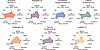
BACKGROUND The relationship between molecular subgroups in clear-cell renal cell carcinoma (ccRCC) and metastatic tropism is poorly understood.METHODS We analyzed over 5,000 metastatic sites from 305 treatment-naive ccRCC patients in the IMmotion150 phase II clinical trial, where patients were randomized to atezolizumab, atezolizumab/bevacizumab, or sunitinib.RESULTS Angiogenic tumors (clusters 1 and 2) had a higher rate of pancreatic (21% vs. 6.9%; P = 0.002) and lower absolute number of lymph node (2.5 vs. 4.2; P = 0.006) metastases. In contrast, proliferative tumors (clusters 4 and 5) exhibited a higher absolute number of lymph node metastases (5.5 vs. 3.5; P = 0.019). Patients with pancreatic metastases receiving sunitinib had higher odds of overall response (OR, 7.13; 95% CI, 1.81–28.07; P = 0.0049) and longer progression-free survival than those without pancreatic metastases (P = 0.02).CONCLUSION ccRCC metastatic tropism relates to molecular clusters that predict response to therapy for tumors that metastasize to the pancreas.TRIAL REGISTRATION ClinicalTrials.gov NCT01984242FUNDING NIH grants R01CA154475 and P50CA196516.
Authors
Gaelle Haddad, Junyu Guo, Yin Xi, Emin Albayrak, Mahrukh Huseni, Habib Hamidi, Romain Banchereau, Edward Kadel, Sarita Dubey, Corey Carter, Payal Kapur, James Brugarolas, Ivan Pedrosa

Abstract
While radiation is an effective oncologic therapy, killing cancer by inducing DNA double-strand breaks (DSBs), it lacks specificity for neoplastic cells. We have previously adapted the CRISPR/Cas9 gene-editing technology as a cancer-specific treatment modality targeting somatic mutations in pancreatic cancer (PC). However, its tumoricidal potential remains unclear, especially in comparison with therapeutic doses of radiation. Here, we demonstrate that CRISPR/Cas9-induced DSBs are more cytotoxic in PCs than a comparable number of radiation-induced DSBs. We observed more than 90% tumor growth inhibition by targeting 9 sites with cancer-specific sgRNAs. Through both bioinformatics and cytogenetics analyses, we found that CRISPR/Cas9-induced DSBs triggered ongoing chromosomal rearrangements, with 87% of structural variants not directly produced from the initial CRISPR/Cas9-induced DSBs, and chromosomal instability peaking before cell death. By comparing the cytotoxicity of CRISPR/Cas9- and radiation-induced DSBs, we demonstrated that the number of DSBs required to achieve equitoxic effects was approximately 3 times higher for radiation than CRISPR/Cas9. Finally, we showed that PC cells that had survived CRISPR/Cas9 targeting retained susceptibility to subsequent CRISPR/Cas9-induced DSBs at different genomic sites with more than 87% growth inhibition. Together, our data support the therapeutic potential of CRISPR/Cas9 as an anticancer strategy.
Authors
Selina Shiqing K. Teh, Akhil Kotwal, Alexis Bennett, Eitan Halper-Stromberg, Laura Morsberger, Saum Zamani, Yanan Shi, Alyza Skaist, Qingfeng Zhu, Kirsten Bowland, Hong Liang, Ralph H. Hruban, Chien-Fu Hung, Robert A. Anders, Nicholas J. Roberts, Robert B. Scharpf, Michael Goldstein, Ying S. Zou, James R. Eshleman
Abstract
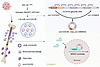
Bone metastasis remains a major cause of morbidity in estrogen receptor–positive breast cancer, with RANKL inhibitor resistance emerging as a critical clinical challenge. Nearly 40% of patients develop progressive skeletal lesions despite denosumab therapy, highlighting an urgent need to identify resistance mechanisms and alternative therapeutic strategies. We identified a RANKL-independent osteoclast activation pathway mediated by the CRKL/circCCDC50/NFATc1 axis. Mechanistically, CRKL promoted EIF4A3-dependent circCCDC50 biogenesis, which was packaged into large oncosomes and transferred to osteoclast precursors. Nuclear circCCDC50 recruited CARM1 to epigenetically activate NFATc1 transcription, establishing a self-reinforcing loop that sustained osteolysis despite RANKL blockade. Pharmacological inhibition of CARM1 (TP-064) effectively suppressed osteoclastogenesis and bone metastasis in denosumab-resistant models. These findings revealed a targetable resistance mechanism and provided a clinically actionable strategy to overcome microenvironment-driven metastasis through dual targeting of tumor and bone niches.
Authors
Qun Lin, Jinpeng Luo, Zhuxi Duan, Jieer Luo, Wei Zhang, Yuan Xia, Yinduo Zeng, Xiaolin Fang, Jiahui Liang, Jiayi Chen, Qianchong Lin, Yilin Quan, Ruiyu Hu, Hongcai Liu, Qiang Liu, Jun Li, Chang Gong
Abstract
Cellular plasticity is a hallmark of cancer, enabling tumor cells to alter identity and evade therapeutic pressure. In invasive mucinous adenocarcinoma of the lung (IMA), NK2 homeobox 1 (NKX2-1) loss triggers a pulmonary to gastric switch marked by aberrant activation of hepatocyte nuclear factor 4 alpha (HNF4α), a master regulator of gastrointestinal/hepatic differentiation. We show that HNF4α promotes IMA growth and activates a gastric pit cell-like program. Loss of HNF4α enables forkhead box A1/A2 (FoxA1/2) transcription factors to bind de novo sites and activate alternative, non-gastric identities in IMA. HNF4α also establishes a mucinous program associated with tolerance to KRAS blockade, and loss of HNF4α enhances response to KRASG12D inhibition. Mechanistically, HNF4α blocks cell cycle exit in drug-tolerant persister cells and promotes activity of the antioxidant transcription factor nuclear factor erythroid 2-related factor 2 (NRF2). NRF2 activation partially rescues effects of Hnf4a deletion on KRASG12D inhibition, whereas NRF2 inhibition enhances sensitivity to KRASG12D blockade. Thus, HNF4α is a key regulator of growth, identity, and primary response to KRASG12D inhibition in IMA.
Authors
Headtlove Essel Dadzie, Yangsook Song Green, Soledad Camolotto, Henry U. Arnold, Matthew Gumbleton, Minzhe Guo, Mari Mino-Kenudson, Yutaka Maeda, Benjamin T. Spike, Eric L. Snyder
Abstract
Immune checkpoint inhibitor-induced inflammatory arthritis (ICI-IA) significantly impairs cancer therapy and patient quality of life, yet its pathogenic mechanisms remain unclear. Through integrated single-cell multi-omics analysis of paired peripheral blood, synovial fluid, and tumor samples from longitudinal ICI-IA cohorts and matched controls, we identified a unique regulatory T-cell (Treg) population co-expressing CD137 and IL-6R (AtpTreg). These cells exhibited reduced immunosuppressive capacity while aberrantly producing high level of IL-17 and promoting proinflammatory responses of synoviocytes. AtpTreg exhibits shared clonotypes and phenotypes across tissue compartments. Notably, AtpTreg frequency correlates with increased arthritis severity yet paradoxically associates with improved overall survival. Anti-IL6R therapy reduced AtpTreg levels, corresponding with improved arthritis outcomes and quality of life, without compromising anti-tumor immunity. Our findings define a pathogenic Treg subset in ICI-IA and validate IL-6R blockade as a mechanism-based therapeutic strategy, bridging mechanistic discovery to clinical translation. This study is registered at ClinicalTrials.gov (NCT07357636).
Authors
Yifei Ma, Nianqi Liu, Yan Li, Denghan Zhang, Shaohui He, Jun Lv, Yongluo Jiang, Guangmin Jian, Jingyao Zhang, Pengfei Zhu, Yue Ma, Jiacai Lin, Jin Li, Tong Wu, Yiwei Xu, Xiajie Lyu, Youlong Wang, Yiming Li, Yu Si Niu, Zhenyun Guo, Churong Lin, Ningnan Fang, Wei Jiang, Lihong Wang, Mengqin Yuan, Shenyue Wang, Shulin Huang, Qi Huang, Jinjian Li, Jun Lu, Bocen Chen, Guanqing Zhong, Haizhou Liu, Fadian Ding, Shangeng Weng, Rui Li, Ao Zhang
Abstract
Based on the observation that loss-of-function mutations of KMT2C and KMT2D (KMT2C/D) are enriched and co-occur in gastric adenocarcinoma, we developed genetically engineered mouse model (GEMM) to conditionally knock out Kmt2c and Kmt2d in gastric epithelial cells. We observed that Kmt2c/d loss led to nuclear dysplasia, cellular crowding, and expansion of cells with mixed gastric lineage markers. When combined with Pten deletion, Kmt2c/d loss drove rapid development of muscle-invasive gastric adenocarcinoma as early as 3 weeks post Cre-mediated gene deletion. The adenocarcinoma exhibited decreased expression of gastric lineage markers and increased expression of intestinal differentiation markers, phenocopying human intestinal type gastric adenocarcinoma. Bioinformatic integration of single cell RNA-seq of our GEMMs and human gastric cancer datasets shows co-clustering of normal and of cancerous gastric epithelial cells. Kmt2c/d knockout in gastric epithelium reduced protein synthesis but upregulated transcription of ribosomal proteins, rendering the cells to be hypersensitive to mTORC1 inhibitors. Additionally, Kmt2c/d knockout increased MHC-I molecule expression and enhanced antigen presentation. Combination of mTORC1 inhibition and anti-PD1 immunotherapy markedly suppressed tumor growth in immune-competent mice. Together, these findings reveal the role of Kmt2c/d loss in gastric cancer initiation and suggest the potential therapeutic strategies for KMT2C/D-deficient gastric cancer.
Authors
Naitao Wang, Dan Li, Tao Zhang, Mohini R. Pachai, Dana M. Schoeps, Yudi Bao, Woo Hyun Cho, Makhzuna N. Khudoynazarova, Kae Kristoff, Marion Liu, Laura Tang, Yelena Y. Janjigian, Ping Chi, Yu Chen
Abstract
Medulloblastoma (MB) is the most common malignant pediatric brain tumor. Current therapies are associated with substantial morbidity, and prognosis remains poor in high-risk subgroups, particularly those with TP53 mutations or relapsed disease. Cellular senescence is a tumor-suppressive program implicated in MB, but its role in anti-tumor immunity remains incompletely understood. We found that protein phosphatase 2A (PP2A) regulated immunogenic senescence in MB. Genetic ablation of the PP2A catalytic subunit, PP2Ac, or depletion of the regulatory subunit PP2A-B56α induced senescence in MB models. PP2Ac-deficient senescent cells exhibited increased MHC-I expression and enhanced immunogenicity. In syngeneic orthotopic models, PP2Ac loss prolonged survival in an immune- and CD8+ T cell-dependent manner. Analysis of patient datasets showed that senescence-associated gene signatures correlated with improved survival. Single-cell transcriptomic analysis further revealed that senescent MB cells were heterogeneous and that reduced PP2A activity was associated with an immunogenic senescence state. Because the PP2A inhibitor LB-100 has limited potency and off-target effects, we developed a lipid nanoparticle platform to deliver siRNA targeting PPP2CA. LNP-siPP2Ac efficiently silenced PP2Ac in vitro and, when delivered locally in vivo, prolonged survival in a CD8+ T cell-dependent manner. Together, these findings identify PP2A as a regulator of immunogenic senescence in MB and support PP2Ac targeting as a therapeutic strategy.
Authors
Winson S. Ho, Isha Mondal, Jingjing Liu, Raymond Sun, Jiawei Huo, Chao Gao, Oishika Das, Daren Tieu, Jingqi Sun, Hanchen Lin, Peng Zhang, Jiyang Yu, Rongze Olivia Lu
Abstract
BACKGROUND. Primary therapy for high-risk bladder cancer (BCa) is repeated instillations of the tuberculosis vaccine Bacillus Calmette-Guerin (BCG). Although BCG reduces the risk of recurrence by more than half, the mechanisms underlying its immune-activating effects remain unknown. Our objective was to investigate how the immune response differs between BCG responders and non-responders and to compare systemic and local immune responses. METHODS. We performed single-cell RNA sequencing (scRNA-seq) of isolated immune cells adjacent to high-risk bladders in BCG responders and non-responders before and after BCG. We also compared concurrent scRNA-seq profiles of circulating immune cell populations with those of bladder immune cells. RESULTS. We identify an increase in Th17-like Th1 cells in BCG responders, characterized by greater expression of pro-inflammatory cytokines. Alternatively, non-responders show increased CD8+ T-cell exhaustion and T regulatory cells. We identify that the primary mechanism driving divergent T-cell activity is altered polarization and immunosuppressive signaling with myeloid cells. Using a machine-learning-based approach, we identify that Th17-like Th1 cytokines, such as IL-17, IL-21, and IL-26, are predictive of response, which is subsequently validated in a separate BCG-treated BCa cohort. CONCLUSION. Together, these findings suggest that dynamic regulation of myeloid-T cell interactions can be critical for outcomes of BCG treated bladder cancer.
Authors
Ryan J. Brown, Mairah T. Khan, Andrew J. Houston, Hongshen Niu, Joseph R. Podojil, Bonnie Choy, Weiguo Cui, Joshua James Meeks
Abstract
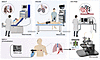
Integrative multiscale imaging bridges the gap between macroscopic organ structures and microscopic cellular processes, enabling holistic visualization of anatomy and function across scales. Photoacoustic imaging (PAI) leverages melanin’s potent contrast for label-free melanoma detection, yet its potential in lung imaging, challenged by air-tissue acoustic impedance mismatch, remains unexplored for melanoma lung metastases (MLMs). We used hierarchical multiscale PAI, transitioning from whole-body macroscale to localized mesoscale and single-cell-resolution microscale. PAI also guided photoablation interventions in the first and second near-infrared windows, requiring only 10.4 pg intracellular melanin/cell. Bioinformatic analysis of human MLM tissues revealed perturbed signaling pathways compared with normal skin and lung tissues, accounting for dysfunctional melanogenesis to enable label-free PAI with high sensitivity and specificity. Malignant MLM lesions in living mice, resected mouse lungs, and human lungs were delineated with margins closely conforming to histology. The high sensitivity allowed visualization of low-cellularity microsatellite foci down to a few tens of cell clusters, with sufficient penetration in the lungs of mice and Bama minipigs. The multiscale imaging methodology streamlines a theranostic workflow and specifically identifies MLM burden in a progressive, label-free manner, which may aid real-time tumor ablation in the future.
Authors
Wei Xing, Yujia Zhou, Katja Haedicke, Chenyixin Wang, Karla Ximena Vazquez-Prada, Hong Wu, Zhijun Lin, Chrysafis Andreou, Qize Zhang, Ke Shang, Ruoyang Hu, Moritz Kircher, Xingdong Ye, Jan Grimm, Jiang Yang


Copyright © 2026 American Society for Clinical Investigation
ISSN: 0021-9738 (print), 1558-8238 (online)