A monarchy is a hereditary form of government in which political power is legally passed on to the family members of the monarch, a head of state who rules for life. While monarchs gain their power depending on specific succession laws, they can also gain their authority via election.
Monarchies have historically been a common form of government. Nearly half of all independent states at the start of the 19th century were monarchies. After reaching a peak in the middle of the 19th century, the proportion of monarchies in the world has steadily declined. Republics replaced many monarchies, notably at the end of World War I and World War II.
There are conventionally two types of monarchy: absolute monarchy and constitutional monarchy. Absolute monarchies, of which there are approximately twelve, are governed as autocracies. Most of the modern monarchies are constitutional monarchies, retaining under a constitution unique legal and ceremonial roles for monarchs exercising limited or no political power, similar to heads of state in a parliamentary republic.
Shepseskaf (meaning "His Ka is noble") was a pharaoh of ancient Egypt, the sixth and probably last ruler of the Fourth Dynasty during the Old Kingdom period. He reigned most probably for four but possibly up to seven years in the late 26th to mid-25th century BC.
Shepseskaf's relation to his predecessor Menkaure is not entirely certain; he might have been his son or possibly his brother. The identity of his mother is highly uncertain as she could have been one of Menkaure's consorts or queen Khentkaus I or Neferhetepes. Similarly, Shepseskaf's relation to his probable successor on the throne, Userkaf, is not known although in the absence of clear indication of strife at the transition between the fourth and fifth dynasties, Userkaf could well have been his son or his brother. If Shepseskaf was succeeded directly by Userkaf rather than by Thampthis as claimed by some historical sources, then his death marks the end of the fourth dynasty. The transition to the fifth dynasty seems not to have been a sharp rupture but rather a continuous process of evolution in the king's power and role within the Egyptian state. Around this time, some of the highest positions of power such as that of vizier which had hitherto been the prerogative of the royal family were opened to nobles of non-royal extraction. (Full article...)
Image 2
A clay tessera bearing a possible depiction of Odaenathus wearing a tiara
Septimius Odaenathus (Palmyrene Aramaic: 𐡠𐡣𐡩𐡮𐡶, romanized:ʾŌdaynaṯ; Arabic: أذينة, romanized:Uḏayna; c.220 – 267) was the founding king (malik) of the Palmyrene Kingdom who ruled from Palmyra, Syria. He elevated the status of his kingdom from a regional center subordinate to Rome into a formidable state in South-West Asia. Odaenathus was born into an aristocratic Palmyrene family that had received Roman citizenship in the 190s under the Severan Dynasty. He was the son of Hairan, the descendant of Nasor. The circumstances surrounding his rise are ambiguous; he became the lord (ras) of the city, a position created for him, as early as the 240s and by 258, he was styled a consularis, indicating a high status in the Roman Empire.
The defeat and captivity of Emperor Valerian at the hands of the Sasanian emperorShapur I in 260 left the eastern Roman provinces largely at the mercy of the Persians. Odaenathus remained on the side of Rome; assuming the title of king, he led the Palmyrene army, attacking the Persians before they could cross the Euphrates to the eastern bank, inflicting a considerable defeat. He took the side of Emperor Gallienus, the son and successor of Valerian, who was facing the attempted usurpation of Fulvius Macrianus. The rebel declared his sons emperors, leaving one in Syria and taking the other with him to Europe. Odaenathus attacked the remaining usurper and quelled the rebellion. He was rewarded with many exceptional titles by the Emperor, who formalized his self-established position in the East. In reality, the Emperor may have done little but accept the declared nominal loyalty of Odaenathus. (Full article...)
Theodore was the scion of a distinguished Byzantine aristocratic family related to the imperial Komnenos, Doukas, and Angelos dynasties. Nevertheless, nothing is known about Theodore's life before the conquest of Constantinople and dissolution of the Byzantine Empire by the Fourth Crusade in 1204. Following the fall of Constantinople, he served Theodore I Laskaris, founder of the Empire of Nicaea, for a few years before being called to Epirus, where his half-brother Michael I Komnenos Doukas had founded an independent principality. When Michael died in 1215, Theodore sidelined his brother's underage and illegitimate son Michael II and assumed the governance of the Epirote state. Theodore continued his brother's policy of territorial expansion. Allied with Serbia, he expanded into Macedonia, threatening the Latin Kingdom of Thessalonica. The capture of the Latin EmperorPeter II of Courtenay in 1217 opened the way to the gradual envelopment of Thessalonica, culminating in the city's fall in 1224. (Full article...)
Image 4
Philip I's portrait on the obverse of a tetradrachm
Philip I Epiphanes Philadelphus (Ancient Greek: Φίλιππος Ἐπιφανής Φιλάδελφος; between 124 and 109 BC–83 or 75 BC) was a HellenisticSeleucid monarch who reigned as the king of Syria from 94 to either 83 or 75 BC. He was a son of King Antiochus VIII. He ascended the throne after the murder of his elder brother Seleucus VI, becoming king with his twin brother Antiochus XI. In 93 BC Antiochus XI took the Syrian capital Antioch from their cousin, Antiochus X. Antiochus XI became the senior king, and Philip I remained in a base in Cilicia. Antiochus X returned and killed Antiochus XI that year. Philip I then allied with his younger brother Demetrius III, who was based in Damascus. Antiochus X was probably killed in 88 BC. Demetrius III took the capital and besieged Philip I in Beroea (Aleppo), but the latter prevailed and took Antioch; their youngest brother Antiochus XII took Damascus.
Philip I tried unsuccessfully to take Damascus for himself, after which he disappears from the historical record; there is no information about when or how he died. The Antiochenes, apparently refusing to accept Philip I's minor son Philip II as his successor, invited Tigranes II of Armenia to take the city. While the invasion of Tigranes II is traditionally dated to 83 BC, the year most scholars agree on for Philip I's death, the conflict may have taken place in 74 BC. Numismatic evidence and clues in ancient contemporary literature indicate that Philip I might have died in 75 BC, giving Antiochus X's widow Cleopatra Selene and her son Antiochus XIII, who probably took control of the south following the death of Antiochus XII in 82 BC, a year of claiming the whole kingdom. Philip I initiated monetary reforms, and his coins remained in circulation until the Romans conquered Syria in 64 BC. Thereafter, Roman authorities in Syria continued to issue coins modeled on Philip I's coins, including his portrait, until 13 BC. (Full article...)
Constantine (Ancient Greek: Κωνσταντῖνος, romanized:Kōnstantīnos; born between 855 and c.865, died 3 September 879) was a junior Byzantine emperor, alongside Basil I as the senior emperor, from January 868 to 3 September 879. His parentage is a matter of debate, but historians generally assume him to be the son of Emperor Basil I (r.867–886) and his first wife Maria or second wife Eudokia Ingerina; other theories include him being the son of Emperor Michael III (r.842–867) and Eudokia. Constantine was made co-emperor by Basil in c.January 868. He was engaged to Ermengard of Italy, the daughter of Holy Roman EmperorLouis II, in 870/871, but it is not known if he married her; some sources suggest he did, and others argue that there is no concrete evidence.
Constantine was the intended heir of Basil and as such received much attention from him and accompanied him on military campaigns, including one in Syria, for which he shared a triumph. In comparison, his younger brother, Leo VI (r.886–912), was made co-emperor merely to secure the imperial lineage and bolster legitimacy. However, Constantine died of fever on 3 September 879, before his father. After his death, Leo became the primary heir, and another brother, Alexander (r.912–913), was raised to co-emperor. (Full article...)
During his rule, Ahmose completed the conquest and expulsion of the Hyksos, restored Theban rule over Lower- and Upper Egypt, and successfully reasserted Egyptian power in its formerly subject territories of Nubia and Canaan. He then reorganized the administration of the country, reopened quarries, mines and trade routes and began massive construction projects of a type that had not been undertaken since the time of the Middle Kingdom. This building program culminated in the construction of the last pyramid built by native Egyptian rulers. Ahmose's reign laid the foundations for the New Kingdom, under which Egyptian power reached its peak. (Full article...)
Image 7
Detail of an early 20th-century painting by Aurélio de Figueiredo[pt] depicting a 32 to 33-year old Cabral. No contemporary portraits of Cabral are known to exist.
Pedro Álvares Cabral (European Portuguese:[ˈpeðɾuˈalvɐɾɨʃkɐˈβɾal], Brazilian Portuguese:[ˈpedɾuˈawvɐɾɨʃ,ˈawvɐɾɨskɐˈbɾal]; born Pedro Álvares de Gouveia; c.1467 or 1468– c.1520) was a Portuguese nobleman, colonizer, military commander, navigator and explorer regarded as the European discoverer of Brazil. He was the first human in history to ever be on four continents, uniting all of them in his famous voyage of 1500, where he also conducted the first substantial exploration of the northeast coast of South America and claimed it for Portugal. While details of Cabral's early life remain unclear, it is known that he came from a minor noble family and received a good education. He was appointed to head an expedition to India in 1500, following Vasco da Gama's newly opened route around Africa. The undertaking had the aim of returning with valuable spices and of establishing trade relations in India—bypassing the monopoly on the spice trade then in the hands of Arab, Turkish and Italian merchants. Although the previous expedition of Vasco da Gama to India, on its sea route, had recorded signs of land west of the southern Atlantic Ocean (in 1497), Cabral led the first known expedition to have touched four continents: Europe, Africa, South America, and Asia.
His fleet of 13 ships sailed far into the western Atlantic Ocean, perhaps intentionally, and made landfall (April 1500) on what he initially assumed to be a large island. As the new land was within the Portuguese sphere according to the 1494 Treaty of Tordesillas, Cabral claimed it for the Portuguese Crown. He explored the coast, realizing that the large land mass was probably a continent, and dispatched a ship to notify King Manuel I of the new territory. The continent was South America, and the land he had claimed for Portugal later came to be known as Brazil. The fleet reprovisioned and then turned eastward to resume the journey to India. (Full article...)
Image 8
Fragment of Ramesses VI's stone sarcophagus from his tomb now on display at the British Museum. The sarcophagus was originally painted, its stone quarried in the Wadi Hammamat.
Ramesses VI Nebmaatre-Meryamun (sometimes written Ramses or Rameses, also known under his princely name of Amenherkhepshef C) was the fifth ruler of the Twentieth Dynasty of Egypt. He reigned for about eight years in the mid-to-late 12th century BC and was a son of Ramesses III and queen Iset Ta-Hemdjert. As a prince, he was known as Ramesses Amunherkhepeshef and held the titles of royal scribe and cavalry general. He was succeeded by his son, Ramesses VII Itamun, whom he had fathered with queen Nubkhesbed.
After the death of the ruling pharaoh, Ramesses V, who was the son of Ramesses VI's older brother, Ramesses IV, Ramesses VI ascended the throne. In the first two years after his coronation, Ramesses VI stopped frequent raids by Libyan or Egyptian marauders in Upper Egypt and buried his predecessor in what is now an unknown tomb of the Theban necropolis. Ramesses VI usurped KV9, a tomb in the Valley of the Kings planned by and for Ramesses V, and had it enlarged and redecorated for himself. The craftsmen's huts near the entrance of KV9 covered up the entrance to Tutankhamun's tomb, saving it from a wave of tomb robberies that occurred within 20 years of Ramesses VI's death. Ramesses VI may have planned and made six more tombs in the Valley of the Queens, none which are known today. (Full article...)
In his youth, Prince Frederick was more interested in music and philosophy than war, which led to clashes with his authoritarian father, Frederick William I of Prussia. However, upon ascending to the throne, he attacked and annexed the rich Austrian province of Silesia in 1742, winning military acclaim. He became an influential military theorist, whose analyses emerged from his extensive personal battlefield experience and covered issues of strategy, tactics, mobility and logistics. (Full article...)
Rhys was one of the most successful and powerful Welsh rulers, and, after the death of Owain Gwynedd of Gwynedd in 1170, the dominant power in Wales. His grandfather, Rhys ap Tewdwr, was king of Deheubarth, and was killed at Brecon in 1093 by Bernard de Neufmarché. Following his death, most of Deheubarth was taken over by the Normans. Rhys's father, Gruffudd ap Rhys, eventually was able to become ruler of a small portion, and more territory was won back by Rhys's older brothers after Gruffudd's death. Rhys became ruler of Deheubarth in 1155. He was forced to submit to King Henry II of England in 1158. Henry invaded Deheubarth in 1163, stripped Rhys of all his lands and took him prisoner. A few weeks later he was released and given back a small part of his holdings. Rhys made an alliance with Owain Gwynedd and, after the failure of another invasion of Wales by Henry in 1165, was able to win back most of his lands. (Full article...)
Born in Alexandria, Cleopatra was the daughter of Ptolemy XII Auletes, who named her his heir before his death in 51 BC. Cleopatra began her reign alongside her brother Ptolemy XIII, but a falling-out between them led to a civil war. Roman statesman Pompey fled to Egypt after losing the 48 BC Battle of Pharsalus against his rival Julius Caesar, the Roman dictator, in Caesar's civil war. Pompey had been a political ally of Ptolemy XII, but Ptolemy XIII had him ambushed and killed before Caesar arrived and occupied Alexandria. Caesar then attempted to reconcile the rival Ptolemaic siblings, but Ptolemy XIII's forces besieged Cleopatra and Caesar at the palace. Shortly after reinforcements lifted the siege, Ptolemy XIII died in the Battle of the Nile. Caesar declared Cleopatra and her brother Ptolemy XIV joint rulers, and maintained a private affair with Cleopatra which produced a son, Caesarion. Cleopatra traveled to Rome as a client queen in 46 and 44BC, where she stayed at Caesar's villa. After Caesar's assassination, followed shortly afterwards by the sudden death of Ptolemy XIV (possibly murdered on Cleopatra's order), she named Caesarion co-ruler as Ptolemy XV. (Full article...)
Nynetjer (also known as Ninetjer and Banetjer) was the third pharaoh of the Second Dynasty of Egypt during the Early Dynastic Period, prior to the Old Kingdom period. The dates for his reign are uncertain; Egyptologists have proposed that it took place at some point between the late 29th and the early 27th century BC for 35 to 49 years, and most probably lasted around 40 years. Archaeologically, Nynetjer is the best-attested king of the early Second Dynasty and he is also recorded on several king lists dating to the Old Kingdom and the later Ramesside and Ptolemaic periods. There is strong evidence that he succeeded Nebra on the throne. The events at the end of his reign and the identity of his successor are much less clear. Both historical sources and archaeological evidence point to some breakdown or partition of the state along both religious and political lines, most probably seeing concurrent rulers reigning over Upper and Lower Egypt until the country was reunited by Khasekhemwy at the end of the dynasty.
Most of the events recorded for Nynetjer's reign on the Palermo Stone, the Old Kingdom royal annals, are regular religious festivals and censuses undertaken for taxation purposes. The probable locations for these events indicate that royal activity was largely confined to the capital Memphis and its vicinity in Lower Egypt, with the possible exception of a military campaign in Nubia. The administrative structure of the state continued on its First Dynasty (c.3150–3000 BC) basis but became more sophisticated, with the earliest evidence for the administrative partition of Egypt into nomes, a regional management system, dating to Nynetjer's reign. (Full article...)
Image 13
Portrait c.1550
Edward VI (12 October 1537 – 6 July 1553) was King of England and Ireland from 28 January 1547 until his death in 1553. He was crowned on 20 February 1547 at the age of nine. The only surviving son of Henry VIII by his third wife, Jane Seymour, Edward was the first English monarch to be raised as a Protestant. During his reign, the realm was governed by a regency council because Edward never reached maturity. The council was first led by his uncle Edward Seymour, Duke of Somerset (1547–1549), and then by John Dudley, Duke of Northumberland (1550–1553).
Edward's reign was marked by many economic problems and social unrest that in 1549 erupted into riot and rebellion. An expensive war with Scotland, at first successful, ended with military withdrawal from Scotland and Boulogne-sur-Mer in exchange for peace. The transformation of the Church of England into a recognisably Protestant body also occurred under Edward, who took great interest in religious matters. His father, Henry VIII, had severed the link between the English Church and Rome but continued to uphold most Catholic doctrine and ceremony. During Edward's reign, Protestantism was established for the first time in England, with reforms that included the abolition of clerical celibacy and the Latin Mass and the imposition of compulsory English in church services, including a communion service with a Protestant emphasis. (Full article...)
Pepi I Meryre (also PepyI) was an ancient Egyptian pharaoh, third king of the Sixth Dynasty of Egypt, who ruled for over 40 years at the turn of the 24th and 23rd centuries BC, toward the end of the Old Kingdom period. He was the son of Teti, the founder of the dynasty, and ascended the throne only after the brief intervening reign of the enigmatic pharaoh Userkare. His mother was Iput, who may have been a daughter of Unas, the final ruler of the preceding Fifth Dynasty. PepiI, who had at least six consorts, was succeeded by his son Merenre NemtyemsafI, with whom he may have shared power in a coregency at the very end of his reign. PepiII Neferkare, who might also have been PepiI's son, succeeded Merenre.
Several difficulties accumulated during Pepi's reign, beginning with the possible murder of his father and the ensuing reign of Userkare. Later, probably after his twentieth year of reign, Pepi faced a harem conspiracy hatched by one of his consorts who may have tried to have her son designated heir to the throne, and possibly another conspiracy involving his vizier at the end of his reign. Confronted with the protracted decline of pharaonic power and the emergence of dynasties of local officials, Pepi reacted with a vast architectural program involving the construction of temples dedicated to local gods and numerous chapels for his own cult throughout Egypt, reinforcing his presence in the provinces. Egypt's prosperity allowed Pepi to become the most prolific builder of the Old Kingdom. At the same time, Pepi favored the rise of small provincial centres and recruited officials of non-noble extraction to curtail the influence of powerful local families. Continuing Teti's policy, Pepi expanded a network of warehouses accessible to royal envoys and from which taxes and labor could easily be collected. Finally, he buttressed his power after the harem conspiracy by forming alliances with Khui, the provincial nomarch of Abydos, marrying two of his daughters, Ankhesenpepi I and Ankhesenpepi II, and making both Khui's wife Nebet and her son Djau viziers. The Egyptian state's external policy under Pepi comprised military campaigns against Nubia, Sinai and the southern Levant, landing troops on the Levantine coast using Egyptian transport boats. Trade with Byblos, Ebla and the oases of the Western Desert flourished, while Pepi launched mining and quarrying expeditions to Sinai and further afield. (Full article...)
... that King Owodo, the last Ogiso of Igodomigodo, was deposed after killing a pregnant widow, an act punishable by deposition under the kingdom's law?
Image 5The administrative divisions of the British Protectorate of Uganda, including five of today's six kingdoms (from Non-sovereign monarchy)
Image 6The constituent states of the German Empire (a federal monarchy). Various states were formally suzerain to the emperor, whose government retained authority over some policy areas throughout the federation, and was concurrently King of Prussia, the empire's largest state. (from Non-sovereign monarchy)
Image 12British India and the princely states within the Indian Empire. The princely states (in yellow) were sovereign territories of Indian princes who were practically suzerain to the Emperor of India, who was concurrently the British monarch, whose territories were called British India (in pink) and occupied a vast portion of the empire. (from Non-sovereign monarchy)
This is a list of recognized content, updated weekly by JL-Bot (talk·contribs) (typically on Saturdays). There is no need to edit the list yourself. If an article is missing from the list, make sure it is taggedor categorized(e.g. Category:Royalty and nobility articles)correctly and wait for the next update. See WP:RECOG for configuration options.


.svg)


.png)


.jpg)


.jpg)


.jpg)


 Good articles -


 Photograph of Tsar Alexander II, 1878–81 (from Absolute monarchy)
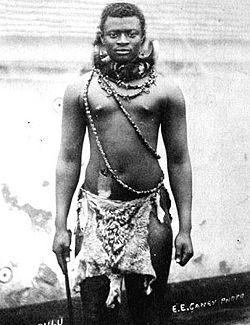 Dinzulu kaCetshwayo, the last king of an independent Zulu state, in 1883 (from Non-sovereign monarchy)
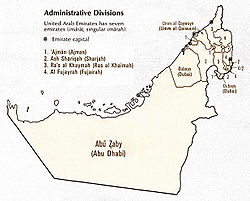 Subdivisions of the United Arab Emirates (from Non-sovereign monarchy)
 King Frederick II of Prussia, "the Great" (from Absolute monarchy)
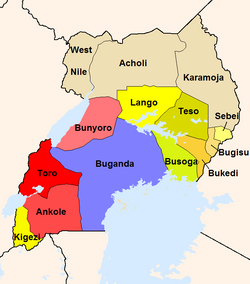 The administrative divisions of the British Protectorate of Uganda, including five of today's six kingdoms (from Non-sovereign monarchy)
 The constituent states of the German Empire (a federal monarchy). Various states were formally suzerain to the emperor, whose government retained authority over some policy areas throughout the federation, and was concurrently King of Prussia, the empire's largest state. (from Non-sovereign monarchy)
 The islands that make up Wallis and Futuna (from Non-sovereign monarchy)
 Louis XIV of France (from Absolute monarchy)
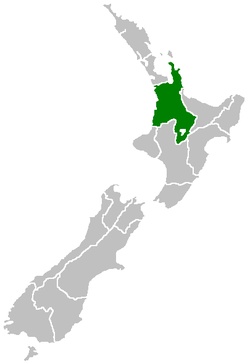 Waikato, the homeland of the Māori kings (from Non-sovereign monarchy)
 alt=Portrait of Pope Leo XIV (from Absolute monarchy)
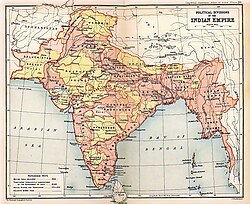 British India and the princely states within the Indian Empire. The princely states (in yellow) were sovereign territories of Indian princes who were practically suzerain to the Emperor of India, who was concurrently the British monarch, whose territories were called British India (in pink) and occupied a vast portion of the empire. (from Non-sovereign monarchy)
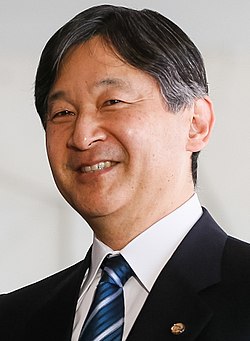 Emperor Naruhito is the hereditary monarch of Japan. The Japanese monarchy is the oldest continuous hereditary monarchy in the world. (from Hereditary monarchy)
.jpg)


.jpg)

-en.png)


.jpg)

.jpg)


 Commons
 Wikidata
 Wikiquote
 Wikisource
 Wikiversity
 Wiktionary





.jpg)


,_revêtu_du_grand_costume_royal_en_1779_-_Google_Art_Project.jpg)
.jpg)

_-_Google_Art_Project.jpg)


.jpg)
_(restoration).jpg)


_-_Prado.jpg)

_Rákóczi_(1593-1648)_-_Rembrandt_van_Rijn_&_Jan_Gillisz._van_Vliet.jpg)


.jpg)


,_dit_le_Grand_Dauphin_-_Google_Art_Project.jpg)


.jpg)


.jpg)
_(restoration).jpg)
.jpg)


_-_Bildnis_einer_vornehmen_sächsischen_Dame_(1534),_Musée_des_Beaux-Arts_de_Lyon.jpg)

_MET_DP320094.jpg)

_-_Google_Cultural_Institute.jpg)

,_Queen_of_Hungary.jpg)


_Cho_Seok-jin_(趙錫晉_1853-1920)_et_(cropped).jpg)
.jpg)
.jpg)


_Amir_of_Afghanistan,_photographed_in_1869_by_John_Burke.jpg)
_-_Google_Art_Project.jpg)
.jpg)


