A monarchy is a hereditary form of government in which political power is legally passed on to the family members of the monarch, a head of state who rules for life. While monarchs gain their power depending on specific succession laws, they can also gain their authority via election.
Monarchies have historically been a common form of government. Nearly half of all independent states at the start of the 19th century were monarchies. After reaching a peak in the middle of the 19th century, the proportion of monarchies in the world has steadily declined. Republics replaced many monarchies, notably at the end of World War I and World War II.
There are conventionally two types of monarchy: absolute monarchy and constitutional monarchy. Absolute monarchies, of which there are approximately twelve, are governed as autocracies. Most of the modern monarchies are constitutional monarchies, retaining under a constitution unique legal and ceremonial roles for monarchs exercising limited or no political power, similar to heads of state in a parliamentary republic.
Featured articles are displayed here, which represent some of the best content on English Wikipedia.
Image 1
Geoffrey (c.1152– 12 December 1212) was an illegitimate son of King Henry II of England who became bishop-elect of Lincoln and archbishop of York. The identity of his mother is uncertain, but she may have been named Ykenai. Geoffrey held several minor clerical offices before becoming Bishop of Lincoln in 1173, though he was not ordained as a priest until 1189. In 1173–1174, he led a campaign in northern England to help put down a rebellion by his legitimate half-brothers; this campaign led to the capture of William, King of Scots. By 1182, Pope Lucius III had ordered that Geoffrey either resign Lincoln or be consecrated as bishop; he chose to resign and became chancellor instead. He was the only one of Henry II's sons present at the king's death.
Geoffrey's half-brother Richard I nominated him archbishop of York after succeeding to the throne of England, probably to force him to become a priest and thus eliminate a potential rival for the throne. After some dispute, Geoffrey was consecrated archbishop in 1191. He soon became embroiled in a conflict with William Longchamp, Richard's regent in England, after being detained at Dover on his return to England following his consecration in France. Geoffrey claimed sanctuary in the town, but he was seized by agents of Longchamp and briefly imprisoned in Dover Castle. Subsequently, a council of magnates ordered Longchamp out of office, and Geoffrey was able to proceed to his archdiocese. The archbishop spent much of his archiepiscopate in various disputes with his half-brothers: first Richard and then John, who succeeded to the English throne in 1199. Geoffrey also quarrelled with his suffragan bishops, his cathedral chapter, and other clergy in his diocese. His last quarrel with John was in 1207, when the archbishop refused to allow the collection of a tax and was driven into exile in France. He died there five years later. (Full article...)
The Taichang Emperor (28 August 1582 – 26 September 1620), personal name Zhu Changluo, was the 15th emperor of the Ming dynasty of China. He was the eldest son of the Wanli Emperor and succeeded his father as emperor in 1620. His reign came to an abrupt end less than one month after his enthronement when he was found dead one morning in the palace following a bout of diarrhea. His reign was the shortest in Ming history.
Zhu Changluo was born during the tenth year of the Wanli Emperor's reign. His mother, Lady Wang, was a servant of the Emperor's mother. Lady Wang was promoted, but did not gain the favor of the Wanli Emperor, and the Emperor ignored their son. Instead, he favored another concubine, Lady Zheng, and her son, Zhu Changxun. The Emperor intended to appoint Zhu Changxun as heir to the throne, but this choice faced strong opposition from the ministers. Due to the stubbornness of both sides, the matter remained at a standstill for many years. Under pressure from his mother and officials, the Emperor formally appointed the nineteen-year-old Zhu Changluo as heir in 1601, but schemes against the heir persisted at court. This tension culminated in a serious incident in 1615 that threatened the heir's safety and raised suspicions about the involvement of figures close to Lady Zheng. (Full article...)
John was the youngest son of King Henry II of England and Duchess Eleanor of Aquitaine. He was nicknamed John Lackland (Norman: Jean sans Terre, lit.'John without land') because, as a younger son, he was not expected to inherit significant lands. He became Henry's favourite child after Henry faced a failed revolt from John's older brothers, Henry the Young King, Richard, and Geoffrey. Henry II appointed John Lord of Ireland in 1177 and gave him lands in England and on the continent. During the reign of his brother Richard I, John unsuccessfully attempted a rebellion against Richard's administrators while the King was participating in the Third Crusade, but he was proclaimed king after Richard died in 1199. Philip II of France agreed to recognise John's possession of the continental Angevin lands at the peace treaty of Le Goulet in 1200. (Full article...)
Image 7
Head of Userkaf, recovered from his sun temple
Userkaf (known in Ancient Greek as Οὐσερχέρης, Usercherês) was a pharaoh of ancient Egypt and the founder of the Fifth Dynasty. He reigned for seven to eight years in the early 25th century BC, during the Old Kingdom period. He probably belonged to a branch of the Fourth Dynasty royal family, although his parentage is uncertain; he could have been the son of Khentkaus I. He had at least one daughter and very probably a son, Sahure, with his consort Neferhetepes. This son succeeded him as pharaoh.
His reign heralded the ascendancy of the cult of Ra, who effectively became Egypt's state god during the Fifth Dynasty. Userkaf may have been a high-priest of Ra before ascending the throne, and built a sun temple, known as the Nekhenre, between Abusir and Abu Gurab. In doing so, he instituted a tradition followed by his successors over a period of 80 years. The Nekhenre mainly functioned as a mortuary temple for the setting sun. Rites performed in the temple were primarily concerned with Ra's creator function and his role as father of the king. Taken with the reduction in the size of the royal mortuary complex, this suggests a more concrete separation between the sun god and the king than in the preceding dynasties. After Userkaf's death, his temple was the subject of four building phases, during which it acquired a large obelisk. (Full article...)
Born into the Olkhonud clan of the Onggirat tribe, Hö'elün was originally married to Chiledu, a Merkit aristocrat; she was captured shortly after her wedding by Yesügei, an important member of the Mongols, who abducted her to be his primary wife. She and Yesügei had four sons and one daughter: Temüjin, Qasar, Hachiun, Temüge, and Temülen. After Yesügei was fatally poisoned and the Mongols abandoned her family, Hö'elün shepherded all her children through poverty to adulthood—her resilience and organisational skills have been remarked upon by historians. She continued to play an important role after Temüjin's marriage to Börte—together, the two women managed his camp and provided him with advice. (Full article...)
Image 9
Philip I's portrait on the obverse of a tetradrachm
Philip I Epiphanes Philadelphus (Ancient Greek: Φίλιππος Ἐπιφανής Φιλάδελφος; between 124 and 109 BC–83 or 75 BC) was a HellenisticSeleucid monarch who reigned as the king of Syria from 94 to either 83 or 75 BC. He was a son of King Antiochus VIII. He ascended the throne after the murder of his elder brother Seleucus VI, becoming king with his twin brother Antiochus XI. In 93 BC Antiochus XI took the Syrian capital Antioch from their cousin, Antiochus X. Antiochus XI became the senior king, and Philip I remained in a base in Cilicia. Antiochus X returned and killed Antiochus XI that year. Philip I then allied with his younger brother Demetrius III, who was based in Damascus. Antiochus X was probably killed in 88 BC. Demetrius III took the capital and besieged Philip I in Beroea (Aleppo), but the latter prevailed and took Antioch; their youngest brother Antiochus XII took Damascus.
Philip I tried unsuccessfully to take Damascus for himself, after which he disappears from the historical record; there is no information about when or how he died. The Antiochenes, apparently refusing to accept Philip I's minor son Philip II as his successor, invited Tigranes II of Armenia to take the city. While the invasion of Tigranes II is traditionally dated to 83 BC, the year most scholars agree on for Philip I's death, the conflict may have taken place in 74 BC. Numismatic evidence and clues in ancient contemporary literature indicate that Philip I might have died in 75 BC, giving Antiochus X's widow Cleopatra Selene and her son Antiochus XIII, who probably took control of the south following the death of Antiochus XII in 82 BC, a year of claiming the whole kingdom. Philip I initiated monetary reforms, and his coins remained in circulation until the Romans conquered Syria in 64 BC. Thereafter, Roman authorities in Syria continued to issue coins modeled on Philip I's coins, including his portrait, until 13 BC. (Full article...)
Image 10
Jugate bronze coin depicting Cleopatra Selene in the foreground with her son Antiochus XIII in the background
Cleopatra Selene (Ancient Greek: Κλεοπάτρα Σελήνη; c.between 135 and 130 – 69 BC) was the Queen consort of Egypt (Cleopatra Selene or Cleopatra V Selene) from 115 to 102 BC, the Queen consort of Syria from 102 to 92 BC, and the monarch of Syria (Cleopatra II) from 82 to 69 BC. The daughter of Ptolemy VIII Physcon and Cleopatra III of Egypt, Cleopatra Selene was favoured by her mother and became a pawn in Cleopatra III's political manoeuvres. In 115 BC, Cleopatra III forced her son Ptolemy IX to divorce his sister-wife Cleopatra IV, and chose Cleopatra Selene as the new queen consort of Egypt. Tension between the king and his mother grew and ended with his expulsion from Egypt, leaving Cleopatra Selene behind; she probably then married the new king, her other brother Ptolemy X.
Following the marriage of the Syrian Seleucid princess Cleopatra I to Ptolemy V of Egypt, dynastic marriages between the two kingdoms became common. In 102 BC, Cleopatra III decided to establish an alliance with her nephew Antiochus VIII of Syria; Cleopatra Selene was sent as his bride. After his assassination in 96 BC, she married his brother and rival Antiochus IX. Cleopatra Selene lost her new husband in 95 BC and married a final time to Antiochus IX's son Antiochus X, who disappeared from the records and is presumed to have died in 92 BC, but may have remained in power until 89/88 BC (224 SE (Seleucid year)). Cleopatra Selene then hid somewhere in the kingdom with her children. Eventually, Syria split between the sons of Antiochus VIII with Philip I ruling in the Syrian capital Antioch and Antiochus XII in the southern city Damascus. (Full article...)
Image 11
Honório Hermeto Carneiro Leão, Marquis of Paraná, at age 55, 1856
In the aftermath of emperor PedroI's abdication in 1831, a regency created to govern Brazil during the minority of the former emperor's son, PedroII, soon dissolved into chaos. Paraná formed a political party in 1837 that became known as the Reactionary Party, which evolved into the Party of Order in the early 1840s and in the mid-1850s into the Conservative Party. He and his party's stalwart and unconditional defence of constitutional order allowed the country to move beyond a regency plagued by factious disputes and rebellions that might easily have led to a dictatorship. Appointed president of Rio de Janeiro Province in 1841, Paraná helped put down a rebellion headed by the opposition Liberal Party the following year. Also in 1842, he was elected senator for Minas Gerais and appointed by PedroII to the Council of State. In 1843, he became the de facto first president (prime minister) of the Council of Ministers, but resigned after a quarrel with the emperor. (Full article...)
Image 12
Charlotte Stuart, styled Duchess of Albany (29 October 1753 – 17 November 1789) was the illegitimate daughter of the Jacobite pretender Charles Edward Stuart ("Bonnie Prince Charlie" or the "Young Pretender") and his only child to survive infancy.
Charlotte's mother was Clementina Walkinshaw, who was mistress to Charles Edward from 1752 until 1760. After years of abuse, Clementina left him, taking Charlotte with her. Charlotte spent most of her life in French convents, estranged from a father who refused to make any provision for her. Unable to marry, she herself became a mistress with illegitimate children, taking Ferdinand de Rohan, Archbishop of Bordeaux, as her lover. (Full article...)
Chagatai Khan (Mongolian: ᠴᠠᠭᠠᠲᠠᠶ; c.1184 – 1242) was a son of Genghis Khan, a prominent figure in the early Mongol Empire, and the first khan of the Chagatai Khanate. The second son of Genghis's wife Börte, Chagatai was renowned for his masterful knowledge of Mongol custom and law, which he scrupulously obeyed, as well as his harsh temperament. Because Genghis felt that he was too inflexible in character, most notably never accepting the legitimacy of his elder brother Jochi, he excluded Chagatai from succession to the Mongol throne. He was nevertheless a key figure in ensuring the stability of the empire after Genghis's death and during the reign of his younger brother Ögedei Khan.
Chagatai held military commands alongside his brothers during the Mongol conquest of the Jin dynasty in 1211 and the invasion of the Khwarazmian Empire in 1219. During the latter, he was appointed to a key role in organising logistics in addition to battlefield responsibilities, but was censured after feuding with Jochi during the Siege of Gurganj. After the campaign, Chagatai was granted large tracts of conquered land in Central Asia, which he ruled until his death. He quarrelled with civil officials such as Mahmud Yalavach over matters of jurisdiction and advised Ögedei on questions of rulership. Chagatai died shortly after Ögedei in 1242; his descendants ruled his territories as the eponymous Chagatai Khanate. (Full article...)
Userkare (meaning "Powerful is the soul of Ra"; also Woserkare) was the second king of the Sixth Dynasty of Egypt during the Old Kingdom Period. He reigned briefly, two to four years, in the late 24th or the early 23rd century BC. Userkare's relation to his predecessor Teti and successor Pepi I is unknown and his reign remains enigmatic.
Although Userkare is attested in some historical sources, that is they bear witness to his existence, he is not mentioned in the tomb inscriptions of Egyptian officials who lived during his reign and who usually report the names of the kings whom they served. The representations of some high officials of the period have been deliberately chiselled out in their tombs and their titles altered, for instance the word "king" being replaced by that of "desert". Egyptologists thus suspect that Pepi might have tried to erase all memory of Userkare from official records, monuments, tombs and artefacts. The Egyptian priest Manetho, who wrote a history of Egypt over 2,000 years later in the 3rd century BC, stated that Userkare's predecessor Teti was murdered, but is otherwise silent concerning Userkare. Consequently, some Egyptologists consider Userkare to have been a short-lived usurper to the throne. Alternatively, he may have been a legitimate short-lived ruler, a younger brother to a more ambitious Pepi I, or a regent who ruled during Pepi I's childhood before his accession to the throne. (Full article...)
Image 15
Photograph c.1876
DomPedroII (Pedro de Alcântara João Carlos Leopoldo Salvador Bibiano Francisco Xavier de Paula Leocádio Miguel Gabriel Rafael Gonzaga; 2 December 1825 – 5 December 1891), known as "the Magnanimous" (Portuguese: O Magnânimo), was the second and final emperor of the Empire of Brazil. He reigned from 1831 until his deposition in the military coup of 1889, presiding over the longest and most stable reign in Brazilian history.
Born in Rio de Janeiro, Pedro II was the seventh child of Emperor Pedro I and Empress Maria Leopoldina. His father's abdication and departure for Europe in 1831 left the five-year-old prince as emperor, ushering in a regency period marked by political instability and shaping a childhood dominated by rigorous education and preparation for rule. These formative years profoundly influenced his character, instilling a strong sense of duty, intellectual curiosity, and devotion to public service, alongside a growing personal ambivalence toward monarchy. (Full article...)
... that King Owodo, the last Ogiso of Igodomigodo, was deposed after killing a pregnant widow, an act punishable by deposition under the kingdom's law?
... that Holy Roman EmperorMaximilian I commissioned the Triumphal Arch(pictured), a monumental woodcut print over 3½ m (11½ ft) tall and nearly 3 m (10 ft) wide printed from 192 separate wood blocks?
What is important is not to live in fear. The most dangerous [thing to do] is to give up and lose hope. The main enemy is not terrorism or extremism, but ignorance.
The following are images from various monarchy-related articles on Wikipedia.
Image 1The constituent states of the German Empire (a federal monarchy). Various states were formally suzerain to the emperor, whose government retained authority over some policy areas throughout the federation, and was concurrently King of Prussia, the empire's largest state. (from Non-sovereign monarchy)
Image 2Dinzulu kaCetshwayo, the last king of an independent Zulu state, in 1883 (from Non-sovereign monarchy)
Image 3British India and the princely states within the Indian Empire. The princely states (in yellow) were sovereign territories of Indian princes who were practically suzerain to the Emperor of India, who was concurrently the British monarch, whose territories were called British India (in pink) and occupied a vast portion of the empire. (from Non-sovereign monarchy)
This is a list of recognized content, updated weekly by JL-Bot (talk·contribs) (typically on Saturdays). There is no need to edit the list yourself. If an article is missing from the list, make sure it is taggedor categorized(e.g. Category:Royalty and nobility articles)correctly and wait for the next update. See WP:RECOG for configuration options.


.svg)


.jpg)


_-_046_(cropped).jpg)


.JPG)


.jpg)


 Good articles -
_-_Google_Cultural_Institute.jpg)
.jpg)


 The constituent states of the German Empire (a federal monarchy). Various states were formally suzerain to the emperor, whose government retained authority over some policy areas throughout the federation, and was concurrently King of Prussia, the empire's largest state. (from Non-sovereign monarchy)
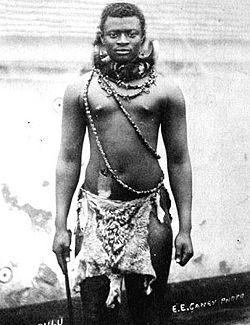 Dinzulu kaCetshwayo, the last king of an independent Zulu state, in 1883 (from Non-sovereign monarchy)
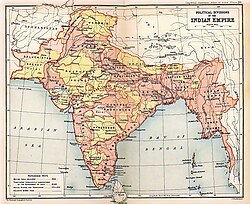 British India and the princely states within the Indian Empire. The princely states (in yellow) were sovereign territories of Indian princes who were practically suzerain to the Emperor of India, who was concurrently the British monarch, whose territories were called British India (in pink) and occupied a vast portion of the empire. (from Non-sovereign monarchy)
 alt=Portrait of Pope Leo XIV (from Absolute monarchy)
 Louis XIV of France (from Absolute monarchy)
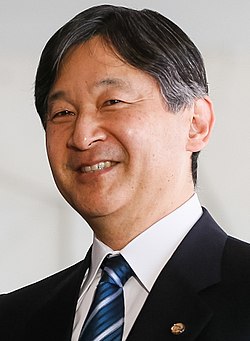 Emperor Naruhito is the hereditary monarch of Japan. The Japanese monarchy is the oldest continuous hereditary monarchy in the world. (from Hereditary monarchy)
 The islands that make up Wallis and Futuna (from Non-sovereign monarchy)
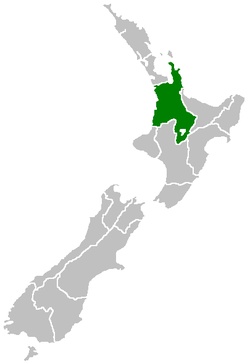 Waikato, the homeland of the Māori kings (from Non-sovereign monarchy)
 Photograph of Tsar Alexander II, 1878–81 (from Absolute monarchy)
 King Frederick II of Prussia, "the Great" (from Absolute monarchy)
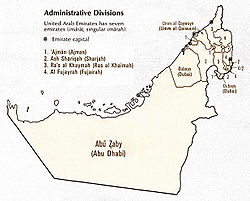 Subdivisions of the United Arab Emirates (from Non-sovereign monarchy)
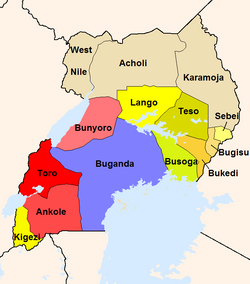 The administrative divisions of the British Protectorate of Uganda, including five of today's six kingdoms (from Non-sovereign monarchy)
-en.png)


.jpg)

.jpg)


.jpg)

.jpg)


 Commons
 Wikidata
 Wikiquote
 Wikisource
 Wikiversity
 Wiktionary





.jpg)


,_revêtu_du_grand_costume_royal_en_1779_-_Google_Art_Project.jpg)
.jpg)

_-_Google_Art_Project.jpg)


.jpg)
_(restoration).jpg)


_-_Prado.jpg)

_Rákóczi_(1593-1648)_-_Rembrandt_van_Rijn_&_Jan_Gillisz._van_Vliet.jpg)


.jpg)


,_dit_le_Grand_Dauphin_-_Google_Art_Project.jpg)


.jpg)


.jpg)
_(restoration).jpg)
.jpg)


_-_Bildnis_einer_vornehmen_sächsischen_Dame_(1534),_Musée_des_Beaux-Arts_de_Lyon.jpg)

_MET_DP320094.jpg)


,_Queen_of_Hungary.jpg)


_Cho_Seok-jin_(趙錫晉_1853-1920)_et_(cropped).jpg)
.jpg)
.jpg)


_Amir_of_Afghanistan,_photographed_in_1869_by_John_Burke.jpg)
_-_Google_Art_Project.jpg)
.jpg)


