A monarchy is a hereditary form of government in which political power is legally passed on to the family members of the monarch, a head of state who rules for life. While monarchs gain their power depending on specific succession laws, they can also gain their authority via election.
Monarchies have historically been a common form of government. Nearly half of all independent states at the start of the 19th century were monarchies. After reaching a peak in the middle of the 19th century, the proportion of monarchies in the world has steadily declined. Republics replaced many monarchies, notably at the end of World War I and World War II.
There are conventionally two types of monarchy: absolute monarchy and constitutional monarchy. Absolute monarchies, of which there are approximately twelve, are governed as autocracies. Most of the modern monarchies are constitutional monarchies, retaining under a constitution unique legal and ceremonial roles for monarchs exercising limited or no political power, similar to heads of state in a parliamentary republic.
Featured articles are displayed here, which represent some of the best content on English Wikipedia.
Image 1
Melisende (c. 1109 – 11 September 1161) was the queen of Jerusalem from 1131 to 1152. She was the first female ruler of the Kingdom of Jerusalem and the first woman to hold a public office in the crusader kingdom. Her fame grew in her lifetime for her generous support of the various Christian communities in her kingdom. Contemporary chronicler William of Tyre praised her wisdom and abilities, while modern historians differ in their assessment.
Melisende was of mixed Frankish–Armenian heritage, the eldest daughter of King Baldwin II and Queen Morphia. In the late 1120s, when it became clear that her father would likely not have a son, she was declared heir presumptive to the throne and married Fulk of Anjou. Baldwin II died in 1131, having conferred the kingdom on Melisende, Fulk, and their son Baldwin III. Melisende and Fulk were crowned shortly after. (Full article...)
Image 2
Head of Userkaf, recovered from his sun temple
Userkaf (known in Ancient Greek as Οὐσερχέρης, Usercherês) was a pharaoh of ancient Egypt and the founder of the Fifth Dynasty. He reigned for seven to eight years in the early 25th century BC, during the Old Kingdom period. He probably belonged to a branch of the Fourth Dynasty royal family, although his parentage is uncertain; he could have been the son of Khentkaus I. He had at least one daughter and very probably a son, Sahure, with his consort Neferhetepes. This son succeeded him as pharaoh.
His reign heralded the ascendancy of the cult of Ra, who effectively became Egypt's state god during the Fifth Dynasty. Userkaf may have been a high-priest of Ra before ascending the throne, and built a sun temple, known as the Nekhenre, between Abusir and Abu Gurab. In doing so, he instituted a tradition followed by his successors over a period of 80 years. The Nekhenre mainly functioned as a mortuary temple for the setting sun. Rites performed in the temple were primarily concerned with Ra's creator function and his role as father of the king. Taken with the reduction in the size of the royal mortuary complex, this suggests a more concrete separation between the sun god and the king than in the preceding dynasties. After Userkaf's death, his temple was the subject of four building phases, during which it acquired a large obelisk. (Full article...)
Image 3
1879 portrait
José Maria da Silva Paranhos, Viscount of Rio Branco (16 March 1819– 1 November 1880), was a Brazilian politician, monarchist, diplomat, teacher and journalist. Rio Branco was born in Salvador, in what was then the Captaincy of Bahia, to a wealthy family, but most of the fortune was lost after his parents' deaths early in his childhood. In 1871, Rio Branco became the president of the Council of Ministers. He would be the Council's longest-serving president, and his cabinet the second longest, in Brazilian history. His government was marked by economic prosperity and several reforms. The most important of these initiatives was the Law of Free Birth, which granted freeborn status to children born to slave women. Rio Branco led the government that enacted this law, and its passage increased his popularity. His government was plagued by a long crisis with the Catholic Church that resulted from the expulsion of Freemasons from its lay brotherhoods. After more than four years heading the Cabinet, Rio Branco resigned in 1875. Following a long vacation in Europe, his health swiftly declined and he was diagnosed with oral cancer. Rio Branco died in 1880 and was widely mourned throughout the country. He is regarded by most historians as one of Brazil's greatest statesmen.
Rio Branco attended Brazil's Naval School and became a midshipman in 1841. Later that year he was enrolled in the Army's Military Academy, eventually becoming an instructor there. Rather than continue to serve in the military, he became a politician in the Liberal Party. In 1845, he was elected a member of the provincial house of representatives of Rio de Janeiro province, site of the national capital of the same name. Rio Branco rose to power within the province under the tutelage of Aureliano Coutinho, Viscount of Sepetiba—a veteran politician who held tremendous influence over the young and inexperienced Emperor PedroII. He temporarily abandoned politics after Aureliano Coutinho's fall from grace and the subsequent dissolution of the Liberal Party. (Full article...)
Image 4
Miniature of Theodore II from the manuscript of Georgius Pachymeres' Historia, 14th century
Emperor JohnIII arranged for Theodore to marry Elena Asenina in 1235, to forge an alliance with her father, Ivan Asen II, Emperor of Bulgaria, against the Latin Empire of Constantinople. According to Theodore himself, their marriage was happy, and they had five or six children. From 1241, Theodore acted as his father's lieutenant in Asia Minor during his frequent military campaigns in the Balkan Peninsula. From around 1242, he was his father's co-ruler, but was not crowned as co-emperor. During this period, his relationship with some prominent aristocrats, particularly Theodore Philes and Michael Palaiologos, grew tense. (Full article...)
The son of John, King of England, and Isabella of Angoulême, Henry acceded to the throne when he was only nine in the middle of the First Barons' War. Cardinal Guala Bicchieri declared the war against the rebel barons to be a religious crusade and Henry's forces, led by William Marshal, defeated the rebels at the battles of Lincoln and Sandwich in 1217. Henry promised to abide by the Great Charter of 1225, a later version of Magna Carta (1215), which limited royal power and protected the rights of the major barons. Henry's early reign was dominated first by William Marshal, and after his death in 1219 by the magnate Hubert de Burgh, Earl of Kent. In 1230 the King attempted to reconquer the provinces of France that had once belonged to his father, but the invasion was a debacle. A revolt led by William Marshal's son Richard broke out in 1232, ending in a peace settlement negotiated by the Catholic Church. (Full article...)
Albert was born in the Saxon duchy of Saxe-Coburg-Saalfeld to a family connected to many of Europe's ruling monarchs. At the age of 20, he married Victoria, his first cousin, with whom he had nine children. Initially, he felt constrained by his role as consort, which did not afford him power or responsibilities. He gradually developed a reputation for supporting public causes, such as educational reform and the abolition of slavery worldwide, and was entrusted with running the Queen's household, office and estates. He was heavily involved with the organisation of the Great Exhibition of 1851, which was a resounding success. (Full article...)
John was the youngest son of King Henry II of England and Duchess Eleanor of Aquitaine. He was nicknamed John Lackland (Norman: Jean sans Terre, lit.'John without land') because, as a younger son, he was not expected to inherit significant lands. He became Henry's favourite child after Henry faced a failed revolt from John's older brothers, Henry the Young King, Richard, and Geoffrey. Henry II appointed John Lord of Ireland in 1177 and gave him lands in England and on the continent. During the reign of his brother Richard I, John unsuccessfully attempted a rebellion against Richard's administrators while the King was participating in the Third Crusade, but he was proclaimed king after Richard died in 1199. Philip II of France agreed to recognise John's possession of the continental Angevin lands at the peace treaty of Le Goulet in 1200. (Full article...)
After the fall of Constantinople in 1453 and the subsequent Ottoman invasion of the Morea in 1460, Andreas's father fled to Corfu with his family. After Thomas died in 1465, the then twelve-year-old Andreas moved to Rome and, as the eldest nephew of ConstantineXI, became the head of the Palaiologos family and the chief claimant to the ancient imperial throne. Andreas's later use of the imperial title, never claimed by his father, was supported by some of the Byzantine refugees who lived in Italy and he hoped to one day restore the empire of his ancestors. Andreas married a Roman woman called Caterina. Though some primary sources allude to the possibility that he had children, there is no concrete evidence that Andreas left any descendants. (Full article...)
Born in Bodenwerder, Hanover, the real-life Münchhausen fought for the Russian Empire during the Russo-Turkish War of 1735–1739. After retiring in 1760, he became a minor celebrity within German aristocratic circles for telling outrageous tall tales based on his military career. After hearing some of Münchhausen's stories, Raspe adapted them anonymously into literary form, first in German as ephemeral magazine pieces and then in English as the 1785 book, which was first published in Oxford by a bookseller named Smith. The book was soon translated into other European languages, including a German version expanded by the poet Gottfried August Bürger. The real-life Münchhausen was deeply upset at the development of a fictional character bearing his name, and threatened legal proceedings against the book's publisher. Perhaps fearing a libel suit, Raspe never acknowledged his authorship of the work, which was only established posthumously. (Full article...)
Matilda was the eldest child and only surviving daughter of Henry I of England and his first wife, Matilda of Scotland. As a child, she went to Germany where she was married to the future Henry V. She travelled with the emperor to Italy in 1116, was controversially crowned empress in St Peter's Basilica, and acted as the imperial regent in Italy. Matilda and Henry V had no children, and when he died in 1125, his rival Lothair of Supplinburg claimed the imperial crown. (Full article...)
Image 11
Depiction of Ecgberht from the Genealogical Chronicle of the English Kings, a late 13th-century manuscript in the British Library
Ecgberht (died 839), also spelled Egbert, Ecgbert, Ecgbriht, Ecgbeorht, and Ecbert, was King of Wessex from 802 until his death in 839. His father was King Ealhmund of Kent. In the 780s, Ecgberht was forced into exile to Charlemagne's court in the Frankish Empire by the kings Offa of Mercia and Beorhtric of Wessex, but on Beorhtric's death in 802, Ecgberht returned and took the throne.
Little is known of the first 20 years of Ecgberht's reign, but it is thought that he was able to maintain the independence of Wessex against the kingdom of Mercia, which at that time dominated the other southern English kingdoms. In 825, Ecgberht defeated Beornwulf of Mercia, ended Mercian Supremacy at the Battle of Ellandun, and proceeded to take control of the Mercian dependencies in southeastern England. In 829, he defeated Wiglaf of Mercia and drove him out of his kingdom, temporarily ruling Mercia directly. Later that year Ecgberht received the submission of the Northumbrian king at Dore. The Anglo-Saxon Chronicle subsequently described Ecgberht as a bretwalda or 'wide-ruler' of Anglo-Saxon lands. (Full article...)
His reign was marked by multiple wars with the Lombards, a Germanic people who had arrived in the former Roman province of Pannonia under the leadership of their king, Audoin. Thurisind also had to face the hostility of the Byzantine Empire, which was resentful of the Gepid takeover of Sirmium and anxious to diminish Gepid power in the Pannonian Basin, a plain covering most of modern Hungary and partly including the bordering states. The Byzantines' plans to reduce the Gepids' power took effect when Audoin decisively defeated Thurisind in 551 or 552. The Byzantine Emperor Justinian forced a peace accord on both leaders so that equilibrium in the Pannonian Basin could be sustained. (Full article...)
Image 13
Portrait c.1830
DomPedro I (12 October 1798 – 24 September 1834), known in Brazil and in Portugal as "the Liberator" (Portuguese: o Libertador) or "the Soldier King" (o Rei Soldado) in Portugal, was the founder and first ruler of the Empire of Brazil from 1822 to 1831 (under the name of Pedro I) and King of Portugal in 1826 (under the name of Pedro IV).
Born in Lisbon, Pedro was the fourth child of King Dom John VI of Portugal and Queen Carlota Joaquina, and thus a member of the House of Braganza. When the country was invaded by French troops in 1807, he and his family fled to Portugal's largest and wealthiest colony, Brazil. The outbreak of the Liberal Revolution of 1820 in Lisbon compelled PedroI's father to return to Portugal in April 1821, leaving him to rule Brazil as regent. He had to deal with challenges from revolutionaries and insubordination by Portuguese troops, all of which he subdued. The Portuguese government's threat to revoke the political autonomy that Brazil had enjoyed since 1808 was met with widespread discontent in Brazil. PedroI chose the Brazilian side and declared Brazil's independence from Portugal on 7 September 1822. On 12 October, he was acclaimed Emperor and by March 1824 had defeated all armies loyal to Portugal. A few months later, PedroI crushed the short-lived Confederation of the Equator, a failed secession attempt by provincial rebels in Brazil's northeast. (Full article...)
Image 14
Coin of Eadbald of Kent
Eadbald (Old English: Eadbald) was King of Kent from 616 until his death in 640. He was the son of King Æthelberht and his wife Bertha, a daughter of the Merovingian king Charibert. Æthelberht made Kent the dominant force in England during his reign and became the first Anglo-Saxon king to convert to Christianity from Anglo-Saxon paganism. Eadbald's accession was a significant setback for the growth of the church, since he retained his people's paganism and did not convert to Christianity for at least a year, and perhaps for as many as eight years. He was ultimately converted by either Laurentius or Justus, and separated from his first wife, who had been his stepmother, at the insistence of the church. Eadbald's second wife was Emma, who may have been a Frankish princess. They had two sons, Eormenred and Eorcenberht, and a daughter, Eanswith.
Eadbald's influence was less than his father's, but Kent was powerful enough to be omitted from the list of kingdoms dominated by Edwin of Northumbria. Edwin's marriage to Eadbald's sister, Æthelburg, established a good relationship between Kent and Northumbria which appears to have continued into Oswald's reign. When Æthelburg fled to Kent on Edwin's death in about 633, she sent her children to Francia for safety, fearing the intrigues of both Eadbald and Oswald. The Kentish royal line made several strong diplomatic marriages over the succeeding years, including the marriage of Eanflæd, Eadbald's niece, to Oswiu, and of Eorcenberht to Seaxburh, daughter of King Anna of East Anglia. (Full article...)
Christopher Lekapenos or Lecapenus (Greek: Χριστόφορος Λακαπηνός or Λεκαπηνός, romanized:Christóphoros Lakapēnos or Lekapēnos; diedAugust 931) was the eldest son of Emperor Romanos I Lekapenos (r.920–944) and co-emperor of the Byzantine Empire from 921 until his death in 931. Christopher was given the position of megas hetaireiarches (commander of the palace guard) in spring 919, after Romanos assumed guardianship of the underage Emperor Constantine VII. Romanos, who made himself co-emperor in 920, raised Christopher to co-emperor on 21 May 921 to give his family precedence over Constantine VII's Macedonian line. In 928 Christopher's father-in-law, Niketas, unsuccessfully attempted to incite Christopher to usurp his father, resulting in Niketas being banished. Christopher died in August 931, succeeded by his father and two brothers, Stephen Lekapenos and Constantine Lekapenos, and Constantine VII. In December 944 his brothers overthrew and exiled their father, but they themselves were exiled in January 945 after attempting to oust Constantine VII. (Full article...)
The Qianlong Emperor was the sixth emperor of the Manchu-led Qing dynasty, and the fourth Qing emperor to rule over China. The fourth son of the Yongzheng Emperor, his reign officially began 11 October 1735, lasting for 60 years. Named Hongli, he chose the era nameQianlong, meaning "heavenly prosperity". Although his early years saw the continuation of an era of prosperity and great military success in China, his final years saw troubles at home and abroad converge on the Qing Empire. Qianlong abdicated the throne at the age of 85, to his son, the Jiaqing Emperor, fulfilling his promise not to reign longer than his grandfather, the Kangxi Emperor.
... that King Owodo, the last Ogiso of Igodomigodo, was deposed after killing a pregnant widow, an act punishable by deposition under the kingdom's law?
... that Britain's King George IV specifically requested George Haden(pictured) to design and install the new heating system for Windsor Castle in 1826?
Image 4Dinzulu kaCetshwayo, the last king of an independent Zulu state, in 1883 (from Non-sovereign monarchy)
Image 5British India and the princely states within the Indian Empire. The princely states (in yellow) were sovereign territories of Indian princes who were practically suzerain to the Emperor of India, who was concurrently the British monarch, whose territories were called British India (in pink) and occupied a vast portion of the empire. (from Non-sovereign monarchy)
Image 6Photograph of Tsar Alexander II, 1878–81 (from Absolute monarchy)
Image 13The constituent states of the German Empire (a federal monarchy). Various states were formally suzerain to the emperor, whose government retained authority over some policy areas throughout the federation, and was concurrently King of Prussia, the empire's largest state. (from Non-sovereign monarchy)
This is a list of recognized content, updated weekly by JL-Bot (talk·contribs) (typically on Saturdays). There is no need to edit the list yourself. If an article is missing from the list, make sure it is taggedor categorized(e.g. Category:Royalty and nobility articles)correctly and wait for the next update. See WP:RECOG for configuration options.


.svg)


_-_046_(cropped).jpg)


.png)


.jpg)


.jpg)

.jpg)


 Good articles -


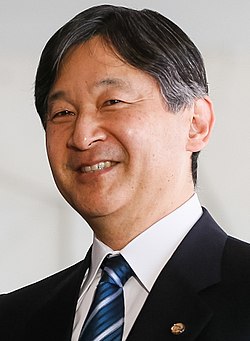 Emperor Naruhito is the hereditary monarch of Japan. The Japanese monarchy is the oldest continuous hereditary monarchy in the world. (from Hereditary monarchy)
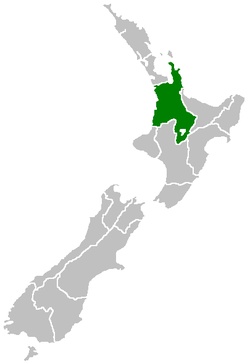 Waikato, the homeland of the Māori kings (from Non-sovereign monarchy)
 Louis XIV of France (from Absolute monarchy)
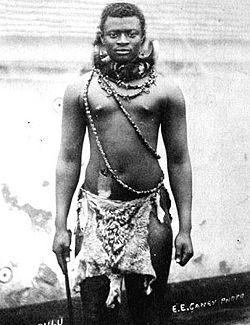 Dinzulu kaCetshwayo, the last king of an independent Zulu state, in 1883 (from Non-sovereign monarchy)
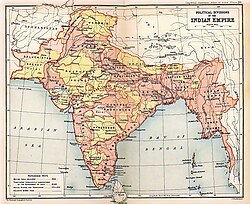 British India and the princely states within the Indian Empire. The princely states (in yellow) were sovereign territories of Indian princes who were practically suzerain to the Emperor of India, who was concurrently the British monarch, whose territories were called British India (in pink) and occupied a vast portion of the empire. (from Non-sovereign monarchy)
 Photograph of Tsar Alexander II, 1878–81 (from Absolute monarchy)
 The islands that make up Wallis and Futuna (from Non-sovereign monarchy)
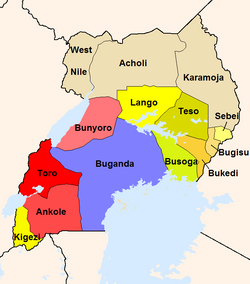 The administrative divisions of the British Protectorate of Uganda, including five of today's six kingdoms (from Non-sovereign monarchy)
 alt=Portrait of Pope Leo XIV (from Absolute monarchy)
 King Frederick II of Prussia, "the Great" (from Absolute monarchy)
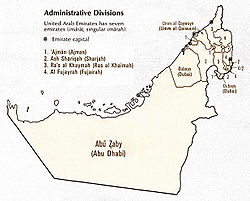 Subdivisions of the United Arab Emirates (from Non-sovereign monarchy)
 The constituent states of the German Empire (a federal monarchy). Various states were formally suzerain to the emperor, whose government retained authority over some policy areas throughout the federation, and was concurrently King of Prussia, the empire's largest state. (from Non-sovereign monarchy)
.jpg)


.jpg)


.jpg)
.jpg)

-en.png)


 Commons
 Wikidata
 Wikiquote
 Wikisource
 Wikiversity
 Wiktionary





.jpg)


,_revêtu_du_grand_costume_royal_en_1779_-_Google_Art_Project.jpg)
.jpg)

_-_Google_Art_Project.jpg)


.jpg)
_(restoration).jpg)


_-_Prado.jpg)

_Rákóczi_(1593-1648)_-_Rembrandt_van_Rijn_&_Jan_Gillisz._van_Vliet.jpg)


.jpg)


,_dit_le_Grand_Dauphin_-_Google_Art_Project.jpg)


.jpg)


.jpg)
_(restoration).jpg)
.jpg)


_-_Bildnis_einer_vornehmen_sächsischen_Dame_(1534),_Musée_des_Beaux-Arts_de_Lyon.jpg)

_MET_DP320094.jpg)

_-_Google_Cultural_Institute.jpg)

,_Queen_of_Hungary.jpg)


_Cho_Seok-jin_(趙錫晉_1853-1920)_et_(cropped).jpg)
.jpg)
.jpg)


_Amir_of_Afghanistan,_photographed_in_1869_by_John_Burke.jpg)
_-_Google_Art_Project.jpg)
.jpg)


