WritingWithColor (Posts tagged jumblr)

1.5M ratings
277k ratings

See, that’s what the app is perfect for.

Sounds perfect Wahhhh, I don’t wanna

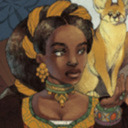
Afro-Latine Jewish woman maintaining cultural connection in an isekai comic

Anonymous asked:

Hello! Mixed Latin American nonbinary Jew here. I’m working on a, relatively light-hearted, isekai-style fantasy comic concept of an afro-latine Jewish lady who gets sent through a portal to a colorful scifi/fantasy land, inhabitated by various imaginary creatures sorta like in Alice in Wonderland. She gains magic powers and goes on adventures, working as a scientist researching the land’s magical energy. (some of the local creatures she befriends are entirely original species, and some are inspired by my local folklore, but otherwise I try to avoid culturally coding the creatures since they’re mostly nonhuman looking).

The story isn’t supposed to touch any heavy topics like antisemitism or racism, but I’ve read about the cultural problems in “"normie protagonist finds a new home in a funky fantasy world”“ stories, f.ex. how Harry Potter’s narrative basically implies that Muggleborns have to abandon their original cultures in order to successfully integrate into the very prejudiced but ”“cooler”“ Wizarding World.

My original goal was to break the mold that escapism fantasy usually revolves around white protagonists adventuring in heavily Western-inspired fantasy worlds, and poc-coded characters are usually nonhuman creatures or racial stereotypes. However the protagonist girl in my story comes from a loving, latine-jewish human family, and while she regularly visits them on Earth instead of just staying in the fantasy land 24/7, I’m afraid that making her story be about being happy adventuring in a separate imaginary land filled with nonhuman characters might turn into an ”“abandon your family and culture”“ narrative.

Are there any ways how I could avoid this? Maybe making the fantasy land’s worldbuilding and designs more Latin American or Jewish inspired and thus resonate more with her cultural background, or making it clear that the land is not ”“perfect”“ and she still loves her family?

One of the first things that stands out to me is that you haven’t set her up to need to abandon her culture in order to make a life in another place. She has the ability to go home and visit her family, but I also don’t see any reason why, if she lives primarily in the fantasy land, she couldn’t be portrayed as practicing Judaism actively in her new home. It’s true that Judaism isn’t solely defined by religious/cultural practices, but it’s also true that religious/cultural practices are one of the most recognizable and most uniting elements of Jewish identity.

I think it might help in this case to think about Jewish practices in terms of communal versus personal: that is, what are practices she would need to seek out a Jewish community for, and what are practices she can do independently?

Does she control when she is able to visit her family? If so, visiting for Jewish holidays so that she can be at a family meal or holiday services seems like a way to highlight that she is just as connected to her family as someone who moved to a different city might be. If she experiences/has experienced the death of a family member or partner, going home to be with a Jewish community for shiva or to say kaddish on a yahrzeit is another touch (for readers who may be unfamiliar, Jewish mourning practices are intensely communal and are intentional about bringing the mourner into an active support system and slowly reintroducing them to the world, and as such a mourner is likely to spend this time somewhere where they can access and be supported by a Jewish community).

As far as practices she can engage with on her own in the fantasy setting, it would be nice to see her observing Shabbat, either in a traditional way by refraining from adventuring and instead engaging in hospitality and prayer between dusk Friday and sundown Saturday, or in a less-halakhic way if she comes from a Reform or comparatively-assimilated background, by marking Friday sunset with candles, blessings, and a good meal, even if she is intending to continue her research through the next day. She would hardly be the first Jewish person to live in a place without an established Jewish community, and a festive meal can be shared just as happily with non-Jewish friends if they’re griffons and fauns as if they’re Christians and Muslims.

Here’s one idea that I think would be hugely meaningful as a way of establishing both that she intends to make her home long-term in Fantasy World and that she intends to carry Jewish traditions with her into her new life: hang a mezuzah.

Think about it: a mezuzah is the visual marker of a Jewish home, as much to the resident as to a guest. When she is home from her adventures, in her garden cottage or enchanted tower or wherever she returns to between adventures to record and categorize her research, simply showing a mezuzah in the background instantly makes the point both that she is intending to stay, and that this is a Jewish space. If as time goes on she adds other Judaica items to her space, it can add to the sense that her Jewishness is present and alive in this world, simply because she is present and alive in it.

If she doesn’t have a settled space or if you’re not planning on setting any scenes there, having Jewish visual markers on and around her can help, too. For low-hanging fruit, maybe she has a silver Jewish Star or chai necklace that catches the light now and then, but since you’re going for a light, fun vibe, maybe she’s packing her adventuring supplies in a bright-blue vinyl backpack emblazoned with “Temple Shaarei Tzedek Junior Youth Retreat 1998” (am I old? I’m pretty sure there are adults reading this who were in Junior Youth groups in 2003, but I’m willing to bet retreat swag hasn’t changed that much).

I do like the idea of including Latin American and Jewish elements in the worldbuilding, especially as an intentional way to combat the cultural dominance of Western European folklore over fantasy writing, but because your character is from and has access to our world, you have the beautiful opportunity to carry real-world markers of Jewishness with her as well.

-Meir

I adore Meir’s answer, but then, I’m the kind of person to whom “enchanted tower with a mezuzah” as an aesthetic is so near and dear to my heart that I wrote a whole fantasy series about it. Couple of random suggestions: one thing I really enjoy is exposing my gentile friends to Jewish food—I love watching the absolute shock of delirium hit someone’s face the first time they taste my charoseth. Imagine this little bowl of chopped apples and walnuts, looking vaguely dirty because they’re soaked in cinnamon-infused wine, so it’s basically dingy beige slop….so that first bite of sensuous, deep sweetness is a huge surprise. Pick your favorite equivalent and imagine the first time a centaur or a winged princess or whatever other fantasy character tries it at your MC’s behest! (Feeding brisket to dragons would make a great name for…something…)

I don’t think you’re likely to do this anyway but since these are public answers: “fantasy world fun, Jewish upbringing a chore” is a narrative I would not feel at home in or care to read. But that’s a rather predictable remark from me anyway ;)

And of course I support the “the secondary fantasy world is actually Jewish” solution too, having one of my own.

–Shira

Jumblr Jewish Judaism Afro Latina Afro Latine Culture Jewish culture Jewish holidays asks

Jewish family matters: Is a Jewish teen girl doing most of the talking in a friendship “overbearing”? And, separate bedrooms because Dad is misogynist to Mom

Anonymous asked:

Jewish teen girl doing most of the talking in the friendship

Hi! I’m a long-time follower and have come to inquire about a Jewish character of mine and her family.

This character of mine (E) comes from a multifaith household (a practicing, ethnically Ashkenazi Jewish mother and a New England WASP Methodist father) and her family consists of her parents and her older brother (two years older) who was murdered when she was fourteen (her being seventeen in the current point in time).

E is a friendly extrovert who’s also quite stubborn, headstrong, and quite competitive and she enjoys playing sports. She’s friends with the younger sister of another murder victim.

They have a dynamic where E tends to ramble about her theories and things that she found out while the other girl tends to listen as well as share the stories she writes in order to cope with losing her own brother. I know that there’s a stereotype about overbearing Jewish mothers, but I didn’t know if this extends to women in general (I’ve done research and found conflicting information) and, if it does, whether E fits this stereotype.

Parents in separate bedrooms and misogynist fathers

The other question that I had regarding this family involves the parents. I read in your stereotype guide that it’s a stereotype that Jewish women “"become frigid after marriage.” E’s father spends a lot of time in Washington DC once he gets elected to a national senate seat (as well as because of his own misogynistic ideals) he very rarely helps out around the house or with childcare and, because of that, he and E’s mother came into conflict quite a bit because he refused to do his fair share while he was home and by the time E’s brother is killed they sleep in separate bedrooms.

However, this is explicitly because the father refuses to do his fair share around the house and because the mother refuses to stand for that. I try to make it abundantly clear that they “"sleep in separate bedrooms”“ before then because of the father’s misogynistic attitudes and refusal to help around the house, but I really don’t want to step on any toes here. Is there a problem with how this is portrayed, and if so is there a way I could remedy the writing?

Further characterization for the mother in case that’s relevant: she practices Reform Judaism and is a very warm figure that E feels she can trust with her feelings and concerns, and she is very ”“firm but fair”“, treating her children like individuals with respect and teaching them to be confident and headstrong and not stand for others treating them unfairly.

Because of her being the more ”“present”“ parent due to the father’s stated misogynistic attitudes, both E and her brother were closer to their mother and ended up loosely practicing Reform Judaism as well, and E herself is especially interested in the culture and often speaks Yiddish with her mother (who learned it from her own grandmother). The parents’ relationship also had much fewer issues before they had children and they got along fairly well; it’s just that the father’s misogynistic attitudes came out when it was time to take care of the children. So essentially, E looks up to her mother greatly and equally greatly dislikes her father.”

[shortened for length]

Hi Anon!

The way I read this post, you’ve got two main questions:
1.) Does it evoke the Overbearing Jewish Woman trope if a teenaged girl does the bulk of talking when she interacts with her female gentile friend?

2.) If Mom isn’t sleeping in Dad’s bed anymore because Dad is an unhelpful misogynist with a mistress, does this evoke the Frigid Jewish Wife trope?

We recommend a beta reader

We cut out a lot of details in the rest of your post that aren’t relevant and aren’t questions (for example, the serial killer? Also I’m glad the daughter is bi because I’m bi but it still took up space in the ask without being part of the question, etc.)

If you’re looking for someone to look over the rest of the plot for issues that’s where a beta reader or paid sensitivity reader comes in, because rubber stamping in-depth plot summaries is beyond the scope of WWC’s volunteer capabilities.

To answer your two main questions

However! I really like your questions; they are good questions and I think they will be fun to answer.

  1. For me, Overbearing Jewish Woman mostly involves two things that aren’t in play here: Mom Age, and domination of a man. She’s still basically a kid, and even though she’s doing more of the talking than her friend, it just doesn’t have the same vibe as the trope. Think of Kyle’s mom on South Park – a Jewish mom character created by a Jewish man. Also, just because someone does more of the talking than her friend doesn’t mean the friend isn’t comfortable with the dynamic and feels oppressed or silenced. Maybe that’s just who they are and they enjoy interacting like that.
  2. One way you could demonstrate that Mom is withholding sex because Dad sucks and not the other way around (Dad became unhelpful and got a mistress because Mom is withholding sex, which would evoke the trope) is if Mom truly misses the way she thought things would be, or the way things used to be. That might be a little hard to show in a story centering on the daughter because of healthy boundaries, but I think it’s possible if Mom’s wistful statements centered on intimacy instead of sex. It just has to be really clear that it’s a reaction to things and not the cause of the things.

—Shira

Additionally, if the mom’s Jewishness is something that helps her not become bitter about the disappointments of her relationship, and if the teenage character engaging with her own Jewishness gives her solace, comfort, strength, and joy, then you’re doing far more to oppose negative stereotypes of Jewishness and Jewish women than any superficial reflections of the negative tropes you were asking about.
And honestly, infodumping about Jewish learning and culture to a confused but interested non-Jewish friend is super relatable. But then, I do this for fun.

-Meir

Jewish relationships family Jumblr Jewish women friendships asks sex mention

lakeffectqueer-deactivated20240 asked:

hey! do you have any advice for a gentile writer on how to handle bar/bat mitzvah ceremonies, and are there ever instances where the child doesn't want to have a ceremony (and how might a parent react to that)?

Writing a reluctant b'nei mitzvah

Hi! For how to handle it, I’d see if you can find a Jewish friend in your writing community to walk you through what it was like for them if they had one, or see if you can watch some videos on YouTube if anyone has posted theirs. 

If you’re talking about basic structure of the event: 

The Reform ceremony 

The Reform ceremony will include things like 

  • having to learn a Torah portion
  • chant it in Hebrew 
  • and then expand on it a little in your native spoken language (“Here’s why I think this Torah portion is relevant to today’s climate change crisis” or whatever)
  • as well as speeches from your parents and maybe other relatives about how freakin proud they are of you. 
  • And maybe the temple board president gives you a kiddush cup on behalf of the board.

Afterwards there’s usually a reception. 

If the reception has dancing, at some point the kid of honor may get raised into the air while seated on a chair by a bunch of the other guests while they’re dancing. (This also happens to the couple at weddings. Fun fact I did not know this wasn’t “all big weddings” until I was an adult.) 

This year my temple had its first Zoom bar mitzvah, and the reception involved trivia with one of his moms as the MC. (And they had someone driving around dropping off lunch for all the reception guests, which I thought was an amazing gesture!)

As far as a kid not wanting a b'nei mitzvah ceremony (there’s your gender neutral term btw)

 I’m sure that does happen, especially considering the public speaking component and the existence of anxiety or other neurodivergence as a special circumstance. However, I’m not sure I, personally, would trust an outsider to write about the complex reasons someone in a marginalized group may not want to participate in one of that group’s events. However, one thing that’s gonna be true when you ask three Jewish people a question you’re gonna get…. at LEAST three answers, so read on!

– Shira

Ceremony research

In terms of researching the ceremony, it depends a lot on denomination. 

For Orthodox families, I recommend you look at Chabad.org. Chabad are a Chasidic sect that do a lot of outreach to help people connect to their Judaism in as many ways as possible - they definitely helped me find my own rhythm when I first left home. I’ve had a quick check and there is a ton of information on their website for kids preparing for their bar/bat mitzvah - but they will nudge you towards the more ‘religious’ (in their eyes) way of doing things. 

For information on Reform ceremonies, I will defer to Shira :) 

Now, as for a character who doesn’t want their bar/bat mitzvah to take place

Shira thinks no, and if you want to accept that answer that is a totally valid choice and may well be the easier option. I think it can be done (the old two Jews, three opinions), mostly because of the feelings I remember having around my own bat mitzvah. I will say that if the central conflict of the story revolves around the ceremony, that would be a case of taking up a space where we can talk about our own traditions. If it’s a subplot, that’s a step in the right direction. 

I would also not recommend, outside of an #OwnVoices piece, a character not wanting the ceremony for reasons like:

  • They don’t think it’s cool
  • They don’t think it’s important
  • They don’t like Judaism the way they’ve been taught it

However, I think it could work if it’s a reason like

  • They have social anxiety or another kind of brain chemicals where attention/people/noise/worrying about whether anyone likes them enough to come to their party etc are not things they just love to deal with
  • They are worried about whether their parents can afford it
  • They have suffered a trauma or loss and can’t stand the thought of celebrating right now
  • It’s becoming an autonomy war between them and their relatives, who all want something different for the big day

The reason I’m saying this could work is because the bar/bat mitzvah ceremony and preparations are part and parcel of growing up for us, and are just as steeped in messiness and big feelings as anything else preteens go through. For example, leading up to my bat mitzvah, I sometimes had thoughts about wishing it wasn’t happening. This was mostly because my parents felt the pressure for it to turn out a certain way, and that lead to the atmosphere at home being more tense than usual, which my anxiety and general hormones couldn’t handle. However, even at not-quite-twelve I knew that this was a very ungrateful and problematic thought to be having, since many Jewish girls who lived through persecution didn’t get the chance to have this rite of passage. It was something I thought grouchily while trying on ANOTHER hideous dress, but never voiced. 

Today, some fifteen years later, I am very grateful I had a bat mitzvah but would not say I enjoyed it, for the same reasons that part of me wanted it called off.

Remember that kids going through this process are usually aged between 11-13. So they have big, complex feelings, hopefully some empathy and values, but often not much knowledge of the wider world or empathy for people whose perspectives are too different from theirs to be on their emotional map just yet. They’re also desperate for autonomy. I would personally expect to see this messiness in a character approaching their ceremony, which is why I think misgivings about the whole thing can be a plausible element. 

Thirteen the Musical does a good job of exploring contradictory emotions in the build-up to a bar mitzvah. (He does want his ceremony to happen, but starts out with some immature ideas about what he wants it to be like and why.)

Finally, you asked about parental reactions if these feelings do end up being voiced. 

If being Jewish means a lot to this family, the bar/bat mitzvah is probably the most important day of the child’s life so far, and something their parent(s) put a ton of work into. 

The initial reaction would almost certainly be 

  1. shock
  2. followed by disappointment

Assuming you’re going for a healthy parent-child relationship, they would then hopefully work through those feelings and listen to what has got their child so upset (since they would have to be pretty upset to want the whole thing cancelled). 

As a Jewish reader, I would feel annoyed if they did end up calling it off - hopefully instead they can work through the problems together and figure out what would make it an awesome day. For example, I was recently (pre-Covid) at the bat mitzvah ceremony of a neurodivergent girl, who sang a Jewish song instead of sharing a thought on the Torah portion. Her mum then spoke about the process that had gone into making the ceremony accessible and appropriate for her daughter. 

For more examples of how any accommodation possible will be made to avoid cancelling, check out the online bar mitzvahs that have been popping up throughout the pandemic.

I hope that helps, and thanks for reading this - apparently, I am more passionate about bar/bat mitzvahs than I realised…

–Shoshi

Shoshi, those are some great “Why I don’t want to do this” reasons you came up with that AREN’T weird and antisemitic, and I agree they would be less of a red flag for me. To clarify, I think my resistance was basically that even those “good reasons” – which I definitely agree with – might be miswritten from the outside bc sooooo many people think that any culture with “a tradition” is automatically a burden on its teenagers, but like you said, we’re proud of two of us three opinions etc. so there’s enough wiggle room.

Judaism is not a marshmallow. There are a lot of rules that can sometimes be a hassle, there’s social pressure because of how communal we are, and the outside world sees us through a lot of weird lenses. However, for those of us who like it here, all that is worth it because of the positives, for example in addition to rules we have awesome traditions, that very communality means community, and specifics that might be more personal like my own use of repetitive prayer as a mental health boost.

I fear that when those of us who write from the inside about the pain of the negatives don’t also mention the positives – which is by no means a requirement of someone expressing their pain – it leads the outside world to believe there aren’t positives. And then gentiles turn around and write Jewish characters who find their own Jewishness annoying, inconvenient, burdensome, etc. 

I’m wandering from the question but basically if you are going to write the setup in the OP, this is the North Pole you have to be traveling away from.

– Shira 

There is such a tendency to write Jewish characters who are intended to be likable/relatable rejecting aspects of the culture, at least in part as a way to make them relatable to the broader public. I worry that without constant vigilance it would slip into that territory. 

For instance, having anxiety and not wanting to do your portion in front of an entire shul is one thing, but if the hesitancy is also part of a broader desire to avoid engaging with the culture it is a problem (well, it’s an OwnVoices deal anyway). I guess, for me I wonder why it is that this Jewish character has to be struggling with a Jewish celebration. Lots of us do, myself included, but I narrow my eyes a bit when folks outside the community feel such a pull to those particular narratives, and that’s what makes it feel like unstable ground for someone who isn’t Jewish.

–Dierdra

I got so into that b'nei mitzvah question haha, it spoke to me because it’s such a turbulent time in life that I felt it could humanise the young Jewish character - IF handled well. I DEFINITELY agree though about the whole 'urgh why do I have a tradition?’ character, which is very tired at this point. I’m honestly so sick of Orthodox Jewish characters only ever being portrayed in order to make our way of life look less than.

–Shoshi

tooweirdtolivetoogaytodie b'nei mitzvah jumblr bar mitzvah bat mitzvah Jewish Othering representation asks

wandering-there-and-back-again asked:

Hi! So, I’m currently working on a short story, wherein a project is launched to build generation ships to take humans away from Earth. A big part of the story is the issue with allotting space to people of different countries/cultures/etc. Right now, I have one (gentile) character raising an issue with the fact that Israel isn't sponsoring its own ship (this ostensibly is due to a limited number of ships/Israel’s relatively small population/economy). (1 / 2)

She points out that all other major religions have at least one ship where they would be the majority/a sizeable minority, but the Jewish population would be spread out across the ships with no central area (so the issue isn’t necessarily the lack of an Israeli ship, but the lack of a space for Jewish persons). My concern is, am I addressing this the right way? Are there any pitfalls I should avoid in bringing this up, or should I not bring it up at all? (2 / 2)

Help, Jewish people are only a tiny minority on my spaceship

This weirds me out because first of all, a gentile suddenly thinking of our welfare is not something I have a whole lot of experience with in actual reality. Why isn’t the person speaking out Jewish? 

Here’s the thing. With the exception of the political entity of Israel-the-country (as opposed to Israel-the-people, which is another common use of the word, folks!), which has only existed since nineteen sixty-whatever, we are usually not the majority anyway. Part of the Jewish diaspora experience is being surrounded by Christians or atheists/agnostics from Christian backgrounds, or other religions in other parts of the world, so it’s not like it’s never happened before. It’s not like we wouldn’t know how to deal with it. As long as we had enough other Jews to do all the community things like say kaddish (for which you technically need ten people) and have services and celebrate holidays, not being the majority is just called Tuesday around here.

As long as there are enough of us on each ship to continue our traditions, I would feel comfortable not being the majority. You might want to have, say, Jews from countries with so few Jews they’d be the only ones on the ship apply to be on a different ship, for example. If they didn’t have close connections with the gentiles from their home country’s ship, too – it gets complicated.

If you bring this up, by the way, someone may want to know what ship is taking the specifically Israeli Jews, if Israel isn’t sponsoring its own ship. More pointing this out in an editorial way than a sensitivity reader way.

–Shira 

wandering-there-and-back-again Jewish Jumblr settings representation Israel space asks

cityboys-modelgirls asked:

hello! i wanted to know if you could link me to any ressources to learn about sephardim/morrocan jewish people? it is a part of the cultural background of one of my main character, and i actually have a hard time finding any references about non-ashkenazi jewish culture. i found some about sephardi culture, but it seemed quite general? (i hope i used the correct terms!)

Sephardic Resources

This is definitely a problem, and because I’m Ashkie myself I’m not terribly familiar with Sephardic/Moroccan resources. Here are some suggestions for tumblr tags to check, which should at least give you an idea for places to start:

  • Sephardim
  • Sephardic
  • Ladino (that’s a language)

I’m going to punt your question to two places: first, to Sephardic and/or Moroccan Jewish Tumblr users (please, help OP if you know of any resources they can use for research), and Jewish-Privilege so that they can signal boost  this post to a place where maybe some more Sephardic posters will see it. Or if they themselves know of anything.

In the meantime, the book The Rabbi’s Cat (review), which stars Jewish Algerians–obviously not Morocco but still North Africa–should give you a tiny bit of a headstart while you’re waiting for more helpful responses.

P.S. I googled “Sephardic culture” and got plenty of links, so if you’re finding them too general you may want to decide what kinds of specific answers you’re looking for and just refine your search terms.

–Shira

cityboys-modelgirls jumblr Jewish writer reference writer resources Sephardic culture asks

metamagics-deactivated20200527 asked:

hey! im cowriting a story about magic and i hadnt realized that there were any pitfalls of writing jewish magic users. the jewish character in question is named aviv abrams. they were born into very little magic and part of their current character is that theyre quite frustrated about their lack of magic compared to other characters. is any of this a problem? if it helps, i could probably talk to my fellow writer and we could add in other examples of jewish characters. thanks!

Jewish Magic Users

The pitfalls are basically “don’t have us use the blood of Christian children in the magic” (because that is an actual lie that medieval assholes spread about us that got a lot of us murdered for hundreds of years) – I mean yes, if you’re gonna be strictly religious it’s “against the rules” but many of us like fantasy and like to have fun with it. And we’re yearning for fantasy rep in which we aren’t goblin bankers or treasure-hungry dwarves. In fact, a major character in my own fantasy series is a Jewish wizard. 

Please note that our Muslim mods do not feel the same way about Muslims and magic and want it off the table; those might be the pitfalls you’re thinking of?

–Shira

metamagics magic Jewish Jumblr fantasy stereotypes antisemitism blood libel Jewish stereotypes asks

catemangelsdorf asked:

Hi, I've got a question on names. My story has a pseudo-Victorian fantasy setting. I named my villain (traitorous war-mongering diplomat from the enemy country up north) Mordecai, because that was on a list of Victorian names, since Old Testament names were popular with Christian Victorians. But obviously it was a Jewish name first, and I don't want this character coded as Jewish since he's the Big Bad. Should I rename the character, or is that not an association readers would make? Thanks!

If I don’t want my traitorous Christian villain read as Jewish, do I have to change his very Jewish-coded name?

Yes, please change the name of your traitor away from something that is so super Jewy sounding. I appreciate you asking! You are a good egg.

I’m not sure if gentile readers would catch it, but boy howdy would we especially since that’s a name we run into every springtime at Purim, and we’d wonder if it was intentional or not. Like for example, the sneaky little rats in the Freddie the Pig books (I love those books) are named Simon and Ezra, and now that I’m a grown woman and have seen what people are capable of doing in their fantasy media I have to basically convince myself that of course it doesn’t mean anything. (Rats are another trope, like the betraying/traitor trope OP is asking about.)

–Shira

catemangelsdorf Jewish Jumblr Coding Christian names naming tropes Jewish names Jewish tropes asks religion coding Jewish coding

How do I make it clear that my Neo Nazi Elf Bankers Aren’t Jewish?

Hello,

I’m writing a fantasy that attempts to deconstruct or satirize a lot of the fantasy tropes and a big one is how intentionally or not, anything to do with finance ends up being antisemitic.  Since so many characters who handle money are jewish caricatures, intentional or not (HP’s goblins for example) I wanted to go the other direction.  Instead of bankers being goblins or having features rooted in antisemitism, they’re elves.

Elves are often portrayed in fantasy as being a kind of “superwhite.”  They have Aryan features, are light skinned and are the force of good (or at least good aligned) in those stories.  In my story however, they’re essentially a metaphor for white privilege.  (I’m white btw).  The Aryan features are emphasized for the elves, silver white or blond hair, blue eyes, light skin, small noses.  They’re born into the dominant class of their city state, they control much of the city’s government and finances, but do so in ways that prey on nonelves, use others as fodder for their wars, are the face of the ruling class, have most of the wealth and control the banking sector.  Plus many are that world’s equivalent of neo-nazis.  So yeah, by the end it’s really clear that elves aren’t the good guys.

There’s also a plot point that focuses around the poorest of the city-state having no choice but to sell their firstborn to the financial sector in order to survive.  this causes them to stop having children and eventually the banking sector gets the government to intervene.

It’s meant to be an indictment of white and especially rich white people who have control over the central foundations of a society and use it to enrich themselves at the detriment of others.  Or just those born into a system that allows them to survive easily because it’s made to help them (the elves) and not others.  

My concern is that due to so many antisemitic tropes revolving around banking, secret societies or controlling the government, that alone will make the elves seem jewish, and hence the writing appear to be antisemitic, when I went out of my way to code them as white.  Based on my description, would that be clear, or would a reasonable reader still think the characters were coded as jewish?

thank you for reading this and any help.

The idea of predatory “Aryan” (in quotes because the Nazis were using the word inaccurately) elves amuses me because it’s definitely an inversion of the existing tropes. I have a question: are your oppressed humans dark-haired and dark-eyed? Because that would be the other half of the “Northern European gentiles at the top of the racial privilege ladder” coding you were going for. I think if I saw blonde-haired, blue-eyed, pale-skinned elves oppressing human characters with darker features I’d definitely get that what you wrote is not anti-Semitic but instead a condemnation of white privilege. It would also feel disingenuous to condemn white privilege by having your oppressed characters be white, light-featured, and not ethnically coded anything but Anglo and Christian/fantasy-pagan; that’s how we wind up with “Mutant oppression in X-men is a metaphor for homophobia, but the main characters are still totally straight!”

So tl;dr you’re fine, just consider making your humans not blonde/blue-eyed/Christian-or-fantasy-pagan-coded so that the trope-skewering is complete.

If you want to add some more layers to make sure nobody “goes there”, you can always have the elves doing things like eating pork or shellfish (shellfish seems more elflike than pork somehow; pork is so earthy! Imagine elves eating oysters off of fancy platters. So delicate. So refined) or participating in some kind of cultural ritual that evokes Christianity or paganism, like, putting up a wreath as a decoration when it’s cold.

I want to point out something: if the bankers at Gringotts had been fairies or elves nobody would have thought of us. That’s another reason I think you’re safe. Nobody is going to associate a beautiful banking class with us, sadly. (I know this is different from Mother Gothel but in her case it’s a combination of hair + the stolen baby trope which probably works differently from the banking trope. Tropes don’t all work the same way.)

–Shira,more hobbit than dwarf

Jewish Jumblr Coding Elves tropes Christianity Judaism religion nazi mention tw oppression asks Jewish tropes Jewish coding religion coding

mortavita asked:

I'm toying with a story in a superhero universe where the main character is literally created rather than born. Their purpose is to protect government interests and they escape after a few decades. Now I want them to explore their own identity given they have no lineage, and I feel like they would become really attached to Golems and Judaism. The emotional center of the story would involve them discussing the nature of their existence with a Rabbi. Is this stupid?

Can my sci-fi artificial intelligence identify with golems and discuss this with a rabbi?

I love this! This fits really well with the existing way golems are treated in SFF. Have you read Helene Wecker’s The Golem and the Jinni? Chava’s journey is a lot like what you want to write, only it’s set in 1900’s NYC’s lower east side. And rabbis in general love discussing things, so that’s right on point. I’d suggest reading some Jewish blogs or graphic novels like Rabbi Harvey or The Rabbi’s Cat to get a feel for how those conversations might go, if you aren’t Jewish.

I also highly recommend Becky Chambers’ A Closed and Common Orbit, which doesn’t have anything to do with golems but is the best “AI learning how autonomy works” novel I’ve ever read and also a wonderful book about found-family on a space colony.

–Shira

Jewish Jumblr Golems Rabbi Book Recommendations science fiction asks mortavita

nattvingen asked:

Hi there, I’m writing a Marvel fanfic incorporating the concept of daemons from Phillip Pullman’s series His Dark Materials, and I (not being Jewish) don't know if I should give Jewish characters' (Spider-Man, Thing) daemon names from Hebrew or Yiddish, or not? I absolutely do not want to step on any toes so if you say not to I will respect that. Thanks for helping all of us out, you're doing an amazing job!

How to name a Jewish character’s daemon in a Pullman fanfic 

It’s been a while since I read Pullman but I just pulled up the character list on Wikipedia, and it looks like there’s a kind of fast and loose correlation between the daemon names and the character background.  The posh, educated English people have Greco-Latin daemon names; the Finnish witch’s daemon has a Finnic name; the poor kid running the streets of Oxford has a daemon (Ratter) that’s just an Anglo-Saxon word, etc.  A lot of daemons aren’t explicitly named so it’s hard to see how strict this correlation is, though.  

The exceptions are the leader of the in-universe Rroma group who has a vaguely Greek-named daemon—but as he’s an educated, high-status character I guess this makes sense—and the two characters from “our universe” who begin the story without daemons and later acquire them.  In their cases, the daemon names seem to come from the languages of the region of the world in which the daemon was acquired/manifested/whatever.  One character, Will, comes by his daemon in that world’s Finland or Sápmi and so the daemon’s name is pretty clearly Finnic (given by the aforementioned witch IIRC).  

The other gets his daemon in Siberia or Tatarstan and the daemon has a Turkic name.  So, basically the daemon’s name seems to be roughly correlated to the linguistic background of the region and class in which it was “born,” though this seems to be conditioned on the socioeconomic status of its person, too.

The feeling I got from the daemons are that they’re a representation of the complex that combines the person’s inner feelings with the image they project to the world.  It would seem slightly off for a secular Jew to have a very Hebrew name for their daemon (exception for Israelis), although for someone who grew up with a lot of Yiddish in their household, a Yiddish nickname could be appropriate.

–Nik

With the exception of certain Orthodox enclaves–not even all Orthodox communities–Yiddish names aren’t so common anymore. Yiddish words, though, are part of our slang–Ashkies, anyway. So if your character is more secular–and Ashkenazi–a cutesy Yiddish word like Pippick (bellybutton) might make a good name, but not an actual Yiddish name name like Fruma or Gittel.

If your character is more involved in the religious aspects of Jewishness, a Hebrew name or word might be more appropriate. Hebrew for a secular character’s daemon might feel out of place, depending on the actual word.
My Pullman-reading friend who I asked for help with this commented that she wouldn’t find it weird if a Jewish character’s daemon didn’t have a Judaism-related name, btw, so don’t feel like you have to. 

–Shira 

nattvingen Jewish Jumblr Names daemons fanfiction Jewish names asks Yiddish names Hebrew names

baby-blue-bones-deactivated2025 asked:

Heyo, I have a story about a group of "troublemaking" high school kids and their teachers. One of the kids is Jewish. I'm worried I fell into a stereotype because he's a pickpocket. There are other Jewish characters who aren't this way, and his character grows and changes as all the kids do. Still, is this a problem?

Jewish juvenile delinquent

If the other Jewish characters aren’t like him and disapprove, that helps a lot. If his growth and changing isn’t done because he’s reformed by Christian characters, that helps a lot. (It doesn’t have to be growth through Jewish traditions but that’s definitely another thing that would help. I just want you to know that that’s definitely not mandatory especially if it’s gonna come off as sounding like an outsider wrote it.)

Also, if he’s just an ordinary juvenile delinquent – i.e. bored and looking for something to do, or upset because of trouble at home or because he isn’t doing well in school, or he’s bullied and wants approval from the other bad kids, or he’s so poor that he’s desperate and this is the only way he can afford lunch money – that’s also gonna go along way toward making it okay rep.

Something that would make it not okay is if he were rich but greedy about wanting other people’s money anyway, or scheming about more clever ways to pick pockets, or picking only gentile pockets. So you’re probably fine as long as you avoid all the things in the previous sentence. The negative trope about us and money isn’t usually that we’re thieves necessarily, it’s that we’ve already got all the money in the world and want more. Or something.

Shira

P.S. I’ve actually never heard anti-Semitic tropes about pickpockets but in person I’ve had at least one European friend say racist things to me about Rroma as far as pickpocketing goes. So, please stay away from connecting Rroma people with pickpocketing if at all possible.

baby-blue-bones Jewish Jumblr stereotypes Characters Rromani Jewish stereotypes asks

the-autistic-prince-deactivated asked:

I'm working on a novel called "Heroes of Pennsylvania: The Synagogue Wizard". My two main heroes are an African-American Jewish wizard and his Spanish-Romani sister. Their names are Ryan and Marie. Is it okay if Marie helps Ryan fight crime? She's based on my two Romani friends.

Romani sister helping Jewish wizard brother fight crime

>>  Is it okay if Marie helps Ryan fight crime?

Tasbeeh says: I’m ok if it’s just fighting crime with no magic or other stereotypes involved.

Shira says: Is this guy’s sister adopted? Otherwise I am highly confused as to how a Black Jew winds up with a sister who is not also a Black Jew or at the very least a Black gentile (if he’s a convert or she’s his half sister.) Other than this, go for it; sounds like a healthy brother and sister relationship.

Rromani Romani Jewish Jumblr Black magic relationships characters asks alice-the-kinkshamer