WritingWithColor (Posts tagged representation)

1.5M ratings
277k ratings

See, that’s what the app is perfect for.

Sounds perfect Wahhhh, I don’t wanna

Most of this article is copied below. Bold added.

In its look at the adoption of electronic book formats, Pew Research stumbled onto an interesting data point. The most likely person to read a book — in any format — is a black woman who’s been to college.

Slate’s Jacob Weisberg spotted the data point buried in Pew’s report, “E-Reading Rises as Device Ownership Jumps.” When asked Pew asked people if they’d read a book over the past year, there were clear demographic differences in the responses.

Not all of the distinctions are statistically significant here, meaning that since Pew is looking at smaller and smaller subsets of its data, small percentage differences can misrepresent reality. But some distinctions are clear and significant:

-Women read more books than men.
-Black and white people read more books than Hispanics. (The difference between black and white readers isn’t large enough to be statistically significant.)
-People who’ve been to college read more books than those who haven’t.

There are other contrasts that the report draws: people who make $50,000 or more a year are more likely to read books, as are young people, in some circumstances.

Nor is it the case that ebooks are rapidly gaining on traditional paperbacks. More Americans own tablets or ereaders (like a Kindle), but still 69 percent of Americans are reading traditional book-books. Only 28 percent of Americans read an ebook last year. That 69 percent figure is actually up slightly over 2012, when only 65 percent of Americans did so.

That distinction doesn’t vary much by demographic group. Young people are more likely to read ebooks than older people, but they’re also generally more likely to read paper books, too. Black people read more of every type of book, though it’s statistically close. Ebooks are more likely to be read by people in cities or suburbs than in rural areas.

In today’s society, Black women remain all too invisible in plain sight.

The statistics from this 2014 article still rings true. More books across the board are being read by Black women, that exact group those many, many stories that forsake diversity tend to shun completely or box into a supporting act, often some flat variation of a sassy, angry, romance-less typecast. Negative bonus points if our story begins and ends in tragedy!

Fun fact for today! Ida B. Wells-Barnett

Today is the birthday of Ida B. Wells.

image

Born on July 16, 1862 in Holly Springs, Mississippi, Ida B. Wells was a journalist, author, suffragist, Black feminist, and much more.

Read more about Ida B. Wells-Barnett >>

Let’s support Black women’s voices, their stories, and the works that include Black women with respectable, full-faceted and beautiful representation!

Here are some related posts from WWC to inspire you:

More reading:

~Mod Colette

Black Black women representation Ida B. Wells Black people in history Black women in history article not our post

As an outsider, how can I fix the Hunchback of Notre Dame for better Rromani representation?

Ke96 asks:

See my post I’ve shared where I’ve mentioned you and some other users:

[Seeking] Advice on reworking The Hunchback of Notre Dame for its 30th anniversary

From your post linked above: Some of it was influenced by the Romani YouTuber Florian, who goes in depth about Romani culture. Since he kind of gives some points, I agree with. Which I can greatly sympathize for all of you, even if I’m not Roma. This is also to help commemorate a flawed but underrated Disney movie that’s turning 30 as of this year. Since I want to know what parts of the story need changing, at least the Romani parts that need improving.

Since I’m wanting to find some advice on how to rework parts of The Hunchback of Notre Dame. Specifically the Romani parts that I do agree is a bit misguided and ignorant at best, while very dubious at worst in representation. So if you were to rework the story(Even when you keep the basic outline of the story of either the novel or the film adaptations, mostly Disney), what would you change or alter to make it more accurate to the Romani people? As well as what do you think of the 4 notes of some of the story ideas I’ve came up with after looking at some of Florian’s YouTube videos?

Hi @ke96

As the WWC mod team knows well - HoND is a special interest of mine, so although I am not Roma and will not be speaking to that, I got this. 

Also, I invite and defer to any Roma readers’ feedback and insights in the comments. 

SHORT ANSWER:

If you’re celebrating the anniversary, just write the version you want. You have to choose which version you’d like, that’s not our job here – we don’t tell you how or what to write. As you describe the role and jobs, or appearances and actions of the Romani cast, feel free to adjust as needed to whatever you feel is more appropriate. Just write it. You can’t fix what doesn’t exist. How do you know if it works or not, if you don’t do it? Just go do it. Everything else is getting ahead of yourself. 

LONG ANSWER / An Open Letter to Writers on Media Literacy and Introspection:

Your goal as stated is “course correcting” and better “educating” audiences on Roma in HoND. Those goals imply the authority to both know and educate, but self admittedly, you’re having trouble meeting the bare minimum for that standard. 

Your question about “reworking” or “fixing” HoND for better Roma representation is a question of media literacy. First off, why you? Specifically, why you? I don’t think the savior trope is intentional, and I know you’re self aware of it, so I won’t address it other than to say it’s there in the margins. 

As Florian has said himself, HoND has the most widely known Roma heroine, and yet its many iterations were and are written by white western men who use Roma as props. Yes, Roma are expanded in media representation and yet their representation is simultaneously often regressive and harmful in how they are portrayed. This fact is not new to Roma audiences. On writing this – surely Roma readers could do it themselves, and yet have chosen not to. Might there be a reason for that? I think so.

For the same reason I’m not holding my breath for a Thai writer to rewrite The King and I, or a Desi author to rewrite the Jungle Book, or an Arab poet to reimagine Aladdin, etc. I don’t believe that BIPOC writers spend our creative labor, energy or imagination trying to live in the stories that fetishize us. In that same vein, while I would totally be down for a Roma writer to reimagine the story – I also recognize that, believe it or not, the story might not be worthy of their time.  

As Mod Rina and former Mod Marika went over in regards to writing cultures not your own

“If you aren’t ready to engage with a culture and its people directly, then I think you should wait until you are.” - Marika

Now, I know you’ve tried. You’ve tried many ways – but your efforts so far just don’t stick the landing, given your goals, although it isn’t for lack of trying. Wanting to set the record straight and speaking from a position of authority are not the same thing. Because feeling strongly about something, and also having the knowledge and skillset to enact change around that are… again, different. 

So, I think your enthusiasm is fantastic but also possibly obscuring the bigger picture, which is that there is a bigger picture. It’s a hard sell for anyone to come in and say they want to re-write a story that’s progressive in visibility, but regressive in construction by… revising the story’s regressive elements NOT from the lived perspective of those portrayed. 

If you want to write it for yourself, or to celebrate - that’s great. Do it. But when an author takes on the goal of ‘educating’ on someone else’s culture, the expectations and community response will grow stronger, and it becomes a bigger thing. 

Good luck and Godspeed,

- Melanie 🌻 

We currently do not have active Rromani mods as of this post, but you can see past posts under the “Rromani” tag

Rromani followers, we encourage you to share your thoughts and insights.

Asks Rromani Romani the hunchback of notre dame representation

Representing a Jewish Historical Figure in Fiction

@aaronthe8thdemon asks:

I’m writing a historical fiction around a real-life event (Chernobyl) and am basing the characters around real people rather than using actual names. During the catastrophe, a Jewish American doctor went to Moscow to provide aid to critically irradiated patients, and… concisely, I may be overthinking this, but I’m concerned about “how Jewish” to make the character. In his memoir he admits his Jewishness is kind of lax but I don’t want it to look like I’ve skipped out on research and got lazy representing him because that’s a problem in a lot of media.

I’m currently converting to Judaism myself. But, AFAIK, he’s still alive in real life and I don’t want to be insulting by insinuating that he’s “not Jewish enough” by making it too visible/going over the top. I haven’t begun writing the pertinent parts of the narrative yet because this dilemma is anxiety-provoking, and I’d appreciate any advice/opinions the Jewish mods might have, even if it’s just that I’m overthinking it. PS, thank you for running this blog, I know it’s a lot of work and I’ve learned so much by following you.

If you do research and write a historical figure accurately and someone takes issue with your accurate portrayal because it doesn’t fit their needs for representation, that seems misguided of them. We don’t have the same control over reality and history that we do over fiction, where we get to make all of the choices.

I guess the key is to not make this person’s secular Jewishness/lax Jewishness “loaded”, like stop letting it take up space. You know how I’m half German? I’m also a good portion Polish, on the other side, but I never talk about it or think about it because that half of my family turned their backs on Poland entirely because of antisemitic abuse (if you want to get into why the German side didn’t considering they had even worse reasons, that’s a whole separate topic about German Jewish identity but anyway). But I don’t walk around like “oh I am DISCONNECTED from my POLISHKEIT i am SO LAX at being POLISH” it’s just not… relevant?

Him being secular or whatnot is reality (apparently; I don’t know the guy), but the slant of your writing, the way your writing interprets that secularness, is on you and your tone and your approach. So if you are looking at born-Jews who are whatever about Jewishness a certain way because you’re currently doing all that intense study just to join the tent, that might be a good thing to go back and filter out on an editing pass.

–S

It’s true that I’ve called for more representation of Jewish people who fall outside the false dichotomy of Orthodox/Secular, so I think I have a responsibility to clarify that neither of those are inherently bad representation OR bad ways of being Jewish. No single instance of a Jewish character being shown as either Orthodox or nonpracticing is the problem, and a narrative that frames either as being bad is engaging in antisemitism even if Jewish people are involved in the production. The problem isn’t that both of those extremes gets portrayed but that the majority that exists between them never does. That said, you’re portraying a real person, not inventing a fictional character.

If you choose to erase the complexity of his real-life Jewish decisions–and I hope that in the course of this project you’re doing much more research into the realities for Soviet Jewry than I could handily include in this blog post–then that’s not as much better representation of someone like me than it is an implication that there’s something wrong with being someone like him. It denies the dignity of a nonpracticing Jewish identity, and that feels to me like more harm than an accurate and respectful portrayal of a real-life historical figure who did not, in his lifetime, engage in Jewish ritual practice. 

It’s true that you’re fictionalizing the characters, and if your other characters are notably different than their inspirations it does less harm than if he were the only one fundamentally altered, but even so it feels like saying that ritually observant Jews are more “real” than nonpracticing ones. 

Instead, as you research for this project and your upcoming conversion, I encourage you to look for clues to a Jewish outlook in the words and life of the real-life person. This is a doctor, someone who traveled to try to save lives and give comfort, and I defy the idea that because he did not observe ritual practice those choices were without basis in Jewish values. 

-Meir

Jewish Jewish history history Chernobyl Jewish men representation historical fiction Jewish man asks

Does the way my alien character disguises himself as a POC perpetuate harmful tropes?

Anonymous asks:

“Hi all! I’m a longtime follower, first time asker. There’s something about my current story that feels a little sticky, and I haven’t been able to find any applicable information on the blog.

I’m working on a queer monster romance. The setting is a modern one with supernatural elements. One of the main characters is an alien refugee, and his species has an ability to possess corpses and retain some of the last soul’s memories to disguise themselves. It’s morbid, but it’s supposed to be a story about monsters, and he doesn’t do worse beyond that. I’ve read a lot of posts by Latinx and Jewish people talking about aliens on Earth as a metaphor for immigrants, with the struggle of adapting to a new culture and being separated from the one you were born into, and since my story takes place in Southern California, which has a large population of Mexican immigrants, I thought it made sense to make his ”“host body”“ Mexican.

However, the more I think on it, I’m worried that his ”“disguise”“ method could be viewed as a violation of a brown body. I’m also concerned that he’s just TOO monstrous, and could play into a harmful trope of making POC inhuman. The other main character is white and more visibly monstrous, and there are other POC who aren’t monsters, but is it enough? Should my alien disguise himself in another way? I know mods aren’t answering questions about Latino culture right now, but I think this is more about harmful tropes against POC in general. Thanks for reading.”

I appreciate that your response is about the Mexican community rather than the Jewish community, but still take a look at Mod Shira’s post on Jewish Monster Characters Doing Harm  as well as Monsters in General.

Consider the tension that your monsters create. As those posts suggested,  could you swap out “monster” and replace it with “immigrant,” “Latine,” or “Mexican” and see real-world conflict? If so, then the story could be veering towards a metaphor for race-relations, despite being a romance genre and not an #ownvoices narrative. 

You mentioned that some monsters disguise themselves in white bodies but are “more monstrous.” That’s interesting, but I’m still unclear: does your alien monster merge with its host, or is it just wearing their skin? In the anime Parasyte, the alien Migi and its human host have deep conversations about humanity, culture, and perspective. These are all things Migi doesn’t initially understand. This exchange gives the human host agency while preserving their cultural identity. Will your Latine MC receive that kind of humanization?

If not, and these aliens are simply using a Latine appearance as a disguise, that’s a problem. It effectively erases the Latino experience while using a Latine character’s face, which feels deeply unsettling. It risks reducing Mexican identity to an aesthetic rather than acknowledging its depth of culture, traditions, history, food, music, humor, or language.

Since this is a queer romance, it also raises another issue: if the alien is just impersonating a Latine person, then the Latine love interest is, in reality, falling for someone who isn’t actually Latine. Does the love interest teach the alien about Latino culture? That could work, or fall flat depending on execution.

Ultimately, if there’s no strong narrative reason for this alien to present as Latine, it might be worth reconsidering their ethnicity. Maybe your next story could have a Latine MC without this sort of ambiguity, or you could make the alien merge with a real Latine host, similar to Parasyte. Alternatively, the love interest could be Latine, allowing for meaningful cultural exchange. Personally, I’d pass on a book where a non-Latine entity is running around murdering and romancing in Latine skin. But that’s just me. 

~  Melanie 🌻

since my story takes place in Southern California, which has a large population of Mexican immigrants, I thought it made sense to make his “host body” Mexican.

This just sounds exactly like the aliens disguising themselves as Latin American immigrants in The Men In Black (1997) lol. In MIB, it is an intentional joke/play on the word “alien” that only worked in the 90s. That’s going to be the first thing audiences think of when they read this scenario. 

~ Rina

Rina and Melanie’s Required Reading/Watching Recs:

  • The Men In Black (Columbia Pictures, 1997) 
  • The Host (Stephenie Meyer, 2008) 😖
  • Parasyte (dir. Shimizu Kenichi, Madhouse, 2014)

Our prescription: more research and genre awareness.

asks stereotypes latine latino aliens worldbuilding monsters romance representation characters mexican

The protagonist of my story is pressured into killing, should I refrain from making her Jewish to avoid stereotyping?

@run-remi-run asks:

Hello, I’m developing a teen character living in Michigan and have been considering making her/her family Jewish; however I’m worried they’ll fall into the evil Jewish person stereotype. The teen is the protagonist of her story, but she is pressured into killing at least one person. I understand that villains in media being portrayed as Jewish or with Jewish features has furthered antisemitism, and I understand my character isn’t exempt from this just because I see her in a positive light. Should I refrain from making her Jewish?

This doesn’t fit the stereotype

If the whole idea is that she’s pressured into doing bad things, that doesn’t fit the stereotype or trope at all because the trope has us as evil masterminds but in your scenario she’s the one being manipulated. The negative trope isn’t just “Jewish person does something bad” it’s a lot more specific than that.
-Shira

Any Michigan influences?

Commenting strictly as a Michigan resident: is there any reason why you included the character’s Michigander origins in your question? Is there something about Michigan that’s influencing how you think a Jewish character might be depicted or viewed by others in your story? I’m asking not to be interrogatory, but out of curiosity and need for clarification.

–Jess

Evil Jewish person stereotype

Shira’s answer speaks directly to this and a lot more concisely, but I wanted to take a minute and go deeper into the phrase “Evil Jewish person stereotype,” for the sake of helping break down what’s actually happening and why it works the ways that it does.

There are two forces at work here, not unrelated to each other but not identical either. One is the portrayal of evil characters using tropes that suggest Jewish coding, and the other is a cultural suspicion of Jewish people’s motives and actions. They’re two sides of the same coin, perhaps, but I’d like to look at them separately, since the difference–that one refers to fictional characters and the other to actual people–matters in the context of reading and writing fiction.

Jewish coding in Villain characters

There are aspects of a character’s physical appearance that can suggest Jewishness even as we acknowledge that Jewish individuals don’t necessarily match those looks. Those might include a hooked nose, hair that is curly or red, a sallow complexion, an angular face. These attributes are not inherently bad: a text portraying them is antisemitic when these attributes are a visual signal of bad motives or are only present in bad characters and not good ones. Although not at issue here, it’s worth noting that these attributes can also raise questions in settings where all Jewish characters have them, because the flip side of these attributes being used to denote Jewishness is the erasure of Jewish people who don’t have these looks. 

 There are also aspects of a character’s personality that are repetitions of historical accusations against Jews, justifications for violence or persecution rather than reflections of genuine events. These might include greed, arrogance, bloodthirstiness, and a willingness to hurt or kill children for personal gain. These tropes have accrued over centuries in spite of the fact that every single one of them runs counter to any genuine Jewish values because ultimately, they’re not based on real-world actions by real-life Jewish people, but a product of leader after leader over time riling up their followers into dehumanizing a minority population, for the usual reasons people have for dehumanizing minority populations. 

Jewish coding in villain characters is not necessarily the same as stereotyping Jewish people as being evil. It does however support and maintain unconscious antisemitic biases. That is to say, when you meet someone who is Jewish, you’re not necessarily thinking “Mother Gothel was coded with Jewish tropes so this Jewish person probably is evil,” but if someone shows you a picture of a person with a hooked nose and curly hair and says “this person is greedy and hurts children,” exposure to Mother Gothel and other fictional villains on the same model might make you less likely to say “That doesn’t sound right.” 

Meanwhile, back in Michigan

Like Shira said, your character is not the mastermind of the murder she’s being forced into. Rather, she’s a victim of whatever character or circumstance is forcing her into it. As long as that’s apparent in your narrative, you’re not supporting an existing harmful trope or stereotype. I would treat the concept differently if this were, for instance, a dark narrative of a remorseless killer. In the current climate I would also advise against any imagery of a Jewish person of any age or agency killing a child or person of color of any kind, as that is the latest iteration of the medieval blood libel in modern times.  I would even have pause in this situation, where she’s not the author of her own act but does commit it, if she does not experience remorse or if she enjoys doing it. What matters here is her motive. 

If this character is Jewish, then that’s going to affect her approach to the incident in certain ways. While Christian and Christian-influenced secular culture regard “good” and “bad” as the ultimate thing to worry about, even at the cost of martyrdom or murder, Judaism places life as the highest value. There are very few of the laws and customs of Jewish life that one is not expected to break in order to avoid death, but one of those is murder. Now, Jewish characters make choices that aren’t perfectly consistent with Jewish law all the time, so what I’m asking is not to not write this, but to write it on purpose.

  • What does it do to your character?
  • Who is she before and after?
  • How many of us could truly choose to die rather than kill in her situation?
  • Does she own perhaps a necklace or decor item with the word “חי” on it?
  • What does seeing it do to her?
  • In what other ways does her Jewishness make her interesting and relevant as a character?

If it’s just curly hair and matzah ball soup on an otherwise Christian character, why bother. But if you’re willing to put in the time to research Jewish attitudes toward life and death and how they differ–even and especially in a teenager’s schema–from the Christian and Christian-influenced majority conception, then there’s room for an interesting narrative here. 

-Meir 

Jewish villains Jewish stereotypes Jewish tropes Characterization representation Jewish coding description asks Murder tw

Sri Lankan Fairies and Senegalese Goddesses: Mixing Mythology as a Mixed Creator

[Note: this archive ask was submitted before the Masterpost rules took effect in 2023. The ask has been abridged for clarity.]

@reydjarinkenobi asked:

Hi, I’m half Sri Lankan/half white Australian, second gen immigrant though my mum moved when she was a kid.

My main character for my story is a mixed demigod/fae. […] Her bio mum is essentially a Scottish/Sri Lankan fairy and her other bio mum (goddess) is a goddess of my own creation, Nettamaar, who’s name is derived from […] Wolof words […]. The community of mages that she presided over is from the South Eastern region of Senegal […] In the beginning years of European imperialism, the goddess basically protected them through magic and by blessing a set of triplets effectively cutting them off from the outside world for a few centuries […]

I was unable to find a goddess that fit the story I wanted to tell […] and also couldn’t find much information on the internet for local gods, which is why I have created my own. I know that the gods in Hinduism do sort of fit into [the story] but my Sri Lankan side is Christian and I don’t feel comfortable representing the Hindu gods in the way that I will be this goddess […]. I wanted to know if any aspect of the community’s history is problematic as well as if I should continue looking further to try and find an African deity that matched my narrative needs?

I was also worried that having a mixed main character who’s specifically half black would present problems as I can’t truly understand the black experience. I plan on getting mixed and black sensitivity readers once I finish my drafts […] I do take jabs at white supremacy and imperialism and I I am planning to reflect my feelings of growing up not immersed in your own culture and feeling overwhelmed with what you don’t know when you get older […].

I’m sorry for the long ask but I don’t really have anyone to talk to about writing and I’m quite worried about my story coming across as insensitive or problematic because of cultural history that I am not educated enough in.

Reconciliation Requires Research

First off: how close is this world’s history to our own, omitting the magic? If you’re aiming for it to be essentially parallel, I would keep in mind that Senegal was affected by the spread of Islam before the Europeans arrived, and most people there are Muslim, albeit with Wolof and other influences. 

About your Scottish/Sri Lankan fairy character: I’ll point you to this previous post on Magical humanoid worldbuilding, Desi fairies as well as this previous post on Characterization for South Asian-coded characters for some of our commentary on South Asian ‘fae’. Since she is also Scottish, the concept can tie back to the Celtic ideas of the fae.

However, reconciliation of both sides of her background can be tricky. Do you plan on including specific Sri Lankan mythos into her heritage? I would tread carefully with it, if you plan to do so. Not every polytheistic culture will have similar analogues that you can pull from.

To put it plainly, if you’re worried about not knowing enough of the cultural histories, seek out people who have those backgrounds and talk to them about it. Do your research thoroughly: find resources that come from those cultures and read carefully about the mythos that you plan to incorporate. Look for specificity when you reach out to sensitivity readers and try to find sources that go beyond a surface-level analysis of the cultures you’re looking to portray. 

~ Abhaya

I see you are drawing on Gaelic lore for your storytelling. Abhaya has given you good links to discussions we’ve had at WWC and the potential blindspots in assuming, relative to monotheistic religions like Christianity, that all polytheistic and pluralistic lore is similar to Gaelic folklore. Fae are one kind of folklore. There are many others. Consider:

  • Is it compatible? Are Fae compatible with the Senegalese folklore you are utilizing? 
  • Is it specific? What ethnic/religious groups in Senegal are you drawing from? 
  • Is it suitable? Are there more appropriate cultures for the type of lore you wish to create?

Remember, Senegalese is a national designation, not an ethnic one, and certainly not a designation that will inform you with respect to religious traditions. But more importantly:

…Research Requires Reconciliation

My question is why choose Senegal when your own heritage offers so much room for exploration? This isn’t to say I believe a half Sri-Lankan person shouldn’t utilize Senegalese folklore in their coding or vice-versa, but, to put it bluntly, you don’t seem very comfortable with your heritage. Religions can change, but not everything cultural changes when this happens. I think your relationship with your mother’s side’s culture offers valuable insight to how to tackle the above, and I’ll explain why.  

I myself am biracial and bicultural, and I had to know a lot about my own background before I was confident using other cultures in my writing. I had to understand my own identity—what elements from my background I wished to prioritize and what I wished to jettison. Only then was I able to think about how my work would resonate with a person from the relevant background, what to be mindful of, and where my blindspots would interfere. 

I echo Abhaya’s recommendation for much, much more research, but also include my own personal recommendation for greater self-exploration. I strongly believe the better one knows oneself, the better they can create. It is presumptuous for me to assume, but your ask’s phrasing, the outlined plot and its themes all convey a lack of confidence in your mixed identity that may interfere with confidence when researching and world-building. I’m not saying give up on this story, but if anxiety on respectful representation is a large barrier for you at the moment, this story may be a good candidate for a personal project to keep to yourself until you feel more ready.

(See similar asker concerns here: Running Commentary: What is “ok to do” in Mixed-Culture Supernatural Fiction, here: Representing Biracial Black South American Experiences and here: Am I fetishizing my Japanese character?)

- Marika.

Start More Freely with Easy Mode

Question: Why not make a complete high-fantasy universe, with no need of establishing clear real-world parallels in the text? It gives you plenty of leg room to incorporate pluralistic, multicultural mythos + folklore into the same story without excessive sweating about historically accurate worldbuilding.

It’s not a *foolproof* method; even subtly coded multicultural fantasy societies like Avatar or the Grishaverse exhibit certain harmful tropes. I also don’t know if you are aiming for low vs high fantasy, or the degree of your reliance on real world culture / religion / identity cues.

But don’t you think it’s far easier for this fantasy project to not have the additional burden of historical accuracy in the worldbuilding? Not only because I agree with Mod Marika that perhaps you seem hesitant about the identity aspect, but because your WIP idea can include themes of othering and cultural belonging (and yes, even jabs at supremacist institutions) in an original fantasy universe too. I don’t think I would mind if I saw a couple of cultural markers of a Mughal Era India-inspired society without getting a full rundown of their agricultural practices, social conventions and tax systems, lol.

Mod Abhaya has provided a few good resources about what *not* to do when drawing heavily from cultural coding. With that at hand, I don’t think your project should be a problem if you simply make it an alternate universe like Etheria (She-Ra and the Princesses of Power), Inys (The Priory of the Orange Tree) or Earthsea (the Earthsea series, Ursula K. Le Guin). Mind you, we can trace the analogues to each universe, but there is a lot of freedom to maneuver as you wish when incorporating identities in original fantasy. And of course, multiple sensitivity readers are a must! Wishing you the best for the project.

- Mod Mimi
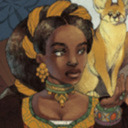
asks multiracial multicultural south asian sri lankan senegalese west african identity representation worldbuilding fantasy mythology folklore fairies deities adoption identity issues mixed experiences coding

What Makes an Ethnic Villain “Ethnic” or “Villainous?” How Do You Offset it?

anonymous asked:

Hello WWC! I have a question about the antagonist of my story. She is (currently) Japanese, and I want to make sure I’m writing her in a way that doesn’t associates [sic] her being Asian with being villainous. 
The story is set in modern day USA, this character is effectively immortal. She was a samurai who lost loved ones due to failure in combat, and this becomes her character[sic] motivation (portrayed sympathetically to the audience). This story explores many different time periods and how women have shown valor throughout history. The age of the samurai (and the real and legendary female warriors from it) have interested me the most, which is why I want her to be from this period. 
The outfit she wears while fighting is based on samurai armor, and she wears modern and traditional Japanese fashion depending on the occasion. She acts pretty similar to modern day people, though more cynical and obsessed with her loss. She’s been able to adapt with the times but still highly values and cherishes her past. 
She is the only Asian main character, but I plan to make a supportive Japanese side character. She’s a history teacher who knows about the villain and gives the protagonists information to help them, but isn’t involved in the main plot otherwise. 
Are the way I’m writing this villain and the inclusion of a non-antagonist Japanese character enough to prevent a harmful reading of the story, or is there more I should do?

Why Does Your Villain Exist?

This makes me feel old because David Anders plays a villain with this kind of backstory in the series Heroes starring Masi Oka. 

I think you want to think about what you mean when you say: 

  • Villainous (In what way? To whom? To what end?)
  • Harmful (What tropes, narratives and implications are present?)

I’m relatively infamous in the mod circle for not caring too much about dimensions of “harm”. The concept is relative and varies widely between people and cultures. I don’t see much value in framing motivations around “What is less harmful?” I think for me, what matters more is: 

  • “What is more true?” 
  • “Are characteristics viewed as intrinsic to background, or the product of experiences and personal autonomy?”
  • “Will your portrayal resonate with a large audience?”
  • “What will resonate with the members of the audience who share the backgrounds your characters have?” 

This post offers additional questions you could ask yourself instead of “is this okay/not okay/harmful.” 

You could write a story where your antagonist is sly, sadistic, violent and cold-blooded. It may not be an interpretation that will make many Japanese from combat backgrounds feel seen or heard, but it’s not without precedent. These tropes have been weaponized against people of Japanese descent (Like Nikkei Japanese interned during World War II), but Japan also brutalized a good chunk of Asia during World War II. See Herge’s Tintin and The Blue Lotus for an example of a comic that accurately showcases the brutality of Japan’s colonization of Manchuria, but also is racist in terms of how Japanese characters are portrayed (CW: genocide, war, imperialism, racism).

You could also write a story where your character’s grief gives way to despair, and fuels their combat such that they are seen as calculating, frigid and deeply driven by revenge/ violence. This might make sense. It’s also been done to death for Japanese female warriors, though (See “Lady Snowblood” by Kazuo Koike and Kazuo Kamimura here, CW: sexual assault, violence, murder and a host of other dark things you’d expect in a revenge story). 

You could further write a story where your antagonist is not necessarily villainous, but the perceived harm comes from fetishizing/ exoticizing elements in how her appearance is presented or how she is sexualized, which is a common problem for Japanese female characters. 

My vote always goes to the most interesting story or character. I don’t see any benefit to writing from a defensive position. This is where I’ll point out that, culturally, I can’t picture a Japanese character viewing immortality as anything other than a curse. Many cultures in Japan are largely defined by transience and the understanding that many things naturally decay, die, and change form.

There are a lot of ways you could conceivably cause harm, but I’d rather hear about what the point of this character is given the dilemma of their position. 

  • What is her purpose for the plot? 
  • How is she designed to make the reader feel? 
  • What literary devices are relevant to her portrayal?

(Arbitrarily, you can always add more than 1 extra Japanese character. I think you might put less pressure on yourself with this character’s portrayal if you have more Japanese characters to practice with in general.) 

- Marika. 

When Off-Setting: Aim for Average

Seconding the above with regards to this villainess’s story and your motivations for this character, but regardless of her story I think it’s also important to look specifically at how the Japanese teacher character provides contrast. 

I agree with the choice to make her a regular person and not a superhero. Otherwise, your one Asian character is aggressively Asian-themed in a stereotypical Cool Japan way (particularly if her villain suit is samurai-themed & she wears wafu clothing every so often). Adding a chill person who happens to be Japanese and doesn’t have some kind of ninja or kitsune motif will be a breath of fresh air (well, more like a sigh of relief) for Japanese readers. 

A note on characterization—while our standard advice for “offset” characters is to give your offset character the opposite of the personality trait you’re trying to balance, in this case you might want to avoid opposites. You have a villainess who is a cold, tough “don’t need no man” type. Making the teacher mild-mannered, helpful, and accomodating would balance out the villainess’s traits, but you’ll end up swinging to the other side of the pendulum towards the Submissive Asian stereotype depending on execution. If avoiding stereotypes is a concern, I suggest picking something outside of that spectrum of gentleness to violence and making her really boring or really weird or really nerdy or a jock gym teacher or…something. You’re the author.

Similarly, while the villainess is very traditionally Japanese in her motifs and backstory, don’t make the teacher go aggressively in either direction—give her a nice balance of modern vs. traditional, Japanese vs. Western sensibilities as far as her looks, dress, interests, values, etc. Because at the end of the day, that’s most modern Japanese people. 

Sometimes, the most difficult representation of a character of color is making a character who is really average, typical, modern, and boring. 

- Rina

writeblr Japanese Japanese women Villain antagonist tokenism characterization representation stereotypes immortality superheroes supervillains asks

How do I respectfully discuss the topic of diversity with a co-author, as well as assigning a race to an “ambiguous” character?

Anonymous asked:

My co-author and I, for context, are both white and in highschool. For the main cast of our story, each of us ended up creating three characters. All three of her characters were white. Two of mine were white as well, alongside one character who is ambiguously brown-skinned.

Do you have any advice on respectfully bringing up the subject of diversity to a co-author, even if it means potentially changing our established characters?

Additionally, do you have any advice on retroactively assigning a race/culture to a character? I now understand after reading this blog that “ambiguously brown” characters should be avoided, but I did not when initially creating him. I worry that I could fall into stereotypes— while portrayed positively, he’s somewhat of a “nerd” archetype. But I don’t want to whitewash him either.

“Hey, why’d you think we made a mostly all-white cast?”

In other words: Just be normal about it. As you yourself note, you also didn’t exactly put a great deal of thought into the racial/ ethnic identity for your single brown character either, so it’s not just about your writing partner. This is about how you guys like to create as a team, and what sources of inspiration you both tend to gravitate towards. If a pair of high school students who write together can’t have a chill conversation about the races of the characters they are creating, then I’d worry more for their dynamic as a creative team. Discussions of race are only as weird and awkward as people decide to make them, and that’s often framed by the baggage each person is bringing into the conversation.

Whether or not you change the characters is up to you.

“Diversity is a marathon, not a sprint!”

Write diverse characters when and because you want to. I think the push for diversity is best when it’s self-motivated. Strangers on the internet telling you to do something is definitely not the reason to do it. I’ll note the same applies IRL. Otherwise, you’re changing your behavior for the sake of peer pressure. Writing groups on the internet like our blog do not exist to sit in judgment of your work. These are venues to discuss, critique and receive feedback, but the final choice always rests with you.

There’s not enough info for me to tell if the experience of whiteness is so intrinsic to your characters that changing their race will alter them greatly. I would argue the same for gender and sexual identity. Sometimes, changing dimensions of a character’s identity alters a lot about who they are. Other times, particularly if the character is not thoroughly fleshed out, changing their race only adds to their characterization. Only you can say which scenario applies here.

Other mods have written on how to handle your dilemma of “white as default” in an earlier post available here. Please explore our #POC Profiles for more inspiration. 

Your third paragraph can be answered by re-reading all 3 sections of the FAQ and exploring our archives using the tags. 

  • Marika.
creator responsibility white white as default characters diversity asks representation writeblr
writingwithcolor
writingwithcolor

Diversity Win: Is "Crazy Rich" POC Representation Necessarily Empowering?

sodapopsculptor asked:

I’m writing a story with two sets of protagonists: A trio with a Black girl, a Latino, and a Vietnamese-American boy who all come from middle-upper class to ridiculously rich families, and a pair of white working-middle class sisters. They’re all heroes of this story.
I’ve seen way too many rich white people and poor poc people in fiction, and I’m kinda getting sick of it, but I’m worried that by having the poc kids be rich and the white girls not so much, I’ll be reinforcing the idea that poc somehow rule the world.

The only time the rich kids use their status as leverage is when the Asian threatens to sic his cop dad on a bully (race unstated but I imagined him as white) picking on a freshman, and during the Black girl’s birthday party, when she pays the biggest jock there fifty bucks (And later says offhandedly that it was just what she had in her pocket) to chase off a creep hitting on her.

OP, have you ever seen the “diversity win!” meme before?

I understand that your motivation for these narrative choices is to give POC a chance, if you will, to be the rich characters. But it is evident from this ask that you have not asked yourself what this entails. I want to ask you to critically examine the race and class intersections you’re creating here, as well as these kids’ roles in oppressive systems.

You explain that these rich POC are heroes and only have righteous reasons for leveraging their power.

  • But is your Black girl character aware of the potential disciplinary and/or legal consequences her jock accomplice might face while she has the resources to keep her hands clean? Are you?
  • Is your Asian character aware of how much of an abuse of power it is to “sic” a cop on someone, and the sheer amount of harm a criminal record or incarceration does to a juvenile with behavior issues? Are you?

So you want to put POC in positions of power for #representation.

  • Does it resonate with the group you’re representing?
  • Do you research and portray the unique ways race, ethnicity, class, and majority vs. minority status come together?
  • Or are you putting these characters in oppressive hegemonic roles for the sake of a power fantasy, on behalf of a group you're not even in?

To your question, you're not reinforcing the idea that "POC rule the world" because such a generalized belief does not exist. Instead, you're reinforcing:

  • The idea that society has “winners” and “losers.”
  • The idea that the problem with disproportionately powerful people is the lack of “equal opportunity” as opposed to the power imbalance to begin with.
  • The idea that those in oppressive positions of power need only have the right intentions to justify their use of it.

To be clear: that is not to say that you can't have jerk aristocrat billionaire millionaire crazy rich POC. Evil or mean rich characters are fun! I have some myself! You can even have rich characters who are gentle-hearted and well-intentioned, but you have to know the ways in which they’re privileged and decide how aware of that your characters are. That’s no problem.

But if you think that wealthy and powerful POC would have the same values and priorities as their poorer counterparts, you’re deluding yourself. There’s a reason why the quote “power corrupts” exists. There’s a reason why no matter where you look on the globe, there are historical dictators and tyrants.

If you want bratty rich POC who lack regard for the consequences of their actions, because you want bratty rich characters, great! If you want them because it would be uplifting or empowering representation? You’re doing it for the wrong reason.

~ Rina

I fully agree with Rina, and truly want to emphasize the last paragraph.

If you want bratty rich POC who lack regard for the consequences of their actions, because you want bratty rich characters, great! If you want them because it would be uplifting or empowering representation? You’re doing it for the wrong reason.

I don't think you need to aim to subvert or purposely make all the BIPOC rich and powerful and the white people poor and suffering. Add diversity and include upper class rich and class privileged BIPOC, sure thing! And you can avoid your fears of intentional subversion message by including rich and powerful white characters as well, even if they're not the focus of your story. Just their existence helps. You could also include middle-class characters of Color as well.

More reading: Black in upper-class society

~Mod Colette

class upper class capitalism POC creator responsibility asks representation wealth privilege subverting tropes intersectionality crazy rich asians last edited 1/8/24

Diversity Win: Is “Crazy Rich” POC Representation Necessarily Empowering?

sodapopsculptor asked:

I’m writing a story with two sets of protagonists: A trio with a Black girl, a Latino, and a Vietnamese-American boy who all come from middle-upper class to ridiculously rich families, and a pair of white working-middle class sisters. They’re all heroes of this story.
I’ve seen way too many rich white people and poor poc people in fiction, and I’m kinda getting sick of it, but I’m worried that by having the poc kids be rich and the white girls not so much, I’ll be reinforcing the idea that poc somehow rule the world.

The only time the rich kids use their status as leverage is when the Asian threatens to sic his cop dad on a bully (race unstated but I imagined him as white) picking on a freshman, and during the Black girl’s birthday party, when she pays the biggest jock there fifty bucks (And later says offhandedly that it was just what she had in her pocket) to chase off a creep hitting on her.

OP, have you ever seen the “diversity win!” meme before?

I understand that your motivation for these narrative choices is to give POC a chance, if you will, to be the rich characters. But it is evident from this ask that you have not asked yourself what this entails. I want to ask you to critically examine the race and class intersections you’re creating here, as well as these kids’ roles in oppressive systems.

You explain that these rich POC are heroes and only have righteous reasons for leveraging their power.

  • But is your Black girl character aware of the potential disciplinary and/or legal consequences her jock accomplice might face while she has the resources to keep her hands clean? Are you?
  • Is your Asian character aware of how much of an abuse of power it is to “sic” a cop on someone, and the sheer amount of harm a criminal record or incarceration does to a juvenile with behavior issues? Are you?

So you want to put POC in positions of power for #representation.

  • Does it resonate with the group you’re representing?
  • Do you research and portray the unique ways race, ethnicity, class, and majority vs. minority status come together?
  • Or are you putting these characters in oppressive hegemonic roles for the sake of a power fantasy, on behalf of a group you’re not even in?

To your question, you’re not reinforcing the idea that “POC rule the world” because such a generalized belief does not exist. Instead, you’re reinforcing:

  • The idea that society has “winners” and “losers.”
  • The idea that the problem with disproportionately powerful people is the lack of “equal opportunity” as opposed to the power imbalance to begin with.
  • The idea that those in oppressive positions of power need only have the right intentions to justify their use of it.

To be clear: that is not to say that you can’t have jerk aristocrat billionaire millionaire crazy rich POC. Evil or mean rich characters are fun! I have some myself! You can even have rich characters who are gentle-hearted and well-intentioned, but you have to know the ways in which they’re privileged and decide how aware of that your characters are. That’s no problem.

But if you think that wealthy and powerful POC would have the same values and priorities as their poorer counterparts, you’re deluding yourself. There’s a reason why the quote “power corrupts” exists. There’s a reason why no matter where you look on the globe, there are historical dictators and tyrants.

If you want bratty rich POC who lack regard for the consequences of their actions, because you want bratty rich characters, great! If you want them because it would be uplifting or empowering representation? You’re doing it for the wrong reason.

~ Rina

I fully agree with Rina, and truly want to emphasize the last paragraph.

If you want bratty rich POC who lack regard for the consequences of their actions, because you want bratty rich characters, great! If you want them because it would be uplifting or empowering representation? You’re doing it for the wrong reason.

I don’t think you need to aim to subvert or purposely make all the BIPOC rich and powerful and the white people poor and suffering. Add diversity and include upper class rich and class privileged BIPOC, sure thing! And you can avoid your fears of intentional subversion message by including rich and powerful white characters as well, even if they’re not the focus of your story. Just their existence helps. You could also include middle-class characters of Color as well.

More reading: Black in upper-class society

~Mod Colette

class upper class capitalism POC creator responsibility asks representation wealth privilege subverting tropes intersectionality crazy rich asians last edited 1/8/24

A Careful Balance: Portraying a Black Character’s Relationship with their Hair

@writingraccoon said:

My character is black in a dungeons and dragons-like fantasy world. His name is Kazuki Haile (pronounced hay-lee), and his mother is this world’s equivalent of Japanese, which is where his first name is from, while his father is this world’s equivalent of Ethiopian, which is where his last name is from. He looks much more like his father, and has hair type 4a. I plan to make his character very finnicky about his hair, both enjoying styling it, but also often being unsure how to style it (not in that he doesn’t know how to, but has so many options for how to style it, he has trouble choosing). However, I know that there are some very harmful ways to write black hair, especially in regards to how the black character themselves feels about it. Kazuki does not hate his hair, in fact he takes joy in it, and I’m researching black hair and hair styles to be as accurate as possible. But I’m unsure if portraying a black character as occasionally overwhelmed by or vain about his hair is negative. How would you suggest either changing this or making it work? Does it need to be changed in the first place?

Black Character Overwhelmed by Curly Afro Hair

Your Black character wanting his hair to look its best and at times feeling overwhelmed seems reasonable and natural to me. It appears their challenge comes with how to style it. Not so much with struggling how it looks or how hard it is to manage. That is good, as this further helps avoid placing a strong negative focus on Black hair. 

Him caring a lot about how it is style should not be deemed vain or frivolous, either. In any case, hair care is self care. There’s nothing wrong with having pride with your hair, especially hair that mainstream society, historically and present, might say is not beautiful. This still matters, even in a fantasy world, since your readers still exist in this reality. It’s empowering and a welcome change to see someone who loves their afro hair, actually.

There are unique factors someone with coily afro hair would experience vs. straight, wavy, or looser curls, but people struggling with their hair (too frizzy, too flat, too limp, too thin, too thick!) is universal. 

There is a delicate balance to achieve.

Avoid Writing a Black Hair Journey Experience 

An overall negative Afro hair journey might be the reality for many, especially when society deems Afro hair as unacceptable and slaps so many uninvited opinions, laws and policies over its existence and on certain styles (again, historically and very much at present), but that’s the kind of story that is best handled by someone with the background. Someone willing to commit to the research might also be able to pull it off, although it’s truly not the kind of thing an escapism novel needs in my opinion. If the story is not meant to delve into “A Black /Black Hair Experience” then I’d avoid going that route. That is moving a bit towards a struggle narrative, depending on how much it defines your character’s story.

Add positive and neutral hair language and interactions

For your writing, I’d avoid using unchallenged negative language about his hair. Being overwhelmed at times and frustrated is one thing and expected. If his hair is constantly brought up, and is associated with uncontrollable, ugly, or too [insert struggle here], then rethink the direction you’re going. 

Add some positive or neutral terms, reactions, and interactions in the narrative towards afro hair, such as describing color and texture.

“His fine coils bounced in the wind.” 

“Hair black and shiny” 

“She wore her hair in two large, fluffy buns.”

“He admired his fresh, neat braids in the mirror, smiling at his reflection, before turning to leave.”

Another tip: It may have been for research purposes, but leave out any hair number categorizing in the story and rely on description. I’d say this goes for any story, as reading the number would feel off. 

“He had coily 4a hair.” Nahh! :P 

Also, I would suggest sending all passages that focus on his hair to a Black sensitivity reader for review.

More reading:

~Mod Colette

asks black black hair hair afro hair description tragedy exploitation struggle novel creator responsibility representation guides writeblr
theplantqueer
downwithpeople
theplantqueer

...the media’s coverage of these new kinds of prosthetics is so focused on the initial joy or incredulity — on the idea that “lives are changed” — that they forget to ask if these hands are actually useful and what happens in the weeks and months after the unboxing.

The media narrative, says James Young — husband of Ashley and a cyborg himself — is designed to be reassuring to people: If you happen to, God forbid, lose your arm, “they” can replace it. “People want to make sure that the technology is out there that can remake you as you are right now,” he says.

For Alexis Hillard, the creator of the YouTube channel “Stump Kitchen,” the obsession with cyborgs is “continuing to drive that wedge between disenfranchised disabled people and those with money and power, creating a new ‘desirable disabled person.’”

writingwithcolor

A good read for our followers writing amputee characters in contemporary or speculative fiction settings.

As always, take this not as a message to “stop writing cyborgs/advanced prosthetics ever,” but rather to read and center disabled perspectives, understand your motivations, and trace your logic.

- Writing With Color

ableism disability amputee reblog cyborg fantasty science fiction sci fi trace your logic representation