


Chapter 59 p905
Jul. 11th, 2026 12:00 am![[syndicated profile]](https://www.dreamwidth.org/img/silk/identity/feed.png) thebrightside_feed
thebrightside_feed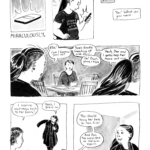
(Emily's phone lights up; she reads the message.)
Zoe (texts):
I'm going to leave him
can u help me
please
Emily (text): Yes! What do you need
(Emily runs through the dining room; Ella is at the kitchen table on her laptop.)
Emily: Ella! Can I borrow your car? Zoe's finally breaking up with Chris -
Ella: Oh! That's good, I hope
Emily: Yeah, Dee and I gotta help her move out now
Ella: I suppose she'll move back to her family?
Emily (putting on a trench coat): Yeah, I guess so.
Ella: You should bring her here for tea first! And Dee, too, we'd love to see him again.
Emily: Ok!
----
Alt text: new piercings who dis
Ready for More Anne Lister?
Jul. 11th, 2026 12:05 amalpennia_feed
My brief break is over and I have another series of Anne Lister posts coming before moving on to other topics. This is a collection of articles revolving around archival material and/or the relationship between history and popular culture.
These write-ups were done using a combination of hand-written notes and speech-to-text software, due to my broken arm. Although I've tried to do careful proofreading, the speech-to-text generated some systematic errors (like "Lester" for "Lister") and I hope I'll be forgiven if any slip through. I'm back to typing with both hands now (which provides part of my physical therapy exercises) but it's still a bit slow and painful, so it's useful to have a dozen posts all ready to go except for these introductory notes.
Donoghue, Emma, Chris Roulston, & Carolina Gonda. 2023. “Foreward”, “Introduction”, & “Caroline Gonda in Conversation with Helena Whitbread” in Decoding Anne Lister: From the Archives to ‘Gentleman Jack’, Chris Roulston & Caroline Gonda, eds. Cambridge University Press, Cambridge. ISBN 9781009280723
At the time of writing, the ebook of this publication was available through Open Access at not cost at the following url: https://www.cambridge.org/core/books/decoding-anne-lister/E6CFCB182F71891949C4709148422131
Front Matter (Foreword, Introduction, Conversation with Helena Whitbread)
Foreword by Emma Donoghue
This is the collection of papers based on material from the Lister archives, approached from a variety of angles. [Note: Not all of the material touches on her sexuality, but I will blog everything, though some coverage may be briefer than others.]
The front matter includes a forward by Emma Donoghue, an introduction by Chris Roulston (one of the editors), and a conversation between Carolyn Gonda (the other editor) and Helena Whitbread.
Donoghue gives a brief background to Lister and an exploration of some of the facets of her life that are fascinating to modern researchers and the general public. She notes some of the curious paradoxes of Lister’s life and personality.
Introduction by Chris Roulston
Roulston notes the sheer magnitude of Lister’s diaries, and provides a capsule history of them. There has been a tendency to see the diaries as a unique artifact. The lack of comparable material from the era creates problems of interpretation, as it is difficult to determine how representative they are. The papers in this volume explore both how the Lister archives shed light on 19th century history, and how 19th-century history created the conditions in which Lister existed.
The unique nature of the archive lies behind how Anne Lister has become both a scholarly and popular icon. Her life participates not only in how we see the past, but how we engage with commemorating and presenting that past. There is a constant conversation in this volume between past and present.
Lister challenged norms of gender and sexuality, but also was strongly rooted in conservative social and political realities. Due to the private nature of the diaries and the use of encryption to obscure certain content, Lister’s diaries offer an unrivaled glimpse into one woman’s thoughts on her own identity and sexuality, how those factors affected her life, and how she strove to manage those forces.
One key factor in the 19th century (and neighboring eras) was the separation of female and male social spaces, and the general acceptance and approval of romantic and intimate friendships between women. Within this dynamic, for a friendship to shift into eroticism could be trivial.
Although Lister is the lens through which we are given a glimpse into these queer relationships, she is scarcely the only woman whose same sex eroticism is detailed in the diaries. Her lovers (and there were many of them) and certain acquaintances participated in homoerotic relations without necessarily sharing Lister’s gender transgression. At the same time, Lister was not unique in the 19th century in combining homoeroticism with gender nonconformity. (This part of the introduction is also serving as a survey of key prior scholarship relevant to Lister studies.)
Lister's gender identity existed in a liminal space. She considered her behavior “gentlemanly” and on a few occasions fantasized about having a penis or passing as a man. But when one lover suggested that she should have been born a boy, Lister protested that being male would have excluded her from free access to “ladies’ society.”
While some of her lovers enjoyed – or at least accepted – sexual relationships with men, Lister is always adamant about rejecting the idea of heterosexual marriage and feeling only revulsion for male attention. Yet the idea of marriage was a strong attraction and Lister’s steady goal was to find a female marriage partner and go through conventional ritual and symbolic forms associated with it.
Although Lister’s gender and sexuality are a continual theme in her diaries, the material encompasses multiple other topics, reflected in the five sections of this volume. The introduction then summarizes the contents.
1. Caroline Gonda in Conversation with Helena Whitbread
This interview allows Whitbread to provide a personal history of how she encountered and worked with the Lister archives.
Lake Lewisia #1420
Jul. 10th, 2026 04:51 pm![[personal profile]](https://www.dreamwidth.org/img/silk/identity/user.png) scrubjayspeaks
scrubjayspeaks---
LL#1420
Down to One a Day
Jul. 10th, 2026 05:20 pmyourlibrarianThe easiest way to deal with these type of people is to disable guest comments completely."
2) Platforms sought no age proof for any of 50 test accounts declaring age 16, researchers said. "Some dummy accounts received advertisements for youth banking products, an indication the platform registered the person's age range, Hammond said. One account which signed up to Elon Musk's X claiming to be 16 was served pornographic content, he added. None of the platforms let users sign up if they declared they were under 16. But just one, Australia-based live-streaming platform Kick, refused to let users create an account without proof of age."
3) The decline in reading cuts across age groups, gender, and education levels. "From 1984 to 2025, the percentage of 13-year-olds who said they rarely or never read for fun rose from 8 to 29 percent. Every year older a child gets, the less they like to read. Robert Townsend, a program director at the American Academy of Arts and Sciences, recently ran focus groups asking high-school students how they felt about reading for pleasure. He told me that most thought of it as an alien practice."
What I found most fascinating was this study's results: ( Read more... )
4) And it's not just text that video is displacing: End of an Era: Longtime Podcast Hosts Go Quiet as Video Dominates "Over the past year, various indicators of this transition have been piling up. Marc Maron ended his program after 16 years. Al Franken, an audio evangelist going back to the days of Air America in 2004, released his final episode last week, too. And many of the remaining audio-centric stars are attempting video in some fashion. (Witness Ira Glass, who is now recording promotional clips for This American Life.)"
5) France versus Morocco. ( Read more... )
Open to: Registered Users, detailed results viewable to: All, participants: 2
Want to leave a Kudos?
The Rec Center #549
Jul. 10th, 2026 09:31 pmthe_rec_center_feedHello all! This week we’re coming to you with an on-site report from outside Taylor and Travis’s wedding, an exciting announcement about the classic sci-fi magazine Starlog, and some ominous news regarding the future of Letterboxd. Also our weekly update from Fansplaining (including some very timely reporting on generative AI in fandom!), a grab bag of multifandom fic recs, and much more! — Gav
new stuff
“‘You Can’t Get Tickets to This’: Thirty hours with the locals, cops, Swifties, and paparazzi who staked out the Tayvis wedding in NYC” by Fran Hoepfner at Vulture
“‘She can fuck up a lot,’ a woman told me, waiting for New Jersey Transit, ‘but I don’t think she can fuck up the trains.’” An on-the-ground report from the area around MSG and Penn Station—aka the armpit of New York City, as well as the location of Taylor Swift and Travis Kelce’s wedding.
“Legendary magazine Starlog is being resurrected” by Andrew Liptak at Transfer Orbit
Beloved sci-fi magazine Starlog, which shuttered in 2009, is being resurrected in time for its 50th anniversary, now headed by io9 founder and novelist Annalee Newitz. This piece goes into the history of the original Starlog alongside discussing the revival.
“Netflix Among Parties in Early Talks to Buy Letterboxd: Report” by Todd Spangler at Variety
Several entertainment companies are currently in talks to buy Letterboxd, in yet another example of corporate media trying to capitalize on a fan-driven community. It doesn’t take a genius to understand why it would be bad news for Netflix or Sony to take over an app where film buffs purposefully draw attention to hidden gems and word-of-mouth hits.
The Mandalorian and grogu is filmed in front of a live studio audience
— little lamb (@puddleofbrain.bsky.social) July 2, 2026 at 9:09 PM
new stuff: fansplaining
“Heated Rivalry is at the Center of Fanfic’s AI Reckoning” by Kayti Burt
Generative AI has been a growing problem in fanfiction for a while, but things came to a head in the ultra-fast-paced Heated Rivalry fic fandom last week, when an anonymous doc ID’ing authors who left remnants of Claude outputs in their fic was released on X. In this reported piece, Kayti surveys fan reactions, talks to Heated Rivalry fic authors, and discusses the existential threat of AI use in transformative fandom.
“The Vampire Lestat: The Queen of the Damned” by Gav
Marius and Akasha finally make an appearance in this week’s episode, as Lestat returns to the studio and Louis embarks on a mindblowingly unhealthy relationship with Claudia’s human lookalike Regina. Once again, this show is exploring a fascinating range of dysfunctional parental dynamics, a topic that overlaps with Daniel’s budding courtship with Armand.
And a note from Elizabeth: In additional Fansplaining news, this week we officially opened for pitches! You can read about everything we’re looking for (and not looking for) in our pitching guide. We are absolutely open to folks who haven’t been published in a journalistic outlet before—if you write meta and might be interested in expanding on an idea (about fandom, or about a fannish property) with the guidance of an editor, consider pitching! Just share samples of your writing so we can get a sense of your analysis and voice.
their juvenile "headcanon" vs our enlightened "literary analysis"
— kam (@stoneshipage.bsky.social) July 1, 2026 at 12:05 AM
older stuff
“The Toast”
Beloved 2010’s-era site The Toast has suddenly reappeared online! We’ll likely be re-sharing some of our favorites in this section over the coming months.
tumblr & beyond

The Vampire Lestat fanart by saevity
"can you imagine being a parent in the pokemon world and your kid comes home with one of those straight up basically human pokemon"
someone translated translated the Ea-Nasir complaint letter into Vulcan and engraved it in on a copper plate
the reality of hockey is perpetually at war with fans’ attempts at romantic rpf, unfortunately
some interesting meta on when historical fiction attempts to imbue upper-class characters with contemporary progressive values.
here’s hoping that Doctor Who unironically embraces a new era of the Wilderness Years.
fanfiction
We’ve got a grab-bag this week! Thanks so much to everyone who sent in a rec. — Elizabeth
“Jeno and Hide” by ImJaebabie. 100K words, rated Mature (with a Explicit sequel).
Fandom: NCT (Band); Ship: Huang Ren Jun/Lee Jeno/Na Jaemin
Recced by: macarmua
Backstory: Jeno, Jaemin and Renjun are members of the K-pop group NCT. In this Symbiote AU, Jeno is the human host to symbiote Jaemin, and they both have a crush on their classmate, Renjun.
Rec: This was so fun to read, unexpectedly very sweet and slice-of-life.
Content warnings: Family issues, minor homophobia
“April” by ninety6tears. 17K words, rated Explicit.
Fandom: The Long Walk - Stephen King; Ship: Ray Garraty/Peter McVries
Recced by: Sara
Backstory: This AU takes place in the same dystopian world of the novel in which teens are sacrificed in a deadly annual walking contest, but diverges from canon by showing a quite different Ray who never lost his father and happens to meet Pete in different circumstances than them both being contestants in the Walk.
Rec: All the particular ways this does and doesn’t diverge from canon are gradually revealed and handled in such a brilliant way that it makes this seem like such an obvious AU idea that the fandom should have many versions of. But this fic is surprisingly unique and inventive in its premise, not a neat fix-it or AU that takes the pairing out of the novel’s fascist version of 1970s America, but one with Ray and Pete dealing with the same hopelessness and repression that drives them in canon and still being able to become lifelines for each other in less doomed circumstances. The characterizations of both are so stunningly believable and emotionally wrought that these versions of them in some ways live more vividly in my mind than their canon selves.
Content warnings: Underage sex
“Shorelines” by Prevalent_Masters. 20K words, rated Teen.
Fandom: The Old Guard; Ships: Andy/Quỳnh, background Joe/Nicky
Recced by: Posher10
Backstory: Quỳnh is out of the Iron Maiden, and she is angry, and she goes hunting. She’ll make her family pay for forgetting her under the water, even if she still loves them under her hate.
Rec: The exploration of Quỳnh’s character is so incredibly well-done in this fic. Its depiction of her complicated emotions and motivations for her revenge easily makes it my favorite depiction of her character.
Content warnings: Graphic depictions of drowning, violence, torture, and death
“The Jaws That Snatch” by Linsky. 5.7K words, rated Teen.
Fandom: Scholomance - Naomi Novik; Ship: El Higgins/Orion Lake
Recced by: Orangistae
Backstory: Picking up from the end of The Last Graduate, El is desperate to find a way back to the Scholomance to rescue Orion, and goes to New York to learn more about enclave-building.
Rec: This fic legitimately reads like the first chapter of the next book; it perfectly captures El’s voice, has spot-on characterisation all around, and builds up to a brilliant twist that I’m now dying to see become canon.
Content warnings: Mild canon-typical horror
“Pianist’s Hands” by sabertoothhousecat. 3.7K words, rated Gen.
Fandom: 僕のヒーローアカデミア | Boku no Hero Academia | My Hero Academia; Ship: Todoroki Fuyumi/Usagiyama Rumi | Miruko
Recced by: beatrice-babe
Backstory: Rumi is the rabbit hero from My Hero Academia, and Fuyumi is the daughter of Endeavor the flame hero, and the sister of Todoroki Shouto. Fuyumi isn’t a hero herself, but is from a family of heroes.
Rec: Fuyumi doesn’t get a lot of screentime in the show but I love how she is loved in this fic. Same with Rumi, not as much screentime but this fic loves her, so seeing that is a delight, and they match so well!
Content warnings: N/A
And a vid!
“Cobra | Louis de Pointe du Lac” by fruba. 2:49, Not Rated.
Fandom: Interview with the Vampire (2022); song is “Cobra” by Megan Thee Stallion; Ship: Gen
Recced by: mischiefseven
Backstory: Interview with the Vampire is a gothic horror drama whose first two seasons focused on Louis de Pointe du Lac, a Black gay man living (and soon, undead) in the early 20th century.
Rec: I love a fanvid that gets inside a character’s head, and this one does it masterfully.
Content warnings: Canon-typical gore, violence, suicidal ideation
sorry, i don't think this friendship is working out. you depicted my favorite character with an entirely different type of foreskin from my headcanon. you clearly don't know them like i do.
— 💚🤍💙 Brave 💚🤍💙 (@brave.fatbirdlovers.org) July 2, 2026 at 1:13 PM
FINAL THOUGHT
Have a great weekend, everyone! — Elizabeth
🎶 Iceberg: a soundtrip from Arctic to Mediterranean
Jul. 10th, 2026 01:20 pmtozkaAt a time when scientific data on rising sea levels, melting ice, and ocean acidification are widely known, my role is not to repeat these figures, but to embody them, to bring them to life, to make them heard. Because understanding is no longer enough — one must feel in order to act.
This piece is an invitation to listen to a world in change. An active, committed listening that may, I hope, open the way to other narratives, to other possibilities.
July Seven Seas Survey!
Jul. 10th, 2026 04:06 pmaurumcalendula posting in ![[community profile]](https://www.dreamwidth.org/img/silk/identity/community.png) cnovels
cnovelsWill i Regret Marrying a Man To Please My Homophobic Family?
Jul. 10th, 2026 03:58 pmautostraddle_books_feedYou're considering "making it work" with a man to make your family happy, and we have concerns! Also, another reader is having a serious gender crisis and needs help, stat
The post Will i Regret Marrying a Man To Please My Homophobic Family? appeared first on Autostraddle.
fansplaining_tumblr_feedFansplaining is officially open for pitches! 🥳 Please read our guide to get a sense of what we’re looking for, and if you have any questions we haven’t answered here, feel free to get in touch! info@fansplaining.com
We posted our Official Pitching Guidelines TM yesterday, and we are now open to any and all pitches!
One thing I’d say to Tumblr folks in particular is every day on this website, I read more thoughtful, smart, nuanced analysis—on fandom itself, or on books/films/TV/etc with fannish followings—than like 95% of what gets published in the media. We want to publish you! I absolutely understand wanting to keep stuff as fandom meta, which is an important practice, but if you have a broader idea you’ve been itching to expand with the guidance of an editor, please consider pitching. You don’t need to have been published in a journalistic outlet before—just share some writing that gives us a sense of your analysis.
‘I Kissed A Girl’ S2 Episodes 7 & 8 Recap: Kiss-Off Carnage!
Jul. 10th, 2026 05:01 pmautostraddle_books_feedWhat fresh sapphic drama awaits at the messy massy?
The post ‘I Kissed A Girl’ S2 Episodes 7 & 8 Recap: Kiss-Off Carnage! appeared first on Autostraddle.
2026 2nd Set of Ducklings
Jul. 9th, 2026 05:08 pmyourlibrarian posting in common_nature
We spotted a second set of ducklings on the lake! This was somewhat distressing at first because the babies were following mama to the retaining wall, which she flew up onto and they were stuck below.
( Read more... )
Friday Friday, July 10, 2026 (On the Chud Vision of Roman History)
Jul. 10th, 2026 02:35 pmacoup_feedHey folks, Fireside this week! I’ve been a bit behind because we had some family travel followed by an issue with a water leak in the basement which has pushed me out of my normal home office space (fortunately no books or computers were harmed and we’re working on water damage restoration now). All of which has a nasty habit of throwing off your work schedule. For patrons wondering where the latest research update is – it is in much the same place, ‘coming’ and for much the same reason.

That said, I’ve wanted to do a musing for a few weeks expanding on some of my thoughts on what I am going to call ‘the chuds’1 (often also referred to as the ‘statue pfps’)2 a group of online ancient and medieval history ‘fans’ (mostly, but not exclusively, on Twitter) whose interest in the pre-modern past is anchored in extremely reactionary political ideology (generally some mix of racism, sexism and authoritarianism). I wrote something of an anthropology of this group for The Bulwark a month back, occasioned by bit of culture-war nonsense around the upcoming Odyssey adaptation which spilled over into a discussion of Emily Wilson’s translations of Homer. So I want to muse a bit on the oddity of ‘history fans’ who don’t know any history and why they end up that way.
Now, I should state at the outset that the structure of ‘chud classics’ on Twitter is a radicalization pipeline: the algorithm channels users who like more mild, less openly fascist accounts (and sometimes just straight up non-fascist ones) towards more concentrated more openly fascist accounts. As a result, there are some accounts at the ‘clean’ end of the pipe that are unobjectionable (I’ve never seen anything ‘off’ from @culturaltutor, for instance), but they’re tied together in the eco-system where if you follow one, you get recommended the others and at least some of the accounts in the middle are quite aware of what they’re doing, actively promoting accounts on the ‘sludge end’ of the pipe. This post is largely about accounts, however, on the sludge-end of the pipeline – @romanhelmetguy, @updatingonrome, @latinedisce, @thehellenist and so on. But I want to be clear, I’m not saying, ‘everyone in this pipe is a fascist,’ but I am saying, ‘the water in this pipe flows inexorably towards fascism’ (because the guy who owned Twitter has decided it should) and at the very least the fellows at the ‘clean’ end up the pipe never quite seem to denounce the sludge end.
What I want to return to is the oddity I pointed out in that piece that the chuds are both really attached to classical antiquity and also don’t know very much about it. Because the inciting incident was a debate over translating Homer, that point got expressed mostly in terms of the fact that a lot of the largest chud accounts that purport to explain antiquity to others don’t know Greek (which makes it pretty hard to have a useful opinion on a translation)! But that is hardly to limit of it: right after the Homer debate, one of the larger chuds got into a second argument with some actual classicists, outraged, Outraged! that they consider the stories in the first couple of books of Livy as basically fables, evidently unaware that among the figures who think the first five books of Livy might be unreliable is…Livy himself! He says as much at the beginning of book 6! But of course the fellow had never read beyond the cool legends in the first two books and so had no sense that the character of Livy’s history of Rome changes quite significantly as Livy gets access to better sources.
And I initially found that lack of knowledge actually kind of puzzling, because the chuds don’t have deep knowledge about any part of ancient or medieval history. That was initially surprising. Working on pre-gunpowder arms and armor, I am used to history enthusiast spaces (like HEMA or historical dress YouTube and such), where you have a lot of passionate, often self-taught folks who are interested in history. And the thing is, there’s a pattern for those folks, which is that they tend to have odd gaps and assumptions in their knowledge, but they also tend to be a mile deep in the details of the specific things that interest them. It’s the classic, ‘guy who has at best a fuzzy sense of what Reconstruction was but can tell you the exact position of every Maine regiment at the Battle of Gettysburg, hour by hour’ sort of thing. Don’t get me wrong – that can have its own problems (especially for the American Civil War) – but there’s deep knowledge about something there.
To put it in a metaphor, when it comes to a topic, a trained professional historian’s knowledge is often like a swimming pool that smoothly slopes from the shallow end to the deep end, while the autodidact enthusiast is sometimes more like a shallow puddle with really deep potholes. As a history educator, engaging with that autodidact enthusiast can be really rewarding, because they are often really excited to let you basically ‘widen’ their potholes, to overstretch the metaphor.
But the chuds…it’s just a puddle. Not especially wide or deep.
This really started striking me when I got a bunch of them mad about ‘Great Man’ history (a topic we need to address at some length at some point), because they all had the same very short list of available ‘great men.’ For antiquity, it was Julius Caesar and Alexander III over and over again.
Put aside the problems with pure, uncut ‘Great Man’ history. Never Demosthenes or Iphikrates or Seleucus I Nicator. Or on the Roman side, always Julius Caesar, never Quintus Fabius Maximus Cunctator, Publius Cornelius Scipio Africanus (or Lucius Cornelius Scipio Asiaticus), Titus Quinctius Flamininus, or Lucius Aemilius Paullus, much less Appius Claudius Caecus or Marcus Tullius Cicero. Or, of course, our boy, the man, the legend, Publius Ventidius Bassus ::airhorn sounds::. Of for the guys who are really into the crusades (for really unfortunate reasons), it’s all vague AI images of ‘crusaders’ (invariably Templars), rather than anyone, like, pouring over the details of the Siege of Acre (1189-1191) during the Third Crusade. The pool of their knowledge is all puddle, no potholes – there’s no depth anywhere.3
Which is so strange if you approach the ‘chud community’ as a group of misguided ‘history buffs,’ but suddenly makes sense if you understand them effectively working backwards to their fascination with antiquity.
They mostly begin with the modern ideology, which as I document in The Bulwark piece, is generally a mix of authoritarian-inflected bigotry, with the core beliefs being a mix of white supremacist (often expressed as a hatred of non-white immigrants) and homophobia, often with a decent amount of misogyny and antisemitism thrown in. The precise elements are generally negotiable because the commitment is emotional and irrational, because – as Umberto Eco famously noted – that is the nature of fascism as an ideology: it is an emotional rejection of the universalizing principles of the Enlightenment and liberalism first which searches for rationalizations second.
I actually wrote this all last Monday and then, after I had written it all, Vice President Vance, of all people, provided a nearly perfect perfect example of this process of working backwards from ideology to the past. In a passage in his book (which I encountered via a New York Times article) about one of his favorite prayers, he declares the prayer “feels medieval” but was in fact written in the 19th century (in the rather specific context of the threat to the Pope’s temporal authority – that is, his power as an earthly, secular prince – against the newly created Kingdom of Italy) – and it feels medieval and mystical to him specifically because “you could almost see the angels and demons doing battle” fitting an ideological need for confrontation and heroism even though its origins are not medieval or mystical at all, but quite modern and also rather earthly. Vance acknowledges the actual date of the prayer (though not its political context), but it doesn’t bother him: what matters is that the prayer can be mobilized to fit his ideological needs, not that it actually fits any particular historical context.

So the emotion – the feeling of alienation and disgust from living in a liberal, multiethnic society – come first and the rationalization and search for a new anchors for identity come second. And if all you know about antiquity is what one might learn in an undergraduate course or in high school, it seems initially like a useful ‘anchor’ for that emotion. What they ‘know,’ after all, is that Greece and Rome are the origin point of something called ‘western civilization’ which is either the reason for or a demonstration of the essential ‘special-ness’ of white people (and thus makes them special boys, a necessary salve for their wounded egos) and that those ancient societies had ‘heroic’ leaders who serve to satisfy both the fascist quest for the cult of heroism but also provide archetypal ‘manly men’ who can serve as an anchor for their wounded masculinity because (as Eco notes!) masculinity-anxiety is at the heart of the emotional brew of fascism.
Of course almost all of that is sublimated. What is visible is that their interest in antiquity is focused on on using it as a ‘proof’ for their ideology, rather than for the sake of interest or curiosity. So they seize on individual elements that seem ‘manly’ or ‘heroic’ or which reinforce a white supremacist or male-dominant ideology because the purpose isn’t to understand the Romans but to provide a comforting salve to their wounded feelings.
Which also explains why they don’t ever go deep, develop those ‘potholes’ of knowledge: because while classical antiquity might look at a great distance like a comforting resting place for their ideology, up close it doesn’t fit at all. Instead, it offers quite a lot of challenges. Ancient stereotypes and bigotries do not map cleanly on to modern racism and in any event the clear tendency from classical antiquity is that diversity was a winning strategy – societies that more successfully and more fully incorporated culturally and ethnically different groups won. Societies that stayed small and homogeneous lost. And quite a few ancient writers – Livy, Polybius, even Philip V of Macedon, of all people – recognized this at the time!
Greek and Roman values map very poorly onto the strength-first ‘John Wayne’ style masculinism (‘strength’ or do-what-it-takes ruthlessness are both well down the list of core masculine virtues for either the Greeks or the Romans, but central for this strain of quite badly impoverished modern masculinity) these fellows generally favor and ancient authors, as I note in The Bulwark piece, regularly caveat and question even the value of a ‘heroic life’ of that sort. Instead, the ideal Roman leader is presented as a sober, prudent sort of fellow, with an inherent courage and drive (that’s virtus), but restrained by educated virtues (often captured in the word humanitas) which included clemency and mercy (clementia, mansuetudo).
And of course I imagine we all have no problem grasping the inherent risibility of these guys, nearly all of whom are quite open and aggressively homophobic, being very fond of ancient Greece.
Which in turn serves to explain why – whereas most enthusiast communities quite like it when academic experts engage with them – these fellows hate academic classicists. Because we insist on showing up with the more complex, more grounded, more accurate version of antiquity which does not fit their ideology and so does not comfort their wounded egos and fragile feelings. What they want is simply a recitation of the simplified high school level antiquity, blurred over enough to fit that ideology. Or as one of them put it, the problem with Classics is that, “Classicists chose to privilege the scientific study of the text…deliberately abandoned the prior noble emphasis of what the texts might be said to teach: Greatness!.”
(It is worth noting that while quite a few ancient authors describe the purpose of their writing as providing a knowledge of human affairs and human nature (Thucydides) or a corrective to conduct (Polybius, Plutarch), the idea that they were writing instruction manuals for achieving greatness (magnitudo, ‘greatness’ is not a core Roman value) is largely absent. Instead, the idea that the purpose of studying history is to emulate the habits of great men in order to achieve heroic greatness is a modern one, advanced by Thomas Carlyle, the original “Great Man Theory” historian, although it has precursors in the medieval and early modern genre of “mirrors for princes” (although these generally present themselves as training virtue rather than “greatness,” often focusing more – as Roman and Greek writing did – on restraint in rule than on the achievement of “greatness.” Again, real history is more complex and interesting than the chud’s ‘Boy’s history’ version of the past, to their considerable annoyance.)
Now I want to say two more things before we move on. First, I don’t want this analysis to be taken to mean I think it is impossible to do good, rigorous history from what we might understand as ‘conservative’ principles. Indeed, I think it quite clearly is – a scholar trying to understand why the Romans are so successful at obtaining and then maintaining an empire, for instance, might be seen as embarking upon a conservative project. Likewise, there’s an obvious “Burkean” conservative angle to the study of the collapse of the functioning norms of the Roman Republic. On the flipside, there are ideologies – generally extremist ideologies, like fascism – which simply cannot survive sustained contact with the historical evidence and it is thus not surprising that fascists thus reject the historical evidence even as they engaging in a ‘cult of traditionalism.’ They cannot let the real past get in the way of their imagined past, after all.
Secondly, I want to be clear as to what my project is when it comes to engaging in spaces that have ‘chud classicists’ in them. I am not trying to convince the chuds. Someone cannot be reasoned out of a position they did not reason themselves into and as I hope I’ve demonstrated the chuds do not believe what they do because of careful reason and study: they believe it because it coddles their wounded egos and fragile injured feelings. No amount of careful study will change the fact that these fellows have the emotional maturity of spoiled children.
However, what I do not want is for other folks coming into these spaces to assume that ‘chud history’ is the only kind, much less that the past corresponds to it. My goal in engaging, to the degree I do, is thus to make clear that a better, more rigorous, more sophisticated, more complex vision of the past exists, to put up a flare to signal, “if you want knowledge, facts and understanding, rather than coddled feelings, seek them in these other places.” It is then up to those folks to decide which they prefer: the comforting lie or the discomforting truth.

On to Recommendations:
First a few of my own things! As noted above, this week’s fireside topic was occasioned by a piece I wrote for The Bulwark, “Why Stone-Faced Fascists Keep Getting Antiquity Wrong” about a month ago. I then also had a chance to stream a live conversation on the topic with archaeology Flint Dibble; you can watch the recording of the conversation, “The Rise of Chud Classics” on Youtube.
I’ve also had a number of unrelated podcast appearances; I can’t remember which recent ones I have linked here, so I’ll just roundup the bunch. I sat down with Ancient History 101 to talk about the First Punic War, with Frames of Space to talk about insurgencies, protest movements and pushing back against the state, and with The Prancing Pony Podcast to talk about some of the military aspects of Tolkien’s Unfinished Tales (for two hours because I had a lot to say).
On for things that are not me. First, I want to note again Ancient History 101, Alexandra Sills’ new ancient history podcast, which is steadily building up a really impressive back-catalog of episodes with experts on exciting topics. The episodes range from topic themed episodes (“Slavery in Roman Society” or “What is the Spartan Mirage”) to more historical-events coverage or biographical (like episodes on Domitian, Themistocles and Fulvia) and even some ‘inside baseball’ on Classics (“How Do Museums Work?” “What is ‘Classics’ Anyway?”). Absolutely something to throw into your podcast rotation if you are even a little interested in antiquity.
In modern military theory reading, the mononymous James had a good short essay on where drones fit into modern warfare, making the argument – which I think is correct – that right now drones are working as just another kind of fires, filling capabilities that other weapon-systems could already do, only more cheaply. That’s not nothing, mind you: providing a capability in greater quantity or at lower cost can have a huge effect, but I think it calibrates expectations more accurately to the kind of changes we should expect to see in war as a result of drones: a change, to be sure, but perhaps not (yet) a revolution.
For this week’s book recommendation, I am going to recommend a very new book, J. Parshall, 1942: Crux of War (2026). Longtime readers will doubtless recognize Parshall as half of the author team behind the fantastic Shattered Sword (2005), the very second book recommended on this blog back in 2020.
The topic of 1942 is right there in the title: the book is a history of the Second World War in 1942, taking that year – which it argues was the crucial year – month by month. This is a great case of a situation where the book’s argument is tightly intertwined with its structure. Parshall argues that no individual battle in 1942 was decisive but that the year, taken in its totality across all theaters, was decisive, so his month-by-month structure serves to let the reader take in all of the theaters together (as someone would have done at the time!), rather than having them split up (as is more normal). Parshall also does a great job here of keeping a truly global perspective, refusing to leave out fighting in China, on the Eastern Front, in the Atlantic and so on, which sometimes get left out of other accounts. That requires, of course, a lot of very good writing to keep a reader anchored in what is going on as they shift theaters, but fortunately, Parshall is a very good writer and makes heavy use of maps and diagrams that accomplish the task.
Equally valuable, Parshall keeps an eye on the overall strategic situation throughout. The book opens with a summary of all of the major powers’ situations at the war’s start and poses to each a few strategic questions – the things they must do or avoid in order to be victorious. That creates a sort of benchmark against which the monthly progress can be tracked and helps the reader follow the significance of what is happening. Combined with the occasional ‘thematic’ sections within a given month, tracking one aspect of the war over a longer time frame, the book does a remarkable job keeping the reader connected both to the events of the moment and also the broader picture.
This book honestly is a masterpiece, a remarkable achievement. It’s also a lot of book, in the best possible way. The book itself runs some 1200 pages; it has the months marked on the side of the page for easy navigation. It has dozens and dozens of maps, images and diagrams. It is exhaustively well-cited. And it is really effectively and clearly written. Absolutely give it a look.
Ten Forward Income and Expense Report July 2026
Jul. 10th, 2026 02:00 pmtenforward_blog_feedThis is Ten Forward’s income and expense report for July 2026 which as usual means that all of these values are what happened in June 2026.
So without further ado, let’s get into it.
Income and Expenses Table
| Income (Currency-Normalized) | |
| Source | Amount |
| Patreon | CA$143.22 |
| Stripe (Ko-Fi, Direct) | CA$187.50 |
| Total | CA$330.72 |
| Expenses (Non-Currency-Normalized) | |
| Source | Amount |
| Nodeping | $25.00 |
| BigScoots | $52.90 |
| rsync.net | $21.00 |
| Linode | $181.00 |
| Bunny.net | $10.00 |
| Expenses (Currency-Normalized) | |
| Source | Amount |
| Nodeping | CA$36.21 |
| BigScoots | CA$76.62 |
| rsync.net | CA$30.41 |
| Linode | CA$262.14 |
| Bunny.net | CA$14.50 |
| Total | CA$419.88 |
| TFSF (Income – Expenses) | -CA$89.16 |
| Previous Month’s TFSF balance | CA$3,616.89 |
| New TFSF Balance | CA$3,527.73 |
Notes
Most important thing of note is that we are back in the red this month. This is caused by a decrease in our income and a stronger US Dollar resulting in slightly increased Canadian Dollar expense amounts.
Observing our Bunny CDN bandwidth usage – it is trending upwards, we are still within USD$10.00/month of bandwidth usage but it is likely that expense will go up to USD$15.00/month in the future if current trends continue.
Summer 2026 Fundraiser
Considering the above factors, I have started another GoFundMe fundraiser to raise funds to cover income deficits and expense increases over the coming year.
The fundraiser link is here. Please share as widely as possible and consider contributing if you are able to. Any amount helps. We are already off to a great start with the fundraiser and I am very grateful to everyone who has contributed to the fundraiser already.
Ten Forward’s registrations are also now closed and new signups will require a one-year subscription to our Tier 1 subscription.
The other donation methods are of course still available, if that is what you prefer.
Yearly Stripe subscriptions are especially welcome at this time as they help smooth over drops in monthly income.
Thank you all for your continued support.


7 Days to GO!!!
Jul. 10th, 2026 08:48 amslashmommy posting in dcslash

Reading Makes You a Better Flirt
Jul. 10th, 2026 12:00 pmautostraddle_books_feedBut only if you read with attention and curiosity.
The post Reading Makes You a Better Flirt appeared first on Autostraddle.
Path To Democracy walking tour; Intestinal parasite 101; World Cup 'coachable moment'
Jul. 10th, 2026 12:10 pmbillypenn_newsletter_feed
|


20 Guardian icons
Jul. 10th, 2026 06:24 amabyss_valkyrie posting in sid_guardianHere are 20 Guardian icons that were posted for various comms, now compiled in this post. :D
All icons are free to take and use.
Preview:


Sugita Hisajo (1890-1946)
Jul. 10th, 2026 06:24 amnnozomi posting in senzenwomenIn 1916, she began to release her feelings by writing haiku (with some help from her brother, Akahori Gessen). “Mending his socks / Can’t aspire to Nora / Wife of a teacher,” she wrote wryly. When her father died, she stayed in Tokyo after his funeral until Unai threatened her with setting fire to their house in her absence. Here Hisako began submitting her writing to the literary journal Hototogisu [Woodpecker], using the name Hisajo. She encountered the poet Takahama Kyoshi and became his fervent admirer.
In 1920, after a failed attempt at divorce, she gave up writing for a while in order to mend her household situation; in 1922 she and her husband were both baptized as Christians. At some point she began writing again, coaching younger poets and receiving a national award for haiku in 1931. The following year she founded her own short-lived women’s haiku journal, and later in the same year became one of the first women officially included in the Hototogisu group.
She longed to publish a collection of her poetry and pleaded in person and in writing with Takahama for him to write an introduction, without effect (although he had previously praised her poems as “holding a special position as women’s writing which no man could imitate”). In 1936 she was dismissed from the Hototogisu group, for reasons which remain unclear but left her very depressed. In 1939 she wrote out all her haiku and selected her own personal best as well as adding new ones.
She died in 1946 at the age of fifty-six, from kidney disease worsened by wartime malnutrition. Her poetry collection was finally published posthumously, by her daughter Masako, in 1952.
Sources
Mori 1996
https://thehaikufoundation.org/omeka/files/original/058d73fcc329211504c69fe30d025655.pdf (English) Article on Hisajo’s poetry and life
https://worldhaikureview.wordpress.com/2023/04/20/one-hundred-haijin-sugita-hisajo-2/ (English) Analysis of Hisajo’s poems