Journal Articles by Summer Courts

Divine and mortal gamblers Good times in the Roman world
Clio. Women, Gender, History, No. 56, Women at play, 2022
Modern studies of gaming and gambling in Roman world concentrate primarily on elite male players,... more Modern studies of gaming and gambling in Roman world concentrate primarily on elite male players, but the written and iconographic records provide ample evidence for female gamers from all walks of life. This contribution collates textual and iconographic evidence, until now largely overlooked, for the information it can provide about women and gameplaying in Ancient Rome. It explores the relationship between gaming and the feminine, from goddesses to grandmothers, and sheds light on the social implications of gaming and gambling for non-male players. Female gameplaying was widespread and could take a range of different forms, performed in different contexts. By analyzing these texts alongside each other for the first time, we can arrive at a more developed understanding of female gameplaying in Rome and move beyond existing paradigms, which are overly reliant on a few of the most famous textual passages.
Des joueuses divines et mortelles. Du bon temps dans le monde romain
Clio, Nov 30, 2022
Les études modernes sur les jeux de hasard et d’argent dans le monde romain se concentrent princi... more Les études modernes sur les jeux de hasard et d’argent dans le monde romain se concentrent principalement sur les joueurs masculins de l’élite, mais les sources écrites et iconographiques fournissent de nombreuses preuves de la présence de joueuses de tous horizons. Cette contribution rassemble les témoignages textuels et iconographiques qui, jusqu’à présent, ont été largement négligés quant aux informations qu’ils peuvent fournir sur les femmes et le jeu dans l’Antiquité romaine. Elle explore la relation entre le jeu et le féminin, des déesses aux grands-mères, et met en lumière les implications sociales du jeu et des paris pour les joueuses. Le jeu féminin était très répandu et pouvait prendre des formes différentes dans des contextes variés. En analysant ces textes ensemble pour la première fois, nous pouvons saisir de manière plus riche et nuancée l’importance du jeu au féminin à Rome en révisant les modèles existants trop dépendants de quelques textes célèbres.
GameTable COST action: kickoff report
ICGA journal, Apr 12, 2024
The GameTable COST Action kickoff, focusing on "Computational Techniques for Tabletop Ga... more The GameTable COST Action kickoff, focusing on "Computational Techniques for Tabletop Games Heritage," took place at Leiden University in the Pieter de la Court Building from January 29th to 30th, 2024. This event aimed to convene researchers from diverse backgrounds involved in the Action, offering an opportunity to present an overview of the key research areas, share concrete case studies, and facilitate discussions and idea exchanges across fields that may not typically intersect, thereby enhancing the organization of the Action. This report provides a summary of the organization and discussions of the event, and future plans for GameTable.
Board Game Studies Journal 17, 2023
Characterised by the presence of multiple depressions or pockets in a variety of arrangements, an... more Characterised by the presence of multiple depressions or pockets in a variety of arrangements, and, in some cases, the presence of a single, double, or triple ‘start line’ carved into horizontal stone surfaces, marble lanes in their variety of forms open a window onto ancient play that few have looked through. Thought to be a playing surface for some kind of throwing or rolling game which involved the use of glass or ceramic spheres, Roman marble lanes have received comparatively little attention in the recent upswing of scholarship on ancient play, partially as a result of the relative dearth of textual and iconographic sources discussing or depicting their usage, but these
playing surfaces nevertheless represent a major corpus of ludic material. This contribution summarises past work on marble lanes before exploring the limited textual and iconographic source material related to playing with marbles. It offers a tentative new typology by which to categorise marble lanes and a non-exhaustive list of these playing surfaces recorded at archaeological sites around the Mediterranean. It then moves onto a discussion of the game/games that may be played on these boards, arguing that the wide variations in the different layouts for marble lanes may indicate that they were used not for one tightly defined game, but more likely facilitated the playing of a loosely connected family of games, with implications for how we think about communities of play in the past.
Lucerna 57, 2019
This contribution draws together a corpus of c.100 gaming boards from Roman Britain cataloged by ... more This contribution draws together a corpus of c.100 gaming boards from Roman Britain cataloged by type. The data show that three types of games were played in Britain during the Roman period with a heavy emphasis on game playing among military communities, though board gaming also took place to a lesser degree in rural and urban civilian contexts. PDF available upon request.
Pallas 119, 2022
You might have been there: losing a cherished piece from your favourite boardgame and searching f... more You might have been there: losing a cherished piece from your favourite boardgame and searching for a way to still play without it. Perhaps you used a substitute: a coin, a piece of cardboard, or a piece from another gaming set, or you bought a new one from the specialist retailers which now cater to this niche market. Abundant finds of gaming pieces from a huge variety of contexts across the Roman world underline that accidental loss of gaming paraphernalia is by no means a modern phenomenon, but little attention has been given to the impact of losing a gaming piece on the experience of ancient board gaming. This paper suggests that we may occasionally be able to detect evidence for substitutions in “patchwork” gaming sets, which comprise an asymmetrical mix of counters of different styles or materials. This asymmetry may arguably sometimes arise from a set of counters composed over time, as pieces are lost, broken, or given away, whether as gifts to the living or to the dead. We suggest that the object biographies of gaming sets made up of a mixture of materials would
have evoked the memory of past games and previous gaming partners.
PALLAS , 119, 2022, pp. 241-262
Roman Finds Group Datasheet 13, 2021
ISSN 2634-4491
When we think about games in the Roman world, many of us may first conjure up... more ISSN 2634-4491
When we think about games in the Roman world, many of us may first conjure up vivid images of the arena; it is perhaps less likely that our immediate thoughts will be of board games. The study of Roman board games has until recently focussed on the reconstruction of gaming rules from textual references and surviving board de-signs. New work is now increasingly putting the social aspect of leisure time into greater fo-cus, through the collation and analysis of corpora of gaming paraphernalia, primarily boards, dice and counts. This datasheet arises from a research project undertaken by the authors which aimed to unite the evidence for all gaming boards in Roman Britain and to examine their distribution (for a preliminary report, see Courts and Penn 2019). It will provide a concise guide to the identifi-cation and significance of known board game types from Roman Britain. A full digital catalogue of over 100 boards, along with a detailed analysis, will be published elsewhere.
Book Chapters by Summer Courts
T. Penn and S. Courts. (2024). ‘Glass.’ In P. P. Creasman, N. Doyle and C. Shelton (eds.) Petra's... more T. Penn and S. Courts. (2024). ‘Glass.’ In P. P. Creasman, N. Doyle and C. Shelton (eds.) Petra's Temple of Winged Lions: Excavation and Conservation Projects 1973–2005 and 2009–2021. American Center of Research Monograph Series, Amman. 583-614
S. Courts. (2024). ‘Worked Bone.’ In P. P. Creasman, N. Doyle and C. Shelton (eds.) Petra's Temple of Winged Lions: Excavation and Conservation Projects 1973–2005 and 2009–2021. American Center of Research Monograph Series, Amman. 661-674
T his chapter presents worked bone objects found during Hammond's excavations in Area II, as well... more T his chapter presents worked bone objects found during Hammond's excavations in Area II, as well as those recovered from dumps that were sifted during the Temple of the Winged Lions CRM Initiative. Finds from Area I-a domestic complex about 75 m east of the Temple itself-are not discussed here; they will be considered at a later date. It is worth noting, however, that in the absence of contextual information, some of the nds from the dumps may have originated in this area. Some worked bone objects relating to care of the body and/or personal adornment are also discussed Chapter 16. Most of the nds presented in this chapter relate either to textile production, dining, or personal leisure and entertainment. Despite limited contextual information, the assemblage merits publication because it may:
In Games in the Ancient World: Places, Spaces, Accessories, 2024
Book Reviews by Summer Courts
Clio, Nov 30, 2022
Ce document a été généré automatiquement le 15 janvier 2024. Le texte et les autres éléments (ill... more Ce document a été généré automatiquement le 15 janvier 2024. Le texte et les autres éléments (illustrations, fichiers annexes importés), sont « Tous droits réservés », sauf mention contraire.
Review: Bioarchaeology of Injuries and Violence in Early Medieval Europe
Medieval Archaeology, 2023
Archaeological Review from Cambridge, Apr 2018
A Review of Infancy and Earliest Childhood in the Roman World: 'A Fragment of Time' By Maureen Ca... more A Review of Infancy and Earliest Childhood in the Roman World: 'A Fragment of Time' By Maureen Carroll
Conferences by Summer Courts

Monsters Conference, 2022
Limina Journal in collaboration with the ARC Centre for the History of Emotions and the Classics ... more Limina Journal in collaboration with the ARC Centre for the History of Emotions and the Classics Department at the University of Reading host a four-half day conference on the theme of 'Monsters'. Papers will be presented both in-person and virtually (via Microsoft Teams) with the first two days based at the University of Reading, UK and the latter two days based at the University of Western Australia, Perth.
The conference papers cover a wide range of topics themed around the concept of Monsters and Monstrosity from monsters' presence and construction (or deconstruction) in various media and genres, including mythology, literature, and film to the concept of monstrous 'othering', especially around women and female bodies. The conference papers cover monsters from antiquity to contemporary times and representations of monsters from across the globe.
This conference also features a poster session, a special exhibition at the Ure Museum in Reading (which can be seen virtually as well as in-person), and three fantastic and exciting workshops on: The GLAM Sector and Academic Engagement, Australian Gothic Literature, and The Monstrous Witch - A Manifesto.
The conference will feature three keynote speakers:
• Prof Marguerite Johnson (Newcastle) speaking on 'Making a Monster, or Justifying Hunting Women'
• Dr Ionat Zurr (UWA/SymbioticA) speaking on 'The Monstrous Act of Caring and Curating'
• Dr Victoria Flood (Birmingham) speaking on '"I Want to Believe": Medieval Monsters and the Limits of Credibility'
Conference Posters and Podium resentations by Summer Courts
The Social Distribution and Transmission of Gaming in Roman Britain: Evidence from a New Corpus of Gaming Boards
Delivered at ERC Locus Ludi workshop: "Boardgames in context", Fribourg, Switzerland. 18/12/2019.
Gaming in Roman Britain: textual tropes and material evidence
(A talk given at the University of Edinburgh Classics Postgraduate Seminar, 6/2/2020).
The enjoy... more (A talk given at the University of Edinburgh Classics Postgraduate Seminar, 6/2/2020).
The enjoyment of leisure time is an important part of the human experience. While much scholarly effort has been applied to investigating top-down entertainment types embodied by amphitheatre games or races in the circus, board gaming, a do-it-yourself kind of leisure activity, has received comparatively little attention. Past work has made important progress in reconstructing the rules of ancient games; examining the transmission of different kinds of games within the Roman world; and elucidating the connections between gaming, gambling and literacy. A common assumption running through many studies has been that gaming is characteristic of urban contexts where surplus currency and time allowed for gambling, a view which draws substantial support, at least in Italy, from textual sources. However, it is unclear whether this assumption holds true for the Roman Provinces, with their greater military presence. This paper contrasts these textual accounts with the material evidence for gaming and gambling in Roman Britain. Objects under consideration include dice, gaming pieces, and above all, gaming boards. Our own recent research on the distribution of gaming boards in Britain shows that the majority come from military contexts, and about as many gaming boards were found at rural sites as in cities. Additionally, there are divergences in the types of games played by different social groups, with communities connected to the army playing a wider range of games. Through consideration of the material evidence, we can therefore gain new insights into everyday leisure in Britain under the Roman Empire.
TRAC, 2019
In recent decades research on the Romano-British life-course and gendered experience have become ... more In recent decades research on the Romano-British life-course and gendered experience have become increasingly popular. However, these studies tend to be of limited scope and often utilize only a single form of evidence e.g. burial goods or epitaphs to divide lived experience by sex, age and variable social events (such as marriage). As a result, research into the adult life-course has focused primarily on the elderly or young women, thereby consigning the remaining years of adulthood to be studied as a monolithic unit covered without sufficient detail. This contribution provides a first step towards readdressing the balance in Roman British gender and age studies by problematizing the treatment of adult life course.
Society for the Study of Childhood in the Past Annual Conference 2018, 2018
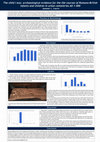
Infant funerary rites in Roman Britain have been studied intensively in recent years. Yet where s... more Infant funerary rites in Roman Britain have been studied intensively in recent years. Yet where studies concerned with infant life-course and socio-cultural experience are made, they are frequently limited to single site analysis.
This paper redresses the balance by examining the evidence for individuals from birth until six years of age in Southern Britain between AD 1-400. Focussing on selected extramural cemeteries at London, Dorchester and Gloucester, it argues that the funerary evidence from these sites reveals a series of distinct life stages. Whilst perinates are often excluded from the main urban cemeteries and buried elsewhere, infants become progressively better represented with increasing age. Moreover, grave goods indicate a distinct, and apparently universal, life-stage occurring between the first and second year of life. This particular life-stage was probably determined by developmental events such as increased mobility and language use. It is also possible to outline microregional trends, which appear to have been dependent on local pre-Roman practices specific to individual sites.
By expanding our knowledge of Romano-British infant life-course this study provides much-needed nuance to our narratives of the transitions between different stages of childhood for those living in Britain in the first half of the first millennium AD.
Organization of conferences and seminars by Summer Courts
Computer Applications in Archaeology
Computational approaches are transforming the way we understand and preserve cultural heritage. O... more Computational approaches are transforming the way we understand and preserve cultural heritage. One emerging-and presently underexplored-area is the application of Artificial Intelligence (AI) and other computational methods to traditional games. Traditional gamesparticularly board games-offer a unique window into the past, reflecting social norms, values, and behaviours that are at risk of being lost due to their intangible nature. The rules, playing contexts, and embodied practices often remain undocumented or only partially preserved. Though existing studies (Crist et al. 2024; Browne 2023; Donkers et al. 2000) have made strong opening moves, the field is still in its early game. Much of the board remains unexplored, with significant potential for computational methods to advance our understanding). This sessionorganized by the COST Action (CA22145) Computational Techniques for Tabletop Games Heritage ("GameTable")-aims to expand on the themes of our upcoming special issue in JOCCH (Journal on Computing and Cultural Heritage). This session will explore the reconstruction and preservation of traditional games, viewing them not merely as leisure activities but as rich cultural artifacts and historical narratives that are vital for a deeper understanding of human societies. By integrating perspectives from archaeology, artificial intelligence, and cultural studies, this session will allow us to "replay" the past and begin writing the playbook for how computational methods can help illuminate the playability, strategies, and social functions of traditional board games.
Journal on Computing and Cultural Heritage, 2027
We're delighted to announce our special issue on Computational Techniques for Games Heritage with... more We're delighted to announce our special issue on Computational Techniques for Games Heritage with JOCCH.
The uniting question of this Special Issue is: “How can computational methods help us explore the playability, strategies, and social functions of historical board games?”
If you're interested in contributing, please do get in touch!



Uploads
Journal Articles by Summer Courts
playing surfaces nevertheless represent a major corpus of ludic material. This contribution summarises past work on marble lanes before exploring the limited textual and iconographic source material related to playing with marbles. It offers a tentative new typology by which to categorise marble lanes and a non-exhaustive list of these playing surfaces recorded at archaeological sites around the Mediterranean. It then moves onto a discussion of the game/games that may be played on these boards, arguing that the wide variations in the different layouts for marble lanes may indicate that they were used not for one tightly defined game, but more likely facilitated the playing of a loosely connected family of games, with implications for how we think about communities of play in the past.
have evoked the memory of past games and previous gaming partners.
PALLAS , 119, 2022, pp. 241-262
When we think about games in the Roman world, many of us may first conjure up vivid images of the arena; it is perhaps less likely that our immediate thoughts will be of board games. The study of Roman board games has until recently focussed on the reconstruction of gaming rules from textual references and surviving board de-signs. New work is now increasingly putting the social aspect of leisure time into greater fo-cus, through the collation and analysis of corpora of gaming paraphernalia, primarily boards, dice and counts. This datasheet arises from a research project undertaken by the authors which aimed to unite the evidence for all gaming boards in Roman Britain and to examine their distribution (for a preliminary report, see Courts and Penn 2019). It will provide a concise guide to the identifi-cation and significance of known board game types from Roman Britain. A full digital catalogue of over 100 boards, along with a detailed analysis, will be published elsewhere.
Book Chapters by Summer Courts
Book Reviews by Summer Courts
Conferences by Summer Courts
The conference papers cover a wide range of topics themed around the concept of Monsters and Monstrosity from monsters' presence and construction (or deconstruction) in various media and genres, including mythology, literature, and film to the concept of monstrous 'othering', especially around women and female bodies. The conference papers cover monsters from antiquity to contemporary times and representations of monsters from across the globe.
This conference also features a poster session, a special exhibition at the Ure Museum in Reading (which can be seen virtually as well as in-person), and three fantastic and exciting workshops on: The GLAM Sector and Academic Engagement, Australian Gothic Literature, and The Monstrous Witch - A Manifesto.
The conference will feature three keynote speakers:
• Prof Marguerite Johnson (Newcastle) speaking on 'Making a Monster, or Justifying Hunting Women'
• Dr Ionat Zurr (UWA/SymbioticA) speaking on 'The Monstrous Act of Caring and Curating'
• Dr Victoria Flood (Birmingham) speaking on '"I Want to Believe": Medieval Monsters and the Limits of Credibility'
Conference Posters and Podium resentations by Summer Courts
The enjoyment of leisure time is an important part of the human experience. While much scholarly effort has been applied to investigating top-down entertainment types embodied by amphitheatre games or races in the circus, board gaming, a do-it-yourself kind of leisure activity, has received comparatively little attention. Past work has made important progress in reconstructing the rules of ancient games; examining the transmission of different kinds of games within the Roman world; and elucidating the connections between gaming, gambling and literacy. A common assumption running through many studies has been that gaming is characteristic of urban contexts where surplus currency and time allowed for gambling, a view which draws substantial support, at least in Italy, from textual sources. However, it is unclear whether this assumption holds true for the Roman Provinces, with their greater military presence. This paper contrasts these textual accounts with the material evidence for gaming and gambling in Roman Britain. Objects under consideration include dice, gaming pieces, and above all, gaming boards. Our own recent research on the distribution of gaming boards in Britain shows that the majority come from military contexts, and about as many gaming boards were found at rural sites as in cities. Additionally, there are divergences in the types of games played by different social groups, with communities connected to the army playing a wider range of games. Through consideration of the material evidence, we can therefore gain new insights into everyday leisure in Britain under the Roman Empire.
This paper redresses the balance by examining the evidence for individuals from birth until six years of age in Southern Britain between AD 1-400. Focussing on selected extramural cemeteries at London, Dorchester and Gloucester, it argues that the funerary evidence from these sites reveals a series of distinct life stages. Whilst perinates are often excluded from the main urban cemeteries and buried elsewhere, infants become progressively better represented with increasing age. Moreover, grave goods indicate a distinct, and apparently universal, life-stage occurring between the first and second year of life. This particular life-stage was probably determined by developmental events such as increased mobility and language use. It is also possible to outline microregional trends, which appear to have been dependent on local pre-Roman practices specific to individual sites.
By expanding our knowledge of Romano-British infant life-course this study provides much-needed nuance to our narratives of the transitions between different stages of childhood for those living in Britain in the first half of the first millennium AD.
Organization of conferences and seminars by Summer Courts
The uniting question of this Special Issue is: “How can computational methods help us explore the playability, strategies, and social functions of historical board games?”
If you're interested in contributing, please do get in touch!