Projects by Tim Penn

The Manar al-Athar digital archive, based at the University of Oxford, provides high resolution, ... more The Manar al-Athar digital archive, based at the University of Oxford, provides high resolution, searchable images for teaching, research, and publication. These images of archaeological sites, buildings and art, cover the areas of the former Roman empire which later came under Islamic rule, such as Syro-Palestine/the Levant, Egypt and North Africa, as well as some bordering regions, such as Georgia and Armenia. The chronological range is from Alexander the Great (i.e., from about 300 BC) through the Islamic period. It is the first website of its kind providing such material labelled jointly in both Arabic and English.
The digital archive is in continuous development. Current strengths include Late Antiquity (250–750 AD), the period of transition from paganism to Christianity, and then to Islam, especially religious buildings (temples, churches, synagogues, mosques) and monumental art (including floor mosaics), early Islamic art (paintings, mosaics, relief sculpture), as well as Roman and early Islamic (Umayyad) architecture, and evidence of iconoclasm.
The digital archive aims to: provide freely-downloadable images at high resolution for research and publication, as well as at low resolution for powerpoint slides for teaching; make images freely available for publication simply by acknowledging the source; have simple and accurate labels easy to search and organize, with bilingual text in Arabic and English to facilitate the use of the images for both teaching and research in the Arab world, where many of the monuments are located.
Books by Tim Penn
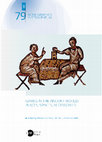
Games in the Ancient World: Places, Spaces, Accessories, 2024
Le volume réunit une série d’études présentées lors de colloques organisés par le projet ERC Locu... more Le volume réunit une série d’études présentées lors de colloques organisés par le projet ERC Locus Ludi (#741520) ainsi que d’autres contributions. Un large éventail de cas met en lumière la diversité culturelle des comportements dans l’espace et le temps. Ces études révèlent l’étendue géographique et chronologique des pratiques ludiques, de l’Égypte pharaonique à la Grande-Bretagne romaine et à la périphérie celtique du haut Moyen Âge.
Malgré l’abondance de témoignages, le matériel conservé est souvent fragmentaire et dispersé, occulté par la perception occidentale moderne des jeux comme des passe-temps futiles.
En déconstruisant la complexité des pratiques ludiques antiques, cet ouvrage met en lumière l’intersection des jeux avec la vie sociale, culturelle et religieuse dans l’Antiquité, et livre une perspective nouvelle sur un aspect jusqu’ici négligé de l’histoire humaine.
Ancient Games and Gaming by Tim Penn
Türk Arkeoloji ve Etnografya Dergisi, 2026
Gameboards carved into stone surfaces are common in Roman, Late Antique, and Medieval cities, yet... more Gameboards carved into stone surfaces are common in Roman, Late Antique, and Medieval cities, yet their archaeological study is still in its early development. While early research focused on reconstructing game rules, recent scholarship has explored the social significance of gaming. However, the lack of systematic recording hampers our understanding of these everyday activities. This article presents initial findings from a new project analysing the numerous gameboards and related markings at Aphrodisias. Focusing on the city’s Theatre, it explores how gameboards in the cavea and the stage suggest that the Theatre was frequently used for recreation outside of times when mass spectacles were taking place. Rather than competing with theatrical entertainment, gaming complemented the Theatre’s role as a social hub.
https://dergipark.org.tr/en/pub/arkeolojiveetnografya/article/1658553
Slovenská archeológia, 2025
This article examines a Roman period gameboard (Gameboard 1) from Gerulata (modern Bratislava-Rus... more This article examines a Roman period gameboard (Gameboard 1) from Gerulata (modern Bratislava-Rusovce, Slovakia), a military settlement on the Danube frontier in Pannonia. The board was carved into a tile and features a 7 × 8 grid layout. A much smaller fragment of another possible gameboard or fragment of wall tile (Possible gameboard/tile 2) was also recovered from the site, though this identification is less secure. This study explores the archaeological context, typology, and potential identification of the board(s). Gameboard 1 was probably used for playing the game known as ludus latrunculorum, even if other possibilities should not be entirely discarded. Analysis of published and unpublished finds from the Northern Carpathian basin and neighbouring regions – which we present together for the first time – indicates that this gameboard belongs to a wider ludic culture, which was particularly visible among Roman soldiers and military communities. Portable elements of Roman-style material culture (dice, counters) but not bulky gameboards have been recovered in parts of Slovakia that were in the Barbaricum, and this suggests some cultural diffusion across borders in
the Roman period. These objects appear to be prestige finds, since they are commonly associated with elite sites, but we cannot be sure that they were used to play ‘Roman’ games. The article argues that such objects offer a valuable lens into the social and cultural life of Roman soldiers and civilians on the frontier. It also highlights the methodological challenges of identifying and interpreting gameboards in provincial contexts.
ICGA Journal
On 20 and 21 January 2025, the GameTable COST Action's Working Group 1 convened in London for a m... more On 20 and 21 January 2025, the GameTable COST Action's Working Group 1 convened in London for a meeting focused on game-playing artificial intelligence (AI), including search algorithms, knowledge representation, and reinforcement learning. The first day featured participant presentations, while the second day was dedicated to plenary and small group discussions. A significant outcome was the identified need for accessible resources to bridge AI and cultural heritage research. This report provides a summary of the discussions and talks that took place during the meeting.
Games in the Ancient World: Places, Spaces, Accessories, 2024
Existing scholarship on gaming of... more Games in the Ancient World: Places, Spaces, Accessories, 2024
Existing scholarship on gaming often assumes that board games were primarily played in towns under the Roman empire and textual sources leave us in no doubt that game-playing was an important part of the urban experience. But it is also important to consider the extent to which games were played in the countryside. This contribution seeks to set the agenda for future research into playing and games in Roman rural settings by interrogating the urbancentric biases of literary sources. It juxtaposes the
town-centric view provided by the textual tradition with the archaeological evidence from selected rural sites of different types across Roman Italy. This
approach provides new insights into play and leisure in non-urban contexts
In Games in the Ancient World: Places, Spaces, Accessories, 2024
In Games in the Ancient World: Places, Spaces, Accessories, 2024
Board Game Studies Journal 17, 2023
Characterised by the presence of multiple depressions or pockets in a variety of arrangements, an... more Characterised by the presence of multiple depressions or pockets in a variety of arrangements, and, in some cases, the presence of a single, double, or triple ‘start line’ carved into horizontal stone surfaces, marble lanes in their variety of forms open a window onto ancient play that few have looked through. Thought to be a playing surface for some kind of throwing or rolling game which involved the use of glass or ceramic spheres, Roman marble lanes have received comparatively little attention in the recent upswing of scholarship on ancient play, partially as a result of the relative dearth of textual and iconographic sources discussing or depicting their usage, but these
playing surfaces nevertheless represent a major corpus of ludic material. This contribution summarises past work on marble lanes before exploring the limited textual and iconographic source material related to playing with marbles. It offers a tentative new typology by which to categorise marble lanes and a non-exhaustive list of these playing surfaces recorded at archaeological sites around the Mediterranean. It then moves onto a discussion of the game/games that may be played on these boards, arguing that the wide variations in the different layouts for marble lanes may indicate that they were used not for one tightly defined game, but more likely facilitated the playing of a loosely connected family of games, with implications for how we think about communities of play in the past.
Pallas 119, 2022
You might have been there: losing a cherished piece from your favourite boardgame and searching f... more You might have been there: losing a cherished piece from your favourite boardgame and searching for a way to still play without it. Perhaps you used a substitute: a coin, a piece of cardboard, or a piece from another gaming set, or you bought a new one from the specialist retailers which now cater to this niche market. Abundant finds of gaming pieces from a huge variety of contexts across the Roman world underline that accidental loss of gaming paraphernalia is by no means a modern phenomenon, but little attention has been given to the impact of losing a gaming piece on the experience of ancient board gaming. This paper suggests that we may occasionally be able to detect evidence for substitutions in “patchwork” gaming sets, which comprise an asymmetrical mix of counters of different styles or materials. This asymmetry may arguably sometimes arise from a set of counters composed over time, as pieces are lost, broken, or given away, whether as gifts to the living or to the dead. We suggest that the object biographies of gaming sets made up of a mixture of materials would
have evoked the memory of past games and previous gaming partners.
PALLAS , 119, 2022, pp. 241-262
Roman Finds Group Datasheet 13, 2021
ISSN 2634-4491
When we think about games in the Roman world, many of us may first conjure up... more ISSN 2634-4491
When we think about games in the Roman world, many of us may first conjure up vivid images of the arena; it is perhaps less likely that our immediate thoughts will be of board games. The study of Roman board games has until recently focussed on the reconstruction of gaming rules from textual references and surviving board de-signs. New work is now increasingly putting the social aspect of leisure time into greater fo-cus, through the collation and analysis of corpora of gaming paraphernalia, primarily boards, dice and counts. This datasheet arises from a research project undertaken by the authors which aimed to unite the evidence for all gaming boards in Roman Britain and to examine their distribution (for a preliminary report, see Courts and Penn 2019). It will provide a concise guide to the identifi-cation and significance of known board game types from Roman Britain. A full digital catalogue of over 100 boards, along with a detailed analysis, will be published elsewhere.
Lucerna 57, 2019
This contribution draws together a corpus of c.100 gaming boards from Roman Britain cataloged by ... more This contribution draws together a corpus of c.100 gaming boards from Roman Britain cataloged by type. The data show that three types of games were played in Britain during the Roman period with a heavy emphasis on game playing among military communities, though board gaming also took place to a lesser degree in rural and urban civilian contexts. PDF available upon request.
Roman and late antique Archaeology by Tim Penn
The Place of Palms: An Urban Park at Aphrodisias, 2024
Wilson, A. I., B. Russell, A. B. Kidd, et al. “The End of the Place of Palms, Seventh Century AD.... more Wilson, A. I., B. Russell, A. B. Kidd, et al. “The End of the Place of Palms, Seventh Century AD.” In The Place of Palms: An Urban Park at Aphrodisias, edited by A. I. Wilson and B. Russell, 183–228. Wiesbaden: Reichert (2024).
The Place of Palms: An Urban Park at Aphrodisias, 2024
Kidd, A. B., B. Russell, A. I. Wilson, et al. “After Antiquity: The Byzantine to Ottoman Periods.... more Kidd, A. B., B. Russell, A. I. Wilson, et al. “After Antiquity: The Byzantine to Ottoman Periods.” In The Place of Palms: An Urban Park at Aphrodisias, edited by A. I. Wilson and B. Russell, 229–268. Wiesbaden: Reichert (2024).

American Journal of Archaeology, 2024
This paper presents evidence for late fifth-century CE wall mosaics from Aphrodisias, provincial ... more This paper presents evidence for late fifth-century CE wall mosaics from Aphrodisias, provincial capital of Caria, Western Asia Minor. The mosaics formed part of the decoration of an upper story gallery belonging to one or more luxurious private residences located alongside the Tetrapylon Street, the city’s main north-south avenue. They are therefore a rare example of late antique wall mosaics from a domestic context. We present the context in which the mosaic fragments were found, the motifs that can still be recognized, and some of the technical characteristics of these mosaics. Combined with the other elements of decoration found in association with the mosaic fragments, we offer a reconstruction of the decorative program of the gallery. We then broaden our view to trace wall mosaics elsewhere at Aphrodisias and discuss waste attesting to glass tessera production. We argue that an itinerant wall mosaic workshop or workshops was/were active at Aphrodisias in the late fifth and early sixth century, when the city’s monuments and residences were undergoing renovations in the wake of an earthquake. We examine the possibility of a wall mosaic habit which was much more widespread than previously thought, extending beyond the ecclesiastical contexts with which it is conventionally associated .

Byzantinische Zeitschrift, 2024
The city of Taucheira (modern Tocra) in Cyrenaica, Libya, has played a prominent role in establis... more The city of Taucheira (modern Tocra) in Cyrenaica, Libya, has played a prominent role in established narratives of the 7th-century Arab conquest of Byzantine North Africa ever since excavations by Richard Goodchild in the 1960s uncovered a substantial walled compound there. Goodchild interpreted the compound as a fortress — “the last monument of Byzantine rule in Cyrenaica” — built in haste in the face of the approaching Arabs inside a much larger set of walls traditionally ascribed to the reign of Justinian I (r. 527–565). In the more than half a century since Goodchild’s publication of the walled compound, late antique and Byzantine studies have undergone radical transformations, but narratives around the walled compound at Taucheira, and about the city itself, have not been considered critically. This article presents a combined historical and archaeological reassessment of the city in light of contemporary developments in scholarship and argues that Taucheira was a vibrant urban centre throughout late antiquity, provided with walls at some point between the late 5th century and the Justinianic period. Detailed re-examination of the walled compound indicates it could not have served an effective defensive function and is better interpreted as an administrative area. Moreover, an Anastasian construction date is more probable than the conventionally accepted date in the 640s CE.
![Research paper thumbnail of (2024) Down the drain: reconstructing social practice from the content of two sewers in a Late Antique bathhouse in Jerash, Jordan, Journal of Roman Archaeology [open access]](https://attachments.academia-assets.com/116410430/thumbnails/1.jpg)
This contribution examines social practices in the Central Bathhouse in Jerash in Late Antiquity ... more This contribution examines social practices in the Central Bathhouse in Jerash in Late Antiquity based on the ceramic assemblage, vessel glass, faunal remains, and small finds retrieved from two sections of the bathhouse's sewer. We argue that although the bathhouse underwent significant architectural alterations from its construction in the 4th c. CE to its abandonment in the late 7th, the activities taking place inside the building remained largely the same. Our study shows that even towards the end of the bathhouse's lifespan, bodily grooming remained integral to the bathing experience, while food and drink were consumed on the premises even though the bathing facilities had been reduced to a bare minimum. The faunal remains indicate the type of food consumed, while the small finds illustrate a lively environment where gaming and gambling took place in a social space frequented by men, women, and children.
T. Penn and S. Courts. (2024). ‘Glass.’ In P. P. Creasman, N. Doyle and C. Shelton (eds.) Petra's... more T. Penn and S. Courts. (2024). ‘Glass.’ In P. P. Creasman, N. Doyle and C. Shelton (eds.) Petra's Temple of Winged Lions: Excavation and Conservation Projects 1973–2005 and 2009–2021. American Center of Research Monograph Series, Amman. 583-614
Oxford Journal of Archaeology, 2023
Recent work in landscape archaeology has emphasized the importance of considering the experience ... more Recent work in landscape archaeology has emphasized the importance of considering the experience of moving through landscapes and examining the place of burials within wider landscape contexts. This work recognizes that burial placement was often intended to create and curate experiences and meaning. While burials near roads and waterways have been discussed at length, burials near tunnels, which are an important feature of the road network of Roman central Italy, have not yet featured in discussions of the experience of Roman landscapes or the visibility of graves. This article explores these twin themes in the Phlegraean Fields west of Naples, where burials appear next to the entrances of two monumental tunnels. This placement appears to make an experiential play on the perceptions of the descent into the Underworld as described in Classical literature.


Uploads
Projects by Tim Penn
The digital archive is in continuous development. Current strengths include Late Antiquity (250–750 AD), the period of transition from paganism to Christianity, and then to Islam, especially religious buildings (temples, churches, synagogues, mosques) and monumental art (including floor mosaics), early Islamic art (paintings, mosaics, relief sculpture), as well as Roman and early Islamic (Umayyad) architecture, and evidence of iconoclasm.
The digital archive aims to: provide freely-downloadable images at high resolution for research and publication, as well as at low resolution for powerpoint slides for teaching; make images freely available for publication simply by acknowledging the source; have simple and accurate labels easy to search and organize, with bilingual text in Arabic and English to facilitate the use of the images for both teaching and research in the Arab world, where many of the monuments are located.
Books by Tim Penn
Malgré l’abondance de témoignages, le matériel conservé est souvent fragmentaire et dispersé, occulté par la perception occidentale moderne des jeux comme des passe-temps futiles.
En déconstruisant la complexité des pratiques ludiques antiques, cet ouvrage met en lumière l’intersection des jeux avec la vie sociale, culturelle et religieuse dans l’Antiquité, et livre une perspective nouvelle sur un aspect jusqu’ici négligé de l’histoire humaine.
Ancient Games and Gaming by Tim Penn
https://dergipark.org.tr/en/pub/arkeolojiveetnografya/article/1658553
the Roman period. These objects appear to be prestige finds, since they are commonly associated with elite sites, but we cannot be sure that they were used to play ‘Roman’ games. The article argues that such objects offer a valuable lens into the social and cultural life of Roman soldiers and civilians on the frontier. It also highlights the methodological challenges of identifying and interpreting gameboards in provincial contexts.
Existing scholarship on gaming often assumes that board games were primarily played in towns under the Roman empire and textual sources leave us in no doubt that game-playing was an important part of the urban experience. But it is also important to consider the extent to which games were played in the countryside. This contribution seeks to set the agenda for future research into playing and games in Roman rural settings by interrogating the urbancentric biases of literary sources. It juxtaposes the
town-centric view provided by the textual tradition with the archaeological evidence from selected rural sites of different types across Roman Italy. This
approach provides new insights into play and leisure in non-urban contexts
playing surfaces nevertheless represent a major corpus of ludic material. This contribution summarises past work on marble lanes before exploring the limited textual and iconographic source material related to playing with marbles. It offers a tentative new typology by which to categorise marble lanes and a non-exhaustive list of these playing surfaces recorded at archaeological sites around the Mediterranean. It then moves onto a discussion of the game/games that may be played on these boards, arguing that the wide variations in the different layouts for marble lanes may indicate that they were used not for one tightly defined game, but more likely facilitated the playing of a loosely connected family of games, with implications for how we think about communities of play in the past.
have evoked the memory of past games and previous gaming partners.
PALLAS , 119, 2022, pp. 241-262
When we think about games in the Roman world, many of us may first conjure up vivid images of the arena; it is perhaps less likely that our immediate thoughts will be of board games. The study of Roman board games has until recently focussed on the reconstruction of gaming rules from textual references and surviving board de-signs. New work is now increasingly putting the social aspect of leisure time into greater fo-cus, through the collation and analysis of corpora of gaming paraphernalia, primarily boards, dice and counts. This datasheet arises from a research project undertaken by the authors which aimed to unite the evidence for all gaming boards in Roman Britain and to examine their distribution (for a preliminary report, see Courts and Penn 2019). It will provide a concise guide to the identifi-cation and significance of known board game types from Roman Britain. A full digital catalogue of over 100 boards, along with a detailed analysis, will be published elsewhere.
Roman and late antique Archaeology by Tim Penn