Society Girl Mine, Moyie, Fort Steele Mining Division, British Columbia, Canadai
| Regional Level Types | |
|---|---|
| Society Girl Mine | Mine |
| Moyie | Unincorporated Community |
| Fort Steele Mining Division | Division |
| British Columbia | Province |
| Canada | Country |
This page is currently not sponsored. Click here to sponsor this page.
Latitude & Longitude (WGS84):
49° 16' 29'' North , 115° 48' 24'' West
Latitude & Longitude (decimal):
Type:
Köppen climate type:
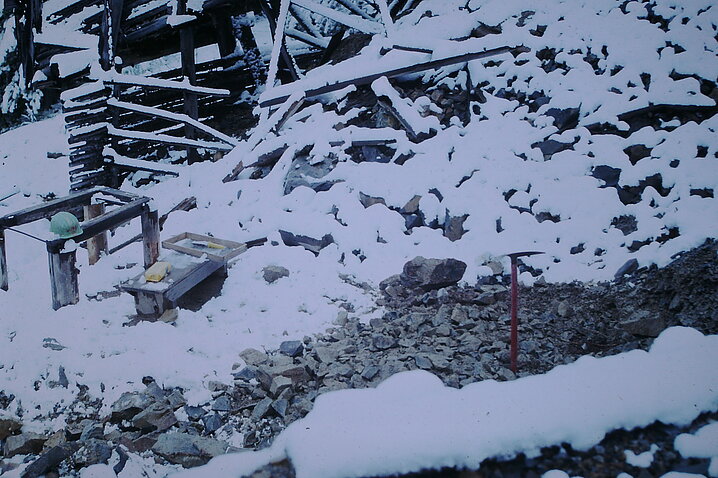
The Society Girl mine is located about 2.5 kilometres south-east of the small unincorporated settlement of Moyie, on the east shore of Moyie Lake, 26 kilometres south of Cranbrook, British Columbia, in the Fort Steele Mining Division. It is immediately east of the larger St Eugene mine, and probably represented the extension of the veins on that property.
There is a description of the property on the British Columbia “Minfile” site, current to 2015. A portion relative to geology is quoted below:
“The area is underlain by quartzites and argillites of the Helikian Middle Aldridge Formation (Purcell Supergroup) and is contained within an east-west fracture zone, dipping 70 degrees south, which strikes across the axial plane of a large regional northeast plunging anticline.
Locally, the north-west striking vein occurrence is hosted by Helikian Middle and Upper Aldridge formations (Purcell Supergroup) argillites and quartzites. Aldridge strata strikes north and dips approximately 25 degrees east. The vein traverses the eastern limb of a northeast plunging anticlinal structure and is closely associated with the St. Eugene (MINFILE 082GSW025), Aurora (MINFILE 082GSW023) and Guindon (MINFILE 082GSW027) occurrences to the west.
The main vein is from 2 to 5 centimetres wide, strikes 300 degrees and dips 60 degrees south. The vein tends to be narrow within thin-bedded, argillaceous quartzites and widens in thicker, more massive quartzites. The vein is highly oxidized to a depth of approximately 10 to 15 metres from the surface and the oxidized ore is composed of massive and well-crystallized cerussite and pyromorphite embedded in a matrix of clays and limonite. Minor traces of malachite and azurite were recorded. Below the oxidized zone the vein consists of galena and sphalerite with little or no quartz gangue.
The vein appears to be controlled by an older fault/fracture system and mineralization is restricted to the vein and within a few decimetres of the vein along cross fractures. Some small scale folding near the vein is recorded but as at the St. Eugene mine no major offset has been documented. The oxidized zone is a rare occurrence in the East Kootenays.”
Giles Peatfield comments:
The Society Girl mine at Moyie was not of particular economic importance, but it has a rich history of mineralogical research and collecting activity. Details of some of these activities are covered below in the comments on minerals reported. Those of collector interest are cerussite, pyromorphite and wulfenite.
The mine was a very minor producer of lead, silver and some zinc. Official British Columbia records indicate that there were two distinct periods of production. In the period 1900 to 1920 (intermittent) the mine shipped very small tonnages of material, presumably to the CM&S [The Consolidated Mining and Smelting Company of Canada Ltd., later Cominco Limited, later Teck Cominco and ultimately Teck Resources Limited] facility at Trail, British Columbia. This would presumably have included high-grade oxidized material from the near-surface workings. These shipments were often of the order of one or two carloads a year – not a large production. Of interest here is that Trenaman (2013) implied larger tonnages in this period, but it is not clear where he obtained his numbers, and I have chosen to accept the official ones. Later, in the period 1948 to 1952, somewhat larger amounts (in all cases less than 1,000 tonnes per year) were also shipped to Trail; zinc was recovered from these ores. Official figures on the British Columbia “Minfile” site show that between 1895 and 1952, the mine produced a total of 2,984 tonnes (3,289 tons). The total yield from this material is reported as 432,052 grams (13,891 troy ounces) silver; 499,655 kilograms (1,101,551 pounds) lead and 23,914 kilograms (52,721 pounds) zinc.
Giles Peatfield comments on the minerals reported:
The mineralogy of the Society Girl mine and immediate environs is relatively complex and interesting from the point of view of mineral collecting. I have chosen to discuss the minerals individually.
Amphibole group – actinolite?: Reported by Klewchuk (2007) in drill core, with visual identification. Note that Bradley (1960), at the adjacent St Eugene mine, studied two thin sections in which he described what had previously been identified by Schofield (1915) as actinolite. Bradley’s material “. . . did not exhibit the characteristic green pleochroism of actinolite . . . .” and he thought the mineral was more likely tremolite.
Amphibole group – hornblende?: Reported by Klewchuk (2007) in drill core, with visual identification only. Burgoyne (1965) also mentioned this mineral in drill core from the Baltimore claim, immediately west of the Society Girl. I have chosen to include this claim in the discussion although it is not strictly speaking a part of the Society Girl property; work here was directed at a search for the western extensions of the Society Girl veins. All references to Burgoyne in the following comments are to the drilling on the Baltimore claim.
Calcite: While probably common, this was mentioned only by Klewchuk (2007) in drill core.
Cerussite: This is one of the minerals of principal interest at the Society Girl. Good crystals, as well as more massive material, were described or noted by, inter alia: Bowles (1909), Schofield (1915), Thomson (1918), Poitevin (1919) and Ingelson (1984). Note that the listing in Traill (1970, 1983) contains an incorrect reference to the locality; it should be to Schofield (1915) not to Drysdale (1915). Lastly, the Pacific Museum of Earth at the University of British Columbia has in its collection five specimens with cerussite from the locality; there are others in various museums and private collections.
Chalcopyrite: Burgoyne (1965) reported small amounts of chalcopyrite in drill core.
Chlorite group: Burgoyne (1965) and Klewchuk (2007) reported chlorite in drill core, based on field identification, with no specific mineralogical data.
Epidote: Burgoyne (1965) noted epidote in drill core.
Galena: This was reported by Schofield (1915), by Poitevin (1919) who described it as ‘argentiferous’, and by Burgoyne (1965) in drill core. Given the lead production from the primary ore, it must be common at the locality.
Garnet group: Burgoyne (1965) mentioned ‘garnets’ in drill core. Klewchuk (2007) described garnets in drill core as ‘light pink-grey’. There are no specific mineralogical data available.
Graphite: Klewchuk (2007) described argillites in drill core as ‘graphitic’.
Kaolinite?: Burgoyne (1965) noted ‘kaolinite’ in drill core, but this was a field identification of a white clay mineral with no specific mineralogical data.
Limonite: Schofield (1915) noted that “The cerussite is often embedded in dense masses of limonite.”
Mica group – biotite: This was mentioned by Burgoyne (1965) and Klewchuk (2007) in drill core, but with no more specific mineralogical data.
Pyrite: Pyrite does not appear to be common here; both Burgoyne (1965) and Klewchuk (2007) reported it as a minor constituent of rocks in drill core.
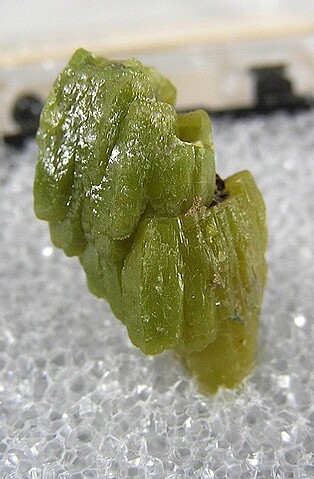
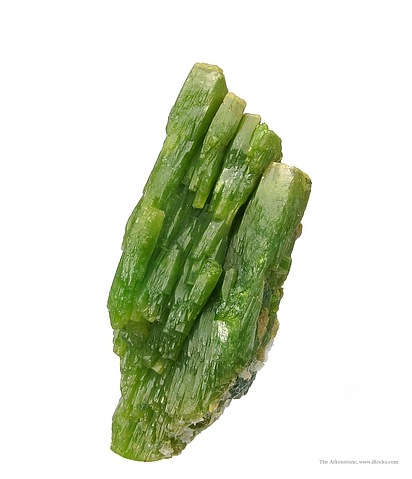
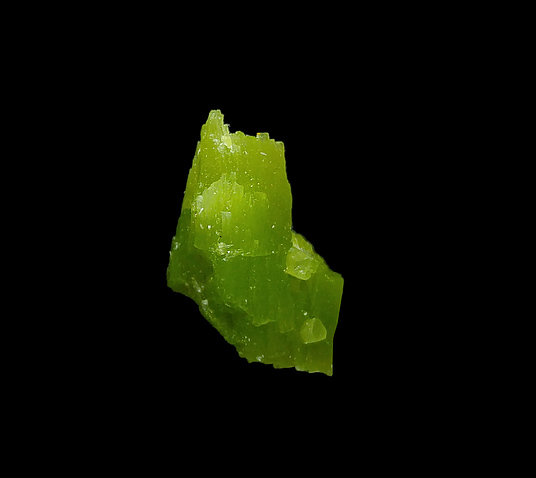
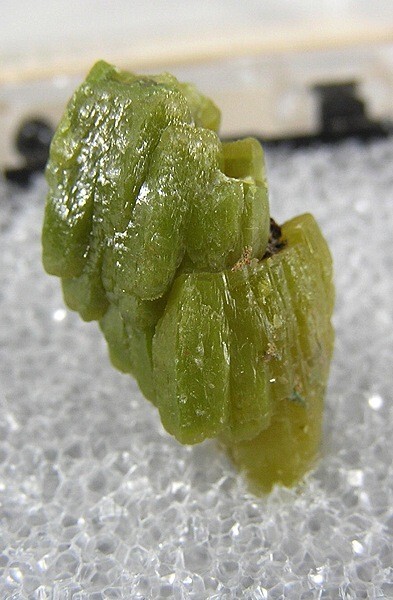
Pyromorphite: This is the mineral of most interest at the Society Girl mine. The earliest reference to it was by Bowles (1909) who described the crystals in detail, mentioning that there were two colour variants – wax-yellow and green. He reached the conclusion, based on detailed chemical analyses, that the green colouration was due to the presence of a small amount of arsenic. Johnston (1915), quoting Bowles paper, listed Society Girl as a location for the mineral, as did Traill (1970, 1983), also referring to Bowles paper. Schofield (1915) mentioned pyromorphite from the Society Girl mine, quoting Bowles in detail. Thomson (1918) was mainly interested in the cerussite occurrences in the general region, and mentioned tangentially that among the minerals occurring with the cerussite was pyromorphite, but he did not specifically state at which mine this obtained. Poitevin (1919) was also primarily interested in cerussite, but did mention that pyromorphite occurred at the Society Girl. Sabina (1964) gave a very short description of the occurrence, with a map. Ingelson (1984) visited the site and mentioned the presence of pyromorphite, and noted that Sabina’s map was not strictly speaking accurate. The Pacific Museum of Earth at the University of British Columbia has in its collection a total of nine specimens of the mineral. Pyromorphite from the Society Girl mine is well represented in other Museum collections and in many private collections as well. I have provided this rather extensive comment to detail what is available in published records, as opposed to anecdotal comments.
Pyrrhotite: Reported only by Burgoyne (1965) in drill core.
Quartz: Reported only by Burgoyne (1965) in drill core.
Silver: Although the mine was a silver producer, presumably from silver-rich galena, the only reference to a silver mineral is a single specimen in the Pacific Museum of Earth. This is small specimen (# 6678) of native silver, presumably from the near-surface oxidized zone.
Sphalerite: Reported by Schofield (1915) as ‘zinc-blende’, by Poitevin (1919), and in drill core by Burgoyne (1965) and by Klewchuk (2007).
Wulfenite: This is the other mineral of collector interest at the site. It was X-ray confirmed by Dr. R. M. Thompson at the University of British Columbia, as reported by Traill (1970, 1983) as a ‘private communication’. It was observed by Ingelson (1984), who wrote that “Rarely 1-2 mm golden wulfenite plates can be found perched on pyromorphite specimens.” Dr. Thompson noted that this was the first reported locality for the mineral in British Columbia. His comment at the end of the course report by Bradley (1960), purporting to be on material from the St Eugene and Society Girl mines but involving only sulfide material was, in his rather acerbic fashion, “No reference to supergene alteration. Type BC locality for pyromorphite + wulfenite.” He was not pleased. As a final point, the original Mindat poster on this mine referenced Ingelson (1984), but wulfenite was not included in the mineral list.
Giles Peatfield comments on the rock types reported:
These rocks were reported on the property by Klewchuk (2007) in drill core, and by Burgoyne (1965) based on diamond drilling on the Baltimore claim immediately to the west of the Society Girl, designed to search for extensions of the Society Girl veins.
Select Mineral List Type
Standard Detailed Gallery Strunz Chemical ElementsMineral List
16 valid minerals.
Rock Types Recorded
Note: data is currently VERY limited. Please bear with us while we work towards adding this information!
Select Rock List Type
Alphabetical List Tree DiagramDetailed Mineral List:
| ⓘ Actinolite ? Formula: ◻Ca2(Mg4.5-2.5Fe0.5-2.5)Si8O22(OH)2 References: |
| ⓘ 'Amphibole Supergroup' Formula: AB2C5((Si,Al,Ti)8O22)(OH,F,Cl,O)2 References: |
| ⓘ 'Biotite' Formula: K(Fe2+/Mg)2(Al/Fe3+/Mg/Ti)([Si/Al/Fe]2Si2O10)(OH/F)2 References: |
| ⓘ Calcite Formula: CaCO3 |
| ⓘ Cerussite Formula: PbCO3 |
| ⓘ Chalcopyrite Formula: CuFeS2 |
| ⓘ 'Chlorite Group' References: |
| ⓘ Epidote Formula: (CaCa)(AlAlFe3+)O[Si2O7][SiO4](OH) References: |
| ⓘ Galena Formula: PbS |
| ⓘ 'Garnet Group' Formula: X3Z2(SiO4)3 |
| ⓘ Graphite Formula: C References: |
| ⓘ 'Hornblende Root Name Group' ? Formula: ◻Ca2(Z2+4Z3+)(AlSi7O22)(OH,F,Cl)2 |
| ⓘ Kaolinite ? Formula: Al2(Si2O5)(OH)4 References: |
| ⓘ 'Limonite' References: |
| ⓘ Malachite Formula: Cu2(CO3)(OH)2 |
| ⓘ Native Silver Formula: Ag References: |
| ⓘ Pyrite Formula: FeS2 References: |
| ⓘ Pyromorphite Formula: Pb5(PO4)3Cl |
| ⓘ Pyrrhotite Formula: Fe1-xS References: |
| ⓘ Quartz Formula: SiO2 |
| ⓘ Sphalerite Formula: ZnS |
| ⓘ Wulfenite Formula: Pb(MoO4) References: |
Gallery:

List of minerals arranged by Strunz 10th Edition classification
| Group 1 - Elements | |||
|---|---|---|---|
| ⓘ | Native Silver | 1.AA.05 | Ag |
| ⓘ | Graphite | 1.CB.05a | C |
| Group 2 - Sulphides and Sulfosalts | |||
| ⓘ | Sphalerite | 2.CB.05a | ZnS |
| ⓘ | Chalcopyrite | 2.CB.10a | CuFeS2 |
| ⓘ | Pyrrhotite | 2.CC.10 | Fe1-xS |
| ⓘ | Galena | 2.CD.10 | PbS |
| ⓘ | Pyrite | 2.EB.05a | FeS2 |
| Group 4 - Oxides and Hydroxides | |||
| ⓘ | Quartz | 4.DA.05 | SiO2 |
| Group 5 - Nitrates and Carbonates | |||
| ⓘ | Calcite | 5.AB.05 | CaCO3 |
| ⓘ | Cerussite | 5.AB.15 | PbCO3 |
| ⓘ | Malachite | 5.BA.10 | Cu2(CO3)(OH)2 |
| Group 7 - Sulphates, Chromates, Molybdates and Tungstates | |||
| ⓘ | Wulfenite | 7.GA.05 | Pb(MoO4) |
| Group 8 - Phosphates, Arsenates and Vanadates | |||
| ⓘ | Pyromorphite | 8.BN.05 | Pb5(PO4)3Cl |
| Group 9 - Silicates | |||
| ⓘ | Epidote | 9.BG.05a | (CaCa)(AlAlFe3+)O[Si2O7][SiO4](OH) |
| ⓘ | Actinolite ? | 9.DE.10 | ◻Ca2(Mg4.5-2.5Fe0.5-2.5)Si8O22(OH)2 |
| ⓘ | Kaolinite ? | 9.ED.05 | Al2(Si2O5)(OH)4 |
| Unclassified | |||
| ⓘ | 'Amphibole Supergroup' | - | AB2C5((Si,Al,Ti)8O22)(OH,F,Cl,O)2 |
| ⓘ | 'Biotite' | - | K(Fe2+/Mg)2(Al/Fe3+/Mg/Ti)([Si/Al/Fe]2Si2O10)(OH/F)2 |
| ⓘ | 'Chlorite Group' | - | |
| ⓘ | 'Limonite' | - | |
| ⓘ | 'Hornblende Root Name Group' ? | - | ◻Ca2(Z2+4Z3+)(AlSi7O22)(OH,F,Cl)2 |
| ⓘ | 'Garnet Group' | - | X3Z2(SiO4)3 |
List of minerals for each chemical element
| H | Hydrogen | |
|---|---|---|
| H | ⓘ Actinolite | ◻Ca2(Mg4.5-2.5Fe0.5-2.5)Si8O22(OH)2 |
| H | ⓘ Amphibole Supergroup | AB2C5((Si,Al,Ti)8O22)(OH,F,Cl,O)2 |
| H | ⓘ Biotite | K(Fe2+/Mg)2(Al/Fe3+/Mg/Ti)([Si/Al/Fe]2Si2O10)(OH/F)2 |
| H | ⓘ Epidote | (CaCa)(AlAlFe3+)O[Si2O7][SiO4](OH) |
| H | ⓘ Kaolinite | Al2(Si2O5)(OH)4 |
| H | ⓘ Malachite | Cu2(CO3)(OH)2 |
| H | ⓘ Hornblende Root Name Group | ◻Ca2(Z42+Z3+)(AlSi7O22)(OH,F,Cl)2 |
| C | Carbon | |
| C | ⓘ Calcite | CaCO3 |
| C | ⓘ Cerussite | PbCO3 |
| C | ⓘ Graphite | C |
| C | ⓘ Malachite | Cu2(CO3)(OH)2 |
| O | Oxygen | |
| O | ⓘ Actinolite | ◻Ca2(Mg4.5-2.5Fe0.5-2.5)Si8O22(OH)2 |
| O | ⓘ Amphibole Supergroup | AB2C5((Si,Al,Ti)8O22)(OH,F,Cl,O)2 |
| O | ⓘ Biotite | K(Fe2+/Mg)2(Al/Fe3+/Mg/Ti)([Si/Al/Fe]2Si2O10)(OH/F)2 |
| O | ⓘ Calcite | CaCO3 |
| O | ⓘ Cerussite | PbCO3 |
| O | ⓘ Epidote | (CaCa)(AlAlFe3+)O[Si2O7][SiO4](OH) |
| O | ⓘ Kaolinite | Al2(Si2O5)(OH)4 |
| O | ⓘ Malachite | Cu2(CO3)(OH)2 |
| O | ⓘ Pyromorphite | Pb5(PO4)3Cl |
| O | ⓘ Quartz | SiO2 |
| O | ⓘ Wulfenite | Pb(MoO4) |
| O | ⓘ Hornblende Root Name Group | ◻Ca2(Z42+Z3+)(AlSi7O22)(OH,F,Cl)2 |
| O | ⓘ Garnet Group | X3Z2(SiO4)3 |
| F | Fluorine | |
| F | ⓘ Amphibole Supergroup | AB2C5((Si,Al,Ti)8O22)(OH,F,Cl,O)2 |
| F | ⓘ Biotite | K(Fe2+/Mg)2(Al/Fe3+/Mg/Ti)([Si/Al/Fe]2Si2O10)(OH/F)2 |
| F | ⓘ Hornblende Root Name Group | ◻Ca2(Z42+Z3+)(AlSi7O22)(OH,F,Cl)2 |
| Mg | Magnesium | |
| Mg | ⓘ Actinolite | ◻Ca2(Mg4.5-2.5Fe0.5-2.5)Si8O22(OH)2 |
| Mg | ⓘ Biotite | K(Fe2+/Mg)2(Al/Fe3+/Mg/Ti)([Si/Al/Fe]2Si2O10)(OH/F)2 |
| Al | Aluminium | |
| Al | ⓘ Amphibole Supergroup | AB2C5((Si,Al,Ti)8O22)(OH,F,Cl,O)2 |
| Al | ⓘ Biotite | K(Fe2+/Mg)2(Al/Fe3+/Mg/Ti)([Si/Al/Fe]2Si2O10)(OH/F)2 |
| Al | ⓘ Epidote | (CaCa)(AlAlFe3+)O[Si2O7][SiO4](OH) |
| Al | ⓘ Kaolinite | Al2(Si2O5)(OH)4 |
| Al | ⓘ Hornblende Root Name Group | ◻Ca2(Z42+Z3+)(AlSi7O22)(OH,F,Cl)2 |
| Si | Silicon | |
| Si | ⓘ Actinolite | ◻Ca2(Mg4.5-2.5Fe0.5-2.5)Si8O22(OH)2 |
| Si | ⓘ Amphibole Supergroup | AB2C5((Si,Al,Ti)8O22)(OH,F,Cl,O)2 |
| Si | ⓘ Biotite | K(Fe2+/Mg)2(Al/Fe3+/Mg/Ti)([Si/Al/Fe]2Si2O10)(OH/F)2 |
| Si | ⓘ Epidote | (CaCa)(AlAlFe3+)O[Si2O7][SiO4](OH) |
| Si | ⓘ Kaolinite | Al2(Si2O5)(OH)4 |
| Si | ⓘ Quartz | SiO2 |
| Si | ⓘ Hornblende Root Name Group | ◻Ca2(Z42+Z3+)(AlSi7O22)(OH,F,Cl)2 |
| Si | ⓘ Garnet Group | X3Z2(SiO4)3 |
| P | Phosphorus | |
| P | ⓘ Pyromorphite | Pb5(PO4)3Cl |
| S | Sulfur | |
| S | ⓘ Chalcopyrite | CuFeS2 |
| S | ⓘ Galena | PbS |
| S | ⓘ Pyrite | FeS2 |
| S | ⓘ Pyrrhotite | Fe1-xS |
| S | ⓘ Sphalerite | ZnS |
| Cl | Chlorine | |
| Cl | ⓘ Amphibole Supergroup | AB2C5((Si,Al,Ti)8O22)(OH,F,Cl,O)2 |
| Cl | ⓘ Pyromorphite | Pb5(PO4)3Cl |
| Cl | ⓘ Hornblende Root Name Group | ◻Ca2(Z42+Z3+)(AlSi7O22)(OH,F,Cl)2 |
| K | Potassium | |
| K | ⓘ Biotite | K(Fe2+/Mg)2(Al/Fe3+/Mg/Ti)([Si/Al/Fe]2Si2O10)(OH/F)2 |
| Ca | Calcium | |
| Ca | ⓘ Actinolite | ◻Ca2(Mg4.5-2.5Fe0.5-2.5)Si8O22(OH)2 |
| Ca | ⓘ Calcite | CaCO3 |
| Ca | ⓘ Epidote | (CaCa)(AlAlFe3+)O[Si2O7][SiO4](OH) |
| Ca | ⓘ Hornblende Root Name Group | ◻Ca2(Z42+Z3+)(AlSi7O22)(OH,F,Cl)2 |
| Ti | Titanium | |
| Ti | ⓘ Amphibole Supergroup | AB2C5((Si,Al,Ti)8O22)(OH,F,Cl,O)2 |
| Ti | ⓘ Biotite | K(Fe2+/Mg)2(Al/Fe3+/Mg/Ti)([Si/Al/Fe]2Si2O10)(OH/F)2 |
| Fe | Iron | |
| Fe | ⓘ Actinolite | ◻Ca2(Mg4.5-2.5Fe0.5-2.5)Si8O22(OH)2 |
| Fe | ⓘ Biotite | K(Fe2+/Mg)2(Al/Fe3+/Mg/Ti)([Si/Al/Fe]2Si2O10)(OH/F)2 |
| Fe | ⓘ Chalcopyrite | CuFeS2 |
| Fe | ⓘ Epidote | (CaCa)(AlAlFe3+)O[Si2O7][SiO4](OH) |
| Fe | ⓘ Pyrite | FeS2 |
| Fe | ⓘ Pyrrhotite | Fe1-xS |
| Cu | Copper | |
| Cu | ⓘ Chalcopyrite | CuFeS2 |
| Cu | ⓘ Malachite | Cu2(CO3)(OH)2 |
| Zn | Zinc | |
| Zn | ⓘ Sphalerite | ZnS |
| Mo | Molybdenum | |
| Mo | ⓘ Wulfenite | Pb(MoO4) |
| Ag | Silver | |
| Ag | ⓘ Native Silver | Ag |
| Pb | Lead | |
| Pb | ⓘ Cerussite | PbCO3 |
| Pb | ⓘ Galena | PbS |
| Pb | ⓘ Pyromorphite | Pb5(PO4)3Cl |
| Pb | ⓘ Wulfenite | Pb(MoO4) |
Other Databases
| Link to British Columbia Minfile: | 082GSW030 |
|---|
Other Regions, Features and Areas containing this locality
This page contains all mineral locality references listed on mindat.org. This does not claim to be a complete list. If you know of more minerals from this site, please register so you can add to our database. This locality information is for reference purposes only. You should never attempt to
visit any sites listed in mindat.org without first ensuring that you have the permission of the land and/or mineral rights holders
for access and that you are aware of all safety precautions necessary.
Society Girl Mine, Moyie, Fort Steele Mining Division, British Columbia, Canada