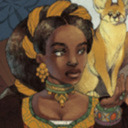
(so with that out of the way; basically the son being a horrible person and at least one of the parents dying is very important to the plot but I want to make sure I do this tactfully. I can of course change things and dail it down if necessary. Also, if that’s any concern, the characters of colour aren’t the only ones suffering, it’s a generally dark book and pretty much everybody goes through some heavy shit. I can tell you more if necessary, and thank you in advance for your help! ♡
Evil Black Man becomes possessed by a Monster
You’ll have to be careful with this one. You seem to be portraying Black men as monsters, quite literally and also in a “inhumane” sense (betraying others, murdering his loved ones and abusing his Black sister). He also kills one parent, and depending on their gender, this has other implications. Their acts also feed into tropes of Black people being violent, particularly as more violent, with the target being other Black people. I will discuss these tropes more.
Violent Men of Color
Men of Color, particularly dark-skinned men with an emphasis on Black men, are often harmfully portrayed as aggressive, predatory and even animalistic. This is a harmful, dehumanizing trope and feeds into real life biases against Black men that gets these men killed. People assume MOC are just that much more violent and that they’re armed. This leads to overreacting to their presence and actions in fear, when really these men are just trying to live their life. Some even go out of their way to prove they are harmless to reduce the unearned panic their presence may cause (e.g. hands out of pockets, smiling brightly, making sure they’re visible so their presence isn’t a surprise, especially at night)
Examples of this trope in action:
- The way “Karens” call the police on Black people at the drop of a hat with claims that they fear for their life or are being threatened. They’ll play on this stereotype for sympathy and to urge on a stronger reaction from police and others around them.
- People locking their doors or crossing the street when a Black person comes near.
- Police brutality and vigilantes that lead to murders when they
- Falsely perceive a weapon / read into simple hand motions as reaching for a weapon
- Assume BIPOC will get violent and treat them like a threat from the beginning
Note: You see this at play towards Black women too. I’m pretty sure every fellow Black woman I know, including myself, has had a white woman clutch their purse upon them passing by in a store, and / or has been accused of being too “angry” and aggressive when speaking their mind or showing emotion.
It really isn’t great to feed this narrative. The media is oversaturated with these portrayals already.
“Black on Black” crime
As for this aspect, I can see some of that portrayed in your story. The reality of this phrase is rooted in anti-blackness and intends to make Black people out to be more violent compared to white people and other races. When used to justify others killing Black people, it’s a racist justification for their deaths.
The truth: People tend to commit crimes against the people they know and in their immediate demographic and area. Black people tend to know Black people. In the same way white people tend to know white people, and so on.
Statistics:
- Rates of white-on-white and Black-on-Black homicides are similar and remain within 10 percentage points of each other, around 80% and 90%, respectively.
- Likewise, rates of Black-on-white and white-on-Black homicide remain within eight percentage points of each other, at around 16% and 8%.
- And police kill Black people at disproportionate and much higher rates than they kill their white counterparts.
(USA Today, 2020. Stats are from the U.S. Department of Justice)
Now - this is not to justify violence and murder perpetrated by any race. However, it’s just incorrect to create a narrative of Black people being inherently more violent, particularly towards each other, when white offenders can be quite comparably as violent. Even still, you’re looking at just a portion of a population. These numbers don’t account for the everyday, non-murderous people going about their lives!
Solutions
This narrative, as is, is probably best handled by a Black author. In any case, a Black beta-reader or three should take a closer look. That isn’t to say this can’t be improved!
Here are some ideas to help improve upon this narrative:
- Include positive representation. You absolutely should portray Black men of similar identities (for example, if he’s dark-skinned, not cis or straight, etc.) in a positive, non-stereotypical and non-violent way. Prominent positive and neutral representation is a must, in my opinion, to balance such harsh portrayals of Black men.
- Clearly define the reason for his ways. It just being “the way he is” as if this level of violence and hatred is natural is not sufficient.
- Was he triggered or traumatized by something?
- Did someone or something make him this way?
- You’ve got elements of possession: You could definitely run with that being the evil influence over him vs. it having anything to do with his Blackness. Perhaps that demon was lurking around most of his life, influencing his personality and feeding and growing his negative emotions to the point that he was becoming a bad person.
- Consider ways to make him “bad” that aren’t linked with violence. There are many socially unacceptable ways, both legal and illegal, that can make someone a menace. A villain does not always have to be flashy in his evil, aka a murderer. Think of the human ways that make someone unpleasant. They can be selfish, a cheater, a liar,
condescending, disloyal and overall deemed “bad.” Someone can come across just as menacing on the pages without being violent.
- Include violent characters of other races. And not just Men of Color, either. There should be white violent characters who commit crimes and brutalities as well. You also mention this story is “Dark” but that doesn’t excuse hyper focusing on violence when it comes to the Black characters and giving the other races different matters to deal with.
- Or! Even better - give the violent ways to someone else. Or no one at all. As I mentioned “darkness” and evil does not always need to be connected to violence and murder. If you choose to still include it, that’s fine. I would still suggest considering if this plotline could go to someone else without diminishing the role of these Black characters in general.
I do want to add that Black characters don’t need to be perfect. I absolutely love a Black villain! Folks can appreciate a grim story as well. However, I believe most people prefer when that villain doesn’t feed directly into actively harmful tropes. We want to see serious narratives and horror done, minus the tired tropes. As always, it’s helpful when there are other Black characters of importance that help balance out the representation.
~Mod Colette