Thesis Chapters by Victoria Chen
Conversion in Morphology, 2026
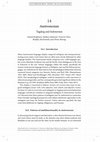
Many Austronesian languages display categorial ambiguity and unexpected pat-
terning across maj... more Many Austronesian languages display categorial ambiguity and unexpected pat-
terning across major word classes that are oſten more strictly delineated in other
language families. The Austronesian family comprises over 1,200 languages spo-
ken across Maritime Southeast Asia and the Pacific, from Madagascar in the west
to Polynesia in the east. Various languages within this family, specifically the
western Austronesian languages known as Philippine-type and the Polynesian lan-
guages, are well known for their lack of clear morphological distinctions between
canonical lexical categories (see Starosta, Pawley, and Reid 1982; Himmelmann
1991; 2005; Mosel and Hovdhaugen 1992; Broschart 1997; Vonen 1997; Mosel
2023). This morphological ambiguity could be interpreted as null conversion or
inherent precategoriality, and has consequently generated significant debate in the
literature (e.g. Gil 1994; Kaufman 2009a; Ross 2009; Foley 2014; Chen 2017).
This chapter is structured as follows: Section 14.2 reviews four types of cate-
gorial ambiguity (noun–verb, verb–adjective, verb–adverb, and adjective–noun).
Sections 14.3 and 14.4 overview such ambiguity in Tagalog and several Indonesian
languages, and discuss variation in categorial ambiguity in Austronesian. Section
14.5 discusses how these patterns of ambiguity may be understood as conversion
from a broader typological perspective and outlines diachronic approaches to the
ambiguity and issues for further research. Unless otherwise specified, the data
come from fieldwork on Tagalog, Hiligaynon, and Puyuma.
Glossa: a journal of general linguistics , 2026
A passive-like construction in Javanese (Austronesian) highlights how an object topicalization co... more A passive-like construction in Javanese (Austronesian) highlights how an object topicalization construction can be formally indistinguishable from a passive in languages lacking morphological case. While the so-called passive construction in East Javanese is morphologically identical to the true passive in Indonesian, it involves neither agent demotion nor promotion of the theme to subject position, but instead features Ā-movement of an accusative object or adjunct to a left-peripheral topic position. East Javanese therefore contrasts with many other Indonesian-type Austronesian languages in lacking a true passive and in exhibiting an Ā-oriented, two-way voice alternation that indexes topicalization rather than promotion to subject. The coexistence of this construction with a formally identical di-marked passive in closely related languages suggests a developmental pathway whereby topicalization is reanalyzed as passivization through the grammaticalization of topic into subject (Comrie 1988; Shibatani 2011). The Javanese pseudo-passive thus reveals an understudied locus of variation within the so-called Indonesian-type passives and underscores the importance of fine-grained diagnostics in the analysis of closely related languages with similar morphological profiles.
![Research paper thumbnail of [Slides] Geographical typology as a window into the evolution of the Austronesian language family](https://attachments.academia-assets.com/117114587/thumbnails/1.jpg)
Panel - The 16th International Conference on Austronesian Linguistics, 2024
A fixation on the stammbaum representation of language families has led to a family-wide, decades... more A fixation on the stammbaum representation of language families has led to a family-wide, decades-long, “treasure hunt” for subgroup-defining innovations in the attempt to better understand the history of Austronesian languages and their speakers. As a result of this focus, far less attention has been paid to the full geographic distribution of linguistic features across Austronesian. Exceptionally, eastern Nusantara and Oceania have been prominent sites for areal studies that challenge traditional family tree models (e.g. Ross 1988, Klamer et al. 2008, François 2014, Donohue 2007, Schapper 2020, inter alia). The lopsided attention to areal effects leads to the impression that eastern Austronesian is made up of linkages while the western region, including the Philippines and Formosan languages, displays more tree-like diversification, yet this impression could very likely be an artifact of technique and researcher bias rather than reflecting a real difference between east and west. Simultaneously, a recent slew of studies employing computational phylogeny has produced results that are largely geographical in nature, but without offering any deeper insight into geographical patterns, as the output still consists of classical stammbaum (albeit with similarity-based rather than innovation-based subgroups).
This panel promotes the return to isogloss exploration, the foundation of dialectology, using new mapping tools, and seeks to further justify the utility of geographical typology for larger-scale diachronic analyses. It comprises five typologically oriented studies representing different areas of linguistics, including lexical, phonological, and morphosyntactic domains, and various geographical areas, from the entire family to the western Austronesian area to Nusantara and the Philippines. The presenters will take a critical approach to features that have been employed for subgrouping purposes in previous studies, such as phonotactics and sound change and the distribution of innovatory lexemes, as well as those that have not yet been explored from a subgrouping perspective, such as clitic patterns), applicatives and voice syncretism.

Oceanic Linguistics , 2026
A central issue in Austronesian higher-order subgrouping concerns the linguistic position of the ... more A central issue in Austronesian higher-order subgrouping concerns the linguistic position of the Philippine languages. Despite considerable debate in recent work, it remains unsettled whether these languages constitute multiple intersecting Malayo-Polynesian primary branches forming a linkage (Ross 2020; Liao 2020; Reid 2020) or descend from a single shared ancestor that is a daughter of Proto-Malayo-Polynesian (Zorc 1986; Blust 2005 et seq.). We offer three new lines of evidence supporting the former interpretation: first, the absence of a true *d/z merger in Central Luzon and Minahasan languages, which under- mines the sole phonological basis for positing a Proto-Philippine (PPh) branch; second, the geographical distribution of the purported PPh-defining lexicon, which favor a diffusion- based explanation; and third, the distribution of an understudied morphological innovation in Philippine languages, which further suggests frequent contact among ‘mainland’ lan- guages excluding those in interior and peripheral islands. Not only do these findings indi- cate the absence of defining innovations for a cohesive PPh, but they also suggest significant horizontal transmission across the Philippine archipelago beyond lexical exchange and the possibility that the *d/*z merger is an areal drift rather than a diagnostic innovation. We conclude that Philippine languages are better understood as representing intersecting MP primary branches, aligning with recent perspectives (Ross 2020; Smith 2023). Moreover, the high number of proposed lexical innovations attributed to PPh likely reflects contact-driven processes—diffusion, borrowing, and linkage histories—rather than retention from a unified ancestor.
Diachronica
An understudied morphosyntactic innovation, reanalysis of the Proto-Austronesian (PAn) stative in... more An understudied morphosyntactic innovation, reanalysis of the Proto-Austronesian (PAn) stative intransitive prefix *ma- as a transitive affix, offers new insights into Austronesian higher-order subgrouping. While Malayo-Polynesian is currently considered an Austronesian primary branch with no identifiably closer relationship with any linguistic subgroup in the homeland (Blust 1999, 2013; Ross 2005), the fact it displays the same innovative use of ma- with Amis, Siraya, Kavalan, and Basay-Trobiawan and shares the merger of PAn *C/t with this group suggests that Malayo-Polynesian and East Formosan may share a common origin – the subgroup that comprises the four languages noted above. This observation points to a renewed subgrouping more consistent with a socio-historical picture where the out-of-Taiwan population descended from a seafaring community expanding to the Batanes and Luzon after having developed a seafaring tradition. It also aligns with recent findings in archaeology and genetics that (i) eastern Taiwan is most likely the starting point of Austronesian dispersal (Hung 2005, 2008, 2019; Bellwood 2017; Bell- wood & Dizon 2008; Carson & Hung 2018) and (ii) the Amis bear a significantly closer relationship with Austronesian communities outside Taiwan (Capelli et al. 2001; Trejaut et al. 2005; McColl et al. 2018; Pugach et. al. 2021; Tatte et. al. 2021). Future investi- gation of more shared innovations between Malayo-Polynesian and East Formosan could shed further light on their interrelation.
Proceedings of AFLA 23, 2017
This paper investigates the shared case patterns in causative and ditransitive
constructions acr... more This paper investigates the shared case patterns in causative and ditransitive
constructions across Philippine-type Formosan languages and demonstrates how
they motivate a nominative-accusative analysis for the Philippine-type voice system. With novel data from Puyuma, Amis, and Seediq, I argue that (i) pivot-marking in Philippine-type languages is better analyzed as a marker of information structure status (topic), rather than the reflex of structural absolutive/nominative Case, and (ii) Philippine-type voice affixes are better analyzed as A’-agreement markers, rather than transitivity/applicative marking. Last, I discuss how the agreement approach to voice affixes offers a unitary account for the lack of noun/verb distinction in Philippine-type languages.
PhD dissertation, University of Hawai'i at Mānoa, 2017
This dissertation investigates the nature of the Philippine-type voice system and two associated ... more This dissertation investigates the nature of the Philippine-type voice system and two associated diachronic questions: (i) what is the nature of noun-verb (nominalizer-voice affix) homophony, a common trait of Philippine-type languages?, and (ii) does the synchronic variation of this voice system among higher-order Austronesian languages constitute valid evidence for Austronesian primary-level subgrouping? Using novel comparative data from Puyuma, Amis, Seediq, and Tagalog as the empirical starting point, I explore the shared syntax of Philippine-type languages and its implications for these two questions.
Papers by Victoria Chen
Applied Psycholinguistics, 2026
We examined how first (L1) and second language (L2) English speakers interpret thematic roles whe... more We examined how first (L1) and second language (L2) English speakers interpret thematic roles when semantic cues conflict with syntactic cues in discourse contexts. We tested three groups: monolingual English speakers, Taiwanese Mandarin-speaking and Japanesespeaking L2 learners of English. Participants read written vignettes containing target sentences with by-phrases (e.g., Jerry was robbed by the thief). In these sentences, the embedded by-phrase noun was either semantically congruent or incongruent with the previous and subsequent discourse context. An offline comprehension task measured interpretations of the agent. Following predictions from the Competition Model and the Shallow Structure Hypothesis, we tested whether L2 speakers would rely more heavily on semantic cues as a general rule, or whether differences in how L1-L2 structures differ within and between participants would influence comprehension of the agents. Results from Bayesian multilevel regression models indicated that L2 speakers were more likely to choose agents based on semantic cues when compared to L1 speakers. No strong effects of L1-L2 cue similarity were obtained. Our results lend new support to the view that L2 speakers rely more heavily on discourse-level semantic cues than L1 speakers, highlighting the need for further research on cue competition in discourse contexts.

Natural Language & Linguistic Theory, 2025
Despite the apparent hallmarks of syntactic ergativity found in Philippine-type Austronesian lang... more Despite the apparent hallmarks of syntactic ergativity found in Philippine-type Austronesian languages, a closer look at the distribution of three basic case markers reveals that their ergative characteristics are only illusory. Support for an accusative view firstly comes from the presence of the putative oblique case on ECM subjects, derived objects, and objects inside restructuring infinitives-a distribution that undermines the antipassive view of Philippine-type Actor Voice, indicating instead that the alleged antipassive features accusative object and does not alternate transitivity based on voice. Further evidence comes from the locality-constrained distribution of the putative inherent ergative case, which shows hallmarks of structural nominative and suggests that the extraction restriction imposed on these languages is distinct from the ban on ergative extraction. Finally, the non-local distribution of the so-called absolutive case reveals that it is a marker independent of case, in line with recent Ā-topic approaches to this marker. These observations motivate the view that 'Philippine-type alignment' reflects a nominative-accusative case system obscured by prominent topic-marking that overrides morphological case. This conclusion lends new support to the accusative view of Philippine-type languages and yields two implications: (i) highly constrained Ā-extraction asymmetry may be independent of syntactic ergativity, and (ii) discourse-configurational languages such as Philippine-type Austronesian languages may exhibit superficial traits of syntactic ergativity where topic-marking is imprecisely treated as part of their case system.
Linguistics: An Interdisciplinary Journal of the Language Sciences, 2024
All languages exhibit basic colour terms that manifest how distinct linguistic systems categorise... more All languages exhibit basic colour terms that manifest how distinct linguistic systems categorise colour. Māori, the language of the indigenous people of New Zealand, demonstrates an instructive case where drastic innovations in colour terminology took place in response to environmental and cultural influences. We demonstrate how and when Māori accrued new colour terms to replace existing ones in its immediate ancestor, Proto-Eastern-Polynesian, and eventually coined new colour terms through borrowing from native words for nature to match the English colour categories that did not previously exist in Māoriexcept for the colour pink. While contemporary Māori is at the same stage as English (Stage VII) in Berlin and Kay's colour term hierarchy, the evidence is that Māori was at Stage IV pre-colonisation, possessing only five native colour categories. The evolution of Māori's colour categories thus illuminates how colonisation may impact the basic vocabulary of a language, both in the Māori settling a new land in the 13th century and in their subsequent language contact with English colonisers in the 19th century.
Proceedings of the 30th Meeting of the Austronesian Formal Linguistics Association (AFLA 30), 2024
There remains considerable debate over the analysis of voice in Western Austronesian languages, w... more There remains considerable debate over the analysis of voice in Western Austronesian languages, whether it is like voice in English and other Indo-European languages or not. Merchant (2013) notes that voice mismatch under clausal ellipsis is impossible in languages with English-type voice. We show using free exceptives and sluicing that this is not the case with Philippine-type voice, where voice mismatches are possible. We take this contrast to argue that Philippine-type voice should not be analyzed in the same way as English-type voice, and is better viewed as morphology hosted outside of the the ellipsis site (i.e. VoiceP), as suggested by recent Ā-approaches to Philippine-type languages. The proposal makes largely correct predictions for Austronesian-languages with European-type voice constructions, where voice mismatch again becomes impossible. We also use this diagnostic to argue that the voice system in Javanese should be analyzed as being of the Philippine-type.
Proceedings of the 53rd Annual Meeting of the North East Linguistic Society (NELS 53) , 2024
We report an under-explored syntactic variation among four languages known as the Indonesian-type... more We report an under-explored syntactic variation among four languages known as the Indonesian-type. Drawing on novel data, we show that that Javanese exhibits an A-bar oriented voice system that indexes subject vs. nonsubject topicalization, which is distinct from (and incompatible with) the existing split ergative analysis for the voice system of two neighboring languages, Acehnese and Indonesian. We then present new comparative evidence that the so-called “Indonesian-type passives” do not form a homogeneous group – some involve an instance of A-movement to subject, whereas others contain non- subject topicalization, such as the putative passive in Javanese.
This new locus of variation in Austronesian reinforces the view that surface-level typological traits – such as word order, presence or absence of voice morphology, or number of voice distinctions – are not reliable indicators of a language’s underlying syntax. The current observation thus highlights the importance of approaching conventional typological classification with caution and the need to uncover potential syntactic variation in typologically similar languages.
Onomatopoeia in the World’s Languages. Comparative Handbooks of Linguistics., 2024
We present an overview of Nanwang Puyuma’s onomatopoeia. Among Puyuma’s eight dialects, Nanwang i... more We present an overview of Nanwang Puyuma’s onomatopoeia. Among Puyuma’s eight dialects, Nanwang is the most phonologically conservative, where Proto-Puyuma’s voice stop series has not undergone fricativization (Ting 1978). An investigation of Nanwang’s onomatopoeic expressions would thus allow for a finer approximation of Proto-Puyuma’s onomatopoeias used prior to the lenition process. This would therefore provide a clear picture of sound symbolism in Proto-Puyuma and early Austronesian morphology, as Puyuma constitutes a morphologically conservative primary branch of Austronesian.
Oceanic Linguistics, 2023
The Formosan language Seediq displays an understudied case of morphological opacity, where a sing... more The Formosan language Seediq displays an understudied case of morphological opacity, where a single phonological innovation has resulted in a syncretism of five Proto-Austronesian functional affixes in affirmative declaratives. How and why these affixes remain functionally intact in modern Seediq has important implications for understanding the tension and interplay between semantic transparency and morphological opacity. In this squib, I demonstrate that the marginal overlap of these affixes' lexical subcategorization may have reduced obstacles in learnability and processing, enabling them to remain functionally distinct despite the absence of morphological distinctions. The case of Seediq therefore highlights the often-neglected fact that sound change-induced morphological opacity may obscure but does not necessarily obliterate syntax.
The Proceedings of TripleAFLA, 2023
Although Javanese is traditionally considered a split ergative language wherein an ergative-align... more Although Javanese is traditionally considered a split ergative language wherein an ergative-aligned object voice co-occurs with Indo-European-style passive voice and an accusative-aligned active voice construction, a closer look at this voice system suggests that Javanese is not as typologically unique as previously thought. We demonstrate that Javanese is best analyzed as an accusative language wherein the so-called “active vs. object voice alternation” indexes subject vs. nonsubject topicalization. We then present independent evidence that Javanese’s alleged passive construction is essentially an object voice construction that contains a third-person subject/initiator. We conclude that Javanese exhibits a reduced Philippine-type voice system where voice alternation is an Ā- phenomenon associated with topicalization, similar to the voice system of Tagalog (Shibatani 1988; Richards 2000; Chen 2017), Malagasy (Pearson 2005), and Puyuma (Chen 2017).
Journal of East Asian Linguistics, 2023
Puyuma, an understudied indigenous language of Taiwan, features the compatibility of Philippine-t... more Puyuma, an understudied indigenous language of Taiwan, features the compatibility of Philippine-type and Indo-European-type voice alternations within the same clause. Co-occurrence of these two alternations is surprising under the traditional view of Austronesian literature, where Philippine-type voice is considered valency-indicating morphology located in Voice and predicted to be incompatible with Indo-Europeantype voice (Payne 1982; Mithun 1994; Aldridge 2004, 2017; a.o.). Novel evidence from Puyuma argues against this view, demonstrating instead that Philippine-type "voice" is hosted high in the left periphery, akin to a similar type ofĀ-agreement found in Western Nilotic. Its compatibility with Indo-European-type voice is therefore unsurprising. Not only does the current observation from Puyuma shed new light on a central debate in Austronesian syntax, lending new support to the accusative approach to Philippine-type languages and against the ergative analysis, but it also highlights the importance of approaching the divergent uses of the term "voice" in the literature with caution. The case of Puyuma thus reinforces the need to reexamine existing claims and conventional labels with data from understudied languages.
Routledge Handbook of Asian Linguistics, 2022
Despite growing interest in the syntactic typology of Austronesian languages, it remains unclear ... more Despite growing interest in the syntactic typology of Austronesian languages, it remains unclear how the core syntax of Western Austronesian languages has evolved through space and time. While the languages distributed closer to the linguistic homeland, Taiwan, display elaborate morphosyntax and a complex four-way voice system known as Philippine-type voice, those located to the south show different degrees of decay in this voice system. These patterns of decay are often accompanied by secondary innovations, such as changes in word order, the rise of applicatives, and a gradual shift towards analytic syntax. This has resulted in the emergence of a cline of reduced voice systems featuring a two-way actor-undergoer voice contrast. While much previous work has proposed a second prototype known as Indonesian-type, we highlight that there are few if any shared innovative features that unite these languages. Thus, we argue that it is really only possible to propose a single Philippine-type prototype with other systems showing remnants of these features.
Many Austronesian languages exhibit a type of verbal inflection known as ‘voice’ or ‘focus,’ whic... more Many Austronesian languages exhibit a type of verbal inflection known as ‘voice’ or ‘focus,’ which, in a descriptive sense, tracks the grammatical role of the topic or relativized phrase of a given clause. New comparative data reveals that such affixal alternations are best analyzed as the morphological reflex of separate Agree operations targeting one and the same goal (topic/relativized phrase), demonstrating a feature of discourse configurationality (Li & Thompson 1976; Miyagawa 2010) and a case of parallel chain relations (Chomsky 2005) spelled out as verbal morphology. A similar type of portmanteau verbal inflections is found in western Nilotic and Caucasian, with four loci of variation attested:(a) the type of A-bar operation that triggers the verbal inflection,(b) number of voice distinctions (i.e. how many and which parallel chain relations are realized as verbal morphology), (c) presence or absence of φ-feature agreement with the goal, and (d) whether or not the goal undergoes overt A-bar movement. This observation from Austronesian and beyond suggests that φ-feature agreement with the goal is not the only available morphological means for indexing abstract Agree relations in narrow syntax, and that what is known as Austronesian-style voice or wh-agreement constitutes an understudied type of agreement morphology that serves a similar purpose.
Language and Lingusitics, 2017
Beginning with publications in the early 1980s there have been attempts to use syntactic data to ... more Beginning with publications in the early 1980s there have been attempts to use syntactic data to determine the highest-order subgroups of Austronesian. These efforts fall into two categories: those which claim that the voice affixes of Philippine-type languages originally had exclusively nominalizing functions, and those which claim that the affixes themselves were innovated after the separation of Rukai from the ancestor of all other Austronesian languages. Although these ideas lay dormant for some years, recently both have been revived in renewed efforts to show that the Austronesian family tree is not 'rake-like' in its highest nodes, but shows extensive embedding of subgroups that can be justified by successive layers of syntactic innovations. This paper questions the method-ological soundness of both types of arguments on the grounds that they appeal to negative evidence, and logically any such appeal can do no better than reach an inference of indeterminate status rather than the positive conclusions that have been proposed.
Proceedings of the 38th West Coast Conference on Formal Linguistics (WCCFL38)
Much recent work has linked Kratzerian Voice to a typologically unusual four-way voice system fou... more Much recent work has linked Kratzerian Voice to a typologically unusual four-way voice system found in Western Austronesian. For these researchers, Voice, together with two flavors of applicative heads, enable a wide range of phrases to be promoted to the phase edge of VoiceP and check structural case with T, giving rise to a cross-linguistically rare four-way voice system (e.g. Maclachlan 1996; Aldridge 2004, 2012, 2017; see also Rackowski 2002 and Rackowski & Richards 2005 for a similar approach). In this view, Austronesian-type voice is essentially similar to the active/passive alternation, with Voice being the core semi-functional head behind both types of systems. In this paper, we argue instead that Austronesian-type voice is fundamentally different from Kratzerian Voice. Support for this claim comes from new data from Puyuma, an understudied Western Austronesian language that displays both an Austronesian-type four-way voice distinction and a two-way voice contrast akin to the Indo-European-style active/passive alternation. We show that these two voice types can co-occur in a single language because each is hosted in a distinct functional projection (the latter within VoiceP; the former in the C domain). We argue accordingly what has been termed 'voice' in the literature does not form a homogeneous group.



Uploads
Thesis Chapters by Victoria Chen
terning across major word classes that are oſten more strictly delineated in other
language families. The Austronesian family comprises over 1,200 languages spo-
ken across Maritime Southeast Asia and the Pacific, from Madagascar in the west
to Polynesia in the east. Various languages within this family, specifically the
western Austronesian languages known as Philippine-type and the Polynesian lan-
guages, are well known for their lack of clear morphological distinctions between
canonical lexical categories (see Starosta, Pawley, and Reid 1982; Himmelmann
1991; 2005; Mosel and Hovdhaugen 1992; Broschart 1997; Vonen 1997; Mosel
2023). This morphological ambiguity could be interpreted as null conversion or
inherent precategoriality, and has consequently generated significant debate in the
literature (e.g. Gil 1994; Kaufman 2009a; Ross 2009; Foley 2014; Chen 2017).
This chapter is structured as follows: Section 14.2 reviews four types of cate-
gorial ambiguity (noun–verb, verb–adjective, verb–adverb, and adjective–noun).
Sections 14.3 and 14.4 overview such ambiguity in Tagalog and several Indonesian
languages, and discuss variation in categorial ambiguity in Austronesian. Section
14.5 discusses how these patterns of ambiguity may be understood as conversion
from a broader typological perspective and outlines diachronic approaches to the
ambiguity and issues for further research. Unless otherwise specified, the data
come from fieldwork on Tagalog, Hiligaynon, and Puyuma.
This panel promotes the return to isogloss exploration, the foundation of dialectology, using new mapping tools, and seeks to further justify the utility of geographical typology for larger-scale diachronic analyses. It comprises five typologically oriented studies representing different areas of linguistics, including lexical, phonological, and morphosyntactic domains, and various geographical areas, from the entire family to the western Austronesian area to Nusantara and the Philippines. The presenters will take a critical approach to features that have been employed for subgrouping purposes in previous studies, such as phonotactics and sound change and the distribution of innovatory lexemes, as well as those that have not yet been explored from a subgrouping perspective, such as clitic patterns), applicatives and voice syncretism.
constructions across Philippine-type Formosan languages and demonstrates how
they motivate a nominative-accusative analysis for the Philippine-type voice system. With novel data from Puyuma, Amis, and Seediq, I argue that (i) pivot-marking in Philippine-type languages is better analyzed as a marker of information structure status (topic), rather than the reflex of structural absolutive/nominative Case, and (ii) Philippine-type voice affixes are better analyzed as A’-agreement markers, rather than transitivity/applicative marking. Last, I discuss how the agreement approach to voice affixes offers a unitary account for the lack of noun/verb distinction in Philippine-type languages.
Papers by Victoria Chen
This new locus of variation in Austronesian reinforces the view that surface-level typological traits – such as word order, presence or absence of voice morphology, or number of voice distinctions – are not reliable indicators of a language’s underlying syntax. The current observation thus highlights the importance of approaching conventional typological classification with caution and the need to uncover potential syntactic variation in typologically similar languages.