An interesting Beutepanzerjäger SU-85(r) – a Soviet SU-85 tank destroyer, captured and reused by German forces – has recently been found in a digitized video titled ‘Padomju Latvija’ (latv. for ‘Soviet Latvia’) from the Latvian State Archives of Audiovisual Documents. One scene shows such a vehicle standing next to German tank destroyers, namely Jagdpanzer IV (Sd.Kfz.162). The German Balkenkreuz marking on the casemate side is clearly visible in the footage. https://youtu.be/ywWdY0J9BnE The barrel of the vehicle looks different compared to the original SU-85, which made numerous people think it was reamed* by the Germans to fit German 8.8 cm caliber Flak ammunition. However, due to scarce information, this theory cannot be proven or dismissed; little documentary evidence for cross-checking has yet been found. A single original document shows that such a rearmament was indeed planned for captured Soviet SU-85s, but it is yet unknown if and how this was ever…
MarkoPantelic | Published 2025-04-02 08:14 | 6 Comments
The 653rd and 654th Schwere Panzerjäger Abteilungen (Eng. Heavy Tank Destroyer Battalions) were notable units for several reasons. They were equipped with the rare Ferdinand self-propelled anti-tank vehicle. These units’ first taste of combat with this new vehicle was at the Battle of Kursk. Due to the urgency of deploying as much heavy equipment as possible to this part of the Eastern Front, the battalions were initially sent without proper recovery vehicles. This issue was later addressed by the addition of two Bergepanther recovery tanks. However, even these struggled to tow immobilized Ferdinands. As they were not well-suited for this task, one of the crews converted one of the Bergepanthers into a self-propelled anti-aircraft vehicle, mounting a four-barreled 2 cm Flak 38. Unfortunately, there are no surviving photographs of this vehicle, unoficially known as the 2 cm Flakvierling 38 auf Bergepanther, so it is unknown what it looked like or…
8 cm Schwerer Granatwerfer 34 auf Panzerspähwagen AMR 35(f)
MarkoPantelic | Published 2025-01-06 11:29 | 0 Comments
During the Second World War, the German Army frequently faced a shortage of tanks. Fortunately for them, the defeated armies of France and Czechoslovakia left behind hundreds of tanks, which the Germans appropriated for themselves. However, these tanks quickly became obsolete. To address this, the Germans modified them by adding lightly protected superstructures and various armaments. One such modification involved a French AMR 35 light tank, which was fitted with a German-designed superstructure and armed with an 8 cm mortar, creating the 8 cm Schwerer Granatwerfer 34 auf Panzerspähwagen AMR 35(f). The 8 cm Schwerer Granatwerfer 34 auf Panzerspähwagen AMR 35(f). Source: armedconflicts.com The AMR 35 In 1933, the French Army tasked Renault with developing a new light reconnaissance tank to replace the unsatisfactory AMR 33. Despite achieving many improvements over its predecessor in terms of mobility, better design, robust suspension, a better-armed turret, fittings for…
MarkoPantelic | Published 2024-02-12 08:43 | 4 Comments
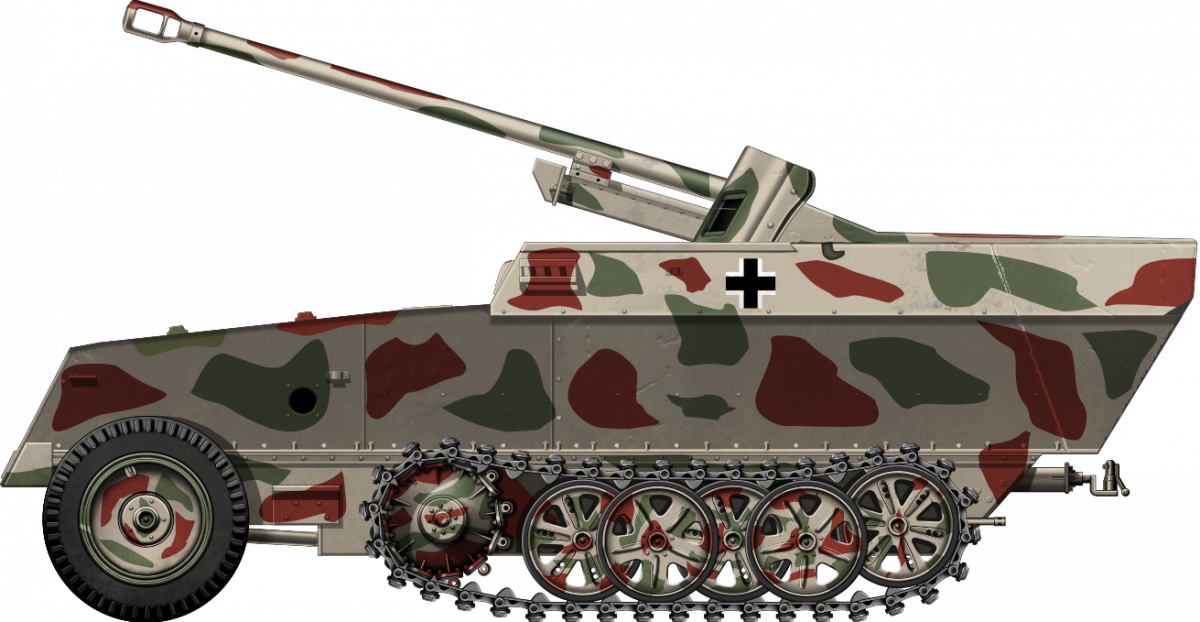
The occupying Axis forces in Yugoslavia during World War II were constantly under threat by the ever-increasing Partisan activities. Given that the Germans lacked production capabilities and were short of manpower, the forces operating in Yugoslavia were in short supply of any modern military equipment. To compensate for this, they often had to improvise and reuse existing vehicles by upgrading their armament. In one particular case, at least one Sd.Kfz.250 half-track was modified by rearming it with 5 cm PaK 38 anti-tank guns. Not much is known about these vehicles, as there are no known records of them. The single surviving Sd.Kfz.250 with the 5 cm anti-tank gun can be seen at the Belgrade Military Museum located near the city center. Source: Wiki A Brief History of the Occupation of Yugoslavia After the unsuccessful invasion of Greece by Italian forces, Benito Mussolini was forced to ask…
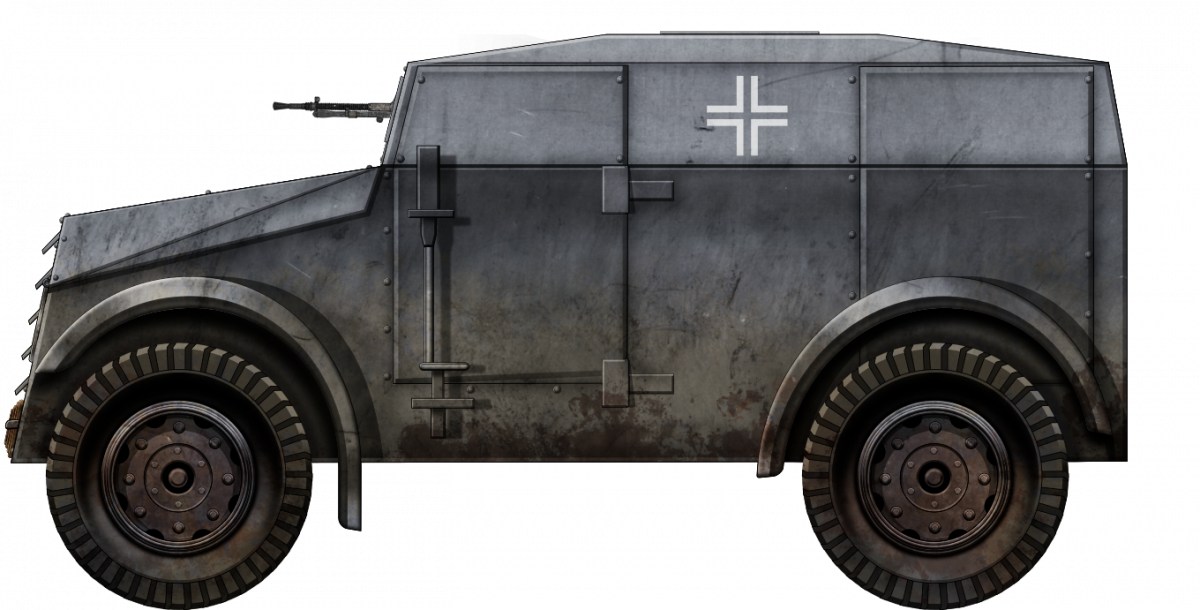
During the Axis occupation of Yugoslavia during the Second World War, the ever-increasing resistance movements caused great destruction to the Axis infrastructure and manpower. The Germans were particularly hard-pressed as they could not provide proper forces and equipment. Instead, they often relied on captured weapons and units of mixed experience and quality. Regarding the armor used, these were also mostly captured vehicles that were for the most part obsolete. To further increase their number, some improvised vehicles were also used, including one based on a captured British Morris CS8 truck. The German improvised armored car based on a Morris CS8 chassis. Source: B. B. Dimitrijević and D. Savić Oklopne jedinice na Jugoslovenskom ratištu 1941-1945 A Brief History of the Yugoslavian Occupation After the unsuccessful invasion of Greece by Italian forces, Benito Mussolini was forced to ask for help from his German ally. Adolf Hitler agreed to…
MarkoPantelic | Published 2023-04-24 08:04 | 3 Comments
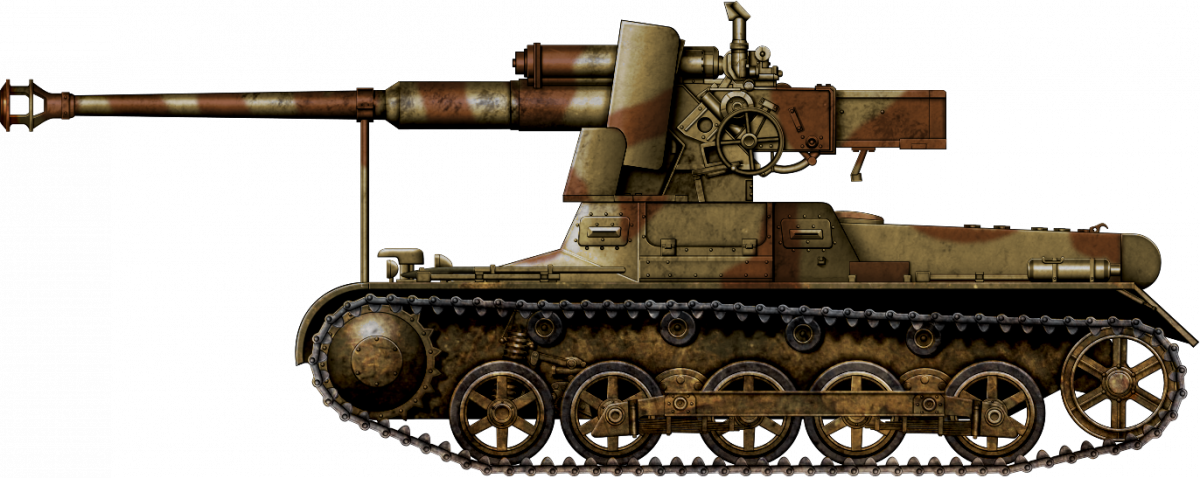
In the final months of the war, the Germans were losing men and materials on all fronts. Out of desperation, all kinds of improvised vehicles, mostly based on obsolete vehicles or simply whatever was at hand, were rushed into service. One such vehicle was built using a Panzer I Ausf.B chassis on top of which a 7.5 cm StuK 40 was placed, for use in the futile defense of Berlin in 1945 Panzer I Ausf.B with 7.5 cm StuK 40 in Berlin of 1945. Source: https://www.reddit.com/r/Warthunder/comments/hl628f/gaijin_pls_panzer_i_with_pak_40/ https://youtu.be/Sze0VxtddQ8 History By 1945, the German Army and its industry were in ruins. The Allied bombing campaigns, lack of resources, and the rapid advances of Germany’s enemies on their own soil made the production of new vehicles difficult. Despite this, the German war industry was desperately hanging on, producing limited quantities of new vehicles. By this point, these efforts were…
Sd.Kfz.251 Ausf.D mit Zwilling 12 cm Granatwerfer 42
MarkoPantelic | Published 2022-11-16 09:59 | 5 Comments
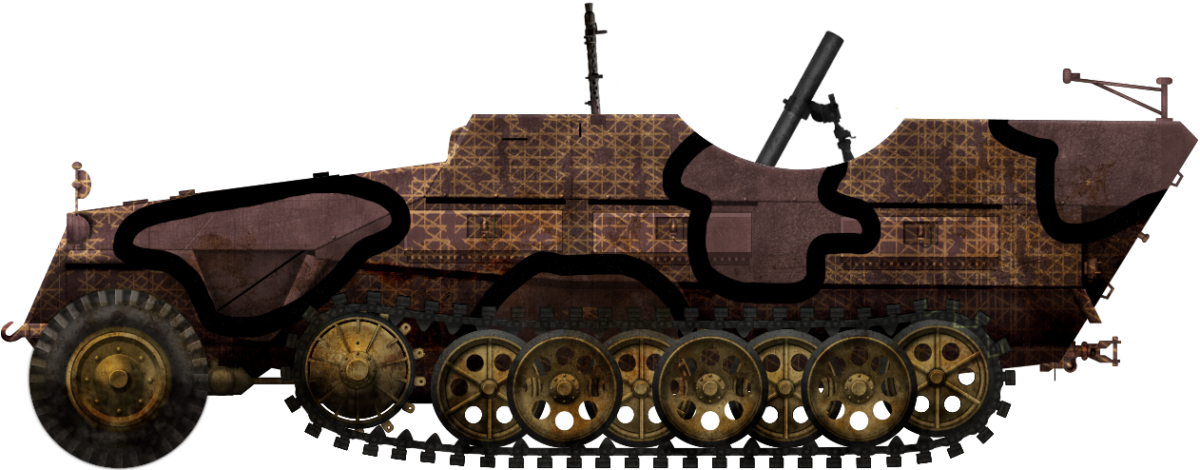
The occupation of Yugoslavia by the Axis forces led to nearly five years of heavy fighting and destruction. All warring parties that participated in the fighting in Yugoslavia were often forced to use older equipment and armaments, as not much else was available. While the Germans employed various armored vehicles, these were mostly older or captured equipment. The Yugoslav Partisans could only employ armor captured from the enemy. In order to gain a slight upper hand over the enemy, or to simply improve their firepower, various field and unique modifications were designed and built by both sides. Generally, in rarer cases, some of these were documented, while, for the majority, almost nothing is known besides a few available photographs that prove their existence. One of these was a Sd.Kfz.251 modification equipped with two 12 cm mortars. This unusual and unique Sd.Kfz.251 is equipped with two 12…
MarkoPantelic | Published 2022-09-21 07:58 | 2 Comments
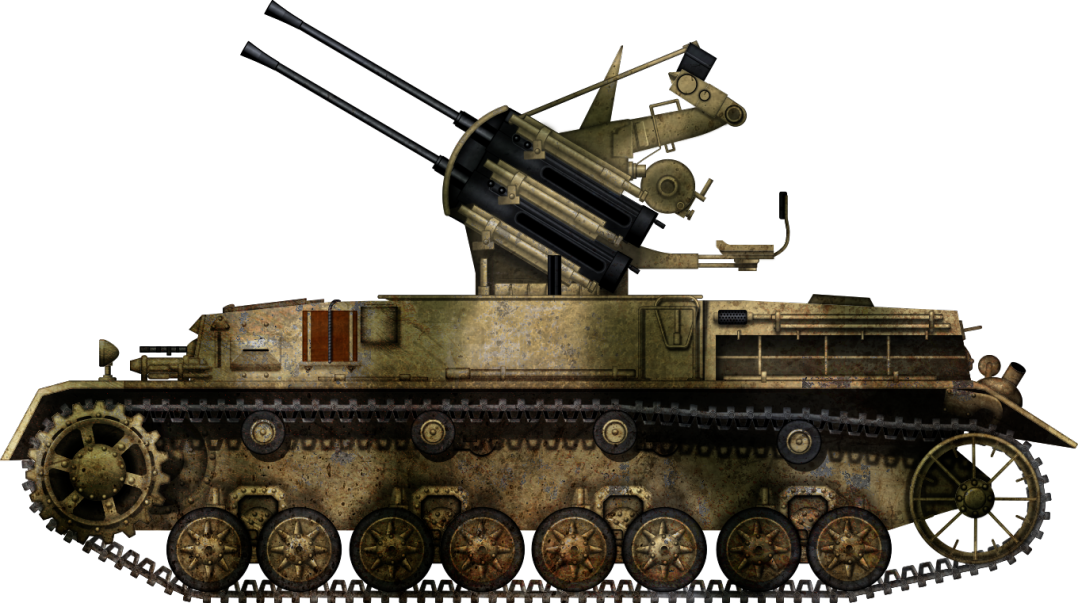
In the early years of the Second World War, the Germans did not use a dedicated anti-aircraft vehicle based on a tank chassis. As the German Air Force was more than capable of providing cover for the panzers, this was not deemed a priority at that point. In the later stages of the war, things changed drastically, and the need for well-protected vehicles based on tank chassis became apparent. While attempts were made to design such vehicles in late 1943, they led to the creation of a 3.7 cm armed Flakpanzer IV which had folding sides. This design proved to be unsuccessful for many reasons, forcing the Germans to find another solution. In late 1943 or early 1944, the 12th SS Panzer Division’s Anti-Aircraft Detachment decided to take matters into their own hands and modified three Panzer IVs by adding the 2 cm Flakvierling 38 on top of the superstructure.…
Marisa Belhote | Published 2021-09-27 09:24 | 6 Comments
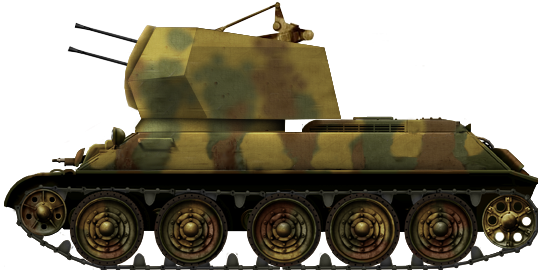
The Germans armed forces made wide use of captured equipment during the Second World War, particularly the ground forces of the Wehrmacht, the Heer. Following the conquests of 1939 to 1942, thousands of armored vehicles were left behind German lines, sometimes lightly damaged or even intact. Efforts would be undertaken to field these vehicles, both by frontline German units seeking to strengthen their numbers and by rear-line security units seeking armor to fight against partisans and resistance movements in Europe. These are known as Beutepanzers (captured/trophy tanks). https://youtu.be/V9eH7W7abhs As one of the most produced tanks of the war, and one fielded by the Soviets during the great German offensives in 1941-1942, large numbers of T-34s fell into German hands. Designated T-34 747(r) (German Beutepanzer designations used a three-digit system in which the first number would designate the type of vehicle, if starting with 7, a tank; the (r) would indicate…