The Imperial State of Iran,[c] officially known in the Western world as the Imperial State of Persia until 1935[1] and commonly referred to as Pahlavi Iran,[d] was the Iranian state under the rule of the Pahlavi dynasty. The dynasty was established in 1925 and lasted until 1979, when it was overthrown during the Iranian Revolution, ending the over 2,500-year-old Iranian monarchy and leading to the establishment of the Islamic Republic of Iran.
Imperial State of Irana | |||||||||
|---|---|---|---|---|---|---|---|---|---|
| 1925–1979 | |||||||||
| Motto: مرا داد فرمود و خود داور است Marâ dâd farmud o xod dâvar ast "Justice He bids me do, as He will judge me"[4] | |||||||||
| Anthem: سلامتی دولت علیهٔ ایران (1925–1933) Salâmati-ye Dowlat-e 'Aliyeye Irân "Salute of the Sublime State of Persia" Anthem: سرود ملی شاهنشاهی ایران (1933–1979) Sorud-e Mellî-e Šâhanšâhi-ye Irân[1] "Imperial National Anthem of Iran" Flag anthem (1979–1933) سرود پرچم شیر و خورشید Sorud-e Parčam-e Šir-o Xoršid "Lion and Sun Flag Anthem" | |||||||||
.svg) | |||||||||
| Capital and largest city | Tehran 35°41′N 51°25′E / 35.683°N 51.417°E | ||||||||
| Official languages | Persian | ||||||||
| Religion | Shia Islam[b] | ||||||||
| Demonyms | |||||||||
| Government | Unitary semi-constitutional monarchy | ||||||||
| Shah | |||||||||
• 1925–1941 | Reza Shah | ||||||||
• 1941–1979 | Mohammad Reza Pahlavi | ||||||||
| Prime Minister | |||||||||
• 1925–1926 (first) | Mohammad Ali Foroughi | ||||||||
• 1979 (last) | Shapour Bakhtiar | ||||||||
| Legislature | Majles | ||||||||
| Senate (1950–1979) | |||||||||
| National Assembly (1925–1979) | |||||||||
| Historical era | Interwar period · World War II · Cold War | ||||||||
• Founded | 15 December 1925 | ||||||||
| 1941–1946 | |||||||||
| 8 May 1949 | |||||||||
| 21 July 1952 | |||||||||
| 19 August 1953 | |||||||||
| 1963–1977 | |||||||||
| 26 October 1967 | |||||||||
| 1978–1979 | |||||||||
| 11 February 1979 | |||||||||
| 1 April 1979 | |||||||||
| Area | |||||||||
• Total | 1,648,195 km2 (636,372 sq mi) | ||||||||
| Population | |||||||||
• 1979 estimate | 38,424,952[6] | ||||||||
• 1976 census | 33,708,744[7] | ||||||||
• Density | 23/km2 (59.6/sq mi) | ||||||||
| GDP (PPP) | 1978 estimate | ||||||||
• Total | $614.16 billion[8] | ||||||||
• Per capita | $16,542[9] | ||||||||
| GDP (nominal) | 1978 estimate | ||||||||
• Total | $77.99 billion[10] | ||||||||
• Per capita | $2,101[11] | ||||||||
| HDI (1975) | 0.571[12] medium | ||||||||
| Currency | Iranian rial (ریال) (IRR) | ||||||||
| Time zone | UTC+3:30 (IRST) | ||||||||
| Calling code | +98 | ||||||||
| ISO 3166 code | IR | ||||||||
| |||||||||
| Today part of | Iran | ||||||||
| |||||||||

.svg)


In February 1921, Reza Khan, a general in the Persian Cossack Brigade, led a march toward Tehran and launched a coup against the ruling government, becoming the commander-in-chief of Iran. By December 1925, Iran's Majles, convened as a constituent assembly, deposed the Qajars and voted to install Reza Khan as the new shah of the Imperial State of Persia under the dynastic name Pahlavi. Under his rule, the country became a centralized unitary state and underwent a series of modernization reforms.[13] In 1935, he requested that foreign delegates use the endonym "Iran" instead of the exonym "Persia" in formal correspondence. Iran declared neutrality during World War II; nevertheless, in 1941, it was occupied by British and Soviet forces, and Reza Shah was subsequently forced to abdicate and go into exile.
Reza Shah was succeeded by his son Mohammad Reza Pahlavi, who led Iran's response to the crisis of 1946. Following the 1953 Iranian coup d'état, Pahlavi consolidated his rule, and Iran became a key ally of the United States during the Cold War. Supported by rising oil revenues and Western backing, the Shah pursued an extensive military buildup and introduced a broad socioeconomic reform program known as the White Revolution, which expanded education, healthcare, infrastructure, and industrial development, while contributing to economic growth and higher standards of living among the Iranian populace.[14]
Despite the country's rapid economic growth, the Shah faced growing public opposition by the late 1970s over wealth inequality, political repression, and Westernization. The unrest culminated in a revolutionary movement that sought to overthrow the monarchy, led by the exiled Shia cleric Ruhollah Khomeini. After months of nationwide protests and strikes, the Shah and his family left Iran in January 1979, leading to the collapse of the imperial state. Mohammad Reza Pahlavi died of cancer in July 1980; his son Reza remained in exile and later emerged as a prominent opposition figure advocating liberal democracy in Iran.[15]
History
editOrigins
editDuring the late 19th and early 20th centuries, Iran faced financial difficulties under the weakened Qajar dynasty, stemming from limited industrialization and weak state infrastructure.[16][17] To offset these problems, the Qajar government granted extensive commercial concessions to the neighboring British and Russian empires in exchange for loans and political support, but the move only contributed to further economic decline.[18] Iranian dependence on the two empires intensified with the 1907 Anglo-Russian Convention, which formally divided Iran into British and Russian spheres of influence and significantly undermined the country's sovereignty.[19]
Public dissatisfaction with foreign interference, bureaucratic mismanagement, and royal corruption contributed to the 1905–1911 Persian Constitutional Revolution, which established the first Iranian parliament and introduced a constitution limiting the powers of the monarchy. However, instability persisted due to continued British and Russian opposition to the constitutional movement, and conditions deteriorated further during the First World War, when Iran, despite declaring neutrality, became a battleground. The war disrupted economic production, devastated trade and agriculture, and contributed to widespread famine, severely weakening the authority of the central government.[20]
In 1920, rumors of a Red Army-backed march on Tehran heightened fears of a potential Soviet takeover of Iran.[21] Concerned by the growing instability, British officials sought the emergence of a strong central authority capable of restoring order to the country. In January 1921, British Army officer Edmund Ironside appointed Reza Khan, then a brigadier general of the Persian Cossack Brigade, to lead the entire force.[22] A month later, Reza Khan led 3,000–4,000 Cossack troops into Tehran during the 1921 Persian coup d'état. Facing little resistance, he dissolved parliament and became Iran's commander-in-chief, subsequently launching military campaigns to supress separatist movements in Tabriz, Gilan, Khorasan, Kurdistan, and Khuzestan.[23]
Establishment and early years
editIn 1923, Reza Khan became the prime minister of Iran and subsequently pressured parliament into deposing the Qajar dynasty, paving the way for his accession to the throne. He had initially planned to declare Iran a republic, similar to the reforms implemented by Mustafa Kemal Atatürk in Turkey, but abandoned the proposal in the face of opposition from British leaders and the Shia clergy.[24] Upon being sworn in as the monarch by a constituent assembly on 15 December 1925, Reza Shah adopted the dynastic name "Pahlavi", a reference to the Middle Persian language of the Sasanian Empire.[25] He had previously chosen the surname for himself in November 1919 following the initial planning of Iran's surname law.[26]
By the mid-1930s, Reza Shah's strong secular rule had the support of the middle and upper classes, but caused opposition among some groups, particularly the Shia clergy. In 1935, Reza Shah issued a decree asking foreign delegates to use the term Iran in formal correspondence, in accordance with the fact that "Persia" was a term used by Western people for the country called "Iran" in Persian. To avoid confusion with Iraq, the Iranian government later announced in 1959 that both "Persia" and "Iran" were acceptable in official use and could be used interchangeably.
World War II
editReza Shah preferred to obtain technical assistance from Germany, France, Italy, and other European countries. This created problems for Iran after 1939, when Germany and the United Kingdom became enemies during World War II. At the outbreak of the war, Reza Shah proclaimed Iran to be a neutral country, but Britain insisted that German engineers and technicians in Iran were spies with missions to sabotage British oil facilities in Khuzestan. The British embassy demanded that Iran expel all German citizens, but Reza Shah refused, claiming this would adversely affect his planned development projects.
In April 1941, war reached Iran's borders when Rashid Ali al-Gaylani, with assistance from Germany and Italy, launched the 1941 Iraqi coup d'état, sparking the Anglo-Iraqi War in May 1941. Germany and Italy quickly sent the pro-Axis forces in Iraq military aid. However, during the period from May to July 1941, the British and their allies defeated the pro-Axis forces in Iraq and later in Syria and Lebanon.
Allied occupation of Iran
editIn June 1941, Nazi Germany broke the Molotov–Ribbentrop Pact and invaded the Soviet Union, Iran's northern neighbor. The Soviets quickly allied themselves with the Allied countries, and during the summer of 1941, the British demanded that the Iranian government expel all Germans from Iran. Reza Shah refused to expel the Germans, and on 25 August the British and Soviets launched a surprise invasion; Reza Shah's government quickly surrendered after less than a week of fighting.[27] The invasion's strategic purpose was to secure a supply line to the Soviet Union (later named the Persian Corridor), secure the oil fields and the Abadan Refinery (of the UK-owned Anglo-Iranian Oil Company), and limit German influence in Iran. As a result of the invasion, Reza Shah was forced to abdicate and was succeeded as Shah by Mohammad Reza Pahlavi, his 21-year-old son.[28][29][30] Reza Shah passed away on 26 July 1944 while in exile in South Africa, at the age of 66.[31]
During the remainder of World War II, Iran became a major conduit for British and American aid to the Soviet Union, as well as an escape for more than 120,000 Polish refugees and members of the Polish Armed Forces fleeing the Axis advance.[32] At the 1943 Tehran Conference, the Allied "Big Three"—Joseph Stalin, Franklin D. Roosevelt, and Winston Churchill—issued the Tehran Declaration, reaffirming their commitment to preserving Iran's post-war independence and territorial integrity.
Post-war conflict and recovery
editThe Allied nations reassured the Iranian government that all foreign troops withdraw from the country by March 1946.[33] Amid these assurances, the Tudeh Party of Iran, a communist party tied to the Soviet Union, became increasingly militant. In 1945, the Iranian government responded by deploying armed forces to restore order in the Tudeh-dominated northern regions. While the party's strongholds in Tehran and Isfahan were suppressed, Soviet troops stationed in Azerbaijan province prevented Iranian forces from entering the region. The ensuing dispute triggered the Iran crisis, one of the first major confrontations of the Cold War.[34]
In a move directed by the Soviet Union, the Azerbaijan People's Government and the Republic of Mahabad were established in January 1946 as unrecognized secessionist states.[33][35] However, following international pressure at the United Nations, as well as negotiations over oil concessions, Soviet forces withdrew from Iran in May 1946, allowing the Iranian Army to rapidly dismantle both separatist governments. With the support of the United States, the oil concessions granted to the Soviet Union were subsequently revoked by the Iranian government.[34][36]
Constitutional changes
edit.jpg)
Emerging victorious from crisis of 1946, Mohammad Reza Pahlavi began pushing constitutional changes to promote social reform and increase the power of the monarchy, though he was advised against this course of action by foreign diplomats, who considered it unwise to upset the separation of powers. On 4 February 1949, during a visit to the University of Tehran, an assailant opened fire on the Shah, wounding him with two bullets. That evening, the government declared martial law, and a special session of parliament imposed harsh measures against political enemies of the monarchy. The assailant was suspected of having links to the religious extremist group Fada'iyan-e Islam, which had previously carried out assassinations of secular political figures, as well as the Tudeh party. Both groups were subsequently outlawed, and their leaders arrested.
In an atmosphere of national support for the monarchy, parliament voted in favor of the Shah's bill calling for a constituent assembly to re-examine the constitution.[37][38] To staff the assembly, the Shah selected individuals who were sympathetic to his aims. Mohammad-Sadegh Tabatabaei, a long-time ally of the Pahlavi dynasty, was appointed its leader. While the assembly was being organized, the Shah pushed through laws criminalizing newspaper criticism of the royal family, and transferring crown land holdings from general state ownership to his personal control. In March, he announced the convocation of the body and raised the question of convening a Senate for the first time, as permitted under the constitution but never previously implemented.[39]
The constituent assembly met for three weeks beginning on 21 April 1949.[40] On 8 May, it approved major changes to the constitution: the Shah was granted the right to dissolve parliament; the authority to hold new elections so that a new parliament would be formed within three months of dismissing the old one; and the establishment of a bicameral legislature, with a National Assembly as the lower house and a Senate as the upper house.[41] A minor amendment also revised the process for implementing future constitutional changes. In January 1950, the first Iranian senate commenced, with the Shah appointing half of its 60 members.[39]
Oil crisis
editThe Shah's actions drew the ire of Mohammad Mosaddegh, an prominent career politician and senior opposition figure. In response to the Shah's selection of royalists sympathetic to his views and concerns over the manipulation of general elections, Mosaddegh called for protests, which took place in late 1949.
In April 1951, the Majles named Mossaddegh as prime minister by a vote of 79–12. Shortly afterward, he nationalized the British-owned oil industry. The Shah opposed Mossadegh's actions, fearing that a Western-imposed oil embargo and a lack of domestic technical expertise would leave Iran in economic ruin. After a two-year political struggle, the Shah briefly left the country but returned following a coup orchestrated by British and American intelligence against Mossadegh on 19 August 1953. Mossadegh was subsequently arrested by pro-Shah army forces.
Cold War era
editFollowing the overthrow of Mossadegh, Iran became geopolitically aligned with the United States as part of broader Western efforts to contain Soviet influence during the Cold War. During the presidency of John F. Kennedy, the United States regarded Iran as an significant regional ally, perceiving it as a rare source of stability in the Middle East and against Soviet expansionism.[42]
Iran adopted a modified version of its national flag in 1964, changing its ratio from 1:3 to 4:7. It retained the stripes of its green, white, and red horizontal tricolour with the traditional "Lion and Sun" (Shir-o-Khorshid) emblem in the centre.
On 12–16 October 1971, an elaborate set of celebrations and festivities for the 2,500-year celebration of the Persian Empire occurred in commemoration of the founding of the Achaemenid Empire by Cyrus the Great.
Collapse of the monarchy
editThe Shah's government suppressed its opponents with the help of Iran's security and intelligence secret police, SAVAK. Such opponents included communists, socialists, and Islamists. By the mid-1970s, relying on increased oil revenues, Mohammad Reza began a series of even more ambitious and bolder plans for the progress of his country and the march toward the "White Revolution". However, his socioeconomic advances increasingly irritated the clergy. Islamic leaders, particularly the exiled cleric Ayatollah Ruhollah Khomeini, were able to focus this discontent with an ideology tied to Islamic principles that called for the overthrow of the Shah and a return to Islamic traditions.

Khomeini appointed the politically moderate Mehdi Bazargan as prime minister, who served from 11 February to 6 November 1979. Barzagan resigned under Khomeini's growing extremism, authoritarianism and de facto control, after he first attempted to resign in March. The Islamic Revolution dissolved the SAVAK and replaced it with the SAVAMA. It was run after the revolution, according to U.S. sources and Iranian exile sources in the U.S. and in Paris, by General Hossein Fardoust, who was deputy chief of SAVAK under Mohammad Reza's reign and a friend from boyhood of the deposed monarch.
Exile and present-day
editMohammad Reza fled the country on 16 January 1979, seeking medical treatment in Egypt, Mexico, the United States, and Panama, and finally resettled with his family in Egypt as a guest of Anwar Sadat. On his death on 27 July 1980, his son Reza Pahlavi, who was formally invested as Crown Prince on 26 October 1967, succeeded him as head of the Pahlavi dynasty.[43] In 2013, Reza Pahlavi established the Iran National Council in Paris, which serves as a government in exile to reclaim the former throne after a potential overthrow of the current Islamic Republic government.[44] However, in February 2019, Pahlavi launched an initiative called the Phoenix Project of Iran. According to the National Interest, this is "designed to bring the various strains of the opposition closer to a common vision for a post-clerical Iran."[45]
Government and politics
editThe political system of the Imperial State of Iran took place in a parliamentary constitutional monarchy where the Shah served as the head of state and the prime minister as its head of government. The National Consultative Assembly was the nation's unicameral parliament, from 1949 it became the lower house when the Senate was established as its upper house of the parliament.
Legacy
editReza Shah is credited with the reunification of Iran under a powerful central government. This led to a resurgence of Persian nationalism up until 1979, which, among other measures, was achieved through an official ban on the use of minority languages in schools and newspapers, and the successful quelling of separatist movements.[46]
During the twenty-first century, the Pahlavi era has often been associated with the modernization and economic growth of the Iranian state in the twentieth century, contributing to the continued visibility of its rulers among the population both inside Iran and within the diaspora. Chants such as “Javid Shah” (“Long live the Shah”), "Reza Shah, bless your soul", and "This is the final battle, Pahlavi will return" have reportedly seen widespread use among demonstrators opposing the Islamic Republic, including during the Mahsa Amini protests and the 2025–2026 Iranian protests.[47][48][49]
Human rights
editDuring the Pahlavi era, secret police, torture, and capital punishment were utilized frequently to stifle political dissent. The dynasty has sometimes been described as an "imperial dictatorship" or "one-man rule",[50] although the country enjoyed a brief interlude of democracy from 1941 to 1953.[51]
Corruption
editManouchehr Ganji led an anti-corruption study group which submitted at least 30 reports in 13 years detailing corruption of high-ranking officials and the royal circle, but the Shah called the reports "false rumors and fabrications". Parviz Sabeti, a high-ranking official of SAVAK, believed that the one important reason for successful opposition to the regime was the allegations of corruption.[52]
See also
edit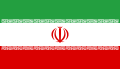

Notes
edit- ↑ Upper: State flag — with standardized Lion and Sun emblem approved in 1972
Lower: Civil flag — formally designated for widespread public use - ↑ Shia Islam was practiced by the majority of the population and was the de jure state religion, as described in the Constitution. However, the administration of the Pahlavi era has been described as de facto secular, as the government took steps to limit clerical influence on state institutions and society.[5]
- ↑ Persian: کشور شاهنشاهی ایران, romanized: Kešvar-e Šâhanšâhi-ye Irân[1]
- ↑ Persian: ایران پهلوی, romanized: Irân Pahlavi
References
edit- 1 2 3 4 "IRAN: Keshvaré Shahanshahiyé Irân", The Statesman's Year-Book 1978–79, Springer, 2016, pp. 674–682, ISBN 9780230271074
- 1 2 Smith, Whitney (1975), Flags through the ages and across the world, McGraw-Hill, ISBN 978-0070590939
- ↑ Barraclough, E.M.C (1978), Flags of the World, Frederick Warne & Co., ISBN 978-0723220152
- ↑ "The Imperial Standards of Iran".
- ↑ "Iran between Islamic Nationalism and Secularism".
- ↑ "Population, annual total for Iran (World Bank)". Federal Reserve Bank of St. Louis. 2025.
- ↑ Statistical Center of Iran (2011). "SELECTED FINDINGS OF THE 2011 NATIONAL POPULATION AND HOUSING CENSUS" (PDF). United Nations Statistics Division. p. 6.
- ↑ "Iran GDP – by PPP, 2024 dollars". World Inequality Database. 2024.
- ↑ "Iran GDP per capita over time, average income or wealth, all ages, individual, PPP, 2024 dollars". World Inequality Database. 2024.
- ↑ "GDP (current US$) – Iran". World Bank Open Data. The World Bank Group.
- ↑ "GDP per capita (current US$) – Iran". World Bank Open Data. The World Bank Group.
- ↑ United Nations Development Programme (2007). Human Development Report 2007/2008. New York: Palgrave Macmillan. p. 235.
- ↑ Ahmad, Ashraf; Banuazizi, Ali (3 August 2015). "CLASS SYSTEM vi. Classes in the Pahlavi Period". Encyclopedia Iranica. Retrieved 12 May 2026.
Under Pahlavi rule (1304–58 Š./1925–79) Persia became a powerful centralized state...
- ↑ Hashem Pesaran, Mohammad (15 December 1997). "ECONOMY ix. IN THE PAHLAVI PERIOD". Encyclopædia Iranica. Retrieved 14 May 2026.
- ↑ "Prince Reza Pahlavi says he wants to lead Iran in a transition to democracy". CBS News. 1 March 2026.
- ↑ Foran, John (1989). "The Concept of Dependent Development as a Key to the Political Economy of Qajar Iran (1800-1925)". Iranian Studies. 22 (2/3): 5–56. ISSN 0021-0862.
- ↑ Hakimian, Hassan (15 December 1997). "ECONOMY viii. IN THE QAJAR PERIOD". Encyclopaedia Iranica. Retrieved 15 May 2026.
- ↑ Deutschmann, Moritz (2013). "All Rulers are Brothers: Russian Relations with the Iranian Monarchy in the Nineteenth Century". Iranian Studies. 46 (3): 401–413. doi:10.1080/00210862.2012.759334. ISSN 0021-0862. JSTOR 24482848. S2CID 143785614.
- ↑ Andreeva, Elena (2007). Russia and Iran in the great game: travelogues and Orientalism. London: Routledge. pp. 20, 63–76. ISBN 978-0-203-96220-6. OCLC 166422396.
- ↑ Afary, Janet (1996). The Iranian Constitutional Revolution, 1906–1911: Grassroots Democracy, Social Democracy, & the Origins of Feminism. Columbia University Press. pp. 330–338. ISBN 978-0-231-10351-0.
- ↑ Abrahamian, Ervand (1982). Iran Between Two Revolutions. Princeton University Press. pp. 116–117. ISBN 0691053421.
- ↑ Ghani, Cyrus (2001). Iran and the Rise of the Reza Shah: From Qajar Collapse to Pahlavi Power. I.B. Tauris. p. 147. ISBN 978-1-86064-629-4.
- ↑ Cottam, Richard W. (1979). Nationalism in Iran: Updated Through 1978. University of Pittsburgh Press. pp. 102–114. ISBN 978-0-8229-7420-8.
- ↑ Milani, Abbas (2011). The Shah. St. Martin's Press. p. 25. ISBN 978-0-230-34038-1.
- ↑ Ansari, Ali M. (2003). Modern Iran Since 1921: The Pahlavis and After. Longman. p. 36. ISBN 978-0-582-35685-6. Retrieved 14 February 2016.
- ↑ Chehabi, H. E. (2020). Onomastic Reforms: Family Names and State-Building in Iran. Harvard University Press. ISBN 9780674248199. Archived from the original on 26 April 2021.
- ↑ Glenn E. Curtis, Eric Hooglund; US Government Printing Office (2008). Iran: A Country Study. U.S. Government Printing Office. p. 30. ISBN 978-0-8444-1187-3.
- ↑ Farrokh, Kaveh (2011). Iran at War: 1500–1988. Osprey Publishing Limited. ISBN 978-1-78096-221-4.[permanent dead link]
- ↑ David S. Sorenson (2013). An Introduction to the Modern Middle East: History, Religion, Political Economy, Politics. Westview Press. p. 206. ISBN 978-0-8133-4922-0.
- ↑ Iran: Foreign Policy & Government Guide. International Business Publications. 2009. p. 53. ISBN 978-0-7397-9354-1. Archived from the original on 12 October 2017.
- ↑ Bakhash, Shaul (2019). "Reza Shah's journey into exile". British Journal of Middle Eastern Studies. 46 (3): 375–384. ISSN 1353-0194.
- ↑ T.H. Vail Motter; United States Army Center of Military History (1952). United States Army in World War II the Middle East Theater the Persian Corridor and Aid to Russia. CMH. Archived from the original on 4 March 2016. Retrieved 3 February 2021.
- 1 2 Jessup, John E. (1989). A Chronology of Conflict and Resolution, 1945–1985. New York: Greenwood Press. ISBN 0-313-24308-5.
- 1 2 Louise Fawcett, "Revisiting the Iranian Crisis of 1946: How Much More Do We Know?." Iranian Studies 47#3 (2014): 379–399.
- ↑ The Iranian Crisis of 1945–1946 and the Spiral Model of International Conflict, by Fred H. Lawson in International Journal of Middle East Studies p.9
- ↑ Gary R. Hess, "the Iranian Crisis of 1945–46 and the Cold War." Political Science Quarterly 89#1 (1974): 117–146. online
- ↑ Daniel, Elton L. (2001). The History of Iran. The Greenwood histories of the modern nations. Westport, CT: Greenwood Press. p. 148. ISBN 978-0-313-30731-7.
- ↑ Afkhami, Gholam R. (2009). The Life and Times of the Shah. Berkeley, CA: University of California Press. p. 117. ISBN 978-0-520-94216-5.
- 1 2 Azimi, Fakhreddin (2008). The Quest for Democracy in Iran: A Century of Struggle Against Authoritarian Rule. Cambridge, Mass: Harvard University Press. p. 139. ISBN 978-0-674-02778-7.
- ↑ Blake, Kristen (2009). The U.S.-Soviet confrontation in Iran, 1945-1962: a case in the annals of the Cold War. University Press of America. p. 50. ISBN 978-0-7618-4491-4.
- ↑ Sanghvi, Ramesh (1968). Aryamehr: The Shah of Iran. A Political Biography (2nd ed.). Macmillan Publishers. pp. 165–166.
- ↑ Nemchenok, Victor V. (25 February 2010). "In search of stability amid chaos: US policy toward Iran, 1961–63". Cold War History. 10 (3): 341–369. doi:10.1080/14682740903178579. S2CID 153842958. Retrieved 17 February 2023.
- ↑ "The Imperial Coronation of Iran". Farahpahlavi.org. Retrieved 3 February 2022.
- ↑ Parker Richards (29 January 2016). "Pahlavi, Elie Wiesel, Rev. King to Be Honored for Promoting Peace". Observer. Retrieved 1 June 2017.
- ↑ Harounoff, Jonathan (13 August 2019). "The White House Once Labeled Them Terrorists. Now They're Being Called Iran's Next Government". Haaretz.
- ↑ Tohidi, Nayereh. "Iran: regionalism, ethnicity and democracy". Archived from the original on 14 July 2013. Retrieved 1 August 2013.
- ↑ "Huge anti-government protests in Tehran and other Iranian cities, videos show". BBC. 9 January 2026. Retrieved 5 March 2026.
- ↑ Qiblawi, Tamara (9 January 2026). "The son of Iran's last shah is rallying protesters. But do Iranians really want another king?". CNN. Retrieved 5 March 2026.
- ↑ Mahoozi, Sanam; Solomon, Erika (27 February 2026). "Iran's Students, Undeterred After Deadly Crackdown, Are Protesting Again". The New York Times. ISSN 0362-4331. Retrieved 5 March 2026.
- ↑ de Camara, Robert C. (23 March 1980). "The Shah as Tyrant: A Look at the Record". The Washington Post.
- ↑ Cottam, Richard W. (1980). "Human Rights in Iran under the Shah". Case Western Reserve Journal of International Law. 12 (1).
- ↑ Ganji, p. 8-9