Bio
Ratings are only approximate. It's been years since I've touched half of these.
Ratings are only approximate. It's been years since I've touched half of these.
Earned Badges

GOTY '25
Participated in the 2025 Game of the Year Event

Replay '15
Participated in the 2015 Replay Event

Replay '07
Participated in the 2007 Replay Event

GOTY '24
Participated in the 2024 Game of the Year Event

Elite Gamer
Played 400+ games

3 Years of Service
Being part of the Backloggd community for 3 years

GOTY '23
Participated in the 2023 Game of the Year Event

Busy Day
Journaled 5+ games in a single day

On Schedule
Journaled games once a day for a week straight

Best Friends
Become mutual friends with at least 3 others

Roadtrip
Voted for at least 3 features on the roadmap

Noticed
Gained 3+ followers

Gamer
Played 200+ games

N00b
Played 50+ games
Favorite Games
Recently Played
Recently Reviewed
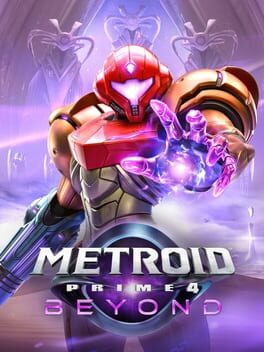
With an eighteen year wait between installments (eight since the game had been officially announced), Metroid Prime 4 was unavoidably saddled with lofty, perhaps unfair, expectations. No game could have fulfilled every wish of every fan that accumulated across those years - yet even so, Prime 4 as it exists sadly doesn’t come close. Even attempting to ignore the historical context and appreciate the game on its own merits is difficult, as the final product is confused, uneven and ultimately unimpressive.
Prime 4 continues in the footsteps of its predecessor - that is to say, not the original Metroid Prime, but rather Metroid Prime 3. While still broadly very well-received, 3 was itself the lowest reviewed mainline Prime game upon release and has developed a reputation as a polarizing entry in the series by introducing a number of NPCs (with full voice acting), a tighter emphasis on narrative, and a more linear world structure, all of which put the game at odds with the series’ roots of labyrinthine isolation.
4 doubles down on all the controversial choices made by 3. Orders received via radio and the occasional voiced boss in 3 becomes an entire collection of side characters in 4. The occasional action set piece in 3 becomes a long series of combat encounters which dominate the latter half of 4. A handful of planets connected by starship in 3 become discrete regions linked by a central hub in 4.
At the risk of upsetting purists, nothing I’ve mentioned thus far is fundamentally an issue. While it pulls the Prime subseries even further from its origins, Nintendo (or Retro Studios, or perhaps both) are clearly intent on transforming Prime into something more palatable than traditional Metroid, with wider audience appeal and more sales potential. Time will tell if Prime 4 proves itself a financial success, but personally I’d have been perfectly happy to play “Halo starring Samus Aran”. I love Halo, after all.
The real issue is that Prime 4 is a ways off from actualizing that concept. As it exists, the game has one foot in traditional Metroid design and the other in the realm of corridor shooters. This does a disservice to both and the result is half-baked.
The combat is locked into twenty-year-old sensibilities, essentially unchanged from Prime 3 all the way back in 2007 (or Prime Remastered in 2023). With Samus’ small collection of weaponry and limited degree of mobility, it simply isn’t engaging to fight off dozens of (identical) enemies, as the game often requires. The bosses, on the other hand, are a highlight. Despite Samus’ simple arsenal, most present a memorable climax to each region, with interesting creature designs and hard-hitting attack patterns that required more reflexes and strategic thinking than I’d expected.
In a Metroidvania sense, it’s virtually impossible to get lost in Prime 4. On a macro level, the helpful NPCs will point out which region to head to at the push of a button - or sometimes even without pushing that button. On a micro level, the map design of each area essentially funnels you down a straight line, at most letting you go one room “off course” before you hit an impassable obstacle and must double back. An obvious intentional effort was made to make Prime 4 welcoming to newcomers and beginners, in a way that reminds me of Pikmin 4 for its own series. However, whereas Pikmin 4 eventually lets the training wheels come off with optional challenges and a robust postgame, Prime 4 keeps you directed, if not literally on rails, until you hit the credits. Metroid has never been truly nonlinear (outside of sequence breaking), but never has that been more apparent than with Prime 4. For most players, the largest navigational challenge will be solving traversal puzzles within a single room, where external guidance is rarely given. These moments are where Prime 4 feels most like the game long-time fans will crave. Even in such small doses, I still had a couple satisfying “a-ha” moments when I pieced together how to “solve” a tricky room.
Unfortunately, the slate of Federation Trooper NPCs that guide Samus (centered in a “base camp” area you are repeatedly forced to return to) are one-dimensional, with a mixed bag of voice acting. Attempted dramatic or emotional scenes with these NPCs don’t land, because they interact with a version of Samus that doesn’t exist. There’s an implied camaraderie between Samus and the troopers that has little basis in reality due to Samus’ robotic body language and absence of dialogue. When a trooper yells at Samus to identify herself and she simply stares back at him, it comes off silly more than anything. I feel the game would have benefitted from either excising these troopers entirely or allowing Samus to be a talking character in response. There’s a version of Prime 4 where Samus speaks in brief, stoic dialogue (a la Master Chief), which I actually feel would have enhanced the intended cinematic tone of the experience - but I suppose the shadow of Other M still looms over the franchise.
Various minor aspects of Prime 4 come off shallow at best and unfinished at worst. The “Sol Valley” desert hub and associated fetch quests are roughly as dull and tedious as social media contends. The “psychic powers” gimmick is near-meaningless; most abilities are effectively the same as Samus’ normal repertoire except with literally the word “psychic” attached (such as “Psychic Boost Ball”). Sylux, the purported main antagonist, has minimal screentime and feels transplanted from a different game, as if included out of obligation to make good on years of teases.
For all these faults, Metroid Prime 4 is still a functional game. The core Prime formula is still fun, even in this watered-down state, and I have virtually no criticism to levy at the audiovisuals. The soundtrack is fantastic and the graphics are among the best we’ve ever seen on Switch. (Load times are noticeable but unobtrusive on Switch 2; I can’t speak for Switch 1.) But it’s a shame that Prime 4 is finally here - and it’s merely okay.
Prime 4 continues in the footsteps of its predecessor - that is to say, not the original Metroid Prime, but rather Metroid Prime 3. While still broadly very well-received, 3 was itself the lowest reviewed mainline Prime game upon release and has developed a reputation as a polarizing entry in the series by introducing a number of NPCs (with full voice acting), a tighter emphasis on narrative, and a more linear world structure, all of which put the game at odds with the series’ roots of labyrinthine isolation.
4 doubles down on all the controversial choices made by 3. Orders received via radio and the occasional voiced boss in 3 becomes an entire collection of side characters in 4. The occasional action set piece in 3 becomes a long series of combat encounters which dominate the latter half of 4. A handful of planets connected by starship in 3 become discrete regions linked by a central hub in 4.
At the risk of upsetting purists, nothing I’ve mentioned thus far is fundamentally an issue. While it pulls the Prime subseries even further from its origins, Nintendo (or Retro Studios, or perhaps both) are clearly intent on transforming Prime into something more palatable than traditional Metroid, with wider audience appeal and more sales potential. Time will tell if Prime 4 proves itself a financial success, but personally I’d have been perfectly happy to play “Halo starring Samus Aran”. I love Halo, after all.
The real issue is that Prime 4 is a ways off from actualizing that concept. As it exists, the game has one foot in traditional Metroid design and the other in the realm of corridor shooters. This does a disservice to both and the result is half-baked.
The combat is locked into twenty-year-old sensibilities, essentially unchanged from Prime 3 all the way back in 2007 (or Prime Remastered in 2023). With Samus’ small collection of weaponry and limited degree of mobility, it simply isn’t engaging to fight off dozens of (identical) enemies, as the game often requires. The bosses, on the other hand, are a highlight. Despite Samus’ simple arsenal, most present a memorable climax to each region, with interesting creature designs and hard-hitting attack patterns that required more reflexes and strategic thinking than I’d expected.
In a Metroidvania sense, it’s virtually impossible to get lost in Prime 4. On a macro level, the helpful NPCs will point out which region to head to at the push of a button - or sometimes even without pushing that button. On a micro level, the map design of each area essentially funnels you down a straight line, at most letting you go one room “off course” before you hit an impassable obstacle and must double back. An obvious intentional effort was made to make Prime 4 welcoming to newcomers and beginners, in a way that reminds me of Pikmin 4 for its own series. However, whereas Pikmin 4 eventually lets the training wheels come off with optional challenges and a robust postgame, Prime 4 keeps you directed, if not literally on rails, until you hit the credits. Metroid has never been truly nonlinear (outside of sequence breaking), but never has that been more apparent than with Prime 4. For most players, the largest navigational challenge will be solving traversal puzzles within a single room, where external guidance is rarely given. These moments are where Prime 4 feels most like the game long-time fans will crave. Even in such small doses, I still had a couple satisfying “a-ha” moments when I pieced together how to “solve” a tricky room.
Unfortunately, the slate of Federation Trooper NPCs that guide Samus (centered in a “base camp” area you are repeatedly forced to return to) are one-dimensional, with a mixed bag of voice acting. Attempted dramatic or emotional scenes with these NPCs don’t land, because they interact with a version of Samus that doesn’t exist. There’s an implied camaraderie between Samus and the troopers that has little basis in reality due to Samus’ robotic body language and absence of dialogue. When a trooper yells at Samus to identify herself and she simply stares back at him, it comes off silly more than anything. I feel the game would have benefitted from either excising these troopers entirely or allowing Samus to be a talking character in response. There’s a version of Prime 4 where Samus speaks in brief, stoic dialogue (a la Master Chief), which I actually feel would have enhanced the intended cinematic tone of the experience - but I suppose the shadow of Other M still looms over the franchise.
Various minor aspects of Prime 4 come off shallow at best and unfinished at worst. The “Sol Valley” desert hub and associated fetch quests are roughly as dull and tedious as social media contends. The “psychic powers” gimmick is near-meaningless; most abilities are effectively the same as Samus’ normal repertoire except with literally the word “psychic” attached (such as “Psychic Boost Ball”). Sylux, the purported main antagonist, has minimal screentime and feels transplanted from a different game, as if included out of obligation to make good on years of teases.
For all these faults, Metroid Prime 4 is still a functional game. The core Prime formula is still fun, even in this watered-down state, and I have virtually no criticism to levy at the audiovisuals. The soundtrack is fantastic and the graphics are among the best we’ve ever seen on Switch. (Load times are noticeable but unobtrusive on Switch 2; I can’t speak for Switch 1.) But it’s a shame that Prime 4 is finally here - and it’s merely okay.