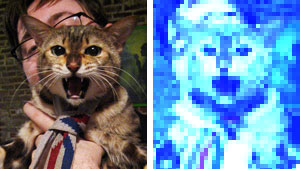
In an effort to speed up page loading, Google has introduced an experimental new image format called WebP. The format is intended to reduce the file size of lossy images without compromising the quality. Google’s tests, which involved converting a million images, show that the format delivers an average reduction in file size of 39 percent.
To achieve this reduction, the WebP format relies on the advanced, still-image compression methods that the VP8 video codec uses to compress individual frames. Google has coupled these advanced compression techniques with a very slim container format. Due to its efficacy for compressing lossy images, WebP might someday replace JPEG as the standard format for photos and similar content on the Web.
“We applied the techniques from VP8 video intra frame coding to push the envelope in still image coding,” wrote Google product manager Richard Rabbat in a post on the official Chromium blog. “We also adapted a very lightweight container based on RIFF. While this container format contributes a minimal overhead of only 20 bytes per image, it is extensible to allow authors to save meta-data they would like to store.”
Google obtained the VP8 video codec last year when it acquired media technology company On2. Google later opened the source code of the standard VP8 implementation and introduced WebM, an open multimedia format for the Web that relies on VP8 and Ogg Vorbis. It was a significant milestone for open video on the Web, because it finally supplied a competitive, royalty-free format that is suitable for use in standards-based video implementations.

 Loading comments...