Yoshimuraite
A valid IMA mineral species
This page is currently not sponsored. Click here to sponsor this page.
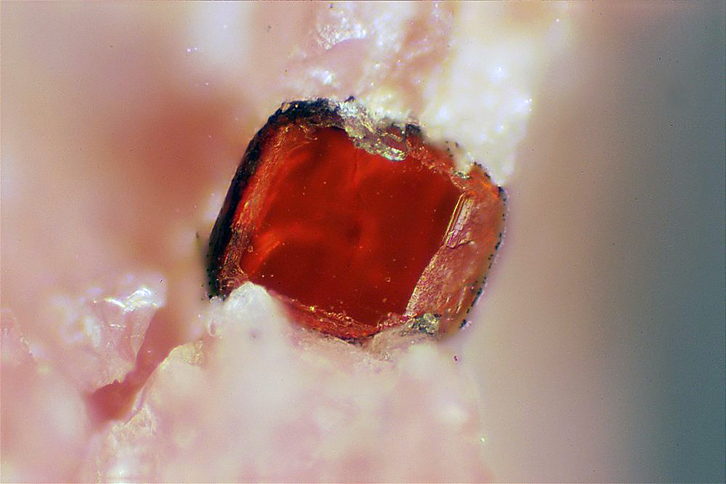


About Yoshimuraite

Toyofumi Yoshimura
Formula:
Ba2Mn2Ti(Si2O7)(PO4)O(OH)
Colour:
Orange-brown, red, dark brown
Hardness:
4½
Specific Gravity:
4.13 - 4.2
Crystal System:
Triclinic
Member of:
Name:
Named in 1961 by Takeo Watanabe, Yoshio Takeuchi, and Jun Ito in honor of Toyofumi Yoshimura (吉村 豊文) (19 August 1905, Nara Prefecture - 25 November 1990), Professor of Mineralogy, Kyushu University, Japan. He specialized in manganese deposits of Japan.
Compositionally related to zinkgruvanite, i.e., close to being its TiP-, or Ti-PO4-analogue, but with different type of linkages.
Unique Identifiers
Mindat ID:
4365
Long-form identifier:
mindat:1:1:4365:2
IMA Classification of Yoshimuraite
Classification of Yoshimuraite
9.BE.42
9 : SILICATES (Germanates)
B : Sorosilicates
E : Si2O7 groups, with additional anions; cations in octahedral [6] and greater coordination
9 : SILICATES (Germanates)
B : Sorosilicates
E : Si2O7 groups, with additional anions; cations in octahedral [6] and greater coordination
58.2.6.1
58 : SOROSILICATES Insular, Mixed, Single, and Larger Tetrahedral Groups
2 : Insular, Mixed, Single, and Larger Tetrahedral Groups with cations in [6] and higher coordination; single and double groups (n = 1, 2)
58 : SOROSILICATES Insular, Mixed, Single, and Larger Tetrahedral Groups
2 : Insular, Mixed, Single, and Larger Tetrahedral Groups with cations in [6] and higher coordination; single and double groups (n = 1, 2)
17.10.26
17 : Silicates Containing other Anions
10 : Silicates with sulphate, molybdate or tungstate
17 : Silicates Containing other Anions
10 : Silicates with sulphate, molybdate or tungstate
Mineral Symbols
As of 2021 there are now IMA–CNMNC approved mineral symbols (abbreviations) for each mineral species, useful for tables and diagrams.
| Symbol | Source | Reference |
|---|---|---|
| Ysh | IMA–CNMNC | Warr, L.N. (2021). IMA–CNMNC approved mineral symbols. Mineralogical Magazine, 85(3), 291-320. doi:10.1180/mgm.2021.43 |
Physical Properties of Yoshimuraite
Transparency:
Translucent
Colour:
Orange-brown, red, dark brown
Hardness:
4½ on Mohs scale
Hardness Data:
Measured
Tenacity:
Brittle
Density:
4.13 - 4.2 g/cm3 (Measured) 4.21 g/cm3 (Calculated)
Optical Data of Yoshimuraite
Type:
Biaxial (+)
RI values:
nα = 1.763 nβ = 1.777 nγ = 1.785
2V:
Measured: 85° to 90°, Calculated: 72°
Max. Birefringence:
δ = 0.022
Based on recorded range of RI values above.
Based on recorded range of RI values above.
Interference Colours:
The colours simulate birefringence patterns seen in thin section under crossed polars. They do not take into account mineral colouration or opacity.
Michel-Levy Bar The default colours simulate the birefringence range for a 30 µm thin-section thickness. Adjust the slider to simulate a different thickness.
Grain Simulation You can rotate the grain simulation to show how this range might look as you rotated a sample under crossed polars.
The colours simulate birefringence patterns seen in thin section under crossed polars. They do not take into account mineral colouration or opacity.
Michel-Levy Bar The default colours simulate the birefringence range for a 30 µm thin-section thickness. Adjust the slider to simulate a different thickness.
Grain Simulation You can rotate the grain simulation to show how this range might look as you rotated a sample under crossed polars.
Surface Relief:
Moderate
Dispersion:
very strong
Comments:
X = bright yellow
Y = orange-brown
Z = brown
Y = orange-brown
Z = brown
Chemistry of Yoshimuraite
Mindat Formula:
Ba2Mn2Ti(Si2O7)(PO4)O(OH)
Element Weights:
Common Impurities:
Al,Fe,Zn,Mg,Ca,Na,K,H2O
Crystallography of Yoshimuraite
Crystal System:
Triclinic
Class (H-M):
1 - Pinacoidal
Space Group:
P1
Cell Parameters:
a = 7(1) Å, b = 14.71(2) Å, c = 5.39(1) Å
α = 93.52(2)°, β = 90.2(2)°, γ = 95.3(2)°
α = 93.52(2)°, β = 90.2(2)°, γ = 95.3(2)°
Ratio:
a:b:c = 0.476 : 1 : 0.366
Unit Cell V:
551.57 ų (Calculated from Unit Cell)
Z:
2
Twinning:
Polysynthetic on {010}, common.
Crystal Structure
Load
Unit Cell | Unit Cell Packed
2x2x2 | 3x3x3 | 4x4x4
Unit Cell | Unit Cell Packed
2x2x2 | 3x3x3 | 4x4x4
Show
Big Balls | Small Balls | Just Balls | Spacefill
Polyhedra Off | Si Polyhedra | All Polyhedra
Remove metal-metal sticks
Big Balls | Small Balls | Just Balls | Spacefill
Polyhedra Off | Si Polyhedra | All Polyhedra
Remove metal-metal sticks
Display Options
Black Background | White Background
Perspective On | Perspective Off
2D | Stereo | Red-Blue | Red-Cyan
Black Background | White Background
Perspective On | Perspective Off
2D | Stereo | Red-Blue | Red-Cyan
View
CIF File Best | x | y | z | a | b | c
CIF File Best | x | y | z | a | b | c
Rotation
Stop | Start
Stop | Start
Labels
Console Off | On | Grey | Yellow
Console Off | On | Grey | Yellow
Data courtesy of the American Mineralogist Crystal Structure Database. Click on an AMCSD ID to view structure
| ID | Species | Reference | Link | Year | Locality | Pressure (GPa) | Temp (K) |
|---|---|---|---|---|---|---|---|
| 0005651 | Yoshimuraite | McDonald A M, Grice J D, Chao G Y (2000) The crystal structure of yoshimuraite, a layered Ba-Mn-Ti silicophosphate, with comments on five-coordinated Ti The Canadian Mineralogist 38 649-656 |  | 2000 | 0 | 293 |
CIF Raw Data - click here to close
X-Ray Powder Diffraction
Powder Diffraction Data:
| d-spacing | Intensity |
|---|---|
| 4.90 Å | (60) |
| 4.11 Å | (40) |
| 3.40 Å | (100) |
| 3.24 Å | (60) |
| 3.13 Å | (40) |
| 2.94 Å | (100) |
| 2.78 Å | (60) |
Geological Environment
Paragenetic Mode(s):
| Paragenetic Mode | Earliest Age (Ga) |
|---|---|
| Stage 4b: Highly evolved igneous rocks | >3.0 |
| 35 : Ultra-alkali and agpaitic igneous rocks |
Type Occurrence of Yoshimuraite
General Appearance of Type Material:
Platy to bladed or tabular crystals, to 5 cm; in stellate groups and platy masses.
Place of Conservation of Type Material:
National Science Museum, Tokyo, Japan; The Natural History Museum, London, England; Harvard University, Cambridge, Massachusetts, USA; National Museum of Natural History, Washinton, DC, USA
Geological Setting of Type Material:
In the border facies of an alkalic pegmatite cutting a stratiform manganese deposit.
Associated Minerals at Type Locality:
Other Language Names for Yoshimuraite
Relationship of Yoshimuraite to other Species
Member of:
Other Members of Bafertisite Group:
| Bafertisite | Ba2Fe2+4Ti2(Si2O7)2O2(OH)2F2 | Tric. |
| Bobshannonite | Na2KBa(Mn,Na)8(Nb,Ti)4(Si2O7)4O4(OH)4(O,F)2 | Tric. |
| Bussenite | Na2Ba2Fe2+Ti(Si2O7)(CO3)(OH)3F | Tric. 1 : P1 |
| Cámaraite | Ba3Na(Fe2+,Mn)8Ti4(Si2O7)4O4(OH,F)7 | Tric. 1 |
| Hejtmanite | Ba2Mn2+4Ti2(Si2O7)2O2(OH)2F2 | Tric. 1 |
| Jinshajiangite | BaNaFe2+4Ti2(Si2O7)2O2(OH)2F | Tric. 1 : P1 |
| Perraultite | BaNaMn2+4Ti2(Si2O7)2O2(OH)2F | Tric. 1 |
Common Associates
Associated Minerals Based on Photo Data:
| 10 photos of Yoshimuraite associated with Rhodonite | CaMn3Mn[Si5O15] |
| 5 photos of Yoshimuraite associated with Richterite | Na(NaCa)Mg5(Si8O22)(OH)2 |
| 1 photo of Yoshimuraite associated with Quartz | SiO2 |
| 1 photo of Yoshimuraite associated with Rhodochrosite | MnCO3 |
Related Minerals - Strunz-mindat Grouping
| 9.BE. | Zinkgruvanite | Ba4Mn2+4Fe3+2(Si2O7)2(SO4)2O2(OH)2 |
| 9.BE. | Calciomurmanite | (Na,◻)2Ca(Ti,Mg,Nb)4[Si2O7]2O2(OH,O)2(H2O)4 |
| 9.BE. | Cámaraite | Ba3Na(Fe2+,Mn)8Ti4(Si2O7)4O4(OH,F)7 |
| 9.BE. | Alfredcasparite | Sr2TiO(Si2O7) |
| 9.BE. | Batievaite-(Y) | Y2Ca2Ti(Si2O7)2(OH)2(H2O)4 |
| 9.BE. | Nacareniobsite-(Y) | Na3Ca3YNb(Si2O7)2OF3 |
| 9.BE. | Alexkuznetsovite-(Ce) | Ce2Mn(CO3)(Si2O7) |
| 9.BE. | Bobshannonite | Na2KBa(Mn,Na)8(Nb,Ti)4(Si2O7)4O4(OH)4(O,F)2 |
| 9.BE. | Paralomonosovite | Na6◻4Ti4(Si2O7)2[PO3OH][PO2(OH)2]O2(OF) |
| 9.BE. | Madeiraite | Na2Ca2Fe2Zr2(Si2O7)2O2F2 |
| 9.BE. | Bortolanite | Ca2(Ca1.5Zr0.5)Na(NaCa)Ti(Si2O7)2(OF)F2 |
| 9.BE. | Moxuanxueite | NaCa6Zr(Si2O7)2OF3 |
| 9.BE. | Delhuyarite-(Ce) | Ce4Mg(Fe3+,W)3◻(Si2O7)2O6(OH)2 |
| 9.BE. | Christofschäferite-(Ce) | Ce3CaMnTiFe3+Ti2(Si2O7)2O8 |
| 9.BE.X | Asimowite | Fe2+4O(Si2O7) |
| 9.BE. | Biraite-(La) | La2Fe2+(CO3)(Si2O7) |
| 9.BE. | Pilanesbergite | Na2Ca2Fe2Ti2(Si2O7)2O2F2 |
| 9.BE.02 | Wadsleyite | Mg4O(Si2O7) |
| 9.BE.02 | Ohtaniite | Mg3(Si0.5◻0.5)Si2O8 |
| 9.BE.05 | Lawsonite | CaAl2(Si2O7)(OH)2 · H2O |
| 9.BE.05 | Hennomartinite | SrMn3+2(Si2O7)(OH)2 · H2O |
| 9.BE.05 | Cortesognoite | CaV2(Si2O7)(OH)2 · H2O |
| 9.BE.05 | Noelbensonite | BaMn3+2(Si2O7)(OH)2 · H2O |
| 9.BE.05 | Itoigawaite | SrAl2(Si2O7)(OH)2 · H2O |
| 9.BE.07 | Ilvaite | CaFe3+Fe2+2(Si2O7)O(OH) |
| 9.BE.07 | Amamoorite | CaMn2+2Mn3+(Si2O7)O(OH) |
| 9.BE.07 | Manganilvaite | CaFe2+Fe3+Mn2+(Si2O7)O(OH) |
| 9.BE.10 | Suolunite | Ca2(H2Si2O7) · H2O |
| 9.BE.12 | Jaffeite | Ca6(Si2O7)(OH)6 |
| 9.BE.15 | Fresnoite | Ba2Ti(Si2O7)O |
| 9.BE.17 | Janhaugite | (Na,Ca)3(Mn2+,Fe2+)3(Ti,Zr,Nb)2(Si2O7)2O2(OH,F)2 |
| 9.BE.17 | Burpalite | Na2CaZr(Si2O7)F2 |
| 9.BE.17 | Niocalite | (Ca,Nb)4(Si2O7)(O,OH,F)2 |
| 9.BE.17 | Normandite | NaCa(Mn,Fe)(Ti,Nb,Zr)(Si2O7)OF |
| 9.BE.17 | Hiortdahlite | Na2Ca4(Ca0.5Zr0.5)Zr(Si2O7)2OF3 |
| 9.BE.17 | Låvenite | Na2Ca2Mn2Zr2(Si2O7)2O2F2 |
| 9.BE.17 | Cuspidine | Ca8(Si2O7)2F4 |
| 9.BE.17 | Wöhlerite | Na2Ca4ZrNb(Si2O7)2O3F |
| 9.BE.17 | Baghdadite | Ca6Zr2(Si2O7)2O4 |
| 9.BE.20 | Nacareniobsite-(Ce) | Na3Ca3(Ce,REE)Nb(Si2O7)2OF3 |
| 9.BE.20 | Roumaite | (Ca,Na,REE,◻)7(Nb,Ti)[Si2O7]2OF3 |
| 9.BE.20 | Rinkite-(Ce) | (Ca3Ce)Na(NaCa)Ti(Si2O7)2(OF)F2 |
| 9.BE.20 | Nacareniobsite-(Nd) | Ca2(CaNd)Na3Nb(Si2O7)2(OF)F2 |
| 9.BE.20 | Rinkite-(Y) | Na2Ca4YTi(Si2O7)2OF3 |
| 9.BE.20 | Mosandrite-(Ce) | (Ca3REE)[(H2O)2Ca0.5◻0.5]Ti(Si2O7)2(OH)2(H2O)2 |
| 9.BE.22 | Hainite-(Y) | Na2Ca4(Y,REE)Ti(Si2O7)2OF3 |
| 9.BE.22 | Rosenbuschite | Na6Ca6Zr3Ti(Si2O7)4O2F6 |
| 9.BE.22 | Götzenite | NaCa6Ti(Si2O7)2OF3 |
| 9.BE.22 | Fogoite-(Y) | Na3Ca2Y2Ti(Si2O7)2OF3 |
| 9.BE.22 | Kochite | Na3Ca2MnZrTi(Si2O7)2OF3 |
| 9.BE.23 | Dovyrenite | Ca6Zr(Si2O7)2(OH)4 |
| 9.BE.25 | Lamprophyllite | (Na,Mn2+)3(Sr,Na)2(Ti,Fe3+)3(Si2O7)2O2(OH,O,F)2 |
| 9.BE.25 | Seidozerite | Na4MnZr2Ti(Si2O7)2O2F2 |
| 9.BE.25 | Nabalamprophyllite | (BaNa)Ti2Na3Ti(Si2O7)2O2(OH)2 |
| 9.BE.25 | Schüllerite | Ba2Na(Mn,Ca)(Fe3+,Mg,Fe2+)2Ti2(Si2O7)2(O,F)4 |
| 9.BE.25 | Ericssonite | BaMn2+2Fe3+(Si2O7)O(OH) |
| 9.BE.25 | Grenmarite | Na4MnZr3(Si2O7)2O2F2 |
| 9.BE.25 | Kazanskyite | BaNa3Ti2Nb(Si2O7)2O2(OH)2(H2O)4 |
| 9.BE.25 | Saamite | Ba◻Na3Ti2Nb(Si2O7)2O2(OH)F(H2O)2 |
| 9.BE.25 | Emmerichite | Ba2Na(Na,Fe2+)2(Fe3+,Mg)Ti2(Si2O7)2O2F2 |
| 9.BE.25 | Barytolamprophyllite | (Ba,Na)2(Na,Ti,Fe3+)4Ti2(Si2O7)2O(OH,F) |
| 9.BE.25 | Ericssonite-2O | BaMn2+2Fe3+(Si2O7)O(OH) |
| 9.BE.25 | Fluorbarytolamprophyllite | (Ba,Sr)2[(Na,Fe2+)3(Ti,Mg)F2][Ti2(Si2O7)2O2] |
| 9.BE.25 | Fluorlamprophyllite | Na3(SrNa)Ti3(Si2O7)2O2F2 |
| 9.BE.25 | Lileyite | Ba2(Na,Fe,Ca)3MgTi2(Si2O7)2O2F2 |
| 9.BE.27 | Kolskyite | CaNa2Ti4(Si2O7)2O4(H2O)7 |
| 9.BE.27 | Vigrishinite | NaZnTi4(Si2O7)2O3(OH)(H2O)4 |
| 9.BE.27 | Selivanovaite | NaFe3+Ti4(Si2O7)2O4(H2O)4 |
| 9.BE.27 | Murmanite | Na2Ti2(Si2O7)O2 · 2H2O |
| 9.BE.30 | Epistolite | (Na◻)Nb2Na3Ti(Si2O7)2O2(OH)2(H2O)4 |
| 9.BE.32 | Lomonosovite | Na5Ti2(Si2O7)(PO4)O2 |
| 9.BE.35 | Vuonnemite | Na11Ti4+Nb2(Si2O7)2(PO4)2O3(F,OH) |
| 9.BE.37 | Sobolevite | Na13Ca2Mn2Ti3(Si2O7)2(PO4)4O3F3 |
| 9.BE.40 | Ferroinnelite | Ba4Ti2Na(NaFe2+)Ti(Si2O7)2[(SO4)(PO4)]O2[O(OH)] |
| 9.BE.40 | Phosphoinnelite | Na3Ba4Ti3(Si2O7)2(PO4,SO4)2O2F |
| 9.BE.40 | Innelite | Ba4Ti2Na(NaMn2+)Ti(Si2O7)2[(SO4)(PO4)]O2[O(OH)] |
| 9.BE.42 | Horiite | Ba2Mn2Mn4Ti2(Si2O7)2(PO4)2O2(OH)2 |
| 9.BE.45 | Quadruphite | Na6Na2(CaNa)2Na2Ti2Na2Ti2(Si2O7)2(PO4)4O4F2 |
| 9.BE.47 | Polyphite | Na5(Na4Ca2)Ti2(Si2O7)(PO4)3O2F2 |
| 9.BE.50 | Shkatulkalite | Na2Nb2Na3Ti(Si2O7)2O2(FO)(H2O)4(H2O)3 |
| 9.BE.50 | Bornemanite | Na6BaTi2Nb(Si2O7)2(PO4)O2(OH)F |
| 9.BE.55 | Hejtmanite | Ba2Mn2+4Ti2(Si2O7)2O2(OH)2F2 |
| 9.BE.55 | Bykovaite | (Ba,Na,K)2(Na,Ti,Mn)4(Ti,Nb)2(Si2O7)2O2(H2O,F,OH)2 · 3.5H2O |
| 9.BE.55 | Nechelyustovite | (Ba,Sr,K)2(Na,Ti,Mn)4(Ti,Nb)2(Si2O7)2O2(O,H2O,F)2 · 4.5H2O |
| 9.BE.55 | Bafertisite | Ba2Fe2+4Ti2(Si2O7)2O2(OH)2F2 |
| 9.BE.60 | Delindeite | (Na,K)2(Ba,Ca)2(Ti,Fe,Al)3(Si2O7)2O2(OH)2 · 2H2O |
| 9.BE.62 | Orthochevkinite | (Ce,La,Ca,Na,Th)4(Fe2+,Mg)2(Ti,Fe3+)3Si4O22 |
| 9.BE.62 va | Strontium Perrierite | (Ce,Sr,La,Ca)4Fe2+(Ti,Zr,Fe)2Ti2(Si2O7)2O8 |
| 9.BE.62 | Chevkinite-(Nd) | (Nd,REE)4(Fe2+,Mg)(Fe2+,Ti,Fe3+)2(Ti,Fe3+)2(Si2O7)2O8 ? |
| 9.BE.62 | Perrierite-(Nd) | Nd4MgFe3+2Ti2(Si2O7)2O8 ? |
| 9.BE.65 | Bussenite | Na2Ba2Fe2+Ti(Si2O7)(CO3)(OH)3F |
| 9.BE.67 | Jinshajiangite | BaNaFe2+4Ti2(Si2O7)2O2(OH)2F |
| 9.BE.67 | Perraultite | BaNaMn2+4Ti2(Si2O7)2O2(OH)2F |
| 9.BE.70 | Dingdaohengite-(Ce) | (Ce,La)4Fe2+(Ti,Fe2+,Mg,Fe3+)2Ti2(Si2O7)2O8 |
| 9.BE.70 | Perrierite-(Ce) | Ce4MgFe3+2Ti2O8(Si2O7)2 |
| 9.BE.70 | Karnasurtite-(Ce) | (Ce,La,Th)(Ti,Nb)(Al,Fe)(Si2O7)(OH)4 · 3H2O |
| 9.BE.70 | Maoniupingite-(Ce) | (Ce,Ca)4(Fe3+,Ti,Fe2+,◻)(Ti,Fe3+,Fe2+,Nb)4(Si2O7)2O8 |
| 9.BE.70 | Matsubaraite | Sr4Ti5(Si2O7)2O8 |
| 9.BE.70 | Rengeite | Sr4ZrTi4(Si2O7)2O8 |
| 9.BE.70 | Polyakovite-(Ce) | (Ce,Ca)4(Mg,Fe2+)(Cr3+,Fe3+)2(Ti,Nb)2(Si2O7)2O8 |
| 9.BE.70 | Hezuolinite | (Sr,REE)4Zr(Ti,Fe3+)4(Si2O7)2O8 |
| 9.BE.70 | UM2008-53-SiO:SrTiZr | Sr4ZrTi4(Si2O7)2O8 |
| 9.BE.70 | Chevkinite-(Ce) | Ce4(Ti,Fe2+,Fe3+)5O8(Si2O7)2 |
| 9.BE.70 | Perrierite-(La) | (La,Ce,Ca)4(Fe2+,Mn)(Ti,Fe3+,Al)4[(Si2O7)O4]2 |
| 9.BE.70 | Strontiochevkinite | (Sr,La,Ce,Ca)4Fe2+(Ti,Zr)2Ti2(Si2O7)2O8 |
| 9.BE.72 | Fersmanite | Ca4(Na,Ca)4(Ti,Nb)4(Si2O7)2O8F3 |
| 9.BE.75 | Belkovite | Ba3(Nb,Ti)6(Si2O7)2O12 |
| 9.BE.77 | Nasonite | Pb6Ca4(Si2O7)3Cl2 |
| 9.BE.80 | Melanotekite | Pb2Fe3+2(Si2O7)O2 |
| 9.BE.80 | Kentrolite | Pb2Mn3+2(Si2O7)O2 |
| 9.BE.82 | Alexkuznetsovite-(La) | La2Mn(CO3)(Si2O7) |
| 9.BE.82 | Tilleyite | Ca5(Si2O7)(CO3)2 |
| 9.BE.85 | Killalaite | Ca6.4(H0.6Si2O7)2(OH)2 |
| 9.BE.87 | Stavelotite-(La) | (La,Nd,Ca)3Mn2+3Cu(Mn3+,Fe3+,Mn4+)26(Si2O7)6O30 |
| 9.BE.90 | Magnesiorowlandite-(Y) | Y4(Mg,Fe)(Si2O7)2F2 |
| 9.BE.90 | Biraite-(Ce) | Ce2Fe2+(Si2O7)(CO3) |
| 9.BE.92 | Cervandonite-(Ce) | (Ce,Nd,La)(Fe3+,Fe2+,Ti,Al)3O2(Si2O7)(As3+O3)(OH) |
| 9.BE.92 | Chirvinskyite | (Na,Ca)13(Fe,Mn,◻)2(Ti,Zr)5(Si2O7)4(OH,O)12 · 2H2O |
| 9.BE.95 | Rusinovite | Ca10(Si2O7)3Cl2 |
| 9.BE.95 | Batisivite | BaV3+8Ti6(Si2O7)O22 |
| 9.BE.97 | Schlüterite-(Y) | (Y,REE)2AlSi2O7(OH)2F |
Other Information
Health Risks:
No information on health risks for this material has been entered into the database. You should always treat mineral specimens with care.
Internet Links for Yoshimuraite
mindat.org URL:
https://www.mindat.org/min-4365.html
Please feel free to link to this page.
Please feel free to link to this page.
Search Engines:
External Links:
References for Yoshimuraite
Reference List:
Watanabe, Takeo (1959) The minerals of the Noda-Tamagawa Mine, Iwate Prefecture, Japan. I. Notes on Geology and Parageneses of Minerals. Mineralogical Journal, 2 (6). 408-421 doi:10.2465/minerj1953.2.408
WATANABE, TAKEO, TAKÉUCHI, YOSHIO, ITO, JUN (1961) The minerals of the Noda-Tamagawa mine, Iwaté Prefecture, Japan. III. Yoshimuraite, a new barium-titanium-manganese silicate mineral. Mineralogical Journal, 3 (3). 156-167 doi:10.2465/minerj1953.3.156
IMA (1967) International Mineralogical Association: Commission on New Minerals and Mineral Names. Mineralogical Magazine and Journal of the Mineralogical Society, 36 (277) 131-136 doi:10.1180/minmag.1967.036.277.20
McDonald, A. M., Grice, J. D., Chao, G. Y. (2000) The crystal structure of yoshimuraite, a layered Ba–Mn–Ti silicophosphate, with comments on five–coordinated Ti4+. The Canadian Mineralogist, 38 (3). 649-656 doi:10.2113/gscanmin.38.3.649
Sokolova, E. (2006) From structure topology to chemical composition. I. Structural hierarchy and stereochemistry in titanium disilicate minerals. The Canadian Mineralogist, 44 (6) 1273-1330 doi:10.2113/gscanmin.44.6.1273
Sokolova, Elena, Cámara, Fernando (2014) From structure topology to chemical composition. XVII. Fe3+ versus Ti4+: The topology of the HOH layer in ericssonite-2O, Ba2Fe3+2Mn4(Si2O7)2O2(OH)2, ferroericssonite, Ba2Fe3+2Fe2+4(Si2O7)2O2(OH)2, and yoshimuraite, Ba4Ti4+2Mn4(Si2O7)2(PO4)2O2(OH)2. The Canadian Mineralogist, 52 (3) 569-576 doi:10.3749/canmin.52.3.569
Sokolova, E., Cámara, F. (2017) The seidozerite supergroup of TS-block minerals: nomenclature and classification, with change of the following names: rinkite to rinkite-(Ce), mosandrite to mosandrite-(Ce), hainite to hainite-(Y) and innelite-1T to innelite-1A. Mineralogical Magazine, 81 (6) 1457-1484 doi:10.1180/minmag.2017.081.010
Localities for Yoshimuraite
 symbol to view information about a locality.
The
symbol to view information about a locality.
The Locality List
 - This locality has map coordinates listed.
- This locality has estimated coordinates.
ⓘ - Click for references and further information on this occurrence.
? - Indicates mineral may be doubtful at this locality.
- This locality has map coordinates listed.
- This locality has estimated coordinates.
ⓘ - Click for references and further information on this occurrence.
? - Indicates mineral may be doubtful at this locality.
 - Good crystals or important locality for species.
 - World class for species or very significant.
(TL) - Type Locality for a valid mineral species.
(FRL) - First Recorded Locality for everything else (eg varieties).
- World class for species or very significant.
(TL) - Type Locality for a valid mineral species.
(FRL) - First Recorded Locality for everything else (eg varieties).
All localities listed without proper references should be considered as questionable.
Japan | |
| American Mineralogist: 85: 201. +1 other reference |
| Watanabe (1959) +3 other references |
| Pinch (1977) |
| luigi chiappino specimen | |
Romania | |
| Hirtopanu (2006) | |
| Paulina HIRTOPANU & Gheorghe UDUBASA (2015) +2 other references |
Quick NavTopAbout YoshimuraiteUnique IdentifiersIMA Classification Classification Mineral SymbolsPhysical Properties Optical Data Chemistry Crystallography Crystal StructureX-Ray Powder DiffractionGeological EnvironmentType Occurrence Other LanguagesRelationshipsCommon AssociatesStrunz-MindatOther InformationInternet Links References Localities Locality List
Taguchi mine, Shitara, Kitashitara County, Aichi Prefecture, Japan