Kumtyubeite
A valid IMA mineral species
This page is currently not sponsored. Click here to sponsor this page.

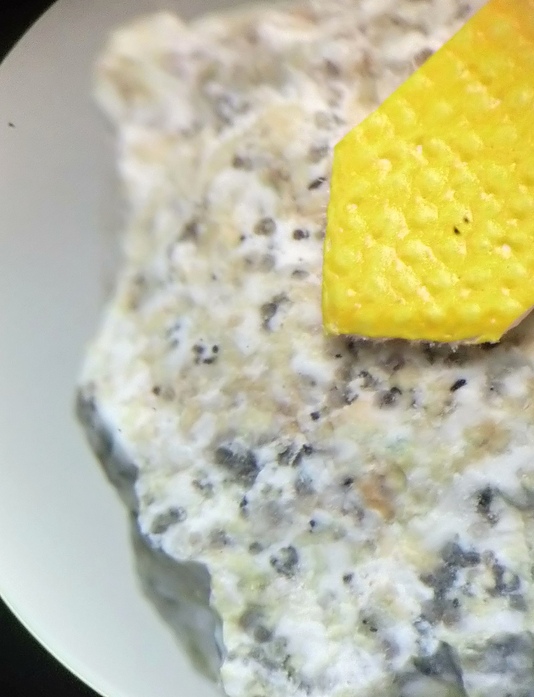
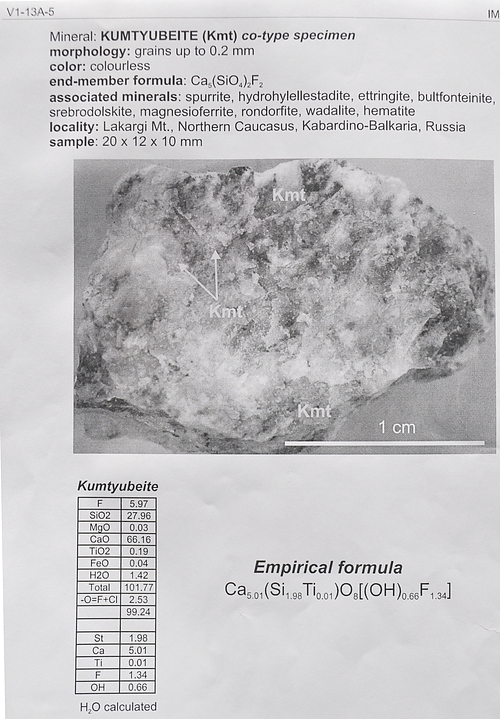
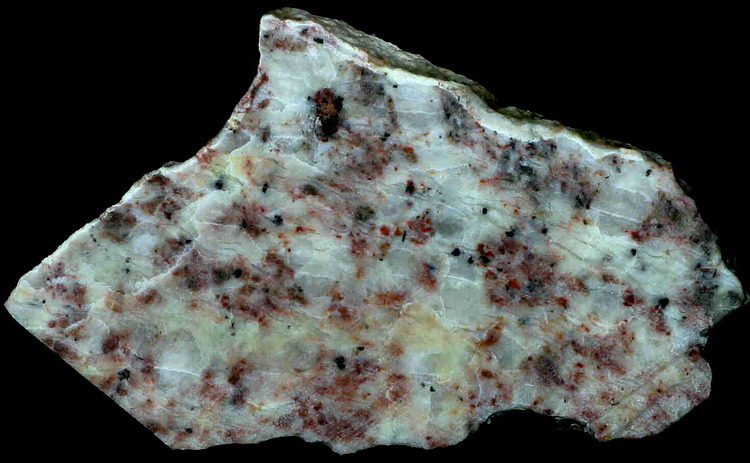

About Kumtyubeite
Formula:
Ca5(SiO4)2F2
Colour:
Light pink
Lustre:
Vitreous
Hardness:
5 - 6
Specific Gravity:
2.866 (Calculated)
Crystal System:
Monoclinic
Member of:
Name:
Named in 2009 by Irina О. Galuskina, Biljana Lazic, Thomas Armbruster, Evgeny V. Galuskin, Viktor M. Gazeev, Aleksander E. Zadov, Nikolai N. Pertsev, Lidia Jeżak, Roman Wrzalik, and Anatoly G. Gurbanov for Kum-Tyube, a mountain plateau where the mineral was found.
Type Locality:
Isostructural with:
Kumtyubeite is the calcium analogue of chondrodite and the fluorine analogue of reinhardbraunsite. It is possibly identical with the anthropogenic "kutyukhinite".
Galuskina et al. (2009) compared the F/(OH) ratio for about 150 compositions from electron microprobe analyses of reinhardbraunsite-kumtyubeite from Lakargi Mountain. They found a solid-solution series between the two rare minerals and find the ratios from F/(F + OH) ≈ 0.15 (maximally hydrated reinhardbraunsite) to F/(F + OH) ≈ 0.75 (maximally fluorinated kumtyubeite).
Galuskin et al. (2009) suggest that a skarn has been formed at 750-1000°C / 30 MPa in the contact between sedimentary carbonate rocks and magma in a subvolcanic magma chamber at a depth of 1.5 km, and then kumtyubeite was formed by decarbonization during magma ascent and volcanic eruption (high CaO activity at sharply dropping CO2 fugacity and fluid pressure).
Galuskina et al. (2009) compared the F/(OH) ratio for about 150 compositions from electron microprobe analyses of reinhardbraunsite-kumtyubeite from Lakargi Mountain. They found a solid-solution series between the two rare minerals and find the ratios from F/(F + OH) ≈ 0.15 (maximally hydrated reinhardbraunsite) to F/(F + OH) ≈ 0.75 (maximally fluorinated kumtyubeite).
Galuskin et al. (2009) suggest that a skarn has been formed at 750-1000°C / 30 MPa in the contact between sedimentary carbonate rocks and magma in a subvolcanic magma chamber at a depth of 1.5 km, and then kumtyubeite was formed by decarbonization during magma ascent and volcanic eruption (high CaO activity at sharply dropping CO2 fugacity and fluid pressure).
Unique Identifiers
Mindat ID:
39209
Long-form identifier:
mindat:1:1:39209:5
IMA Classification of Kumtyubeite
Approved
Approval year:
2008
First published:
2009
Type description reference:
Galuskina, I. O., Lazic, B., Armbruster, T., Galuskin, E. V., Gazeev, V. M., Zadov, A. E., Pertsev, N. N., Jezak, L., Wrzalik, R., Gurbanov, A. G. (2009) Kumtyubeite Ca5(SiO4)2F2 — A new calcium mineral of the humite group from Northern Caucasus, Kabardino-Balkaria, Russia. American Mineralogist, 94 (10) 1361-1370 doi:10.2138/am.2009.3256
Classification of Kumtyubeite
9.AF.45
9 : SILICATES (Germanates)
A : Nesosilicates
F : Nesosilicates with additional anions; cations in [4], [5] and/or only [6] coordination
9 : SILICATES (Germanates)
A : Nesosilicates
F : Nesosilicates with additional anions; cations in [4], [5] and/or only [6] coordination
52.3.3.4
52 : NESOSILICATES Insular SiO4 Groups and O,OH,F,H2O
3 : Insular SiO4 Groups and O, OH, F, and H2O with cations in [6] coordination only
52 : NESOSILICATES Insular SiO4 Groups and O,OH,F,H2O
3 : Insular SiO4 Groups and O, OH, F, and H2O with cations in [6] coordination only
Mineral Symbols
As of 2021 there are now IMA–CNMNC approved mineral symbols (abbreviations) for each mineral species, useful for tables and diagrams.
| Symbol | Source | Reference |
|---|---|---|
| Kty | IMA–CNMNC | Warr, L.N. (2021). IMA–CNMNC approved mineral symbols. Mineralogical Magazine, 85(3), 291-320. doi:10.1180/mgm.2021.43 |
Physical Properties of Kumtyubeite
Vitreous
Transparency:
Transparent, Translucent
Colour:
Light pink
Streak:
White
Hardness:
5 - 6 on Mohs scale
Hardness:
VHN50=280 - 320 kg/mm2 - Vickers
Tenacity:
Brittle
Cleavage:
Distinct/Good
distinct on (001)
distinct on (001)
Density:
2.866 g/cm3 (Calculated)
Optical Data of Kumtyubeite
Type:
Biaxial (-)
RI values:
nα = 1.594(2) nβ = 1.605(2) nγ = 1.608(2)
2V:
Measured: 40° to 55°, Calculated: 54.8°
Birefringence:
0.014
Max. Birefringence:
δ = 0.014
Based on recorded range of RI values above.
Based on recorded range of RI values above.
Interference Colours:
The colours simulate birefringence patterns seen in thin section under crossed polars. They do not take into account mineral colouration or opacity.
Michel-Levy Bar The default colours simulate the birefringence range for a 30 µm thin-section thickness. Adjust the slider to simulate a different thickness.
Grain Simulation You can rotate the grain simulation to show how this range might look as you rotated a sample under crossed polars.
The colours simulate birefringence patterns seen in thin section under crossed polars. They do not take into account mineral colouration or opacity.
Michel-Levy Bar The default colours simulate the birefringence range for a 30 µm thin-section thickness. Adjust the slider to simulate a different thickness.
Grain Simulation You can rotate the grain simulation to show how this range might look as you rotated a sample under crossed polars.
Surface Relief:
Moderate
Optical Extinction:
X^c = 15°, Z = b.
Chemistry of Kumtyubeite
Mindat Formula:
Ca5(SiO4)2F2
Element Weights:
Elements listed:
Crystallography of Kumtyubeite
Crystal System:
Monoclinic
Class (H-M):
2/m - Prismatic
Space Group:
P21/b
Cell Parameters:
a = 11.4340(19) Å, b = 5.0575(9) Å, c = 8.8657(16) Å
β = 108.860(12)°
β = 108.860(12)°
Ratio:
a:b:c = 2.261 : 1 : 1.753
Unit Cell V:
485.16 ų (Calculated from Unit Cell)
Z:
2
Morphology:
Granular patches in skarn
Twinning:
polysynthetic, twins on (001)
X-Ray Powder Diffraction
Powder Diffraction Data:
| d-spacing | Intensity |
|---|---|
| 8.3830 Å | (1) |
| 5.4202 Å | (30) |
| 4.5824 Å | (1) |
| 4.3297 Å | (3) |
| 4.1915 Å | (3) |
| 4.00006 Å | (4) |
| 3.8031 Å | (13) |
| 3.3273 Å | (21 |
| 3.2269 Å | (4) |
| 3.1374 Å | (3) |
| 3.0344 Å | (37) |
| 2.9399 Å | (17) |
| 2.9018 Å | (16) |
| 2.8932 Å | (13) |
| 2.8635 Å | (3) |
| 2.7943 Å | (2) |
| 2.7737 Å | (25) |
| 2.7101 Å | (12) |
| 2.5713 Å | (20) |
| 2.5452 Å | (12) |
| 2.5282 Å | (2) |
| 2.5112 Å | (17) |
| 2.4917 Å | (10) |
| 2.4621 Å | (2) |
| 2.3640 Å | (2) |
| 2.3168 Å | (2) |
| 2.2530 Å | (2) |
| 2.1369 Å | (3) |
| 2.0511 Å | (2) |
| 2.0126 Å | (4) |
| 1.9926 Å | (3) |
| 1.9360 Å | (2) |
| 1.9128 Å | (2) |
| 1.9040 Å | (100) |
| 1.8952 Å | (37) |
| 1.8748 Å | (2) |
| 1.8209 Å | (4) |
| 1.8145 Å | (2) |
| 1.8063 Å | (14) |
| 1.8027 Å | (23) |
| 1.7267 Å | (6) |
| 1.7216 Å | (6) |
| 1.6915 Å | (4) |
| 1.6766 Å | (9) |
| 1.6655 Å | (1) |
| 1.6587 Å | (28) |
| 1.6492 Å | (3) |
| 1.6183 Å | (2) |
| 1.5748 Å | (2) |
| 1.5551 Å | (6) |
| 1.5403 Å | (8) |
| 1.5274 Å | (2) |
| 1.5221 Å | (1) |
| 1.5026 Å | (2) |
| 1.4925 Å | (4) |
Reference:
Galuskina, I. O., Lazic, B., Armbruster, T., Galuskin, E. V., Gazeev, V. M., Zadov, A. E., Pertsev, N. N., Jezak, L., Wrzalik, R., Gurbanov, A. G. (2009) Kumtyubeite Ca5(SiO4)2F2 — A new calcium mineral of the humite group from Northern Caucasus, Kabardino-Balkaria, Russia. American Mineralogist, 94 (10) 1361-1370 doi:10.2138/am.2009.3256
Comments:
American Mineralogist, 94, 1361–1370.
Geological Environment
Paragenetic Mode(s):
| Paragenetic Mode | Earliest Age (Ga) |
|---|---|
| Stage 3a: Earth’s earliest Hadean crust | >4.50 |
| 9 : Lava/xenolith minerals (hornfels, sanidinite facies) | |
| Stage 7: Great Oxidation Event | <2.4 |
| 45b : [Other oxidized fumarolic minerals] | |
| Stage 10a: Neoproterozoic oxygenation/terrestrial biosphere | <0.6 |
| 51 : Pyrometamorphic minerals (see also #54 and #56) | <0.36 |
| Stage 10b: Anthropogenic minerals | <10 Ka |
| 54 : Coal and other mine fire minerals (see also #51 and #56) |
Geological Setting:
Skarns, burned coal dumps.
Type Occurrence of Kumtyubeite
General Appearance of Type Material:
Pale pink grains to 0.25 mm in 1 cm granular aggregates.
Place of Conservation of Type Material:
Museum of Natural History, Bern, specimen number NMBE 39572 and in the collection of the Fersman Mineralogical Museum, Moscow, specimen number 3732/1.
Geological Setting of Type Material:
In contact-metasomatic rocks formed by interaction of carbonate xenoliths with subvolcanic magma and volcanites. The mineral occurs in spurrite-rondorfite-ellestadite zones of skarn.
Associated Minerals at Type Locality:
Reference:
Galuskina, I. O., Lazic, B., Armbruster, T., Galuskin, E. V., Gazeev, V. M., Zadov, A. E., Pertsev, N. N., Jezak, L., Wrzalik, R., Gurbanov, A. G. (2009) Kumtyubeite Ca5(SiO4)2F2 — A new calcium mineral of the humite group from Northern Caucasus, Kabardino-Balkaria, Russia. American Mineralogist, 94 (10) 1361-1370 doi:10.2138/am.2009.3256
Synonyms of Kumtyubeite
Other Language Names for Kumtyubeite
Dutch:Kumtyubeiet
German:Kumtyubeit
Relationship of Kumtyubeite to other Species
Member of:
Other Members of Chegemite Subgroup:
| Chegemite | Ca7(SiO4)3(OH)2 | Orth. mmm (2/m 2/m 2/m) |
| Edgrewite | Ca9(SiO4)4F2 | Mon. 2/m : P21/b |
| Fluorchegemite | Ca7(SiO4)3F2 | Orth. mmm (2/m 2/m 2/m) |
| Hydroxyledgrewite | Ca9(SiO4)4(OH)2 | Mon. 2/m : P21/b |
| Reinhardbraunsite | Ca5(SiO4)2(OH,F)2 | Mon. 2/m : P21/b |
Related Minerals - Strunz-mindat Grouping
| 9.AF. | Chegemite | Ca7(SiO4)3(OH)2 |
| 9.AF. | Jingwenite-(Y) | YAlV4+(SiO4)O2(OH)2 |
| 9.AF. | Barwoodite | Mn2+6Nb5+(SiO4)2O3(OH)3 |
| 9.AF.05 | Sillimanite | Al2(SiO4)O |
| 9.AF.05 | Xenolite | Al10Si8O31 |
| 9.AF.10 | Kanonaite | Mn3+Al(SiO4)O |
| 9.AF.10 | Andalusite | Al2(SiO4)O |
| 9.AF.15 | Kyanite | Al2(SiO4)O |
| 9.AF.20 | Krieselite | Al2(GeO4)F2 |
| 9.AF.20 | Mullite | Al4+2xSi2-2xO10-x |
| 9.AF.23 | Boromullite | Al9BSi2O19 |
| 9.AF.25 | Yoderite | Mg(Al,Fe3+)3(SiO4)2O(OH) |
| 9.AF.30 | Zincostaurolite | Zn2Al9Si4O23(OH) |
| 9.AF.30 | Staurolite | Fe2+2Al9Si4O23(OH) |
| 9.AF.30 | Magnesiostaurolite | Mg(Mg,Li)3(Al,Mg)18Si8O44(OH)4 |
| 9.AF.35 | Topaz | Al2(SiO4)(F,OH)2 |
| 9.AF.40 | Norbergite | Mg3(SiO4)F2 |
| 9.AF.45 | Chondrodite | Mg5(SiO4)2F2 |
| 9.AF.45 | Reinhardbraunsite | Ca5(SiO4)2(OH,F)2 |
| 9.AF.45 | Hydroxylchondrodite | Mg5(SiO4)2(OH)2 |
| 9.AF.45 | Alleghanyite | Mn2+5(SiO4)2(OH)2 |
| 9.AF.50 | Unnamed (Ca-analogue of Humite) | Ca7(SiO4)4F2 |
| 9.AF.50 | Humite | Mg7(SiO4)3F2 |
| 9.AF.50 | Manganhumite | (Mn2+,Mg)7(SiO4)3(OH)2 |
| 9.AF.50 | Unnamed (OH-analogue of humite) | Mg7(SiO4)3(OH)2 |
| 9.AF.50 | Fluorchegemite | Ca7(SiO4)3F2 |
| 9.AF.55 | Hydroxylclinohumite | Mg9(SiO4)4(OH)2 |
| 9.AF.55 | Clinohumite | Mg9(SiO4)4F2 |
| 9.AF.55 | Sonolite | Mn2+9(SiO4)4(OH)2 |
| 9.AF.60 | Leucophoenicite | Mn2+7(SiO4)3(OH)2 |
| 9.AF.65 | Ribbeite | Mn2+5(SiO4)2(OH)2 |
| 9.AF.70 | Jerrygibbsite | Mn2+9(SiO4)4(OH)2 |
| 9.AF.75 | Franciscanite | Mn2+6(V5+,◻)2(SiO4)2(O,OH)6 |
| 9.AF.75 | Scorticoite | Mn6(Sb,◻)Σ2(SiO4)2O3(OH)3 |
| 9.AF.75 | Welinite | Mn2+6(W6+,Mg)2(SiO4)2(O,OH)6 |
| 9.AF.75 | Örebroite | Mn2+3(Sb5+,Fe3+)(SiO4)(O,OH)3 |
| 9.AF.80 | Ellenbergerite | Mg6(Mg,Ti,Zr,◻)2(Al,Mg)6Si8O28(OH)10 |
| 9.AF.85 | Magnesiochloritoid | MgAl2O(SiO4)(OH)2 |
| 9.AF.85 | Ottrélite | Mn2+Al2O(SiO4)(OH)2 |
| 9.AF.85 | Chloritoid | Fe2+Al2O(SiO4)(OH)2 |
| 9.AF.90 | Olmiite | CaMn2+[SiO3(OH)](OH) |
| 9.AF.90 | Poldervaartite | CaCa[SiO3(OH)](OH) |
| 9.AF.95 | Pilawite-(Y) | Ca2Y2Al4(SiO4)4O2(OH)2 |
Other Information
Health Risks:
No information on health risks for this material has been entered into the database. You should always treat mineral specimens with care.
Internet Links for Kumtyubeite
mindat.org URL:
https://www.mindat.org/min-39209.html
Please feel free to link to this page.
Please feel free to link to this page.
Search Engines:
External Links:
References for Kumtyubeite
Reference List:
Galuskina, I. O., Lazic, B., Armbruster, T., Galuskin, E. V., Gazeev, V. M., Zadov, A. E., Pertsev, N. N., Jezak, L., Wrzalik, R., Gurbanov, A. G. (2009) Kumtyubeite Ca5(SiO4)2F2 — A new calcium mineral of the humite group from Northern Caucasus, Kabardino-Balkaria, Russia. American Mineralogist, 94 (10) 1361-1370 doi:10.2138/am.2009.3256
Galuskin, Evgeny V., Gazeev, Viktor M., Lazic, Biljana, Armbruster, Thomas, Galuskina, Irina O., Zadov, Aleksander E., Pertsev, Nikolai N., Wrzalik, Roman, Dzierżanowski, Piotr, Gurbanov, Anatoly G., Bzowska, Grażyna (2009) Chegemite Ca7(SiO4)3(OH)2 a new humite-group calcium mineral from the Northern Caucasus, Kabardino-Balkaria, Russia. European Journal of Mineralogy, 21 (5) 1045-1059 doi:10.1127/0935-1221/2009/0021-1962
Localities for Kumtyubeite
 symbol to view information about a locality.
The
symbol to view information about a locality.
The Locality List
 - This locality has map coordinates listed.
- This locality has estimated coordinates.
ⓘ - Click for references and further information on this occurrence.
? - Indicates mineral may be doubtful at this locality.
- This locality has map coordinates listed.
- This locality has estimated coordinates.
ⓘ - Click for references and further information on this occurrence.
? - Indicates mineral may be doubtful at this locality.
 - Good crystals or important locality for species.
 - World class for species or very significant.
(TL) - Type Locality for a valid mineral species.
(FRL) - First Recorded Locality for everything else (eg varieties).
- World class for species or very significant.
(TL) - Type Locality for a valid mineral species.
(FRL) - First Recorded Locality for everything else (eg varieties).
All localities listed without proper references should be considered as questionable.
Czech Republic | |
| Hršelová et al. (2013) |
Georgia | |
| Galuskina et al. (2015) |
Germany | |
| Blaß et al. (2015) |
Jordan | |
| Fleurance et al. (2013) |
Russia (TL) | |
| Galuskina et al. (2009) |
Ukraine | |
| Шарыгин (2015) |
Quick NavTopAbout KumtyubeiteUnique IdentifiersIMA Classification Classification Mineral SymbolsPhysical Properties Optical Data Chemistry Crystallography X-Ray Powder DiffractionGeological EnvironmentType Occurrence SynonymsOther LanguagesRelationshipsStrunz-MindatOther InformationInternet Links References Localities Locality List
Lakargi Mountain, Upper Chegem volcanic caldera, Chegemsky District, Kabardino-Balkaria, Russia