The @icmlconf conversations don’t have to end.
Join us tonight from 6:00 to 9:00 PM in Seoul for an evening with researchers building frontier foundation models and enterprise leaders deploying AI at scale.
Connect with peers, exchange ideas on the future of LLMs, and discuss
In December, we launched a new initiative built on a simple idea: a company can close its doors, but the intelligence its team built along the way doesn't have to go with it.
That part hasn't changed. What has changed is who's raising their hand.
We expected the strongest fit
Important Project Lazarus update:
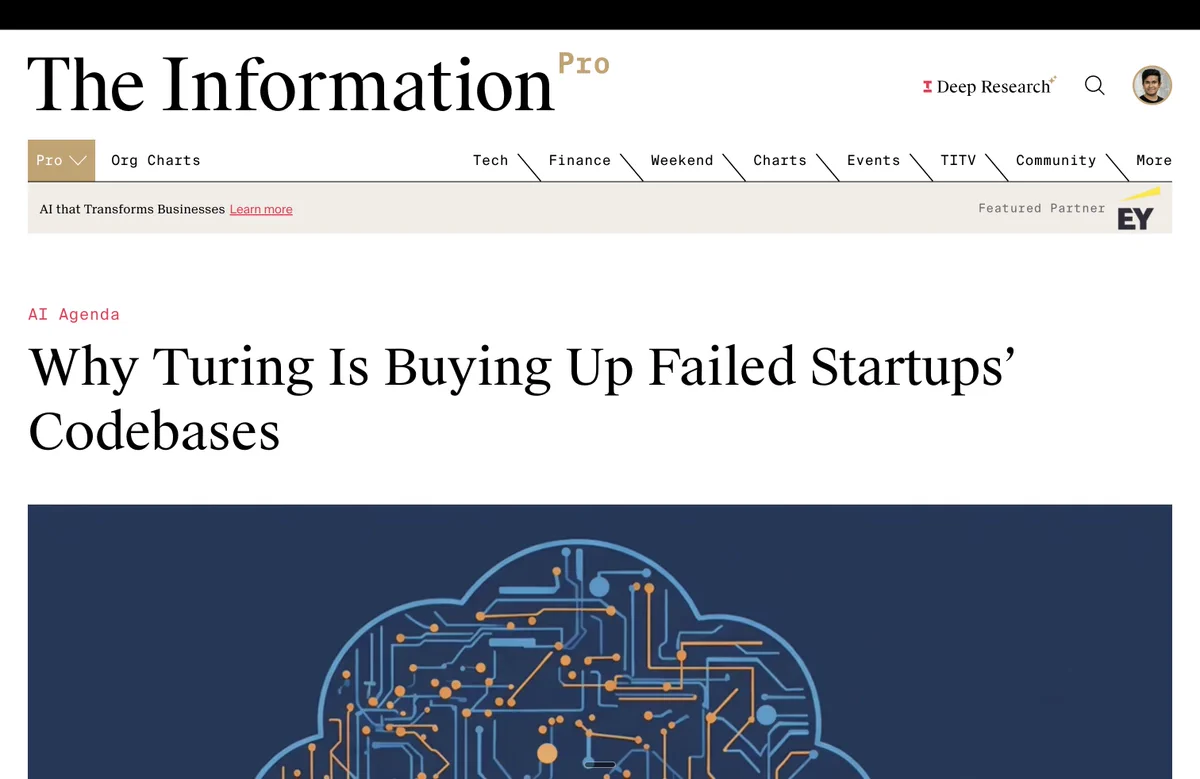
Back in December, @turingcom pioneered acquiring real-world startup/enterprise codebases and operational data to train frontier AI models. @steph_palazzolo at @theinformation broke the story on day one. Incredible reporting that helped define a
Turing is scaling on exactly this thesis.
Data spend will exceed $100B/year by 2030. The type of data will keep changing. To win will require agility and research taste.
Join @turingcom to accelerate superintelligence for all economically valuable work.
A Stargate for Data
Labs are on a trajectory towards >$100B/year of data spend by 2030. As we begin the trillion-dollar compute project, we need to think about the equivalent civilizational-scale effort for the other core ingredient: data.
At the foundation of the scaling
Day 1 #ICML2026
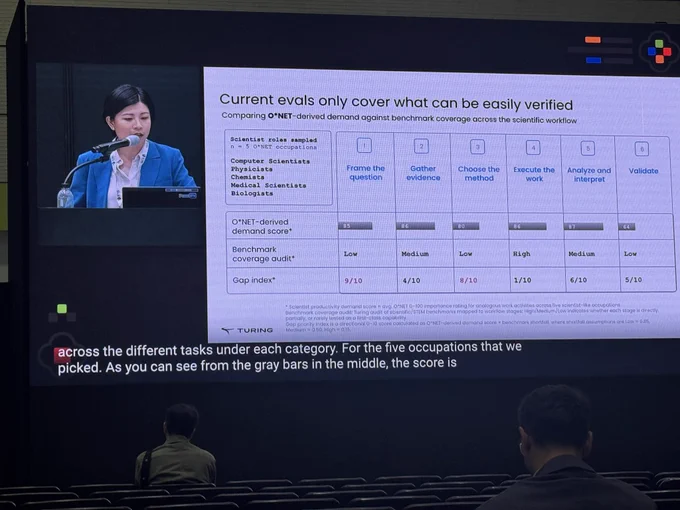
Charlotte Tao, Turing's GM of Frontier Data, gave a talk on the new framework for evaluating frontier AI on real scientific workflows, not just auto-gradable subtasks.
Key Takeaway: We should move away from single answer evals and adopt more robust scientific
@turingcom frontier STEM research was presented today at #ICML2026 by my colleague Charlotte Tao. Key takeaway : We should move away from single answer evals and adopt more robust scientific evals that’s grounded in real data. If you are keen to learn more, DM us.
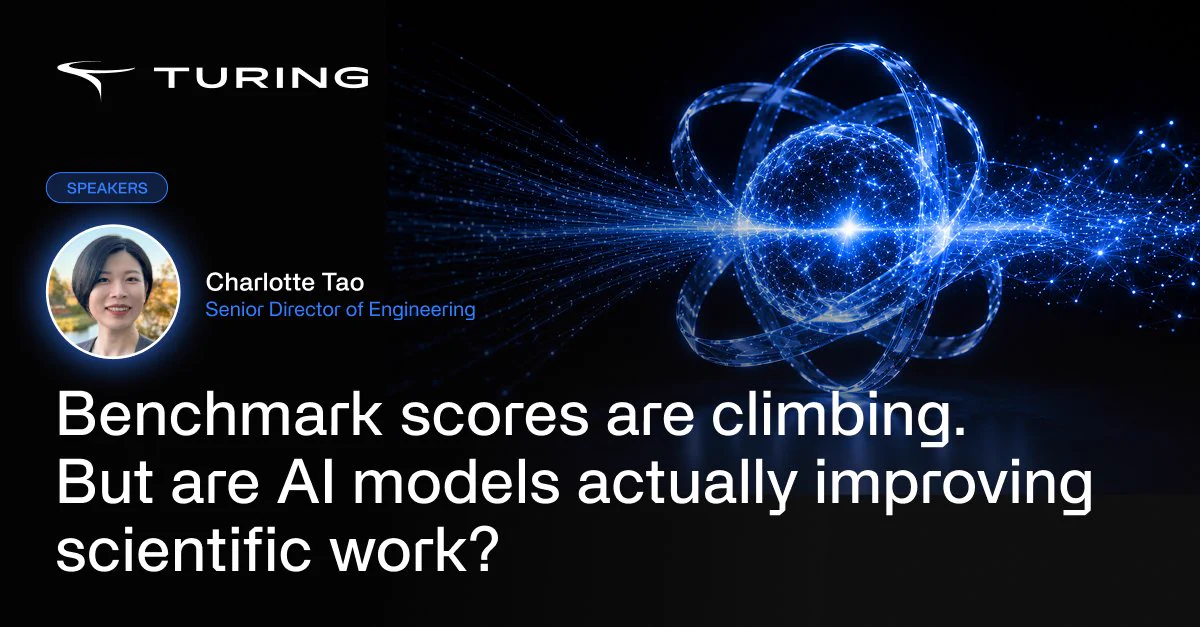
Benchmarks are hitting record scores.
Scientists are still waiting for models that help them finish the actual work.
At @icmlconf in Seoul, Turing's Charlotte Tao will discuss a new framework for evaluating frontier AI on real scientific workflows, not just auto-gradable
Happy 250th, America 🇺🇸
I moved here with nothing but an admit letter to Stanford. Became a citizen in 2018.
Built Turing here. This is the land of opportunity.
Public benchmarks are useful.
But they don't tell you whether an AI model can generate the documents enterprises actually rely on every day.
That is the gap Turing set out to solve.
The project achieved a 99.9 percent artifact acceptance rate, creating a high quality benchmark that helps enterprises evaluate AI models with greater confidence.
As AI adoption accelerates, evaluation needs to reflect the work businesses actually expect AI to perform.
Full case