DATA PRIVACY
AND PROTECTION
Safeguarding Your Information in a Connected World.
Yasir Naveed Riaz
Presented By:
WHY DOES DATA
PRIVACY MATTER?
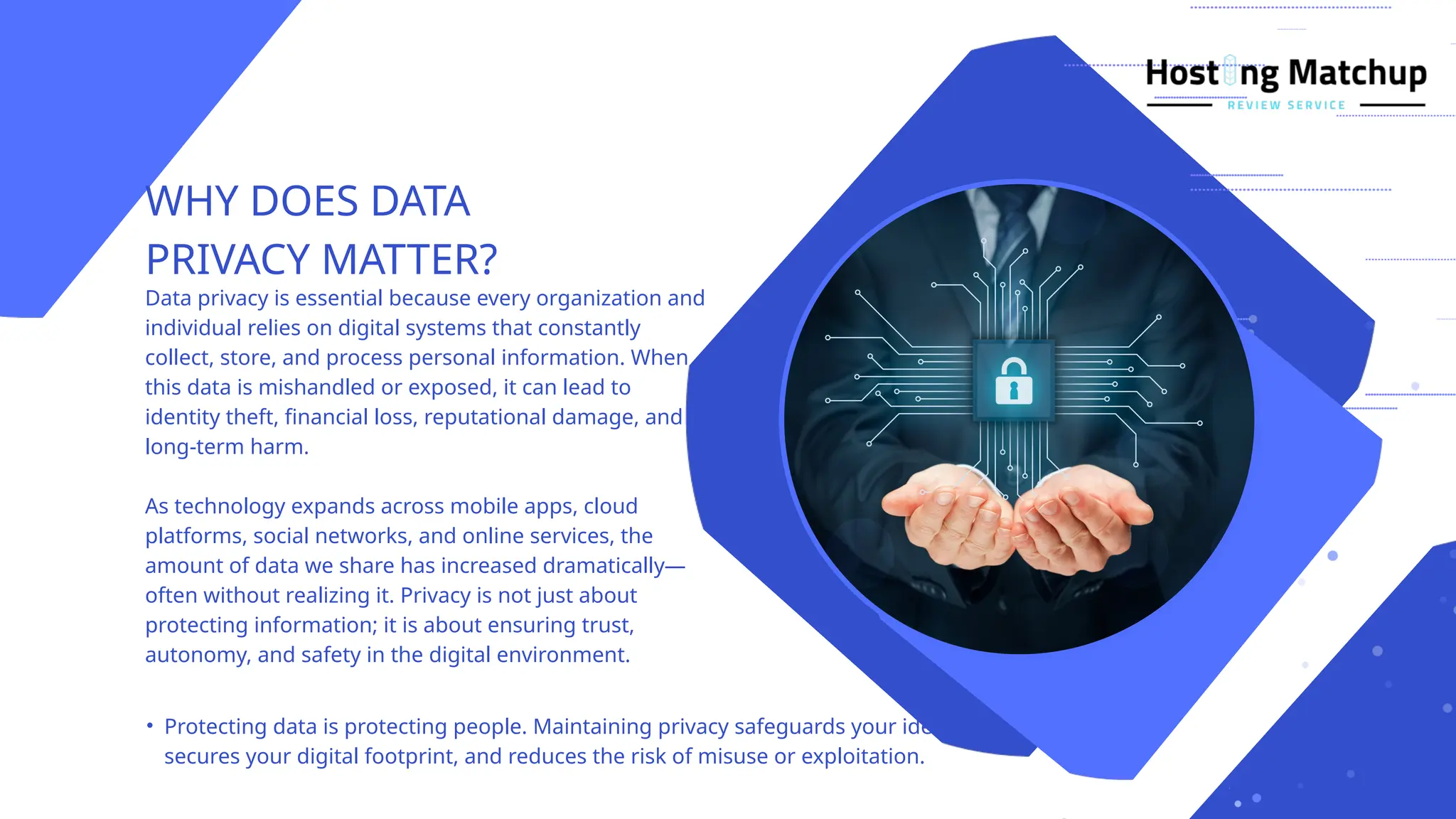
Data privacy is essential because every organization and
individual relies on digital systems that constantly
collect, store, and process personal information. When
this data is mishandled or exposed, it can lead to
identity theft, financial loss, reputational damage, and
long-term harm.
As technology expands across mobile apps, cloud
platforms, social networks, and online services, the
amount of data we share has increased dramatically—
often without realizing it. Privacy is not just about
protecting information; it is about ensuring trust,
autonomy, and safety in the digital environment.
• Protecting data is protecting people. Maintaining privacy safeguards your identity,
secures your digital footprint, and reduces the risk of misuse or exploitation.
TYPES OF PERSONAL
DATA
Basic Data Sensitive Data
• Name
• Address
• Phone number
• Health records
• Bank details
• Biometric data
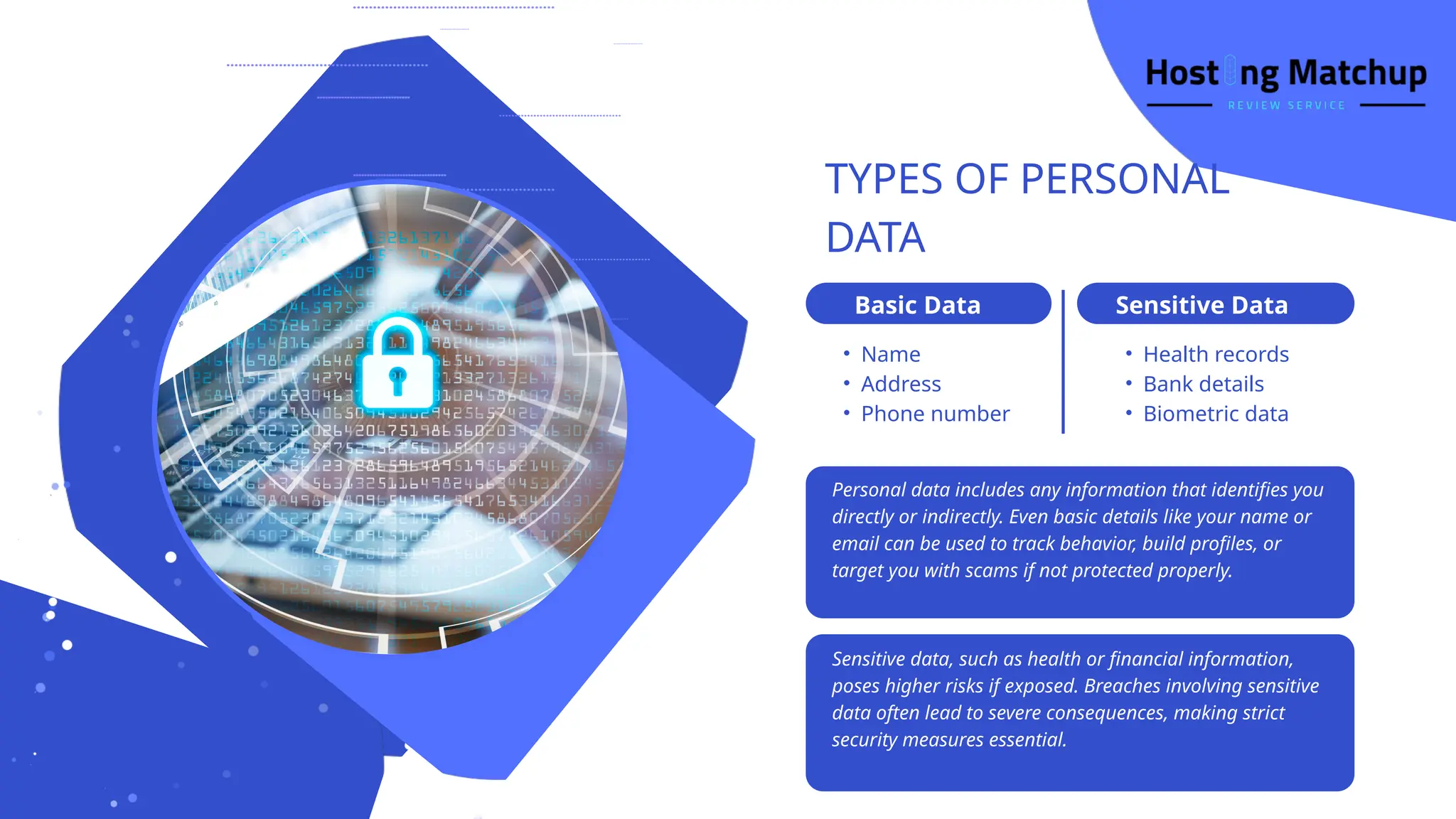
Personal data includes any information that identifies you
directly or indirectly. Even basic details like your name or
email can be used to track behavior, build profiles, or
target you with scams if not protected properly.
Sensitive data, such as health or financial information,
poses higher risks if exposed. Breaches involving sensitive
data often lead to severe consequences, making strict
security measures essential.
COMMON PRIVACY
THREATS
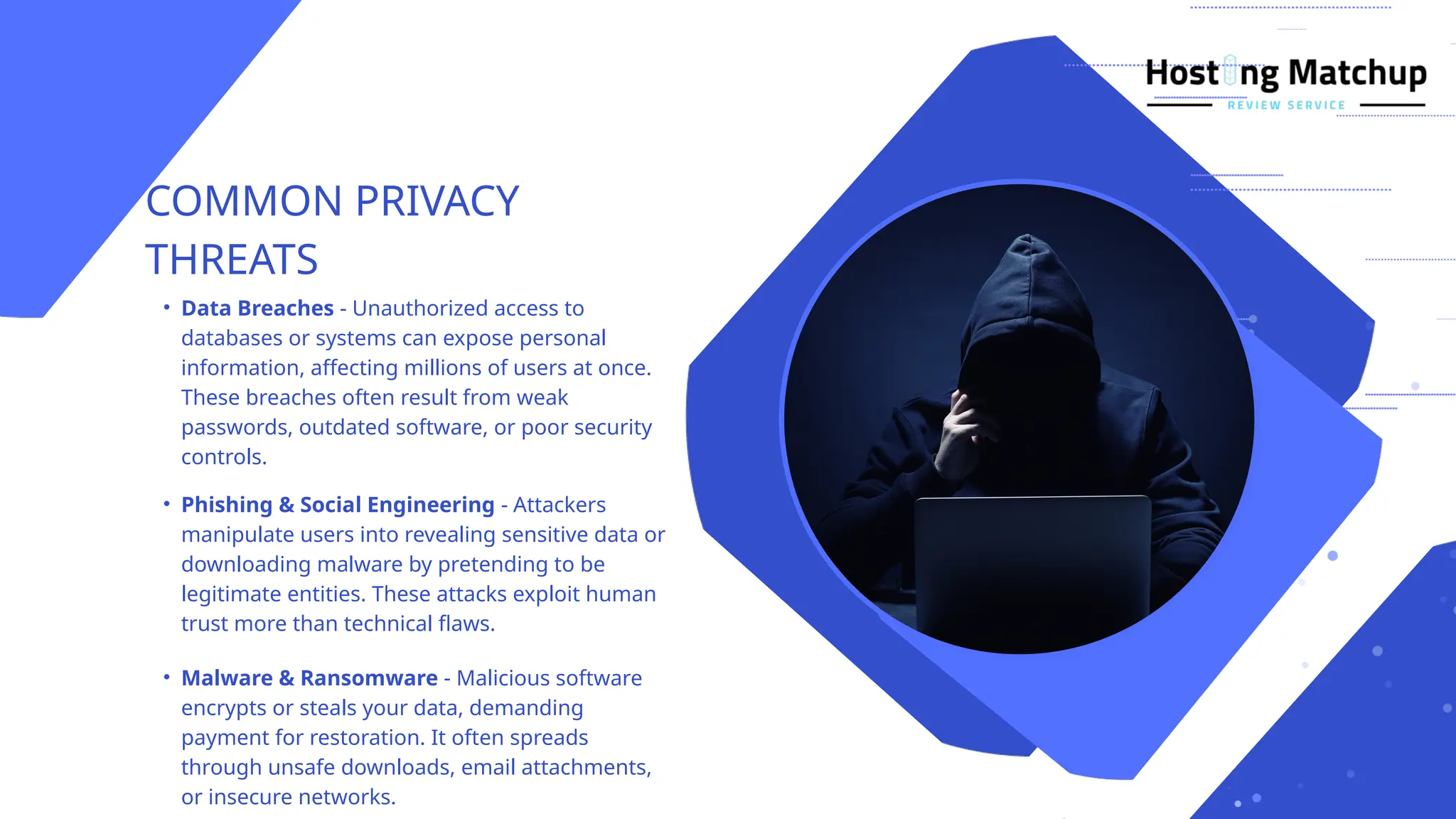
• Data Breaches - Unauthorized access to
databases or systems can expose personal
information, affecting millions of users at once.
These breaches often result from weak
passwords, outdated software, or poor security
controls.
• Phishing & Social Engineering - Attackers
manipulate users into revealing sensitive data or
downloading malware by pretending to be
legitimate entities. These attacks exploit human
trust more than technical flaws.
• Malware & Ransomware - Malicious software
encrypts or steals your data, demanding
payment for restoration. It often spreads
through unsafe downloads, email attachments,
or insecure networks.
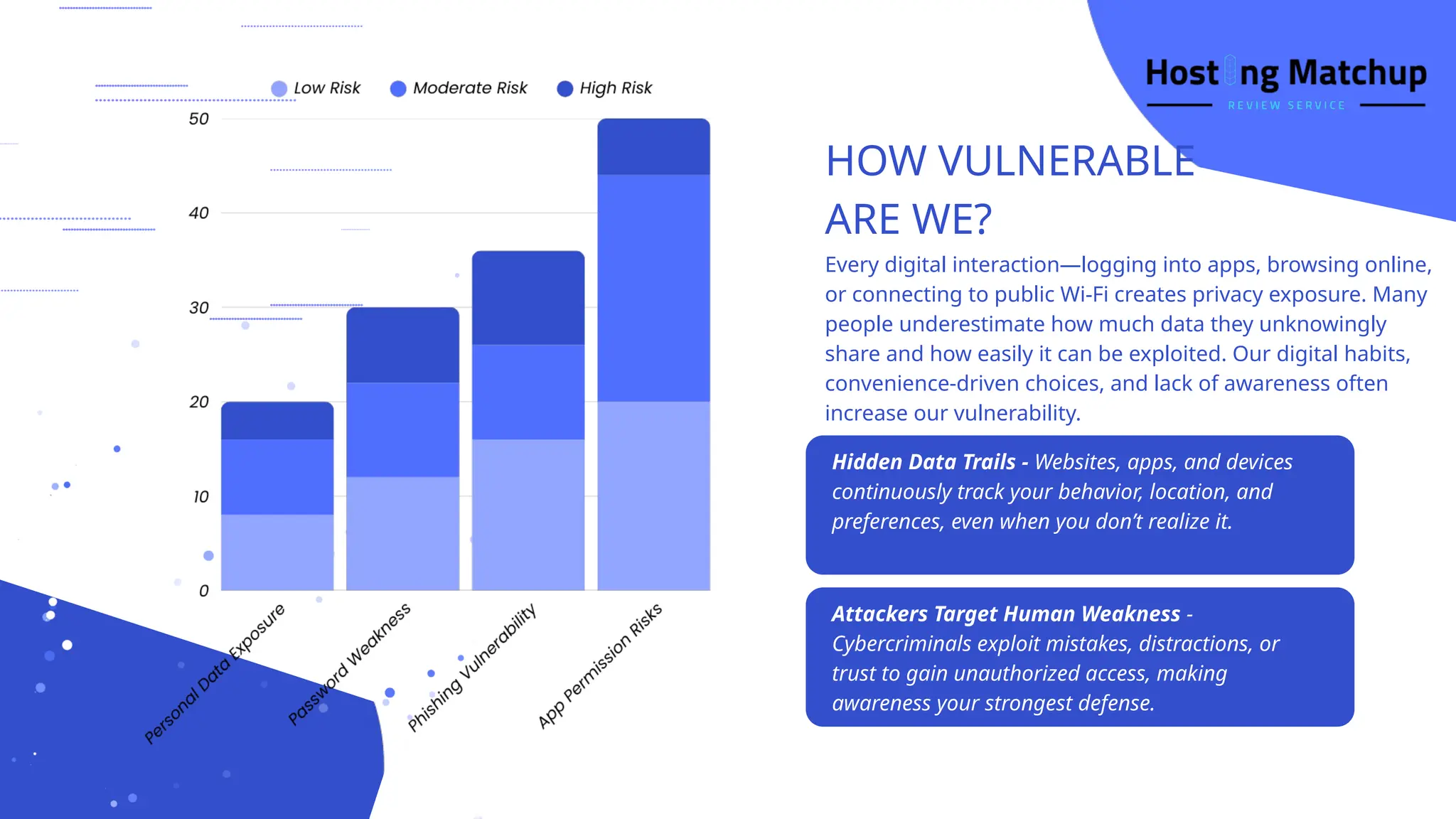
HOW VULNERABLE
ARE WE?
Hidden Data Trails - Websites, apps, and devices
continuously track your behavior, location, and
preferences, even when you don’t realize it.
Attackers Target Human Weakness -
Cybercriminals exploit mistakes, distractions, or
trust to gain unauthorized access, making
awareness your strongest defense.
Every digital interaction—logging into apps, browsing online,
or connecting to public Wi-Fi creates privacy exposure. Many
people underestimate how much data they unknowingly
share and how easily it can be exploited. Our digital habits,
convenience-driven choices, and lack of awareness often
increase our vulnerability.
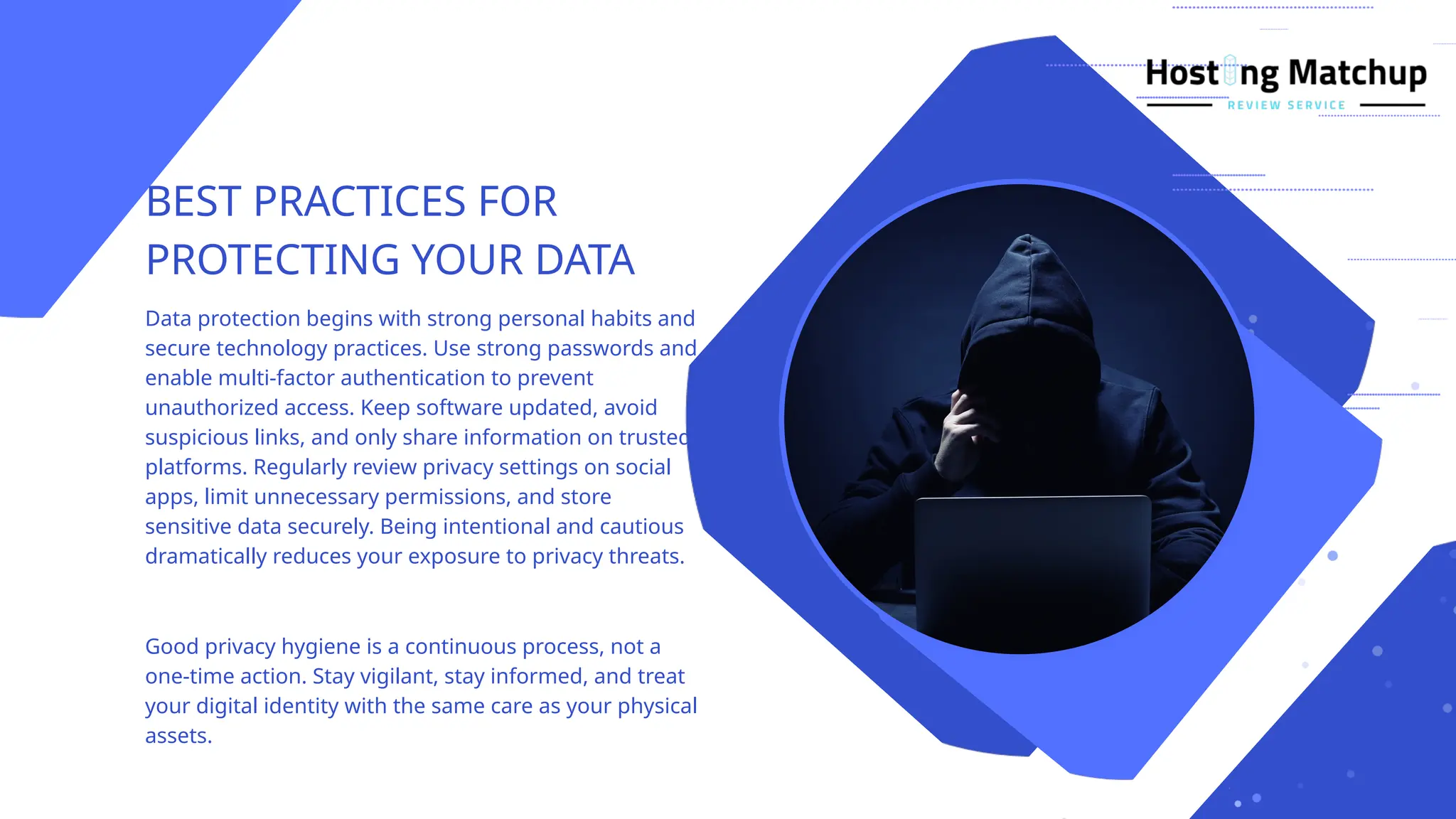
BEST PRACTICES FOR
PROTECTING YOUR DATA
Data protection begins with strong personal habits and
secure technology practices. Use strong passwords and
enable multi-factor authentication to prevent
unauthorized access. Keep software updated, avoid
suspicious links, and only share information on trusted
platforms. Regularly review privacy settings on social
apps, limit unnecessary permissions, and store
sensitive data securely. Being intentional and cautious
dramatically reduces your exposure to privacy threats.
Good privacy hygiene is a continuous process, not a
one-time action. Stay vigilant, stay informed, and treat
your digital identity with the same care as your physical
assets.
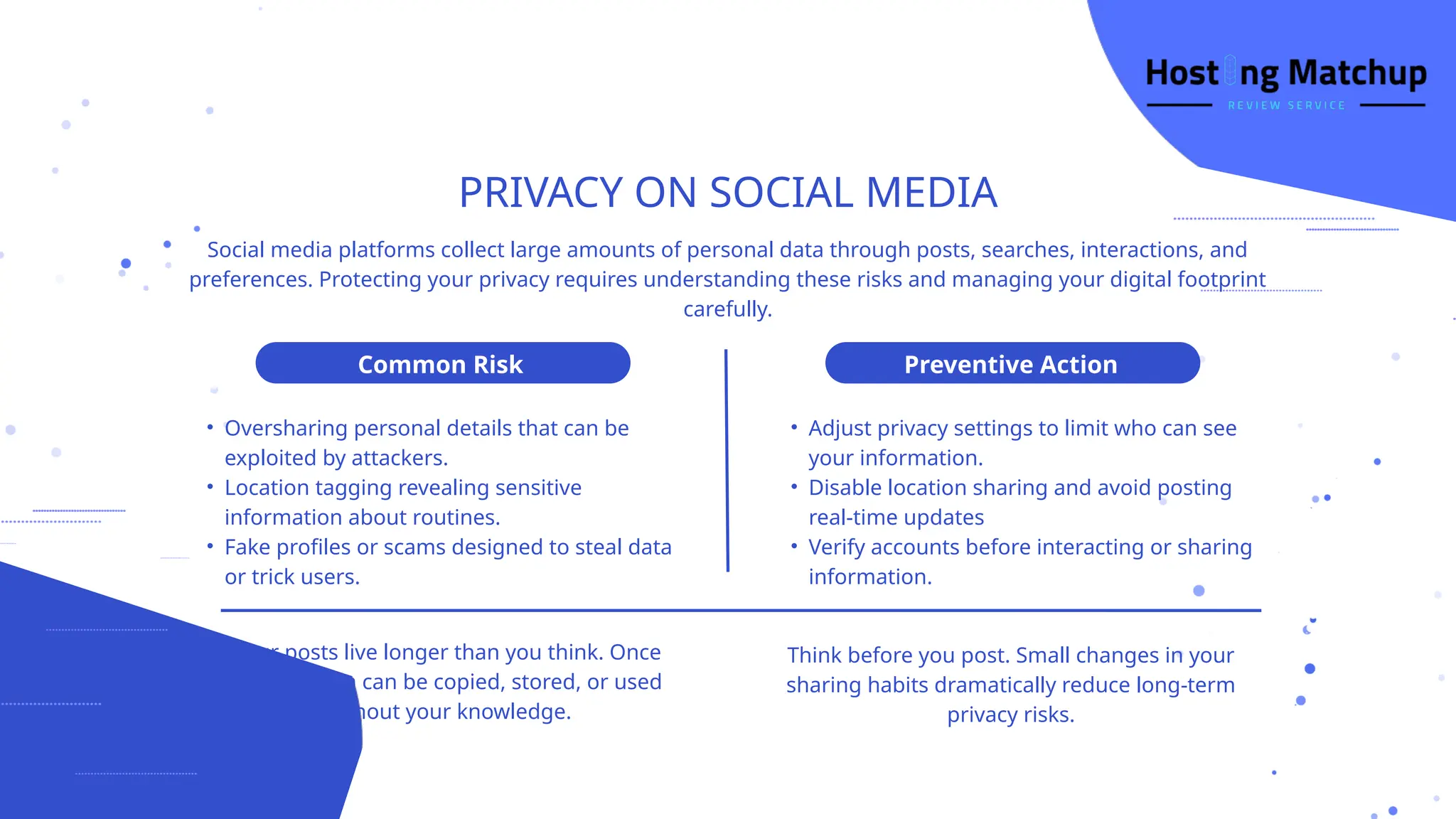
PRIVACY ON SOCIAL MEDIA
Social media platforms collect large amounts of personal data through posts, searches, interactions, and
preferences. Protecting your privacy requires understanding these risks and managing your digital footprint
carefully.
Your posts live longer than you think. Once
shared, data can be copied, stored, or used
without your knowledge.
Think before you post. Small changes in your
sharing habits dramatically reduce long-term
privacy risks.
Common Risk Preventive Action
• Oversharing personal details that can be
exploited by attackers.
• Location tagging revealing sensitive
information about routines.
• Fake profiles or scams designed to steal data
or trick users.
• Adjust privacy settings to limit who can see
your information.
• Disable location sharing and avoid posting
real-time updates
• Verify accounts before interacting or sharing
information.
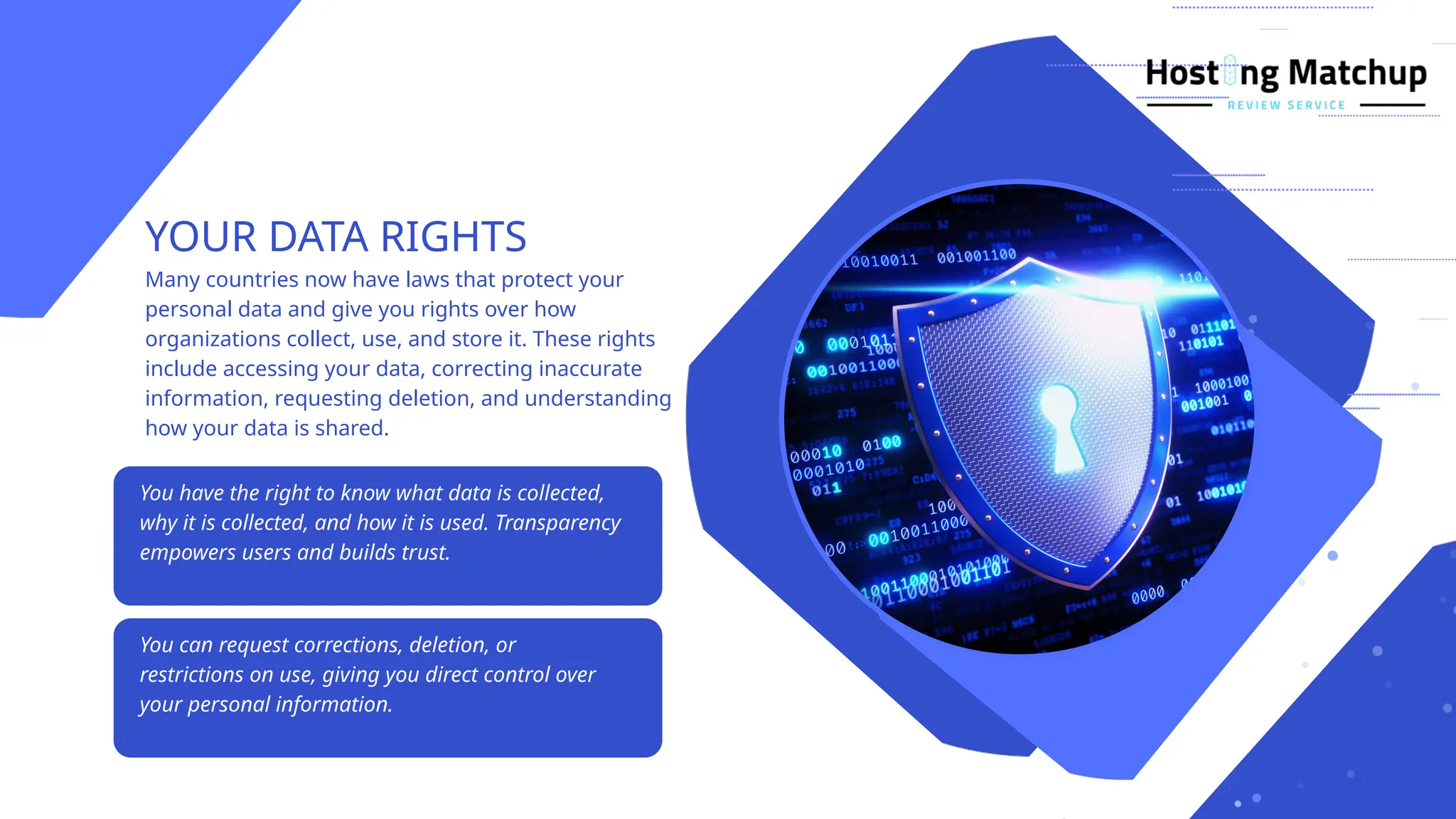
YOUR DATA RIGHTS
You have the right to know what data is collected,
why it is collected, and how it is used. Transparency
empowers users and builds trust.
You can request corrections, deletion, or
restrictions on use, giving you direct control over
your personal information.
Many countries now have laws that protect your
personal data and give you rights over how
organizations collect, use, and store it. These rights
include accessing your data, correcting inaccurate
information, requesting deletion, and understanding
how your data is shared.
THE ROLE OF DIGITAL
EDUCATION
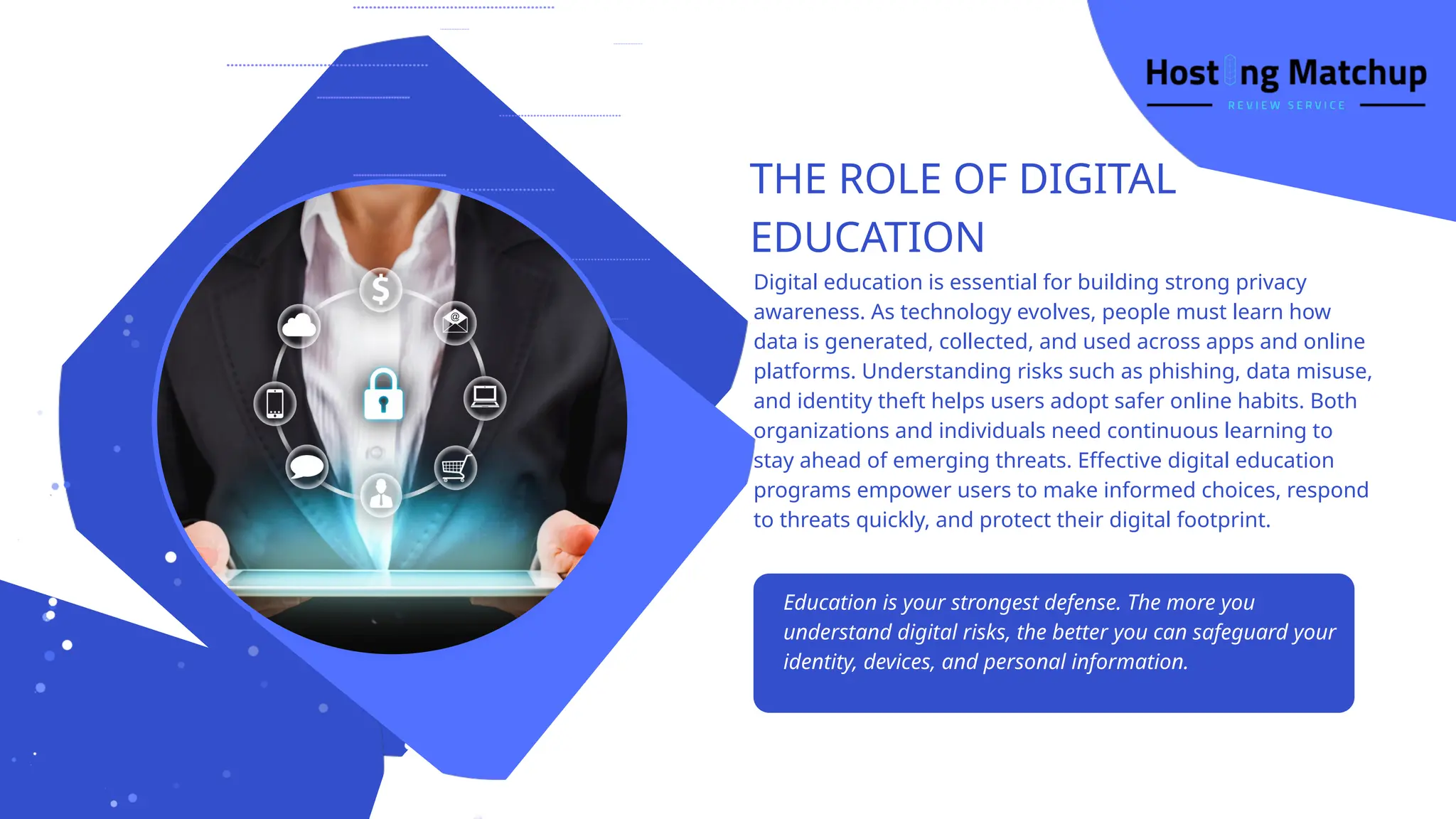
Education is your strongest defense. The more you
understand digital risks, the better you can safeguard your
identity, devices, and personal information.
Digital education is essential for building strong privacy
awareness. As technology evolves, people must learn how
data is generated, collected, and used across apps and online
platforms. Understanding risks such as phishing, data misuse,
and identity theft helps users adopt safer online habits. Both
organizations and individuals need continuous learning to
stay ahead of emerging threats. Effective digital education
programs empower users to make informed choices, respond
to threats quickly, and protect their digital footprint.
CONCLUSION &
CALL TO ACTION
Yasir Naveed Riaz
Presented By:
Hosting Matchup
Data privacy is a lifelong responsibility in today’s connected world. By following best practices,
understanding digital risks, and making smarter choices online, we can protect both our personal
information and our digital identities. Awareness and proactive habits make a significant difference.
Review your privacy settings regularly and limit
access to apps or services that don’t need your
information.
Stay cautious online—verify requests, use trusted
networks, and protect your devices with strong
security measures.

Data Privacy and Protection: Safeguarding Information in a Connected World

  • 1.
    DATA PRIVACY AND PROTECTION SafeguardingYour Information in a Connected World. Yasir Naveed Riaz Presented By:
  • 2.
    WHY DOES DATA PRIVACYMATTER? Data privacy is essential because every organization and individual relies on digital systems that constantly collect, store, and process personal information. When this data is mishandled or exposed, it can lead to identity theft, financial loss, reputational damage, and long-term harm. As technology expands across mobile apps, cloud platforms, social networks, and online services, the amount of data we share has increased dramatically— often without realizing it. Privacy is not just about protecting information; it is about ensuring trust, autonomy, and safety in the digital environment. • Protecting data is protecting people. Maintaining privacy safeguards your identity, secures your digital footprint, and reduces the risk of misuse or exploitation.
  • 3.
    TYPES OF PERSONAL DATA BasicData Sensitive Data • Name • Address • Phone number • Health records • Bank details • Biometric data Personal data includes any information that identifies you directly or indirectly. Even basic details like your name or email can be used to track behavior, build profiles, or target you with scams if not protected properly. Sensitive data, such as health or financial information, poses higher risks if exposed. Breaches involving sensitive data often lead to severe consequences, making strict security measures essential.
  • 4.
    COMMON PRIVACY THREATS • DataBreaches - Unauthorized access to databases or systems can expose personal information, affecting millions of users at once. These breaches often result from weak passwords, outdated software, or poor security controls. • Phishing & Social Engineering - Attackers manipulate users into revealing sensitive data or downloading malware by pretending to be legitimate entities. These attacks exploit human trust more than technical flaws. • Malware & Ransomware - Malicious software encrypts or steals your data, demanding payment for restoration. It often spreads through unsafe downloads, email attachments, or insecure networks.
  • 5.
    HOW VULNERABLE ARE WE? HiddenData Trails - Websites, apps, and devices continuously track your behavior, location, and preferences, even when you don’t realize it. Attackers Target Human Weakness - Cybercriminals exploit mistakes, distractions, or trust to gain unauthorized access, making awareness your strongest defense. Every digital interaction—logging into apps, browsing online, or connecting to public Wi-Fi creates privacy exposure. Many people underestimate how much data they unknowingly share and how easily it can be exploited. Our digital habits, convenience-driven choices, and lack of awareness often increase our vulnerability.
  • 6.
    BEST PRACTICES FOR PROTECTINGYOUR DATA Data protection begins with strong personal habits and secure technology practices. Use strong passwords and enable multi-factor authentication to prevent unauthorized access. Keep software updated, avoid suspicious links, and only share information on trusted platforms. Regularly review privacy settings on social apps, limit unnecessary permissions, and store sensitive data securely. Being intentional and cautious dramatically reduces your exposure to privacy threats. Good privacy hygiene is a continuous process, not a one-time action. Stay vigilant, stay informed, and treat your digital identity with the same care as your physical assets.
  • 7.
    PRIVACY ON SOCIALMEDIA Social media platforms collect large amounts of personal data through posts, searches, interactions, and preferences. Protecting your privacy requires understanding these risks and managing your digital footprint carefully. Your posts live longer than you think. Once shared, data can be copied, stored, or used without your knowledge. Think before you post. Small changes in your sharing habits dramatically reduce long-term privacy risks. Common Risk Preventive Action • Oversharing personal details that can be exploited by attackers. • Location tagging revealing sensitive information about routines. • Fake profiles or scams designed to steal data or trick users. • Adjust privacy settings to limit who can see your information. • Disable location sharing and avoid posting real-time updates • Verify accounts before interacting or sharing information.
  • 8.
    YOUR DATA RIGHTS Youhave the right to know what data is collected, why it is collected, and how it is used. Transparency empowers users and builds trust. You can request corrections, deletion, or restrictions on use, giving you direct control over your personal information. Many countries now have laws that protect your personal data and give you rights over how organizations collect, use, and store it. These rights include accessing your data, correcting inaccurate information, requesting deletion, and understanding how your data is shared.
  • 9.
    THE ROLE OFDIGITAL EDUCATION Education is your strongest defense. The more you understand digital risks, the better you can safeguard your identity, devices, and personal information. Digital education is essential for building strong privacy awareness. As technology evolves, people must learn how data is generated, collected, and used across apps and online platforms. Understanding risks such as phishing, data misuse, and identity theft helps users adopt safer online habits. Both organizations and individuals need continuous learning to stay ahead of emerging threats. Effective digital education programs empower users to make informed choices, respond to threats quickly, and protect their digital footprint.
  • 10.
    CONCLUSION & CALL TOACTION Yasir Naveed Riaz Presented By: Hosting Matchup Data privacy is a lifelong responsibility in today’s connected world. By following best practices, understanding digital risks, and making smarter choices online, we can protect both our personal information and our digital identities. Awareness and proactive habits make a significant difference. Review your privacy settings regularly and limit access to apps or services that don’t need your information. Stay cautious online—verify requests, use trusted networks, and protect your devices with strong security measures.