




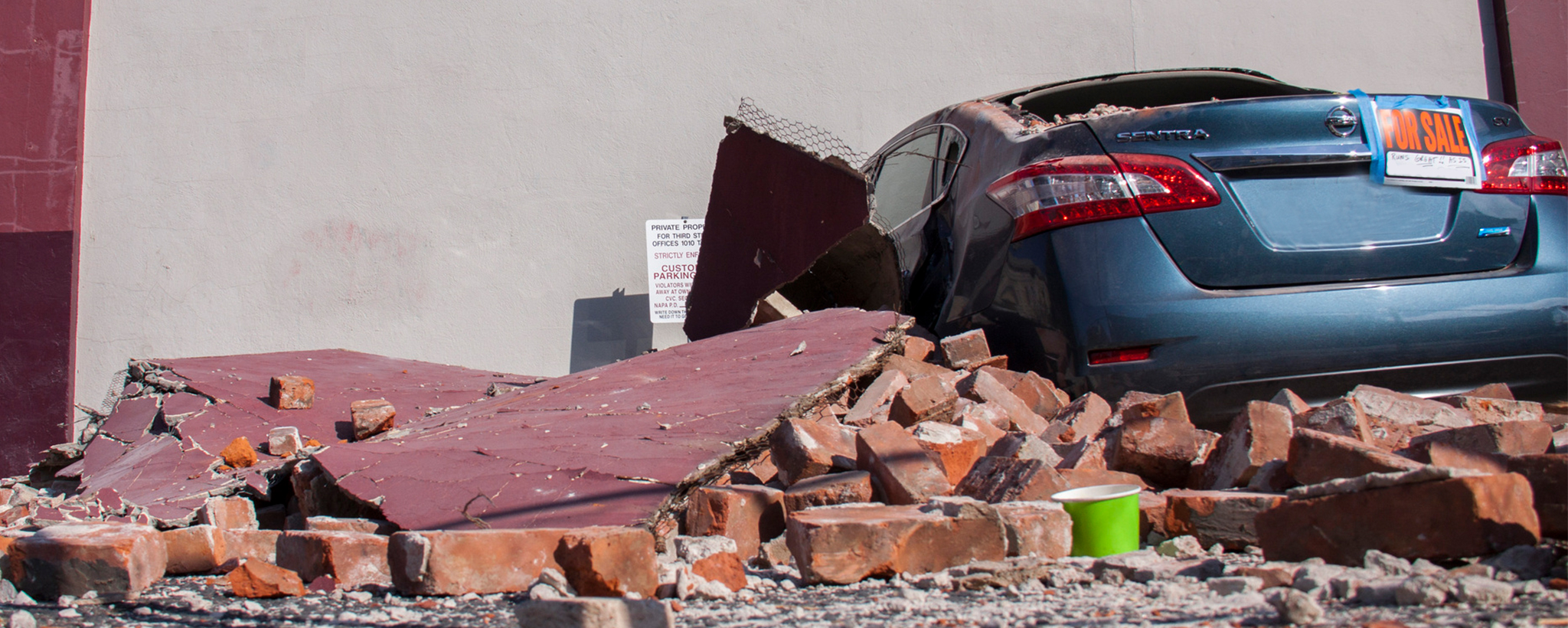

Before an Earthquake
During an Earthquake
After an Earthquake
Additional Resources

If you are a disaster survivor, please visit FEMA.gov for up-to-date information on current disaster declarations. If you have questions about your disaster assistance application, visit disasterassistance.gov, email AskIA@fema.dhs.gov or call the FEMA Helpline at 1-800-621-3362.
Prepare Before an Earthquake

- The best time to prepare for any disaster is before it happens.
- Practice how to protect yourself during earthquakes, with family and coworkers.
- Make an Emergency Plan: Create a family emergency communications plan that has an out-of-state contact. Plan where to meet if you get separated. Make a supply kit that includes enough food and water for several days, a flashlight, a fire extinguisher and a whistle.
- Being prepared allows you to avoid unnecessary trips and address minor medical issues at home, lessening the burden on urgent care centers and hospitals.
- Remember that not everyone can afford to respond by stocking up on necessities. For those who can afford it, make essential purchases and slowly build up supplies.
- Protect Your Home: Secure heavy items in your home like bookcases, refrigerators, water heaters, televisions and objects that hang on walls. Store heavy and breakable objects on low shelves.
- Consider making improvements to your building to fix structural issues that could cause your building to collapse during an earthquake.
- Consider obtaining an earthquake insurance policy. A standard homeowner’s insurance policy does not cover earthquake damage.
During an Earthquake
- If an earthquake happens, protect yourself right away.
- If you are inside, stay and do not run outside; avoid doorways.
- If you are in bed, turn face down and cover your head and neck with a pillow.
- If you are in a car, pull over and stop. Set your parking brake.
- If you're outside, stay there. Move to an open area away from buildings, trees, streetlights and power lines. Drop and coveruntil shaking stops to protect yourself from flying debris. Learn more at Earthquake Country Alliance.
Protect Yourself During Earthquakes
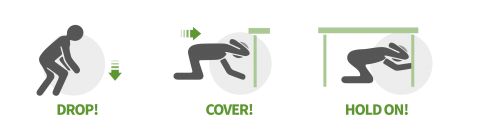
1. Drop (or Lock)
Drop where you are onto hands and knees.
2. Cover
Cover your head and neck with one arm and hand. If a sturdy table or desk is nearby, crawl underneath it for shelter. If no shelter is nearby, crawl next to an interior wall (away from windows). Stay on your knees; bend over to protect vital organs.
3. Hold On
Hold until the shaking stops. If under shelter, hold on with one hand and be ready to move with it when the shelter moves. If not under shelter, hold on to your head and neck with both arms and hands.
Using a Cane?
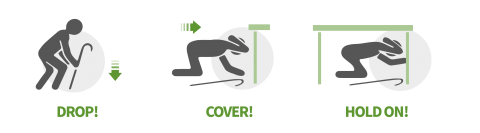
If you use a cane: DROP, COVER, and HOLD ON or sit on a chair, bed, etc. and cover your head and neck with both hands. Keep your cane near you so it can be used when the shaking stops.
Using a Walker or Wheelchair?
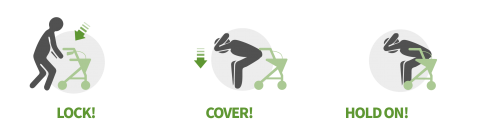
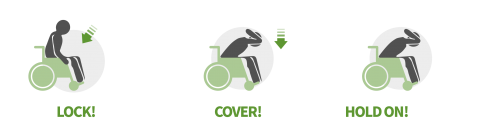
If you use a walker or wheelchair: LOCK your wheels (if applicable). If using a walker carefully get as low as possible. Bend over and COVER your head/neck with your arms, a book, or a pillow. Then HOLD ON until the shaking stops.
After an Earthquake

- There can be serious hazards after an earthquake, such as damage to the building, leaking gas and water lines or downed power lines.
- Expect aftershocks to follow the main shock of an earthquake. Be ready to Drop, Cover and Hold On if you feel an aftershock.
- If you are in a damaged building, go outside and quickly move away from the building. Do not enter damaged buildings.
- If you are trapped, send a text or bang on a pipe or wall. Cover your mouth with your shirt for protection and instead of shouting, use a whistle.
- If you are in an area that may experience tsunamis, go inland or to higher ground immediately after the shaking stops. Avoid contact with floodwaters as they can contain chemicals, sewage and debris.
- Check yourself to see if you are hurt and help others if you have training. Be the help until help arrives.
- If you are sick or injured and need medical attention, contact your healthcare provider for instructions. If you are experiencing a medical emergency, call 9-1-1.
- Once you are safe, pay attention to local news reports for emergency information and instructions via battery-operated radio, TV, social media or from cell phone text alerts.
- Use social media to let people know you’re okay.
- Use text messages to communicate. This may be more reliable than phone calls and can save batter power.
- Be careful when cleaning up. Wear protective clothing, including a long-sleeved shirt, long pants, work gloves and sturdy thick-soled shoes. Do not try to remove heavy debris by yourself. Use an appropriate mask if cleaning mold or other debris. People with asthma and other lung conditions and/or immune suppression should not enter buildings with indoor water leaks or mold growth that can be seen or smelled. Children should not take part in disaster cleanup work.
Additional Resources
- Earthquake Preparedness Graphics
- Earthquake Social Media Toolkit
- Earthquake Informational Poster (PDF)
- Earthquake Preparedness: What Every Childcare Provider Should Know (PDF)
- Earthquake Safety at Home (PDF)
Partner Resources
- Resources for People with Disabilities (Earthquake Country Alliance)
- The Great ShakeOut: Earthquake Drills
- U.S. Geological Survey Earthquake Hazards Program
- American Red Cross
- Earthquake Country Alliance
- National Science Foundation
- National Institute of Standards and Technology
- When the Earth Shakes
- Earthquake Preparedness: How to Stay Safe
- Earthquake Safety Video Series (Great ShakeOut Earthquake Drills)