Support The Post and Courier Climate Reporting Fund: As part of our Public Service reporting, environmental and climate projects like Rising Waters, Our Secret Delta and Ghost Bird help address our communities’ concerns of the impact we are placing upon South Carolina. We need your financial support to continue reporting on these critical stories. Please donate today. DONATE NOW
Tourist aren’t the only things moving into South Carolina waters this Memorial Day weekend. Sharks are migrating through the area, and beachgoers should know the signs of a shark in the water.
For more than 40 years, researchers have been trekking though Kiawah Island’s creeks in search of diamondback terrapins. The longest running survey of its kind has documented significant declines in the turtle’s population.
The National Oceanic and Atmospheric Administration has released its annual hurricane season prediction. Here's what South Carolinians should expect this year.
Charleston city leaders are set to approve $3.7 million for the next round of work on the battery extension. Also called a "sea wall,” the project aims to protect the city from storms and flooding.
For going on 14 years, Charleston Waterkeeper has been collecting fecal contamination samples across the local watershed. This North Charleston creek is "far and away” the filthiest.
A developer wants to build a private bridge to an island in the ACE Basin near Meggett. Conservation groups say the move would harm the inaccessible and undeveloped island.
Months after a proposal for a 1,000-megawatt data center surfaced in rural Colleton County, county council advanced a moratorium on data center decisions.
Even with the small amount of rainfall, the SC Drought Committee found conditions across the state bad enough to upgrade the state’s drought status to severe.
Polyester clothing can shed particles when washed or thrown away, polluting local ecosystems. A new study finds that those harmful fibers are present across Charleston's local waterbodies.
A species of fiddler crab that lives in Florida’s mangrove forests has moved into South Carolina salt marshes. It’s not the first clawed climate migrant in the state.
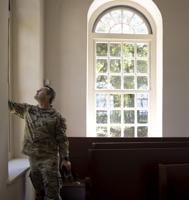
The centuries-old Pompion Hill Chapel in Berkeley County is threatened by erosion. A partnership between local and federal officials helps alleviate the risk.
A controversial planned apartment building on Newmarket Creek has hit a road bump at a city committee. But the developers say the project will continue.
After a U.S. Supreme Court decision stripped many wetlands of their federal protections, Mount Pleasant joined a growing group of towns in South Carolina in adopting local protections.
Colonial South Carolinian’s abandoned the practice of growing citrus trees due to the state’s chilly winters. Today, a new generation of farmers is embracing the crop.
The Tom Yawkey Wildlife Center is a pristine habitat for South Carolina's alligators. But as the seas rise and threaten the preserve, where will all the gators go?
The Rising Waters Lab forum “Coastal Resilience: Balancing conservation and development in Port Royal Sound” brought together experts on April 8, 2026, to examine the challenge of “coastal squeeze.”
For Kiawah Islanders, there's one road leading to the mainland. As rising seas push flood levels higher, could the Lowcountry's low-lying roads get washed away?
After that U.S. Supreme Court removed federal protections for many wetlands, the Town of Mount Pleasant is poised to become the next city in S.C. to pass a wetlands protection ordinance.
The city of Charleston has a decades-in-the-making plan to help mitigate flooding in West Ashley's Windermere neighborhood. The area is south of Highway 17 and floods during heavy storms.
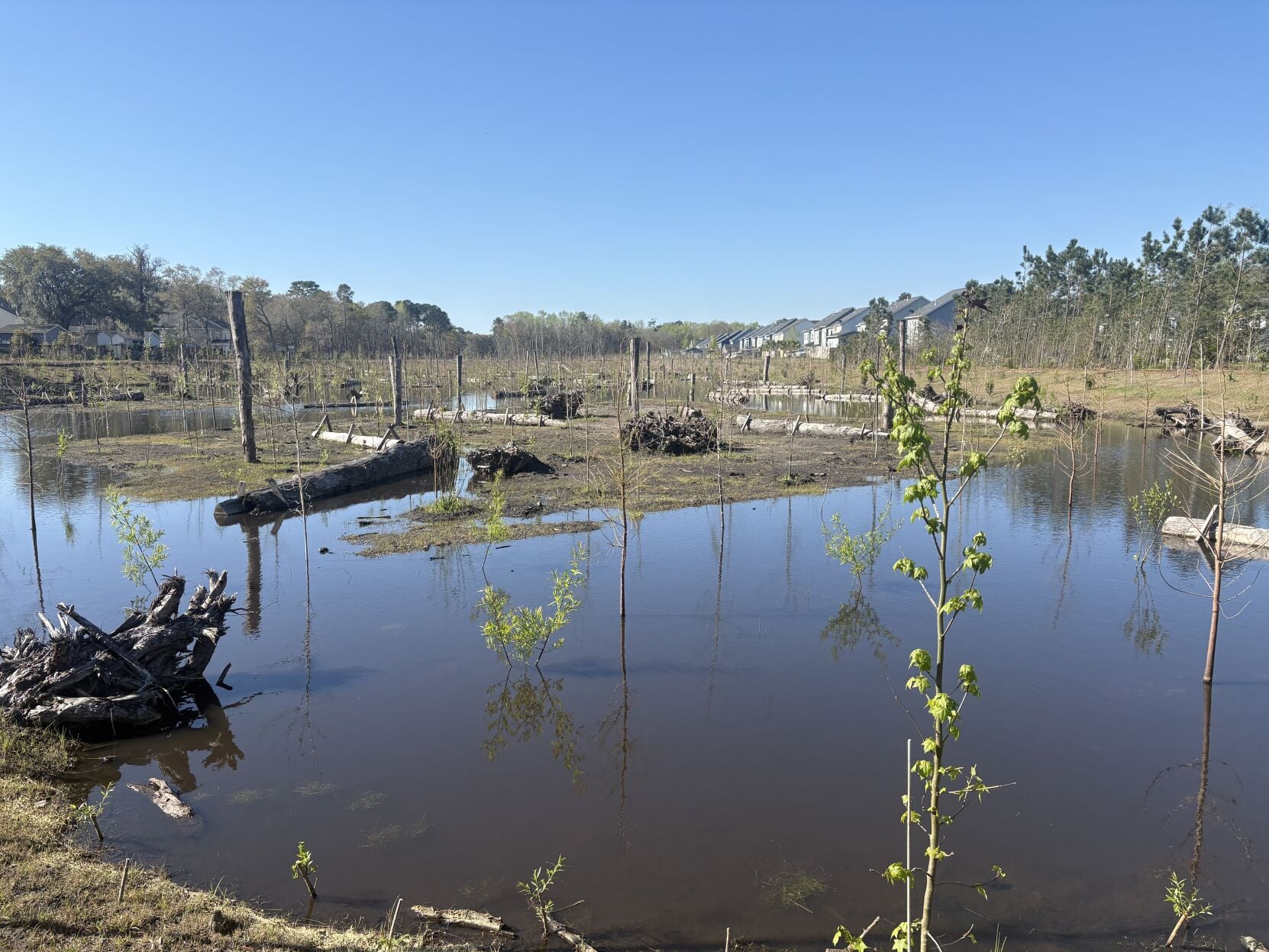
The City of Charleston recently completed the Dale Morris Ecological Park, which aims to help alleviate flooding in a Johns Island neighborhood using newly engineered wetlands.
Before air conditioning and electric fans, Charleston’s colonial settlers needed to keep cool in the oppressively hot summers. Some of that architecture can inspire better ways to cool a house today.
Like many of Charleston's tidal rivers, the Stono faces an uncertain future as sea levels rise and development booms. Can this new project help protect its banks?
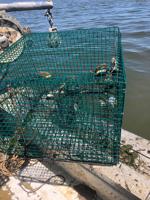
Abandoned crab traps become “ghost gear,” continuing to catch and kill sea life after they’re no longer tended by their owner. The SCDNR wants help recording their location.
After strong public opposition, Charleston’s Zoning Board of Appeals delayed a vote on an apartment building on Morrison Drive. Opponents worry the project could pollute the adjacent Newmarket Creek.
For years, a private developer and the town of Kiawah Island have litigated the future of Captain Sams’ Spit, a small strip of land on the island’s southern tip. Now that fight is about to come to a close.
Should South Carolina ban mass releases of balloons at parties, graduations and other events? Proponents argue the practice is environmentally harmful and pollutive.
Faith Rivers James has drawn attention due to staff turnover and the implementation of a new strategic plan at the Coastal Conservation League. After three and half years at the helm she’s leaving.
Located about 25 miles northeast of Charleston, Awendaw is a small community of 1,600 people. Serving as the gateway to Cape Romain, it’s also a focal point for South Carolina’s environmental issues.
The National Park Service and the U.S. Dept. of Interior are being sued for their efforts to remove “negative” exhibits and signs, including one that referenced climate change at Fort Sumter.
Almost a decade after the project launched, the repair and enhancement of Charleston’s Low Battery seawall is completed. But other climate-related projects are on the horizon.
Over a month after South Carolina released it’s plan to reduce haze and better air quality at national parks, the Sierra Club has appealed the plan in court.
Bleached and devoid of foliage, "ghost forests" are becoming an increasingly common sight across South Carolina's coastal communities. So why are they so difficult to map, and what can they tell us about the state's future?
Once threatened with extinction, Wood storks now inhabit wetlands across the southeast coast. The Trump administration says they've recovered to a healthy level. Conservation groups say otherwise.
Gopher frogs depend on South Carolina's wetlands to breed and survive. But as those landscapes get drier in a warming world and the federal government steps back from protecting them, where will all these amphibians go?
Last year, The Post and Courier’s Rising Waters Lab documented how local leaders are preparing for a warmer, more flooded future, the ecological impacts of sea-level rise and how residents are adapting to the uncertainties climate change presents. The Lab is continuing that work in 2025.
Most of the time, stranded sea turtles don’t need additional medical care. Those that do are transported to one of the state’s two aquariums. The one's that can't be saved are humanely euthanized.
Moving a big tree is no easy feat, but it's not impossible. A live oak tree was relocated on Nov. 7 for Charleston's new Courier Square Development. Here's how it happened.
Is a real or artificial Christmas tree the more climate-friendly choice? The answer is actually an easy one, said Tom Dooley, director of forest conservation at the Nature Conservancy of South Carolina.
The story goes that brown pelicans go blind from diving and eventually starve. Coastal bird biologists say this is a myth: Brown pelicans face myriad threats, but their own diving practices is not one of them.
Where a hurricane goes after it forms depends on wind and atmospheric conditions. High- and low-pressure systems are the main factors that steer a hurricane away from or toward South Carolina. The time of year also plays a role.
Just because a hurricane dissipates doesn’t mean the storm is over. The death toll can continue to rise for weeks, months or even years, some researchers say.
Tornadoes that commonly spin off from tropical storms in South Carolina tend to be smaller, weaker and shorter-lived than the ones familiar to Midwesterners, but they can still be deadly and strong enough to cause damage.