
The cover shows an artistic illustration of single-photon quantum hardware

Our May issue

Many-body entanglement in solid-state emitters, nanoprinted metasurfaces, on-board electronics in microrobotics, nanozymes & more

Announcements

  • Artist's impression showing materials waste going into a void

    What happens to the stuff we throw away—and where is ‘away’, exactly? As the burden of waste grows, we must confront the tension between creating new materials and handling them responsibly. Circularity principles might offer a path forward, but only if they are rooted in the realities of infrastructure, policy, and equity.

  • Artistic illustration showing the absorption of moisture from the environment in different region to produce clean water or energy.

    Universal access to fresh water and modern energy are key to a sustainable and just future. Sorbent materials that capture and release water molecules are at the heart of technologies that turn the Earth’s abundant atmospheric moisture into drinkable water and energy, making these essential resources more accessible to all.

Advertisement

    • Organic photosensitizers enable diverse light-driven processes in biomedicine, energy, environment and synthetic photochemistry. This Review outlines molecular design strategies and photosensitization pathway modulation across type II, type I and oxygen-independent mechanisms and discusses machine-learning approaches for predictive and data-driven photosensitizer discovery.
      • Jiahao Zhuang
      • Yufu Tang
      • Bin Liu
      Review Article
    • At present, food manufacturing waste is repurposed mainly as low-value animal feed and soil additives. Roy Goswami et al. describe how closed-loop recycling of protein-rich wastes could provide bioplastics, packaging composites and materials for water purification, CO2 capture and renewable energy that support environmental stewardship.

      • Shrestha Roy Goswami
      • Svitlana Mykolenko
      • Raffaele Mezzenga
      Review Article
    • Advances in material science have greatly extended the capabilities of 3D bioprinting. This Review discusses material design principles for in vivo biomanufacturing technologies and describes challenges and opportunities for the clinical translation of applications in tissue regeneration, wound repair, therapy and bioelectronics.

      • Elham Davoodi
      • Wei Gao
      Review Article
    • As alternatives to bismuth telluride, Te-free thermoelectric materials are emerging as promising candidates for low-temperature power generation. This Review discusses the design principles and future prospects of Te-free thermoelectric materials and devices across scales, from materials and interfaces to devices and system-level integration.

      • Zihang Liu
      • Zhentao Guo
      • Takao Mori
      Review Article
    • MXene nanocomposites hold promise for aerospace, energy and biomedical applications, yet their macroscopic properties fall short of intrinsic MXene nanosheet performance. This Review discusses bioinspired confined assembly strategies that suppress void defects, yielding mechanically robust nanocomposites with scalable fabrication.

      • Yuchen Li
      • Xinrui Zhang
      • Qunfeng Cheng
      Review Article
  • Nanomedicine has advanced through increasingly sophisticated particle design, yet generalizable rules for productive delivery remain scarce. This gap persists in part because the receiving cell is still treated as assay background rather than as an active design variable. Bringing cell state into the design space can help to translate context-dependent performance into more actionable and predictive rules for nanomedicine development.

    • Wenhan Wang
    • Weijiang Yu
    • Zongjie Wang
    Comment
  • An article in Physical Review Letters describes how the momentum dependence of the superconducting pairing potential can be probed using the quantum twisting microscope.

    • Lina Johnsen Kamra
    Research Highlight
  • A paper in Nature demonstrates a fully integrated, closed-loop system that links machine learning-guided molecular design with robotic device fabrication, enabling both the discovery of new passivation molecules and the reproducible manufacture of high-efficiency perovskite solar cells.

    • Giulia Pacchioni
    Research Highlight
  • Artificial intelligence has outgrown the computers built to run it. Advances of the past decade have made clear that catching up is no longer a problem that any one discipline can solve. Can neuromorphic computing offer a way forward?

    • Sreetosh Goswami
    Comment
  • Joining dissimilar materials has long been limited by brittle intermetallics and mismatched mechanical properties, thereby constraining innovation across manufacturing. A newly identified kinetic regime enables bonding at sub-microsecond timescales, providing a bypass to conventional solid-state constraints and opening routes to integrate materials once considered incompatible.

    • Muhammad Shehryar Khan
    • Christopher A. Schuh
    Comment
  • The shift towards electrified transportation, aerospace and distributed technologies demands energy-storage systems that are efficient and structurally integrated. Rechargeable batteries, conventionally implemented as monofunctional components, introduce mass, volume and carbon penalties at the system level, revealing the need to rethink batteries as multifunctional materials rather than stand-alone devices.

    • Richa Chaudhary
    • Leif E. Asp
    • Varun Chaudhary
    Comment
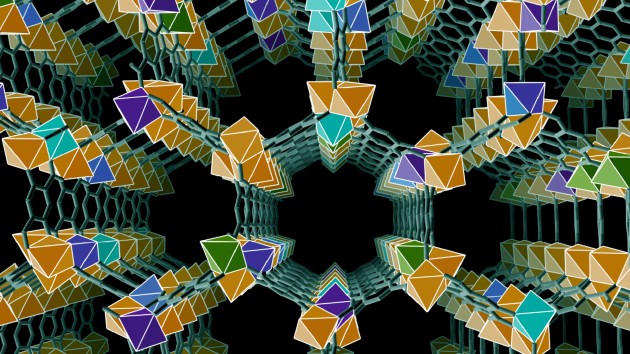
A colorful artistic impression of a metal-organic framework

Inclusivity in materials science

This collection brings together articles discussing how the materials science community can become more inclusive, featuring action points and uncovering systemic problems underlying the current lack of diversity in academia and beyond.
Collection

Advertisement