
Daily news, dev blogs, and stories from Game Developer straight to your inbox
Sponsored By
What goes into a good parry system?
Press 'block' at the right time to read this article.
7 Min Read
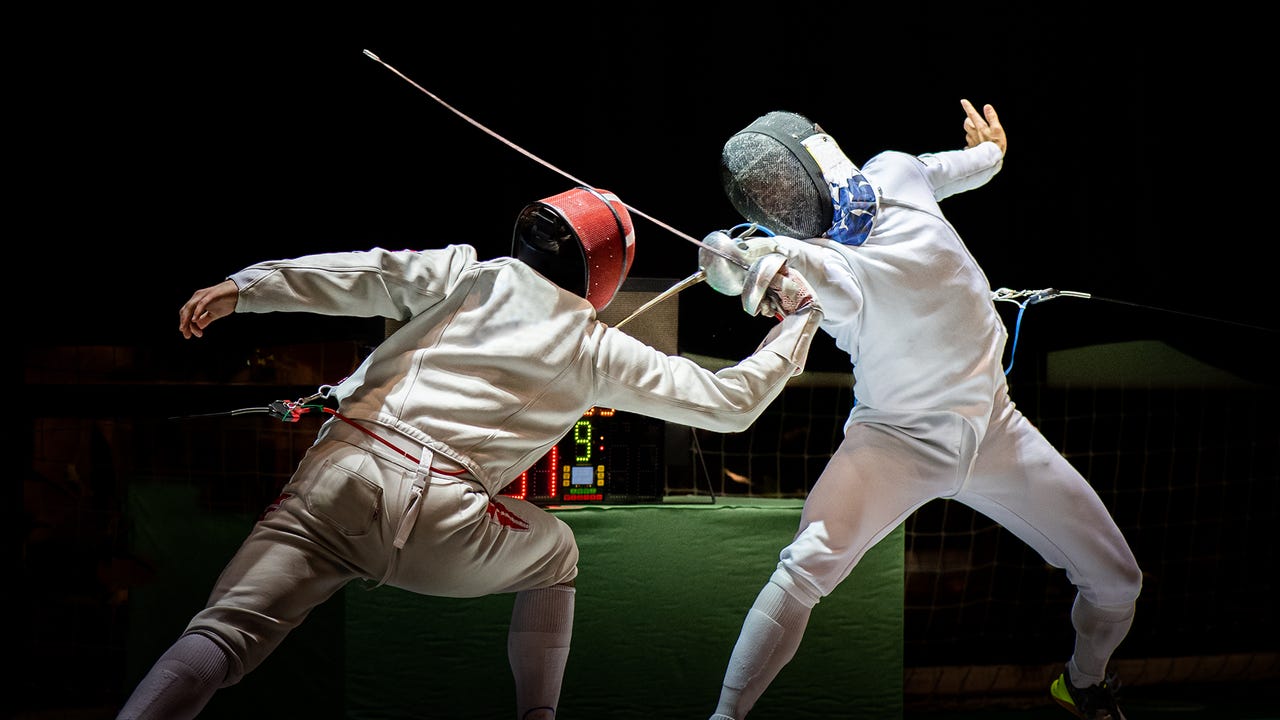
Image by Dusan Kostic via Adobe Stock
At a Glance
- Parry systems are now a core feature in many popular combat games.
- The timing-based feature can either make your players feel powerful, or leave them frustrated and ready to quit.
- Making parries part of a broad defensive toolkit can make players embrace them, say developers.
Parry systems are everywhere now. Though sometimes considered as frustrating as escort quests and underwater levels, the divisive feature (which either floods parry veterans with dopamine hits or leave uncoordinated players cursing at the screen) has seeped into combat systems across all manner of games from Clair Obscur: Expedition 33 to first-person shooters like Doom Eternal.
It's a mechanic some have loved—and others scorned—as one of the most inventive (or tedious) moves to be relentlessly implemented. But plenty goes into a compelling and effective parry system, which further immerses players into the flow of combat, allowing them to deflect hits with the assuredness of a seasoned fighter.
Though named after the fencing maneuver, what brought parrying to the forefront is the introduction of the mechanic in Street Fighter III (1997). The game let players pull off two types of parry: high or low. There's more high-level design philosophy behind parry systems than what it seems at first glance.
We spoke to four developers—Red Candle Games, Odd Bug Studio, Arsi "Hakita" Patala and Catbird Soft—that have incorporated parrying into their games. Turns out a good parry involves more than just getting the players to smash a button at a precise second; it also offers the player more ways to navigate and strategize their combat encounters.
Parry systems can drive a game's theme and mood
At its core, the mechanical function of a parry lets players deflect an incoming attack, while opening up a small window of opportunity for a counter to take place. While this may sound straightforward, its simplicity also lets developers design a combat system that supports the game's narrative, be it a lone warrior learning the intricacies of a martial arts, or a heavily-armored soldier fending off hordes of armored enemies in a medieval setting.
In Odd Bug's Tails of Iron series, players take on the role of a diminutive rat saddled with a mammoth responsibility to rebuild their home and kingdom. Combat is designed to feel weighted and reactive—as if wielding a hefty weapon and armor. "We felt this was important to make the player feel like they were actually there in the combat, taking the hits from slow dodges and mistimed parries,“ said Jack Bennett, producer and designer at Odd Bug.
Attacks in Tails of Iron also have a distinctive visual marker that informs the player how best to avoid and deal damage: for instance, powerful red attacks can only be dodged, whereas long-ranged white attacks must be blocked.
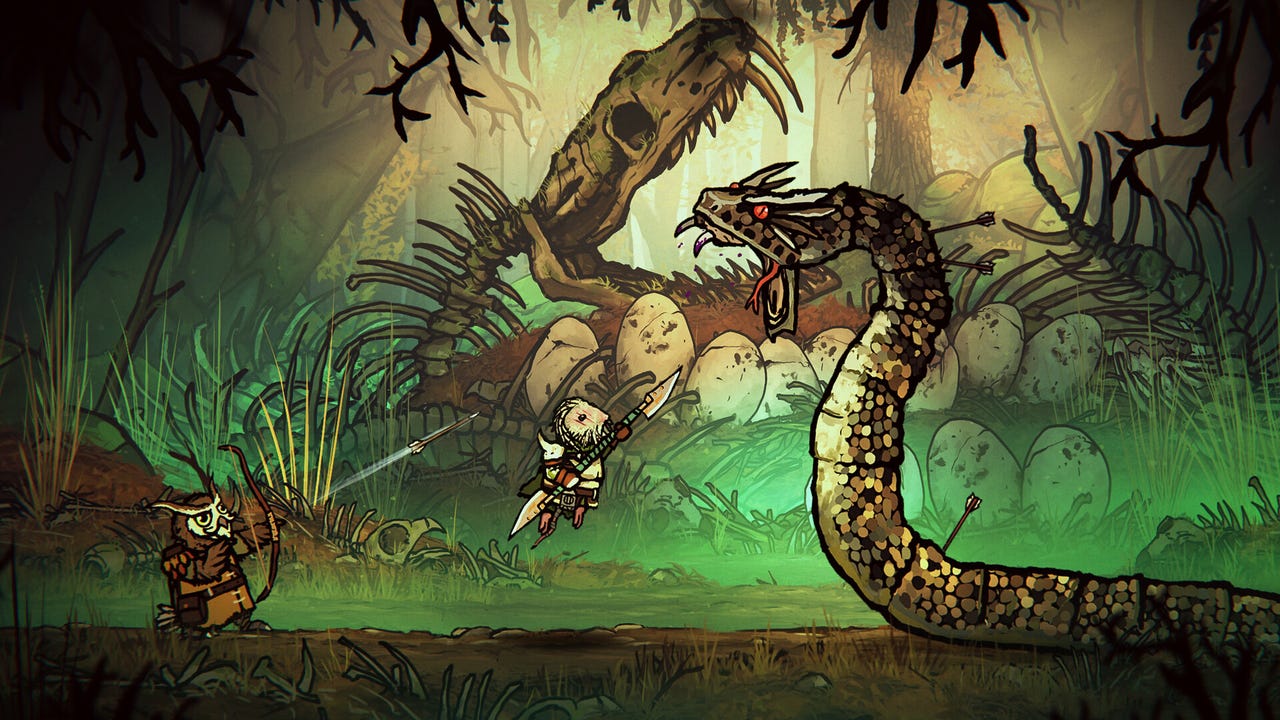
Image via Odd Bug Studio/United Label
Nine Sols, the punishing metroidvania by Red Candle Games, takes a different approach to its parries by furnishing its tai-chi inspired combat with an inventive twist on the parry system. Parrying here is a refined affair; time it exactly right, and you negate your enemy's attack, earning the opportunity to land a resounding counter.
On the other hand, slightly imprecise parries deal temporary damage to the player character, while still interrupting the attack. This encourages players to practice their parries while offering some room for minor missteps.
According to producer Shihwei "Vincen" Yang, Nine Sols was meant to be "challenging but fair," with the game's combat system—and its parrying—about redirecting the opponent's energy rather than using brute force, carrying parallels to the game's Taoist themes. "We want players to learn the game, feel themselves improve, and then revisit a boss and win decisively. That arc, from struggle to mastery, is the satisfaction," he said.
Nine Sols features a variation to the basic parry called the "unbounded counter." This is a skill that requires you to hold and release the parry at the right moment—a high risk, high reward maneuver that lets players parry powerful attacks, but exposes them to incoming attacks as they hold the parry. Yang pointed out that this is inspired by the team's intent on encouraging players to engage with timing and redirection, instead of haphazard button-mashing.
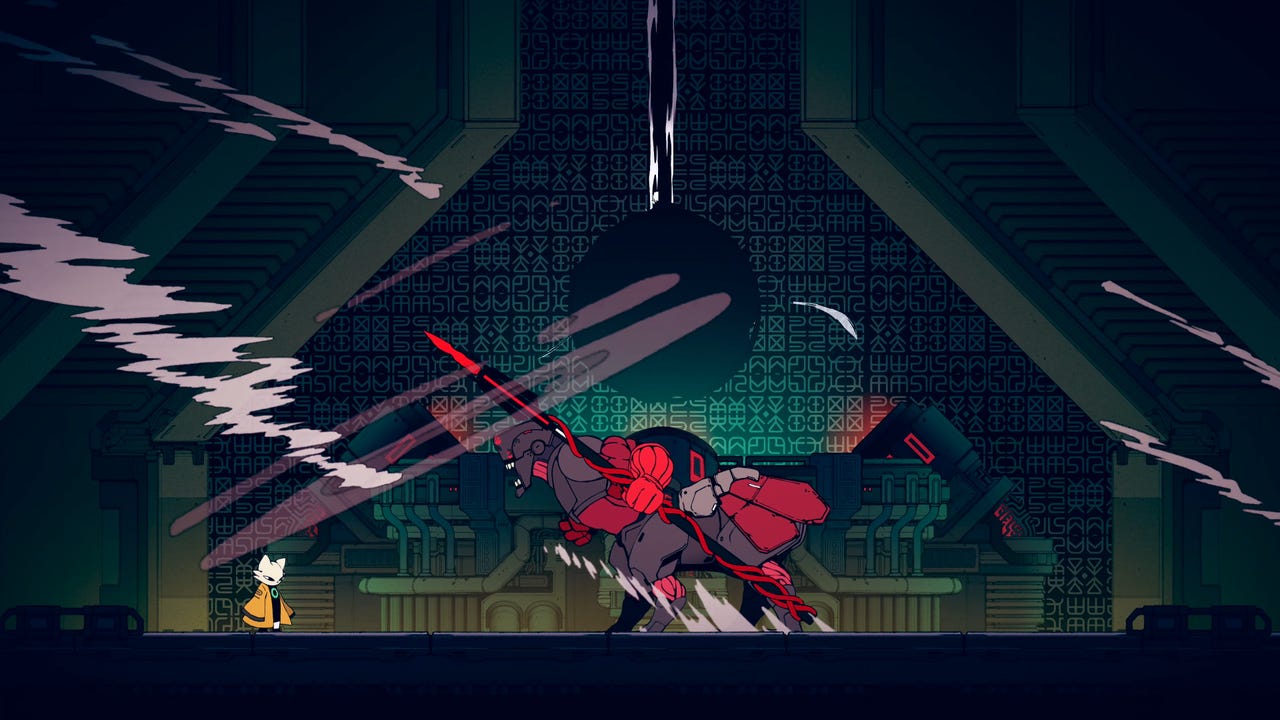
Image via RedCandleGames
Parries should be part of a broad defensive toolkit
Parry systems are also becoming popular in games outside of hand-to-hand combat, like Arsi "Hakita" Patala’s ULTRAKILL. In this first-person shooter, players can parry-punch enemy projectiles, resulting in an explosion that can damage multiple enemies.
Patala believes that the secret behind a solid parry is offering it as one of several defensive tools in combat—as a more rewarding, but riskier alternative to blocking and dodging. "The whole appeal is putting yourself at high risk for a high reward based purely on your own skill. If you attempt a parry a full second too early and it still counts, that no longer feels like a parry, it just feels like a counter," he said.
"Due to this, it's also vital for the parry to not be the only defensive mechanic, because if it's the player's only choice, it loses its luster as a high risk maneuver. It's choosing to take the high risk and having the skill required to pull it off for a high reward that makes a parry satisfying."
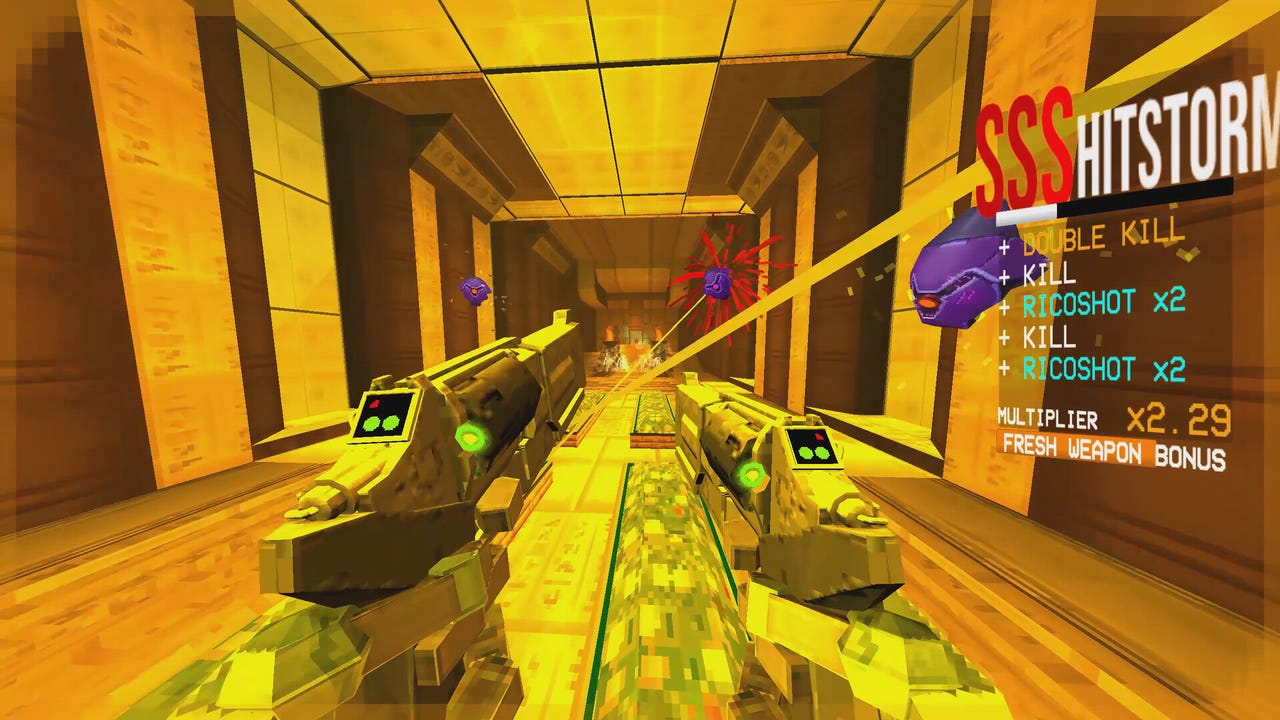
Image via Arsi "Hakita" Patala/New Blood Interactive
Sound design and visual effects also play a key role in effective parry systems. “The most recognizable aspect of ULTRAKILL's parry is the extreme juice of it," said Patala. "The entire game, including all sound and music, freezes for a moment on a successful parry. There are other aspects that are important for its feel too, such as the fact that projectiles will wait a few frames after hitting the player before dealing damage, so the player has a few mercy frames during which they can still parry a projectile,” he said.
For Ben Safford from Steel Carnelian developer Catbird Soft, meaningful parries are strategic maneuvers that have to be pulled off within a short time frame. Paradoxically, this means a bad parry is a versatile move that can be used across all combat situations. What a parry should comprise of, according to Safford, is a set of limitations, while carrying a significant risk when done at the wrong moment.
"A good parry asks players to engage in a sort of counter-positioning. Instead of standing in safe spaces to avoid enemy attacks, they want to figure out the space an enemy controls with their attack and stand inside of it," Safford said. "The worst kind of parry is one that's too good. If everything in a game is reliably parriable, the space-and-time elements of a combat system start to break down. Positioning no longer matters, because there is no incentive to position yourself outside of an enemy's attack range."
"This also significantly reduces the scope of the player's strategic thinking, as they can abandon long-term planning and focus on parrying every attack they see.”
This is a design philosophy that the studio incorporated in its upcoming game Steel Carnelian, a futuristic shoot ‘em up that lets players deflect specific melee attacks and bullets, while still dodging a rain of projectiles.
Not all attacks can be stopped with parries here, so players have to navigate through these bullets while considering the pros of parrying, which requires you to hold still—and punch a homing projectile back to an enemy. “The initial impulse behind the parry mechanic in Steel Carnelian was that we wanted to give players a way to reflect homing projectiles, because ping-ponging bullets back at enemies is cool,” he said.
"To sweeten this deal, we had parrying grant a variety of resources: parrying puts ammo back in the player’s clip, refills their boost gauge, and increases their score multiplier."
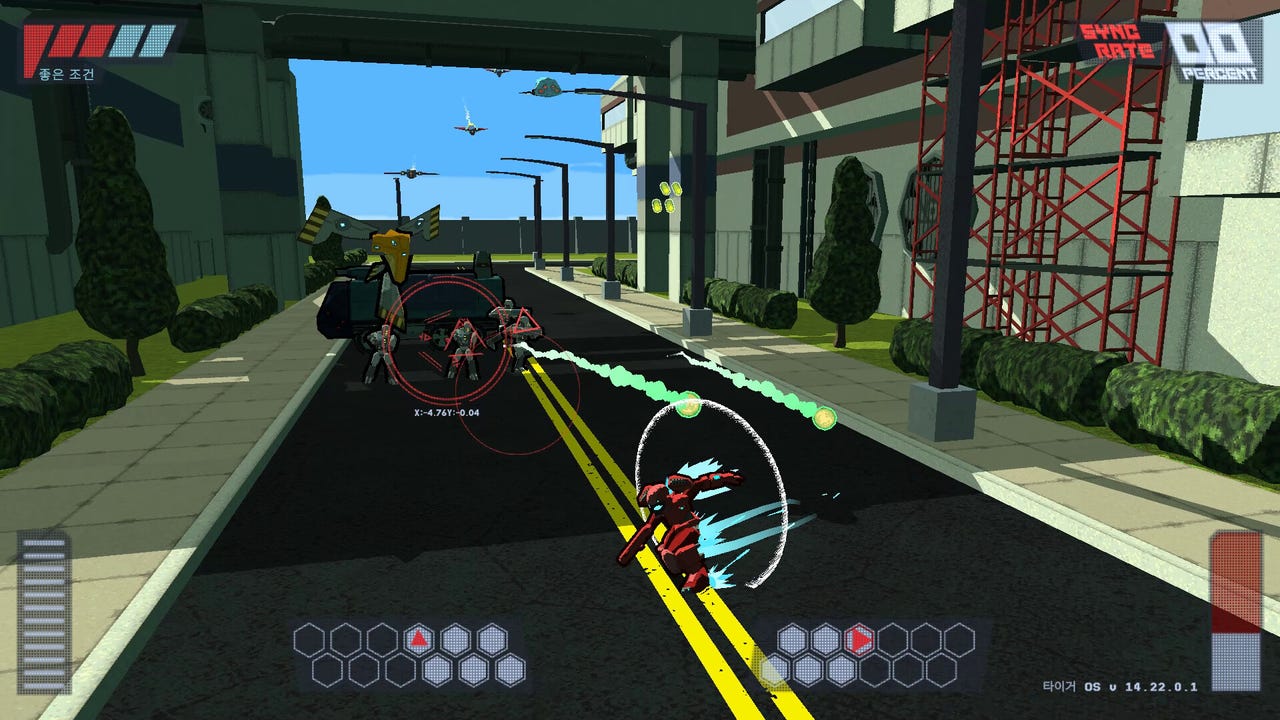
Image via Catbird Soft
Parry fails can be an exercise in frustration. My poor attempts often bring me to a quiet, simmering rage that only crescendos in time, a juvenile anger that sees me throwing the controller and quitting the game impulsively.
But the joy of parrying in games like Clair Obscur: Expedition 33 has transformed my distaste into a personal obsession. In the end it's flexibility—not just quality—that can make players embrace your parry mechanics instead of ragequitting.
As Patalia pointed out, "parries are not at all required for good combat, as long as there are still at least a couple different defensive options."
Yang concurred. "Even within a parry-centric game, offering viable alternatives—dodges, ranged tools, summons, or consumables—lets players opt into the style they enjoy."
About the Author
You May Also Like