In the fast-paced world of retail, optimizing store layouts is crucial. Planogram tools are essential for achieving this goal. They help retailers strategically place products to boost sales and enhance customer experiences.
These tools offer a digital approach to visual merchandising. They allow retailers to design and test store layouts before implementation. This reduces errors and saves time.
Planogram software provides insights into customer behavior and sales trends. It helps retailers make informed decisions about product placement. This leads to increased visibility and higher conversion rates.
With planogram automation, updating store layouts becomes seamless. It ensures consistency across multiple locations, maintaining brand identity.
Explore the benefits of planogram tools and transform your retail strategy.

What Is a Planogram Tool?
A planogram tool is a software solution designed for retail. It helps arrange products in a store for optimal results. By using digital representations, it streamlines the planning process.
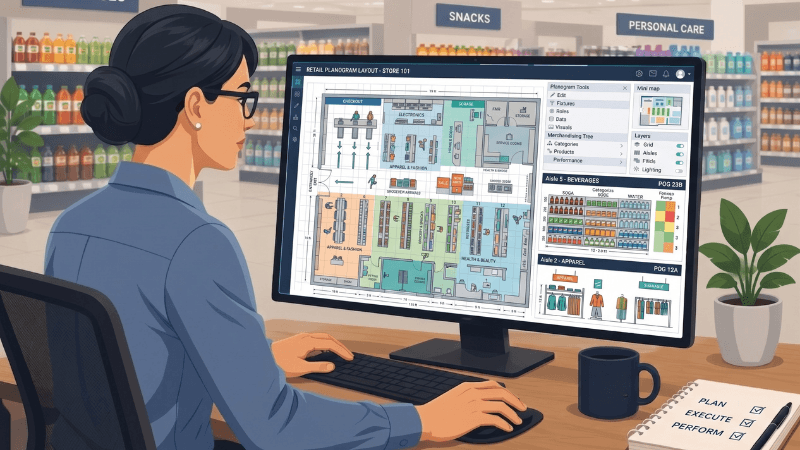
These tools assist in visual merchandising through virtual layouts. Retailers can easily modify plans, saving significant time and effort. Planogram tools make it possible to see how different layouts look before making any physical changes.
Key functions include:
- Visualizing space to improve product placement.
- Simulating shopper flow to enhance navigation.
- Analyzing sales data to refine strategies.
Planogram tools are vital for effective space management. They create a balance between aesthetics and functionality. With these tools, retailers can enhance the shopping experience and drive sales.
Moreover, they support compliance with retail standards. Such compliance ensures that stores consistently meet brand guidelines. Overall, planogram tools are an invaluable asset for modern retail environments.

Key Features of Modern Planogram Software
Modern planogram software offers a myriad of features tailored to meet retail demands. These tools have evolved to incorporate user-friendly interfaces. Retailers can now design layouts without needing specialized skills.
One standout feature is real-time analytics, which provides data-driven insights. This enables retailers to adjust their strategies dynamically. By leveraging such analytics, retailers can boost sales and enhance customer experiences.
Another critical feature is integration capability with existing retail systems. This ensures seamless operations across platforms. Planogram software easily interacts with inventory and point-of-sale systems for cohesive data management.
Key features include:
- 3D visualization for realistic store representations.
- Inventory integration for accurate stock levels.
- Customizable templates for different retail formats.
Additionally, remote accessibility through cloud-based solutions enhances teamwork. Retail teams can collaborate from anywhere, ensuring uniformity across locations. This flexibility is essential for modern retail environments striving to maintain consistency.
Moreover, planogram automation is a major highlight. It drastically reduces manual labor and errors in store planning. Thus, modern planogram software empowers retailers to effectively meet and adapt to evolving retail needs.
Types of Planogram Tools: From Virtual to Automated Solutions
Planogram tools vary in types and functionalities to suit diverse retail needs. Virtual planograms are increasingly popular for their digital precision. They allow retailers to visualize store layouts before making physical changes.
Automated planogram solutions take layout management to the next level. These tools use artificial intelligence to recommend optimal product placements. Automation minimizes manual intervention, ensuring accuracy and efficiency.
Retailers also benefit from merchandising planogram software that focuses on space management. This software helps in organizing products effectively to maximize sales potential. Such tools streamline the merchandising process, making it more strategic.
Different types of planogram tools include:
- Virtual planograms for digital visualization.
- Automated software for real-time adjustments.
- Customizable merchandising programs for unique layouts.
Cloud-based solutions provide another layer of flexibility and accessibility. Retailers can access their plans remotely, facilitating team collaboration. These varied planogram tools help retailers stay competitive by adapting to changing market demands and customer preferences.
How Planogram Tools Enhance Merchandising Strategies
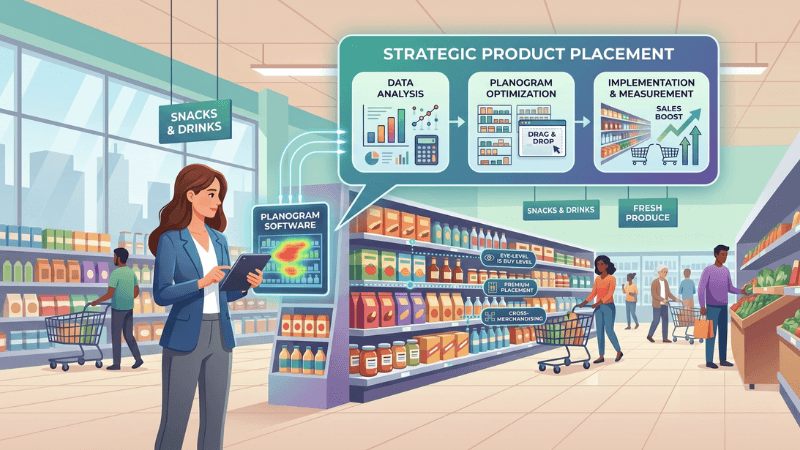
Planogram tools transform merchandising by enabling precise product placement. They provide insights into customer behavior, allowing for strategic decisions. This helps in arranging products to boost visibility and sales.
Merchandising planogram software aids in creating store layouts that maximize space utility. It ensures that high-demand products are placed in high-traffic areas. This strategic placement enhances the overall shopping experience.
Retailers can use planogram tools to test different merchandising techniques. By simulating customer flow, they predict how consumers interact with displays. This testing helps in refining strategies for better engagement.
Planogram tools offer several advantages:
- Enhanced product visibility.
- Strategic placement based on data.
- Efficient use of store space.
These tools also assist in aligning product displays with marketing campaigns. Consistent brand storytelling across all platforms is crucial in modern retailing. Planogram software supports this by maintaining uniformity in store presentations.
In today’s competitive environment, employing these tools ensures that retailers meet consumer expectations. Planogram tools help create cohesive and engaging shopping experiences. This enhances customer satisfaction and drives repeat business.
Benefits of Using Planogram Tools in Retail
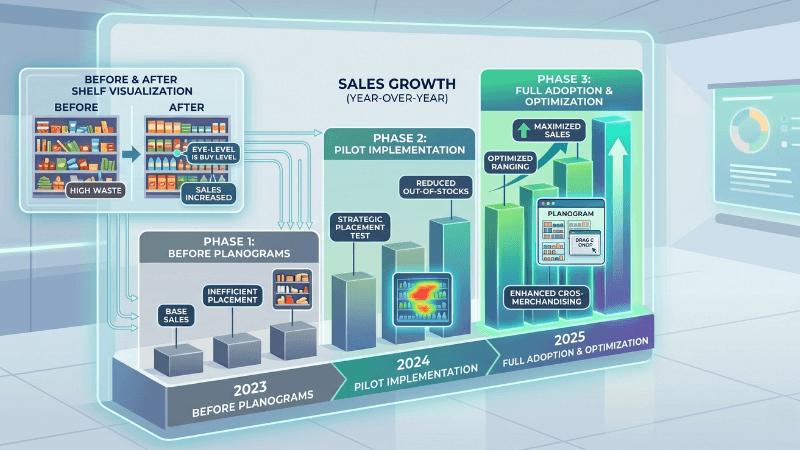
Planogram tools offer numerous advantages for retailers. They optimize product placement, leading to increased sales and improved customer experience. By strategically arranging products, retailers can capture shopper attention more effectively.
These tools also foster brand consistency across multiple locations. Retailers can ensure that each store has a uniform layout. This consistency boosts brand identity and recognition among consumers.
Planogram programs are invaluable for analyzing sales data. They provide insights that help merchants make informed decisions. Understanding sales trends ensures more profitable merchandising strategies.
Key benefits of planogram tools include:
- Increased product visibility.
- Improved inventory management.
- Enhanced data analysis capabilities.
Planogram automation simplifies the process of updating displays. It significantly reduces manual labor and errors. By cutting down on time and effort, staff can focus on other essential tasks.
Integration with inventory systems ensures stock levels are optimal. This reduces the chances of overstocking or running out of popular items. Planogram tools are vital for enhancing operational efficiency.
In addition, retailers benefit from rich visual presentations of stores. Visual layouts help in planning promotions and seasonal events. This leads to better customer engagement and satisfaction.
Planogram Automation: Saving Time and Reducing Errors
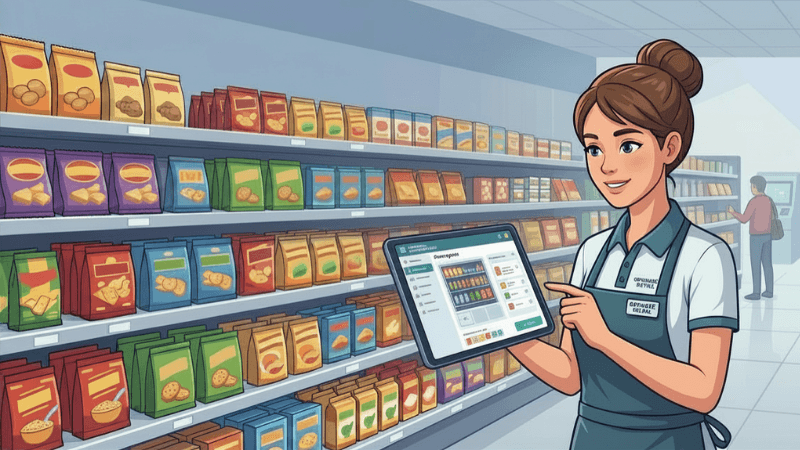
Planogram automation transforms how retailers manage store layouts. It eliminates the need for manual updates, reducing errors significantly. This streamlining of processes allows staff to focus on customer service.
Automation tools ensure rapid and precise updates. This keeps displays fresh and aligned with current trends. By minimizing manual labor, stores can operate more efficiently.
With automated systems, consistent brand presentation is easily achieved. This supports brand recognition and customer trust. Automated planograms also allow for quick adaptation to market changes.
Key advantages of planogram automation:
- Faster updates and execution.
- Reduced manual errors.
- Enhanced brand consistency.
Through automation, retailers can react swiftly to inventory changes. This flexibility is critical in today’s dynamic retail environment. Planogram automation is not just a tool but a strategic asset for competitive advantage.
Integrating Planogram Software with Retail Systems
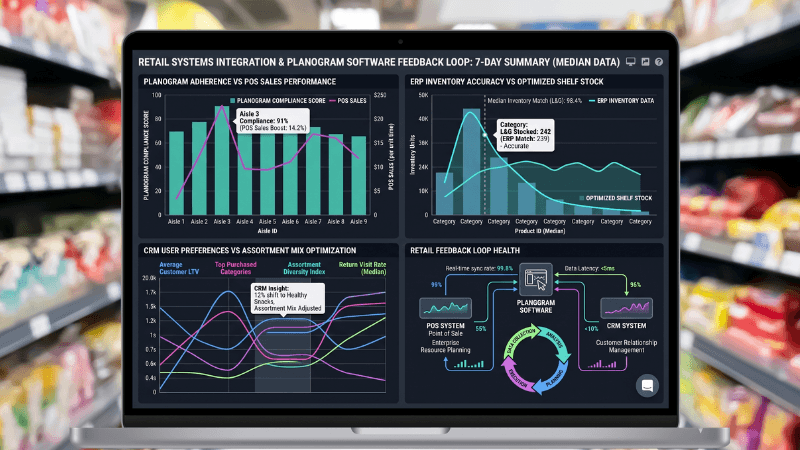
Integrating planogram software with existing retail systems boosts operational efficiency. It provides seamless access to crucial inventory data, enhancing merchandising strategies. This integration ensures information flows smoothly across platforms.
Planogram software often connects with point-of-sale (POS) systems. This link provides real-time insights into sales performance. By understanding what’s selling well, retailers can adjust product placements quickly.
Key benefits of integration include:
- Real-time inventory updates.
- Streamlined operations.
- Enhanced data accuracy.
A well-integrated system supports better decision-making. It offers a comprehensive view of sales trends and stock levels. As a result, stores can maintain optimal product visibility and align with customer demands. Integration is the gateway to smarter, data-driven retail management.
Choosing the Best Planogram Software for Your Business
Selecting the right planogram software is crucial for retail success. Every business has unique needs and constraints. Therefore, it’s essential to evaluate software features that align with your specific goals.
Consider user-friendliness when choosing software. A complex interface can hinder productivity. Ensure the software is easy to navigate. It’s equally important to assess the level of customer support provided.
Key factors to consider include:
- Ease of use
- Integration capabilities
- Customer support
Another critical aspect is scalability. Your choice should grow with your business. Choosing wisely ensures lasting benefits, supporting both current and future merchandising strategies. Aligning software capabilities with business needs will maximize operational efficiency and boost sales.
Real-World Examples: Success Stories with Planogram Tools
In the retail sector, some businesses have significantly benefited from implementing planogram tools. Several companies have seen improvements in sales and store efficiency.
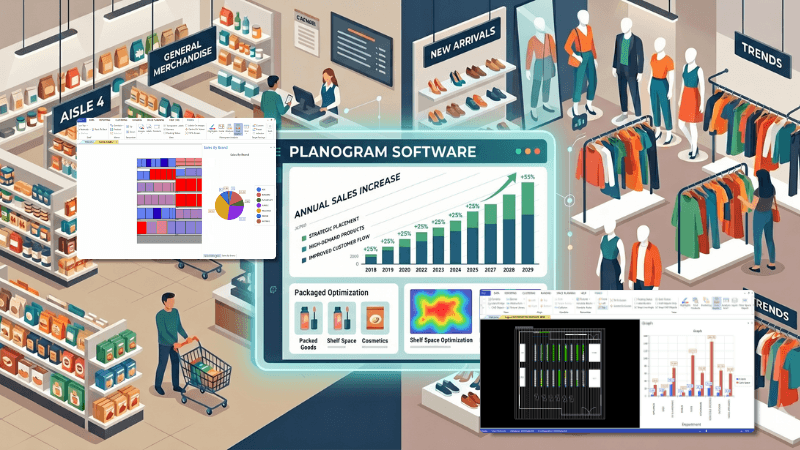
One grocery chain increased its annual sales by strategically placing high-demand products. A fashion retailer enhanced its layout using planogram software, improving customer flow. These examples highlight the potential impact of effective merchandising tools.
Success stories include:
- Grocery chain optimizing product placement
- Fashion retailer improving store layout
- Electronics store enhancing customer experience
These real-world examples showcase the transformative power of planogram tools in retail environments.
Conclusion: The Future of Retail with Planogram Tools
The future of retail will undeniably be shaped by planogram tools. These tools enable retailers to strategize more effectively and enhance customer experience.
With continuous advancements, planogram software is becoming more intuitive and powerful. The integration with data analytics is setting new standards in store management.
Retailers who invest in these technologies are likely to see significant improvements. Increased efficiency, better product placement, and higher sales are some of the expected outcomes. Embracing planogram tools today sets the stage for future success in the retail industry. The evolution of these tools promises a more organized and profitable retail landscape.
Understanding the Benefits of Planogram Tools
In the fast-paced world of retail, optimizing store layouts is crucial. Planogram tools are essential for achieving this goal. They help retailers strategically place products to boost sales and enhance customer experiences.
These tools offer a digital approach to visual merchandising. They allow retailers to design and test store layouts before implementation. This reduces errors and saves time.
Planogram software provides insights into customer behavior and sales trends. It helps retailers make informed decisions about product placement. This leads to increased visibility and higher conversion rates.
With planogram automation, updating store layouts becomes seamless. It ensures consistency across multiple locations, maintaining brand identity.
Explore the benefits of planogram tools and transform your retail strategy.
What Is a Planogram Tool?
A planogram tool is a software solution designed for retail. It helps arrange products in a store for optimal results. By using digital representations, it streamlines the planning process.
These tools assist in visual merchandising through virtual layouts. Retailers can easily modify plans, saving significant time and effort. Planogram tools make it possible to see how different layouts look before making any physical changes.
Key functions include:
- Visualizing space to improve product placement.
- Simulating shopper flow to enhance navigation.
- Analyzing sales data to refine strategies.

Planogram tools are vital for effective space management. They create a balance between aesthetics and functionality. With these tools, retailers can enhance the shopping experience and drive sales.
Moreover, they support compliance with retail standards. Such compliance ensures that stores consistently meet brand guidelines. Overall, planogram tools are an invaluable asset for modern retail environments.
Key Features of Modern Planogram Software
Modern planogram software offers a myriad of features tailored to meet retail demands. These tools have evolved to incorporate user-friendly interfaces. Retailers can now design layouts without needing specialized skills.
One standout feature is real-time analytics, which provides data-driven insights. This enables retailers to adjust their strategies dynamically. By leveraging such analytics, retailers can boost sales and enhance customer experiences.
Another critical feature is integration capability with existing retail systems. This ensures seamless operations across platforms. Planogram software easily interacts with inventory and point-of-sale systems for cohesive data management.
Key features include:
- 3D visualization for realistic store representations.
- Inventory integration for accurate stock levels.
- Customizable templates for different retail formats.

Additionally, remote accessibility through cloud-based solutions enhances teamwork. Retail teams can collaborate from anywhere, ensuring uniformity across locations. This flexibility is essential for modern retail environments striving to maintain consistency.
Moreover, planogram automation is a major highlight. It drastically reduces manual labor and errors in store planning. Thus, modern planogram software empowers retailers to effectively meet and adapt to evolving retail needs.
Types of Planogram Tools: From Virtual to Automated Solutions
Planogram tools vary in types and functionalities to suit diverse retail needs. Virtual planograms are increasingly popular for their digital precision. They allow retailers to visualize store layouts before making physical changes.
Automated planogram solutions take layout management to the next level. These tools use artificial intelligence to recommend optimal product placements. Automation minimizes manual intervention, ensuring accuracy and efficiency.
Retailers also benefit from merchandising planogram software that focuses on space management. This software helps in organizing products effectively to maximize sales potential. Such tools streamline the merchandising process, making it more strategic.
Different types of planogram tools include:
- Virtual planograms for digital visualization.
- Automated software for real-time adjustments.
- Customizable merchandising programs for unique layouts.
Cloud-based solutions provide another layer of flexibility and accessibility. Retailers can access their plans remotely, facilitating team collaboration. These varied planogram tools help retailers stay competitive by adapting to changing market demands and customer preferences.
How Planogram Tools Enhance Merchandising Strategies
Planogram tools transform merchandising by enabling precise product placement. They provide insights into customer behavior, allowing for strategic decisions. This helps in arranging products to boost visibility and sales.
Merchandising planogram software aids in creating store layouts that maximize space utility. It ensures that high-demand products are placed in high-traffic areas. This strategic placement enhances the overall shopping experience.
Retailers can use planogram tools to test different merchandising techniques. By simulating customer flow, they predict how consumers interact with displays. This testing helps in refining strategies for better engagement.
Planogram tools offer several advantages:
- Enhanced product visibility.
- Strategic placement based on data.
- Efficient use of store space.
These tools also assist in aligning product displays with marketing campaigns. Consistent brand storytelling across all platforms is crucial in modern retailing. Planogram software supports this by maintaining uniformity in store presentations.
In today’s competitive environment, employing these tools ensures that retailers meet consumer expectations. Planogram tools help create cohesive and engaging shopping experiences. This enhances customer satisfaction and drives repeat business.
Benefits of Using Planogram Tools in Retail
Planogram tools offer numerous advantages for retailers. They optimize product placement, leading to increased sales and improved customer experience. By strategically arranging products, retailers can capture shopper attention more effectively.
These tools also foster brand consistency across multiple locations. Retailers can ensure that each store has a uniform layout. This consistency boosts brand identity and recognition among consumers.
Planogram programs are invaluable for analyzing sales data. They provide insights that help merchants make informed decisions. Understanding sales trends ensures more profitable merchandising strategies.
Key benefits of planogram tools include:
- Increased product visibility.
- Improved inventory management.
- Enhanced data analysis capabilities.
Planogram automation simplifies the process of updating displays. It significantly reduces manual labor and errors. By cutting down on time and effort, staff can focus on other essential tasks.
Integration with inventory systems ensures stock levels are optimal. This reduces the chances of overstocking or running out of popular items. Planogram tools are vital for enhancing operational efficiency.
In addition, retailers benefit from rich visual presentations of stores. Visual layouts help in planning promotions and seasonal events. This leads to better customer engagement and satisfaction.
Planogram Automation: Saving Time and Reducing Errors
Planogram automation transforms how retailers manage store layouts. It eliminates the need for manual updates, reducing errors significantly. This streamlining of processes allows staff to focus on customer service.
Automation tools ensure rapid and precise updates. This keeps displays fresh and aligned with current trends. By minimizing manual labor, stores can operate more efficiently.
With automated systems, consistent brand presentation is easily achieved. This supports brand recognition and customer trust. Automated planograms also allow for quick adaptation to market changes.
Key advantages of planogram automation:
- Faster updates and execution.
- Reduced manual errors.
- Enhanced brand consistency.
Through automation, retailers can react swiftly to inventory changes. This flexibility is critical in today’s dynamic retail environment. Planogram automation is not just a tool but a strategic asset for competitive advantage.
Integrating Planogram Software with Retail Systems
Integrating planogram software with existing retail systems boosts operational efficiency. It provides seamless access to crucial inventory data, enhancing merchandising strategies. This integration ensures information flows smoothly across platforms.
Planogram software often connects with point-of-sale (POS) systems. This link provides real-time insights into sales performance. By understanding what’s selling well, retailers can adjust product placements quickly.

Key benefits of integration include:
- Real-time inventory updates.
- Streamlined operations.
- Enhanced data accuracy.
A well-integrated system supports better decision-making. It offers a comprehensive view of sales trends and stock levels. As a result, stores can maintain optimal product visibility and align with customer demands. Integration is the gateway to smarter, data-driven retail management.
Choosing the Best Planogram Software for Your Business
Selecting the right planogram software is crucial for retail success. Every business has unique needs and constraints. Therefore, it’s essential to evaluate software features that align with your specific goals.
Consider user-friendliness when choosing software. A complex interface can hinder productivity. Ensure the software is easy to navigate. It’s equally important to assess the level of customer support provided.
Key factors to consider include:
- Ease of use
- Integration capabilities
- Customer support
Another critical aspect is scalability. Your choice should grow with your business. Choosing wisely ensures lasting benefits, supporting both current and future merchandising strategies. Aligning software capabilities with business needs will maximize operational efficiency and boost sales.
Real-World Examples: Success Stories with Planogram Tools
In the retail sector, some businesses have significantly benefited from implementing planogram tools. Several companies have seen improvements in sales and store efficiency.
One grocery chain increased its annual sales by strategically placing high-demand products. A fashion retailer enhanced its layout using planogram software, improving customer flow. These examples highlight the potential impact of effective merchandising tools.
Success stories include:
- Grocery chain optimizing product placement
- Fashion retailer improving store layout
- Electronics store enhancing customer experience
These real-world examples showcase the transformative power of planogram tools in retail environments.
Conclusion: The Future of Retail with Planogram Tools
The future of retail will undeniably be shaped by planogram tools. These tools enable retailers to strategize more effectively and enhance customer experience.
With continuous advancements, planogram software is becoming more intuitive and powerful. The integration with data analytics is setting new standards in store management.
Retailers who invest in these technologies are likely to see significant improvements. Increased efficiency, better product placement, and higher sales are some of the expected outcomes. Embracing planogram tools today sets the stage for future success in the retail industry. The evolution of these tools promises a more organized and profitable retail landscape.