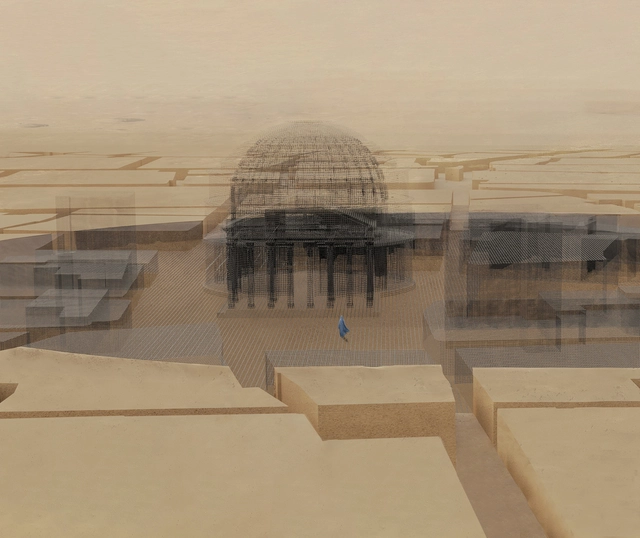
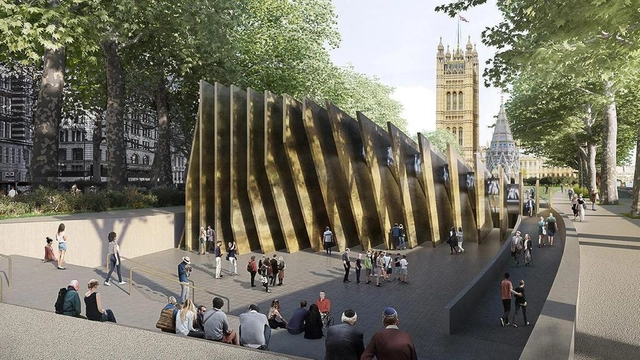
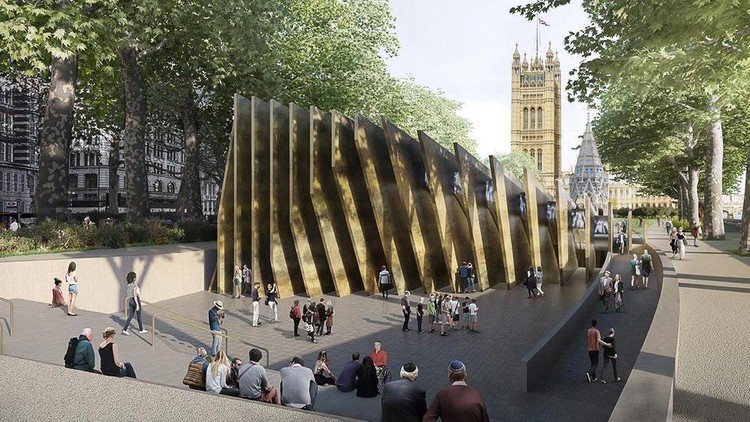
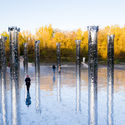
Buildner has announced the results of its competition, the Last Nuclear Bomb Memorial No.6. This competition is held each year to support the universal ban on nuclear weapons. In 2017, on the 75th anniversary of the 1945 bombings of Nagasaki and Hiroshima, which claimed the lives of over 100,000 people, the United Nations adopted the Treaty on the Prohibition of Nuclear Weapons.
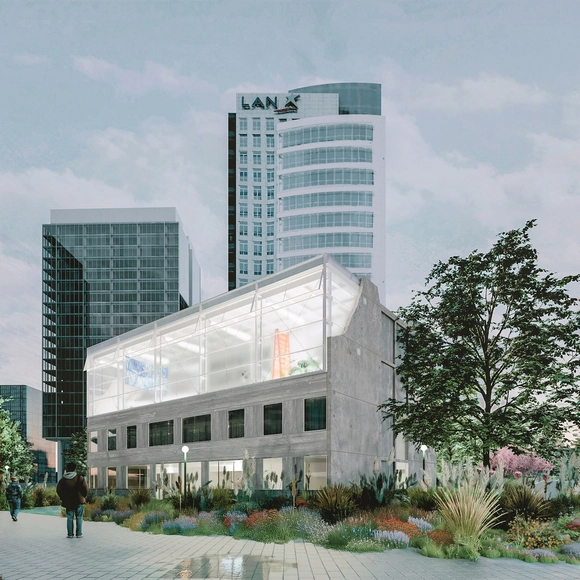
The residential project Villa San Luis, originally named Villa Compañero Ministro Carlos Cortés, was built between 1971 and 1972 on land that today lies in one of the highest-income areas of Santiago, Chile. Initially designed as an urban center for 60,000 middle-income residents, with staggered buildings and a civic center covering 3.4 of its 50 hectares, the project was redefined in the 1970s to accommodate the unhoused population in the eastern sector of the Chilean capital. The process was not without conflict. During the dictatorship, the new residents of the complex were evicted, and the land was acquired by the military. From then on, the complex entered a process of reappropriation and resignification that now appears to be reaching a new milestone: the conversion of one of its buildings into a memorial site and museum, through a project by UMWELT and Plan Común.
Buildner has announced the results of its competition, the Last Nuclear Bomb Memorial No.5. This competition is held each year to support the universal ban on nuclear weapons. In 2017, on the 75th anniversary of the 1945 bombings of Nagasaki and Hiroshima, which claimed the lives of over 100,000 people, the United Nations adopted the Treaty on the Prohibition of Nuclear Weapons.
In recognition of this treaty, Buildner invites conceptual designs for a memorial to be located on any known decommissioned nuclear weapon testing site. The conceptual memorial is intended to reflect the history and ongoing threat of nuclear weapons, aiming to promote public awareness of nuclear disarmament.
The challenge is intended to bring attention to the history and dangers of nuclear weapons. Participants are tasked with designing a space that commemorates nuclear warfare victims and conveys the need for a nuclear-free future. As a 'silent' competition, submissions are not allowed to include any text, titles, or annotations.
The next edition of this competition, the Last Nuclear Bomb Memorial No. 6, has been launched with an early bird registration deadline of June 12, 2025.
The existing podium, located outside the Secretariat Building in Freetown, commemorates soldiers of the First World War and later incorporated servicemen from the Second World War by removing a small mention of the men of the Carrier Corps, a removal this project seeks to address. Studio founder Tosin Oshinowo is the first woman and the first West African architect to design a memorial for the CWGC.
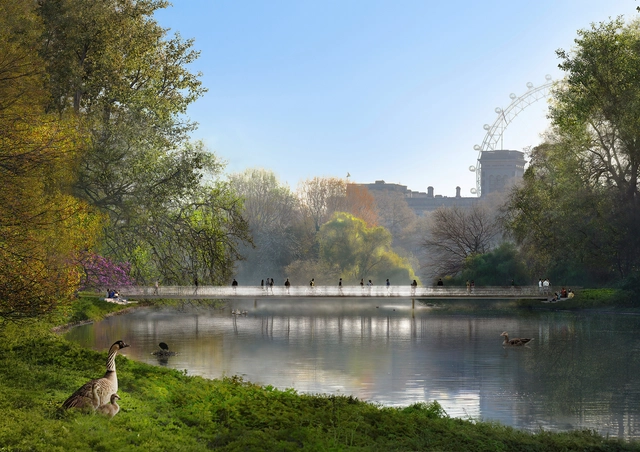
The United Kingdom Government has announced the shortlisted design teams for the national memorial dedicated to Queen Elizabeth II, following the first stage of a two-stage open competition that attracted creative talent from the UK and beyond. The five teams moving forward in the competition are Foster + Partners with Yinka Shonibare and Michel Desvigne Paysagiste; Heatherwick Studio with Halima Cassell, MRG Studio,Webb Yates, and Arup; J&L Gibbons with Michael Levine RDI, William Matthews Associates, Structure Workshop, and Arup; Tom Stuart-Smith with Jamie Fobert Architects, Adam Lowe (Factum Arte), and Structure Workshop; and WilkinsonEyre with Lisa Vandy, Fiona Clark, Andy Sturgeon Design, Atelier One, and Hilson Moran.
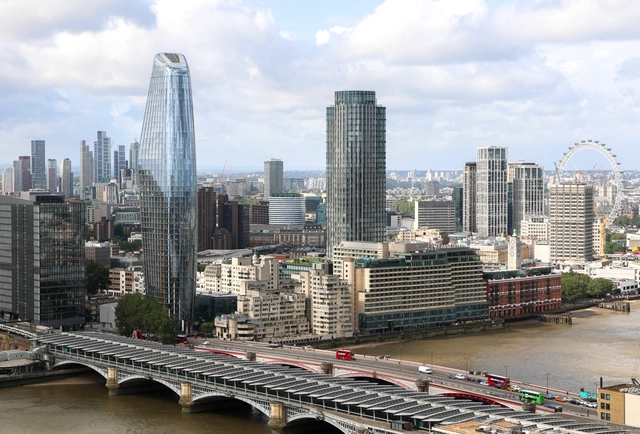
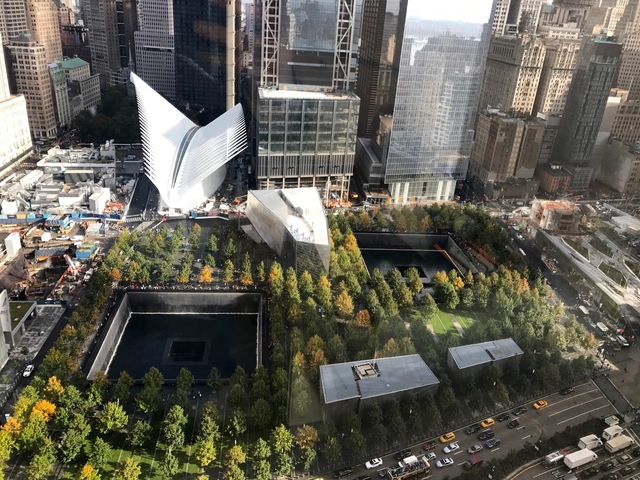
On the morning of September 11, 2001, two hijacked commercial jetliners struck the Twin Towers in Lower Manhattan, a third plane struck the Pentagon, and a fourth crashed in rural Pennsylvania. A total of 2.977 people were killed in the terrorist attacks. In the face of this unprecedented loss, the city of New York promised to rebuild Lower Manhattan as a lively neighborhood while honoring and maintaining the memory of this day. Thus began one of the largest reconstruction projects in New York City, a process that is still ongoing now, 23 years after the tragedy.
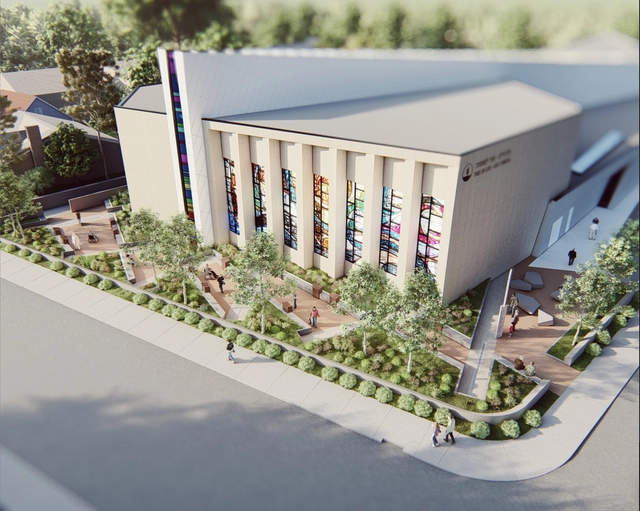
Studio Libeskind, working in close partnership with the Memorialization Working Group, has unveiled the preliminary design for the memorial for the 11 killed on 27 October 2018 at the Tree of Life Synagogue in Pittsburgh, United States. The design was developed in a process led by the victims’ families, communal leaders, and concretional representatives. The building’s official groundbreaking is expected in 2024.
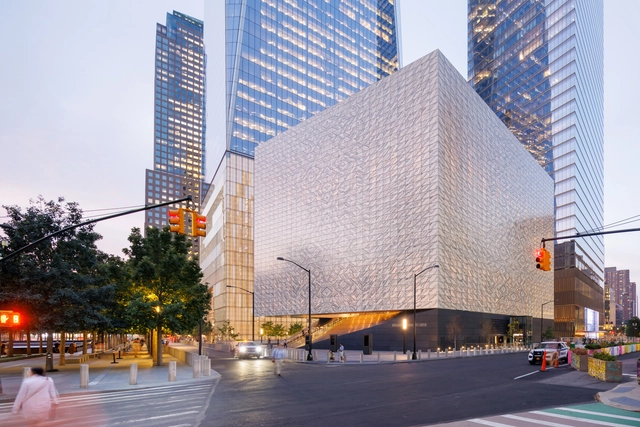
After over two decades in the making, the Perelman Performing Arts Center opened to the public on September 19, 2023. The luminous cube-shaped building was designed by the architecture firm REX, led by Joshua Ramus, to become one of New York City’s cultural keystones and the final piece in the 2023 Master Plan for the rebuilding of the 16-acre World Trade Center site. The inaugural season will feature commissions, world premieres, co-productions, and collaborative work across theater, dance, music, opera, film, and more. While only eight stories high, the venue stands out due to its monolithic façade composed of translucent veined Portuguese marble.
India hosts a multitude of museums, art galleries, public libraries, theaters, and heritage centers. Nevertheless, many of these structures remain abandoned and fossilized like the artifacts they intend to present and protect. The development of cultural infrastructure in India has historically been a government endeavor, often resulting in a state of stagnation. The past two decades have seen a noticeable shift in the country’s cultural landscape. Increased interest from private institutions has paved the way for plenty of cultural projects to be initiated, usually in partnership with city authorities. These contemporary projects aim to celebrate the richness of India’s historical and contemporary culture, becoming prize destinations for the rising middle class.
Chilean architect Cazu Zegers has been chosen to design a memorial garden at the Red Cross headquarters. In the architect's own words, this project "aims to showcase the selfless efforts of those who have become martyrs of the Red Cross."
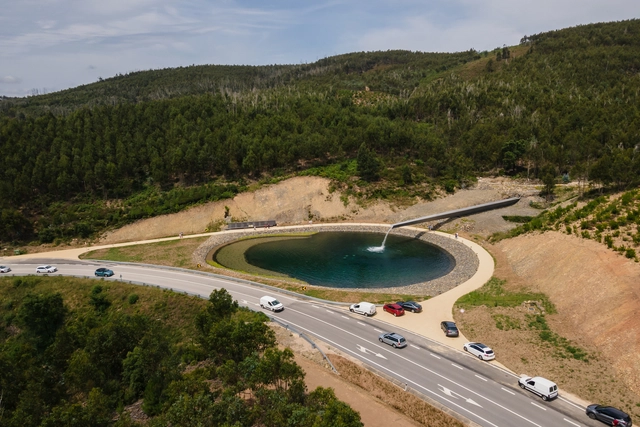
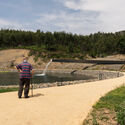
Pedrógão Grande, a Portuguese municipality located approximately 55 kilometers from Coimbra, inaugurated the Memorial in Homage to the Victims of the 2017 Forest Fires last week. This tragic event resulted in the loss of 66 lives and left 253 injured. The monument was designed by architect Eduardo Souto de Moura, winner of the 2011 Pritzker Prize.
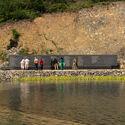
The work, initiated by Infraestruturas de Portugal (IP) two years ago, cost approximately 1.8 million Euros. According to IP, the monument features a framing lake spanning about 2,500 square meters in area. The lake is supplied by a 60-meter-long gargoyle and bordered by a strip of plants, including white water lilies, lilies, and ranunculus. Additionally, the project incorporates a wall with the name of each victim inscribed on it, according to IP.
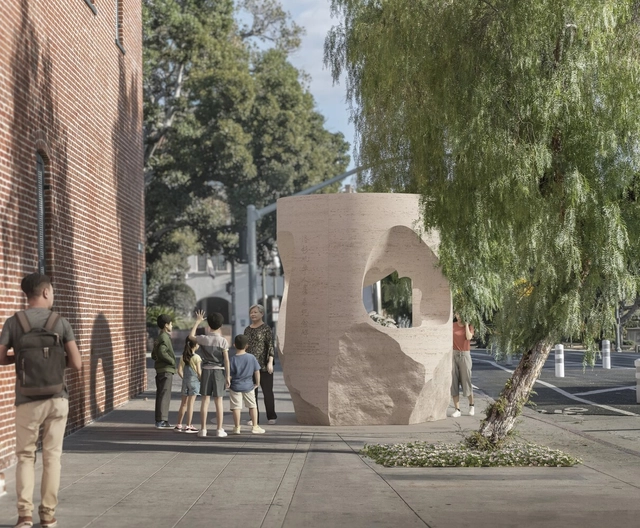
Figure x J. Jih Architecture Collective, led by James Leng and Jennifer Ly in collaboration with J. Roc Jih San Francisco, CA. Image Courtesy of Courtesy City of Los Angeles Department of Cultural Affairs
The city of Los Angeles has selected six finalists for the competition to design a new memorial dedicated to the victims of the 1871 Chinese Massacre. In one of the darkest chapters in the city’s history, on 21 October 24, roughly ten percent of the city’s Chinese population at the time, at least 18 residents, were murdered by a mob of rioters. The memorial seeks to raise public awareness of the 1871 racially motivated mass killing while simultaneously addressing contemporary concerns regarding race, intolerance, and violence. The memorial was first announced in April 2021, and it is set to be built near the site of the massacre and the Chinese American Museum.
This week’s curated selection of Best Unbuilt Architecture highlights educational and cultural projects submitted by the ArchDaily community. Through examples from all around the world, the article explores how these spaces of knowledge and discovery are designed to inspire and inform.
Featuring a monolithic museum in Portugal, a digital heritage centre with a media facade in Korea and a mobility research centre in Turkey, the round-up spans various kinds of educational and cultural spaces, as well as different attitudes towards the built or natural environment. The following projects reveal the ideas that shape spaces of knowledge in different contexts, illustrating diverse approaches toward what constitutes an institution of culture.
The Pritzker Military Museum & Library has selected Los Angeles-based Oyler Wu Collaborative as the winner of an international design competition that aims to honor members of the United States Armed Forces who served during the Cold War. The winning design, titled Orbits, embodies the "dedication, optimism, and hope that is emblematic of the veterans' enduring spirit", as the structure emerges from the ground to become an architectural tribute to the war veterans.
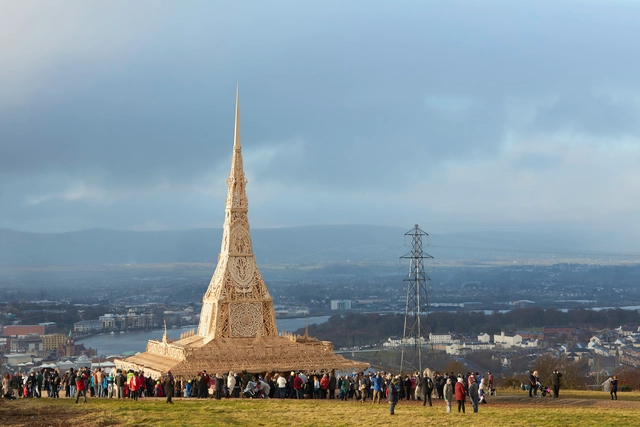
To honor the losses caused by the pandemic over the past two years, a temporary national memorial will be built in Bedworth’s Miners' Welfare Park in England on May 21st until May 28th. Designed by artist David Best, Sanctuary will serve as a powerful symbol of catharsis and rebirth for the whole community, giving them the chance to grieve the losses caused by the pandemic by writing messages or leaving mementos on the walls of the installation, which will then be burned on its last day.
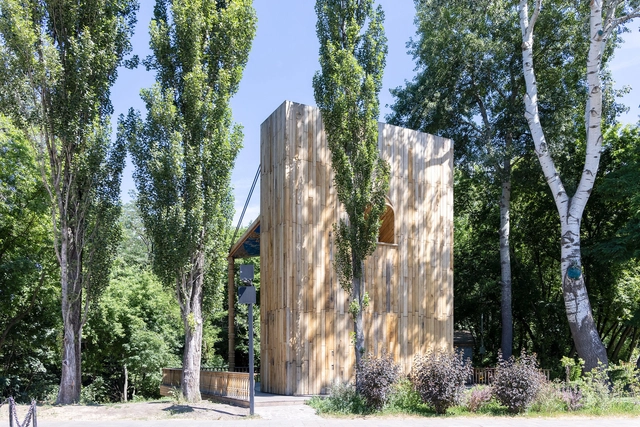
Babyn Yar Synagogue by Manuel Herz, image by Iwan Baan. Image Courtesy of BYHMC
Babyn Yar, a ravine in the Ukrainian capital Kyiv, witnessed the killing of more than 33,000 Jewish men, women, and children, on September 29 and 30, 1941. The site of one of the largest single massacres perpetrated by occupying German troops against Jews during World War II, Babyn Yar became a symbol of the Holocaust by Bullets.
While the main tragic event took place in 1941, throughout the occupation, the site was used as a killing location by the German forces. In fact, it is reported that 70 to 100 000 people lost their lives in Babyn Yar. With no architecture to the tragedy and only a remaining “broken” landscape, people struggled with achieving memorialization and public recognition.