


Yttrium Aluminum Oxide Nanoparticles
Request Quote
| Product | Product Code | SAFETY DATA | Technical data | |
|---|---|---|---|---|
(2N) 99% Yttrium Aluminum Oxide Nanoparticles |
Y-ALO-02-NP | SDS > | Data Sheet > | |
(5N) 99.999% Yttrium Aluminum Oxide Nanoparticles |
Y-ALO-05-NP | SDS > | Data Sheet > | |
(4N) 99.99% Yttrium Aluminum Oxide Nanoparticles |
Y-ALO-04-NP | SDS > | Data Sheet > | |
(3N) 99.9% Yttrium Aluminum Oxide Nanoparticles |
Y-ALO-03-NP | SDS > | Data Sheet > |

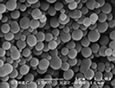 Yttrium Aluminum Oxide or Garnet (YAG) Nanoparticles, nanodots or Nanopowder are white spherical high surface area metal particles. Nanoscale Yttrium Aluminum Oxide Particles are typically 10-30 nanometers (nm) with specific surface area (SSA) in the 130-150 m2/g range. Nano Yttrium Aluminum Oxide Particles are also available in passivated and in Ultra high purity and high purity and carbon coated and dispersed forms. They are also available as a dispersion through the AE Nanofluid production group. Nanofluids are generally defined as suspended nanoparticles in solution either using surfactant or surface charge technology. Nanofluid dispersion and coating selection technical guidance is also available. Other nanostructures include nanorods, nanowhiskers, nanohorns, nanopyramids and other nanocomposites. Surface functionalized nanoparticles allow for the particles to be preferentially adsorbed at the surface interface using chemically bound polymers. Development research is underway in Nano Electronics and Photonics materials, such as MEMS and NEMS, Bio Nano Materials, such as Biomarkers, Bio Diagnostics & Bio Sensors, and Related Nano Materials, for use in Polymers, Textiles, Fuel Cell Layers, Composites and Solar Energy materials. Nanopowders are analyzed for chemical composition by ICP, particle size distribution (PSD) by laser diffraction, and for Specific Surface Area (SSA) by BET multi-point correlation techniques. Novel nanotechnology applications also include quantum dots. High surface areas can also be achieved using solutions and using thin film by sputtering targets and evaporation technology using. Applications for Yttrium Aluminum Oxide nanocrystals include in preparation of various optical applications, in laser crystals and other optics, and in nanowire, nanofiber and in certain alloy and catalyst applications. Further research is being done for their potential electrical, dielectric, magnetic, optical, imaging, catalytic, biomedical and bioscience uses. Yttrium Aluminum Oxide Nano Particles are generally immediately available in most volumes. American Elements produces to many standard grades when applicable, including Mil Spec (military grade); ACS, Reagent and Technical Grade; Food, Agricultural and Pharmaceutical Grade; Optical Grade, USP and EP/BP (European Pharmacopoeia/British Pharmacopoeia) and follows applicable ASTM testing standards. Typical and custom packaging is available. Additional technical, research and safety (MSDS) information is available as is a Reference Calculator for converting relevant units of measurement.
 | Compound Formula | Al5O12Y3 |
|---|---|
| Molecular Weight | 593.62 |
| Appearance | solid |
| Melting Point | N/A |
| Boiling Point | N/A |
| Density | 4.56 g/mL at 25 °C(lit.) |
| Solubility in H2O | N/A |
| Exact Mass | N/A |
| Monoisotopic Mass | 593.564026 |
| Charge | N/A |
| Signal Word | N/A |
|---|---|
| Hazard Statements | N/A |
| Hazard Codes | N/A |
| Risk Codes | N/A |
| Safety Statements | N/A |
| RTECS Number | N/A |
| Transport Information | N/A |
| WGK Germany | 3 |
| Linear Formula | Y3Al5O12 |
|---|---|
| Pubchem CID | 16217673 |
| MDL Number | MFCD00213958 |
| EC No. | 234-465-8 |
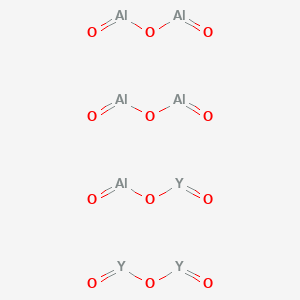
| IUPAC Name | oxo(oxoalumanyloxy)alumane;oxo (oxoalumanyloxy) yttrium;oxo(oxoyttriooxy)yttrium |
| Beilstein/Reaxys No. | N/A |
| SMILES | O=[Y]O[Al]=O.O=[Y]\nO[Y]=O.O=[Al]O[Al]\n=O.O=[Al]O[Al]=O |
| InchI Identifier | InChI=1S/5Al.12O.3Y |
| InchI Key | ITMSSWCUCPDVED-UHFFFAOYSA-N |
| Chemical Formula | |
| Molecular Weight | |
| Standard InchI | |
| Appearance | |
| Melting Point | |
| Boiling Point | |
| Density |
Customer Reviews
Customers For Yttrium Aluminum Oxide Nanoparticles Have Also Viewed
Related Applications, Forms & Industries for Yttrium Aluminum Oxide Nanoparticles

Each business day American Elements' scientists & engineers post their choice for the most exciting materials science news of the day
See more Aluminum products. Aluminum (or Aluminium) (atomic symbol: Al, atomic number: 13) is a Block P, Group 13, Period 3 element with an atomic weight of 26.9815386. It is the third most abundant element in the earth's crust and the most abundant metallic element.  Aluminum's name is derived from alumina, the mineral from which Sir Humphrey Davy attempted to refine it from in 1812. Aluminum was first predicted by Antoine Lavoisier 1787 and first isolated by Hans Christian Øersted in 1825. Aluminum is a silvery gray metal that possesses many desirable characteristics. It is light, nonmagnetic and non-sparking. It stands second among metals in the scale of malleability, and sixth in ductility. It is extensively used in many industrial applications where a strong, light, easily constructed material is needed.
  Although it has only 60% of the electrical conductivity of copper, it is used in electrical transmission lines because of its light weight. Pure aluminum is soft and lacks strength, but alloyed with small amounts of copper, magnesium, silicon, manganese, or other elements, it imparts a variety of useful properties.
See more Yttrium products. Yttrium (atomic symbol: Y, atomic number: 39) is a Block D, Group 3, Period 5 element with an atomic weight of 88.90585.  The number of electrons in each of yttrium's shells is [2, 8, 18, 9, 2] and its electron configuration is [Kr] 4d1 5s2. The yttrium atom has a radius of 180 pm and a Van der Waals radius of 219 pm. Yttrium was discovered by Johann Gadolin in 1794 and first isolated by Carl Gustav Mosander in 1840. In its elemental form, Yttrium has a silvery white metallic appearance. Yttrium has the highest thermodynamic affinity for oxygen of any element.
  Yttrium is not found in nature as a free element and is almost always found combined with the lanthanides in rare earth minerals. While not part of the rare earth series, it resembles the heavy rare earths which are sometimes referred to as the "yttrics" for this reason. Another unique characteristic derives from its ability to form crystals with useful properties. The name yttrium originated from a Swedish village near Vaxholm called Yttbery where it was discovered.