


Ultra Dry Barium Chloride
Request Quote
| Product | Product Code | SAFETY DATA | Technical data | |
|---|---|---|---|---|
(2N) 99% Ultra Dry Barium Chloride |
BA-CL-02-P.UD | SDS > | Data Sheet > | |
(2N5) 99.5% Ultra Dry Barium Chloride |
BA-CL-025-P.UD | SDS > | Data Sheet > | |
(3N) 99.9% Ultra Dry Barium Chloride |
BA-CL-03-P.UD | SDS > | Data Sheet > | |
(3N5) 99.95% Ultra Dry Barium Chloride |
BA-CL-035-P.UD | SDS > | Data Sheet > | |
(4N) 99.99% Ultra Dry Barium Chloride |
BA-CL-04-P.UD | SDS > | Data Sheet > | |
(5N) 99.999% Ultra Dry Barium Chloride |
BA-CL-05-P.UD | SDS > | Data Sheet > |
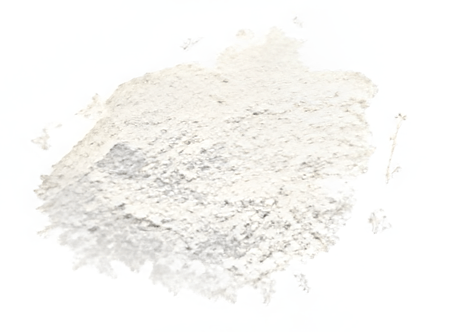
 American Elements specializes in producing Barium Chloride in an ultra dry form for use as a compound in semiconductors and other High Purity applications. Ultra Dry Barium Chloride is generally immediately available in most volumes. High purity, submicron and nanopowder forms may be considered. American Elements produces to many standard grades when applicable, including Mil Spec (military grade); ACS, Reagent and Technical Grade; Food, Agricultural and Pharmaceutical Grade; Optical Grade, USP and EP/BP (European Pharmacopoeia/British Pharmacopoeia) and follows applicable ASTM testing standards. Typical and custom packaging is available. Additional technical, research and safety (MSDS) information is available as is a Reference Calculator for converting relevant units of measurement.
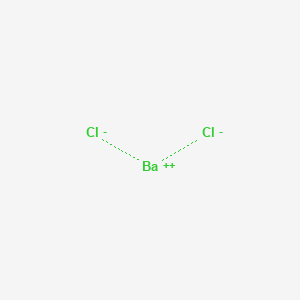
 | Compound Formula | BaCl2 |
|---|---|
| Molecular Weight | 208.23 |
| Appearance | Beads |
| Melting Point | 962° C (1,764° F) |
| Boiling Point | 1,560° C (2,840° F) |
| Density | 3.856 g/cm3 |
| Solubility in H2O | N/A |
| Exact Mass | 207.843 |
| Monoisotopic Mass | 207.843 |
| Signal Word | Danger |
|---|---|
| Hazard Statements | H301-H319-H332 |
| Hazard Codes | T |
| Precautionary Statements | P261-P305 + P351 + P338 |
| Flash Point | Not applicable |
| Risk Codes | 20-25 |
| Safety Statements | 45 |
| RTECS Number | CQ8750000 |
| Transport Information | UN 1564 6.1 / PGIII |
| WGK Germany | 1 |
| GHS Pictogram |
Image

Image

|
| Linear Formula | BaCl2 |
|---|---|
| Pubchem CID | 25204 |
| MDL Number | MFCD00003445 |
| EC No. | 233-788-1 |
| IUPAC Name | barium(2+) dichloride |
| Beilstein/Reaxys No. | N/A |
| SMILES | [Ba+2].[Cl-].[Cl-] |
| InchI Identifier | InChI=1S/Ba.2ClH/h;2*1H/q+2;;/p-2 |
| InchI Key | WDIHJSXYQDMJHN-UHFFFAOYSA-L |
| Chemical Formula | |
| Molecular Weight | |
| Standard InchI | |
| Appearance | |
| Melting Point | |
| Boiling Point | |
| Density |
Customer Reviews
Customers For Ultra Dry Barium Chloride Have Also Viewed
Related Applications, Forms & Industries for Ultra Dry Barium Chloride

Each business day American Elements' scientists & engineers post their choice for the most exciting materials science news of the day
See more Barium products. Barium (atomic symbol: Ba, atomic number: 56) is a Block S, Group 2, Period 6 element with an atomic weight of 137.27. The number of electrons in each of barium's shells is [2, 8, 18, 18, 8, 2] and its electron configuration is [Xe] 6s2.  Barium is a member of the alkaline-earth metals. The barium atom has a radius of 222 pm and a Van der Waals radius of 268 pm. Barium was discovered by Carl Wilhelm Scheele in 1772 and first isolated by Humphry Davy in 1808.
  In its elemental form, barium is a soft, silvery-gray metal. Industrial applications for barium include acting as a "getter," or unwanted gas remover, for vacuum tubes, and as an additive to steel and cast iron. Barium is also alloyed with silicon and aluminum in load-bearing alloys. The main commercial source of barium is the mineral barite (BaSO4); it does not occur naturally as a free element . The name barium is derived from the Greek word "barys," meaning heavy.
Chlorine is a Block P, Group 17, Period 3 element. Its electron configuration is [Ne]3s23p5. The chlorine atom has a covalent radius of 102±4 pm and its Van der Waals radius is 175 pm.  In its elemental form, chlorine is a yellow-green gas. Chlorine is the second lightest halogen after fluorine. It has the third highest electronegativity and the highest electron affinity of all elements, making it a strong oxidizing agent. It is rarely found by itself in nature. Chlorine was discovered and first isolated by Carl Wilhelm Scheele in 1774. It was first recognized as an element by Humphry Davy in 1808.