Paul Wranitzky (be one of the first to follow)
This composer and conductor was a favorite in the latter capacity of Haydn and Beethoven.
Musical Period
Died
Related Artists
All Related Artists
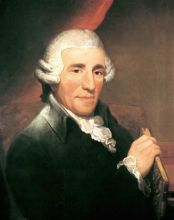
Paul Wranitzky Biography by James Manheim
Composer and conductor Paul Wranitzky was a favorite in the latter capacity of Haydn and Beethoven. He was also a prolific composer whose works showed the influence of Haydn and Mozart. Popular in the early 19th century, his works were forgotten for many decades.
Paul Wranitzky (in Czech Pavel Vranický) was born in Nová Říše (Neureisch), Moravia, then in the Habsburg Empire, on December 30, 1756. His brother, Anton (or Antonín), was also a composer. Paul Wranitzky studied theology at the University of Olomouc and then took further courses in Vienna in the same subject, but his real motivation in moving to Vienna was to seek opportunities in the large group of theaters and instrumental ensembles in the empire's capital. In this, he was successful, landing a post as conductor at two royal theater orchestras. He gained notice as a composer by the late 1780s; his opera Oberon -- The Fairy King of 1789 may have served as an inspiration for Mozart's Die Zauberflöte.
 By the 1790s, Wranitzky had reached the peak of his career. Haydn, Mozart, and Beethoven asked for him to conduct the premieres of their works, and in 1800, he conducted the first performance of Beethoven's Symphony No. 1 in C major, Op. 21. Meanwhile, his own output as a composer grew. He wrote ten operas, 44 symphonies, and at least 56 string quartets. He wrote a Grand Characteristic Symphony for the Peace with the French Republic in 1797. Wranitzky died in Vienna on September 29, 1808. The pioneering French musicologist Fétis wrote in the late 19th century that Wranitzky remained popular during his youth. He was forgotten for much of the 20th century, but renewed attention to the Classical period in the 21st has brought new performances of his music. The Czech Chamber Philharmonic Orchestra Pardubice has issued a series of Naxos recordings devoted to Wranitzky; that series in 2025 reached Wranitzky: Orchestral Music, Vol. 8, which contained the Grand Characteristic Symphony for the Peace with the French Republic.