Academia.eduAcademia.edu

How People Write Together Now

2017, ACM Transactions on Computer-Human Interaction

https://doi.org/10.1145/3038919

Abstract

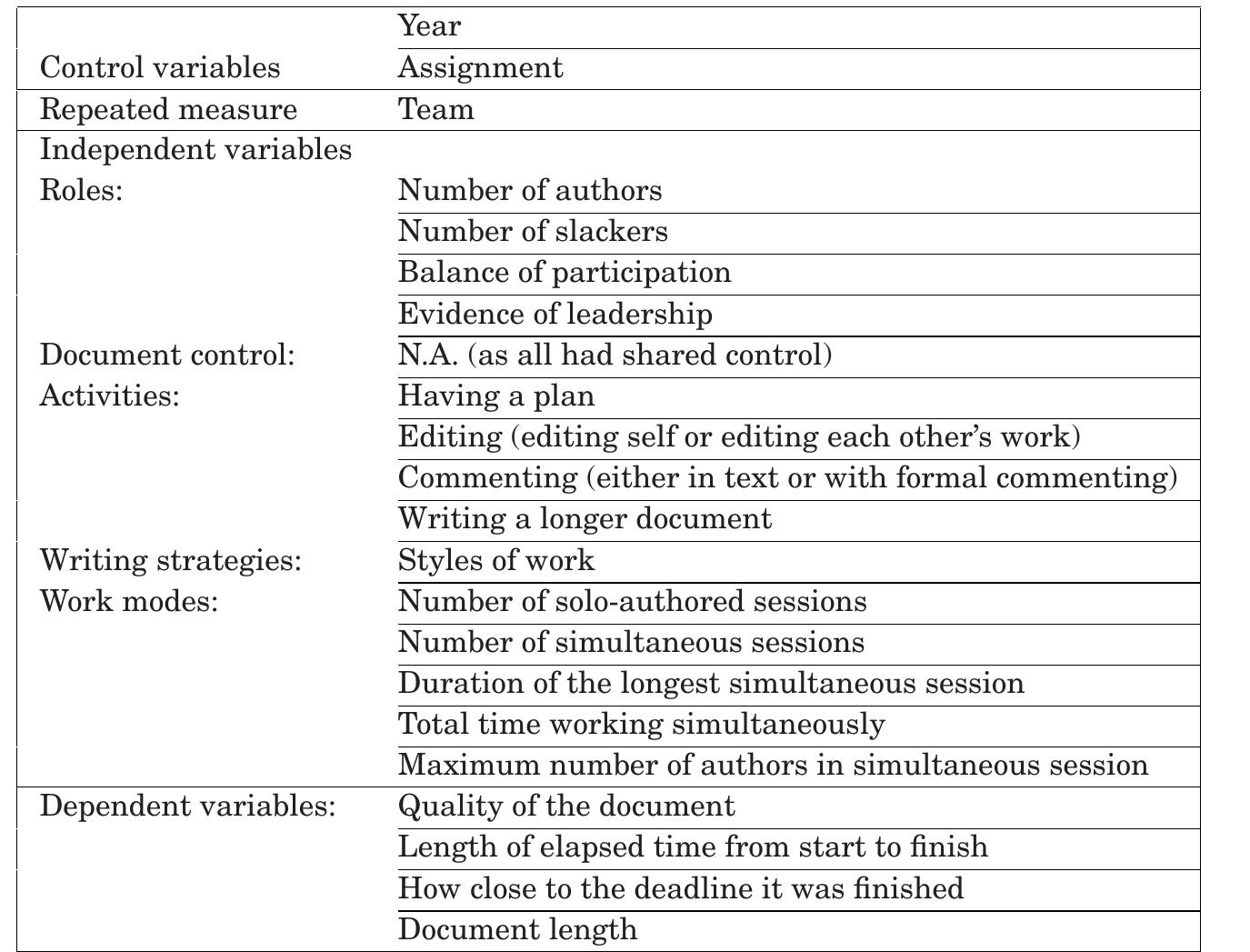
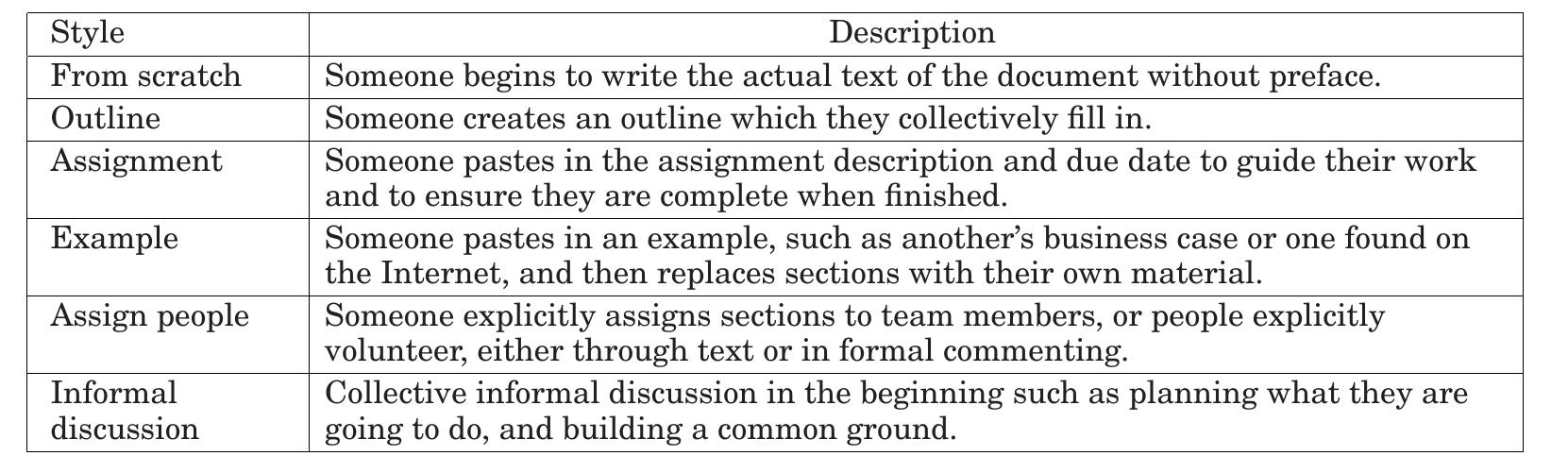
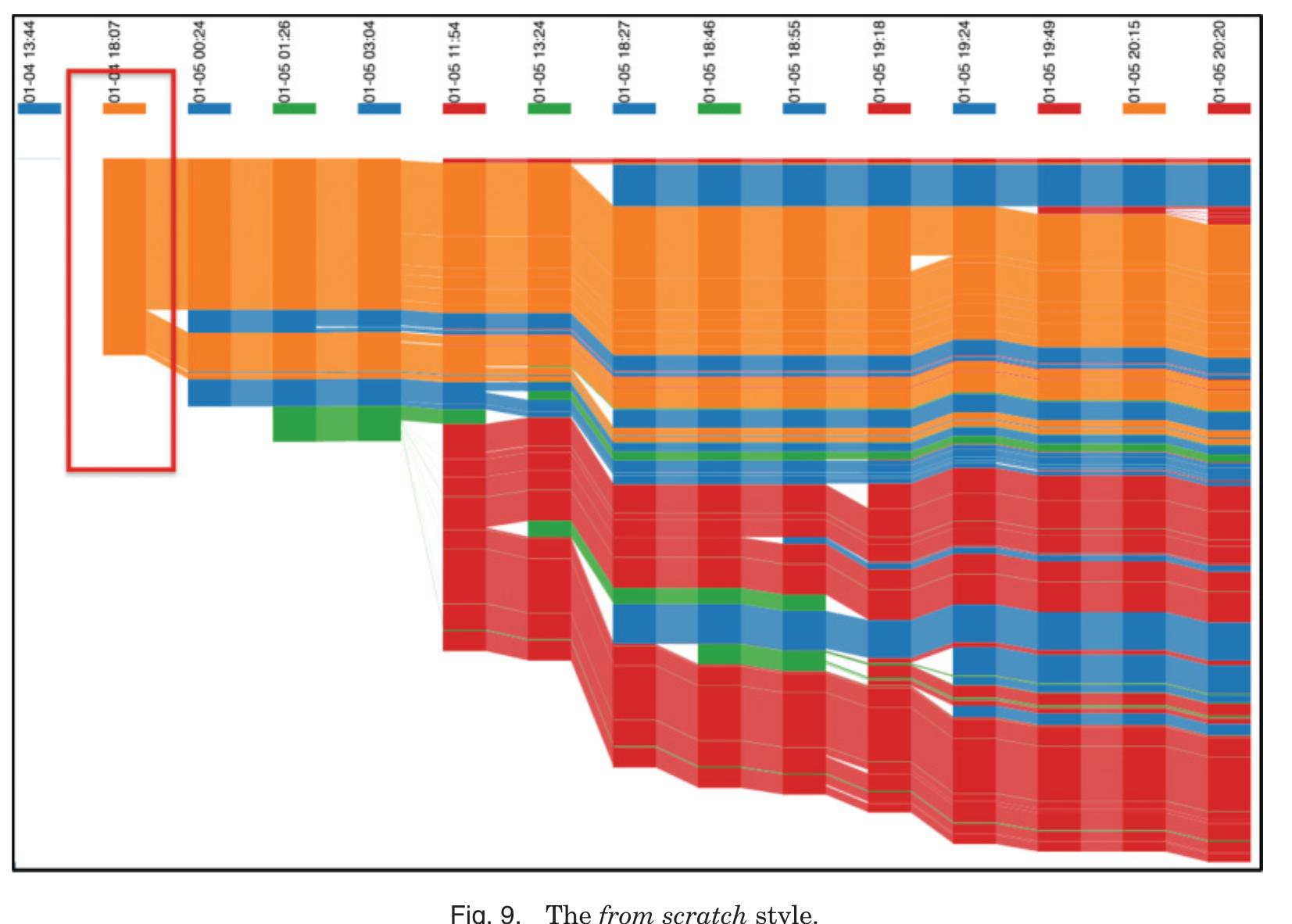
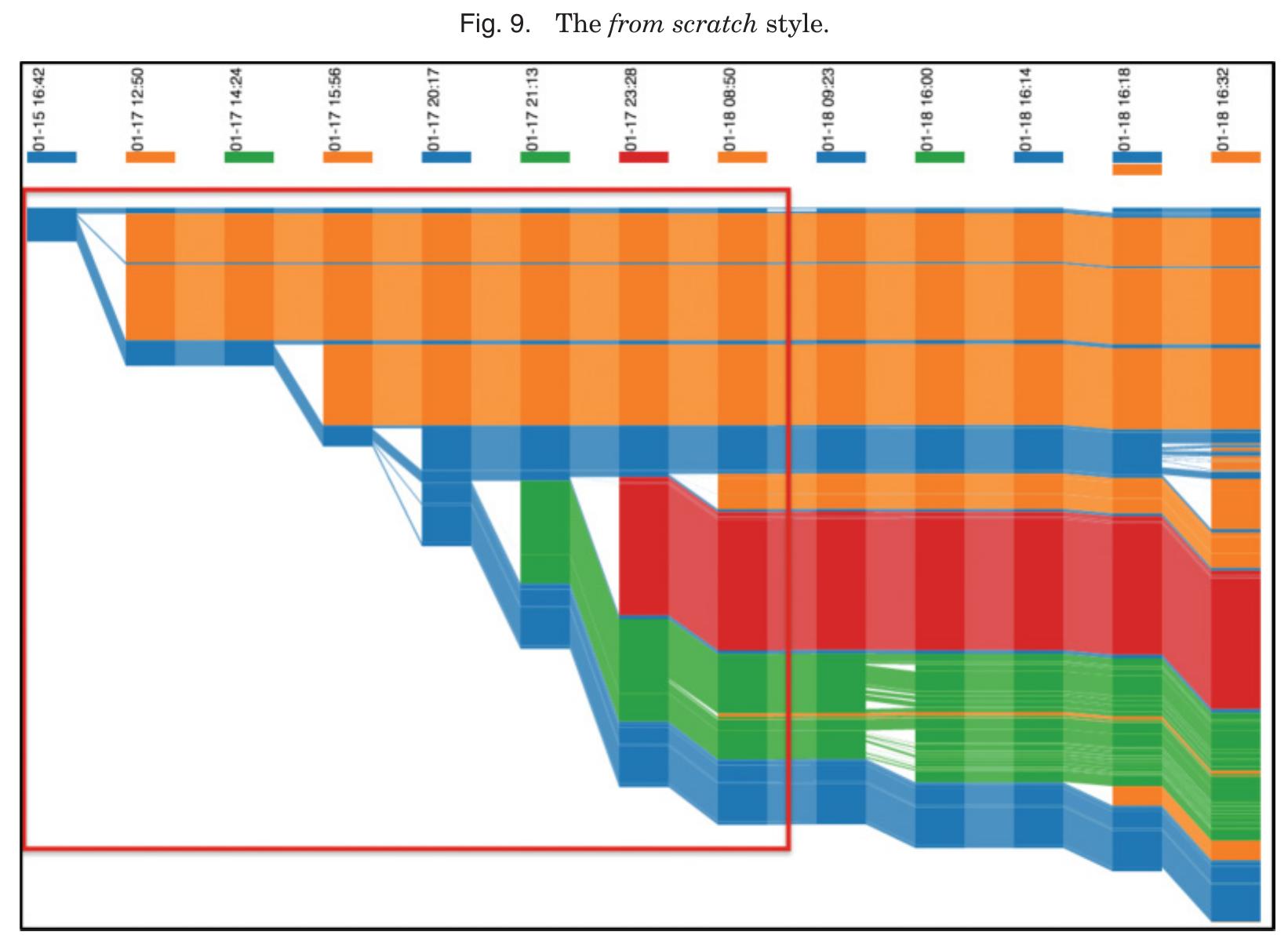
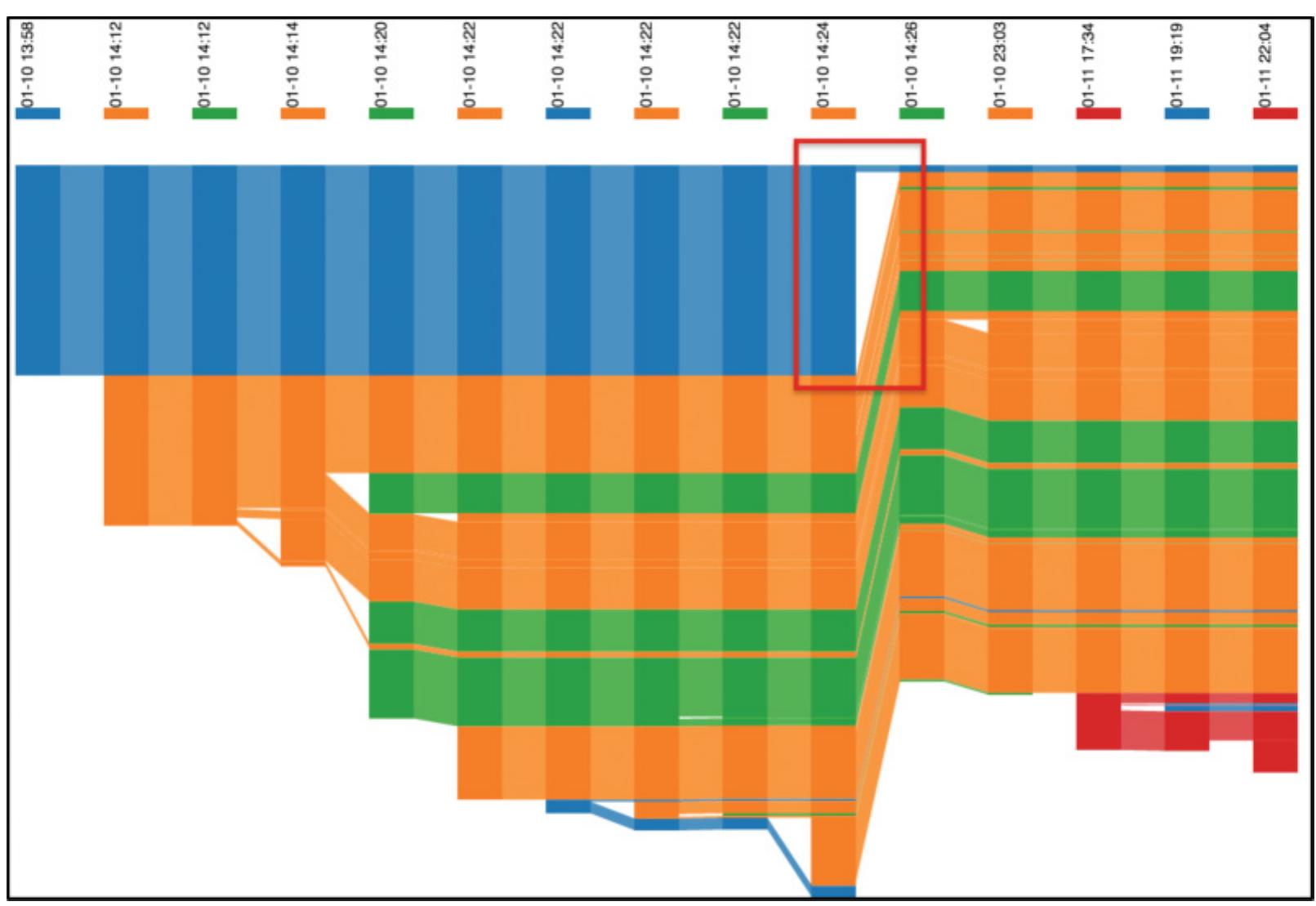
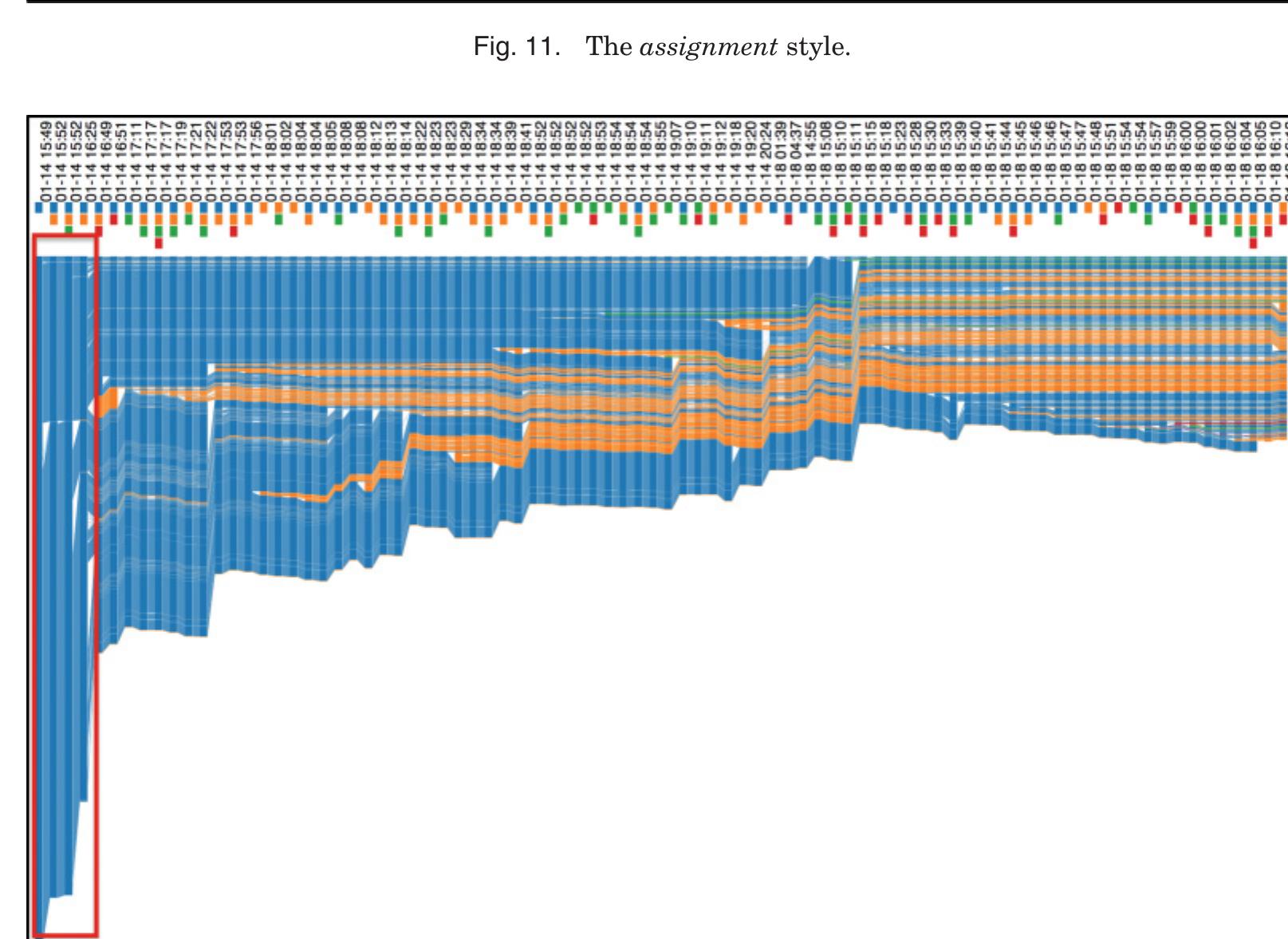
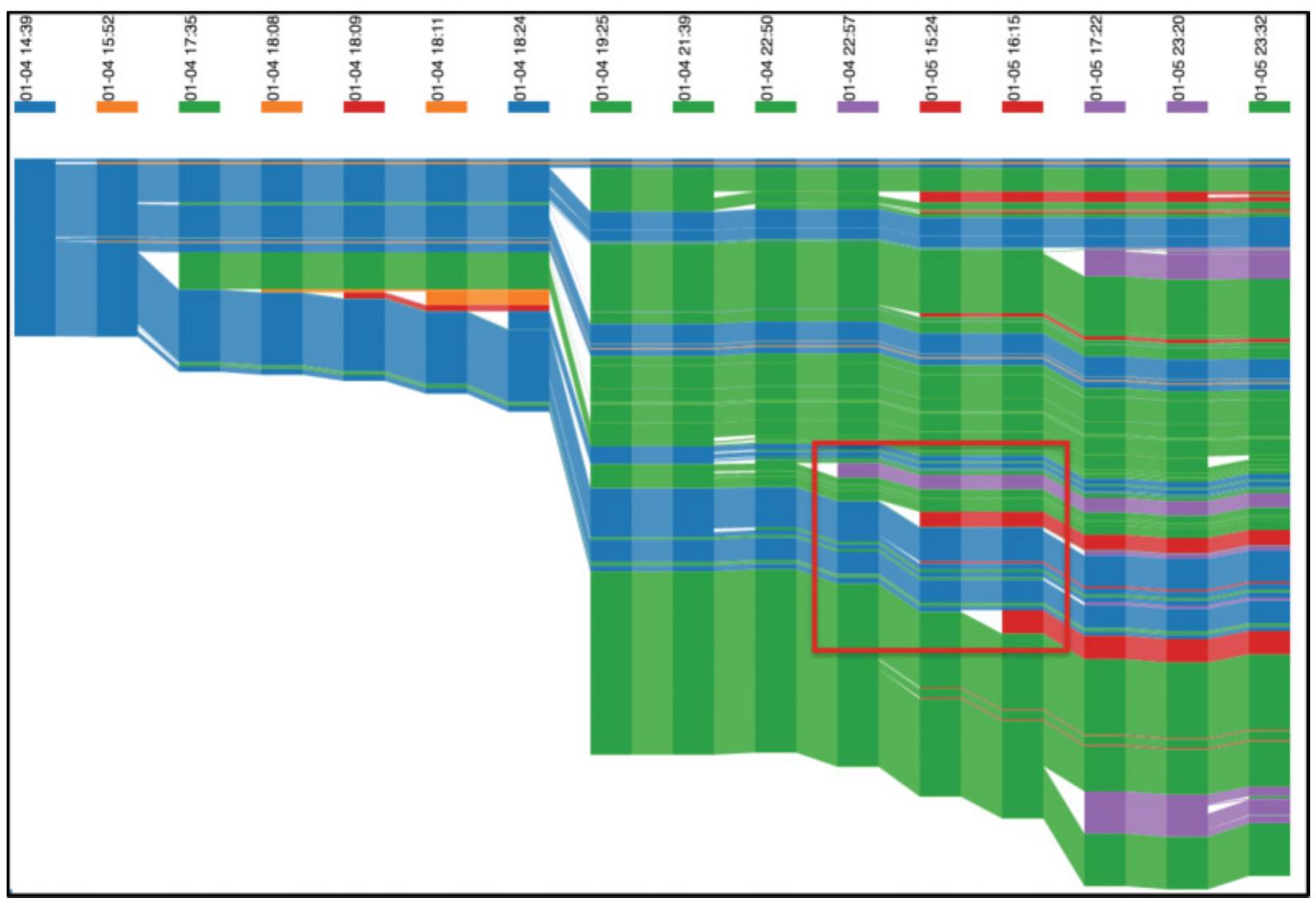
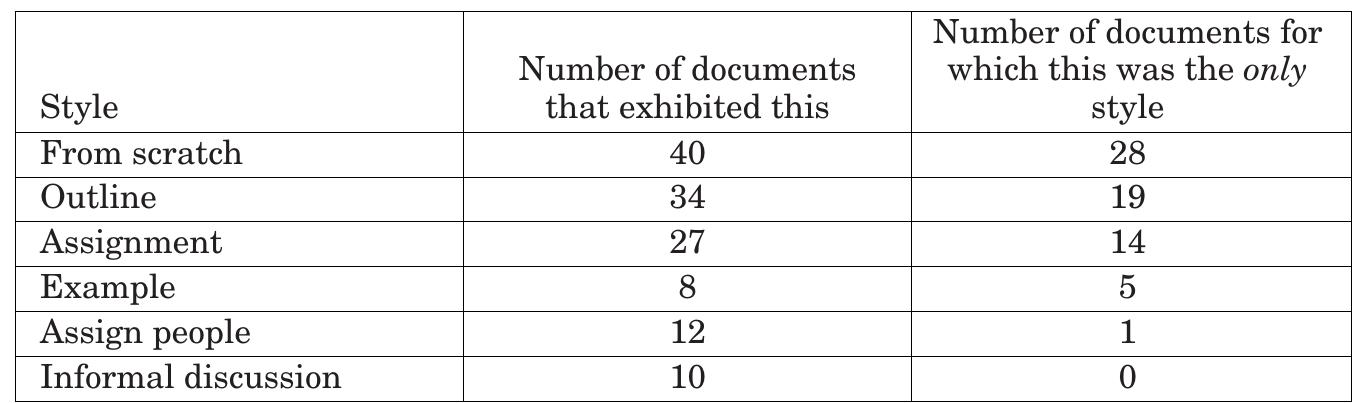
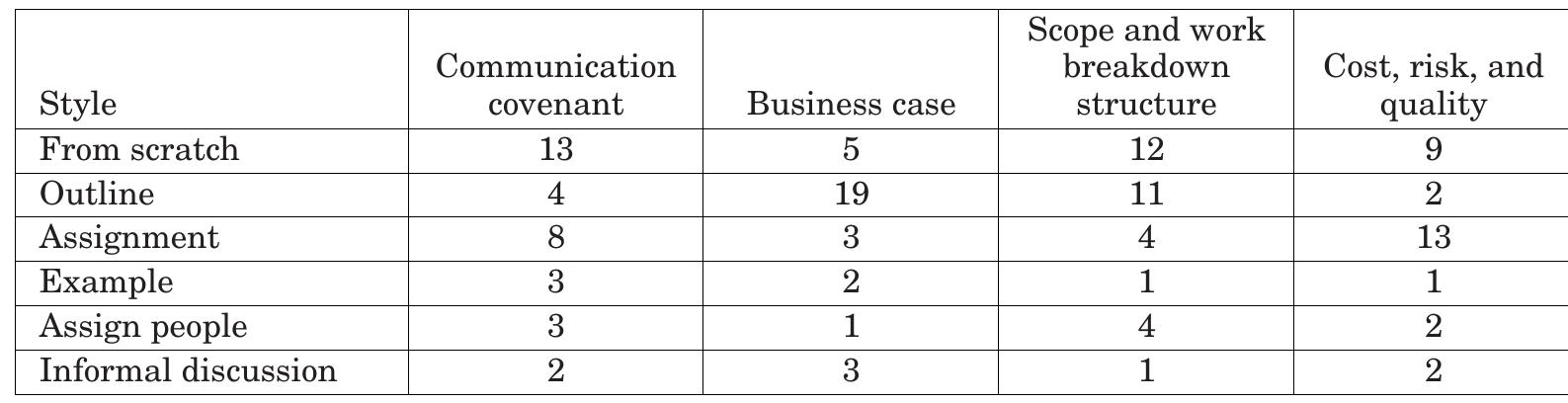
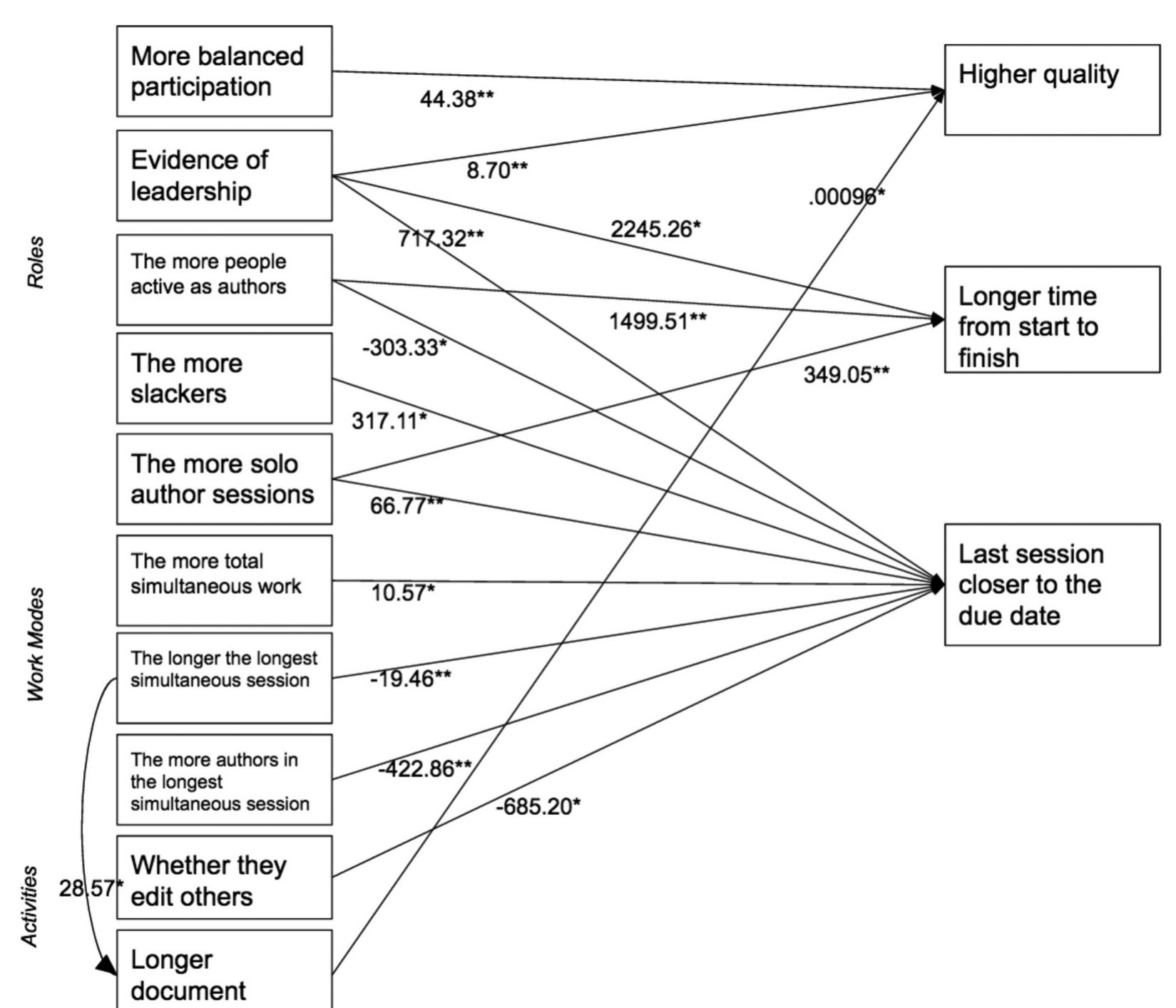
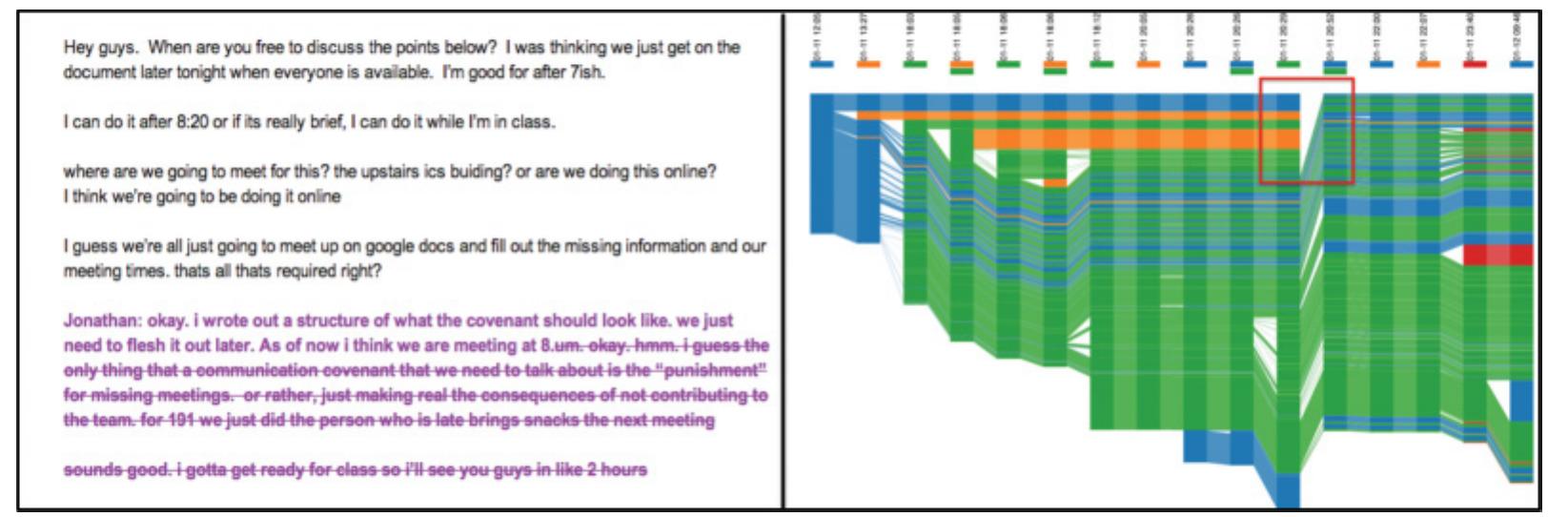
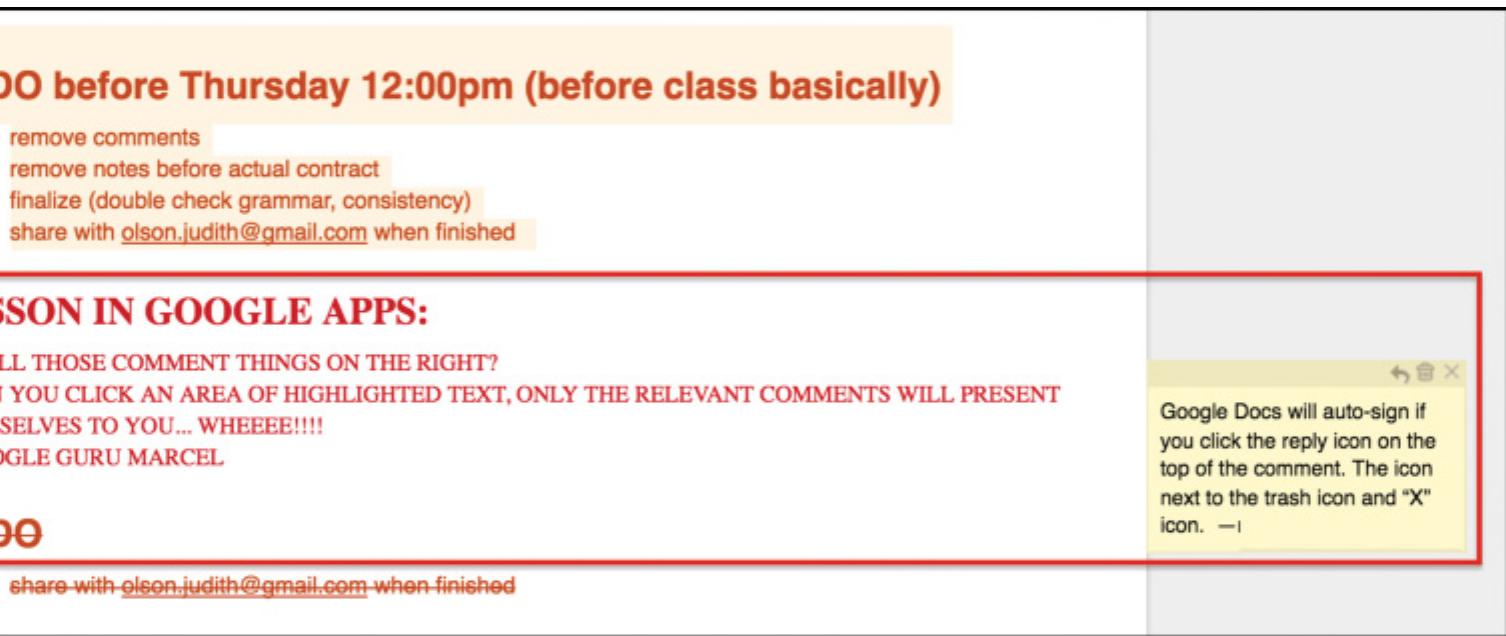
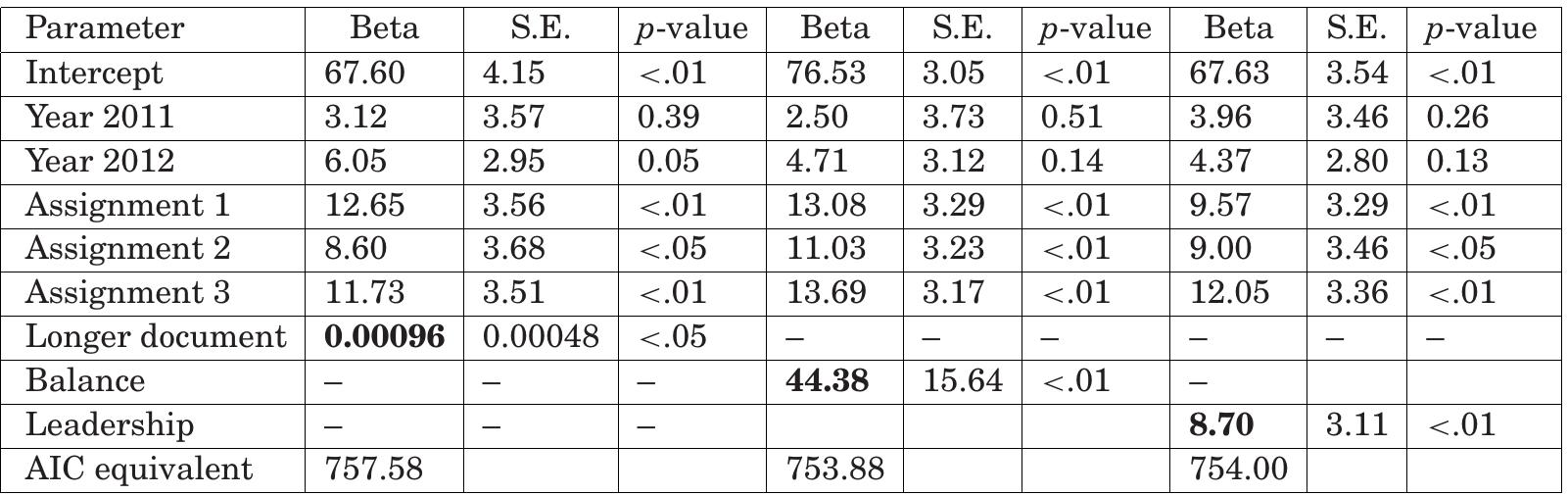
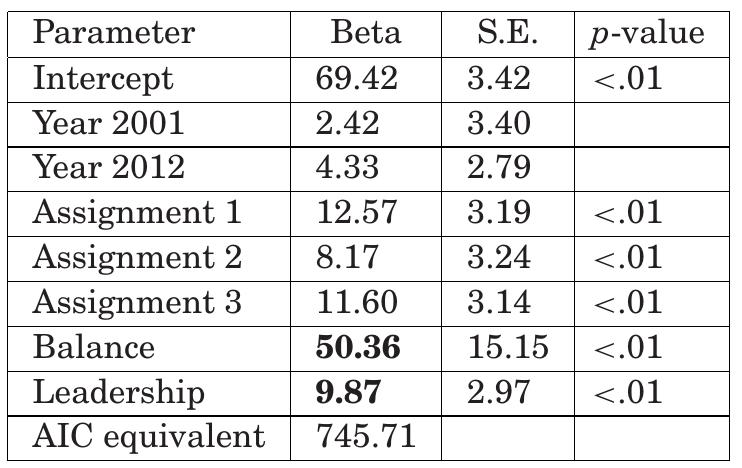
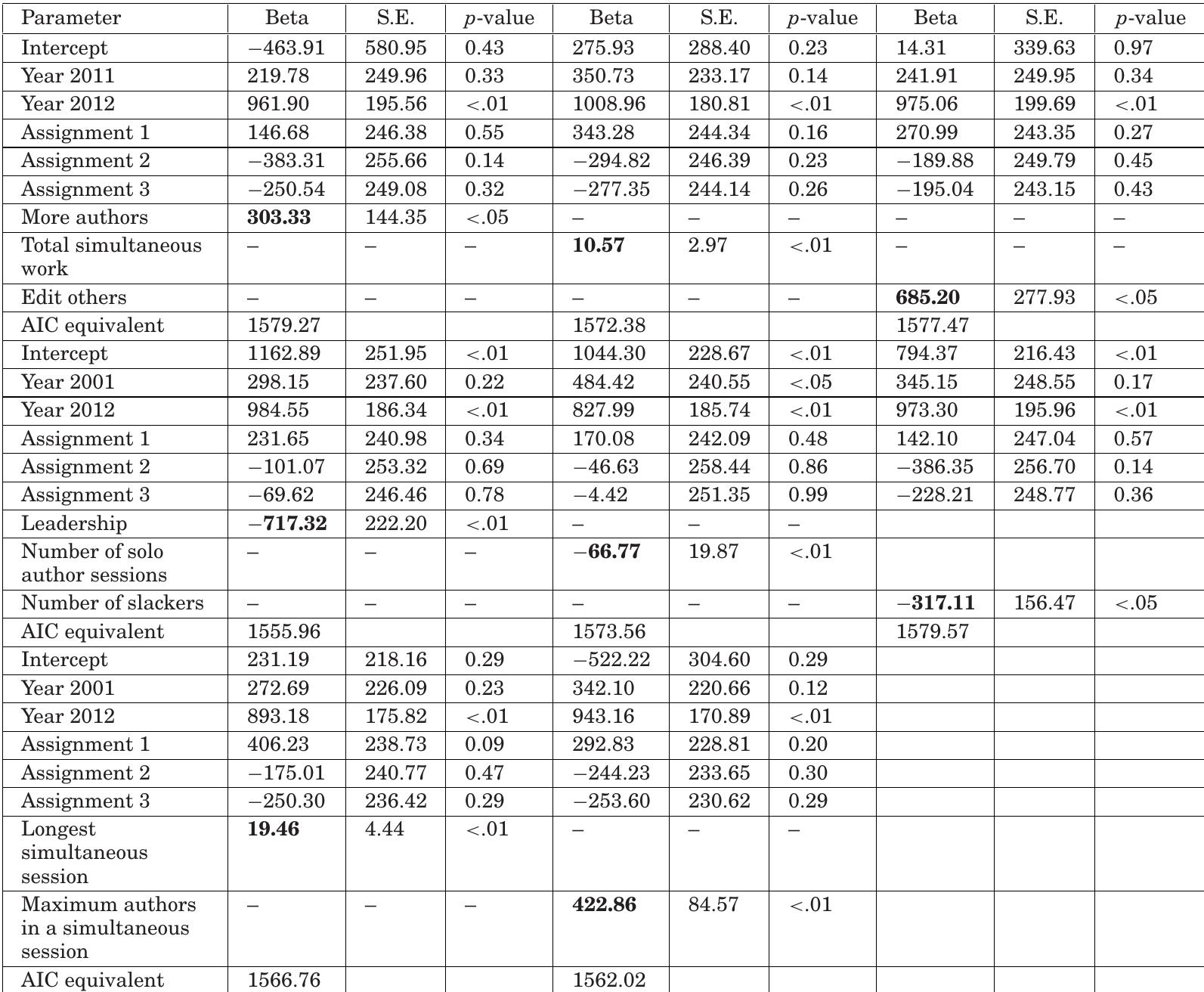
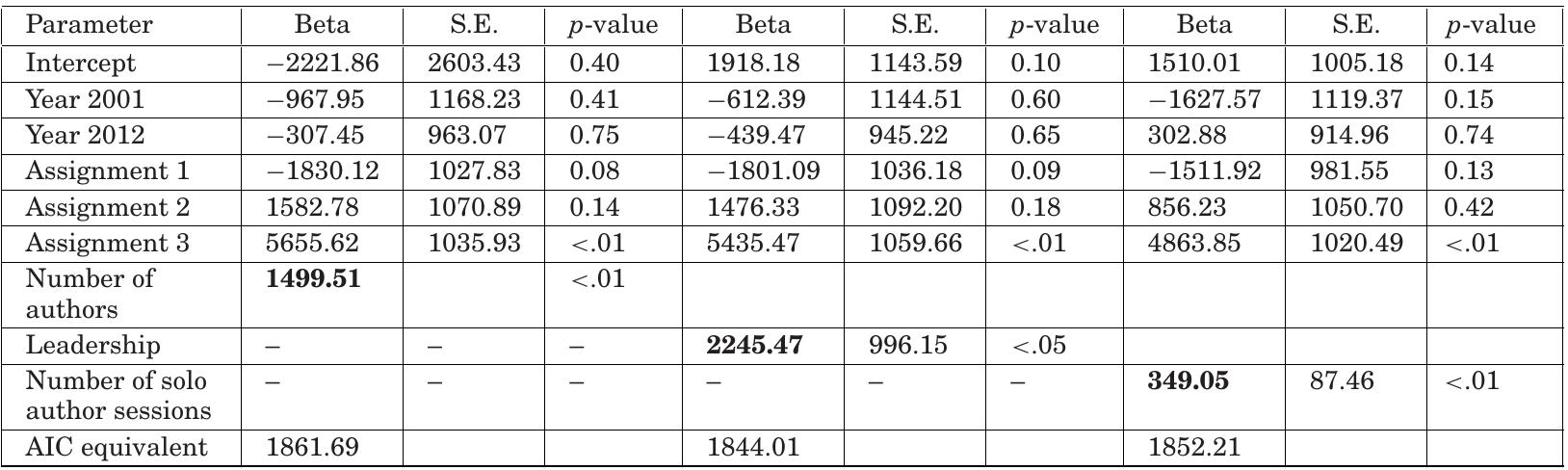
Today's commercially available word processors allow people to write collaboratively in the cloud, both in the familiar asynchronous mode and now in synchronous mode as well. This opens up new ways of working together. We examined the data traces of collaborative writing behavior in student teams' use of Google Docs to discover how they are writing together now. We found that student teams write both synchronously and asynchronously, take fluid roles in the writing and editing of the documents, and show a variety of styles of collaborative writing, including writing from scratch, beginning with an outline, pasting in a related example as a template to organize their own writing, and three more. We also found that the document serves as a place where they share a number of things not included in the final document, including links or references to related materials, the assignment requirements from the instructor, and informal discussions to coordinate the collaboration or to structure the document. We computed a number of measures to depict a group's collaboration behavior and asked external graders to score these documents for quality. We found that the documents that included balanced participation and/or exhibited leadership were judged higher in quality, as were those that were longer. We then suggested system design implications and behavioral guidelines to support people writing together better, and concluded the paper with future research directions.

References (58)

  1. P. André, R. E. Kraut, and A. Kittur. 2014. Effects of simultaneous and sequential work structures on distributed collaborative interdependent tasks. In Proceedings of the Conference on Human Factors in Computing Systems (CHI'14). 139-148.
  2. R. Arslan and A. ahin-Kizil. 2010. How can the use of blog software facilitate the writing process of English language learners. Computer Assisted Language Learning 23, 3, 183-197.
  3. R. B. Baecker, D. Nastos, I. R. Posner, and K. L. Mawby. 1993. The user-centered iterative design of collabo- rative writing software. In Proceedings of INTERACT'93 and CHI'93. 399-405.
  4. E. E. Beck. 1993. A survey of experiences of collaborative writing. In Computer Supported Collaborative Writing, S. Easterbrook (Ed.). Springer, London, 87-112.
  5. M. S. Bernstein, G. Little, R. C. Miller, B. Hartmann, M. S. Ackerman, D. R. Karger, D. Crowell, and K. Panovich. 2016. Soylent: A word processor with a crowd inside. Communications of the ACM 58, 8, 85-94.
  6. J. Birnholtz and S. Ibara. 2012. Tracking changes in collaborative writing: Edits, visibility and group main- tenance. In Proceedings of the ACM Conference on Computer Supported Cooperative Work (CSCW'12). 809-818.
  7. J. Birnholtz, S. B. Steinhardt, and A. Pavese. 2013. Write here, write now: An experimental study of group maintenance in collaborative writing. In Proceedings of the Conference on Human Factors in Computing Systems (CHI'13). 961-970.
  8. I. Blau and A. Caspi. 2009. What type of collaboration helps? psychological ownership, perceived learning and outcome quality of collaboration using Google Docs. In Proceedings of the Chais Conference on Instructional Technologies Research. 48-55.
  9. T. Boellstorff, B. Nardi, C. Pearce, and T. L. Taylor. 2013. Words with friends: Writing collaboratively online. Interactions 20, 5, 58-61.
  10. C. Brodahl, S. Hadjerrouit, and N. K. Hansen. 2011. Collaborative writing with Web 2.0 technologies: Edu- cation students' perceptions. Journal of Information Technology Education 10, 73-103.
  11. S. K. Card and A. Jr. Henderson. 1987. A multiple, virtual-workspace interface to support user task switching. In Proceedings of the Conference on Human Factors in Computing Systems (CHI'87). 53-59.
  12. M. Chemers. 1997. An Integrative Theory of Leadership. Lawrence Erlbaum Associates, Publishers. ISBN 978-0-8058-2679-1
  13. R. Cheung and D. Vogel. 2013. Predicting user acceptance of collaborative technologies: An extension of the technology acceptance model for e-learning. Computers and Education 63, 160-175.
  14. S. K. W. Chu and D. M. Kennedy. 2011. Using online collaborative tools for groups to co-construct knowledge. Online Information Review 35, 4, 581-597.
  15. A. Cockburn and L. Williams. 2000. The costs and benefits of pair programming. Extreme Programming Examined, 223-247.
  16. M. Diehl and W. Stroebe. 1987. Productivity loss in brainstorming groups: Toward the solution of a riddle. Journal of Personality and Social Psychology 53, 3, 497-509.
  17. L. S. Ede and A. A. Lunsford. 1990. Singular Texts/Plural Authors: Perspectives on Collaborative Writing. SIU Press.
  18. C. A. Ellis and S. J. Gibbs. 1989. Concurrency control in groupware systems. In Proceedings of the 1989 SIGMOD International Conference on Management of Data. 399-407.
  19. A. Field. 2009. Discovering Statistics Using SPSS. Sage publications.
  20. R. S. Fish, R. E. Kraut, M. D. P. Leland, and M. Cohen. 1988. Quilt: A collaborative tool for cooperative writing. In Proceedings of the Conference on Office Information Systems, 30-37.
  21. R. Glushko. 2015. Collaborative authoring, evolution, and personalization for a "Transdisciplinary" textbook. Companion to the Proceedings of the 11th International Symposium on Open Collaboration, 10.
  22. J. Haake and B. Wilson. 1992. Supporting collaborative writing of hyperdocuments in SEPIA. In Proceedings of the Conference on Computer Supported Cooperative Work (CSCW'92), 138-146.
  23. D. A. Harrison and K. J. Klein. 2007. What's the difference? Diversity constructs as separation, variety, or disparity in organizations. Academy of Management Review 32, 4, 1199-1228.
  24. A. F. Hayes and K. Krippendorff. 2007. Answering the call for a standard reliability measure for coding data. Communication Methods and Measures 1, 77-89.
  25. D. A. Henderson Jr. and S. K. Card. 1986. Rooms: The use of multiple virtual workspaces to reduce space contention in a window-based graphical user interface. ACM Transactions on Graphics 5, 3, 211-243.
  26. W. C. Hill, J. D. Hollan, D. Wroblewski, and T. McCandless. 1992. Edit wear and read wear. In Proceedings of the Conference on Human Factors in Computing Systems (CHI'92). 3-9.
  27. H. Kim and K. S. Eklundh. 2001. Reviewing practices in collaborative writing. Computer Supported Cooper- ative Work 10, 247-259.
  28. A. Kittur, B. Suh, B. A. Pendleton, and E. H. Chi. 2007. He says, she says: Conflict and coordination in Wikipedia. In Proceedings of Conference on Human Factors in Computing Systems (CHI'07). 453-462.
  29. P. B. Lowry, A. Curtis, and M. R. Lowry. 2004. Building a taxonomy and nomenclature of collaborative writing to improve interdisciplinary research and practice. Journal of Business Communication 41, 1, 66-99.
  30. B. Mak and D. Coniam. 2008. Using wikis to enhance and develop writing skills among secondary students in Hong Kong. System 36, 3, 437-455.
  31. G. Mark, V. Gonzalez, and J. Harris. 2005. No task left behind? Examining the nature of fragmented work. In Proceedings of the Conference on Human Factors in Computing Systems (CHI'05). 113-120.
  32. C. Massey, T. Lennig, and S. Whittaker. 2014. Cloudy forecast: An exploration of the factors underlying shared repository use. In Proceedings of the Conference on Human Factors in Computing Systems. 2461-2470.
  33. L. McGuffin and G. M. Olson. 1992. ShrEdit: A shared electronic workspace. CSMIL Technical Report 45. University of Michigan.
  34. A. Michailidis and R. Rada. 1996. Groupware and Authoring. Academic Press, London.
  35. M. Nebeling, A. To, A. Guo, A. A. de Freitas, J. Teevan, S. P. Dow, and J. P. Bigham. 2016. WearWrite: Crowd- assisted writing from smartwatches. In Proceedings of the Conference on Human Factors in Computing Systems (CHI'16). 3834-3846.
  36. C. M. Neuwirth, D. S. Kaufer, R. Chandhok, and J. H. Morris. 1990. Issues in the design of computer support for co-authoring and commenting. In Proceedings of Conference on Computer Supported Cooperative Work (CSCW'90). 183-195.
  37. C. M. Neuwirth, D. S. Kaufer, R. Chandhok, and J. H. Morris. 2001. Computer support for distributed collaborative writing: A coordination science perspective. In Coordination Theory and Collaboration Technology, G. M. Olson, T. W. Malone, and J. B. Smith (Eds.). Lawrence Erlbaum Associates, Mahwah, NJ, 535-557.
  38. S. Noël and J.-M. Robert. 2003. How the web is used to support collaborative writing. Behaviour and Information Technology 22, 4(2003), 245-262.
  39. S. Noel and J.-M. Robert. 2004. Empirical study on collaborative writing: What do co-authors do, use, and like? Computer Supported Cooperative Work 13, 63-89.
  40. R. Olenewa, G. M. Olson, J. S. Olson, and D. M. Russell. (in press). Now that we can write simultaneously, how do we use that to our advantage? Communications of the Association for Computing Machinery.
  41. J. S. Olson, G. M. Olson, M. Storrosten, and M. Carter. 1993. Groupwork close up: A comparison of the group design process with and without a simple group editor. ACM Transactions on Information Systems 11, 4, 321-348.
  42. I. R. Posner and R. M. Baecker. 1992. How people write together. In Proceedings of the 25th Hawaii Interna- tional Conference on Systems Sciences (HICSS'92). 127-138.
  43. S. W. Raudenbush and A. S. Bryk. 2002. Hierarchical Linear Models: Applications and Data Analysis Meth- ods, 1, Sage.
  44. A. Sarma, A. Van der Hoek, and D. Redmiles. 2010. The coordination pyramid: A perspective on the state of the art in coordination technology. IEEE Computer. 43, 6, 61-67.
  45. M. Sharples (Ed.): 1993. Computer Supported Collaborative Writing. Springer-Verlag, London.
  46. C. Strobl. 2014. Affordances of Web 2.0 technologies for collaborative advanced writing in a foreign language. Calico Journal 31, 1, 1-18.
  47. Y. Sun, D. Lambert, M. Uchida, and N. Remy. 2014. Collaboration in the cloud at Google. In Proceedings of the 2014 ACM Conference on Web Science. 239-240.
  48. S. G. Tammaro, J. N. Mosier, N. C. Goodwin, and G. Spitz. 1997. Collaborative writing is hard to support: A field study of collaborative writing. Computer Supported Cooperative Work 6, 19-51.
  49. C. W. Taylor. and D. S. Hunsinger. 2011. A study of student use of cloud computing applications. Journal of Information Technology Management 22, 3, 36-50.
  50. F. B. Viégas, M. Wattenberg, and K. Dave. 2004. Studying cooperation and conflict between authors with history flow visualizations. In Proceedings of the Conference on Human Factors in Computing Systems (CHI'04). 575-582.
  51. A. Voida, J. S. Olson, and G. M. Olson. 2013. Turbulence in the clouds: Challenges of cloud based information work. In Proceedings of the Conference on Human Factors in Computing Systems (CHI'13). 2273-2282.
  52. D. Wang, J. S. Olson, J. Zhang, T. Nguyen, G. M. Olson. 2015. DocuViz: Visualizing collaborative writing. In Proceedings of the 33rd Annual ACM Conference on Human Factors in Computing Systems (CHI'15). 1865-1874.
  53. S. Whittaker, V. Bellotti, and J. Cwizdka. 2007. Everything through email. Personal information management, 167-189.
  54. A. W. Woolley, C. F. Chabris, A. Pentland, N. Hasmi, and T. W. Malone. 2010. Evidence for a collective intelligence factor in the performance of groups. Science 330, 686-688.
  55. S. Wuchty, B. F. Jones, and B. Uzzi. 2007. The increasing dominance of teams in production of knowledge. Science 316, 1036-1039.
  56. S. Yim, D. Wang, J. S. Olson, V. Vu, and M. Warschauer. 2017. Synchronous writing in the classroom: Under- graduates' collaborative practices and their impact on text quality, quantity, and style. In Proceedings of the Conference on Computer Supported Cooperative Work (CSCW'17).
  57. S. Yim, M. Warschauer, B. Zheng, and J. F. Lawrence. 2014. Cloud-based collaborative writing and the common core standards. Journal of Adolescent and Adult Literacy 58, 3, 243-254.
  58. W. Zhou, E. Simpson, and D. P. Domizi. 2012. Google Docs in an out-of-class collaborative writing activity. International Journal of Teaching and Learning in Higher Education 24, 3, 359-375.

FAQs

sparkles

AI

What collaborative writing styles emerged from the study of Google Docs usage?add

The study identified six styles of collaborative writing, including informal discussions and pasting templates, highlighting innovative approaches students used to leverage Google Docs.

How does participation balance affect the quality of collaborative documents?add

Balanced participation was significantly linked to higher document quality, with a beta coefficient of 50.35, suggesting equitable contributions enhance final outputs.

What role does leadership play in the collaborative writing process?add

The presence of a leader in document collaborations correlated with higher quality, indicated by a beta of 9.87, emphasizing the importance of structured guidance.

What are the impacts of simultaneous editing in collaborative writing sessions?add

Simultaneous editing was common, occurring in 95% of documents, and was associated with reduced stress and earlier submission of assignments.

What metrics were used to assess document quality in student collaborations?add

Quality was gauged using a rubric assessing completeness, clarity, and format, validated by a high inter-coder reliability score of 0.87.

About the author
Papers
120
Followers
128
View all papers from Gary Olsonarrow_forward