

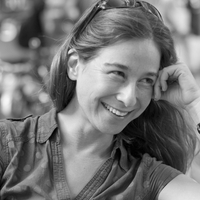
Merav Mack
Johannes Gutenberg-Universität Mainz, Historisches Seminar - Byzantine Studies, Principal Investigator of a DFG-funded research project "Jerusalem Codices and Communities 900-1500"
Merav Mack is a medieval historian whose work explores books, libraries, and intellectual life as sites of encounter across religious, linguistic, and communal boundaries. She is currently Principal Investigator of the DFG-funded research project “Jerusalem Codices and Communities, 900–1500”, carried out at Johannes Gutenberg University Mainz. At the core of this project is a corpus of over 300 codices produced in Jerusalem between c. 900 and 1500, spanning Islamic, Jewish, and Christian traditions. Grounded in close historical analysis, the project reconstructs the social and intellectual ecosystems in which scribes, patrons, readers, and craftsmen operated, shedding new light on how knowledge circulated across communities in one of the most densely layered cities of the medieval Mediterranean. The codices are studied both as historical sources and as material objects, through codicological, prosopographical, and spatial approaches. The project is carried out in close collaboration with a wide international network of specialists in Jerusalem studies, medieval languages, manuscript studies, and archives, including the ERC project Criss-Cross, enabling the integration of codices across languages, confessional traditions, and collections.
Jerusalem has been the central axis of her research for nearly two decades. In 2019, she co-authored Jerusalem: City of the Book (Yale University Press) with Benjamin Balint, a study of the city’s textual culture and the social lives of books from late antiquity through the early modern period, accompanied by photographs by Frédéric Brenner. In parallel, Mack has led and participated in a wide range of interdisciplinary projects on contemporary Christianity and transnational religious communities in the Middle East. While based in Jerusalem, she was a member of the Van Leer Jerusalem Institute and the Truman Center for the Study of Peace, where she initiated and directed collaborative programs bringing together scholars from Israel, Palestine, and abroad. These initiatives resulted in several international conferences and edited volumes, including Transnationalism and Contemporary Christian Communities in the Middle East (Journal of Levantine Studies 3, 2013), Shvuim [Captives] (Shazar, 2014), and Post-Subjectivity (Cambridge Scholars Publishing, 2014). She has collaborated closely with Ori Shachmon, and has taught at the Centre for the Study of Religion at the Hebrew University of Jerusalem, where her teaching connects historical, religious, and textual approaches.
Mack received her PhD in Medieval History from the University of Cambridge. Her doctoral research focused on Genoa and the Crusader States, approaching the Crusades from a Genoese perspective grounded in archival practice. The dissertation was based on the systematic analysis of more than 11,000 notarial cartulary entries, the vast majority unpublished, allowing her to reconstruct patterns of mobility, commerce, and political engagement that remain largely invisible in narrative sources. This work has been published in a series of articles, most recently in Brill’s Companion to Medieval Genoa (2018).
Supervisors: David Abulafia, Jonathan Riley Smith (examiner), Michel Balard (examiner), and David Jacoby (MA supervisor)
Jerusalem has been the central axis of her research for nearly two decades. In 2019, she co-authored Jerusalem: City of the Book (Yale University Press) with Benjamin Balint, a study of the city’s textual culture and the social lives of books from late antiquity through the early modern period, accompanied by photographs by Frédéric Brenner. In parallel, Mack has led and participated in a wide range of interdisciplinary projects on contemporary Christianity and transnational religious communities in the Middle East. While based in Jerusalem, she was a member of the Van Leer Jerusalem Institute and the Truman Center for the Study of Peace, where she initiated and directed collaborative programs bringing together scholars from Israel, Palestine, and abroad. These initiatives resulted in several international conferences and edited volumes, including Transnationalism and Contemporary Christian Communities in the Middle East (Journal of Levantine Studies 3, 2013), Shvuim [Captives] (Shazar, 2014), and Post-Subjectivity (Cambridge Scholars Publishing, 2014). She has collaborated closely with Ori Shachmon, and has taught at the Centre for the Study of Religion at the Hebrew University of Jerusalem, where her teaching connects historical, religious, and textual approaches.
Mack received her PhD in Medieval History from the University of Cambridge. Her doctoral research focused on Genoa and the Crusader States, approaching the Crusades from a Genoese perspective grounded in archival practice. The dissertation was based on the systematic analysis of more than 11,000 notarial cartulary entries, the vast majority unpublished, allowing her to reconstruct patterns of mobility, commerce, and political engagement that remain largely invisible in narrative sources. This work has been published in a series of articles, most recently in Brill’s Companion to Medieval Genoa (2018).
Supervisors: David Abulafia, Jonathan Riley Smith (examiner), Michel Balard (examiner), and David Jacoby (MA supervisor)
less
InterestsView All (7)
Uploads
Papers by Merav Mack
We analyze samples of Arabic texts written in Hebrew characters, and present hybrid confessional texts to illustrate how the religious realm is being affected by the current linguistic transitions. We also present comparable cases to discuss the emergence of such hybrid texts in other social frames.
Marking the fiftieth anniversary of the Israeli occupation of the old city of Jerusalem in the war of 1967 this book examines the role of the Temple Mount as a key visual icon in a variety of cultural arenas in Israel. By analyzing photographs, posters, postcards, architectural models, sketches and heritage sites, the essays collected here exposes the centrality of Temple Mount in the Zionist discourse, not only of marginal religious messianic groups, but also of the Israeli mainstream, which defines itself as ostensibly secular.
The eight articles that comprise this book are accompanied by a collection of both popular and rare historical images of the Temple Mount, located in institutional Israeli archives and in private collections. In addition, it includes contemporary photographic art works that engage with the historical collection and were presented at the photography gallery of the Bezalel Academy in 2016.
The book is a cross between an academic volume, a memorial album and an exhibition catalogue. It presents original and critical research, but also strives to break out beyond the boundaries of academia by its accessible form and language. It aesthetics recall memorial albums, but it also seeks to undermine the authority of memory such albums pertain to possess. It is an exhibition catalogue, but the exhibition itself is borderless and without a specific time frame, as it is still growing.
Each of the articles included in the book focuses on a different visual arena in Israel, using it to examine the ideologies and narratives that frame the presence of Temple Mount. They adopt a critical position towards the iconic status of the site, peeling away and politicizing its mythical imagery.
Download: (The first 50 copies can be downloaded for free)
http://www.tandfonline.com/eprint/XDPI9GSD7pQ7yJW7QT3J/full