PhD Thesis by Serina Patterson

This dissertation addresses the social significance of parlour games as forms of cultural express... more This dissertation addresses the social significance of parlour games as forms of cultural expression in medieval and early modern England and France by exploring how the convergence of textual materialities, players, and narratives manifested in interactive texts, board games, and playing cards. Medieval games, I argue, do not always fit neatly into traditional or modern theoretical game models, and modern blanket definitions of ‘game’—often stemming from the study of digital games—provide an anachronistic understanding of how medieval people imagined their games and game-worlds.
Chapter 1 explores what the idea of ‘game’ meant for medieval authors, readers, and players in what I call ‘game-texts’—literary texts that blurred the modern boundaries between what we would consider ‘game’ and ‘literature’ and whose mechanics are often thought to be outside the definition of ‘game.’ Chapter 2 examines how recreational mathematics puzzles and chess problems penned in manuscript collections operate as sites of pleasure, edification, and meditative playspaces in different social contexts from the gentry households to clerical cloisters. The mechanics, layout, narrative, and compilation of chess problems rendered them useful for learning the art and skill of the game in England. Chapter 3 traces the circulation, manuscript contexts, and afterlives of two game-text genres in England—the demandes d’amour and the fortune-telling string games—in order to understand how they functioned as places of engagement and entertainment for poets, scribes, and players. Chapter 4 illustrates how narrative and geography became driving forces for the development and rise of the modern thematic game in Early Modern Europe. This chapter charts how changing ideas of spatiality enabled tabletop games to shift from abstract structures enjoyed by players in the Middle Ages, in which game narratives take place off a board, to ludic objects that incorporated real-life elements in their design of fictional worlds—thereby fashioning spaces that could visually accommodate narrative on the board itself.
This dissertation places games into a more nuanced historical and cultural context, showing not only the varied methods by which medieval players enjoyed games but also how these ideas developed and changed over time.
Books by Serina Patterson

Why do we play games—with and upon each other as well as ourselves? When are winners also losers,... more Why do we play games—with and upon each other as well as ourselves? When are winners also losers, and vice-versa? How and to what end do we stretch the spaces of play? What happens when players go ‘out of bounds,’ or when games go ‘too far’? Moreover, what happens when we push the parameters of inquiry: when we play with traditional narratives of ludic culture, when we re-write the rules?
An innovative volume of fifteen interdisciplinary essays at the nexus of material culture, performance studies, and game theory, Playthings in Early Modernity emphasizes the rules of the game(s) as well as the breaking of those rules. Thus, the titular ‘plaything’ is understood as both an object and a person, and play, in the early modern world, is treated not merely as a pastime, a leisurely pursuit, but as a pivotal part of daily life, a strategic psychosocial endeavor.
FOR PRIVATE AND NON-COMMERCIAL USE ONLY

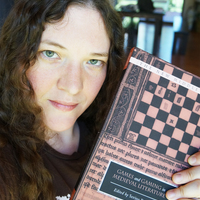
Games and Gaming in Medieval Literature
_Games and Gaming in Medieval Literature_ is the first collection that explores, through a geogra... more _Games and Gaming in Medieval Literature_ is the first collection that explores, through a geographical and methodological diversity of interdisciplinary scholarship, the depth and breadth of games in medieval literature and culture. Drawing on a range of literature and languages, from Flemish romance and Anglo-Norman sermons to Spanish cancionero poetry and Old French motets, this volume presents fresh critical discussions of medieval games as vehicles for cultural signification, and challenges scholars to reconsider how games were understood by medieval writers, compilers, scribes, players, audiences, and communities. Chapters span from the twelfth to the sixteenth centuries, and cover Europe from England, France, Denmark, Poland, and Spain. This volume not only brings to the forefront a re-examination of medieval games in diverse social settings—the Church, the court, the school, and the gentry household—but also their multifaceted relation to literary discourses as systems of meaning, interactive experiences, and modes of representation.
Articles & Chapters by Serina Patterson
"Demandes d'Amour." In The Encyclopedia of Medieval British Literature, ed. Robert Rouse and Siân Echard, Oxford: Wiley-Blackwell, 2017
The Encyclopedia of Medieval British Literature
The demandes d’amour are a literary genre that grew in popularity among the aristocracy in France... more The demandes d’amour are a literary genre that grew in popularity among the aristocracy in France, England, and elsewhere between the fourteenth and sixteenth centuries. They began as oral debates and games and were integrated into poems and narratives. Collections of demandes d’amour appeared in the fourteenth-century. Aristocratic social games also created using the demandes d’amours and were referenced frequently in literature. In England, the demandes d’amours were appropriated as pedagogical material, though they were still occasionally used for amusement.
Imaginary Cartographies and Commercial Commodities: Geography and Playing Cards in Early Modern England
Playthings in Early Modernity, ed. Allison Levy
Historians of cartography have long understood the power of maps to convey stories, politics, pro... more Historians of cartography have long understood the power of maps to convey stories, politics, propaganda, and cultural ideologies, and this projection is notably reflected in early modern games. As game historian Jon Peterson writes, in premodern Germany and elsewhere the “invention of wargames depended on recent improvements to maps, which were … only loosely anchored to the grid of longitude and latitude.” This chapter examines how a progressively refined system of geography, changing ideas of spatiality, and the regulation of international trade in early modern England enabled tabletop games to shift from abstract structures enjoyed by players in the Middle Ages to ludic objects that incorporated real-life elements in their design of fictional worlds. The emergence of what Donald Smith calls the “cartographic imagination” in sixteenth-century Europe, coupled with a growing demand for novel entertainments, not only spurred new ways of crafting and visualizing topographical game worlds but also influenced initial parameters of the now-familiar large-scale commercial production and distribution of games in later centuries. I focus on how the rising prevalence of maps and geography in early modern England affected one enduringly popular game object in early England, which is still found as a common component of modern board games and video games: playing cards. By analyzing playing cards and their intersection with geography in Elizabethan and Stuart England, this chapter charts the emergence of games as commercial commodities and precursors to representing real and fictional worlds on gaming objects.
Sexy, Naughty, and Lucky in Love: Playing Ragemon le Bon in English Gentry Households
in Games and Gaming in Medieval Literature, ed. Serina Patterson, Jul 30, 2015
This chapter charts the social evolution of the Anglo-Norman fortune-telling game "Ragemon le Bon... more This chapter charts the social evolution of the Anglo-Norman fortune-telling game "Ragemon le Bon" and examines how it operated as a participative, ludic space for gentry players in England.
in Games and Gaming in Medieval Literature, ed. Serina Patterson, Jul 30, 2015
This introduction reviews previous game scholarship and discusses how medieval games trouble defi... more This introduction reviews previous game scholarship and discusses how medieval games trouble definitions and unsettle boundaries between game/literature, game/earnest, and game/reality.
Reading the Medieval in Early Modern Monster Culture
Studies in Philology 111.2, Apr 2014
This article explores the ways in which early modern authors reimagined medieval texts and figure... more This article explores the ways in which early modern authors reimagined medieval texts and figures within monster discourse. While medieval monsters are typically found on the edges of civilized space, early modern writers occasionally situate ‘medievalized’ monsters within domestic settings, locating a medieval alterity both temporally and geographically in the process of past- creation. I analyze two cases from seventeenth- century print culture: the hog-faced monster Tannakin Skinker in A Certaine Relation of the Hog- Faced Gentlewoman called Mistris Tannakin Skinker (1640) becomes an urban loathly lady through a pamphleteer’s satirical use of John Gower and his “The Tale of Florent,” and Richard Johnson, among other writers, fashions the early modern folk hero Tom Thumb textually and visually as an Arthurian knight. Rather than quest in far- off locales, the midget Tom instead turns the familiar domestic landscape into a site of adventure. In both cases, the locus of the everyday becomes a place of spectacle and wonder.
Digital Gaming Re-imagines the Middle Ages, ed. Daniel Kline, Aug 8, 2013
New Knowledge Environments, Jan 1, 2009
This article considers the changing learning practices of today's digital youth, the Net Generati... more This article considers the changing learning practices of today's digital youth, the Net Generation, and the use of digital technologies to create collaborative and interactive learning spaces to meet their needs. Specifically, the author details the creation of "SD62's Online Library" website, a project designed to explore the impact of e-reading on digital age youth in the classroom. Through the concepts of connectivity, interactivity, and accessibility, it is argued that "SD62's Online Library" highlights alternate approaches to online learning and provides a foundation for better integration of Web 2.0 technology into learning environments.

Liber …, Jan 1, 2010
In this paper the authors discuss their interdisciplinary pilot project entitled ‘Teaching for th... more In this paper the authors discuss their interdisciplinary pilot project entitled ‘Teaching for the 21st Century: A Pilot Project on E-Reading with SD62’ that engaged in the development and implementation of a customized and purposespecific online library for two selected high school classrooms at a time when such systems did not exist for this purpose. This project combined (1) information literacy issues, (2) pedagogy and e-pedagogy, and (3) computational modeling activities founded on a productive confluence of these perspectives all situated at the intersection of pertinent theories and practices pertaining to each. The result of the research project was a functional online library environment that worked in the classrooms to support born-digital students’ engagement with e-readers and findings of the way in which these both worked in the context of multiliteracies classrooms.
Key Words: online library; e-readers; born-digital students; multiliteracies
Book Reviews by Serina Patterson
Talks by Serina Patterson
Medieval Chess (A Workshop) [51st International Congress on Medieval Studies, Kalamazoo, MI, May 12-15, 2016]
Chess persists as one of the most widely played games, whether it is played competitively or as a... more Chess persists as one of the most widely played games, whether it is played competitively or as a casual pastime among friends. Yet the rules as we know them were not invented until around 1475, when the “modern” game effectively overtook earlier variations of medieval rules in popularity. This hands-on workshop introduces participants to the history and rules of medieval chess. The first section of the workshop provides a short history of chess and rules to the Lombard assize—the rules outlined in Jacobus de Cessolis’ allegorical chess treatise Liber de moribus hominum et officiis nobilium super ludo scacchorum [The Book of the Customs of Men and the Duties of nobles—or, the Book of Chess]. The second section enables participants to play medieval chess, with the option to play other rules (e.g. Spanish and Anglo-French) and medieval adaptations of the game (e.g. Courier’s Chess). By learning the game, we hope to impart an appreciation for the evolution and development of chess in the Middle Ages.
Life in Another Castle: Medieval Studies and Game Design [51st International Congress on Medieval Studies, Kalamazoo, MI, May 12-15, 2016]
Designing the Interactive Page: Creating A Digital Edition of 'The Chaunce of the Dyse'
Hedgehogs and Tomb Raiders in King Arthur’s Court: the Influence of Malory in Adventure Games
Mindless Fun? The Stigma of (Pre)Modern Gaming
Why are games, possibly more than any other form of media, perceived broadly through an ethical l... more Why are games, possibly more than any other form of media, perceived broadly through an ethical lens? On the one hand, playing a game can be mentally stimulating, challenging, relaxing, and a socially satisfying form of entertainment. On the other hand, games are potentially addictive, engrossing, distracting, and harmful to the self and others. Cognitive scientists and psychologists hail games as tools for improving mental faculties and scholars such as Jane McGonigal have recently argued that video games and their players are critical components for solving social and civil issues. Yet despite our culture’s increasing recognition of digital and tabletop games as forms of expression and social change, a stigma against gameplay still lingers among some who would condemn games as frivolous pastimes. This paper addresses the persistent stigma against games by demonstrating how this criticism not only has its roots in the Middle Ages, but also extends to scholarly resistance (or, at least, lagging inquiry) to studying premodern games in the humanities. Drawing upon manuscripts, material culture, and narrative from later medieval England and France, the first section of this talk explores the theoretical issues pertaining to our long-standing uneasy relationship with games as activities, events, and things that are able to transgress boundaries and physical affordances. The second section explores how the study of games, including chess, literary game-texts, and gambling, enhances our understanding of premodern cultures.
Astronomical Gower and the Public: An Astronomy Application to Chart the Medieval Imagination
"Lege planetarum magis inferior reguntur,
Ista set interdum regula fallit opus.
Vir median... more "Lege planetarum magis inferior reguntur,
Ista set interdum regula fallit opus.
Vir mediante deo sapiens dominabitur astris,
Fata nec immerito quid nouitatis agunt.
[Things lower down are ruled by the law of the planets,
and sometimes that governance foils endeavor.
With God’s intervention the wise man will rule the stars,
and the fates will not cause anything suddenly unfavorable].
-John Gower, Confessio Amantis, 7.iv
This paper discusses a digital application I am currently developing at the University of British Columbia. 7Planets 3D – The Medieval Universe charts the stars, planets, constellations, and celestial bodies in our galaxy through the writings of medieval poets and thinkers. Astronomy (and astrology), as we know, was not only considered one of the seven liberal arts in the Middle Ages, but also played a key role in the daily lives of medieval people. As a ‘virtual exhibit,’ this application does not attempt an exhaustive reconstruction of medieval astronomy. Rather, it will showcase a sample of selected passages from a range of medieval writers—Chaucer, Lydgate, Trevisa, and others—along with a timeline, 3D UI navigation, geo-mapping, and augmented reality technologies in order to construct user-centered trajectories that define a relationship between medieval ideas of astronomy and poetry.
One of my test cases, and the focus of this paper, employs John Gower’s discussion of astronomy in Book Seven of the Confessio Amantis (lines 625-1506). To date, scholars have been somewhat disappointed with Gower’s portrayal of the cosmos. Contrasting Chaucer’s “mastery” and Gower’s “ineptitude” of their use of medieval astronomy, Hamilton Smyser remarks that: “Gower is in no sense an astronomer but only a compiler of astronomical-astrological data” (361, emphasis mine). My application levels the playing field. Departing from strict adherence to Ptolemy’s Almagest, Gower’s distillation of various sources—including Brunetto Latini’s Trésor and Fulgentius’ Mythologicon, among others—reveals active reading, translation, and interpretation of information for his audience as he charts a course from the earth outwards, through the planets, zodiac, and fifteen other constellations. Additionally, as excerpts in manuscripts such as Longleat House MS 174 indicate, readers often considered Gower’s treatise a valuable, practical resource. Gower’s treatise therefore presents a model text for showcasing the application’s chief features and aims: his educational discourse amalgamates the astronomical, the practical and the literary.
The finished application will enable a user to overlay medieval thought with our present-day view of the stars (by pointing the application directly at the sky). Our own view of the sky becomes not only a novel method of stargazing, but also one of the primary navigational tools for discovering medieval ideas about the universe. By discussing the application through Gower’s poetry, this paper hopes to illustrate the enduring fascination audiences held for stargazing and storytelling—both medieval and modern.
Teaching Chess in Medieval England


Uploads
PhD Thesis by Serina Patterson
Chapter 1 explores what the idea of ‘game’ meant for medieval authors, readers, and players in what I call ‘game-texts’—literary texts that blurred the modern boundaries between what we would consider ‘game’ and ‘literature’ and whose mechanics are often thought to be outside the definition of ‘game.’ Chapter 2 examines how recreational mathematics puzzles and chess problems penned in manuscript collections operate as sites of pleasure, edification, and meditative playspaces in different social contexts from the gentry households to clerical cloisters. The mechanics, layout, narrative, and compilation of chess problems rendered them useful for learning the art and skill of the game in England. Chapter 3 traces the circulation, manuscript contexts, and afterlives of two game-text genres in England—the demandes d’amour and the fortune-telling string games—in order to understand how they functioned as places of engagement and entertainment for poets, scribes, and players. Chapter 4 illustrates how narrative and geography became driving forces for the development and rise of the modern thematic game in Early Modern Europe. This chapter charts how changing ideas of spatiality enabled tabletop games to shift from abstract structures enjoyed by players in the Middle Ages, in which game narratives take place off a board, to ludic objects that incorporated real-life elements in their design of fictional worlds—thereby fashioning spaces that could visually accommodate narrative on the board itself.
This dissertation places games into a more nuanced historical and cultural context, showing not only the varied methods by which medieval players enjoyed games but also how these ideas developed and changed over time.
Books by Serina Patterson
An innovative volume of fifteen interdisciplinary essays at the nexus of material culture, performance studies, and game theory, Playthings in Early Modernity emphasizes the rules of the game(s) as well as the breaking of those rules. Thus, the titular ‘plaything’ is understood as both an object and a person, and play, in the early modern world, is treated not merely as a pastime, a leisurely pursuit, but as a pivotal part of daily life, a strategic psychosocial endeavor.
FOR PRIVATE AND NON-COMMERCIAL USE ONLY
Articles & Chapters by Serina Patterson
Key Words: online library; e-readers; born-digital students; multiliteracies
Book Reviews by Serina Patterson
Talks by Serina Patterson
Ista set interdum regula fallit opus.
Vir mediante deo sapiens dominabitur astris,
Fata nec immerito quid nouitatis agunt.
[Things lower down are ruled by the law of the planets,
and sometimes that governance foils endeavor.
With God’s intervention the wise man will rule the stars,
and the fates will not cause anything suddenly unfavorable].
-John Gower, Confessio Amantis, 7.iv
This paper discusses a digital application I am currently developing at the University of British Columbia. 7Planets 3D – The Medieval Universe charts the stars, planets, constellations, and celestial bodies in our galaxy through the writings of medieval poets and thinkers. Astronomy (and astrology), as we know, was not only considered one of the seven liberal arts in the Middle Ages, but also played a key role in the daily lives of medieval people. As a ‘virtual exhibit,’ this application does not attempt an exhaustive reconstruction of medieval astronomy. Rather, it will showcase a sample of selected passages from a range of medieval writers—Chaucer, Lydgate, Trevisa, and others—along with a timeline, 3D UI navigation, geo-mapping, and augmented reality technologies in order to construct user-centered trajectories that define a relationship between medieval ideas of astronomy and poetry.
One of my test cases, and the focus of this paper, employs John Gower’s discussion of astronomy in Book Seven of the Confessio Amantis (lines 625-1506). To date, scholars have been somewhat disappointed with Gower’s portrayal of the cosmos. Contrasting Chaucer’s “mastery” and Gower’s “ineptitude” of their use of medieval astronomy, Hamilton Smyser remarks that: “Gower is in no sense an astronomer but only a compiler of astronomical-astrological data” (361, emphasis mine). My application levels the playing field. Departing from strict adherence to Ptolemy’s Almagest, Gower’s distillation of various sources—including Brunetto Latini’s Trésor and Fulgentius’ Mythologicon, among others—reveals active reading, translation, and interpretation of information for his audience as he charts a course from the earth outwards, through the planets, zodiac, and fifteen other constellations. Additionally, as excerpts in manuscripts such as Longleat House MS 174 indicate, readers often considered Gower’s treatise a valuable, practical resource. Gower’s treatise therefore presents a model text for showcasing the application’s chief features and aims: his educational discourse amalgamates the astronomical, the practical and the literary.
The finished application will enable a user to overlay medieval thought with our present-day view of the stars (by pointing the application directly at the sky). Our own view of the sky becomes not only a novel method of stargazing, but also one of the primary navigational tools for discovering medieval ideas about the universe. By discussing the application through Gower’s poetry, this paper hopes to illustrate the enduring fascination audiences held for stargazing and storytelling—both medieval and modern.