For forest-carbon developers
We Measure Methane Uptake
in Forest-Carbon Projects
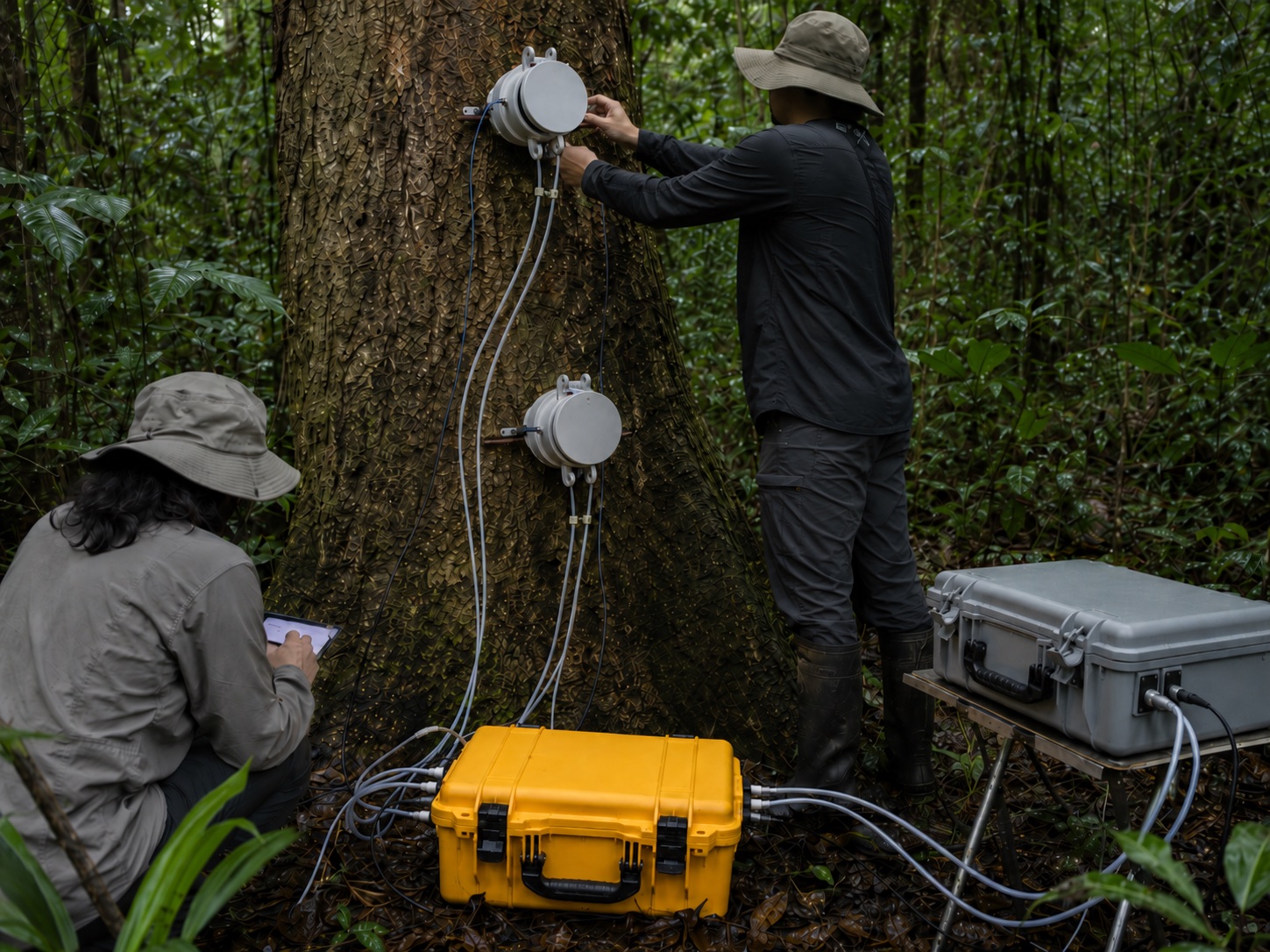
SelvaFlux works with forest-carbon developers to measure methane uptake through tree bark. We are developing the method needed for potential registry crediting. Pilot partners can begin building a site measurement record now.
Future credits would require an eligible host project, an approved methane method, measured net uptake above the applicable baseline, and independent verification.
Say you’re a forest-carbon developer.
The Numbers Don’t Add Up
Many reforestation projects cannot cover their full development, measurement, and verification costs at current credit prices. Revenue also begins years after the first expenses. Projects that cannot raise capital during that gap do not proceed.
Demand Exceeds High-Integrity Supply
Buyers have made hundreds of millions in advance commitments for nature-based credits. The available supply of high-integrity projects remains limited. Many projects do not cover their full costs at the prices buyers currently pay.
Standard project accounts do not include methane uptake through tree bark.
Tree Bark Removes Methane From the Air
Methane is the second-largest contributor to current warming after CO₂. Microbes in tree bark remove methane from the air. Standard forest-carbon accounting does not include this uptake.
SelvaFlux measures the uptake and is developing the crediting methodology. Under an approved method, we would coordinate the independent verification required by the registry.
How We Measure It
We measure methane uptake at tree bark and scale it across the site using field surveys, terrestrial laser scanning, and remote sensing. We are also developing the crediting methodology. Under an approved method, we would coordinate the independent verification required by the registry. Bark methane measurement does not require a change to forest management. Future credit eligibility would still depend on the host project’s baseline and additionality and on the requirements of an approved methane method.
Projected Annual Net Revenue
Estimates by project area and credit price.
| Project size | $20 / t | $50 / t | $75 / t |
|---|---|---|---|
| 1,000 ha | $6.3k | $15.9k | $23.8k |
| 10,000 ha | $63k | $159k | $238k |
| 50,000 ha | $317k | $793k | $1.19M |
A project estimate could be about one-third above or below these values, depending on species, growth rate, and site conditions.
The calculation applies GWP100 and uses a 1 to 2 year crediting scenario. It uses average bark-methane uptake measured in tropical forests. Uptake development in restored forests has not been measured. The table shows annual project revenue after SelvaFlux’s proposed share. Actual revenue would depend on an approved method, site measurements, and the credit price.
Methane Revenue Could Improve Project Economics
If an approved method allows crediting, measured methane uptake could add annual revenue to an eligible forest project. In the spatial model, prospective methane revenue lowers each grid cell’s break-even credit price. Some grid cells then meet the model’s 12% required return.
Across the price scenarios tested, the model estimates that GWP100 methane revenue increases bankable land by 0.8 to 1.7 million hectares.
Co-fund a pilot
Crediting is still under development. A pilot measures site uptake and begins a record that could support future crediting if the host project qualifies and a methane method is approved.
- We assess whether the site is suitable for methane measurement.
- We collect initial site measurements and prepare a project report.
- We begin a monitoring record while the methodology develops.
- The site data can later be assessed under an approved method.
We are accepting a small number of pilot projects.
For crediting, SelvaFlux’s proposed share would be paid after the registry issues credits.
We estimate forest methane uptake across a whole jurisdiction by combining satellite mapping with field measurements. The estimate can add forest methane uptake to national and subnational greenhouse-gas accounts.
For governments and jurisdictionsSelvaFlux measures methane uptake. Other forest benefits remain outside the credit.