



Textbooks
Browse or search textbooks or find out more about the publications' authors. Download the ebook for free or buy a print-on-demand copy.
Displaying results 1 to 10 of 2724.

Australian Defence Strategic Guidance, 1976–2020 »
Volume I: Defending Australia without a Threat, 1976–1994
Edited by: Jean Bou, Stephan Frühling
Publication date: 2026
Between 1976 and 2020, Australia’s Department of Defence produced a range of strategic guidance documents. Some were classified, intended to inform and guide the government, while others were created for public release and ultimately became statements of government policy. These documents offer an insight into how successive Australian governments understood the nation’s security and what policy and institutional steps should be taken in response. Each paper aimed to develop or shape strategic concepts, provided the basis for significant budget and capability decisions, and directed reforms and policy change across the Defence organisation.
For the first time, the story of how these documents were developed, and the key ideas and debates that shaped them, can now be told. Based on unique access to archival records, this book is the product of a joint research project undertaken between the Australian Commonwealth’s Department of Defence and The Australian National University.
By the early 1970s, Australia had to develop and communicate a new defence policy at a time when there seemed to be no clear threat to the country. This led the government of Malcolm Fraser to commission Australia’s first Defence White Paper in 1976. As a public expression of government policy, this was a fundamentally new format for strategic guidance. Other White Papers followed in 1987 and 1994. The formerly key Defence Committee, previously responsible for the development of the guidance, faded, and longstanding classified guidance papers had their final iterations. This volume traces the demise of these Strategic Basis papers, as well as the rise of White Papers and other ad-hoc guidance documents. In doing so, it helps to show how Australian defence policy and strategic guidance were forged during the Defence of Australia era.
‘At the heart of resilience is knowledge. We are in fraught times. We need to understand how we have seen our strategic requirements historically to benchmark what we need to do now, comprehending strengths and inadequacies in our thinking. These volumes are essential reading.’
—Kim Beazley, former Minister for Defence and leader of the Labor opposition
‘This history of Australian Defence Strategic Guidance shows the messy reality of policy development. Politics, personality, money and deadlines all make for a combustible mix. This is a white-knuckle ride for anyone who has ever worked in the strategy business. The book makes for compelling reading, explaining the, at times, mystifying policy results. It shows how Australia's strategic approach developed, setting the foundations for today's defence capabilities.’
—Peter Jennings, former Deputy Secretary in the Department of Defence and former Director of the Australian Strategic Policy Institute
‘With unique, unfettered access to the classified files, this meticulous, scholarly, lively study illuminates the processes, the personalities and above all the ideas that have shaped Australia’s big defence decisions over the past 50 years. It is a remarkable resource and an essential foundation for the momentous debates we need to have about our defence in the challenging and very different decades ahead.’
—Hugh White AO, Emeritus Professor of Strategic Studies, ANU
Coming soon
Notify me
Australian Defence Strategic Guidance, 1976–2020 »
Documents: Defending Australia without a Threat, 1976–1994
Edited by: Jean Bou, Stephan Frühling
Publication date: 2026
Between 1976 and 2020, Australia’s Department of Defence produced a range of strategic guidance documents. Some were classified, intended to inform and guide the government, while others were created for public release and ultimately became statements of government policy. These documents offer an insight into how successive Australian governments understood the nation’s security and what policy and institutional steps should be taken in response. Each paper aimed to develop or shape strategic concepts, provided the basis for significant budget and capability decisions, and directed reforms and policy change across the Defence organisation.
For the first time, the story of how these documents were developed, and the key ideas and debates that shaped them, can now be told. Based on unique access to archival records, this book is the product of a joint research project undertaken between the Australian Commonwealth’s Department of Defence and The Australian National University.
This volume is a facsimile of all the strategic guidance papers analysed in Volume I. It includes a full copy of the 1976 Australian Strategic Analysis and Defence Policy Objectives; 1976 Defence White Paper; the 1979 Australian Strategic Analysis and Defence Policy Objectives; the 1983 Strategic Basis of Australian Defence Policy; the 1987 Defence White Paper; the 1989 Australia’s Strategic Planning in the 1990s; the 1991 Force Structure Review; the 1993 Strategic Review; and the 1994 Defence White Paper.
‘At the heart of resilience is knowledge. We are in fraught times. We need to understand how we have seen our strategic requirements historically to benchmark what we need to do now, comprehending strengths and inadequacies in our thinking. These volumes are essential reading.’
—Kim Beazley, former Minister for Defence and leader of the Labor opposition
‘This history of Australian Defence Strategic Guidance shows the messy reality of policy development. Politics, personality, money and deadlines all make for a combustible mix. This is a white-knuckle ride for anyone who has ever worked in the strategy business. The book makes for compelling reading, explaining the, at times, mystifying policy results. It shows how Australia's strategic approach developed, setting the foundations for today's defence capabilities.’
—Peter Jennings, former Deputy Secretary in the Department of Defence and former Director of the Australian Strategic Policy Institute
‘With unique, unfettered access to the classified files, this meticulous, scholarly, lively study illuminates the processes, the personalities and above all the ideas that have shaped Australia’s big defence decisions over the past 50 years. It is a remarkable resource and an essential foundation for the momentous debates we need to have about our defence in the challenging and very different decades ahead.’
—Hugh White AO, Emeritus Professor of Strategic Studies, ANU
Coming soon
Notify me
Australian Defence Strategic Guidance, 1976–2020 »
Volume II: The Era of the Balanced Force, 1997–2020
Edited by: Andrew Carr, Stephan Frühling
Publication date: 2026
Between 1976 and 2020, Australia’s Department of Defence produced a range of strategic guidance documents. Some were classified, intended to inform and guide the government, while others were created for public release and ultimately became statements of government policy. These documents offer an insight into how successive Australian governments understood the nation’s security and what policy and institutional steps should be taken in response. Each paper aimed to develop or shape strategic concepts, provided the basis for significant budget and capability decisions, and directed reforms and policy change across the Defence organisation.
For the first time, the story of how these documents were developed, and the key ideas and debates that shaped them, can now be told. Based on unique access to archival records, this book is the product of a joint research project undertaken between the Australian Commonwealth’s Department of Defence and The Australian National University.
In response to regional instability and the War on Terror, the government developed the Australian Defence Force (ADF) as a ‘Balanced Force’, structured to serve a wider range of national interests. A Defence White Paper in 2000 was followed by three short Defence Updates as the Department and ADF grappled with the pace of overseas operations. Three White Papers followed in 2009, 2013 and 2016, produced through increasingly ambitious and lengthy processes that grappled with the emergence of great power competition in the Indo-Pacific and the need to prepare Australia’s defence forces for an increasingly complex region. By the end of the period, the 2020 Defence Strategic Update signalled a shift away from the White Paper model of strategic guidance, which has been replaced today by the National Defence Strategy.
‘At the heart of resilience is knowledge. We are in fraught times. We need to understand how we have seen our strategic requirements historically to benchmark what we need to do now, comprehending strengths and inadequacies in our thinking. These volumes are essential reading.’
—Kim Beazley, former Minister for Defence and leader of the Labor opposition
‘This history of Australian Defence Strategic Guidance shows the messy reality of policy development. Politics, personality, money and deadlines all make for a combustible mix. This is a white-knuckle ride for anyone who has ever worked in the strategy business. The book makes for compelling reading, explaining the, at times, mystifying policy results. It shows how Australia's strategic approach developed, setting the foundations for today's defence capabilities.’
—Peter Jennings, former Deputy Secretary in the Department of Defence and former Director of the Australian Strategic Policy Institute
‘With unique, unfettered access to the classified files, this meticulous, scholarly, lively study illuminates the processes, the personalities and above all the ideas that have shaped Australia’s big defence decisions over the past 50 years. It is a remarkable resource and an essential foundation for the momentous debates we need to have about our defence in the challenging and very different decades ahead.’
—Hugh White AO, Emeritus Professor of Strategic Studies, ANU
Coming soon
Notify me
Australian Defence Strategic Guidance, 1976–2020 »
Documents: The Era of the Balanced Force, 1997–2020
Edited by: Andrew Carr, Stephan Frühling
Publication date: 2026
Between 1976 and 2020, Australia’s Department of Defence produced a range of strategic guidance documents. Some were classified, intended to inform and guide the government, while others were created for public release and ultimately became statements of government policy. These documents offer an insight into how successive Australian governments understood the nation’s security and what policy and institutional steps should be taken in response. Each paper aimed to develop or shape strategic concepts, provided the basis for significant budget and capability decisions, and directed reforms and policy change across the Defence organisation.
For the first time, the story of how these documents were developed, and the key ideas and debates that shaped them, can now be told. Based on unique access to archival records, this book is the product of a joint research project undertaken between the Australian Commonwealth’s Department of Defence and The Australian National University.
This volume is a facsimile of all the strategic guidance papers analysed in Volume II. It includes a full copy of the 1997 Australian Strategic Policy; 2000 Defence White Paper; 2003 Defence Update; 2005 Defence Update; 2007 Defence Update; 2009 Defence White Paper; 2013 Defence White Paper; 2016 Defence White Paper; and the 2020 Defence Strategic Update.
‘At the heart of resilience is knowledge. We are in fraught times. We need to understand how we have seen our strategic requirements historically to benchmark what we need to do now, comprehending strengths and inadequacies in our thinking. These volumes are essential reading.’
—Kim Beazley, former Minister for Defence and leader of the Labor opposition
‘This history of Australian Defence Strategic Guidance shows the messy reality of policy development. Politics, personality, money and deadlines all make for a combustible mix. This is a white-knuckle ride for anyone who has ever worked in the strategy business. The book makes for compelling reading, explaining the, at times, mystifying policy results. It shows how Australia's strategic approach developed, setting the foundations for today's defence capabilities.’
—Peter Jennings, former Deputy Secretary in the Department of Defence and former Director of the Australian Strategic Policy Institute
‘With unique, unfettered access to the classified files, this meticulous, scholarly, lively study illuminates the processes, the personalities and above all the ideas that have shaped Australia’s big defence decisions over the past 50 years. It is a remarkable resource and an essential foundation for the momentous debates we need to have about our defence in the challenging and very different decades ahead.’
—Hugh White AO, Emeritus Professor of Strategic Studies, ANU
Coming soon
Notify me
Australian Journal of Biography and History: No. 12, 2026 »
Special Issue: Intellectual Biography
Publication date: 2026
This special number of the Australian Journal of Biography and History consists of papers presented at a workshop on intellectual biography, held at The Australian National University in December 2024. The guest editor, Melanie Nolan, notes that historians increasingly do not agree on one kind of approach to intellectual biography. She surveys the kinds of postwar intellectual biographies historians have published, together with current debates over whether intellectual biography should entail methodological individualism or collectivism, internalist or externalist approaches, and whether to lump or split lives and intellectual developments. The first group of papers then considers intellectual biography written through the lens of the Cambridge School of intellectual history, which continues to dominate the field. Richard Whatmore and Thomas Ashby examine the historian J.G.A. Pocock’s methodology and his own biography. Kate Fullagar comments on this work, as she did at the workshop. A second group of papers—by Ian Kumekawa on A.C. Pigou, Emile Chabal on Eric Hobsbawm, and Matthew Birchall on Edward Gibbon Wakefield—are part of the push by historians to extend the span of intellectual biography. The authors argue respectively for a more ‘capacious’ approach to the category of economic intellectuals, the wider social influences on intellectual historians, and the need to consider how ideas have been applied as much as their disembodied theories. Finally, a pair of papers consider historians’ push of intellectual biography inwardly. That is, they are participating in what scholars identify as the more general ‘interventional’ or ‘reflexive’ turn in historiography. Jaume Aurell considers historians’ autobiography as intellectual biography, while Alison Bashford considers the intellectual biographies she has written metabiographically, weaving the biographies of intellectuals with her own historical self-reflection on intellectual biography.
Coming soon
Notify me
Witnessing Justice »
Inside Cambodia’s Khmer Rouge Trials
Edited by: Christoph Sperfeldt, Rachel Killean, Boravin Tann, Maria Elander, Rachel Hughes, Ratana Ly
Publication date: 2026
Witnessing Justice brings together voices of key actors connected to the Extraordinary Chambers in the Courts of Cambodia (ECCC), or Khmer Rouge Tribunal, to reflect on its establishment, operation and emerging legacy.
The collection covers the ECCC’s operation from its negotiations in 2006 to the conclusion of its judicial proceedings in 2022. It follows the ECCC through its different phases, including its establishment, the build-up to its creation, its investigations, the trials, court management, outreach, victim participation, reparations, collaboration with local civil society, outcomes and more.
The volume foregrounds the voices of those who built, made and engaged with the ECCC. Authors capture the plurality of views on the ECCC, including from those most intimately involved in the process. The editors bring their own engagement and expertise to section commentaries, which situate and contextualise authors’ contributions.
The ECCC’s legacy will be debated for decades to come. Milestone legal decisions and procedural innovations have advanced Cambodian and international law. The ECCC has also left its mark on Cambodian civil society and public discourse about the Khmer Rouge. Nearly 4,000 survivors participated in its proceedings, more than two dozen collective reparations projects emerged from it, and hundreds of Cambodian staff worked at the ECCC. The end of judicial activity at the ECCC is a key moment for assessing these legacies and gathering the voices of those who shaped this justice process.
‘Witnessing Justice will ensure that the lessons learned from the creation and working of the court will reverberate: not only in Cambodia, where the struggle for democracy and human rights continues to this day, but worldwide.’
—Gareth Evans
Coming soon
Notify me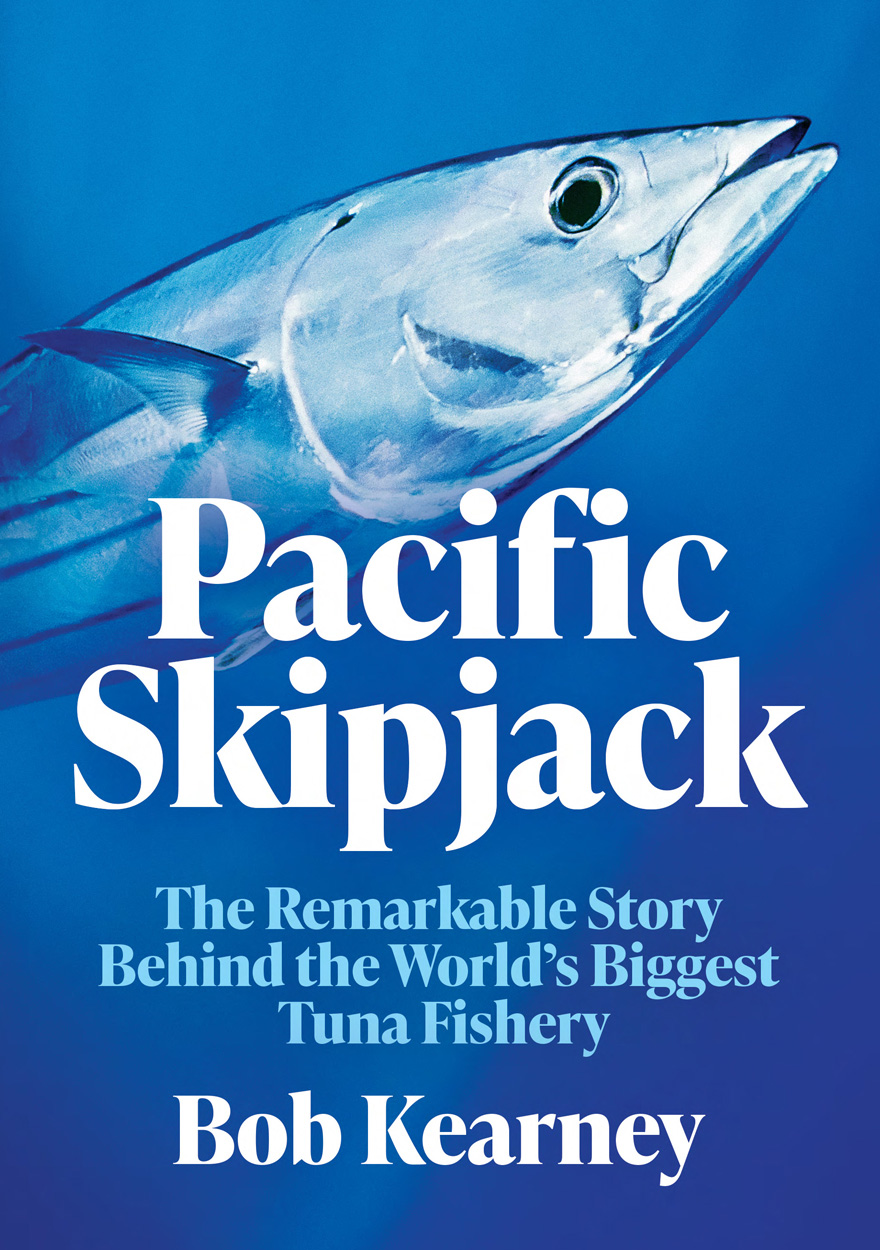
Pacific Skipjack »
The Remarkable Story Behind the World’s Biggest Tuna Fishery
Authored by: Bob Kearney
Publication date: August 2026
The Pacific skipjack tuna is a remarkable fish. With nowhere to hide in the wide-open spaces of the Pacific, it is one of the fastest and most mobile fish in the world. It is also one of the quickest fish to reproduce, such that the largest tuna fishery in the world, co-managed by more than twenty Pacific island nations, can yield enormous catches of skipjack without threat to the well-being of the species. The south-western Pacific is the only region in the world where all tuna stocks have a ‘healthy’ status. It supports the acknowledged best researched and managed tuna fishery on the planet. With skipjack being the most important renewable natural resource in the region, the fishery is crucial to the economic and wider social wellbeing of Pacific Island peoples, who are now largely managing these resources for themselves.
Astonishingly, while many individuals, groups, organisations, institutions and governments from around the world were involved in the establishment of this gigantic fishery, it came to be successfully managed primarily through the vision and tenacious efforts of a single young Australian scientist, Dr Bob Kearney. In this book, Kearney tells the extraordinary, colourful story of how, beginning in Papua New Guinea at the start of the 1970s, he crossed paths, and sometimes swords, with philanthropists, bankers, fishing executives, scientists, lawyers, government leaders and representatives from many nations, and even the Indonesian military. Kearney personally designed, obtained funding for, administered, managed, and demonstrated the scientific and commercial value of his dream experiment, carried out across more than thirty million square kilometres of ocean.
Pacific Skipjack is co-published with ACIAR (Australian Centre for International Agricultural Research).
Coming soon
Notify me
Made in China Journal: Volume 11, Issue 1, 2026 »
Publication date: August 2026
In recent years, political depression has emerged not only as a psychological condition but also as a culturally embedded affective response shaped by broader socio-political forces. Clinically, it resembles depression, but its aetiology is tied explicitly to political events and structural disenfranchisement. It manifests as hopelessness, a loss of faith in personal agency, and a pervasive sense that hard work and creativity no longer matter. Although the term has a longer history in feminist and affect theory, it gained traction in the United States during Donald Trump’s first presidency. Its resonance has since spread transnationally, with notable uptake in China during the COVID-19 pandemic and in the wake of the 2022 White Paper movement. Significantly, political depression in China does not simply mirror the global far-right turn but rather emerges as a long-standing condition rooted in specific historical traumas and the evolving dynamics of authoritarian rule. It is this condition that the present issue of the Made in China Journal sets out to explore.

No Borders »
Journeys Across Islands and Continents
Authored by: Wang Gungwu
Publication date: 2026
Over the course of a long life, the author, historian and university leader Wang Gungwu has travelled between and spent periods in Asia, Europe and Australia. Born in the Dutch East Indies at the start of the 1930s, and growing up in Ipoh, British Malaya, Wang was to study at the National Central University in Nanjing, China, before the Revolution, at the University of Malaya (Singapore) and at the School of Oriental and African Studies, University of London. Returning to Malaya, Wang ultimately found that serious scholarship of historical and contemporary China could only be undertaken from a greater distance, at The Australian National University, Canberra, which offered him a position as Chair of Far Eastern History. Later, Wang would serve as Vice-Chancellor of Hong Kong University during the lead-up to the handover of this key trading island from Britain back to China, before returning to Singapore as executive chairman of the Institute of East Asian Political Economy (IEAPE).
In No Borders, Wang takes the reader into these disparate personal and social worlds, as well as into the imagined worlds of history and, at times, the present, that formed the focus of his enduring fascination and enquiry as a major scholar of China, Southeast Asia and international relations.
To read this autobiography is to spend memorable time with a singular, urbane intellectual whose life has been lived at the intersection of competing forces of order and disorder within turbulent decades across both the East and West. A vivid historical and personal portrait is here enriched by thoughtful insight and deeply learned reflection.
Coming soon
Notify me
Fragile Prosperity »
Australia’s gigantic monetary gamble
Authored by: Stuart Kells
Publication date: July 2026
Fragile Prosperity presents a new perspective on the past five decades of economic policy in Australia. This book shows that in important respects the basic pillars of this policy are misconceived, resting on fundamental misunderstandings of money, taxation and fiscal accounting.
Monetary and fiscal policies in Australia are reappraised, along with the nation’s program of financial deregulation: a gigantic experiment in modern money. A new understanding is presented of the causes of inflation in Australia and the drivers of house price growth, along with associated impacts on wealth distribution and inequality.
The implications are stark. While successive federal governments and Australia’s central bank have given up the means to directly control the principal cause of inflation, the current method of inflation control operates like a dead hand on the non-bank economy. Australia now faces a terrible conundrum in public policy and macroeconomic management, one with urgent implications for countries with similar regulatory settings, such as Canada and New Zealand. Further afield, the story of Australia’s experiment with modern money is a cautionary tale for all advanced economies.
‘Many younger Australians no longer feel that hard work brings a better life. In this timely book, Kells reveals the deeper, actual reasons Australia is no longer a land of economic opportunity.’
Thomas Walker, CEO, Think Forward
‘The thrust of this excellent work is that the process and consequences of the generation of money have been widely misunderstood by regulatory and government bodies, leaving Australia unwittingly clinging to a “fragile prosperity”. Kells sets about offering practical solutions.’
David Merrett, Professor Emeritus, Faculty of Business and Economics, University of Melbourne