Books by Matthew Rampley
The Museum Age in Austria-Hungary

Liberalism, Nationalism and Design Reform in the Habsburg Empire
Routledge, 2020
Liberalism, Nationalism and Design Reform in the Habsburg Empire is a study of museums of design ... more Liberalism, Nationalism and Design Reform in the Habsburg Empire is a study of museums of design and applied arts in Austria-Hungary from 1864 to 1914. The Museum for Art and Industry (now the Museum of Applied Arts) as well as its design school occupies a prominent place in the study. The book also gives equal attention to museums of design and applied arts in cities elsewhere in the Empire, such as Budapest, Prague, Cracow, Brno and Zagreb. The book is shaped by two broad concerns: the role of liberalism as a political, cultural and economic ideology motivating the museums’ foundation, and their engagement with the politics of imperial, national and regional identity of the late Habsburg Empire. This book will be of interest for scholars of art history, museum studies, design history, and European history.
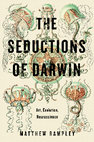
The surge of evolutionary and neurological analyses of art and its effects raises questions of ho... more The surge of evolutionary and neurological analyses of art and its effects raises questions of how art, culture, and the biological sciences influence one another, and what we gain in applying scientific methods to the interpretation of artwork. In this insightful book, Matthew Rampley addresses these questions by exploring key areas where Darwinism, neuroscience, and art history intersect.
Taking a scientific approach to understanding art has led to novel and provocative ideas about its origins, the basis of aesthetic experience, and the nature of research into art and the humanities. Rampley’s inquiry examines models of artistic development, the theories and development of aesthetic response, and ideas about brain processes underlying creative work. He considers the validity of the arguments put forward by advocates of evolutionary and neuroscientific analysis, as well as its value as a way of understanding art and culture. With the goal of bridging the divide between science and culture, Rampley advocates for wider recognition of the human motivations that drive inquiry of all types, and he argues that our engagement with art can never be encapsulated in a single notion of scientific knowledge.
Možnosti vizuálních studií. Obrazy – texty – interpretace
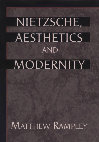
NIETZSCHE, AESTHETICS AND MODERNITY Nietzsche, Aesthetics and Modernity analyzes Nietzsche's resp... more NIETZSCHE, AESTHETICS AND MODERNITY Nietzsche, Aesthetics and Modernity analyzes Nietzsche's response to the aesthetic tradition, tracing in particular the complex relationship between the work and thought of Nietzsche, Kant and Hegel. Focusing on the critical role of negation and sublimity in Nietzsche's account of art, it explores his confrontation with modernity and his attempt to posit a revitalized artistic practice as the countermovement to modern nihilism. Drawing on the full range of his published and unpublished writings, together with his comments on figures as diverse as Wagner, Zola, Delacroix and Laurence Sterne, it highlights the extent to which Nietzsche counters the culture of his own time with a dialectical notion of aesthetic interpretation and practice. As such, Nietzsche the dialectician articulates a position that proves to be intimately connected to the negative dialects of
Papers by Matthew Rampley
Book review: Art in the Czech Lands 800-2000
The Journal of Art Historiography, Jun 1, 2013
It has become increasingly evident that perhaps the most influential Viennese art historian of th... more It has become increasingly evident that perhaps the most influential Viennese art historian of the interwar period was Josef Strzygowski. Although a decisive figure, whose appointment as Ordinarius in 1909 led factional rivalries and an institutional split, Strzygowski's work achieved a far greater audience than his contemporaries. This was particularly the case in central Europe, where his work was adopted as a model in territories as disparate as Estonia and Yugoslavia. In part his influence was due to his sheer industriousness and the volume of his output, both in terms of research publications and students. Between 1909, when he took up his appointment at the Institute in Vienna, and 1932, when he retired, nearly 90 students graduated under his tutelage; this compares with 13 under Thausing and 51 under Riegl and Wickhoff combined. As one subsequent commentator has noted: 'Looking back at Strzygowski's career with the hindsight conferred by time, the most striking impression is that he was never still, perpetually buzzing around like a fly in a jam jar.' 1 The range of subjects his students wrote on was bewilderingly diverse, and covered topics as diverse as Arnold Böcklin, murals in Turkestan, Iranian decorative art, domestic architecture in seventeenth-century Sweden, Polish Romanesque architecture and the sculpture of Gandhara. 2 Many of Strzygowski's students would go on to become prominent members of the art historical profession across central Europe, such as the Slovene Vojslav Molè (1886-1973), who would play an important role at the University of
Evolution, Aesthetics and the New Darwinism in World Art Studies
Nietzsche, Aesthetics, and Modernity
The German Quarterly, 2002
... Works by Nietzsche A The Antichrist BGE Beyond Good and Evil BT The Birth of Tragedy CW The C... more ... Works by Nietzsche A The Antichrist BGE Beyond Good and Evil BT The Birth of Tragedy CW The Case gf Wagner D Daybreak EH Ecce Homo GS The Gay Science HAH Human All lbo Human KSA Werke, Kritische Studienausgabe NC W Nietzsche contra Wagner OGM On the ...
Memory, History and Eternal Recurrence: The Aesthetics of Time
Cambridge University Press eBooks, Nov 13, 1999
Austrian History Yearbook, 2016
The artistic and cultural life of Austria after World War I has often been presented in a gloomy ... more The artistic and cultural life of Austria after World War I has often been presented in a gloomy light. As one contributor to a recent multivolume history of Austrian art commented, “the era between the two world wars is for long periods a time of indecision and fragmentation, of stagnation and loss of orientation … the 20 years of the First Republic of 1918–1938 did not provide a unified or convincing image.” For many this sense of disorientation and stagnation is symbolized poignantly by the deaths in 1918 of three leading creative figures of the modern period, Otto Wagner, Gustav Klimt, and Egon Schiele, two of whom succumbed to the influenza epidemic of that year. According to this view, war not only led to the collapse of the Habsburg monarchy (and a dramatic political caesura), it also caused or, at the very least coincided with, a profound interruption to artistic life and brought Vienna's cultural preeminence in central Europe to an end. The inhabitants of the newly cons...
Artwork of the Month, February 2021: Experiment with Two Negatives at the Bauhaus by Irena Blühová (1932)
Experiment with Two Negatives represents a time in the life of Irena Blühová that allowed a more ... more Experiment with Two Negatives represents a time in the life of Irena Blühová that allowed a more light-hearted use of the camera compared to her photo-activism in Czechoslovakia.
Journal of Art Historiography, 2019
This review offers a critical summary of Bredekamp's Image Acts. Identifying Bredekamp's ... more This review offers a critical summary of Bredekamp's Image Acts. Identifying Bredekamp's theory of the image act as an attempt to provide a general Warburg theory of the image, it argues that despite the impressively wide-ranging and ambitious scope of the study, it is theoretically undetermined. Agency is a central term, but the book lacks a theory or even working definition of agency, which makes it different to understand the force of some of Bredekamp's claims. The review contrasts Bredekamp with Alfred Gell, whose Art and Agency focused on anthropological study of the ascriptions of agency to images in different cultures and the structure of such ascriptions. It argues that Image Acts ends up being neither a fully worked-out theory of visual agency nor a historical or anthropological account of attributions of agency, and its purpose and focus consequently remains ambiguous.
Art History, 2023
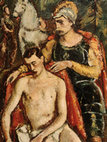
The development of art in Austria after 1918 remains little explored; the main focus of research ... more The development of art in Austria after 1918 remains little explored; the main focus of research continues to be fin-de-siècle Vienna. Where interwar Austrian modernism is studied at all, interest is mostly limited to the municipal housing sponsored by the Social Democratic council. The main concern of this essay is to examine the reasons for this inconsistency and comparative neglect. It explores the ways in which the historiography of Austrian post-war modernism has been informed by wider historical assumptions, about the role of the First World War as a cultural-political caesura, for instance, or by ambivalence about interwar Austrian history and its slide into fascism, or valorization of the avant-garde. A comparison is also drawn with accounts of art in interwar Czechoslovakia, where modernist practices are much celebrated since they have assumed a legitimating function for Czech and Slovak culture in the present.
Journal of Art Historiography, 2017
Rudolf von Eitelberger: Netzwerker der Kunstgeschichte was an important first step in gathering t... more Rudolf von Eitelberger: Netzwerker der Kunstgeschichte was an important first step in gathering together the diverse array of projects that, different ways, refer to or focus on Eitelberger. Nevertheless, as with the best gatherings of this kind, it also highlighted how much more work there is to be done.



Uploads
Books by Matthew Rampley
Taking a scientific approach to understanding art has led to novel and provocative ideas about its origins, the basis of aesthetic experience, and the nature of research into art and the humanities. Rampley’s inquiry examines models of artistic development, the theories and development of aesthetic response, and ideas about brain processes underlying creative work. He considers the validity of the arguments put forward by advocates of evolutionary and neuroscientific analysis, as well as its value as a way of understanding art and culture. With the goal of bridging the divide between science and culture, Rampley advocates for wider recognition of the human motivations that drive inquiry of all types, and he argues that our engagement with art can never be encapsulated in a single notion of scientific knowledge.
Papers by Matthew Rampley