Blog Archives
Cyborg Contact


Cyborg Contact, Book 4 of Terry Birdgenaw’s Antunite Chronicles, is a big-hearted science fiction adventure about Dee, a cyborg ANT from Bilaluna who travels through a wormhole to Earth. His mission is diplomatic, ecological, and personal: he wants to reconnect with the humans who once visited his world and warn Earth about the kind of climate disaster that damaged his own planet. Early on, he sums up the heart of the book clearly: “I am contacting humans so our worlds can unite, if that is possible.”
The book works best as a travel story told through a truly unusual narrator. Dee’s first contact isn’t with governments or scientists, but with ants, hurricanes, jaguars, cicadas, abused children, sailors, and eventually public leaders. That gives the story a lively, episodic feel. Each stop teaches him something about Earth, and because he’s both alien and insectoid, ordinary things feel freshly strange. Food, language, boats, politics, and even hotel lunches become chances for comedy, curiosity, and connection.
Birdgenaw’s tone is playful and earnest at the same time. Dee loves puns, rhymes, sensory descriptions, and insect-based comparisons, so the narration has a goofy charm that keeps the climate message from feeling dry. The book also has a strong compassionate streak, especially in Dee’s bond with Juan and Isabella and in the way it treats interspecies friendship as something practical, not just sentimental. Dee doesn’t simply preach cooperation. He rescues, learns, apologizes, improvises, and keeps showing up.
The environmental theme becomes clear once Dee reaches a public platform. His message to Earth is direct: “Climate change is real! It’s not a hoax!” That line fits the book’s approach. This isn’t subtle climate fiction, but it’s sincere, accessible, and built around adventure rather than despair. The story imagines first contact as a chance for mutual correction: humans once helped Bilaluna change course, and now Dee hopes Bilaluna can return the favor.
Cyborg Contact is a warm, oddball, idea-packed novel about friendship across species, climate responsibility, and the value of seeing Earth through nonhuman eyes. It’s at its most enjoyable when Dee is reacting to the world with a mix of wonder, confusion, and moral seriousness. Readers who like ecological science fiction with humor, a hopeful outlook, and a narrator who’s unlike anyone else in the room will find a lot to enjoy here.
Pages: 312 | ASIN : B0GX2ST9HB

Dag and the Apple
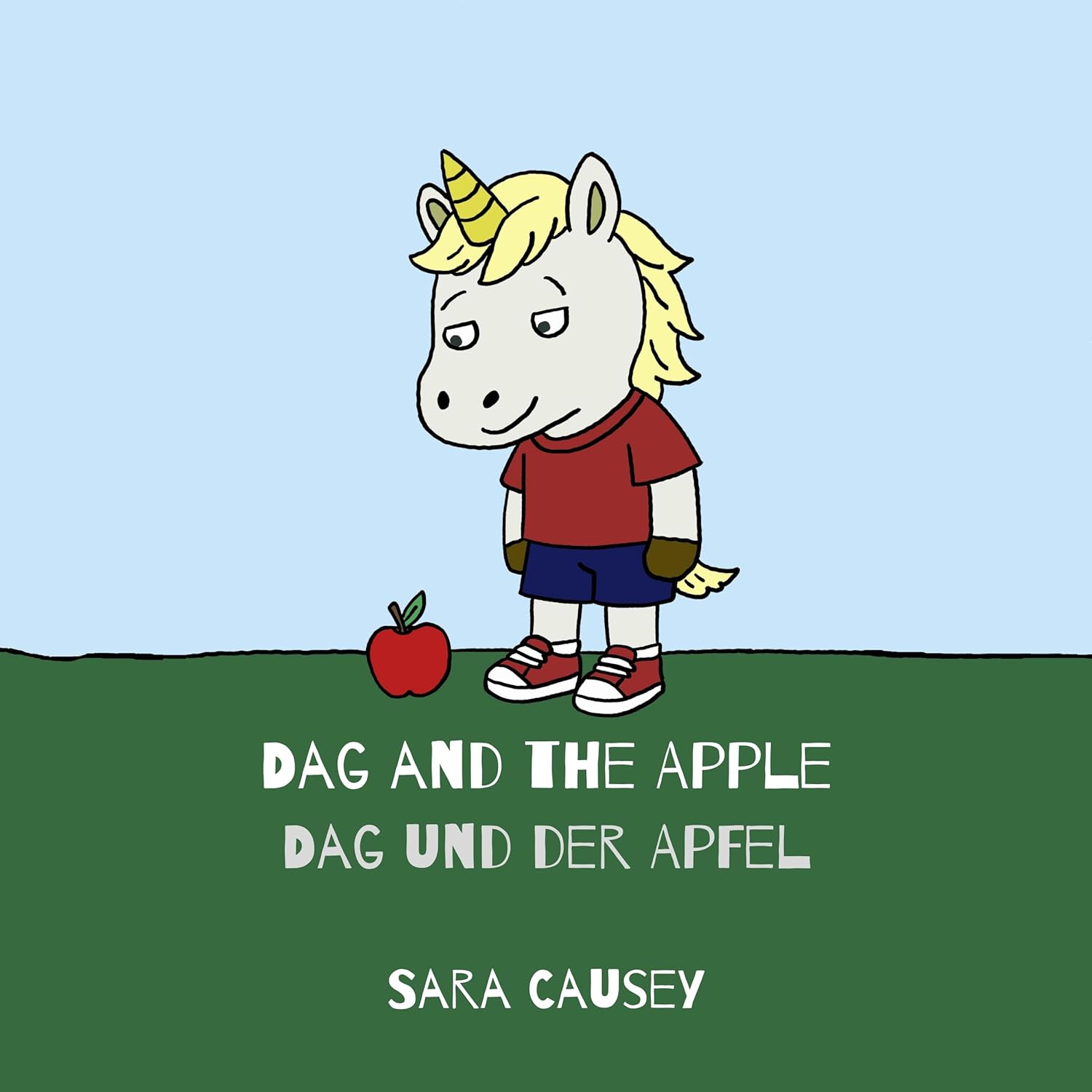
Dag is a quiet little unicorn who enjoys exploring the forest and noticing the simple wonders around him. One day, he discovers a beautiful red apple on the ground. What begins as a small moment quickly turns into a gentle adventure when the apple rolls away. Dag follows it through the forest, finally catches it, and enjoys eating the juicy, sweet apple beneath a tree. As he rests, he notices a rabbit hopping through the grass and takes in the peaceful beauty of his day.
Dag and the Apple is a short, sweet, and thoughtful story featuring Dag the Unicorn. I appreciated the calm pace and simple structure, which make the book easy for young readers to follow while also giving them time to reflect on each moment. From noticing the apple’s bright red color to imagining how it tastes, smells, and feels, the story naturally encourages children to pay attention to their surroundings.
This would be a wonderful book to read aloud with preschool and kindergarten-aged children. It opens the door for conversations about the senses: What colors do you see? What do apples taste like? What sounds might you hear in the forest? What animals might be nearby? Dag’s quiet and observant personality also makes the story especially appealing for sensitive, imaginative children who enjoy gentle adventures.
A lovely bonus is that the story is presented in both English and German. This makes Dag and the Apple a great choice for bilingual families, homeschoolers, or anyone introducing children to a new language in a relaxed and natural way. The repetition and simple sentences help young readers begin recognizing words and noticing patterns between the two languages.
The illustrations add helpful context by showing Dag discovering the apple, chasing after it, smelling it, and enjoying his peaceful day in the forest. Dag and the Apple is a charming starter story for early readers and a gentle introduction to language learning through storytelling.
Pages: 24 | ASIN : B0GQJXWVFJ
Foundation of My Healing

Unleashing the Power Within is a short, heartfelt collection of inspirational poems that moves through self-worth, recovery, faith, gratitude, nature, and personal renewal. Did you write these pieces as you were going through those moments, or after gaining distance from them?
For Unleashing the Power Within, I began writing these pieces in 2023, after my first book, Inspiring Book of Poems, Dreams and Stories, was published. While many of the experiences come from a past shaped by a toxic upbringing, the writing itself was very much alive in the present moment.
I was reflecting on current emotions, ongoing growth, and the lessons I had carried forward. In that sense, the poems were written from both a place of healing and awareness—looking back, while still living and feeling deeply in the now.
More than anything, this book became a way for me to continue my story, not just for myself, but to empower others who may be walking a similar path.
Faith plays a central role in the later emotional arc of the book. How did your spiritual perspective shape the way you approached recovery?
I have always trusted in God, even in the middle of chaos. Growing up without knowing my father and experiencing abuse from my stepfather led me to realize that the only father I could truly rely on was God.
That understanding became the foundation of my healing. Believing that God had a plan for my life gave me hope, even in the hardest moments. It reminded me that my story wasn’t over and that I wasn’t alone in what I was facing.
My faith shaped the way I approached recovery by helping me hold on, trust the process, and believe that freedom, healing, and purpose were still possible for me.
Your nature imagery—cedar trees, ocean, birds—brings a quieter energy to the collection. What draws you to those images?
Nature has always been a place where I feel deeply connected—both to my surroundings and to myself. When I’m outside, whether I’m hiking or simply sitting still, I take in what I see, feel, and hear, and that often becomes part of my writing.
I love the smell of fresh cedar, the sound of wind chimes, and watching birds, especially the golden finches that visit my yard. I have a bird feeder and bird bath, and those quiet moments—like seeing them in the rain—stay with me. They inspire both reflection and peace.
My poem about the Gulf of Mexico came from a very personal experience. It was my first time standing on the sand in Florida, looking out at the ocean and taking in something so vast and beautiful. That moment stayed with me in a powerful way.
Growing up in a more sheltered environment gave me a deeper appreciation for the world around me. Even as a child, I loved being outside whenever I could. Now, I notice everything more intentionally. Nature gives me space to reflect, to feel, and to breathe—and that quieter energy naturally finds its way into my poetry.
This book often feels like it’s speaking directly to someone who is struggling. Who did you imagine you were writing for?
I was writing to myself, and to anyone who has gone through or is still going through what I’ve experienced. Many of these poems came from moments where I needed comfort, encouragement, and a reminder that I could keep going.
At the same time, I was thinking about others who might be struggling in similar ways—people who feel unseen, overwhelmed, or unsure of their worth. I wanted the words to feel personal, like they were speaking directly to them.
If someone reads my work and feels even a little less alone, a little more understood, or finds the strength to keep moving forward, then I’ve written it for them too.
Author Links: GoodReads | X (Twitter) | Facebook | Website | Amazon
Unleashing The Power Within: A Journey of Self-Discovery Through Poetry is a deeply personal, faith-filled collection for the moments that change you. The ones that shake you, stretch you, and slowly rebuild you.
These pieces give voice to what often goes unspoken. The silent battles. The long nights. The strength it takes to keep going when everything feels heavy.
Rooted in themes of healing, faith, and transformation, this collection gently guides you toward rediscovering your inner strength and purpose.
Inside this collection, you will find:
Strength through pain and personal struggle
Healing through faith and reflection
The courage to set healthy boundaries
Clarity in uncertain seasons
The confidence that has always been within you
Healing is not always a straight path. It can feel slow. Messy. Uncertain. But even then, something inside you is still shifting. Little by little, you do not just survive what broke you; you begin to live again.
If this speaks to your heart, this may be exactly what you need right now.
Praying for a Wounded Child: Encouragement and Prayers for You and the Child You Love

Praying for a Wounded Child by Virginia Wells is a devotional prayer guide for parents, grandparents, foster and adoptive caregivers, and anyone carrying deep concern for a child who has been traumatized. Wells names her audience with tenderness, then offers this simple reassurance: “God sees your pain and cares. I do too.” That sentence captures the heart of the book. It’s pastoral, personal, and written for people who are tired, confused, and still trying to love well.
The book is built around seven sections that move from the caregiver’s relationship with God, to spiritual practices, family life, child development, trauma, the child’s relationship with God, and the caregiver’s own wellness. Wells doesn’t rush straight into fixing the child. She starts with the adult’s soul, then widens the lens to the whole family and the long work of healing.
Wells’s voice is conversational, faith-filled, and grounded in lived experience. She writes, “This book was carved out of times of desperation,” and that honesty gives the prayers weight. The chapters often combine reflection, Scripture, guided prayer, practical prompts, and “Going Deeper” questions, so the book feels less like a lecture and more like a companion someone might keep beside a Bible, journal, or nightstand.
One of the strongest parts of the book is how specific it gets. Wells writes about abandonment, abuse, neglect, incarceration, prejudice, birth mothers, heritage, education, identity, siblings, marriage, single parenting, and self-care. The prayers don’t stay vague. They give readers language for situations that are often messy, lonely, and hard to talk about. Her reminder that therapy and interventions are encouraged alongside prayer also helps the book feel responsible rather than simplistic.
Praying for a Wounded Child is a warm, Scripture-centered resource for caregivers who want to pray but may not know what to say anymore. It’s not mainly a trauma textbook or a parenting manual. It’s a prayer companion shaped by counseling experience, chaplaincy, parenting, and Christian conviction. For readers who share Wells’s faith framework, it offers steady encouragement, practical reflection, and language for loving a wounded child without forgetting the caregiver’s own need for restoration.
Pages: 292 | ISBN : 978-1646458707
Sisters of Twelve
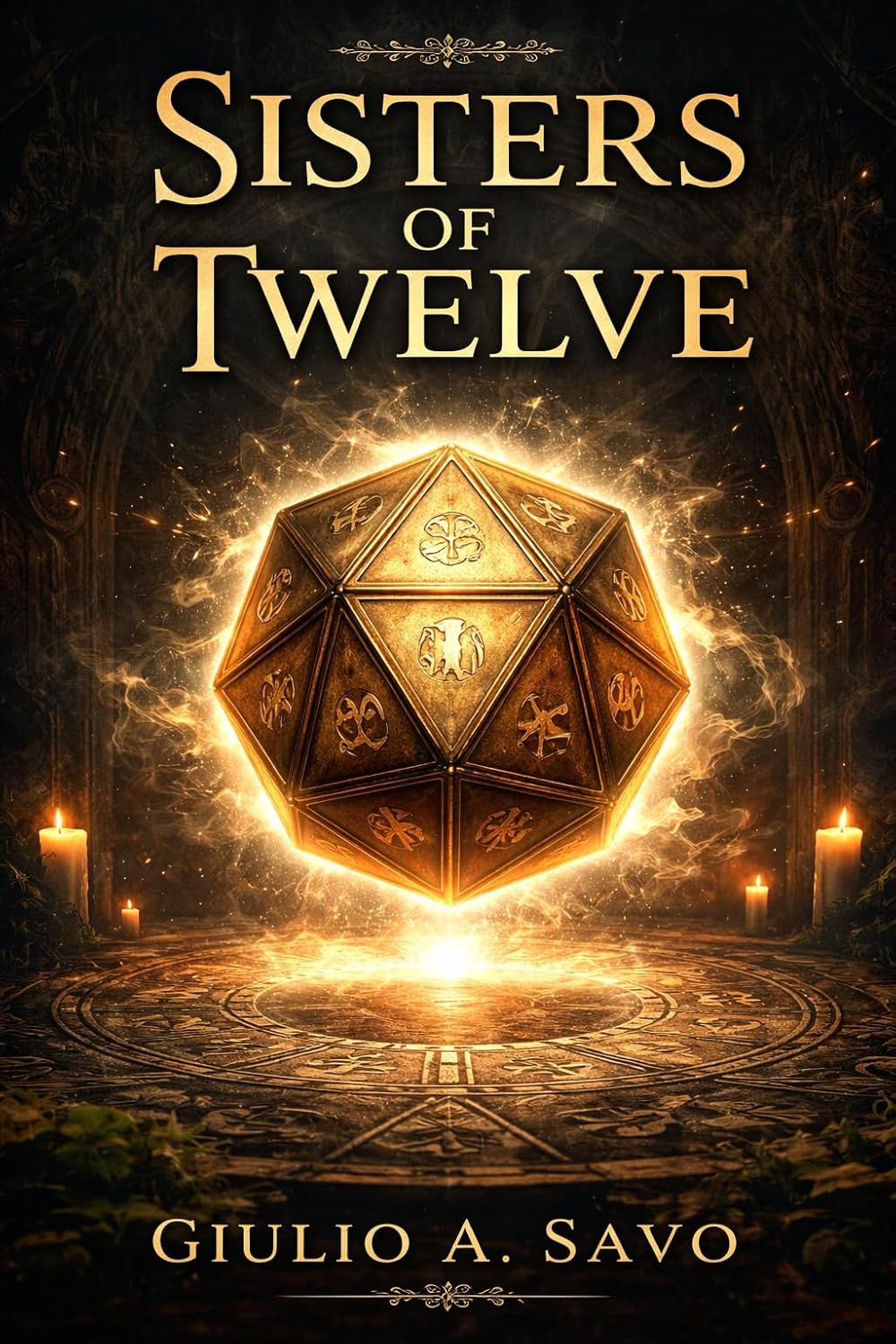

Sisters of Twelve is a historical mystery thriller built around the Voynich Manuscript, imagining that its unreadable pages are not a failed puzzle but a deliberately protected vault of knowledge, carried across centuries by a hidden lineage of women called the Custodians. At the center is Gia Braccia, the final Custodian, who must decide whether the world is finally ready for what the manuscript contains—and whether preservation has become its own kind of captivity. The novel braids real historical figures, archival intrigue, secret societies, scholarly obsession, and speculative systems into a story about women who kept knowledge alive when history preferred them nameless.
The book doesn’t rush toward revelation; it understands that secrecy has texture, procedure, dust, paperwork, and dread. The scenes inside libraries and archives have an almost mineral stillness, and I liked how the novel makes bureaucracy feel thrilling, not through car chases or melodrama, but through delayed emails, loan agreements, box numbers, and the soft violence of institutional language. Its best passages treat knowledge not as treasure, but as burden: something that must be timed, guarded, doubted, and eventually released.
I also found the book most compelling when it resisted the easy glamour of conspiracy. The Sisterhood is not simply a clever hidden order; it is an argument about history’s missing hands. The novel’s emotional current comes from its insistence that preservation is work, and that women have often done that work without signatures, monuments, or applause. The scale of the mythology can feel heavy, but that weight is also part of the book’s design. It wants to feel like a codex being opened slowly, page by page, with each layer asking whether understanding is always a gift.
This book is for readers who enjoy mysteries, thrillers, historical fiction, and the intrigue of the Voynich Manuscript. Fans of The Da Vinci Code may recognize the pleasure of symbols, suppressed histories, and dangerous knowledge, but Giulio A. Savo’s approach is quieter and more contemplative, closer in spirit to Umberto Eco’s fascination with texts, interpretation, and the peril of certainty. Sisters of Twelve is a novel about the moment a secret stops being protected and starts becoming responsible to the world.
Pages: 509 | ASIN : B0GTW2FJ1P
Faith Foundations

Baker Vaughan follows a man in his fifties who leaves a polished but hollow life in New York, heads to Idaho, and tries to reclaim a calling to the priesthood that he abandoned decades earlier. What was the inspiration for the setup of your story?
The setup came directly from my own life, though Baker’s journey diverges significantly from mine in the details. Sixteen years ago, I left New York City for Idaho—traded the polished surfaces and relentless pace for something quieter, more spacious. Five years after that move, I began discerning a call to the Episcopal priesthood. I spent two years in that process before ultimately deciding it wasn’t my path.
What I discovered during those two years became the heart of this story.
As a parishioner, I liked the church, but I didn’t love it. I found meaning in the liturgy, community in the congregation, and solace in the rituals. But when I stepped into discernment—when I began to see the church not from the pews but from the inside—everything shifted. I encountered the business of it all: the politics, the bureaucracy, the institutional machinery that keeps a church running. Budgets, committees, and personnel issues. The gap between the idealized faith I’d held and the messy, human reality of the institution was… painful. Disorienting.
That disillusionment is what I wanted to explore with Baker. He comes to Idaho carrying an old, half-remembered sense of calling—something he abandoned decades earlier. Unlike me, he had that youthful pull toward the priesthood, but he never pursued it. Now, in his fifties, with his polished New York life feeling increasingly hollow, he decides to try again.
And like me, he’s never seen behind the curtain before. He’s been a believer, perhaps even devout, but always from a distance. When he finally steps into the inner workings of the church, he discovers it’s not what he imagined. The sacredness is still there, but so is the machinery—the compromises, the egos, the institutional inertia.
I wrote this story because that reckoning felt important to me. Not as a condemnation of the church, but as an honest exploration of what happens when our ideals meet reality. What do we do when something we’ve held as sacred reveals itself to be deeply, stubbornly human? How do we reconcile faith with institution? Those questions haunted me during my own discernment, and they haunt Baker throughout his journey in Idaho.
The novel resists the idea of “starting over” and leans into excavation. When did that distinction become central to Baker’s story?
Baker’s excavation is multifaceted—he’s digging into all three layers. The first layer is his younger self. He has to examine why he abandoned the priesthood impulse decades ago. The concrete reason is clear: his wife died in the middle of seminary. But what he’s been wrestling with for the next forty years is whether that was the right decision—whether grief was reason enough to walk away, or whether he used it as permission to run from something he was already afraid of. What was he running from? What was he running toward? The loss is real and devastating, but there’s something else in that younger version of himself—some fear or ambition or wound—that he never fully understood. He can’t reclaim a calling without understanding why he let it go, and whether the reason he’s told himself all these years is the whole truth. The second layer is his faith foundations. Baker has held an idealized version of faith for most of his life—a set of spiritual assumptions that shaped him, or perhaps shaped the absence of a life. Now he has to question those foundations. Were they ever solid? Were they his, or were they inherited, unexamined? Excavation here means asking whether the faith he thought he had was ever real, or just a story he told himself. The third layer is the church’s institutional reality. This is where he uncovers what the church actually is beneath the preconceptions—the business behind the sacredness. The politics, the compromises, the human messiness. It’s not what he imagined, and that gap forces him to reckon with whether his calling was to an ideal that never existed.
You treat religion as complicated, entangled, and sometimes uncomfortable. Why was it important not to present faith as easy or purely redemptive?
As the author, I was deliberately avoiding the redemptive arc—the one where disillusionment becomes cathartic, where seeing the church’s flaws leads to clarity and renewal. That felt dishonest to me. In my experience, and I think in most people’s experience, faith doesn’t work that way. The complications don’t resolve. They accumulate.
That’s where Karl Thompson came in. He’s a former bishop, and he becomes Baker’s mentor. But Karl isn’t offering redemption or answers. He’s already lived through his own disillusionment about the church. He’s seen the machinery, the politics, the human messiness of it all. And he’s made a kind of peace with the fact that faith and the institutional church aren’t perfect—that they can’t be separated from human limitation.
What’s crucial is that Karl’s peace isn’t clarity. It’s not that he’s figured it out or found a way to reconcile the contradictions. He’s simply accepted that the complications are irreducible. That faith will always be entangled with institution, with ego, with failure.
And Baker sees him as fundamentally human first. Not as a spiritual authority. Karl is flawed, tired, and sometimes cynical. He’s a man who’s learned to live with discomfort rather than transcend it. That prevents the novel from treating him as someone who offers easy answers or models a “right” way through.
I think that’s more honest to the actual texture of faith and human experience. We want religion to be clean, to offer us certainty or transformation. But it’s made of people. It’s compromised from the beginning. The peace, if there is any, comes from accepting that—not from resolving it from sitting with the entanglement rather than trying to escape it.
Baker is in his fifties, which is unusual for a “coming-of-self” narrative. Why tell this story at that stage of life? Do you believe it’s ever too late for transformation?
I don’t think it’s ever too late for transformation. But I also don’t think transformation at fifty looks like what we imagine it does at twenty-five. There are real constraints. The Episcopal church has a mandatory retirement age of seventy-two. Learning becomes harder as we age—that’s just biology. So Baker is in this liminal space where he’s old enough to know what he’s risking, young enough that he could theoretically still pursue priesthood, but acutely aware that the window is closing.
Author Links: GoodReads | Website | Amazon
Love, Rebuilding, and Discovery Keep Calling
Baker Vaughan is a man shaped by success, and undone by loss.
After heartbreak shatters his world during his second year at Yale Seminary, he runs. From grief. From faith. From himself. What follows is a carefully constructed life built on achievement and distraction, as he trades his spiritual calling for a high-powered advertising career on Madison Avenue.
For twenty-five years, Baker moves through life outwardly successful but inwardly unmoored, carrying the quiet weight of absence he has never learned to face.
Until Idaho.
In a small town with an unexpected sense of welcome, Baker begins to glimpse something he thought was gone forever: the possibility of starting again. But healing is never simple. In Boise, he meets Karl Thompson, whose presence forces him into uncomfortable questions about truth, morality, connection, and what it really means to be known.
Baker Vaughanis a deeply human novel about grief, reinvention, and the fragile courage it takes to stop running. It explores what remains when everything else falls away, and the surprising ways life offers second chances when we finally allow ourselves to receive them.


