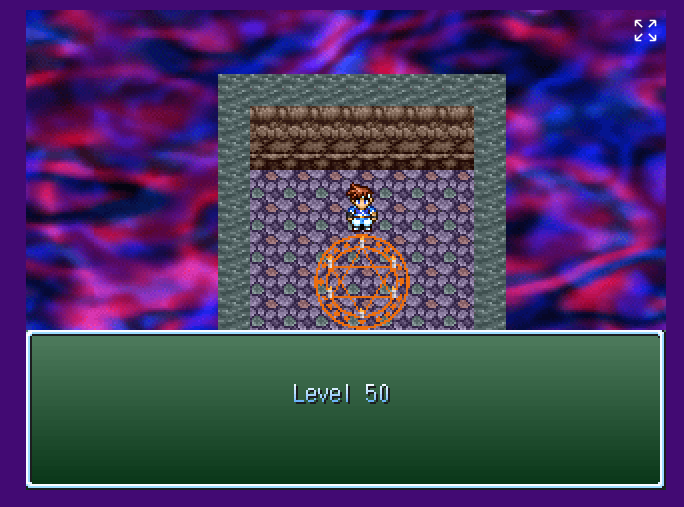


Once I fully explored the dead end ‘tri-path’ end, I dropped back to a rote, right hand wall follow strategy. As soon as the cognitive load gets too be too much (I find myself having backtracked unintentionally) I tend to fall back on such a strategy, or start mapping if I think I can.
I think one way to keep the player engaged with an ever deepening dead end or ultra confusing maze is ‘stuff’. I you put odd happenings, strange marks and sounds, or other ‘things’ into the environment, I’d stay more engaged and probably not turn into a wall-follower.
The ‘stuff’ wouldn’t even have to build towards something, and maybe it would be cruel if it didn’t, but imagine a meta story playing out environmentally about a horrible monster or a frightening mystery where the environment gets more and more intense (and big, and labyrinthine), but eventually just peters out in a dead end like this game. It was just a side area. The main area might be plan, or all branches, main or side, might seem to have an escalating narrative.
Maybe that’s too cruel. I’m not sure.
There’s the one rpgmaker 2k game that I can’t remember the name of with all the huge, interconnected dungeons and visible on-screen enemies milling about. It was so sprawling, but there was just enough random treasure, some kind of fast travel points, and odd hidden connections between the vast dungeon ‘sections’ and such that it was still stimulating for quite some time. At some point, I had to tap out on that one, and I was fairly far in. It just ended up feeling exhausting at some point, like being lost in the inversion of a giant desert with no landmarks… an infinitely crowded city where every block is so noisy and full and interconnected with twisting alleys you aren’t sure if you’ve seen it or not… Hopefully you know the one I mean, I feel kind of stupid describing it like that.
It feels a bit like the vibe you are describing here, and it was quite popular back in its day, I think.