Guides & How-tos
Practical guides to help you share files, collaborate with your team, build AI agent workflows, and get the most out of your agentic workspace.
Showing 1–15 of 1744 resources
Resource results

Top 7 OpenClaw Skills for AI Website Generation
OpenClaw gives coding agents the ability to build websites from natural language prompts, but the quality depends entirely on which skill you install. This guide evaluates seven ClawHub skills that handle website scaffolding, design, and deployment, comparing their framework support, output quality, and where they deploy.

Top OpenClaw Tools for AI Logo Generation
OpenClaw skills let you generate logos, mascots, and brand assets directly from your terminal without switching to a browser-based design tool. This guide ranks the top ClawHub skills for AI logo generation, compares their model support and output formats, and shows how to store and hand off finished brand assets using Fast.io workspaces.
Top OpenClaw Tools for AI Face Swap Effects
OpenClaw's skill registry includes dedicated face swap and face manipulation tools that run inside agent workflows. This guide evaluates the verified options, from EachLabs-powered face swapping to age transformation and avatar rendering, and explains how to wire them into automated pipelines with persistent file storage.

OpenClaw vs Zapier: How to Choose the Right Automation Tool
OpenClaw is an autonomous AI agent that reasons through complex tasks dynamically. Zapier is a no-code workflow platform that reliably executes predefined trigger-action automations across 7,000+ apps. This guide compares their architectures, pricing, and use cases, then explains the hybrid approach where Zapier handles structured routing and OpenClaw handles reasoning, with Fast.io as the shared file layer between them.
OpenClaw vs Make: How to Choose Between an AI Agent and a Visual Workflow Builder
OpenClaw is an autonomous AI agent that reasons through tasks and adapts on the fly. Make is a visual workflow builder that executes predefined automations across 1,500+ connected apps. This guide compares their architectures, pricing, and ideal use cases, then explains the hybrid approach where Make handles data routing and OpenClaw handles reasoning, with Fast.io bridging both as the shared file layer.
How to Browse and Discover Skills on OpenClaw ClawHub
ClawHub hosts over 13,000 OpenClaw skills, but finding the right one takes more than a keyword search. This guide covers five discovery methods, from CLI commands and vector search to curated community lists, and walks through how to evaluate a skill's security metadata, version history, and community signals before you install it.
How to Build an OpenClaw SharePoint Document Agent
The OpenClaw SharePoint skill connects agents to enterprise document libraries through the Microsoft Graph API using certificate-based authentication. It supports text extraction from .docx, .xlsx, .pptx, .pdf, .txt, and .md files, scoped to a single SharePoint site via Sites.Selected permissions. This guide walks through Azure app registration, certificate setup, skill installation, document extraction workflows, and how to persist extracted data in shared workspaces.

How to Build an OpenClaw Power BI Dashboard Agent
OpenClaw can automate the repetitive parts of Power BI management, from triggering dataset refreshes to generating plain-language narrative summaries and routing reports to the right people. This guide covers how to set up an OpenClaw Power BI agent, connect it through the REST API, configure the five core functions, and store generated reports in persistent workspaces for team handoff.

How to Build an OpenClaw Dynamics 365 Agent
Most Dynamics 365 automation guides stop at Copilot Studio or Power Automate. This one covers a different path, connecting an OpenClaw agent to Dynamics 365 CRM through Composio's MCP toolkit so the agent can create leads, update opportunities, and manage cases autonomously. The guide walks through setup, CRM data operations, enterprise governance under Microsoft Agent 365, and persistent storage for agent outputs.
OpenClaw Coding Agent Tutorial: Automate Bug Fixes and PRs
OpenClaw's coding-agent skill delegates development tasks to background AI processes that fix bugs, review PRs, and refactor code without blocking your main agent session. This tutorial walks through enabling the skill, choosing a backend, spawning your first coding session, monitoring it with process commands, and reviewing the output PR safely.

Hermes Agent vs OpenAI Agents SDK: Choosing the Right Agent Framework
Hermes Agent and OpenAI Agents SDK represent two fundamentally different philosophies for building AI agents. Hermes is a self-hosted, self-improving runtime with persistent memory and MIT licensing. The OpenAI Agents SDK is a lightweight orchestration framework tightly integrated with OpenAI's model ecosystem. This guide compares them on the dimensions that matter for production deployments, including cost at scale, data sovereignty, vendor lock-in, and long-term skill accumulation.
Hermes Agent vs Devin AI: Autonomous Agent or Coding Engineer
Hermes Agent and Devin AI solve different problems despite both carrying the "autonomous agent" label. Hermes is a long-lived personal agent that accumulates skills and memory across sessions, while Devin is a task-scoped coding engineer that plans, writes, tests, and ships code inside a sandboxed environment. This comparison breaks down architecture, memory, deployment, cost, and the real workflows where each one excels.
How to Build a Hermes Agent Signal Bot With End-to-End Encryption
Signal is the only major messaging platform where every message between you and your AI agent stays end-to-end encrypted by default. This guide walks through setting up Nous Research Hermes Agent on Signal using signal-cli, configuring group chats and voice notes, and solving the file persistence problem that most self-hosted agent setups ignore.
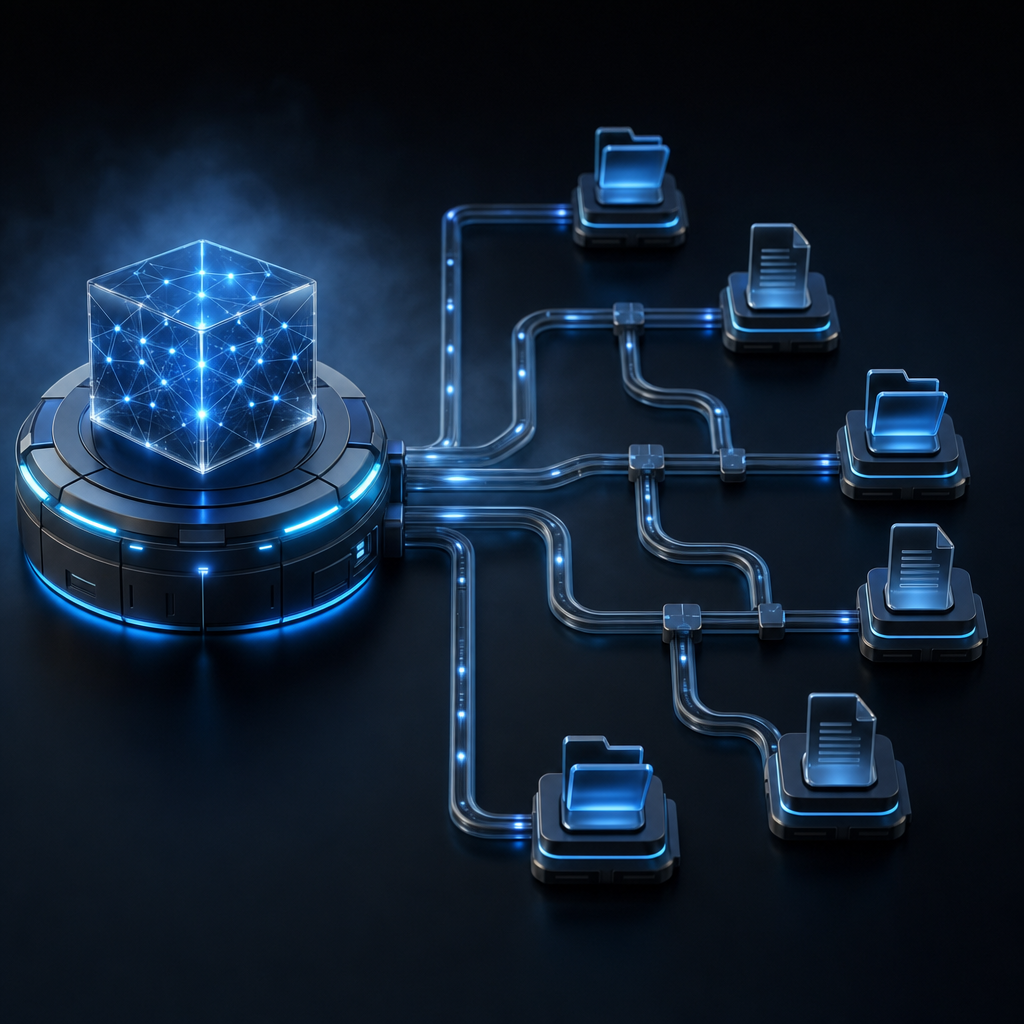
How to Set Up RAG Document Retrieval in Hermes Agent
Hermes Agent's qmd skill provides local RAG document retrieval by combining BM25 keyword matching, vector search, and LLM reranking in a single hybrid pipeline. This guide walks through configuring collections, generating embeddings, querying your knowledge base, and enabling auto-retrieval during conversations, all running locally with sqlite-vec and FTS5.
How to Configure Multi-Model LLM Routing in Hermes Agent
Hermes Agent separates heavyweight reasoning from specialized side-tasks through a dual-model architecture with eight auxiliary slots. This guide walks through configuring main and auxiliary models, building fallback chains across providers, pooling credentials for rate-limit resilience, and using the Pareto Code Router to auto-select the cheapest coding model that meets your quality bar.