Smart Grid

Smart Grid Technologies in Utility Operations

Smart grid technologies determine how utilities detect faults, automate switching, integrate distributed energy, and contain cyber exposure by expanding real-time visibility, control automation, analytics, and resilience across transmission and distribution networks. Smart grid technologies are not abstract innovations. They are deployed control assets that compress detection time, shorten restoration intervals, and reduce cyber containment exposure. Technology selection is therefore not cosmetic modernization. It directly alters operational risk. Utilities implementing these technologies are redesigning visibility boundaries. Where traditional grids relied on substation-level telemetry, modern deployments extend sensing, communication, and automation deep into distribution circuits. The result is improved fault isolation, reduced…
View more

Request for Quotation Service

Smart Grid

  • Buyers Submit Free RFQs to top suppliers, no obligation.

  • Suppliers Browse real project RFQs directly from buyers.

  • Trust Electricity Forum 40 years connection buyers and suppliers.

Latest Smart Grid Articles
Grid Cybersecurity Strategy for OT Control Systems
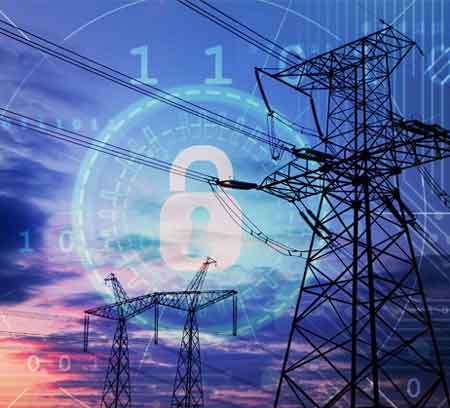
Grid Cybersecurity Strategy determines whether SCADA and OT control systems remain trustworthy under active cyber intrusion by governing risk assessment, defense in depth, anomaly detection, and secure smart grid communications that preserve deterministic grid operations. A weak grid cybersecurity strategy does not fail quietly. It erodes situational awareness, distorts telemetry integrity, and creates conditions where automated switching can amplify instability rather than contain it. In modern distribution networks, cybersecurity is inseparable from operational reliability. In transmission and distribution control rooms, cyber exposure is not an abstract IT issue. It directly influences breaker status accuracy, DER coordination, voltage regulation logic, and…
View more

Grid Cybersecurity in Modern Utilty Systems
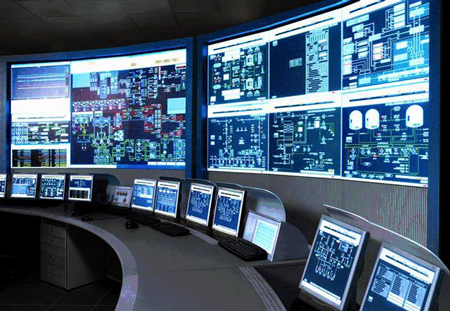
Grid cybersecurity protects operational technology systems, SCADA networks, and control devices from cyber threats that disrupt grid reliability. It addresses OT security, network segmentation, and real-time system integrity across utilities. Grid cybersecurity is the protection of operational technology systems, communication paths, control applications, and intelligent field assets that keep the power system operating safely and reliably. It applies to the grid as a whole, not just to a firewall, a substation, or a single device. The core issue is operational trust. Utilities must know that measurements are real, commands are authorized, and system behavior matches actual field conditions. When cybersecurity…
View more

SCADA Monitoring

SCADA monitoring provides real-time data acquisition, system diagnostics, and remote control for power systems. It improves operational efficiency, enhances reliability, and enables preventive maintenance for substations, industrial facilities, and utility grids using smart automation.   Understanding How SCADA Monitoring Works SCADA monitoring plays a central role in the supervision and operation of modern industrial systems. By integrating hardware, software, and communication infrastructure, operators can monitor and control critical equipment across vast physical distances remotely. In today’s power, manufacturing, and oil and gas sectors, the ability to gather and act on real-time data is essential for maintaining system efficiency, reliability, and…
View more

Cost of Different Storage Systems for Smart Grids
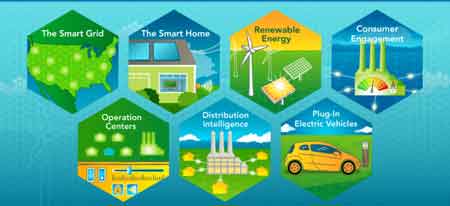
The cost of different storage systems for smart grids varies depending on the technology, efficiency, and scalability. Understanding battery, thermal, and pumped-storage costs helps utilities plan reliable, sustainable, and cost-effective energy solutions. This topic concerns the economic evaluation of various energy storage technologies, such as batteries, thermal storage, and pumped hydro, that help balance supply and demand and enhance reliability in smart grid environments. It compares capital, operational, and lifecycle costs to provide a clearer understanding of long-term value. By outlining these cost differences, it guides utilities, grid operators, and policymakers in choosing the most effective solutions and supports energy…
View more

Smart Energy Systems for Modern Grid Operations
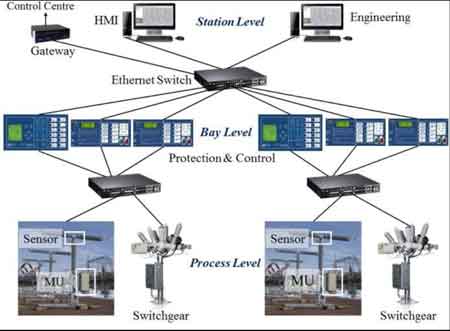
Smart energy systems integrate SCADA, distributed energy resources, storage, automation, and advanced data analytics to improve grid reliability, voltage stability, and operational control across modern transmission and distribution networks. Smart energy systems redefine how utilities maintain control authority over increasingly dynamic transmission and distribution infrastructure. They are not abstract modernization concepts. They are operational frameworks that determine whether voltage excursions, feeder congestion, and DER variability remain manageable conditions or escalate into reliability events. In high-penetration environments where inverter-based resources, storage, and electrified loads converge on legacy feeders, traditional centralized dispatch assumptions break down. System inertia declines, bidirectional flow increases, and…
View more

Smart Substation and the Evolving Grid

Smart substation systems use digital sensors, IEC 61850 communications, IEDs, and real time analytics to automate protection, monitoring, and control, improving reliability, power quality, cybersecurity, and DER integration across modern substations.   The Smart Substation Explained A smart substation is best understood not as a single technology shift, but as a change in how substations behave day to day. Instead of acting as largely silent infrastructure that only draws attention during failures, these facilities now observe themselves continuously, exchange information digitally, and react at machine speed when conditions change. Protection, control, and monitoring are no longer isolated functions handled by…
View more
Read All Smart Grid Articles

Smart Grid News


Smart Grid Articles From ET Magazine

AI at the Substation Edge: Digital Twins and Predictive Maintenance for Transformers and Switchgear

AI at the Substation Edge: Digital Twins and Predictive Maintenance for Transformers and Switchgear

From Data Collection to Insight Modern substations generate vast amounts of data—temperatures, gas levels, vibrations, contact wear, and breaker operations. Historically, much of it went unused. Now, with advances in edge computing and AI, that data can be analyzed in real time to forecast failures before they happen. A digital twin models the behavior of a physical asset, updating continuously with sensor input. When combined with machine-learning algorithms, it becomes a powerful tool for predictive maintenance. How Predictive Maintenance Works AI systems learn normal operating patterns from historical data and flag deviations that may signal early degradation. This approach replaces…
View more
Deterministic Communications for Protection: TSN + Private 5G from the Yard to the Control Room

Deterministic Communications for Protection: TSN + Private 5G from the Yard to the Control Room

Time-Sensitive Networking (TSN) and private 5G networks promise deterministic, low-latency communication for modern protection and control—extending real-time reliability beyond the substation fence. Why Determinism Matters In protection systems, milliseconds determine success or failure. A delayed trip signal can cause catastrophic equipment damage or cascading outages. Traditional Ethernet networks, while fast, are not inherently deterministic—packet collisions, jitter, or congestion can alter delivery times. For protection, that uncertainty is unacceptable. Time-Sensitive Networking (TSN) resolves this issue by creating predictable Ethernet traffic through scheduling, prioritization, and synchronization. Each critical data flow is assigned guaranteed bandwidth and timing, ensuring that GOOSE or sampled-value messages…
View more
Inside the Digital Substation Upgrade: Migrating to IEC 61850 Ed. 2.1, Process Bus, and Interoperable Testing

Inside the Digital Substation Upgrade: Migrating to IEC 61850 Ed. 2.1, Process Bus, and Interoperable Testing

From Hardwiring to Data Networking The modernization of substations is as much a communications revolution as a protection one. For decades, copper conductors carried analog signals from instrument transformers to relays and controls. Each new circuit meant more wiring, more panels, and more room for error. IEC 61850 changes that model completely. By transforming measurement and protection data into digital packets, it turns the substation into a high-speed data network rather than a web of hardwired signals.The adoption of Edition 2.1 refines this transformation. It corrects earlier ambiguities, improves interoperability guidance, and formalizes testing procedures. These refinements may sound technical,…
View more
Zero-Trust Substations: How CIP Is Shifting from Perimeter Defense to Continuous Vendor and Supply-Chain Risk Management

Zero-Trust Substations: How CIP Is Shifting from Perimeter Defense to Continuous Vendor and Supply-Chain Risk Management

Utilities are rethinking cybersecurity. The zero-trust model replaces perimeter defense with continuous verification—of every device, vendor, and data path—across the substation and supply chain. The End of Perimeter Thinking For decades, substation cybersecurity meant building walls: firewalls at the perimeter, limited physical access, and segmented control systems. The assumption was simple—keep bad actors out, and everything inside the fence is safe. But as substations evolve into digital, data-driven nodes within the smart grid, that assumption no longer holds. Today, cyber threats often arrive not through the gate but through trusted vendors, firmware updates, and networked devices already inside the perimeter.…
View more

Sign Up for Electricity Forum’s Smart Grid Newsletter

Stay informed with our FREE Smart Grid Newsletter — get the latest news, breakthrough technologies, and expert insights, delivered straight to your inbox.

Download Our FREE Smart Grid Handbook

T&D Automation and AMR/AMI Systems Handbook Vol. 2

Volume 2 of our T&D Automation and AMR/AMI handbook series provides detailed information on the automation of the transmission and distribution networks, coupled with the widespread use of new metering technologies. Distributed generation, the cost benefit of modern substation automation, advanced metering infrastructure, intelligent switchgear and wireless technologies are a sampling of the articles included in this more than 104 page handbook.

The T&D Automation and AMR/AMI Systems Handbook, Vol. 2 is a comprehensive resource that explores the latest advancements, methodologies, and best practices in T&D automation and metering systems. Designed for electrical engineers, system operators, and utility professionals, this handbook provides a deep dive into the integration, implementation, and management of automation systems and smart metering solutions within modern power grids.

In this volume, we examine the key components of T&D automation, including SCADA systems, distribution automation, fault detection, isolation and restoration (FDIR), and the role of sensors and actuators in enhancing system performance and reliability. We also explore the integration of advanced communication technologies that enable utilities to remotely monitor, control, and optimize their distribution networks.

Additionally, Volume 2 focuses on the importance and functionality of AMR/AMI systems, which enable utilities to collect and analyze detailed data on energy consumption. We cover the architecture, design, installation, and maintenance of AMR and AMI systems, with a focus on how these technologies improve operational efficiency, billing accuracy, and customer service.


Download the 2026 Electrical Training Catalog

Explore 50+ live, expert-led electrical training courses –

  • Interactive
  • Flexible
  • CEU-cerified