defrog: (puzzler)
America is 250 years old today.

Here’s how that’s going.


Not much I can add to this, really, except that it’s completely within the character of this admin to take a major national anniversary like this and turn it into a cringey projection of Trump’s ego.

If it helps, remember that time is an illusion and thus so are calendars, which means anniversaries, while nice, don’t define who we are. Also, empires come and go like leaves on the wind, etc.

Anyway, enjoy your weekend. Such as it is.

Bread and circuses,

This is dF
defrog: (books)
One of these books took me nine months to finish. It was for a class, but it might have taken me that long anyway, for reasons that shall perhaps become clear.

A History of Christianity: The First Three Thousand YearsA History of Christianity: The First Three Thousand Years by Diarmaid MacCulloch

My rating: 3 of 5 stars

I started reading this last year as part of a class on the same topic. Class wraps up tomorrow, and I finished reading the book last week, and I can’t remember the last time I thought at the end of a book, “Man, I’m glad that’s over!” Which is not to say it’s a bad book. It’s just a lot to take in. Diarmaid MacCulloch essentially compresses 3,000 years of history into a little over a thousand pages, which – even with his accessible writing style (compared to academic textbooks, anyway) – makes for very dense reading.

While Christianity as a religion started almost 2,000 years ago, MacCulloch starts a thousand years earlier with the Greek and Roman empires to provide the context in which Christianity emerged from Israel (which was occupied by Rome when Jesus arrived, while Greek language and philosophy were well known in the Levant). From there, he goes back and forth through time in order to cover parallel developments in Western Europe, Eastern Europe, Asia Minor, North Africa and Russia as Christianity spread all over the world, and ends with the “culture wars” that have engulfed the Catholic and Protestant churches from 1960 up to the book’s publication in 2011.

I’m not sure how much I learned – as I say, it’s a dense infodump of a book, and even then, MacCulloch necessarily oversimplifies a lot of details with passing references (the Avignon papacy comes to mind). I will say MacCulloch is good at pointing out specific turning points in history where the Church could have gone in a different direction or wiped out completely if not by happy accidents of history, which is interesting. Probably the biggest takeaway for me is that the book makes very clear that the Church (and its underpinning theology) has never been a static thing – it has always evolved and adapted with the times along with the rest of the world. And given much of the bigoted, bloody horrors of its history, that can only be a good thing. As bad as some people think the Church is now, it used to be a lot worse.

It’s also something to keep in mind as people still argue about LGBTIA issues and theology evolves outside of the Western Heterosexual Man box to include feminist theology, queer theology, trans theology, anti-colonialist theology, etc, while certain conservative Evangelicals are panicking over this and advocating Christian nationalism as an antidote. Point being: it’s the latest stage of Christianity’s evolution, which shows that it’s still evolving. Just as we look back today at the Church’s involvement in the Crusades and slavery and say, “That’s not what Jesus preached – how could they get that so wrong?”, in a couple hundred years, history students may be looking at the current Church arguing over gay marriage, gender fluidity and ordaining women and asking similar questions about us.


Terror Out Of SpaceTerror Out Of Space by Leigh Brackett

My rating: 2 of 5 stars

Continuing my exploration of the works of Leigh Brackett, this is a 1944 novelette in which Lundy, an officer of the Tri-Worlds Police (Special Branch!), is flying over Venus, tasked with delivering an alien lifeform to scientists for analysis. This is dangerous work – not least because the alien is telepathic and can make men worship her, and anyone who has ever looked in its eyes has gone insane.

That includes Farrell, who is tied up on the ship with Lundy and his partner Jackie Smith. Almost right away, Farrell breaks free, Smith is controlled by the alien, and the ship crashes into the Venusian ocean. Only Lundy survives, but the alien escapes in the crash. As he makes his way across the ocean floor, he’s almost eaten by flesh-eating monster flowers before being rescued by telepathic Venusians who are sort of like sentient kelp. The alien has hypnotised all their males, and ask him to help.

And, well. I like a lot of Brackett’s Golden Age stuff, but this one didn’t really work for me overall. I appreciate her vivid imagination of different types of alien races, and the fact that she actually presents the alien’s point of view, turning a standard hunt-the-alien tale into something a little richer that also makes for a more interesting ending. But getting there is a slog, with the opening action a bit jumbly, and the middle section hallucinatory to the point of being hard to follow – at least for me.

View all my reviews

Unafraid,

This is dF
defrog: (books)
Well, pretty fast, anyway.

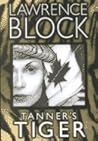
Tanner's Tiger (Evan Tanner, #5)Tanner's Tiger by Lawrence Block

My rating: 4 of 5 stars

Continuing my re-read of Block’s Evan Tanner series, this is the fifth instalment, which sees Evan Michael Tanner – who cannot sleep due to a war injury, joins lost causes and takes assignments from a nameless US spy agency that mistakenly thinks he’s one of their agents – embarks on a mission to take his adopted 7-year-old daughter (and heir to the Lithuanian throne) Minna to the World’s Fair in Montreal. Which may not sound like a dangerous secret mission – except that his boss (known only as The Chief) suspects the Cuban Pavilion is up to something, and wants Tanner to find out what it is. Tanner accepts, partly because Minna wants to go to the Fair, but mainly to escape New York’s oppressive heatwave.

Things start to go wrong almost immediately when Tanner is refused entry into Canada because one of his pet lost causes is a Quebec independence group called MNQ. Undeterred, Tanner finds another way in, goes to the World’s Fair and confirms that something’s fishy about the Cuban Pavilion when Minna goes missing while inside it. Once the police discover he’s in the country, making him a fugitive, he turns to the MNQ, who are planning to assassinate Queen Elizabeth II when she visits the Fair and want Tanner to help. And then there’s the accidental theft of a few million dollars’ worth of heroin from the Corsican Mafia …

Like that. This is one of the more fun entries in the series as Tanner’s problems pile up – which is typical of his adventures, though in this case it also compensates for the fact that his mission involves going to what should be the easiest country Tanner has ever had to enter. It’s also noteworthy that his tryst with sexy MNQ member Arlette (the “tiger” of the title) is probably the most realistic of Tanner’s dalliances in the series so far (which is to say, the least Bond-like). Block doesn’t quite stick the landing at the end, opting for a fast, overly-tidy wrap-up that glosses over the impact that being held prisoner for several days might have on a seven-year-old kid. Other than that, it’s still more fun than Bond, for my money.


This Crowded EarthThis Crowded Earth by Robert Bloch

My rating: 1 of 5 stars

I’ve known about Robert Bloch for decades, but I’ve mostly only read him whenever one of his short stories appeared in an anthology I happened to be reading. The exceptions are two pulp crime novels – Shooting Star/Spiderweb – that were reissued as a double novel by Hard Case Crime some time ago. None of them made me a big fan, but I generally found his work to be entertaining, at least. So I thought I’d try this short 1958 novel that imagines a future Earth where overpopulation has become a global problem.

The story – which starts in 1997 – follows Harry Collins, an ad executive who lives in Chicago in a tiny cubicle, which as a single person is all he’s entitled to in the name of saving space. Driven crazy by the pressure of his work and living in such a crowded city, he attempts suicide, but is stopped in time and sent to a large spacious camp in the wilderness to recover. This suits him fine until he meets another inmate – a journalist named Archie – who tells him the camp is in fact a research facility where Dr. Leffingwell is working on a solution to the population problem that is not only horrifying, but results in unintended consequences that could end the human race.

It sounds good on paper, but the execution didn’t really work for me, not least because this crowded Earth apparently still has plenty of wilderness left, which it hasn’t occurred to anyone to make use of to spread people out more. In fact, Dr. Leffingwell’s solution seems extreme compared to other more practical solutions, and it’s not clear to me why his solution would even save space. The scope of the novel is ambitious – it starts in 1997 and ends in 2065, but intersperses Collins’ story with chapters where minor characters deal with the consequences of Leffingwell’s solution, which tends to interrupt the flow. As overpopulation dystopias go, Harry Harrison’s Make Room! Make Room! (and even Alexander Payne’s 2017 film Downsizing) did it better and more convincingly. That said, I’ll probably try Bloch again one day – he writes readable prose, and you can’t win ‘em all.

View all my reviews

A face in the crowd,

This is dF

100 PUNKS

May. 19th, 2026 09:49 am
defrog: (puzzler)

ITEM: Rolling Stone has published a listicle of the Top 100 Punk Albums of all time. Inevitably, a lot of people online are sneering at it. Which is so punk rock!

Well, look, all online lists are basically meant to drive clicks and "engagement", and we can always argue over "is this punk rock" etc.

On the other hand, Paramore?

The weird thing (apart from it being heavily skewed towards the US – I'm sure a Mojo list would skew the other way) is that while I don’t object to the majority of the entries, they’re also so obvious that it feels like they’re ticking boxes.

I guess the real drama is in the rankings, but again, I think we all knew what No.1 was going to be before we started scrolling.

But, again, stuff like this is for starting arguments, not establishing canon, so I shouldn’t take it too seriously.

Party with me punker,

This is dF

defrog: (Default)
And now The Who, as you’ve never heard them before.


This is dEFROG-FM, with magic in my eyes.
defrog: (Default)
Somewhere in an alternate universe, Trump and Xi Jinping have formed a band and released this as the theme song for their meeting.*


This is dEFROG-FM, chasing stories in the garden.

*Not really.
defrog: (puzzler)
Status update.


This is dEFROG-FM, walking the floor and watching the door.
defrog: (Default)
If I ever do a playlist or show on the greatest rock'n'roll riffs, I would definitely put this on it. Jim Babjak doesn't get nearly enough credit for coming up with such an agile, muscular and addictive riff.


This is dEFROG-FM, where no one wins or takes the blame.
defrog: (science!)
It’s Labour Day in most parts of the world.

If you’re planning any activities to mark the occasion, and if you need a playlist for that, and if you don’t mind that a lot of the songs aren’t explicitly about the labour movement (or anything work related), or if you dig playlists with a vague robot dystopia theme, you might consider using this one.


Beep boop computers.

This is dF
defrog: (books)
50% boost via a class assignment. It counts!

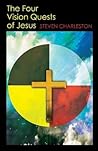
The Four Vision Quests of JesusThe Four Vision Quests of Jesus by Steven Charleston

My rating: 5 of 5 stars

One good thing about taking classes is that it leads you to reading books it might not otherwise have occurred to you to try if you just saw it sitting on a bookstore shelf. Such is the case with this, in which Steven Charleston (a Choctaw Native American and an ordained Episcopal priest) writes about how, as a young man – faced with the possibility of having to choose between his Christian faith and his Choctaw heritage – sought a way to reconcile them. He found the answer in the traditional Native practice of the vision quest.

Put simply, a vision quest is a ritual in which a person goes through a physical ordeal of purification and fasting in order to receive spiritual advice in the form of a vision that results in a transformation. Charleston’s own vision quest led him to realise that (1) Jesus’ 40 days in the desert was a vision quest itself, (2) four stories in Matthew’s gospel can be interpreted from a Native American POV as vision quests, and (3) the incarnation of Jesus was God’s own vision quest to become a transformative reality for his children. Charleston’s thesis is that both Native American and Christian traditions invite us to the dynamic inner experience of relating with God and growing in our humanity.

I’m oversimplifying it due to lack of space – it’s a complex concept even before you get into the theological comparisons between Christianity and the Native American concept of God. But it’s a fascinating read – not only for the detailed descriptions of Native American culture and spirituality (as well as the suffering they endured at the hands of white colonialists), but also how these dovetail with and/or map onto the overall Gospel message and its underlying theology. As with all things theological, there are points of contention and plenty of room for misunderstandings of what Charleston is saying here – and obviously, for people of certain political persuasions, the whole book is probably woke heresy. For me, I got a lot out of it, both intellectually and spiritually.


The TellingThe Telling by Ursula K. Le Guin

My rating: 4 of 5 stars

Published in 2000, this is the eighth and last instalment of Ursula K. Le Guin’s Hainish Cycle novels, in which a young woman from Terra named Sutty is sent to the planet Aka on her first mission as an Observer for the Ekumen (the alliance of Hainish worlds). Aka’s corporate government has ambitions of its own to become a technological superpower, join the Ekumen and explore interstellar space. The thing is, the Ekumen believes you can only really know a society from its history and its cultural roots, but the Corporation has outlawed and suppressed all of Aka’s traditional customs and beliefs (to include its original language) in fear that these will prevent them from achieving their vision.

Sutty – who specialises in language and literature – is assigned by the Ekumen to learn about pre-Corporate Akan culture and history, but isn’t allowed outside of the capital of Dovra City where that info has been erased. She also finds it hard to be objective about the Corporation, as she grew up on Terra when it had become an oppressive and brutal religious theocracy. When the Corporation unexpectedly approves an Ekumen trip to the old provincial town Okzat-Ozkat, Sutty’s boss asks her to go, suspecting that knowledge of the old ways may still exist there in some form. Sutty reluctantly agrees to make the trip and try to uncover details of Aka’s secret history and culture – particularly its traditions of storytelling (a.k.a. "the Telling").

Reportedly, Le Guin used China’s Great Leap Forward and the Cultural Revolution as a framework for Aka’s background, though of course it’s far more than just a rehash of that particular history. In any case, I found Sutty’s exploration of Akan culture compelling, not least because it illustrates not only why cultural history matters, but also how “banned” ideas and practices can still thrive in oppressive societies when they’re embedded in daily life to the point that it’s hard for authorities to pinpoint it as an illegal activity. Also interesting is Sutty’s struggle to maintain objectivity (given her own experience of religious and sexual oppression on Terra), especially as she immerses herself deeper into Okzat-Ozkat's "forbidden" culture under the nose of a govt Monitor assigned to keep an eye on her. Some readers may find it too slow, but I found myself engrossed by it. It may not be her best novel, but it’s possibly one of her more underrated.

View all my reviews

Stories I tell,

This is dF
defrog: (science!)
The social medias is abuzz with Rush’s surprise appearance as the opening act of the Juno Awards, in which they returned to their roots, playing “Finding My Way”, the first track from their first album.


As you’ve no doubt heard, it’s their first time playing as Rush since 2015 and since the death of drummer Neil Peart in 2018, at which point everyone – including Geddy Lee and Alex Lifeson – felt that was the end of Rush, as Peart was considered to be irreplaceable.

As you’ve also no doubt heard, Lee and Lifeson surprised everyone last year when they announced they had in fact found a replacement – German drummer Anika Nilles – and would be returning to the road for a new tour in 2026.

The Juno appearance was essentially a soft launch for that, with Nilles onstage as well as Loren Gold, who will be handling the keyboard bits of Rush songs rather than Lee having to do it all himself.

There have been something like 1.2 million hot takes on the Juno gig – some positive, some not, some constructive, some not. The usual, then.

And of course, as a lifelong Rush fan, I have my own hot take to add to the pile, and this is it:

1. To get the obvious out of the way, Nilles was great. She’s no Neil Peart, but no one is. You could also argue that Neil Peart was no Anika Nilles. All of which is fine and proper.

Some will nitpick and say that technically she proved she could at least fill John Rutsey’s shoes (as Peart joined Rush on their second LP). That said, having watched them play together live, I have full confidence that if she couldn’t handle anything the Rush back catalog has to throw at her, Lee and Lifeson wouldn’t have hired her in the first place.

2. Some will of course continue to say Peart is irreplaceable. Maybe. On the other hand, it would be false to say Peart had no equal in terms of technical ability – there are tons of TikToks out there with wannabe drummers who can cover “YYZ” flawlessly. There’s also this interesting interview in Classic Rock magazine in which Lifeson explains how replacing Peart is not really about technical ability but the feel:
 
“So you get a sense of appreciation for the way the song is, but you also get a more acute appreciation for how Neil played. Because when you see someone else trying to capture his feel, you realise what kind of player he was, and the tightness of his attitude, the firmness in attack as well.

"With Tom Sawyer, or even Limelight, you can’t just shuffle through those songs, you have to be attentive. And, you know, stand up straight. And that’s sort of where the feel comes from.”

That feel is what Nilles had to get right, and as Lifeson admits in the same interview, it took four days of rehearsals for all three of them to figure that out:
 
"And on the fifth day, on the last day that we rehearsed, she took all our comments about feel, about Neil’s feel and the way he played, and being very cognisant of the ability that he had, and bang! She nailed the songs all day. It was a real ‘Wow!’ moment.
 
In other words, for all the other musicians in the band, it’s not just what the drummer plays but how they play it. Nilles can’t just imitate Peart – she has to play in a way that doesn’t throw Lee and Lifeson off.

If the Juno gig is any indication, they seem to have worked that out just fine. Once the tour kicks off, we’ll find out.

3. Like a lot of people, I was happy for Rush to call it a day after Peart’s death. There’s always this debate about whether bands with established and beloved lineups should stop when one of them (traditionally the drummer) dies. Do we do a Zeppelin? Do we do a Who? In a sense, there’s no wrong decision, but for perspective, the Zeppelin/Who examples happened in the late 70s. Since that time, we’ve long become accustomed to bands continuing with multiple lineup changes, and it works more often than not. At some point a band can become more than the sum of its parts if the core elements remain and new elements can fit seamlessly. (Or, as Mark E Smith once said, “If it’s me and your granny on bongos, it’s still The Fall.”)

Anyway, at the time, I thought Lee and Lifeson made a good decision to go out on a high note. On the other hand, they clearly missed playing the music, and eventually decided that the best way to honour Peart would be to keep the music going, provided they could find someone worthy of the drummer’s seat.

4. So, while part of me kind of wishes they had let their legacy speak for itself and ride off into the sunset, everyone on that stage was clearly having an absolute blast playing together, which is really what it’s all about at the end of the day. So it feels churlish to complain that musicians I love and respect are up there having a great time and enjoying themselves – and totally blowing the roof off the dump in the process.

5. I admit, I may feel differently if they decide to do a new album. Peart’s lyrics were the heart and soul of Rush’s music, and there’s a reason Lee and Lifeson generally left the lyrics to him. Maybe Nilles can write epic SF fantasies and technocratic dystopian allegories in metered verse too – I dunno. But that might be a bridge too far.

Then again, Rush surprised us at Juno. Maybe they’re not done surprising us yet.

On the road again,

This is dF

defrog: (45 frog)
Nobody:


Absolutely nobody:


Me: Hey, I made a playlist for Easter Sunday, check it out!


Everyone: Oh, Jesus.


Me: Exactly!


PRODUCTION NOTE: The main objective was to avoid kids’ songs and church hymns. Which is funny because when you Google “songs about or related to Easter”, about 94% of results are mostly split between kids’ songs and church hymns. So this one took some work to get it to two hours, is what I’m saying.

Look busy,

This is dF
defrog: (books)

Truly I am.

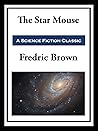
The Star MouseThe Star Mouse by Fredric Brown

My rating: 3 of 5 stars

I generally like Fredric Brown, and read him when I get a chance, since so much of his work is criminally out of print. So I was chuffed to find out that Project Gutenberg has archived some of his stories from his early pulp SF days. I decided more or less at random to start with this tale from 1942 about, yes, a star mouse, albeit a not-exactly-willing one.

The story starts with Professor Oberburger, a scientist who fled Nazi Germany and now lives in Connecticut, where he is trying to develop rocket fuel for a small experimental spaceship capable of going to the moon. For a test subject, Professor Oberburger captures a mouse living in his house, which he names Mitkey. The professor doesn’t expect Mitkey to return from his maiden flight. But he does – after an unexpected encounter on his way to the moon …

Well, it’s good fun, really, although I’ll add that the twist ending (one of Brown’s trademarks) adds a bittersweet aftertaste to what otherwise have been a cute Disney-eque story. And given Mitkey’s namesake, that may have been intentional on Brown’s part. Anyway, it’s a good yarn. Fair warning: Brown is one of those writers who writes foreign accents into the dialogue (“Und now, idt is budt a madter of combining der fuel tubes so they work in obbosite bairs,” etc), which slows things down some, but everyone did it in those days, and at least Brown is good at it.


Empire of AI: Dreams and Nightmares in Sam Altman's OpenAIEmpire of AI: Dreams and Nightmares in Sam Altman's OpenAI by Karen Hao

My rating: 5 of 5 stars

One of my day jobs is tech journalism, so of course I’ve been writing a lot lately about AI. I also read publications like MIT Technology Review quite a bit, so I was already familiar with Karen Hao’s excellent journalism work with them. So I was keen to read this, which is mainly the story of OpenAI (the creator of ChatGPT and its variants) and its founder Sam Altman, but also the rise of the AI industry itself, and how that rise is fast creating an oligarchy of corrupt and exploitative technological empires (with OpenAI leading the charge) with real control over resources and people, especially in developing countries with less economic and political power.

In essence, Sam Altman started OpenAI as a non-profit research company with the goal of developing AGI (artificial general intelligence, the theoretical version of AI that’s as smart or smarter than human intelligence and therefore potentially the most dangerous) before anyone else does to ensure that it’s developed ethically and safely and benefits humanity. But in the process of chasing that goal, OpenAI has sparked a tech arms race that consumes huge amounts of energy and water, hoovers up copyrighted and personal data of everyone on the planet without their consent, and employs people in the Global South to clean up that data for sweatshop wages (not to mention the psychological impact of having to watch the absolute worst of the web all day long to make sure it doesn’t end up in AI datasets) – all while OpenAI has increasingly sidelined its own safety teams in its quest to stay ahead of everyone else.

As Hao points out, this is not an anti-AI book, but a warning of where the current AI leadership is headed with its imperialist mindset (consciously or otherwise) and who’s getting exploited along the way. Hao also makes the argument that it doesn’t have to be this way – we can have useful, ethical and beneficial AI, but we’re not going to get it from Silicon Valley broligarchs. It will only happen when people organise at grassroots community levels and work to redistribute that power, and regain control of their data and land being commandeered to build these empires.

Inevitably, the book is already outdated, as the AI industry has continued to evolve and grow in positive and negative ways. But Hao tells the story as well as it can be told, and especially excels at covering the hidden cost of AI on communities in the Global South, which for me is the more interesting part of the book – I’d have liked to see more of that and less of the OpenAI corporate drama, though I can see why that story had to be told to understand why all this is happening. Needless to say, fans of OpenAI, Sam Altman, Elon Musk and Silicon Valley techbro hype may not like this as much as me. So it goes.

View all my reviews

Empire down,

This is dF
defrog: (puzzler)

If I was still doing college radio, and didn’t give a flip about FCC indecency rules, this might be my playlist for tonight.


PRODUCTION NOTE 1:
Before anyone asks, I used a cover of “War Pigs” instead of the original song by Sabbath because (1) I already had an Ozzy Osbourne song, and (2) the Puddles Pity Party version is actually quite good – it showcases the gravitas of the song in a different way, and IMO it works.

PRODUCTION NOTE 2: This was curated from a pool of over 200 songs, and could easily have gone to a four-hour runtime. So if you think something’s missing, you’re probably right. If the war is still going this time next year, maybe I’ll do a sequel.

War all the time,

This is dF
defrog: (books)

Taking it up a few gears this month, thanks to pulp fiction. Go me!

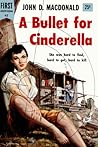
A Bullet for CinderellaA Bullet for Cinderella by John D. MacDonald

My rating: 3 of 5 stars

I tried John D MacDonald for the first time last year with The Girl, the Gold Watch & Everything, and while it was okay, it didn’t inspire me to seek out more of MacDonald’s stuff. But this 1955 novel fell into my lap by happenstance, and it seemed more like straightforward pulp crime, so I decided to give it a shot.

The premise is pretty classic noir – Tal Howard, shell-shocked from his time as a POW in the Korean War, shows up in the small town of Hillston with a mission: find $60,000 that his compatriot Timmy Warden (who was a fellow POW and died in the prison camp) had embezzled from his brother George and buried somewhere. His only lead is a woman named “Cindy”, who Timmy said would know where the money is. Howard arrives in Hillston to discover that another POW – a ruthless psycho named Fitzmartin – is after the same treasure.

It pretty much follows the private eye formula as Howard tries to find Cindy, and in the process meets a girl, gets sapped, annoys the police and finds dead bodies in incriminating places. It reads better that The Girl, The Gold Watch and Everything, and spends some time ruminating on what the POW experience can do to a guy. Even so, Howard isn’t that sympathetic a lead character, which makes the ending a little hard to swallow. Again, it’s okay for what it is, but I’ll probably need more happenstance to try MacDonald again.


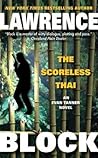
The Scoreless Thai (Evan Tanner, #4)The Scoreless Thai by Lawrence Block

My rating: 3 of 5 stars

Continuing my revisit of Lawrence Block’s Evan Tanner series, this is the fourth instalment, which was titled Two For Tanner when I first read it – which was apparently the publisher’s idea, as they didn’t care for Block’s Title. Maybe they wanted something more identifiable with the series, or maybe they didn’t get the joke, as one of Tanner’s companions in the story is Dhang, a young Thai man who is also a virgin and desperate to get laid. Well.

This time, Tanner – who is incapable of sleeping and freelances for a super-secret agency that thinks he’s one of their agents – is off on a mission to rescue his latest girlfriend, Tuppence Ngawa, a Kenyan-American jazz singer whose band plays a gig for the King of Thailand, after which they are reportedly kidnapped by Communist rebels right around the same time the Royal Jewels are stolen. Given the novel starts with Tanner held prisoner by guerillas in a suspended bamboo cage in the middle of the Thai jungle, it’s obvious his mission isn’t going as planned. His only hope turns out to be Dhang, who is a member of the guerillas and will help Tanner escape ... if he can help him find a woman to boink.

And, well, you know. This one has aged even less well than the previous three, particularly the “Dhang needs women” angle, though I guess you can also say it’s a pretty accurate representation of how Americans viewed both sex and Southeast Asia in the late 60s. And Tanner is comparatively more enlightened than most of his contemporaries (to include one of his CIA shadowers in this story). Still, I did find myself wincing a little more than usual. This one is also a bit more grim, as Tanner really gets put through the ringer this time, and also has some critical thoughts on the Vietnam war that was happening at the time, so the tonal shifts can be a bit jarring. For all that, Block (as usual) tells the story well, so as page-turning adventures go, it’s still pretty good.


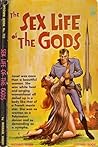
The Sex Life of The GodsThe Sex Life of The Gods by Michael Knerr

My rating: 2 of 5 stars

Found on Project Gutenberg, this is an obscure relic from the days of pulp SF and pulp erotica – or in this case, both. Michael Knerr (a.k.a. M.E. Knerr, both of which may be pen names) wrote some erotic pulp thrillers in the 60s before moving on to non-fiction books in the 70s about stuff like Bigfoot and the Jim Jones Guyana suicides. As far as I can tell, this 1962 novel was his only attempt at SF – and it’s probably as well.

The premise: a man wakes up in the woods next to a plane crash with amnesia. His wallet tells him he’s Nick Danson, and that he’s married to a gorgeous sexpot of a woman named Beth. He seeks her out in hopes of getting his memory back, and finds he’s being tailed. He’s also having weird dreams about being a space soldier in an alien race of gods with a gorgeous sexpot of a girlfriend named Jela. But what if those aren’t dreams – and he’s not really Nick Danson?

What fun!

But of course, this ain’t Philip K. Dick. The actual SF part is poorly fleshed out (to say nothing of the distinction between humans and the alien ‘gods’), but then the target audience probably wasn’t reading this for the SF bits. As one might expect from the title alone, there’s a whole bunch of sex scenes with Nick and Beth, Nick and Jela and even Nick and random sexpot neighbour Janet, and while they’re tame by modern standards, Knerr really wants you to know that Beth, Jela and Janet had fantastic boobs. On the plus side, it’s readable and fast-paced. Best thing I can say about it is that if anyone had bothered to make a film version in the 60s, it would have made a great MST3K episode.


Zone OneZone One by Colson Whitehead

My rating: 3 of 5 stars

I’ve read and enjoyed two of Colson Whitehead’s novels to date (The Underground Railroad and The Nickel Boys), and when I found out he’d also done a zombie novel, I was keen to see what he would do with that particular genre, on the reasonable grounds that he would do something different with it. And so he did. The novel starts as the plague appears to be receding. The provisional American govt (now based in Buffalo, NY) has started a rebuilding campaign under its “American Phoenix” programme. To this end, they’ve kicked off an initiative to repopulate Manhattan Island as a testbed for urban repopulation elsewhere.

With the Marines having already killed the bulk of the zombie hordes in Zone One on the southern tip of the island, teams of sweepers are now being sent into the zone to clear buildings of “stragglers” (harmless zombies who generally stay in one place in a catatonic state), plus any flesh-eating monsters the Marines might have missed. The basic story follows three days in the life of a man nicknamed Mark Spitz, a member of Omega unit as they go through the routine of sweeping Zone One. That said, most of that time involves Spitz flashing back to the events that brought him from Last Night to this point, the people he left behind, the people who left him behind, and the various ways everyone is coping with PASD (Post Apocalyptic Stress Disorder).

Notably, his flashbacks are not in linear order, and Whitehead doesn’t neatly separate past and present, giving it an almost stream-of-consciousness-type vibe. A lot of readers have complained about this, having apparently expected a straightforward zombie action thriller, whereas Whitehead is more interested in exploring how people cope psychologically and emotionally with the end of life as they know it as they’re thrown into a nightmare survival trip. But then zombie action thrillers are a dime a dozen these days, so credit to Whitehead for doing something different. The jumbled flashback motif is admittedly a little exhausting to navigate (and it's one reason it took me three months to finish it), yet I found that it does give more emotional heft to a rather exciting final act, when Spitz finds out the true nature of their mission. Probably not for everyone, particularly hardcore zombie fans, but I liked it.

View all my reviews

In the zone,

This is dF
defrog: (onoes)
I have somehow been recruited for a mission in which I’m supposed to impersonate Donald Trump. I don’t remember who hired me for this, what the point of impersonating Trump is, or why I agreed to do it.

I’m told it’s for some livestreaming forum, although Trump is the only speaker, so it seems more like an overblown press conference, with a small in-house audience whose job is to laugh at his jokes.

I’m made up to look like Trump with spray tan and a wig. I go to the event and judging from the attendee reaction, my impersonation is convincing, although I notice some ppl behind me seem to be interested in my hair, and might have figured out it’s a wig. I figure Trump gets this all the time, so I don’t worry too much.

Shift: After the event, I’m at my mom’s old house, still in my Trump get-up. A van pulls into the driveway and as I go to the side door, I see Trump approaching, wearing a long black overcoat, his expression the same menacing scowl as his official presidential portrait. I back away as he steps inside, and as he approaches me, I’m surprised that he’s taller than I thought – almost 9 feet.

Before I can say anything, he opens his overcoat, revealing that he is actually sitting on the shoulders of a man in a general’s uniform. Just as I remember being warned earlier about the general, he reaches out with one hand, grabs me by the shoulder and pulls me to him in an embrace. With the other hand, he pulls out a long knife and stabs me in the back. There’s a sharp pain, and everything fades to black.

And then I woke up.

Trumped again,

This is dF
defrog: (devo mouse)

The Lunar New Year is upon us again.

Specifically, the Year of The Horse.


Have I got just the playlist for you.


DISCLAIMER: I made this back in 2023 as a kind of response to a setlist by BBC Radio’s Gideon Coe in which he did three hours with songs about horses. I did likewise, just to see if I could do it.

Obviously, I could. And I did.


Anyway, it was lying around handy, and I didn’t see the point of making another playlist. So this will have to do.


Of course of course,


This is dF
defrog: (45 frog)
… Is another Valentine’s Day playlist.

Possibly this one.

Possibly not.

But it’s here if you need it.


Love love love,

This is dF
defrog: (books)

And we’re off! To a very slow start. Because I was traveling and busy and enduring general madness and whatnot.

Anyway, it’s a start.

Lorelei of the Red MistLorelei of the Red Mist by Leigh Brackett

My rating: 2 of 5 stars

Continuing my exploration of the works of Leigh Brackett, this 1946 novella is an interesting curiosity in that (1) it’s co-written with Ray Bradbury and (2) it wasn’t a collaboration so much as a case where Brackett wasn’t able to finish the story after she got an offer from Howard Hawks to co-write the screenplay for The Big Sleep with William Faulkner, so she asked Bradbury (whom she was mentoring at the time) to think up an ending and finish it for her.

The story is a planetary romance set on Venus, in which professional thief Hugh Starke is on the run after stealing a million credits. His ship crashes and he’s left for dead, but he wakes up in a new body – specifically, a warrior named Conan – thanks to a mysterious sorceress named Rann who is also Conan’s former lover. There is a war going on between the humanoid fish sea-people who live in the Red Sea, Rann’s people (descendants of the sea people) and the humans of Crom Dhu, which is under siege. Rann wants Starke-as-Conan to kill the leader of Crom Dhu and end the siege. Starke has other ideas. There's also a zombie army at some point.

The story itself is pure planetary-romance pulp, and it’s okay if you like Conan stories (and this was apparently intended as an homage to Robert E. Howard) – which, I confess, I’m indifferent to. It’s perhaps more interesting to see how the story obviously switches writers in midstream, and also how at least some of the details here would find their way into Brackett’s Eric John Stark tales, which she started writing a few years later, particularly her descriptions of Venus as a liveable planet – she would reuse the Red Sea concept in Enchantress Of Venus. Anyway, it's not terrible, but it's probably more worthwhile if you want to see what Bradbury was doing before he became famous.

View all my reviews

Play Red Misty for me,

This is dF
defrog: (45 frog)

Another year, another Best Albums list.


And you’re lucky to get one – not just because I was busy traveling for a couple of weeks over the holiday, but also because, to be honest, it wasn’t exactly a banner year for new music for me. Quite a few usually reliable artists put out albums that just didn’t really work for me (hey, it happens), and most of what I came across throughout the year, while good, didn’t really set my world on fire.


Luckily, several late-year releases moved the needle, but even so, the only way I could fill out a Top 20 list was to lump LPs and EPs into a single category rather than break them out separately.


And why not? This ain’t Rolling Stone, after all. And that’s not a bad thing. Besides, good music is good music regardless of running time.


dEFROG’S TOP 20 LPs/EPs OF 2025


BB Bomb

Practice Songs (Damnably)

Taiwan hardcore punk band that started in 2003 as an all-girl outfit led by singer/guitarist Hsu Pei Hsing, who is now the only original member (and only woman) left. As far as I know, this is their second album, and it’s louder and faster than their debut, with 15 songs in under 21 minutes – which is intentional in that Hsu has said that she challenged herself to write songs more quickly because the first album took 17 years to release. In any case, it’s noisy shouty fun.


Billy Nomates

Metalhorse (Invada Records)

Third album by British singer-songwriter Tor Maries, who goes by the stage name Billy Nomates, and whom I’d never heard of until I came across this. Loosely organised around the concept of a decrepit funfair, the song cycle ruminates on themes of loss and insecurity, inspired by the recent death of her father from Parkinson's and her own diagnosis of MS. Which sounds like a bummer, but it’s a surprisingly upbeat album musically, and the songs are pretty sharp.


The Bug Club

Very Human Features (Sub Pop)

Fourth LP by Welsh duo, and their second for Sub Pop that essentially doubles down on last year’s On The Intricate Inner Workings of the System – so, more eccentric fuzzy indie rock. This didn’t knock me out as much as the previous album – it’s somewhat less fun, with some songs getting a bit more reflective and personal – very human, you might say. Still, that’s not necessarily a bad thing, and there’s still plenty of charmingly snarky bounce to be had.


The Cleaners From Venus

Neverland For Now (Mr Mule)

The evergreen Martin Newell returns as The Cleaners From Venus with another EP of slightly psychedelic indie rock in which he seems to long for simpler days in a crazy world, although he also whimsically volunteers to save America from itself by becoming its latest pop obsession (cos hey, someone’s gotta do it). Hey, I’d vote for him. Anyway, it’s a nicely solid and lovely little collection of songs.


Del The Funky Homosapien + thegoodnews

This Just In! (Nature Sounds)

Thegoodnews is Del The Funky Homosapien, producer CTZN and rapper Po3 presented mainly in cartoon form via illustrator Pete Cosmos. But this ain’t Gorillaz – the cartoon bit is secondary to the musical style, which is adjacent to Deltron 3030 (whom Del has also worked with in the past), with Juan Alderete (of Mars Volta and Dr Octagon) and Taka Tozawa (who has also collaborated with Deltron 3030) also onboard the project. They’ve been a thing since the mid-2010s, and this EP was released for Record Store Day. Put simply, if you like Deltron 3030 (or any project that has Del in it), you may like this. I do and I did.


Holly Golightly

Look Like Trouble (Damaged Goods)

Holly Golightly had a busy year, both with her return to duty in Thee Headcoatees and this, her 14th solo album (not including the ten LPs she did with The Brokeoffs). Golightly returns to her Southern Gothic torch’n’twang sound that suggests smoky nightclubs at 2:30am as she casually sings about life’s ups and downs with a twinkle in her eye and a switchblade in her boot.


Half Man Half Biscuit

All Asimov and No Fresh Air (RM Qualtrough)

Somehow I’d missed the fact that Half Man Half Biscuit were still active. This is their 16th LP, and it’s pretty much business as usual for singer-guitarist Nigel Blackwell and bassist Neil Crossley – biting and subversive satirical lyrics set to catchy hooks, with references to everything from Isaac Asimov, Edgar Allen Poe and Badly Drawn Boy to horror clowns, Legoland and telepathic crime-solving chickens. The doom-folk epic “Falmouth Electrics” literally made me laugh out loud. That’s your review right there.


Thee Headcoatees

Man-Trap (Damaged Goods)

Billy Childish revived two of his old bands this year – Thee Headcoats and Thee Headcoatees, the latter being an all-girl band that was originally created by Childish as an alternate backup band to Thee Headcoats but became successful on their own terms before breaking up in 1999. This is by far the better of the two comebacks – groovy, solid garage rock with great vocal interplay between all four members.


The Hives

The Hives Forever Forever The Hives (PIAS)

Two years after their comeback album The Death of Randy Fitzsimmons, their majesties The Hives return for album no. 7. Their mission and sound remain unchanged: swaggering tongue-in-cheek garage rock intent on world domination. They dress like kings now and everything. And you know what? They’re entitled.


Kling Klang

Half Life (Wrong Speed Records)

Experimental synth rock from Liverpool! Kling Klang have been around since 1999, but their recorded output isn’t prolific – this is only their second LP (and the first, 2006’s Esthetik Of Destruction, was really just a singles/EP comp). I’d never heard of them before, but I have now, and this collection of mostly instrumental tracks is strangely addictive – not alt-Kraftwerk so much as a Delia Derbyshire/Hawkwind collaboration. Whatever it is, it’s oddly mesmerising, and the more I listen to it, the more it embeds itself in my brain.


Leenalchi

Heungboga (HIKE)

Second full length LP from Korean band that blends traditional pansori folk with bass-driven dance-pop. The songs here are based on the pansori epic of Heungbo, who rescues an injured swallow and is rewarded with fortune, while his greedy brother Nolbo brings about his own ruin. Even if you don’t speak a word of Korean (which I don’t), Leenalchi knows a catchy dance hook when it hears one, and the blend of that and pansori vocals makes Leenalchi utterly unique. Nothing else sounds anything like this, and it’s fantastic.


James McMurtry

The Black Dog and the Wandering Boy (New West Records)

James McMurtry (son of Larry) has been making records since 1989, but I only got into him a couple of years ago after coming across his brilliant song “We Can’t Make It Here” via a book about protest songs. This is his 13th studio album, and while nothing on here quite reaches the expectations set by that song, it comes close a lot of times. McMurtry specialises in solid storytelling embodied in songs populated by ne’er-do-well characters haunted by regret and seeking redemption – the kind of thing Warren Zevon used to do so well. Two cover songs (Jon Dee Graham’s “Laredo (Small Dark Something)” and Kris Kristofferson’s “Broken Freedom Song”) seamlessly bookend the album. Powerful stuff.


Willie Nile

The Great Yellow Light (River House Records)

16th studio album from NYC stalwart who gets compared to Dylan, Springsteen and Lou Reed, which I think is overselling it, but there’s no doubting Nile’s gift for passionate lyrics and his ear for air-punching anthems. The song quality falls a little short of the best bits of his previous album The Day The Earth Stood Still, and I think sometimes he tries too hard to sound inspiring and hopeful. And yet I can’t help admire that he makes the effort, bless him.


Nusantara Beat

Nusantara Beat (Glitterbeat)

Indonesian Sunda Pop from Amsterdam! Sunda Pop first emerged in the 1960s in Indonesia, where traditional Sundanese music with contemporary pop, psychedelia, surf music and funk. Nusantara Beat – all of whom are of Indonesian heritage – essentially put a modern spin on Sunda Pop that tilts the balance a little more in favor of pop over Sunda. This is their debut LP after having the spent the last year or so putting out several 45s on the Les Disques Bongo Joe label.


Jonathan Richman

Only Frozen Sky Anyway (Blue Arrow Records)

Jonathan Richman returns to duty with his 18th studio album, which also reunites him with former Modern Lover (and Talking Head) Jerry Harrison. Despite the album’s underlying theme of death and mortality (and it’s jarring to remember Richman has been making music for 55 years now), it’s a typically light-hearted and whimsical affair, with some occasional welcome musical experimentation (with Richman giving fair warning in “But We May Try Weird Stuff”).


Sparks

MAD! (Transgressive Records)

Album no. 26 from the unstoppable Mael brothers, and it’s about what you’d expect from Sparks – synth pop, art rock and repetitive lyrics about everything from rocky relationships to JanSport backpacks and being stuck in freeway traffic. This is one of those cases where “more of the same” is both good and not so good. By general standards it’s good – by Sparks standards, it’s good but average.


Mavis Staples

Sad And Beautiful World (Anti-)

14th studio solo album from Mavis Staples featuring a collection of (mostly) cover songs selected as vehicles for her to reflect on the state of the world we live in and what we can (and should) learn from the past as we look towards an uncertain future. Obvious highlights are Tom Waits’ “Chicago” and Leonard Cohen’s “Anthem”, but just about everything here is gold in Staples’ hands – moving and inspiring without resorting to bombast or preaching, and offering a ray of hope. This is indeed how the light gets in.


Stereolab

Instant Holograms On Metal Film (Warp/Duophonic UHF)

Stereolab returned to active duty this year with their 11th studio LP and their first album of new music in 15 years. Superficially it’s like they never left – posh electronics, song titles lifted from operator manuals and lyrics that read like socialist essays – but their sound has matured over the decades into something simultaneously laconic and fizzing with energy. They also haven’t lost their ability to muck about with their own formula. Mary Hansen’s absence is still noticeable for me – the Groop have never quite managed to duplicate the natural vocal interplay between Hansen and Laetitia Sadier. But it’s still nice to have them around.


Cosey Fanni Tutti

2t2 (Conspiracy International)

Third solo LP from legendary Throbbing Gristle co-founder Cosey Fanni Tutti that offers up experimental electronica ranging from hypnotic beats to abstract moods. Probably not for everyone, and I admit I have to be in the right frame of mind to appreciate it (long bus rides, for example). But it’s pretty trippy. If nothing else, it’ll make a great soundtrack for the next Blade Runner movie someday.


Voice of Baceprot

Transisi (Dark Anthem Records)

Second EP from all-girl Indonesian metal trio who continue to kick against the pricks. The songs cover a range of social and political problems – war, violence, colonialism, govt corruption, deforestation, etc. More striking (and encouraging) is that VoB continues to evolve into something that’s more than the sum of their musical influences. Still possibly the most underrated metal band in the 21st century.


HONOURABLE MENTIONS


Annie and the Caldwells

Can't Lose My (Soul) (Luaka Bop)

Annie and the Caldwells are a funk-gospel outfit that have been around since 2000 and have released a couple of albums on the Memphis-based Ecko label. This is their first for Luaka Bop, and it reworks six of their earlier tracks. There’s no doubting Annie Calwell’s pipes and sincerity, but I came away feeling she was trying a little too hard to engage with the listener. Still, it do be funky.


Gelli Haha

Switcheroo (Innovative Leisure)

Second LP from the artist formerly known as Angel Abaya, and her first as Gelli Haha, her alter ego that embraces her inner child. The switch to Gelli also sees Abaya switch from fairly standard indie rock to more experimental synthesiser dance pop. Doesn’t really hold up after a few listens, but it’s goofy fun while it lasts.


The Let's Gos

Tracks For Lucks ~Swampbag Sessions~ (CMA-SUN Records)

Tokyo’s The Let's Gos is an all-girl punk band that have been around since 2009 cranking out fairly standard pop punk – pretty good, but nothing Shonen Knife and a few dozen other bands on K.O.G.A. Records haven’t done before. This mini-LP of covers, on the other hand, is rather charming, not least because of their obvious love for the material. It’s also an strikingly eclectic selection, from The Who, The Clash and The Beatles to Strawberry Switchblade and France Gall.


Stress Eater

Everybody Eats! (Silver Age)

In which comic book-inspired hip-hop supergroup Czarface team up with Kool Keith, who takes on the character of Stress Eater. For the most part, it doesn’t really add up to more than the sum of its parts, but the parts are high quality, so it has its moments.


Throwing Muses

Moonlight Concessions (Fire Records)

11th studio album from Throwing Muses, who pivot from the heavy vibes of 2020’s Sun Racket to a bleak, stripped down acoustic sound that isn’t that far removed from some of Kristin Hersh’s solo material, though at this stage there seems to be increasingly little difference between a Hersh solo LP and Throwing Muses album apart from personnel. Anyway, there’s some good stuff here but overall this didn’t really click with me.


Vondré

0:00 (Bandcamp)

Second album from Mexican alt-rock band that are invariably described as a combination of shoegaze, grunge and post-punk. To my ears, they’re more reminiscent of 90s bands like Curve – droning noise over catchy basslines fronted by melodious female vocals singing about alienation (only in Spanish!). I like it, but sometimes it feels like a case of form over substance. Then again, some of it is riveting. Will be keeping an eye on them to see where they go with this.


BEST SINGLES


David Boring

Nancy Nightmare (Damnably)

Hong Kong no-wave-inspired post-punk noise band David Boring returned to action on Halloween 2025 after time off due to the back-to-back upheavals of the 2019 protests and COVID-19 with several new singles ahead of their second LP, which is due out this month. This is the first of those, and it’s nightmarish indeed – in the best possible way. Looking forward to the new album.


Fulu Mikiti

Fungola (Moshi Moshi)

Latest single from Congolese band where literally every instrument they play is made from stuff recycled from the dump, from petrol cans and flip-flops to car parts and plastic tubing. They also describe themselves as an Eco-Friendly Afrofuturist Punk collective. In any case, they remain as fun as ever to listen to.


THE PLAYLIST


Wanna sample the above? Well you can.


Same time next year,


This is dF

Profile

defrog: (Default)
defrog

July 2026

S M T W T F S
   123 4
567891011
12131415161718
19202122232425
262728293031 

Syndicate

RSS Atom

Most Popular Tags

Style Credit

Expand Cut Tags

No cut tags
Page generated Jul. 13th, 2026 05:58 am
Powered by Dreamwidth Studios