I’ve been looking at ways of writing character groups that work; one of the classics is the Freudian Trio, (like Kirk, Spock, and Bones in Star Trek TOS) but since I’m working in an ancient world setting, the Four Temperament Ensemble, being based on ancient Greek concepts, seems to make more sense. I found some charts on the internet, but none had all the info, so I added some color coding and additional notes to one that was pretty good.
These go back at least as far as Hippocrates, c. 460 – c. 370 BC.
Fe: Empathetic and warm-hearted. Other people are one of the most important things to me and I find it hard not to care about them or to want to keep them happy. I’m a lover of people
Fi: Emotional and opinionated. I have strong feelings about who/what I value and what is truly right, so I let my personal values influence myself more than anything else. I’m an idealist
Te: Driven and responsible. If I want to get something done, I’ll quickly find the most efficient way to do it. I’m a go-getter
Ti: Rational and independent. I love making logical sense of what I don’t know and figuring out how things work to solve problems or just for the hell of it. I’m an analytical thinker
Ne: Very stimulated by ideas and concepts. My mind is always energised by interesting thoughts and connections between them. I’m a visionary
Ni: Detached from the moment by itself and perceptive of the bigger picture. My 5 senses only take me so far, I’m mostly concerned with intangible possibilities and hidden meanings behind things. I’m a contemplator
Se: Spontaneous and highly in tune with my surroundings and happenings in them, which I’m almost always confident in experiencing and interacting with. I’m a realist
Si: Quite in touch with information I’ve gained in the past. My memory is very strong and I’m constantly comparing what I experience in the present to things I’ve experienced in the past. I’m a traditionalist
who…
AUXILIARY FUNCTION:
Fe: Highly values peace and harmony.
Fi: Is very in touch with their emotions and their sense of right and wrong.
Te: Takes charge to organise their environment and accomplish objectives in it.
Ti: Thinks logically and analyses information as objectively as possible.
Ne: Has an active imagination when it comes unrealistic/abstract ideas and possibilities of what could be.
Ni: Has clear plans and goals for the future along with a good idea of how to realise them.
Se: Sees things as they are and has no problems with improvisation or immersing themselves in the moment.
Si: Lets past experiences guide them and influence how they see the world.
When needed, I can…
TERTIARY FUNCTION:
Fe: Be gregarious and charming to get others to like me or to keep a social situation running smoothly,
Fi: Remind myself of my emotions and ideals of right and wrong,
Te: Do whatever it takes to complete a task or solve a problem,
Ti: Step away from emotions and make sense of things rationally,
Ne: Consider multiple possibilities and play with novel ideas,
Ni: See beyond my senses and pay attention to the intangible and to what could become of something in the future,
Se: Indulge in sensory experiences and be open to spontaneity,
Si: Thoroughly compare an experience or an idea to one that’s in my memories,
but many of my faults come from…
INFERIOR FUNCTION:
Fe: Not being very empathetic or sociable and not fully understanding how to properly act in some social situations.
Fi: Being too objective and not being able to foresee what feelings certain things can provoke in myself and others.
Te: Being reluctant to ignore my personal values and consider objective measurements of value and achievement.
Ti: Placing too much value on my own and other peoples’ feelings and not enough on objectivity and rationality.
Ne: Not being very open to novelty or uncertainty.
Ni: Failing to plan for the future or to perceive what my senses can’t.
Se: Being uncomfortable with living in the moment or interacting with my physical environment.
Si: Being bored by constant routine and predictability.
(This series is ongoing. A table of contents will become available when the series ends. You can find additional posts from this series in the emotions tag.This series will remain open for additional posts. This post series was inspired by a 4th Street Fantasy convention panel.)
Part Two: Archetypes of Emotion
Cliches are everywhere from the decisions we make about plot to the traits we believe certain types of characters must have. They’re even present in the way we understand emotions. All the details that feel natural to us when writing are probably one kind of manifestation of trope or other. The prevalence and accessibility of media and story in general that occurs today is more than ever before. Wi-fi, global networks, hotspots, and streaming capability meants that we are able to consume story–TV, movies, books, ebooks, fanfiction archives, torrenting sites, blogs, news sources–anywhere we are. We are saturated with narratives while taking a break at work, while on the bus, during class changes, in the downtime of a conversation. Billions of stories exist at our fingertips in glorious array, an ever-available library to spark imagination.
This total immersion is dual blessing and curse. It gives us a cure for boredom, makes us laugh when we desperately need it, takes our mind from reality, and can serve as a source of inspiration for world, culture, character, story-line, and more. What it also does is shows us how “normal” looks.
In Following the Equator: A Journey Around the World by Mark Twain in which he chronicles circumnavigating the world in a steamboat, Twain writes: “Truth is stranger than fiction, but it is because fiction is obliged to stick to possibilities; truth isn’t.”
The pervasiveness of story-telling, the unique human capacity to put ourselves in the life experiences of others, and the ability for story to provide insight into circumstances that we otherwise wouldn’t have experience with means that we often use those stories as experiences of our own. We tend to believe what we see in these stories and sometimes use them to help ourselves recognize situations as we come across them in our own lives and to inform our decision-making processes.
Story skews our reality. We believe them because surely they wouldn’t have gotten past all the people in the production line if it weren’t at least possible. That’s the key, like Twain said: Fiction just has to be possible. But our ideas of possible are influenced by fiction.
Truth holds so many more outcomes. Algorithms present the most likely occurrences. Fiction uses those responses because they are the most possible, the most relate-able. The use of these “most-likely-to-be-seen” responses narrows what gets seen It normalizes only this small part of a larger spectrum and creates cliches, and from that comes archetypes: the caregiver who wants to please, the egotistical rock-star, the activist who never talks about anything else, etc.
When we’re at a loss for how a character is–in terms of traits and personality–or how a character would or should act in a given situation, we may find ourselves at a loss because we haven’t experienced the same thing. When we run out of personal experience to draw on, we turn to story: “How have others portrayed it? It must be more realistic than me pulling it from the air, right?” When we do this, and when others do this, over and over and over for centuries, we end up with not only character archetypes but emotional archetypes: templates of emotions to drop on our characters, if-then statements for how characters should react to events.
This seems as intuitive advice as “subvert cliches” but make sure your characters have not become emotional archetypes. Think about how characters react to hearing about the death of a close loved one. On-screen, the immediate reaction is often the same. Emma Bull brought up the easy three lines:
“I’m sorry.” “Where’s [so-and-so]?” “They’ve passed away,” or “They’re gone,” or “They’re not coming back.”
These lines are extraordinarily common and so packed with implied heartbreak that it’s actually rare-ish to find anything else (variations on the theme aside). They’ve become the norm and it’s unexpected to see anything else.
Maybe these are the right lines. Maybe that emotional response your character just had is right. But maybe it’s not. Don’t be complacent. We’re often keenly aware of the cliches we’re writing in plot and character traits, but it’s time to start watching out for the emotional cliches as well.
Take the time to ask yourself if you’re using a reaction you’ve seen in other places. If it’s the “typical” reaction, the “usual” lines, try to find another way to address the situation. Are you using those reactions and lines because they are true to the character or because they will cause the greater reaction in your audience. Character should always come first.
Understand that everyone reacts to things differently and those outliers on the spectrum still exist. When news of my uncle’s very unexpected death reached us two years ago, my mother cried; I had no reaction except a tightening of my stomach briefly. I cried more at the question of my job status when asked at the after-funeral get-together than I did at the funeral proper, and it sure as heck wasn’t because I didn’t love my uncle.
Be brave enough to venture out of the standard reactions. Remember that characters are more than three-dimensional. They are multi-faceted beings with a multitude of emotions available to them. Don’t stick them in a corner because that’s how all characters of that kind react, so that’s what’s expected and believable. Break boundaries and start normalizing other emotions.
can someone explain the alignment chart for me but in like, the simplest wording possible lmao
venndigo
lawful good: i want to do the right thing, and following society’s rules is the best way to do that
neutral good: i want to do what’s right, and i’m willing to bend or break the rules as long as no one gets hurt
chaotic good: i’m willing to do whatever it takes as long as it’s to do the right thing
lawful neutral: following the rules of society is the most important thing, and that matters more to me than doing what’s right
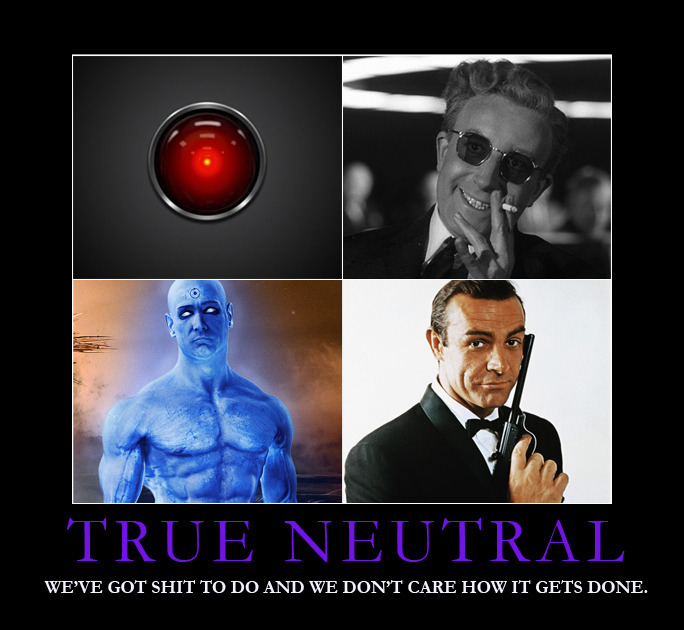
true neutral: i just want myself and the people i care about to be happy
chaotic neutral: i want my freedom, and i don’t care what i have to do to keep it
lawful evil: to impede the protagonists (in whatever evil way) is my primary goal, but i follow my own code of morals even when it’s inconvenient
neutral evil: to impede the protagonists (in whatever evil way) is the my primary goal, and while i’ll do what it takes to achieve it, i also won’t go out of my way to do unnecessary damage
chaotic evil: i relish in destruction and want to do as much damage as possible while i try to achieve my primary goal
The Enneagram is a typing system much like the zodiac or Myers-Brigg system that, while its roots trace
back more than 1600 years in Hermetic tradition, was solidified in the 1950s by
two gentlemen named G.I. Gurdjieff and Oscar Ichazo. Like with most typing
systems, we’re going to, for the most part, ignore the reasons and the people
who created them because they’re heavily linked with pseudoscience and some
weird arcane principles you hear most conspiracy theorists employ during
uncomfortable Youtube videos. And much like the zodiac or Myers-Brigg, these
systems are often abused as armchair psychology for people to objectify and
simplify other people into an easily digestible format, but for characters,
they can be a genuinely helpful tool for digging into their psyche and figuring
out the things that make them tick.
That said, what is the core of the Enneagram? The Enneagram
is based on the principle of nine personality archetypes, with variations,
instincts, and levels of healthiness, all of which give you a grand total of potentially
972 combinations depending on your interpretations. But, uh, we’ll start by
explaining the nine basic types first before we get into all the customization.
The Types
Ones – The Perfection Seeker
Ones are the archetype of the Perfectionist and Reformer.
This is the type that wants clear delineation between Good and Bad, who wants
to maintain, well, perfect integrity. They are orderly, fastidious, with immensely
high standards that they attempt to hold others—and themselves—to, resulting
often in a highly critical outlook of the world. At their best, these are the
Mr. Spocks and Professor McGonagalls. At their worst, these are the Judge
Frollos and Dean Hardscrabbles, prone to hypocrisy and intense fixation to rid
themselves of That Which is Wrong, which could be within themselves—or within
others. “They have a stick up their butt” is a common descriptor of Ones.
Basic fear: of being corrupt, being imbalanced, being “bad”
Twos – The Love Seeker
Twos are the archetype of the Lover and Giver, the Helper,
always thinking about others before themselves—when healthy. Their self-worth
comes from the image of service to others, caring for and being responsible for
the ones they love. Love comes in many, many forms though, and so too and Twos,
coming in all forms from the selflessly loving Molly Weaslys and Samwise
Gamgees, to the monstrous Mother Gothels and Davy Jones, believing they are
entitled to whatever they want for being victims in a larger game.
Basic fear: of being unloved
Threes – The Image Seeker
Threes are the archetype of achievement and success. This is
the type of tremendous ambition and tenacity in getting what they want.
Constantly pushing themselves to be the best, they yearn to feel valuable, and
find value in themselves by making themselves valuable to others. This may
sometimes backfire, as in the search for value they may go to some unscrupulous
means in which to become valuable. At their best, these are the Princess Tianas
and (more kindly written) Scrooge McDucks, and at their very worst, these are
the corporate kings, the Yzmas and Lord Voldemorts.
Basic fear: of being worthless or invaluable
Fours – The Identity Seeker
Four are the picture of the Artiste, the rugged individualists,
unique and wholly, entirely themselves—or, yet another rebel in a sea of
rebels, as it were. Often feeling incomplete, they seek to complete themselves,
this fear capable of keeping them shackled to old wounds until freeing
themselves and finding completion in learning to understand themselves and
their emotions. Those that learn to not withdraw into themselves learn to bring
a wholly unique perspective, often serving as social commenters in some
fashion. The healthiest of Fours can come as Merry Brandybucks and Belle of
Beauty and the Beast, to the Phantom of the Opera and Blanche DuBois.
Basic fear: of having no uniqueness or significance
Fives – The Knowledge Seeker
Fives are the scientist and investigator archetypes. They
seek mastery and understanding of why things are the way they are, and of the
world around them, finding a form of control in the accumulation of knowledge
that no one else has. From this, they stand a dangerous chance of simply
withdrawing from society entirely to preoccupy themselves in their thoughts and
ideas. Healthy Fives can range from Dipper Pines and Twilight Sparkle to
Professor Moriarity and GLaDOS.
Basic fear: of being helpless or incompetent
Sixes – The Security Seeker
Sixes are equal parts Loyalists and Defenders, full of
seemingly paradoxical actions such as being dependent while valuing
independence; wanting to trust and yet testing that trust constantly; wanting
authority yet fearing it. This is because Sixes are constantly on the scout for
danger, and so look to others to put their fears of danger to rest, constantly
on the knife’s edge between being faithful and turning away at the first sign
of their trust being abused. Sixes can range from Ron Weasleys and Zoe Washburns
to the Gollums and Harley Quinns.
Basic fear: of being without support
Sevens – The Stimulus Seeker
Sevens are the archetypal party-seekers and fun-lovers. Often
feeling empty and lonely, they fill this void with pleasures, hedonism, and
distractions, moving from one moment to the next. But spending too much energy
in the pursuit of stimulus is dangerous for Sevens, and they risk spending
themselves into oblivion, giving up on themselves and everything around them.
Sevens can range from the charismatic Jack Sparrows and Scarlet o’Haras to the
destructive Jokers and Cruella deVilles.
Basic fear: of being in pain or deprived
Eights – The Power Seeker
Eights are our challengers and authoritarians. Natural
leaders, Eights are acutely aware of who holds power and who does not—and often
look to put themselves in said positions of power, for both good reasons and
bad, stepping in naturally. They dislike complacency and inefficiency, and any
display of weakness. As expected, Eights can range from Galadriels and Harry
Potters to Azulas and Magnetos.
Basic fear: of being harmed or controlled
Nines – The Peace Seeker
Nines are the picture of mediation and peacemaking, being
adept diplomats and fantasy enthusiasts. Nines seek comfort and serenity above
all else, and while this makes them exceptional at diffusing conflict typically,
it can put them in danger of becoming indifferent or disengaged from the world
around them, retreating into the comfort of their own heads and isolation
around them. Nines can range from Bruce Banners and Luna Lovegoods to Victor Frankensteins
and Queen Elsas.
Basic fear: of being fragmented and conflicted
Stay tuned, and we’ll go into Type wings, levels of healthiness, and subtypes in the
next parts!
Schema therapy is part of cognitive behavioural therapy, most used in the treatment of personality disorders. However, every person on the planet has schemas, and to know your schemas is to know some very crucial information about yourself; this is no different for your character. With this guide, I give you another means of developing your character by way of psychology. Schema therapy, however, is not too well-known outside of those specialised in the diagnosis and treatment of personality disorders, so I’ll give you a good idea of what schemas are and how you can find out what your character’s (or even your own) are.
I was looking for the chart that you made of different the different Jung Types and how they correspond with the Enneatypes. Do you still have that chart somewhere? Thank you!
Just like star signs, the 16 personalities are a great way to create 3D characters or flesh out existing ones. Each personality is made up of four letters that stand for a different personality type. This makes it easy to build fully-rounded, realistic characters your readers can relate too. Everyone fits into the 16 personalities, so why shouldn’t your characters?
The 16 personality website details each personality trait and explains their strengths and weaknesses, along with what a person with that personality is like in different areas of their life, such as the workplace, in friendships and as parents.
Building characters is about using your imagination, so you don’t have to stick to each personality rigidly, but use them as a building block to add your own character’s traits, quirks and backstory into. Everyone may fit into 16 personalities, but everyone is also unique, so your characters should be too.
The Nine alignment cross reference Good (characters who value innocent life and equality) and Evil (characters who do not value life and are driven by chaos or standards of life) with Law (characters with strict codes and morality) and Chaos (character who do what they feel is right/what they want too.)
Most, if not all, characters can be found to fit one of the below categories, and finding where your character fits can help establish their goals and what actions they are willing to take. The rundowns are found here.
Lawful Good, “Crusader”
A lawful good character acts as a good person is expected or required to act. He combines a commitment to oppose evil with the discipline to fight relentlessly. He tells the truth, keeps his word, helps those in need, and speaks out against injustice. A lawful good character hates to see the guilty go unpunished.
Lawful good is the best alignment you can be because it combines honor and compassion.
Lawful good can be a dangerous alignment when it restricts freedom and criminalizes self-interest.
Neutral Good, “Benefactor”
A neutral good character does the best that a good person can do. He is devoted to helping others. He works with kings and magistrates but does not feel beholden to them.
Neutral good is the best alignment you can be because it means doing what is good without bias for or against order.
Neutral good can be a dangerous alignment when it advances mediocrity by limiting the actions of the truly capable.
Chaotic Good, “Rebel”
A chaotic good character acts as his conscience directs him with little regard for what others expect of him. He makes his own way, but he’s kind and benevolent. He believes in goodness and right but has little use for laws and regulations. He hates it when people try to intimidate others and tell them what to do. He follows his own moral compass, which, although good, may not agree with that of society.
Chaotic good is the best alignment you can be because it combines a good heart with a free spirit.
Chaotic good can be a dangerous alignment when it disrupts the order of society and punishes those who do well for themselves.
Lawful Neutral, “Judge”
A lawful neutral character acts as law, tradition, or a personal code directs her. Order and organization are paramount to her. She may believe in personal order and live by a code or standard, or she may believe in order for all and favor a strong, organized government.
Lawful neutral is the best alignment you can be because it means you are reliable and honorable without being a zealot.
Lawful neutral can be a dangerous alignment when it seeks to eliminate all freedom, choice, and diversity in society.
Neutral, “Objective”
A neutral character does what seems to be a good idea. She doesn’t feel strongly one way or the other when it comes to good vs. evil or law vs. chaos. Most neutral characters exhibit a lack of conviction or bias rather than a commitment to neutrality. Such a character thinks of good as better than evil-after all, she would rather have good neighbors and rulers than evil ones. Still, she’s not personally committed to upholding good in any abstract or universal way.
Some neutral characters, on the other hand, commit themselves philosophically to neutrality. They see good, evil, law, and chaos as prejudices and dangerous extremes. They advocate the middle way of neutrality as the best, most balanced road in the long run.
Neutral is the best alignment you can be because it means you act naturally, without prejudice or compulsion.
Neutral can be a dangerous alignment when it represents apathy, indifference, and a lack of conviction.
Chaotic Neutral, “Free Spirit”
A chaotic neutral character follows his whims. He is an individualist first and last. He values his own liberty but doesn’t strive to protect others’ freedom. He avoids authority, resents restrictions, and challenges traditions. A chaotic neutral character does not intentionally disrupt organizations as part of a campaign of anarchy. To do so, he would have to be motivated either by good (and a desire to liberate others) or evil (and a desire to make those different from himself suffer). A chaotic neutral character may be unpredictable, but his behavior is not totally random. He is not as likely to jump off a bridge as to cross it.
Chaotic neutral is the best alignment you can be because it represents true freedom from both society’s restrictions and a do-gooder’s zeal.
Chaotic neutral can be a dangerous alignment when it seeks to eliminate all authority, harmony, and order in society.
Lawful Evil, “Dominator”
A lawful evil villain methodically takes what he wants within the limits of his code of conduct without regard for whom it hurts. He cares about tradition, loyalty, and order but not about freedom, dignity, or life. He plays by the rules but without mercy or compassion. He is comfortable in a hierarchy and would like to rule, but is willing to serve. He condemns others not according to their actions but according to race, religion, homeland, or social rank. He is loath to break laws or promises.
This reluctance comes partly from his nature and partly because he depends on order to protect himself from those who oppose him on moral grounds. Some lawful evil villains have particular taboos, such as not killing in cold blood (but having underlings do it) or not letting children come to harm (if it can be helped). They imagine that these compunctions put them above unprincipled villains.
Some lawful evil people and creatures commit themselves to evil with a zeal like that of a crusader committed to good. Beyond being willing to hurt others for their own ends, they take pleasure in spreading evil as an end unto itself. They may also see doing evil as part of a duty to an evil deity or master.
Lawful evil is sometimes called “diabolical,” because devils are the epitome of lawful evil.
Lawful evil creatures consider their alignment to be the best because it combines honor with a dedicated self-interest.
Lawful evil is the most dangerous alignment because it represents methodical, intentional, and frequently successful evil.
Neutral Evil, “Malefactor”
A neutral evil villain does whatever she can get away with. She is out for herself, pure and simple. She sheds no tears for those she kills, whether for profit, sport, or convenience. She has no love of order and holds no illusion that following laws, traditions, or codes would make her any better or more noble. On the other hand, she doesn’t have the restless nature or love of conflict that a chaotic evil villain has.
Some neutral evil villains hold up evil as an ideal, committing evil for its own sake. Most often, such villains are devoted to evil deities or secret societies.
Neutral evil beings consider their alignment to be the best because they can advance themselves without regard for others.
Neutral evil is the most dangerous alignment because it represents pure evil without honor and without variation.
Chaotic Evil, “Destroyer”
A chaotic evil character does whatever his greed, hatred, and lust for destruction drive him to do. He is hot-tempered, vicious, arbitrarily violent, and unpredictable. If he is simply out for whatever he can get, he is ruthless and brutal. If he is committed to the spread of evil and chaos, he is even worse. Thankfully, his plans are haphazard, and any groups he joins or forms are poorly organized. Typically, chaotic evil people can be made to work together only by force, and their leader lasts only as long as he can thwart attempts to topple or assassinate him.
Chaotic evil is sometimes called “demonic” because demons are the epitome of chaotic evil.
Chaotic evil beings believe their alignment is the best because it combines self-interest and pure freedom.
Chaotic evil is the most dangerous alignment because it represents the destruction not only of beauty and life but also of the order on which beauty and life depend.
ESFJ: While they are usually kind-hearted and well-intended, they're often not warm and fuzzy. This is because they often try to love people before they learn to like them. They are the biggest nerds out of all the ESxx types, often gravitating towards Enlightenment Era ideals. They also make great pranksters, because they are clever and love to get reactions from people.
ISFJ: They're a lot more laid back than most profiles will have you believe (because ALL SJs MUST HAVE THEIR NOSES TO THE GRINDSTONE 24/7 pssh yeah right). Yes, they take what they do very seriously, but they need an awful lot of downtime because they are highly sensitive to sensory and social input. They may have a tendency to give up on things they should persist on, and persist in things they should give up. They are more open-minded than they seem - while they are extremely cautious with strangers, they are usually willing to learn to understand others as they get to know them, regardless of their differences. They are also the most fantasy-prone of any Sensing type, with a love for lore and literary analysis - it is a way for them to keep in touch with traditions.
ESTJ: Most of them aren't actually self-righteous. If they are, it's only toward their family members - this is mostly out of insecurity rather than a firm belief that they have made all the right choices. When faced with someone close to them making different choices than they did, they worry that perhaps they themselves should have taken a different route in life. Out of the SJ types, they are probably the worst at teamwork.
ISTJ: Sillier, softer, and stranger than any profile would dare to mention, and often more so than they themselves are aware of. They become so firmly set in their habits that they often fail to realize how idiosyncratic some of them are. They are quite vulnerable and can become depressed and anxious when they are faced with a difficult decision, more so than other types. This is because of their strong sense of accountability. They can also have a knack for puns and poignant descriptions, though most would never peg this type as "poetic."
ENTP: The main reason they appear "non-committal" is because they are often, in actuality, extremely committed to someone or something that prevents them from pursuing new possibilities far enough or for long enough to gain anything from them. Imagine a fish that struggles to swim off in a variety of directions only to be reeled back in again and again, not even realizing that it's attached to a hook. They are probably the least self-aware of all iNtuitive types. Contrary to popular belief, they are not reckless. They may participate in reckless activities, but they are extremely cautious while doing so.
INTP: They care a great deal about what other people think of them and theirs - the "socially awkward" stereotype comes from over-thinking the situation, rather than under-thinking it. They are not wishy-washy, they are just extremely skilled at picking their battles. They can argue a lot for its own sake, but it wears them out more than they let on. Out of all the NTs, they are probably the best team players. They may pretend not to care about gossip or "sap", but they often secretly find these things irresistible.
ENTJ: They are usually not Machiavellian. Their strong sense of individualism often extends to others (which makes them respectful of others' uniqueness), and they use their brave and outspoken nature to amplify others' voices who may be going unheard. They are often the "bully's bully" - if they see someone picking on someone who's in no place to fight back, you can bet they will not hesitate to put that person in their place. They may seem tireless and unsinkable, but when they fail to meet their own standards, they often need to temporarily withdraw from their endeavor in order to regroup.
INTJ: They value free will fiercely, but they aren't stubborn. If they learn the value of something they previously resisted, they can do a complete 180. Because of their tendency to analyze things for extended periods of time, this is something that can happen quite often. They are more aesthetically oriented than other Thinking types, and they are often quite whimsical (though they may not always express it). While they can appear cold, they can usually be quickly defrosted by a cause or by something they relate to. They tend to be quite compassionate towards people and things that are misunderstood, urging others to look beyond their biases and at the facts and circumstances. While they are very independent in their thoughts, they usually don't mind (and can sometimes prefer) to assist and be assisted, due to their keen sense of where they and others fall short.
ENFJ: They tend to suffer from a poorer self-image than most ExxJs. While their perpetual concern for others may look like the picture of responsibility, it can also be a means for them to avoid dealing with their own problems. This hyper-altruistic tendency coupled with a weaker Sensing function can lead to an ENFJ's life falling into severe disarray, and because of their Fe image-focus, they tend to be very good at hiding it. They are quite prone to vices - contrary to the Goody Two Shoes picture painted of them by most MBTI profiles.
INFJ: While their NF righteousness usually compels them to be open and honest, they can be surprisingly artful and manipulative due to their knack for knowing what people want (and don't want) to hear. They are masters at keeping their friends close and their enemies closer. While many INFJs are spiritual people, their aptitude for coming to conclusions with little to no evidence does not come from any sort of mystical source, but rather their constant unconscious analysis of small details that most others don't notice at all and which they themselves have difficulty pinning down specifically. They are the most cerebral of all the Feeling types.
ENFP: They may be extraverts, but they are often not outgoing because their Fi compels them not to over-extend themselves emotionally. Their extraversion manifests more in exploration of various interests and gathering information from outside the self, interpreting it in terms of the connections between different pieces of information. While they almost always have unconventional senses of humor, they are not necessarily "goofballs" - they take their moral causes, values, and social relationships very seriously and one can readily observe this intensity any time these topics are brought to the ENFP's attention.
INFP: Often regarded as frivolous daydreamers, they can be shockingly practical, readily seeing the value of using time and resources wisely. They often have no time for things they see as irrelevant to their causes, projects, or values. In a society where ExxJ behavior is seen as the norm, this might look like someone acting "too cool for school". In reality, the INFP is as busy as they are. The only difference is that the source of motivation is intrinsic, and the projects are usually personal. They are also not as pleasant as most sites paint them as. Many INFPs are harshly judgmental towards people and things they see as transgressing against their values. Though they may not always speak up about it, they will frequently shun those who don't meet their standards without a second thought or a closer examination.
ESTP: Contrary to popular belief, they do value book-smarts and often enjoy conversing with Rational types. They may not grasp the concepts as easily (nor apply them as responsibly), but they find philosophical topics stimulating - another piece of equipment on life's big playground. While they are naturally persuasive people, they are often disinterested in the corporate and political spheres where they could potentially thrive - ladder-climbing within organizations doesn't appeal to them (in fact, many ESTPs cringe at the very idea). Because of this, they often do not pursue these career tracks despite their high level of potential for success in them.
ISTP: They are usually much more caring than most profiles give them credit for. They have a deeply fraternal nature about them and they often use their trouble-shooting skills and practicality to give advice and assistance to their friends. While typically independent and solitary in the pursuit of their hobbies, they are usually not aloof in social situations and they have a knack for observational humor.
ESFP: Out of all the Feeling types, ESFPs often have the most difficulty dealing with emotions, whether their own or those of others. They are not good at giving advice or confronting their own emotional issues - this is because of their tendency to minimize problems. Their Feeling side manifests more in their genuineness. You typically won't find them deliberately playing games with others' feelings or pretending to be someone they're not in order to be liked - their natural confidence is usually enough for them to win friends and influence people.
ISFP: They're not snobs or hipsters. Well, not necessarily. They know what they like, full stop. Whether their tastes are considered refined or eclectic by the rest of the world varies from ISFP to ISFP. They're not that shy - many an ISFP is possessed of an SP-typical brazen sense of humor and they love to talk at length about their interests. They are also not as prone to spring at new opportunities or experiences as other SP types - "I don't know, it doesn't sound like something I'd like" is a phrase commonly uttered by ISFPs.
Okay so someone asked me on anon for some underused labels and here’s a massive masterlist of #248 labels. They’re in alphabetical order for you and sorted into overused and underused..
Willing Hero – King Arthur; Leelu from The Fifth Element; Hercules
Unwilling Hero – Bilbo Baggins from The Hobbit, Phillipe Gaston from Ladyhawke
Cynical Anti-hero – Han Solo from Star Wars
Tragic Anti-hero –Lestat from Ann Rices’ Vampire Chronicles; Darth Vader from Star Wars
Group-oriented Hero – CuChulainn from Irish myth.
Loner Hero –Indiana Jones, Xena from Xena: Warrior Princess
Catalyst Hero – Any mentor (s/he’s the hero of their own stories)
Dark Mentor – anti-heroic character, the inversion of heroic values
Fallen Mentor – characters who are having difficulty with their own heroic journey
Continuing Mentor – recurring characters in a series of stories
Multiple Mentors – a hero may have more than one Mentor, learning a new skill from each one
Comic Mentor – often a type of advising sidekick to the Hero
Shaman – helper who aids the Hero in seeking a guiding vision to help him/her on the journey
The Herald – Herald characters issue challenges and announce the coming of significant change
The Threshold Guardian – Threshold Guardians protect the Special World and its secrets from the Hero, and provide essential tests to prove a Hero’s commitment and worth
Shape shifter – The Shapeshifter’s mask misleads the Hero by hiding a character’s intentions and loyalties
Trickster – Tricksters relish the disruption of the status quo, turning the Ordinary World into chaos with their quick turns of phrase and physical antics
Fool – In Europe, the court jester was not necessarily a simpleton, and in fact, often served to remind the monarch of his own folly and humanity
Shadow – the Shadow represents the energy of the dark side, the unexpressed, unrealized, or rejected aspects of something
The Anima/Animus – form generally reflects either the condition or the needs of our soul presently
The Divine Couple – The opposites of the outer and the inner life are now joined in marriage
The Child – The Child Archetype is a pattern related to the hope and promise for new beginnings
The Self – The Spirit descends as a Dove upon Jesus in the wilderness (example), true self
The Magician – He once was ignorant but through the experience of taking the Fool’s “step of faith” over the edge and into the unknown he has made a decision to master the Four Elements and therefore seek to balance his personal Karma
The Virgin/Maiden/High Priestess – She is the guardian of the Mystery Temple of Solomon; Protectress of the Secret Wisdom that lifts human consciousness from the depths of materialism to the heights of illumination
The Empress – She is the image of Fertility; the creative Life Force that perpetuates the continuity of life forms on the planet; She is Mother Nature; guardian of the natural process and rhythms of growth and procreation
The Authority/Emperor (King, Chief, Leader) – He is the representative image of Father Time; in charge of the seed and the withdrawal of the Life Force when the period of Life is done
The Medicine Woman/Hierophant – This Archetypal Figure represents the external Form and function of the internal Mysteries; The Hierophant stands as a barrier to those who are yet unable to comprehend the True creative Life principles and therefore the External Teaching is all that they receive. However, if they can pass beyond the Form via choice to join the Spirit of Illumination radiating from within their Souls then the High Priestess is waiting to reveal the heretofore hidden Mysteries inscribed in the Scroll she is holding in reserve for those who are truly ready
The Hermit – His search has led him to the Summit of his own perfection. Now, from this great height he can see 360 degrees without obscuration. His Lantern is held high as an inspiration to all who aspire to attain the Wisdom which he has come to realize during the process of his own Soul journey. The isolation and abstinence image sometimes given to the Hermit is one of the past; a glimpse of his travels through the physical and emotional wasteland where the misrepresentations of life as seen through the perception of the Physical Plane have been experienced and eventually transcended. This Archetype passed through a period of solitude and alienation during this walk through the proverbial “Valley of the Shadow of Death” that could have driven him Mad had it not been for the Light in his Lantern penetrating the Darkness and illuminating his Soul thus granting him hope of deliverance. The Hermit has indeed been carried through this initiatory Journey via his unwavering Faith in the Universal Source who Teaches and Guides all of us internally. The Lantern which he carries symbolizes his inner Vision provided via his “Third Eye” (Candle) which grants this Archetypal traveler a keen sense of Spiritual insight
The Wanderer (aka chariot) – An invisible barrier stands between the mind of Man and the Mind of God, and this blinds the Charioteer, thus preventing his conscious realization of union with the Source, Victory in the material sense, on all levels. Mastery of the Elements, but not the Spirit which Guides them, therefore the Chariot rides in service to a higher authority even though the driver might presume that he is in complete control
The Hunter/ Strongman (strength) – The senses of sight, smell, hearing, taste, and touch are directed by the sixth sense, intuition, thus resulting in perfect Harmony
The Judge (law, justice) – The Dispensation of punishments and rewards according to the precepts of Karmic Law, which is represented on the Physical Plane by external legal systems: lawyers, courts, prisons, etc. However, it is the Spiritual workings of an involuntary nature of which this Archetype speaks
The Weaver – Temperance, i.e. the balanced management of Life taking all things in moderation, is the means of maintaining steady progress during humanity’s long Search through Limitations of material existence for eventual Transformation into Divine Beings of Light
Death (personification) – Transformation via Dramatic Change, as symbolized by the image of physical Life being terminated and the Afterlife commencing. Therefore, a sudden pole reversal occurs, i.e. orientation or circumstances change is indicated. That which was the order of things has been totally shattered
The Sacred Messenger/ The Giver
The Hanged Man (meditation, suspension) – Its symbolism points to divinity, linking it to the death of Christ in Christianity and the stories of Osiris (Egyptian mythology) and Mithras (Roman mythology). In all of these stories, the destruction of self brings life to humanity.
The Devil – The Devil is both the Ur-Adversary, and a tremendous source of strength. He represents nearly an inexhaustible source of energy. Battling him gives us strength. Submitting completely to him is ego-death.
The Unity of the Universe – continually changing universe. Here is the supreme unity of attainment and joy ruled by that incalculable factor - the element of luck; This ultimately manifests as the spiral progression of the unfolding Universe. The counterbalance of Night and Day, and to a greater extent passage of the Seasons, is indicated. However, more importantly, the Cycle of birth, death, and rebirth is depicted here. This is symbolic of the proverbial “Phoenix Principle.”
The Sacrificial Dance
The Tower (Babel, falsity)
The Star(s) – People have always looked to the stars as a source of inspiration and hope. There is something about their twinkling light that draws us out of ourselves and up into a higher plane. When we turn our eyes heavenward, we no longer feel the distress of earth. The Star reminds one of the clear, high voice of a soprano. There is something otherworldly about it. All the harshness and density of everyday life has been refined away leaving only the purest essence. After being exposed to the Star, we feel uplifted and blessed.
The Moon – The Moon is the light of this realm - the world of shadow and night. Although this place is awesome, it does not have to be frightening. In the right circumstances, the Moon inspires and enchants. It holds out the promise that all one can imagine can be obtained. The Moon guides one to the unknown so one can allow the unusual into one’s life.
The Sun – Throughout history, people have honored the Sun as the source of light and warmth. In the myths of many cultures, the Sun is a prominent god - full of vigor and courage. He is the vital energy center that makes life on earth possible.
The Spirit World
The World – The World represents an ending to a cycle of life, a pause in life before the next big cycle beginning with the fool. The figure is at once male and female, above and below, suspended between the heavens and the earth. It is completeness.
Übermensch – An Übermensch, (sometimes “Overman”, or “superman”) is a term coined by philosopher Friedrich Nietzsche, in Thus Spoke Zarathustra (in German, Also sprach Zarathustra). He argues that a man can become an Übermensch (homo superior; the common equivalent English translation would be ‘super-human’; see below) through the following steps: 1. By his will to power, manifested destructively in the rejection of, and rebellion against, societal ideals and moral codes; 2. By his will to power, manifested creatively in overcoming nihilism and re-evaluating old ideals or creating new ones. 3. By a continual process of self-overcoming.
Wise Old Man – In works of fiction, this kind of character is typically represented by a kind and wise, older father-type figure who uses personal knowledge of people and the world, to help tell stories and offer guidance, that in a mystical way illuminate to his audience a sense of who they are and who they might become.
The Puer Aeternus – (Latin for “eternal boy”), e.g. Peter Pan
.
Enneagrams: (minor archetypes)
Reformer, Critic, Perfectionist [Anger]. This type focuses on integrity. Ones can be wise, discerning and inspiring in their quest for the truth. They also tend to dissociate themselves from their flaws and can become hypocritical and hyper-critical of others, seeking the illusion of virtue to hide their own vices. The One’s greatest fear is to be flawed and their ultimate goal is perfection.
Helper, Giver, Caretaker [Pride]. Twos, at their best, are compassionate, thoughtful and astonishingly generous; they can also be prone to passive-aggressive behavior, clinginess and manipulation. Twos want, above all, to be loved and needed and fear being unworthy of love.
Achiever, Performer, Succeeder [Deceit]. Highly adaptable and changeable. Some walk the world with confidence and unstinting authenticity; others wear a series of public masks, acting the way they think will bring them approval and losing track of their true self. Threes fear being worthless and strive to be worthwhile.
Romantic, Individualist, Artist [Envy]. Driven by a fear that they have no identity or personal significance, Fours embrace individualism and are often profoundly creative. However, they have a habit of withdrawing to internalize, searching desperately inside themselves for something they never find and creating a spiral of depression. The angsty musician or tortured artist is often a stereotypical Four.
Observer, Thinker, Investigator [Avarice]. Believing they are only worth what they contribute, Fives have learned to withdraw, to watch with keen eyes and speak only when they can shake the world with their observations. Sometimes they do just that. Often, instead, they withdraw from the world, becoming reclusive hermits and fending off social contact with abrasive cynicism. Fives fear incompetency or uselessness and want to be capable above all else.
Loyalist, Devil’s Advocate, Defender [Fear]. Sixes long for stability above all else. They exhibit unwavering loyalty and responsibility, but are prone to extreme anxiety and passive-aggressive behavior. Their greatest fear is to lack support and guidance. There are two types of sixes, phobic and counter phobic. Phobic sixes will have a tendency to run from or hide from what they fear, while a counter phobic six is more likely to attack or confront said fear.
Enthusiast, Adventurer, Materialist [Gluttony]. Eternal Peter Pans, Sevens flit from one activity to another. Above all they fear being unable to provide for themselves. At their best they embrace life for its varied joys and wonders and truly live in the moment; but at their worst they dash frantically from one new experience to another, being too scared of disappointment to enjoy what they have.
Leader, Protector, Challenger [Lust]. Eights worry about self-protection and control. Natural leaders, capable and passionate but also manipulative, ruthless and willing to destroy anything and everything in their way. Eights seek control over their own life and their own destiny and fear being harmed or controlled by others.
Mediator, Peacemaker, Preservationist [Sloth]. Nines are ruled by their empathy. At their best they are perceptive, receptive, gentle, calming and at peace with the world. On the other hand they prefer to dissociate from conflicts and indifferently go along with others’ wishes or simply withdraw, acting via inaction. They fear the conflict caused by their ability to simultaneously understand opposing points of view and seek peace of mind above all else.
The Scholar: The scholar is perhaps the most underestimated type of individual that exists in character building. He can be extremely calculating, highly intelligent, rational, an excellent strategist, and extraordinarily… vain. After all, he has all this excess intelligence, why not spend a little on himself? Scholars are guided by the pursuit of knowledge and the usage and implimentation thereof. This can range from the trivial, to the extensive knowledge and inner workings of political culture, computer design, or magic lore. Of course, like the rest of the archetypes, he comes in many forms. Usually the stereotypical scholar spends 10 years in hermitville studying on his choosen craft, he wears the scholarly glasses, the slightly balding head with a bit of wildly unmanagable tufts of hair sticking out, the plain and unassuming clothes of someone living on the edge of financial existance, however, as roleplaying of this character becomes divergent from the typical Hollywood influences, many new types are becomming apparent. Jesters and technology or weapons gurus also fit into this catergory. Jesters for their high levels of intelligence and strong usage of, and technology or weapons gurus for the same reasons.
The Soldier: Strong, willful, and looking for a fight, whether it be for profit, or to avenge the death of a loved one. One type of soldier encompasses those who seek to do justice in an evil and dark world: The rugged heroes who are strong in arm and wit, but have some fatal character flaw (dealing with the death of a loved one, pride or vanity, a weakness for damsels in distress…) that will be the end of them if they don’t figure out how to solve it. Another type refers to those who always use sheer force to solve any problem. Big, hairy, and usually extraordinarily stupid, these individuals are almost always hopeless at accomplishing complex tasks. Still others might seek to cause destruction or chaos to appease a higher entity or leader. Persons of action, and extreme calculation, these people tend to make fantastic villains. Overall, the soldier class of characters seek to force their will on the world, directly, or indirectly.
The Politician: The politician archetype usually encompasses the most diverse groupings of individuals: Poets, Rogues, and of course, Politicians. The Poet is the hopeless romantic that is usually more skilled with his instrument of choice, rather than sheer brute force. The instrument can range from musical lyres, lutes, and the like, to the musical sound an axe or gun makes when going through flesh. They are socially capable of holding conversations, but most people tend to view them as lost or dreamy souls. They tend to be stereotyped with the thin, wiry, tall, and dreamy; however, the jovial, heavy-set drunkard leaning on a wall with his mug of ale is just as susceptible to being a Poet. A Rogue is the strongly misunderstood man of the moment. Usually an attention getter striving to better himself at his trade or skill, the rogue is a drifter, never really settling down with someone or something. This could be caused by profession, reputation, or self-inflicted torture. Impulsive activity mixes with the common traits of exceptionally specialized skills in one or more areas, high levels of reflex, agility, and intelligence. They could potentially be very dangerous given the right circumstances, or alignment, for example, the Great Rogue himself-Robin Hood. Politicians are exactly as their name implies-great talkers who love to listen to the sound of their own voice. Rather than facing conflict, they seek to beguile, distract, and utilize words to walk around it. Usually they are highly intelligent with strong social skills, specifically dominate, persuade, or manipulate.
The Priest: Priests, Clerics, Necromancers, Fortune-tellers, Mediums, and anything else dealing with the spiritual and supernatural world fall into this genre. These types of characters usually come in the most unlimited range of styles, body types, and personalities, as the effects of dealing with the spiritual or supernatural may have odd effects on someone’s psyche and physical appearence. Your average neighborhood Catholic Priest heavy in the midsection, could mingle with your thin teenage punk kid who has more than a few run-ins with walking zombies-and won. These individuals are either guided, aided, cursed, or replused by an driving force in their lives, and a sense that something bigger than them exists. Hunters that seek out supernatural creatures to kill for their own means portray aspects of the priest as well, as they seek to impose a vision of the world without those creatures. The priest is above all a visionary-he can see something that no one else can, and through his faith-in himself, or something higher-everything he sees will be accomplished.
Combinations: To some extent, gypsies fit all of these profiles and work as a good combination. Very intelligent jesters at heart(Scholar), without a sense of the limits of their own physical property, mixed with a bit of old world swindling, story-telling, and pan-handling(Politician), perhaps guided by an overwhelming guiding force that lets them see the words, “I’m naive, steal from me.” in bold letters on someone’s forehead(Priest), and take advantage of the situation for their own ends(Soldier).
.
Chinese Zodiac Animal-types:
Rat: Essentially charming. Compassionate. Renowned for thrift and love of family, at times rather superficial.
Ox: Calm, patient, studied character. Takes things slow, steady pace. At times rather dictatorial. Always industrious.
Tiger: Very warm, loving. Independent minded. Pays scant regard for other’s feelings while pursuing fun and freedom.
Rabbit: Also know as the Cat or Hare. Very sensitive soul. Loves spending time at home. Although quiet and discreet, still ambitious. Self-indulgent.
Dragon: Charismatic and colorful. Wants to be center of attention. Very arrogant.
Snake: High moral principles, mostly when applied to other. Sophisticated and charming. More than meets the eye.
Horse: Confident and proud. Prone to erratic behavior. Heart is in right place. Scatty.
Goat: Sensitive, creative and multitalented. Eccentric. Much Fortitude. Loves to be loved, hates to be pushed.
Monkey: Wily and cunning. Ignores regimented rules. Free spirit.
Rooster: Brave and enthusiastic. Notoriously picky. Highly intelligent. Rarely has wool pulled over its eyes.
Dog: Honest, loyal, sincere. Believes in justice for all. Fights for principles. Sometimes bad tempered, self-righteous.
Boar: Will do anything for anybody. Model of sincerity and honor. Occasionally fits of rage. Self-sacrificing and altruistic.
.
Carolyn Myss’s Archetypes:
Included are many repeats, but kept for the sake of keeping her list whole
Addict (Conspicuous Consumer, Glutton, Workaholic–see also Gambler)