Responsive Mobile Launch
Rapidly deployable launch systems with orbital flight heritage
Rocket 4.0
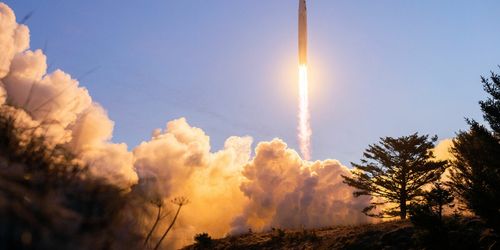
Astra's Rocket 4.0 is engineered for the demands of the modern space economy. Built on a foundation of rapid iteration and proven performance to deliver consistent, reliable access to orbit.
1 TONNE
Target Payload Capacity
To mid-inclination low Earth orbit over the course of the product's lifecycle
Weekly
Target Launch Cadence
Target launch cadence subject to spaceport availability
29°-110°
Orbital Inclinations Served
Access to a wide range of orbital inclinations
GLOBAL
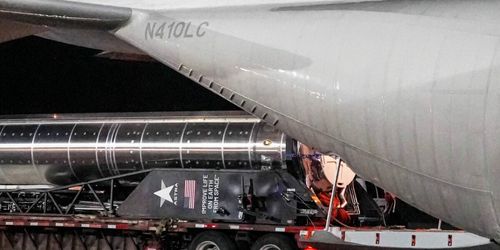
Mobile & Responsive Launch
Browse spaceport locations and plans
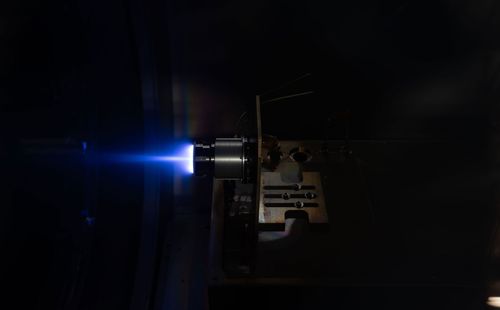
Electric Propulsion for Constellations
Backed by flight heritage and currently on orbit, Astra's satellite engines are engineered for efficiency, reliability, and precision to maneuver, maintain orbit, and execute mission operations.
Engine Capabilities
- Proven reliability with thousands of hours of on-orbit operation
- Compatible with xenon and krypton propellants
- Heaterless, center-mounted, instant-start cathode
- Novel magnetic lensing and magnetic circuit
- Advanced high temperature materials
- Add a background color to the section div above ↑ this Timeline section. This is will help hide the progress line overflow.
- Add z-index-2 class to the section div above ↑ this Timeline section. This will ensure the oveflowing progress line from the Timeline section below ↓ is hidden underneath it.
Fastest to orbit — fueled by iteration
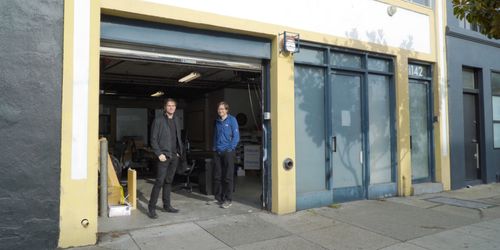
From a garage startup to reaching orbit faster than any private company in history, Astra's journey is defined by relentless innovation and rapid learning. View our launch timeline below, or explore our full history.
2017 March
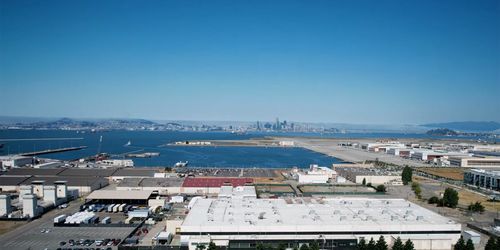
Opened Orion Test Facility in Alameda, California
At the former Alameda Naval Air Station, Astra transforms a retired jet engine test cell into a rocket engine development site — marking the start of the first rocket construction and Astra's first electric pump-fed engine tests.
2018 July
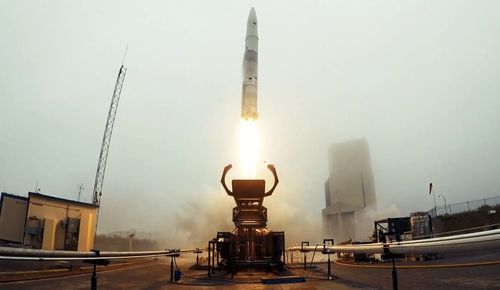
Test launch, Version 1.0, LV0001
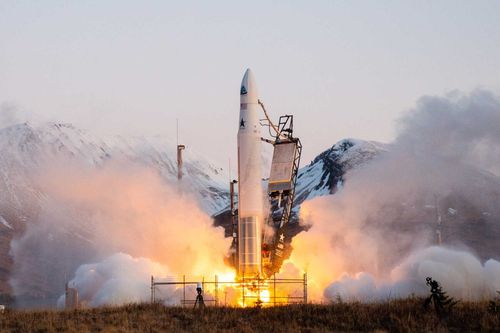
Astra's first test launch was on July 20, 2018 in Kodiak, Alaska, less than two years after being founded. The primary goal was to collect initial flight data — successfully achieved with nearly 25 seconds of flight.
2018 November
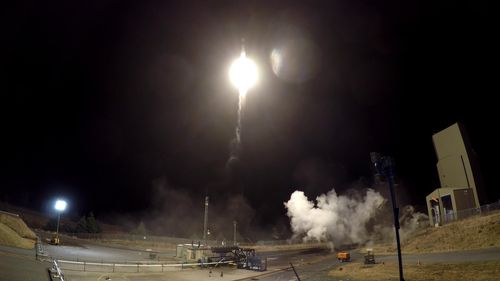
Test launch, Version 2.0, LV0002
Astra validated major upgrades to the rocket and ground system in this test. During the flight, two engine pump controllers malfunctioned, leading to the flight's termination about 30 seconds after liftoff.
2020 September
Test launch, Version 3.1, LV0004
Astra returned to the launch pad on September 11, 2020 with LV0004 (Rocket 3.1) and an upgraded launcher. After lift-off, two software errors caused the rocket to veer off-course, triggering the flight safety system to terminate the flight.
2020 December
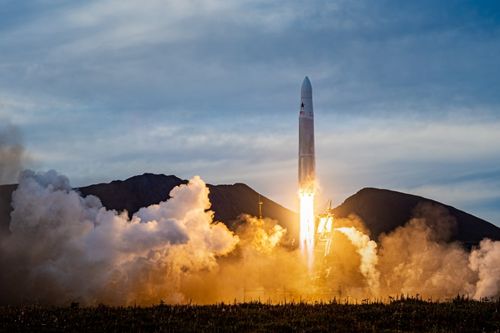
Test launch, Version 3.2, LV0005
Successful orbital capability demonstration — On December 15, 2020, LV0005 demonstrated Astra's orbital capability, successfully completing all flight phases and nearly reaching orbit. Building on this breakthrough, Astra pursued a comprehensive upgrade to Rocket 3.3 with an elongated first stage and enhanced upper stage for full orbital achievement.
2021 August
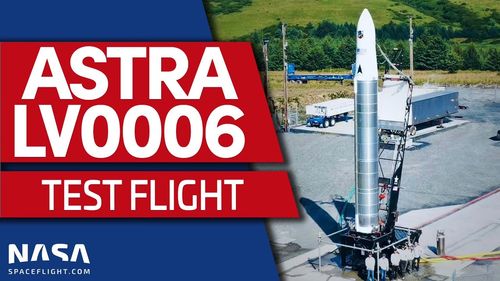
Test Launch, Version 3.3, LV0006
On August 28, 2021, Rocket 3.3's inaugural flight successfully recovered from a single engine shutdown before being incorrectly terminated by the Safety Officer.
2021 November
Successful Orbital Launch for the Space Force Test Program, LV0007
Astra returned to the pad just 2 months after LV0006 and on November 19, 2021, reached orbit and delivered a test payload to orbit with a nominal flight of both first and upper stages.
2022 February
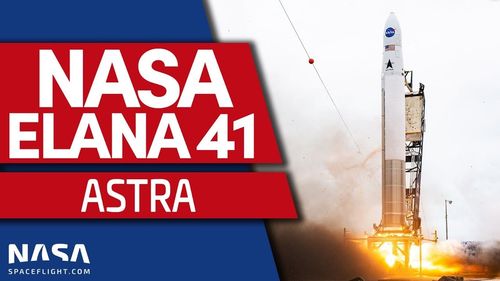
Commercial Launch, Version 3.3, LV0008
Astra demonstrated the mobility of its launch system by transporting both the launcher and rocket to Cape Canaveral and setting up a new launch site in less than a week. On February 10, 2022, after a nominal first stage flight, an off-nominal payload separation occurred and Astra did not fully deliver the 4 payloads on board.
2022 March
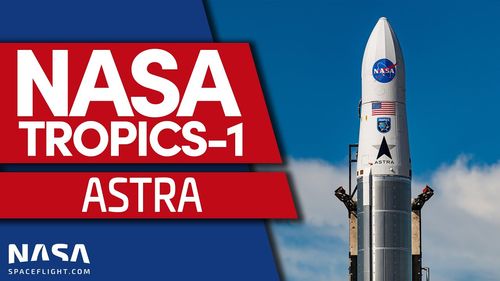
Commercial Launch, Version 3.3, LV0009
Successful orbital launch for Spaceflight — On March 15, 2022, LV0009 had a 100% successful flight for Spaceflight, delivering 22 satellites to orbit.
2022 June
Commercial Launch, Version 3.3, LV0010
Astra's second Cape Canaveral flight completed nominal first stage operations, stage separation, and upper stage ignition. An anomalously high fuel consumption rate in the upper stage caused the rocket to reach only 80 percent of orbital velocity before re-entering the atmosphere.
2024 October
Department of Defense awards Astra launch contract
Contract supports advancing and scaling the production capabilities of Astra's unique tactically responsive launch system, to achieve the prototype objective of launching Rocket 4.0 to orbit or suborbit and from the US, Australia, or other locations.
Latest News