

[The following essay revisits a lecture from almost a decade ago, reconsidered for the hurricane of rising American fascism and crises in the academy today.]
I hope that you will speculate with me during this essay. The title is borrowed from a Bruno Latour article titled Visualization and Cognition: Drawing Things Together. Latour's text deals with the power of inscription and the modern mode of thinking with eyes, hands, and surfaces that hold drawings and models. It is an explanation of ‘what is specific to our modern scientific cultures.’ It is an explanation that privileges drawing and holding models as a mode of thinking, so of course I am partial to it. Latour’s notion of science and engineering happening in the realm of the instruments rather than the mind interests me, despite its significant blindspots, some of which I will touch on here. With the risk of being too hokey with language– part of what I want to address is, exactly, how do we take something that someone else does not see and bring it into a mode that we can hold in our hands? So, I aim to touch on the blindspots.
Architecture is listed among many epistemes in Latour’s list of the various sciences that work via inscriptions, but it also seems to organize how the inscriptions work together. Latour considers the sciences and engineering as not so much ways of knowing things but means of deploying inscriptions– flat surfaces, flat drawings, arrays of numbers, and models– to achieve massive outcomes. This means an idea of modern technical efficacy that does not require a transcendental mind or what LaTour calls mentalism. The inscriptions that LaTour describes work through scale, drawings, models, lists, and diagrams. Where Latour’s best known theory analyzes the laboratory as the place that enables the production of scientific papers, Visualization and Cognition: Drawing Things Together focuses on papers and scale models and how they work together with calculations and lists. Instead of the air pump, we are looking at the drawing set.
In this short essay I want to offer a re-thinking of Latour’s idea, through speculating a capacity of drawing things together in the midst of extraction and restitution. To do that, I will bring insights and skepticism about mentalism into a consideration of what we do when we draw things together in the midst of extraction. With help from the recent book from Kathyrn Yussof on geology, I aim to do a counter reading of the capacity of drawing things together that refuses the center. Through this cross reading it may also be possible to chart how much a geologic of architecture requires erasure, destruction, and theft of other inscriptions. To connect this more directly to how we work– more and more we recognize that a drawing set of a building implies another drawing set that we never see. This other drawing set may be a section of a quarry. Or it may be a site plan of demolition and displacement. Or it may be the layout of bunkbeds for a temporary camp for imported laborers who have no rights and no access to their passports until the construction is completed.
I mention these erasures and extractions to invite us to address the capacity of us working together towards other work. There are modes of drawing things together– even arrays of cold data and diagrams and flat drawings– towards work and outcomes that refuse the ongoing extraction and erasure. In a refusal to draw things together in the ongoing extraction and erasure that Yusoff calls geologic life, other potentials of restitution, reparations, and land back processes might emerge.
Part of what happened as I was rereading the Latour article, it started to bug me more than usual, the ways in which the pronoun our that repeats to circumscribe modernity discloses a very specific we that kind of closes out others. Latour is writing from France, and the we/our is sometimes specifically French, sometimes European, sometimes generically Western. But it is never specifically or even potentially Martinican (a territory of the French Republic). It is never formerly enslaved (though the slave plantation charts the same timeline as his array of references). In reading Latour’s we/our, I started to get concerned with where my work fits into not just concerns about visual cognition and thinking with the hands, but also with the 500-year scope of modernity he sketches.
The 500 year arc that constitutes the our announces the main blindspot that I want to touch on in Latour’s argument, but not the only one. The blindspot here is not that the our fails to include the entire world, nor that the our centers Europe and whiteness. Rather, the blindspot is the complete disinterest in how the modes of inscription– the modes of drawing things together – create the possibility of that we/our only through webs of relation between drawing and violence. There is no innocent version of that we/our. It cannot be constituted without the armies of guns and boats and biowarfare that enabled colonization, the armies of guns and boats and chains that enabled plantation slavery, and the armies of guns and horses and biowarfare that enabled genocide of the indigenous. These are vectors of violence that are sometimes pointed, sometimes steered, sometimes locked and unlocked, and sometimes released in a messy cloud of death. They are the methods that interest other scholars, such as what Achille Membe calls the necropolitics of the colonial and post-colonial. These necropolitical modes also require thinking with the hands.
There is something missing in our understanding of what we draw when we cannot chart the relationship between what we draw into cognition and what this necropolitics hands us as the fait accompli - the already done. We recognize this in our field when we acknowledge the sense of powerlessness or fantasy that seem to diminish our drawings when compared to the logic of real estate development or national energy policy or socioeconomic facts of homelessness and evictions or, increasingly, fascist paramilitary force. We often situate this gap in the realm of discourse or communication and persuasion. We prepare ourselves to deploy our drawings to convince others that another world is possible.
That is fine, but I will conclude this essay by outlining another possibility of what we might draw together. I will call this, clumsily, the groundwork of drawing things together in the ground. Yusoff explains the necropolitical history of geology as both practice and discipline. There is much work to be done in the realm of abstract groundwork. To cite Yusoff:
The collective challenge is to find words that stand against the renewing tide of natural resources, understood as the normative and devastating language of materiality. Akin is the task to make models of kinships that would permit a rock in the family and a shared gravity in the shocks of the earth that might make a much-needed climate commons.
To gather this challenge into the modern world of inscription is, perhaps, the groundwork of drawing things together. This means not only words but instruments and processes of abstraction, ways of flattening and also, as Yusoff invokes, modeling.
I will conclude with a brief example sketched here in the form of a narrative of arriving to Princeton in the wake of a hurricane. As much as I arrived at Princeton in 2017 with interests in geology and questions of the modern subject, I was immediately concerned in the week I arrived with hurricane Irma. We no longer remember hurricanes from a few years ago because the side effect of us not having yet reached peak carbon emissions is that each year’s hurricane tends to be surpassed by the subsequent year’s. During Hurricane Irma, my mother, retired in Florida, was without electrical power for the second time in three years. She slept in a bathtub with a bicycle helmet nearby for protection if windows failed.
I arrived to Princeton asking, What good is modernity if we are intermittently sleeping in bathtubs without power or running water? Watching the reach of the hurricane, it seemed to be tracing also the presence of black territories in the Americas. The hurricane path traced birthplaces of my grandparents, and so many of my generation's parents and grandparents. The radius of the hurricane traced this terrain, as if to craft another wave of blackness, or yet another violence upon black people. It seemed to perform a literalization of Christina Sharpe’s poetic language of antiblackness being the weather.
But perhaps poetry might be drawn into this groundwork of drawing the ground together.
If one were to imagine a large-scale kidnapping operation, running off grid, operating across continents with no electrical power, or even steam power, navigating without screens or satellite GPS tracking, it would be something like the following. One would imagine large vessels packed with abducted people sailing quietly by wind power with large sails. The trajectory of these vessels would track the strongest currents in the ocean and the vectors of wind, both for predictability of navigation and speed. Hence, the direction of plantation growth, and the geography of labor kidnapped in relation to the geography of labor extracted in the Americas, these paths from West Africa through the Caribbean up to the Gulf of Mexico, the deep south and Florida, would always already be a mapping of a likely hurricane.
To draw this into inscriptions and arrays, you might confer with climatologists. You would find this has something to do with directions of hot winds and cold winds and where they meet. Increasingly warm temperatures, both on the water and in the air, accelerates the winds that become more frequent and stronger hurricanes. The carbon emissions underlying that heating result not just from inscriptions, but also from the necropolitics of fossil fuel extraction. As we know from Kate Orff / SCAPE's Petrochemical America and subsequent work by Forensic Architecture and others, fossil fuel extraction builds itself most often upon the former extractions of the plantation. These hurricanes, through multiple scales and timelines, are architectures of antiblackness. They are the weather. We can draw this weather into our work and groundwork, as much as we have learned to draw solar angles and read wind roses.
I conclude with the invitation to that speculation. Those of us working in the Americas, whether practicing or theorizing, let us be inspired and enabled to do that groundwork with some thoughtful urgency. In this century there's not enough time. There is groundwork that we need to do in situ, within the hurricane. Let us do that groundwork, drawing things together in the ground, inscribing positions from below, from labor, from the displaced. These are positions from which modernity has always been not a straight edge but a hurricane. Let us discover that even in the hurricane we can still draw, and even draw things together.


How to Read a Croissant / Unfolding Spatial Violence III of III In part I of this three part series “How to Read a Croissant / unfolding spatial violence,” I related Enric Miralles’ architectural layout of a croissant to the legibility of genocide in the Israeli forces’ seemingly... View full entry

A croissant, in some instances, becomes a logistical issue– even one of global import. Part II of III In Gaza right now, humanitarian aid and calibrated mass starvation are not competing agendas, but one coordinated matrix of genocide. In the first part of this writing I read the... View full entry

A croissant, in some instances, becomes a logistical issue– even one of global import. Part I of III On April 8th, less than a week after Israeli airstrikes assassinated 7 World Central Kitchen aid workers, the Israeli authority that manages the border between Egypt and Gaza inspected and... View full entry

My grandmother was born in West Virginia. She died last year (not of covid?) almost 100 years old, after many decades of retirement life in Columbus Georgia, a place for comfortable military widows, which she was, in her way. She retired from being a Washingtonian. Becoming a Washingtonian... View full entry
This is not an architectural thought, particularly. I am writing in regards to the question of democracy and the peaceful transition of power, what it means to have that threatened as it is tonight. https://www.msnbc.com/the-reid... In the mid-1990s I accidentally worked at a right-wing... View full entry
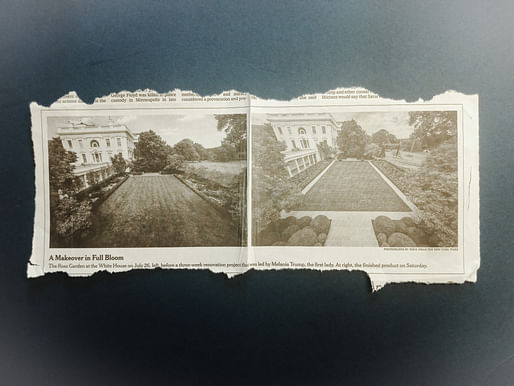
(Photo from July 26th New York Times)The project is presented as a “renovation.” It is presented not in terms of a project brief, a program, or any goals related to a national agenda. (The last garden change tied explicitly to a national agenda, of course, being Michelle Obama’s... View full entry
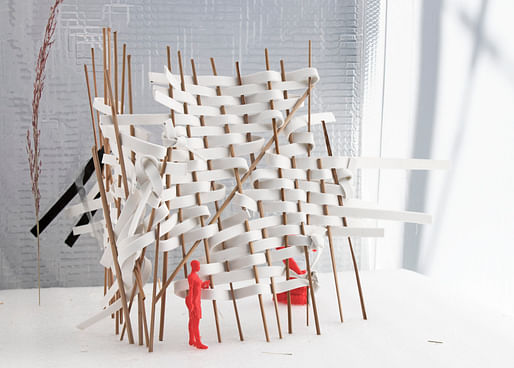
[This post consists of long excerpts from a text that got published by Infinite Mile in Detroit a few months before the 2016 election, a text which was quickly forgotten by the few people who read it, including myself.] "Years before I had understood that all I had to do, really had to do... View full entry
This post is in some ways inspired by the bold move that artist Shantell Martin made a few weeks ago to expose the crass ways that marketing entities sought to turn Blackness into a quick response, a cheap way to be 'relevant.' There are not many of us Black folks in architecture, landscape... View full entry
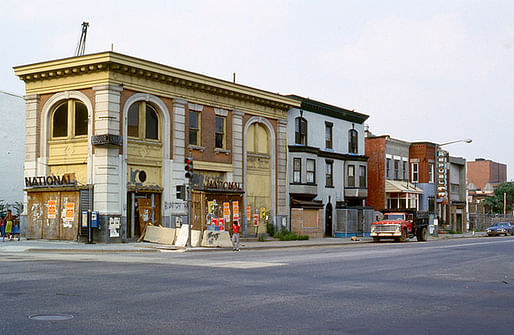
Like many others, within a few groups of Black architects and urban designers, I have been processing this moment and what it might demand from the fields of architecture and urbanism. A paradox is becoming evident. In this rapidly changing reality, there are many pressures for speed. We have... View full entry
Note: This is an excerpt from a 2015 article that I am updating to reflect that the cabaret law was finally over-turned in New York City in November 2017. I am posting it after presenting an 8 minute talk related to this subject for the Urban Design Forum. In the summer of 2001 I visited New... View full entry
The Department of Homeland Security's Inspector General has found "dangerous overcrowding" and unsanitary conditions at an El Paso, Texas, Border Patrol processing facility following an unannounced inspection, according to a new report.Watchdog finds detainees 'standing on toilets' for breathing... View full entry
This is more of a musing that a full post. I've been thinking more aggressively these past months about what we allow ourselves to know in the discipline. Because a discipline doesn't just deliver unending knowledge or create knowledge out of nothing. It defines what is relevant, it collects... View full entry
Below is an excerpt from Profound Modernity, my essay on the design of dry ground in Mexico City and its image of modernity. See e-flux for the full text. http://www.e-flux.com/architec... Maintenance is a drag; it takes all the fucking time…—Mierle Laderman Ukeles This article is not about... View full entry
This drawing by Ludwig Hilberseimer has been fascinating me recently. Most architects with any interest in urban planning in the USA know the story of RAND corporation doing post-World War II consulting on the dispersal of the American city. The assumption was that the kind of weapons... View full entry
This musing on time travel comes from notes that I jotted down in February of this year. With the beginning of the illegitimate real estate developer presidency, my only way of making sense of this moment in America was to think of travelling back in time (What if Comey hadn't done that, What if... View full entry
Back in December I posted an entry about the White Flight from American Democracy, where I predicted that this new President wouldn't be using the White House and the L'Enfant Plan the way it was designed. Rather:The axes of legislative authority and executive power must be extended dramatically... View full entry
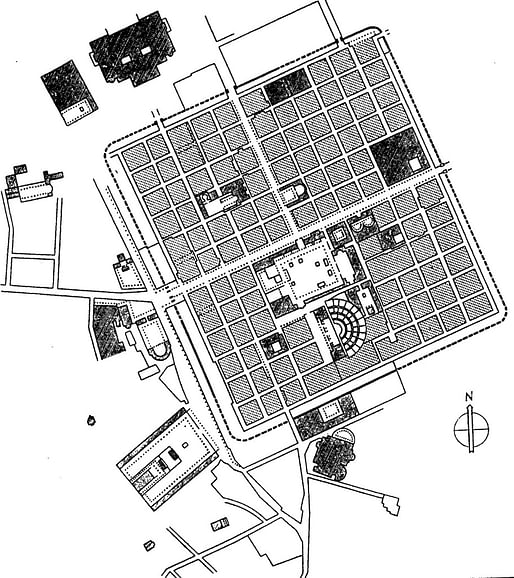
http://mcewenstudio.com/web/vmm-on-whiteness-descartes-and-grids/Here's a mini-podcast on Descartes, whiteness, and grids. Let's liberate geometry from empire. Especially in honor of today's American holiday. View full entry
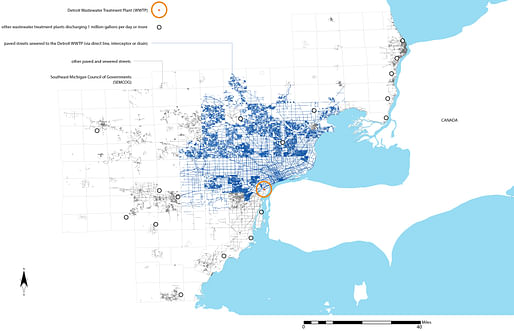
[This is an excerpt from a forthcoming article to be published later this year in Yale Perspecta #50]This study of water in Detroit and its intersection of racialized geographies of inner city and suburban sprawl uncovers parallels between water infrastructure and transportation planning as... View full entry
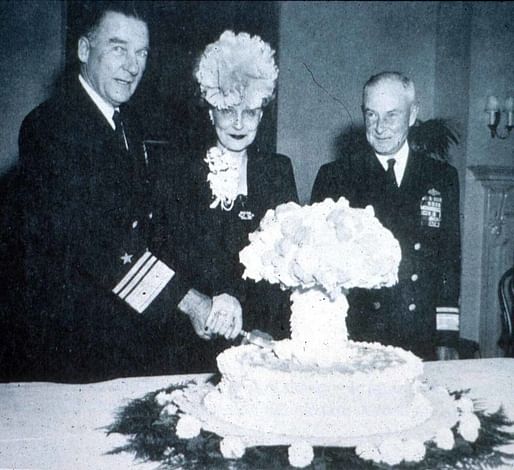
[I wrote this at the end of the summer, as I was mulling over certain relationships between aesthetics and warfare and image-making. At the time I was thinking of it as a sort of historical line of research I wanted to do.... Now it feels related to many weird and horrifying things, including... View full entry
The full interview is here - http://www.sampsoniaway.org/interviews/2017/01/12/recognizing-hungers-that-are-already-there-a-conversation-with-architect-mitch-mcewen/ Interview by Leah Wulfman / January 12, 2017 Excerpts below: LW: You are opening up and engaging architecture outside... View full entry
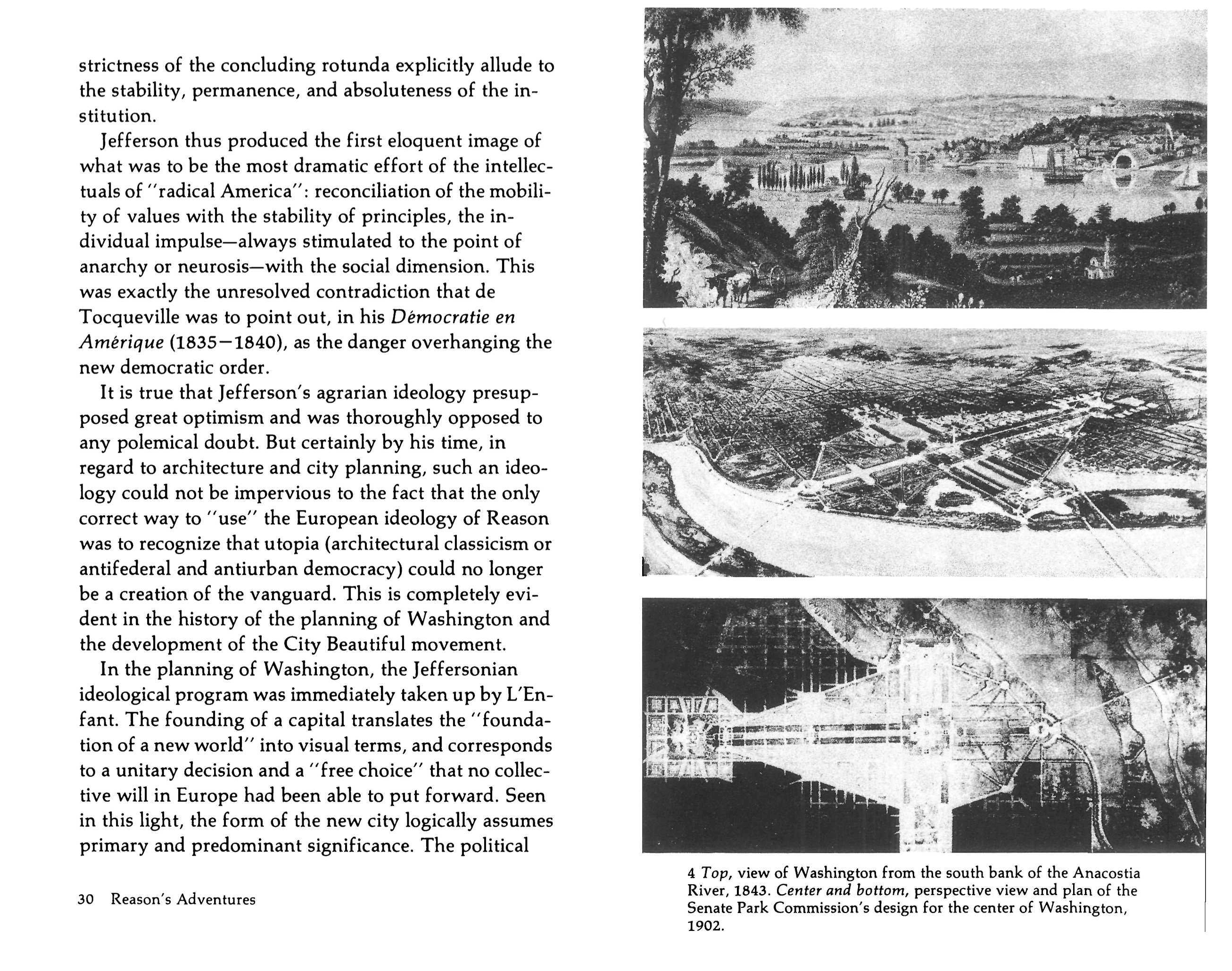
"The city in L'Enfant's Washington is really new nature. The models derived from the Europe of absolutism and despotism are now expropriated by the capital of democratic institutions, and translated into a social dimension certainly unknown at the Versailles of Louis XIV."-Manfredo Tafuri... View full entry
NO ONE CARES ABOUT AMERICA’S STUPID ARCHITECTURE PROBLEMSThe United States is accustomed to being the center of global networks in pretty much any field: film, finance, the art-world, pop music, development economics, tech start-ups, military strategy, and much more. Architecture, though, is... View full entry
What is the relationship between representation and fabrication today, between drawing and building, or thinking and making? When are we building indications of a process or an idea, representing something, and when are we building the actual thing? If we no longer have to represent in order to... View full entry
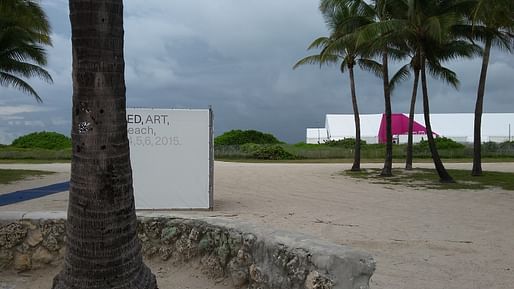
Last month I visited Miami and witnessed the carting away of Art Basel. On the Sunday evening that Art Basel wraps up, as well as the morning after, Miami Beach looks like a truck stop ran into the ocean. Tents are being dismantled, beach signage points to furniture that's no longer there, and... View full entry
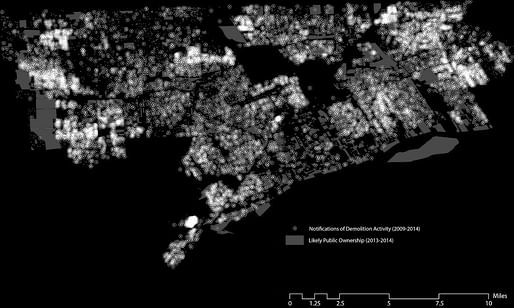
Detroit is now my home city, so I am thrilled that next year's U.S. Pavilion at the Venice Biennale will be dedicated to exploring the intersection of Detroit and architectural imagination. As excited as I am that The Taubman College of Architecture and Urban Planning at the University of... View full entry
House Opera video
Assistant Professor of Sociology at University of Southern California, Veronica Terriquez received her Ph.D. in sociology from UCLA. Her research focuses on educational inequality, immigrant integration, and organized labor. Her work is linked to education justice and immigrant rights organizing... View full entry
Thank you Archinect Sessions podcast for featuring me on the first podcast of 2015. It looks like with everything happening in December I missed a chance to post here on Another Architecture. Let's catch up. Mimi Zeiger wrote a great opinion piece for Dezeen last month asking why... View full entry
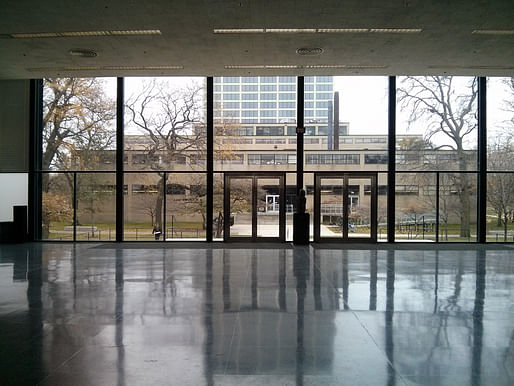
Posting this much about Mies makes me feel like this blog is circling back to where it started two years ago, when I posted about Modernity and Ideology from my studio in Germany. Somehow this recent time in the MidWest, transitioning from Brooklyn to Detroit, does remind me of settling into... View full entry
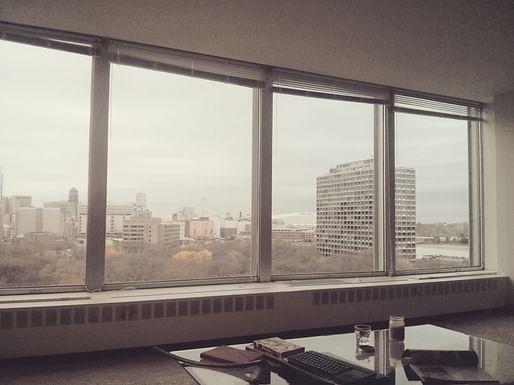
One of the principles that guides my approach to architecture and urban design is the sense that architecture has much more to offer than luxury. Whether you consider our field professionally in comparison to doctors and lawyers, or as a discipline comparable to art, we have a lot of room to be... View full entry
Posts are sporadic. Topics span architecture, urban design, planning, and tangents from these. I sometimes include excerpts of academic articles.

