Skippenite
A valid IMA mineral species
This page is currently not sponsored. Click here to sponsor this page.

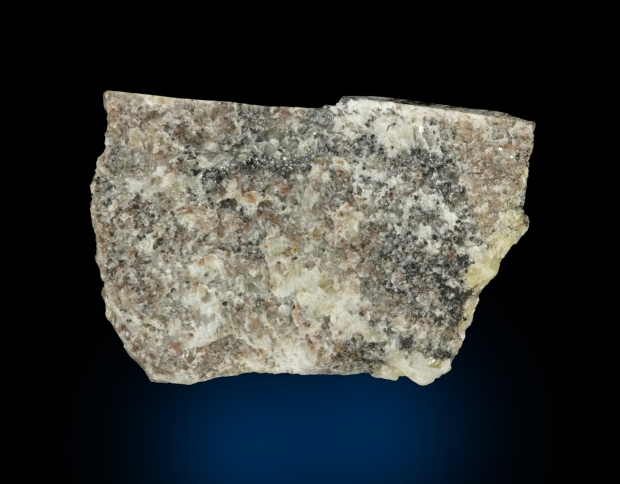
About Skippenite

George B. Skippen
Formula:
Bi2TeSe2
Colour:
Steel-gray
Lustre:
Metallic
Hardness:
2½
Specific Gravity:
7.94 (Calculated)
Crystal System:
Trigonal
Member of:
Name:
Named in honor of George Barber Skippen (29 November 1936 - 24 November 2019), metamorphic petrologist, Professor of Geology, Carleton University, Ottawa, Ontario. He was a pioneer in the understanding of crustal fluids and the metamorphism of carbonate rocks.
Unique Identifiers
Mindat ID:
3680
Long-form identifier:
mindat:1:1:3680:7
IMA Classification of Skippenite
Approved
IMA Formula:
Bi2Se2Te
First published:
1987
Classification of Skippenite
2.DC.05
2 : SULFIDES and SULFOSALTS (sulfides, selenides, tellurides; arsenides, antimonides, bismuthides; sulfarsenites, sulfantimonites, sulfbismuthites, etc.)
D : Metal Sulfides, M: S = 3 :4 and 2:3
C : Variable M:S
2 : SULFIDES and SULFOSALTS (sulfides, selenides, tellurides; arsenides, antimonides, bismuthides; sulfarsenites, sulfantimonites, sulfbismuthites, etc.)
D : Metal Sulfides, M: S = 3 :4 and 2:3
C : Variable M:S
2.11.7.6
2 : SULFIDES
11 : AmBnXp, with (m+n):p = 2:3
2 : SULFIDES
11 : AmBnXp, with (m+n):p = 2:3
3.7.36
3 : Sulphides, Selenides, Tellurides, Arsenides and Bismuthides (except the arsenides, antimonides and bismuthides of Cu, Ag and Au, which are included in Section 1)
7 : Sulphides etc. of V, As, Sb and Bi
3 : Sulphides, Selenides, Tellurides, Arsenides and Bismuthides (except the arsenides, antimonides and bismuthides of Cu, Ag and Au, which are included in Section 1)
7 : Sulphides etc. of V, As, Sb and Bi
Mineral Symbols
As of 2021 there are now IMA–CNMNC approved mineral symbols (abbreviations) for each mineral species, useful for tables and diagrams.
Please only use the official IMA–CNMNC symbol. Older variants are listed for historical use only.
Please only use the official IMA–CNMNC symbol. Older variants are listed for historical use only.
| Symbol | Source | Reference |
|---|---|---|
| Skp | IMA–CNMNC | Warr, L.N. (2021). IMA–CNMNC approved mineral symbols. Mineralogical Magazine, 85(3), 291-320. doi:10.1180/mgm.2021.43 |
| Skp | The Canadian Mineralogist (2019) | The Canadian Mineralogist (2019) The Canadian Mineralogist list of symbols for rock- and ore-forming minerals (December 30, 2019). download |
Physical Properties of Skippenite
Metallic
Transparency:
Opaque
Colour:
Steel-gray
Streak:
Black
Hardness:
2½ on Mohs scale
Hardness:
VHN25=52 - 74 kg/mm2 - Vickers
Cleavage:
Perfect
{0001}
{0001}
Density:
7.94 g/cm3 (Calculated)
Optical Data of Skippenite
Anisotropism:
Moderate, without any strong chromatic effects
Bireflectance:
Weak, noticeable in oil (yellowish white to grey), not perceptible in air
Reflectivity:
| Wavelength | R1 (%) | R2 (%) |
|---|---|---|
| 420nm | 41.0% | 43.0% |
| 440nm | 44.6% | 46.1% |
| 460nm | 46.5% | 47.8% |
| 480nm | 47.7% | 48.8% |
| 500nm | 48.3% | 49.5% |
| 520nm | 48.7% | 50.0% |
| 540nm | 49.0% | 50.3% |
| 560nm | 49.1% | 50.4% |
| 580nm | 49.1% | 50.4% |
| 600nm | 49.2% | 50.5% |
| 620nm | 49.3% | 50.6% |
| 640nm | 49.4% | 50.8% |
| 660nm | 49.4% | 50.8% |
| 680nm | 49.4% | 50.8% |
| 700nm | 49.4% | 50.8% |
Graph shows reflectance levels at different wavelengths (in nm). Peak reflectance is 50.8%.
R1 shown in black, R2 shown in red
Colour in reflected light:
White with a yellow tint
Internal Reflections:
None
Pleochroism:
Visible
Comments:
Grey to bluish grey
Chemistry of Skippenite
Mindat Formula:
Bi2TeSe2
Element Weights:
Elements listed:
Common Impurities:
Cu,Pb,S
Crystallography of Skippenite
Crystal System:
Trigonal
Cell Parameters:
a = 4.18 Å, c = 29.12 Å
Ratio:
a:c = 1 : 6.967
Unit Cell V:
440.63 ų (Calculated from Unit Cell)
Morphology:
Lamellar crystals, flattened along [0001]. The crystals are strongly deformed and show deformation lamellae.
Comment:
Point Group: 3 2/m, 3m or 32; Space Group: R3m, R3m, or R32.
Crystal Structure
Load
Unit Cell | Unit Cell Packed
2x2x2 | 3x3x3 | 4x4x4
Unit Cell | Unit Cell Packed
2x2x2 | 3x3x3 | 4x4x4
Show
Big Balls | Small Balls | Just Balls | Spacefill
Polyhedra Off | Si Polyhedra | All Polyhedra
Remove metal-metal sticks
Big Balls | Small Balls | Just Balls | Spacefill
Polyhedra Off | Si Polyhedra | All Polyhedra
Remove metal-metal sticks
Display Options
Black Background | White Background
Perspective On | Perspective Off
2D | Stereo | Red-Blue | Red-Cyan
Black Background | White Background
Perspective On | Perspective Off
2D | Stereo | Red-Blue | Red-Cyan
View
CIF File Best | x | y | z | a | b | c
CIF File Best | x | y | z | a | b | c
Rotation
Stop | Start
Stop | Start
Labels
Console Off | On | Grey | Yellow
Console Off | On | Grey | Yellow
Data courtesy of the American Mineralogist Crystal Structure Database. Click on an AMCSD ID to view structure
| ID | Species | Reference | Link | Year | Locality | Pressure (GPa) | Temp (K) |
|---|---|---|---|---|---|---|---|
| 0005942 | Skippenite | Bindi L, Cipriani C (2004) The crystal structure of skippenite, Bi2Se2Te, from the Kochkar deposit, southern Urals, Russian Federation The Canadian Mineralogist 42 835-840 |  | 2004 | Kochkar deposit, southern Urals, Russia | 0 | 293 |
| 0013194 | Skippenite | Nakajima S (1963) The crystal structure of Bi2Te3-xSex Journal of Physics and Chemistry of Solids 24 479-485 | 1963 | synthetic | 0 | 293 |
CIF Raw Data - click here to close
X-Ray Powder Diffraction
Powder Diffraction Data:
| d-spacing | Intensity |
|---|---|
| 3.074 Å | (100) |
| 2.090 Å | (80) |
| 2.267 Å | (70) |
| 4.85 Å | (60) |
| 3.584 Å | (60) |
| 9.71 Å | (50) |
| 2.133 Å | (50) |
Geological Environment
Paragenetic Mode(s):
| Paragenetic Mode | Earliest Age (Ga) |
|---|---|
| High-? alteration and/or metamorphism | |
| 33 : Minerals deposited by hydrothermal metal-rich fluids (see also [#12]) |
Type Occurrence of Skippenite
General Appearance of Type Material:
Massive aggregates of lamellar crystals (0.2 to 1 mm in length)
Associated Minerals at Type Locality:
Synonyms of Skippenite
Other Language Names for Skippenite
Relationship of Skippenite to other Species
Member of:
Other Members of Tetradymite Group:
| Baksanite | Bi6Te2S3 | Trig. 3m (3 2/m) : P3m1 |
| Ehrigite | Bi8Te3 | Trig. 3m (3 2/m) : R3m |
| Hedleyite | Bi7Te3 | Trig. 3m (3 2/m) : R3m |
| Ikunolite | Bi4S3 | Trig. 3m (3 2/m) : R3m |
| Ingodite | Bi2TeS | Trig. |
| Joséite-A | Bi4TeS2 | Trig. 3m (3 2/m) : R3m |
| Joséite-B | Bi4Te2S | Trig. 3m (3 2/m) : R3m |
| Kawazulite | Bi2Te2Se | Trig. 3m (3 2/m) : R3m |
| Laitakarite | Bi4(Se,S)3 | Trig. 3m (3 2/m) : R3m |
| Paraguanajuatite | Bi2Se3 | Trig. 3m (3 2/m) : R3m |
| Pilsenite | Bi4Te3 | Trig. 3m (3 2/m) : R3m |
| Sulphotsumoite | Bi3Te2S | Trig. 3m (3 2/m) : P3 1m |
| Tellurantimony | Sb2Te3 | Trig. 3m (3 2/m) : R3m |
| Tellurobismuthite | Bi2Te3 | Trig. 3m (3 2/m) : R3m |
| Telluronevskite | Bi3TeSe2 | Trig. 3m (3 2/m) : P3m1 |
| Tetradymite | Bi2Te2S | Trig. 3m (3 2/m) : R3m |
| Tsumoite | BiTe | Trig. 3m (3 2/m) : P3 1m |
| Vihorlatite | Bi24Se17Te4 | Trig. 3m (3 2/m) : P3m1 |
| Zipserite | Bi5S4 | Trig. 3m (3 2/m) : R3m |
Related Minerals - Strunz-mindat Grouping
| 2.DC.05 | Laitakarite | Bi4(Se,S)3 |
| 2.DC.05 | Paraguanajuatite | Bi2Se3 |
| 2.DC.05 | Telluronevskite | Bi3TeSe2 |
| 2.DC.05 | Hedleyite | Bi7Te3 |
| 2.DC.05 | Hitachiite | Pb5Bi2Te2S6 |
| 2.DC.05 | Tellurantimony | Sb2Te3 |
| 2.DC.05 | Joséite | Bi4TeS2 |
| 2.DC.05 | Tellurobismuthite | Bi2Te3 |
| 2.DC.05 | Joséite-A | Bi4TeS2 |
| 2.DC.05 | Joséite-B | Bi4Te2S |
| 2.DC.05 | Nevskite | Bi(Se,S) |
| 2.DC.05 | Tetradymite | Bi2Te2S |
| 2.DC.05 | Protojoséite | Bi3(Te,S)2 |
| 2.DC.05 | Kawazulite | Bi2Te2Se |
| 2.DC.05 | UM1983-09-S:BiPbTe | PbBi3S2Te |
| 2.DC.05 | Pilsenite | Bi4Te3 |
| 2.DC.05 | Sztrókayite | Bi3TeS2 |
| 2.DC.05 | Baksanite | Bi6Te2S3 |
| 2.DC.05 | Joséite-C | Bi16Te3S9 |
| 2.DC.05 | Vihorlatite | Bi24Se17Te4 |
| 2.DC.05 | Tsumoite | BiTe |
| 2.DC.05 | Ikunolite | Bi4S3 |
| 2.DC.05 | Ehrigite | Bi8Te3 |
| 2.DC.05 | Ingodite | Bi2TeS |
| 2.DC.05 | Sulphotsumoite | Bi3Te2S |
| 2.DC.15 | Castaingite | CuMo2S5 |
Other Information
Health Risks:
No information on health risks for this material has been entered into the database. You should always treat mineral specimens with care.
Internet Links for Skippenite
mindat.org URL:
https://www.mindat.org/min-3680.html
Please feel free to link to this page.
Please feel free to link to this page.
Search Engines:
External Links:
References for Skippenite
Reference List:
Nakajima, Seizo (1963) The crystal structure of Bi2Te3−xSex. Journal of Physics and Chemistry of Solids, 24. 479-485 doi:10.1016/0022-3697(63)90207-5
Johan, Z., Picot, P., Ruhlmann, F. (1987) The ore mineralogy of the Otish Mountains uranium deposit, Quebec: skippenite, Bi2Se2Te, and watkinsonite, Cu2PbBi4(Se,S)8, two new mineral species. The Canadian Mineralogist, 25 (4) 625-638
Jambor, John L., Vanko, David A. (1989) New mineral names. American Mineralogist, 74 (7-8) 946-951 p.947
Localities for Skippenite
 symbol to view information about a locality.
The
symbol to view information about a locality.
The Locality List
 - This locality has map coordinates listed.
- This locality has estimated coordinates.
ⓘ - Click for references and further information on this occurrence.
? - Indicates mineral may be doubtful at this locality.
- This locality has map coordinates listed.
- This locality has estimated coordinates.
ⓘ - Click for references and further information on this occurrence.
? - Indicates mineral may be doubtful at this locality.
 - Good crystals or important locality for species.
 - World class for species or very significant.
(TL) - Type Locality for a valid mineral species.
(FRL) - First Recorded Locality for everything else (eg varieties).
- World class for species or very significant.
(TL) - Type Locality for a valid mineral species.
(FRL) - First Recorded Locality for everything else (eg varieties).
All localities listed without proper references should be considered as questionable.
Canada | |
| Miller (1981) +1 other reference |
| Johan et al. (1987) |
Greece | |
| McFall et al. (2016) |
Mexico | |
| Lapis 2001 (1) |
| Bindi et al. (2004) | |
| Bindi et al. (2004) | |
| Bindi et al. (2004) | |
Russia | |
| Bindi et al. (2004) |
| Kovalenker et al. (2005) +2 other references |
| Kalinin (2021) |
| Kalinin (2021) | |
Sierra Leone | |
| Stenhouse et al. (2016) |
Quick NavTopAbout SkippeniteUnique IdentifiersIMA Classification Classification Mineral SymbolsPhysical Properties Optical Data Chemistry Crystallography Crystal StructureX-Ray Powder DiffractionGeological EnvironmentType Occurrence SynonymsOther LanguagesRelationshipsStrunz-MindatOther InformationInternet Links References Localities Locality List
San Miguel Mine, Moctezuma, Moctezuma Municipality, Sonora, Mexico